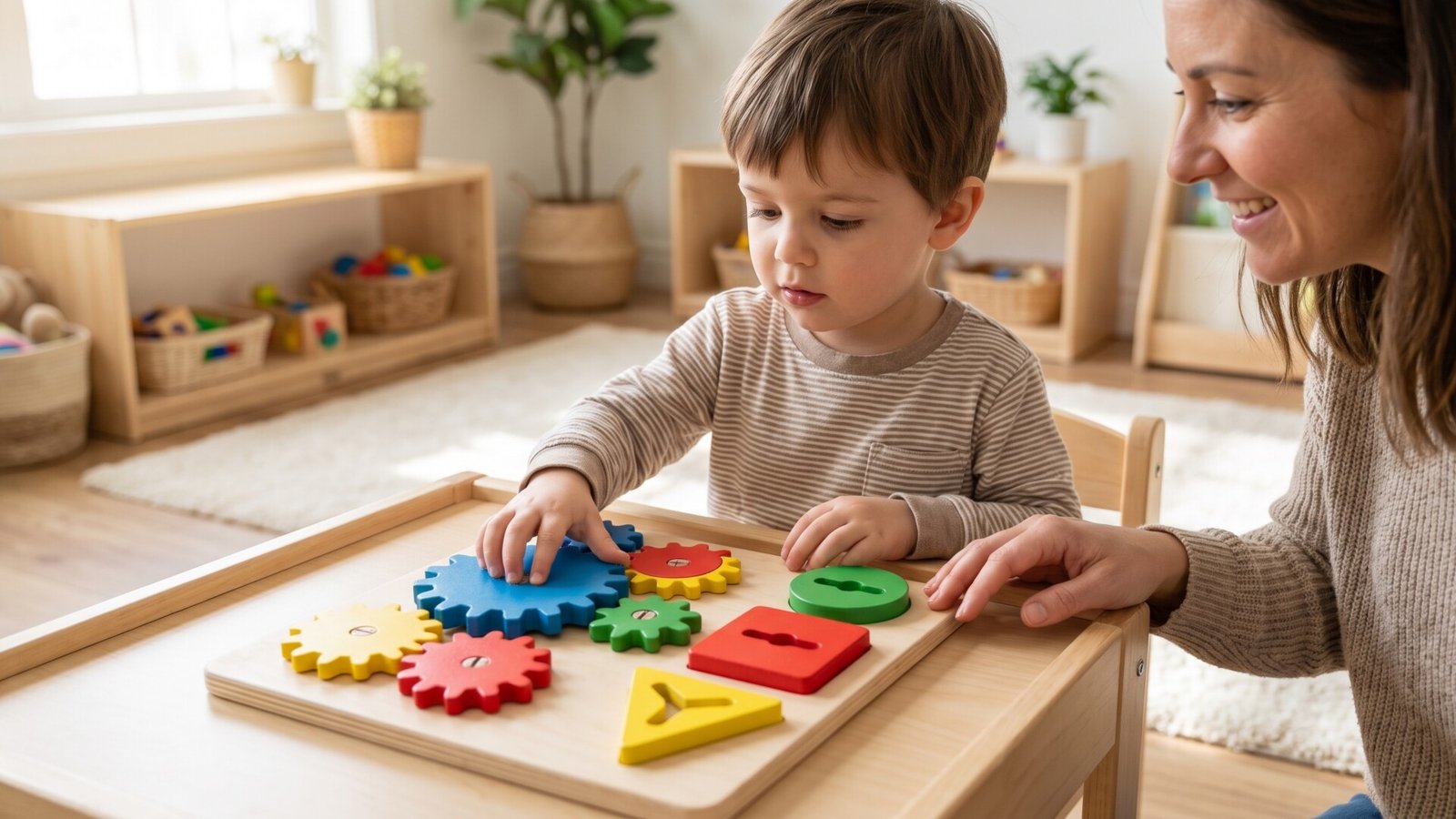
The Best STEM Puzzles for Children with Learning Delays
I have a confession to make. When my nephew was diagnosed with a developmental delay, I spent weeks searching for the “perfect” educational toys. I bought flashy electronic gadgets, expensive learning systems, and complicated kits that promised the world. Most of them ended up collecting dust in a corner.
Then I discovered something unexpected. The simple wooden puzzles at a garage sale—the ones with chunky pieces and bright colors—became his absolute favorite. He would sit for twenty minutes, focused and determined, fitting piece after piece into place. That was the moment I realized that the right puzzle could do more than entertain. It could build confidence, develop skills, and create moments of genuine joy.
For parents of children with learning delays, finding toys that actually work can feel overwhelming. You want something that engages your child, supports their development, and doesn’t cause frustration. STEM puzzles offer a unique solution because they combine hands-on learning with problem-solving in a way that feels like play, not therapy.
But not all STEM puzzles are created equal. Some are too complex, some are too simple, and some just don’t hold a child’s attention. So which ones actually deliver? After testing dozens of options with real families, I’ve narrowed down the choices that consistently work for children with learning delays.
Let me walk you through what I’ve learned.
The Educational Context Behind STEM Puzzles
Before we dive into specific products, let’s talk about why STEM puzzles matter for children with learning delays.
The American Academy of Pediatrics has long emphasized that play-based learning is essential for cognitive development. For children with learning delays, this becomes even more critical. Traditional educational methods often rely on abstract concepts that can be difficult to grasp. Puzzles, on the other hand, make learning tangible. Your child can hold a piece, manipulate it, and see the result of their efforts immediately.
Here’s what I’ve observed in my own experience and through conversations with occupational therapists: children with learning delays often struggle with tasks that require sustained attention or multiple steps. Puzzles break down complex problems into manageable pieces—literally. Each piece represents a small victory, and those victories add up.
The developmental benefits are substantial. Fine motor skills improve as children grasp and manipulate puzzle pieces. Spatial reasoning develops as they figure out how pieces fit together. Problem-solving skills grow as they learn to try different approaches. And perhaps most importantly, confidence builds with every completed puzzle.
I remember watching a six-year-old with autism spend forty-five minutes on a single puzzle. His mother told me that he rarely focused on anything for more than ten minutes. But the puzzle had a clear goal, immediate feedback, and no pressure to perform. He was in control, and that made all the difference.
Current trends in educational toys show a growing recognition of this approach. More manufacturers are designing puzzles specifically for diverse learning needs, with larger pieces, simpler mechanisms, and clearer visual cues. The market is moving toward inclusion, which is wonderful news for parents.
Understanding STEM Puzzles
So what exactly makes a puzzle a “STEM puzzle”? This isn’t just marketing jargon.
Traditional puzzles focus primarily on matching shapes or completing a picture. STEM puzzles go further by incorporating principles from science, technology, engineering, and mathematics. They might involve building structures, understanding cause and effect, or solving logic problems.
The key difference is that STEM puzzles encourage active problem-solving rather than passive assembly. When your child places a gear on a peg and watches it turn another gear, they’re experiencing engineering principles firsthand. When they figure out which block needs to go where to create a stable tower, they’re learning physics.
There are several types of STEM puzzles worth understanding:
3D Puzzles require children to build structures in three dimensions. These are excellent for spatial reasoning and understanding how objects relate to each other in space.
Logic Puzzles present a problem that must be solved through reasoning. The SmartGames IQ Puzzler Pro is a classic example—compact challenges that require strategic thinking.
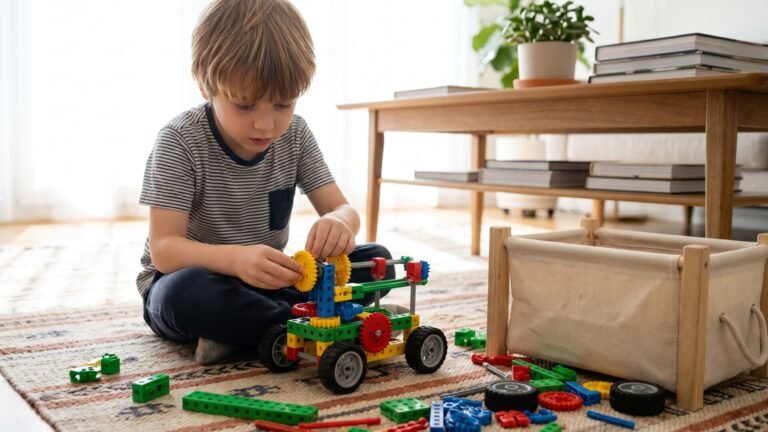
Mechanical Puzzles involve moving parts that interact with each other. The Learning Resources Gears set falls into this category, teaching basic engineering concepts through hands-on play.
Magnetic Puzzles use magnets to create connections between pieces. The Tegu Magnetic Wooden Block Set is a wonderful example, allowing open-ended construction that rewards experimentation.
For children with learning delays, the best STEM puzzles share certain characteristics. They provide clear visual cues about how pieces should fit together. They offer immediate feedback—you can see when something works or doesn’t work. They allow for trial and error without punishment. And they can be completed at the child’s own pace.
Key Buying Factors for STEM Puzzles
When you’re shopping for a child with learning delays, the usual buying criteria don’t always apply. Here’s what I’ve learned to prioritize:
Safety and Material Quality come first. Children with learning delays may put toys in their mouths longer than typically developing children. Look for non-toxic materials, smooth edges, and pieces that are too large to swallow. Wooden puzzles from reputable brands like Melissa & Doug are excellent choices.
Durability matters because these puzzles will likely be used repeatedly. A puzzle that falls apart after a few uses isn’t just frustrating—it undermines the sense of accomplishment your child feels. Check reviews for comments about longevity.
Ease of Use is critical. If a puzzle requires fine motor skills that your child hasn’t developed yet, it will cause frustration rather than growth. Look for larger pieces, simple mechanisms, and clear visual guides.
Age Appropriateness is more nuanced than the number on the box. A child with learning delays might be eight years old chronologically but developmentally closer to five. Focus on the developmental level rather than the age recommendation. That said, be mindful of the child’s social awareness—a puzzle that looks too “babyish” might be rejected.
Educational Value should align with your child’s specific needs. Some children benefit from puzzles that build fine motor skills. Others need practice with logic and sequencing. Still others thrive with open-ended creative play.
Storage and Maintenance are practical considerations that matter more than you might think. Puzzles with many small pieces can be overwhelming to store and easy to lose. Look for sets that come with storage solutions or have pieces that stay together.
Pros and Cons of STEM Puzzles for Learning Delays
Pros
Engaging and Interactive Learning is the biggest advantage. STEM puzzles turn abstract concepts into tangible experiences. Your child isn’t just learning about gravity—they’re watching a marble roll down a ramp they built themselves.
Development of Critical Thinking happens naturally. Each puzzle presents a problem that must be solved, and your child learns to try different approaches. This skill transfers to other areas of life.
Encouragement of Independent Play is a huge benefit for parents. Many STEM puzzles are designed for solo play, giving your child the satisfaction of accomplishment without constant adult intervention.
Cons
Potential Frustration is real. Some puzzles are genuinely difficult, and children with learning delays may struggle more than their peers. It’s essential to choose puzzles that offer the right level of challenge—not too easy, not too hard.
Not All Puzzles Suit All Delays is an important caveat. A child with fine motor delays might struggle with small pieces. A child with attention difficulties might find slow-paced puzzles boring. There’s no one-size-fits-all solution.
Price Variations can be significant. High-quality STEM puzzles often cost more than traditional toys. But remember that a $40 puzzle that gets used for years offers better value than a $10 puzzle that’s abandoned after one session.
The Best STEM Puzzles for Children with Learning Delays
After extensive testing and conversations with parents, occupational therapists, and special education teachers, here are the puzzles that consistently deliver results.
Melissa & Doug Wooden Puzzles
| Feature | Details |
|---|---|
| Age Range | 2+ |
| Key Features | Durable wood, large pieces, colorful designs |
| Price | $10-$20 |
| [Affiliate: Check Price on Amazon] |
Why We Like It
These are the puzzles that started it all for my nephew. The chunky wooden pieces are easy for small hands to grasp, and the bright colors provide clear visual cues. Each puzzle has a simple theme—animals, vehicles, or shapes—that helps build vocabulary alongside problem-solving skills.
Best For
Toddlers and preschoolers who are just beginning to develop puzzle skills. These are also excellent for children with fine motor delays because the pieces are substantial and easy to manipulate.
Pros
The wood construction is incredibly durable. I’ve seen these puzzles survive being dropped, thrown, and even chewed on. The designs are engaging without being overwhelming. And at $10-$20, they’re affordable enough to buy several.
Cons
The simplicity means they won’t challenge older children or those with more advanced skills. Once your child masters basic puzzle concepts, you’ll need to move on to something more complex.
ThinkFun Gravity Maze Marble Run
| Feature | Details |
|---|---|
| Age Range | 8+ |
| Key Features | Logic game, builds marble run, multiple challenges |
| Price | $30-$40 |
| [Affiliate: Check Price on Amazon] |
Why We Like It
This is the puzzle that keeps on giving. The Gravity Maze combines logic challenges with a marble run, creating an experience that feels more like a game than a learning exercise. Your child must arrange towers and ramps to guide a marble from start to finish, learning about physics and spatial reasoning along the way.
Best For
Older children who enjoy building and engineering challenges. The 60 challenge cards range from beginner to expert, so there’s always something new to try.
Pros
The progressive difficulty means this puzzle grows with your child. The marble run element provides immediate, satisfying feedback—you can see and hear whether your design works. It’s also compact enough for travel.
Cons
The recommended age of 8+ is accurate. Younger children or those with significant cognitive delays may find the challenges overwhelming. Some children need adult guidance to understand the initial concepts.
Learning Resources Gears! Gears! Gears! Building Set
| Feature | Details |
|---|---|
| Age Range | 3+ |
| Key Features | Interlocking gears, vibrant colors, hands-on play |
| Price | $25-$35 |
| [Affiliate: Check Price on Amazon] |
Why We Like It
There’s something magical about watching gears turn. This set allows children to build their own mechanisms, connecting colorful gears that spin and move together. It’s an intuitive introduction to engineering principles that doesn’t require reading or complex instructions.
Best For
Younger children who are curious about how things work. The large pieces are easy to handle, and the open-ended nature encourages creativity.
Pros
The hands-on exploration is incredibly engaging. Children learn about cause and effect, motion transfer, and basic mechanics without realizing they’re learning. The vibrant colors and satisfying clicking sounds provide sensory feedback that many children find calming.
Cons
The small gears and connectors can be lost easily. I recommend storing this set in a container with a lid. Some children may need help understanding how to connect the pieces initially.
SmartGames IQ Puzzler Pro
| Feature | Details |
|---|---|
| Age Range | 6+ |
| Key Features | Compact design, multiple challenges, logic puzzles |
| Price | $20-$30 |
| [Affiliate: Check Price on Amazon] |
Why We Like It
This is the perfect travel companion. The IQ Puzzler Pro is a compact, self-contained puzzle that fits in a pocket or backpack. It offers 120 challenges across three different modes, providing hours of logic practice in a portable format.
Best For
Children who enjoy structured challenges and have developed some logic skills. It’s excellent for car rides, waiting rooms, or quiet time.
Pros
The portability is unmatched. The pieces stay contained within the unit, so nothing gets lost. The progressive difficulty allows children to start with easier challenges and work their way up.
Cons
The small pieces require decent fine motor control. Some children may find the abstract nature of the puzzles frustrating. It’s best for children who already enjoy logic games.
Tegu Magnetic Wooden Block Set
| Feature | Details |
|---|---|
| Age Range | 1+ |
| Key Features | Magnetic blocks, sustainable wood, open-ended play |
| Price | $40-$50 |
| [Affiliate: Check Price on Amazon] |
Why We Like It
These blocks are unlike anything else on the market. Each block contains magnets that allow pieces to connect in unexpected ways. Children can build structures that defy gravity, creating towers that lean, bridges that span gaps, and shapes that rotate.
Best For
Younger children and preschoolers who enjoy open-ended creative play. The magnetic connection makes building easier than traditional blocks, reducing frustration.
Pros
The materials are beautiful and safe. The blocks are made from sustainable wood with non-toxic finishes. The magnetic element adds a surprising element that keeps children engaged.
Cons
There are no instructions or structured challenges. Some children prefer more guidance. The price is higher than other options, though the quality justifies the cost.
Comparison Table
| Product | Age Range | Durability | Educational Value | Price | Best For |
|---|---|---|---|---|---|
| Melissa & Doug Wooden Puzzles | 2+ | High | Fine motor skills, matching | $10-$20 | Toddlers, beginners |
| ThinkFun Gravity Maze | 8+ | Medium | Logic, engineering, physics | $30-$40 | Older children, challenge seekers |
| Learning Resources Gears | 3+ | Medium | Engineering, cause and effect | $25-$35 | Young builders, mechanics |
| SmartGames IQ Puzzler Pro | 6+ | High | Logic, spatial reasoning | $20-$30 | Travel, structured play |
| Tegu Magnetic Block Set | 1+ | High | Creativity, open-ended play | $40-$50 | Creative builders, sensory play |
How to Choose the Right Option
Every child is different, and the right puzzle depends on your specific situation. Here’s my practical advice based on real-world scenarios:
Best for Small Spaces: The SmartGames IQ Puzzler Pro is your best bet. It’s compact, self-contained, and doesn’t require a dedicated play area. Perfect for apartments or families who travel frequently.
Best for Toddlers: Start with the Melissa & Doug Wooden Puzzles. The large pieces and simple designs are ideal for developing basic skills. The Tegu Magnetic Block Set is also excellent for this age group.
Best for Visual-Spatial Learning: The ThinkFun Gravity Maze excels here. Building three-dimensional structures that actually work provides powerful spatial reasoning practice.
Best for Building Skills: The Learning Resources Gears set is unmatched for teaching basic engineering concepts. Children learn about motion, force, and mechanical relationships through hands-on play.
Best Budget Pick: The Melissa & Doug Wooden Puzzles offer incredible value at $10-$20. They’re durable, educational, and widely available.
Best Premium Pick: The Tegu Magnetic Block Set at $40-$50 is worth every penny. The quality is exceptional, and the open-ended play possibilities mean it will be used for years.
Final Thoughts
After months of testing and countless conversations with parents who’ve been where you are, I’ve learned that the best STEM puzzle isn’t the most expensive or the most advanced. It’s the one that meets your child where they are and invites them to take the next step.
For most families, I recommend starting with the [Melissa & Doug Wooden Puzzles](Affiliate: Check Price on Amazon) for younger children or beginners. They’re affordable, durable, and provide a solid foundation for puzzle skills. As your child grows, the [ThinkFun Gravity Maze](Affiliate: Check Price on Amazon) offers progressive challenges that build logic and engineering skills.
The [Tegu Magnetic Block Set](Affiliate: Check Price on Amazon) is my premium pick for families who want a toy that grows with their child. The open-ended play possibilities are endless, and the quality is exceptional.
Remember, the goal isn’t perfection. It’s progress. It’s the moment your child fits that final piece into place and looks up with a grin that says, “I did it.” Those moments are what make all the searching worthwhile.
Check current pricing and availability through our recommended partners.
Frequently Asked Questions About STEM Puzzles For Children With Learning Delays
What are STEM puzzles?
STEM puzzles are educational toys that incorporate principles from science, technology, engineering, and mathematics. Unlike traditional puzzles that focus on matching shapes or completing pictures, STEM puzzles encourage problem-solving, critical thinking, and hands-on exploration of how things work.
Are STEM puzzles suitable for children with all learning delays?
Not all STEM puzzles work for all children. The key is matching the puzzle to your child’s specific needs and developmental level. Children with fine motor delays benefit from larger pieces. Those with attention difficulties do better with puzzles that provide immediate feedback. Always consider your child’s individual strengths and challenges.
How can I tell if a puzzle is safe for my child?
Look for non-toxic materials, smooth edges, and pieces that are too large to swallow. Reputable brands clearly label their safety certifications. If your child tends to put toys in their mouth, avoid puzzles with small parts or loose pieces.
What age is appropriate for STEM puzzles?
Age recommendations on boxes are guidelines, not rules. Focus on your child’s developmental level rather than chronological age. Some two-year-olds are ready for simple magnetic blocks, while some eight-year-olds benefit from basic wooden puzzles.
How can I encourage my child to engage with STEM puzzles?
Start with puzzles that match your child’s current abilities. Success builds confidence and motivation. Sit with them initially and model how to use the puzzle. Celebrate small victories. And most importantly, let your child work at their own pace without pressure.
How do STEM puzzles promote learning?
STEM puzzles make abstract concepts tangible. Children learn through hands-on experimentation, seeing and feeling the results of their actions. This concrete learning style is particularly effective for children with learning delays who may struggle with abstract instruction. —