The Science of Open-Ended Play: Why It Matters for Your Child
As a parent, you want your child to grow into a creative, confident, and problem-solving individual. You probably already know that play is important, but there’s a special type of play that truly fosters development: open-ended play. Unlike structured toys with step-by-step instructions or screen-based games with fixed outcomes, open-ended play allows your child to explore, invent, and create without limits.
In this guide, I’ll show you why open-ended play is so powerful, the benefits it brings, and the types of toys you can use to nurture this kind of learning at home. You’ll also discover practical ways to incorporate it into your daily routine without feeling overwhelmed.
What is Open-Ended Play?
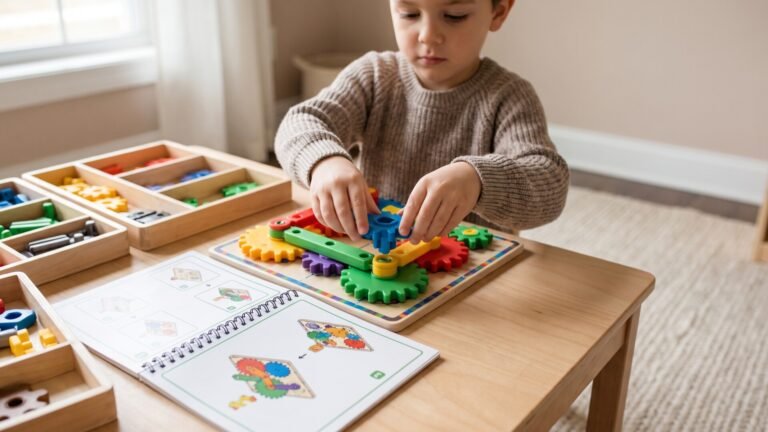
Open-ended play is play without a predetermined goal. It doesn’t have one “right” way to use the toy or achieve a specific outcome. Instead, your child can:
- Build, tear down, and rebuild structures
- Invent characters, worlds, and stories
- Experiment with cause-and-effect
- Combine multiple toys in new ways
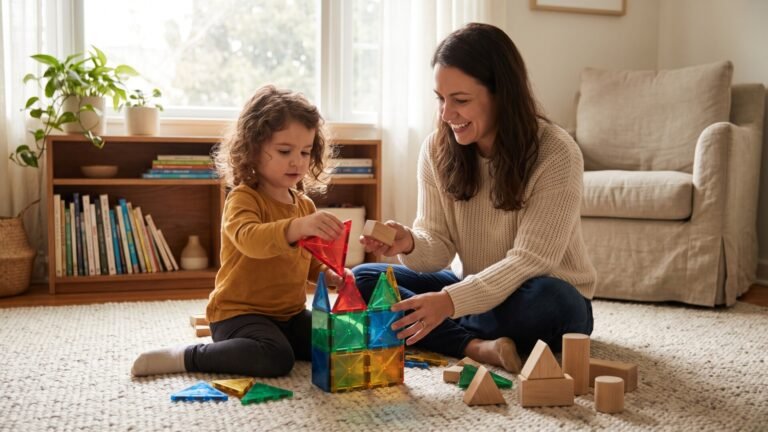
For example, a set of LEGO Duplo bricks can become a castle, a rocket ship, or a grocery store. A set of Magna-Tiles can form towers, pyramids, or a pretend ice palace. There’s no single correct use—your child decides what happens.
As a parent, witnessing this creative independence can be as rewarding as the learning itself.
Why Open-Ended Play Works
The science behind open-ended play shows that it engages multiple areas of the brain simultaneously:
- Cognitive Development
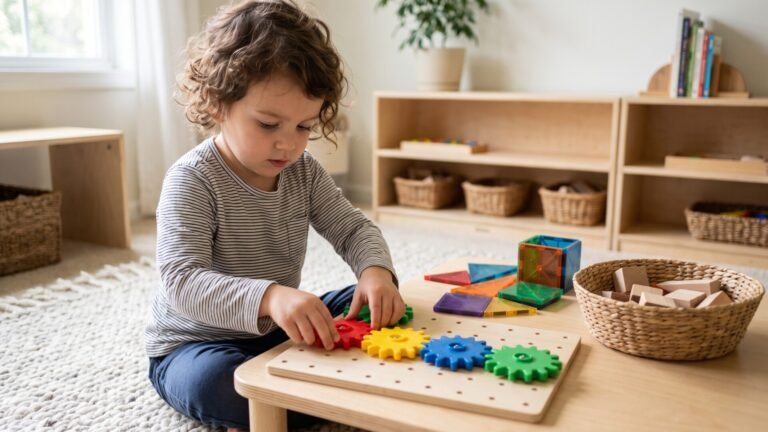
When your child manipulates blocks, sorts shapes, or mixes materials, they’re learning about spatial reasoning, problem-solving, and logic. For instance, stacking wooden blocks teaches balance and weight distribution. - Language Skills
Open-ended play encourages storytelling. If your child is building a zoo with Schleich animal figures, they naturally use descriptive words, narrate actions, and ask questions. - Social and Emotional Growth
Playing alongside siblings or friends in an unstructured way teaches negotiation, empathy, and patience. For example, when two kids co-build a city with PicassoTiles, they must communicate ideas and compromise on design choices. - Creativity and Imagination
Open-ended play sparks imagination because there are no rules to constrain your child. A cardboard box could become a spaceship, a puppet stage, or a bakery—your child decides. - Executive Function
Skills like planning, focus, and self-regulation are strengthened when your child sets goals and figures out how to achieve them independently.
Benefits You’ll See at Home
Here’s what you might notice when you give your child space for open-ended play:
- Longer attention spans because they are deeply engaged in creative problem-solving
- Enhanced resilience as they experiment, fail, and try again without being “wrong”
- Greater curiosity because play encourages asking questions and exploring possibilities
- Stronger fine motor skills as your child manipulates blocks, pegs, or dough
- Improved social skills through cooperative play and negotiation
Even 15–30 minutes of daily open-ended play can provide these benefits.
Choosing the Right Toys
Not all toys are created equal when it comes to open-ended play. You want toys that are flexible, safe, and encourage creativity.
1. Building & Construction Toys
- LEGO Duplo / Classic LEGO: Encourage spatial reasoning, pattern recognition, and storytelling. You can build towers, vehicles, or entire cities.
- Magna-Tiles or PicassoTiles: Transparent magnetic tiles let your child experiment with shapes, symmetry, and 3D structures.
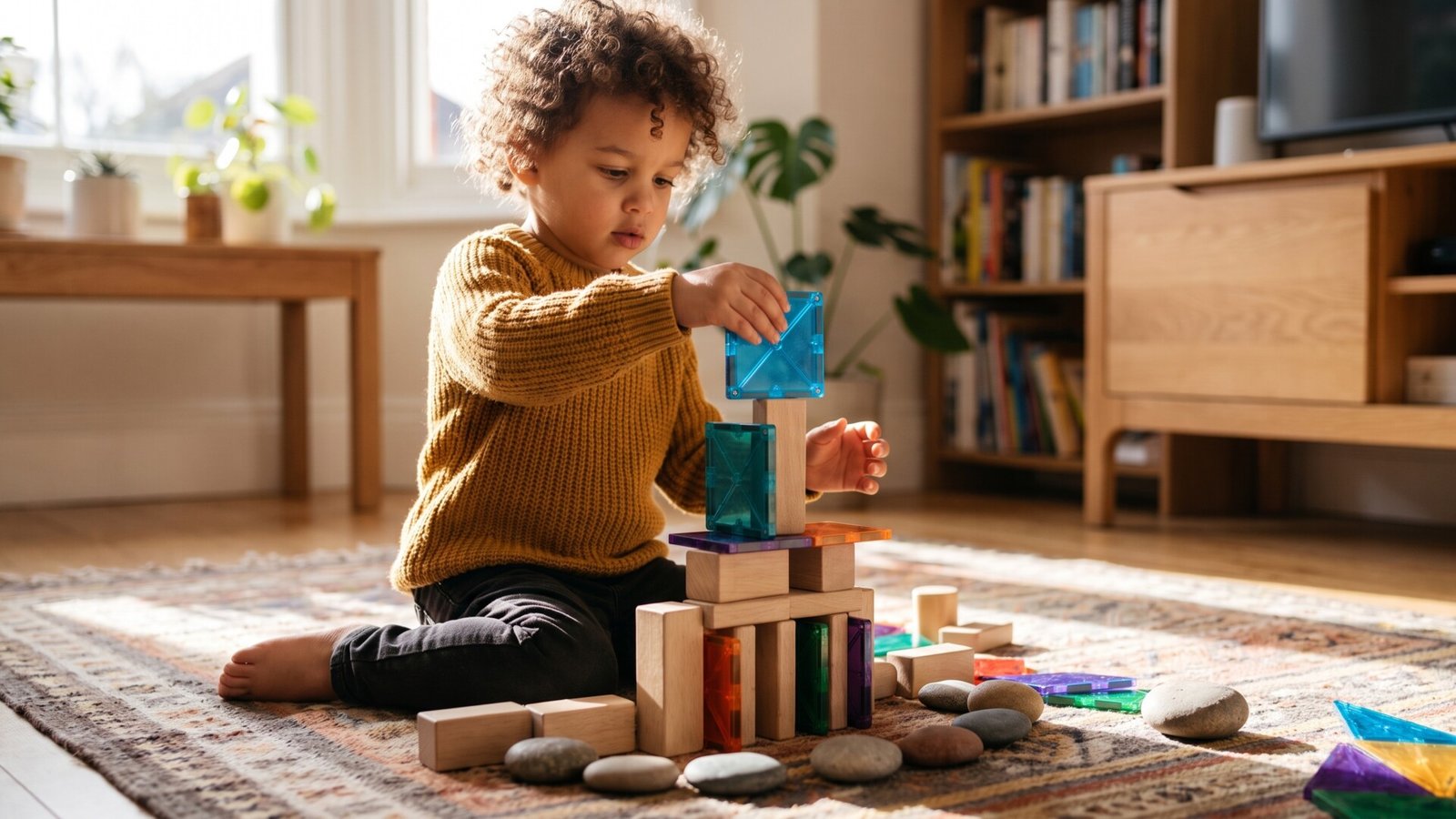
- Wooden Blocks: Classic, timeless, and open to endless configurations. They teach balance, geometry, and hand-eye coordination.
Rotate sets occasionally to spark new ideas and prevent boredom.
2. Pretend Play & Role-Playing Toys
- Play Kitchens & Food Sets: Encourage narrative language, social skills, and problem-solving. Pretend cooking teaches planning and sequencing.
- Dollhouses and Figurines (Melissa & Doug, Schleich): Support storytelling, empathy, and social interaction. Children can invent entire narratives for their characters.
- Dress-Up Costumes: Whether a pirate, doctor, or superhero, your child practices role-taking, creativity, and language development.
Join the play occasionally to model rich language and cooperative problem-solving, but let your child lead the story.
3. Arts, Crafts, and Loose Parts
- Play Dough or Kinetic Sand: Excellent for fine motor development and tactile exploration. Children can sculpt, roll, and create structures, enhancing both creativity and patience.
- Art Supplies: Watercolors, crayons, and collage materials encourage expression, experimentation, and hand-eye coordination.
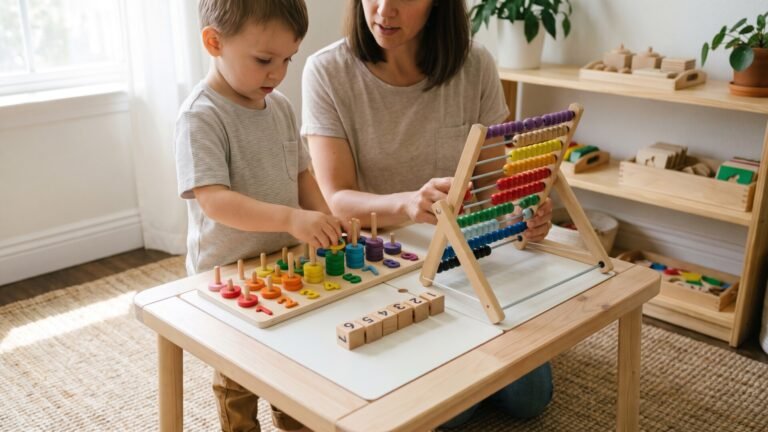
- Loose Parts: Buttons, shells, beads, or natural materials allow children to invent games, patterns, and designs, building math and pattern recognition skills.
Keep materials accessible in bins or trays to make open-ended play easy to start.
4. STEM-Focused Open-Ended Toys
- Magnetic Building Sets (Magna-Tiles, PicassoTiles): Great for exploring magnetism, balance, and architecture.
- LEGO Education Kits or STEM Kits: Offer guided play but still allow creative problem-solving.
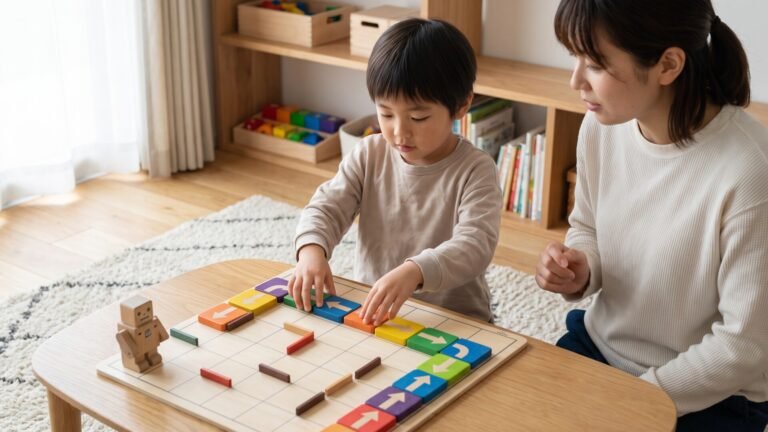
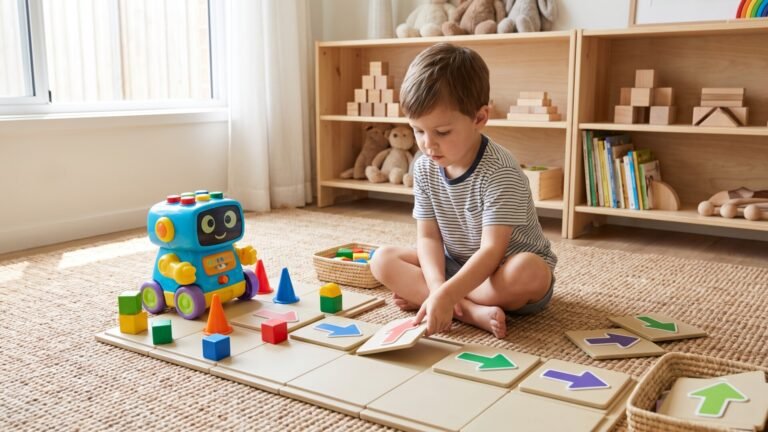
- Coding Toys (Botley 2.0, Code & Go Robot Mouse): Combine hands-on manipulation with early computational thinking.
Don’t worry if your child doesn’t “follow instructions”—the creativity in experimenting often teaches more than following a guide.
Integrating Open-Ended Play into Daily Life
You don’t need hours to make open-ended play part of your child’s routine. Here are practical ways to incorporate it:
- Create a Play Zone: Dedicate a corner or low shelf with toys accessible to your child.
- Limit Structured Toys Temporarily: Rotate toys to keep focus on open-ended options.
- Follow Their Lead: Let your child decide the rules, the story, and the end result.
- Ask Open-Ended Questions: “What happens if you stack another block here?” or “Can you make a new character for your story?”
- Combine Play Styles: Mix building, pretend play, and art for multi-sensory engagement.
- Encourage Outdoor Open-Ended Play: Sand, water, and natural loose parts expand the possibilities for creativity.
Common Concerns Parents Have
“Won’t my child get bored without instructions?”
- Actually, boredom can spark innovation and problem-solving. Open-ended play teaches children to invent solutions independently.
“How do I know they’re learning?”
- Look for signs of planning, trial and error, conversation, storytelling, and experimenting. Every structure they build or story they create is a learning opportunity.
“Isn’t screen time better for educational content?”
- Screens can be educational, but open-ended play engages multiple senses, encourages social interaction, and develops executive function—things screens alone can’t replicate.
Encouraging Open-Ended Play With Multiple Children
If you have siblings or playdates, open-ended toys can be a social learning opportunity:
- Encourage collaborative building projects with LEGO or magnetic tiles.
- Invite children to co-create stories with dolls, puppets, or play kitchens.
- Teach problem-solving and negotiation skills through shared play scenarios.
Even small conflicts, like who gets to place the last block, are opportunities to teach sharing and communication skills.
Making Open-Ended Play a Habit
- Keep Toys Accessible: Low shelves or baskets encourage spontaneous play.
- Rotate Toys: Introducing new materials every few weeks keeps engagement high.
- Set Play Routines: A daily 20–30 minute open-ended play session can be enough.
- Participate Wisely: Join in occasionally, but let your child direct the experience.
- Celebrate Creativity: Encourage storytelling, show interest in creations, and ask questions.
Benefits You’ll Notice as a Parent
- Your child becomes more confident in their ideas.
- Fine motor and cognitive skills improve without “drills.”
- Social and language skills grow naturally through storytelling and collaboration.
- You observe problem-solving, perseverance, and resilience in action.
Open-ended play doesn’t just teach skills—it cultivates curiosity and independence, qualities that will serve your child for a lifetime.
Toys to Support Open-Ended Play
Here are some toys that naturally foster creativity, learning, and independence:
- LEGO Duplo / Classic LEGO: Encourage building and STEM skills
- Magna-Tiles / PicassoTiles: Explore geometry, balance, and architecture
- Melissa & Doug Dollhouses / Figures: Support narrative play and empathy
- Play Kitchens & Food Sets: Promote pretend play and planning
- Kinetic Sand / Play Dough: Enhance tactile exploration and fine motor skills
- Puppet Sets: Boost language development and imaginative storytelling
These toys grow with your child and can be mixed, matched, and rotated to keep play fresh and engaging.
Conclusion
Open-ended play is more than just fun. It’s a scientifically proven way to nurture creativity, problem-solving, social skills, language, and cognitive development. By providing your child with the right toys—like LEGO, Magna-Tiles, dollhouses, or play kitchens—and creating a space for unstructured exploration, you are giving them a foundation for lifelong learning and curiosity.
As a parent, your role is to facilitate, observe, and celebrate. Open-ended play doesn’t just grow your child’s mind—it strengthens your bond as you join in, ask questions, and marvel at their creativity.
With this approach, you’re not just giving your child toys; you’re giving them the tools to explore, invent, and thrive.