Best STEM Building Sets for 8–10 Year Olds: From Robotics to Chemistry
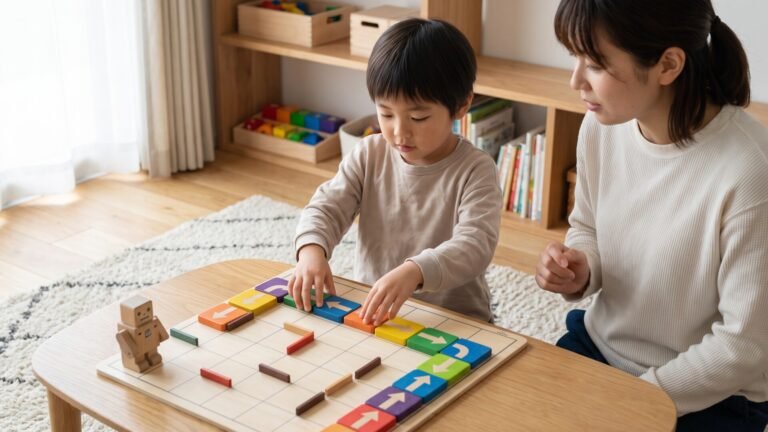
Children between eight and ten are at a wonderful age. They can follow multi‑step instructions, think abstractly, and ask “why” with genuine curiosity. They’re also not yet too cool to get excited about building something that moves, lights up, or explodes (safely) with baking soda. This is the sweet spot for STEM learning.
STEM—science, technology, engineering, and mathematics—isn’t just about preparing kids for future jobs. It’s about teaching them how to think. A good STEM building set encourages problem‑solving, critical thinking, creativity, and hands‑on experimentation. When a child builds a robot that doesn’t work the first time, they learn iteration. When they mix two chemicals and watch them fizz, they learn cause and effect. When they design a bridge that holds weight, they learn engineering principles without a single textbook.
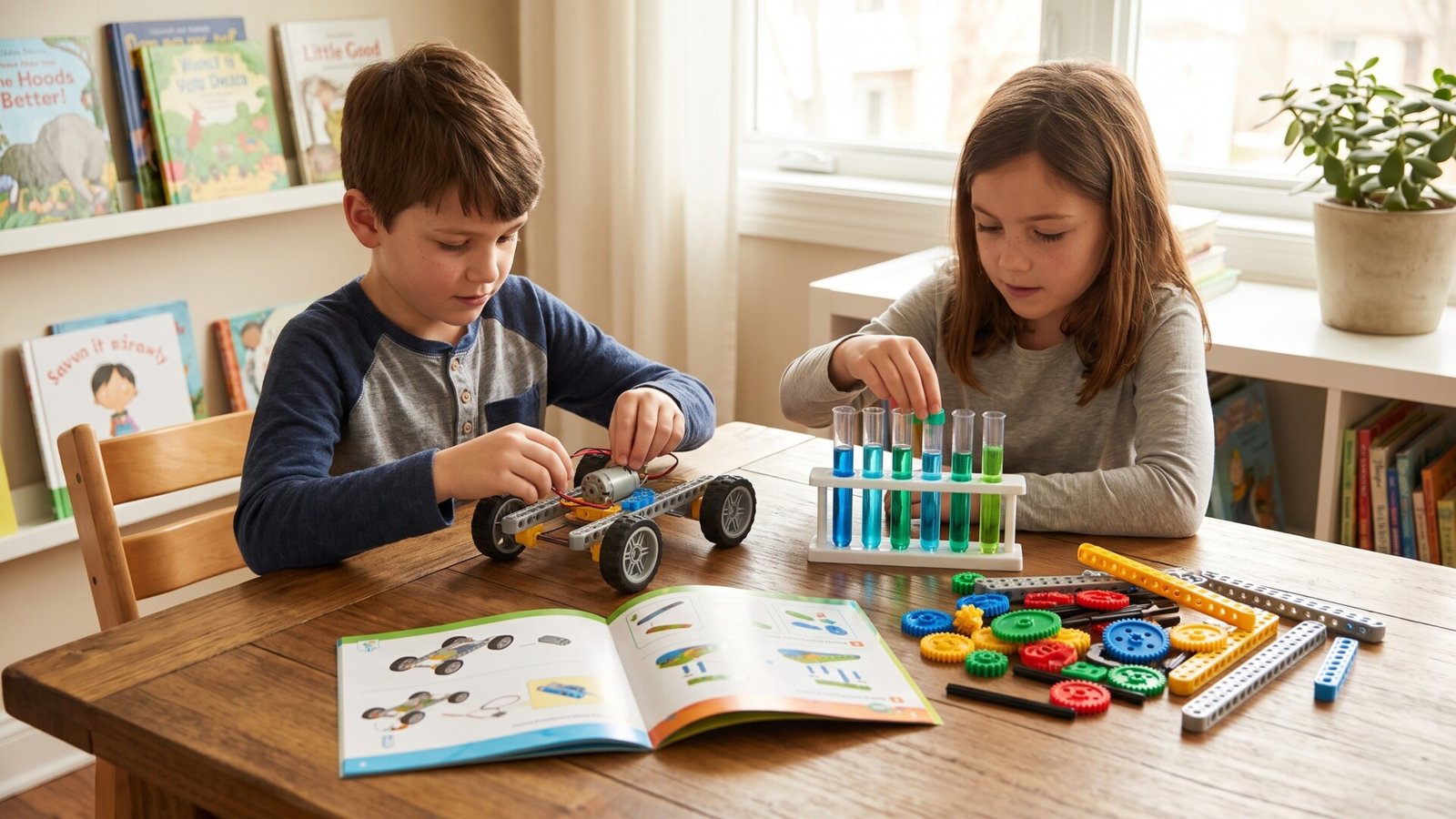
This guide focuses on the best STEM building sets for 8‑to‑10‑year‑olds, covering three key areas: robotics and coding, engineering and mechanical design, and chemistry and science exploration. Many of these sets are available through Amazon, LEGO, and specialized STEM retailers—look for links throughout the article to check current prices and availability.
What to Look for in STEM Building Sets for 8–10 Year Olds
Not every “STEM” toy delivers real learning. Here’s what to prioritise when choosing a set for this age group.
Age‑appropriate complexity – The set should challenge without frustrating. At eight, many children can follow written instructions and work with small parts. By ten, they’re ready for real coding logic and multi‑step experiments. Look for kits labelled 8+ or 10+ and read reviews from parents of similar‑aged kids.
Multi‑disciplinary focus – The best sets blend disciplines. A robotics kit might include basic coding (technology), mechanical assembly (engineering), and sensors that measure light or distance (science). Chemistry sets can introduce basic math through measuring and ratios.
Encouraging independent experimentation – Instructions are fine, but the best sets also invite open‑ended play. “Now build your own robot” or “design a reaction that changes colour” turns a one‑time project into a repeatable learning tool.
Quality and durability – Eight‑to‑ten‑year‑olds aren’t always gentle. Look for sturdy plastic, well‑sealed electronics, and connectors that won’t snap after three uses. LEGO, K’NEX, and Thames & Kosmos have excellent reputations.
Relevant affiliate programs – Many of the toys below are available through LEGO, VTech & LeapFrog, Tenacious Toys, Seedling, Amazon, Target, and Friendly Toy Box.
Top 15 STEM Building Sets for 8–10 Year Olds
2.1 Robotics & Coding (Toys 1–5)
#1 LEGO Education Spike Prime
Skills Targeted: Robotics, coding, problem‑solving
Affiliate Program: LEGO Affiliate
LEGO Education Spike Prime is the gold standard for classroom‑grade robotics at home. It combines colourful LEGO bricks with a programmable hub, sensors (distance, colour, force), and over 600 pieces. Kids build robots, vehicles, or machines, then code them using a simple drag‑and‑drop interface based on Scratch.
What makes Spike Prime special is the depth. A child can start with a “drive forward for 2 seconds” program, then add conditional logic (“if colour sensor sees red, stop”). The set comes with 40+ hours of learning activities, but open‑ended challenges are easy to invent.
Check LEGO Education Spike Prime prices →
#2 Makeblock mBot
Skills Targeted: Coding, engineering, robotics basics
Affiliate Program: Tenacious Toys / Amazon
The Makeblock mBot is one of the most beginner‑friendly robotics kits on the market. It comes as a box of parts that children assemble themselves—screws, wheels, motors, and a main control board. The building process takes about an hour and teaches basic electronics.
Once assembled, kids code the mBot using mBlock, which supports both Scratch‑based blocks and real Python. They can make the robot follow a line, avoid obstacles, or even play music. The price point (around $100) is reasonable for a robot that can be reprogrammed hundreds of times.
Shop Makeblock mBot on Amazon →
#3 VTech Robotics Workshop
Skills Targeted: Logic, STEM fundamentals, simple robotics
Affiliate Program: VTech / LeapFrog
For families who want an affordable, no‑soldering introduction to robotics, VTech’s Robotics Workshop is a solid choice. It includes over 300 pieces that snap together to build three different motorised robots: a wheeled rover, a mechanical arm, and a walking bot.
The coding is done through a simple remote or a tablet app, focusing on sequences, loops, and conditional commands. While not as deep as LEGO Spike, it’s perfect for an eight‑year‑old’s first taste of robotics. The instructions are colour‑coded and step‑by‑step, building confidence early.
Explore VTech Robotics Workshop →
#4 Sphero BOLT
Skills Targeted: Programming, experimentation, sensor use
Affiliate Program: Amazon / Target
Sphero BOLT is a robotic ball that rolls, glows, and reacts to its environment. Kids program it using Sphero Edu, an app that scales from drawing paths (no code) to Scratch blocks to real JavaScript. The BOLT has a programmable 8×8 LED matrix, infrared sensors, and a compass.
What makes it great for 8–10 year olds is the instant feedback. Draw a square on the screen, and the ball rolls a square on the floor. Add a loop, and it does it three times. The “light sensor” can make the ball glow red in a dark room. It’s less about building hardware and more about pure coding and experimentation.
Get Sphero BOLT at Target →
#5 Arduino Starter Kit
Skills Targeted: Electronics, coding, prototyping
Affiliate Program: Amazon / Friendly Toy Box
Arduino is the real thing—the same open‑source electronics platform used by engineers and hobbyists. The official starter kit includes an Arduino Uno board, breadboard, LEDs, resistors, sensors, motors, and a 170‑page project book.
For a motivated nine‑ or ten‑year‑old (with adult help), this is a gateway to understanding how computers talk to the physical world. Projects include a light‑sensitive nightlight, a temperature‑displaying thermostat, and a motorised pinwheel. It requires reading and patience, but the payoff is enormous.
Check Arduino Starter Kit on Amazon →
Engineering & Mechanical Sets (Toys 6–10)
#6 K’NEX STEM Explorations
Skills Targeted: Structural engineering, mechanics, gear systems
Affiliate Program: Amazon / Ryder Toys
K’NEX is often overshadowed by LEGO, but for pure mechanical learning, it’s outstanding. The STEM Explorations series includes sets for building working vehicles, cranes, and bridges. Unlike LEGO, K’NEX pieces snap in multiple directions, allowing realistic trusses and moving joints.
Each set comes with a booklet explaining the science behind the build—how gears multiply torque, why a suspension bridge works, or how a wheel and axle reduce friction. Kids can then modify designs to test their own ideas. Great for hands‑on learners who want to see physics in action.
Shop K’NEX STEM sets on Amazon →
#7 LEGO Technic Kits
Skills Targeted: Mechanical design, problem‑solving, gear trains
Affiliate Program: LEGO Affiliate
LEGO Technic is the older sibling of standard LEGO. It uses beams, pins, gears, and sometimes pneumatic cylinders or electric motors. Kids build realistic mechanisms like steering systems, suspension, and sequential gearboxes.
The sets range from small car models ($20) to massive cranes and excavators ($200+). For an eight‑to‑ten‑year‑old, a medium‑sized Technic set (300–600 pieces) provides weeks of focused building. The instruction books teach patience and attention to detail, and the finished model is genuinely impressive.
Explore LEGO Technic kits →
#8 Engino STEM Building Kits
Skills Targeted: Physics, mechanics, structural engineering
Affiliate Program: Seedling / Amazon
Engino kits are less famous but exceptionally well designed. Each set focuses on a specific principle—levers, pulleys, inclined planes, or gears. The plastic pieces snap together tightly, and the included activity book guides children through experiments: “How many grams can this lever lift?” “Does a longer ramp make the car go faster or slower?”
Engino also offers multi‑model kits, where one box of parts can build up to 16 different machines. That kind of flexibility encourages experimentation and reuse. A great choice for children who love taking things apart to see how they work.
Find Engino STEM kits at Seedling →
#9 SmartLab Engineering Lab
Skills Targeted: STEM experiments, critical thinking, simple machines
Affiliate Program: Seedling / Party Toyz
SmartLab’s Engineering Lab is a complete workshop in a box. It comes with a motor, gears, pulleys, axles, and an illustrated 24‑page book that walks through 20 experiments. Kids build a flagpole with a pulley, a crane with a crank, and a moving drawbridge.
The experiments are designed to be done independently, with questions that prompt thinking: “What happens if you swap the small gear for a larger one?” It’s less flashy than robotics but very effective at teaching mechanical principles. Perfect for a rainy afternoon.
Shop SmartLab Engineering Lab →
#10 Gears! Gears! Gears!
Skills Targeted: Mechanical thinking, creativity, cause‑and‑effect
Affiliate Program: Melissa & Doug / Amazon
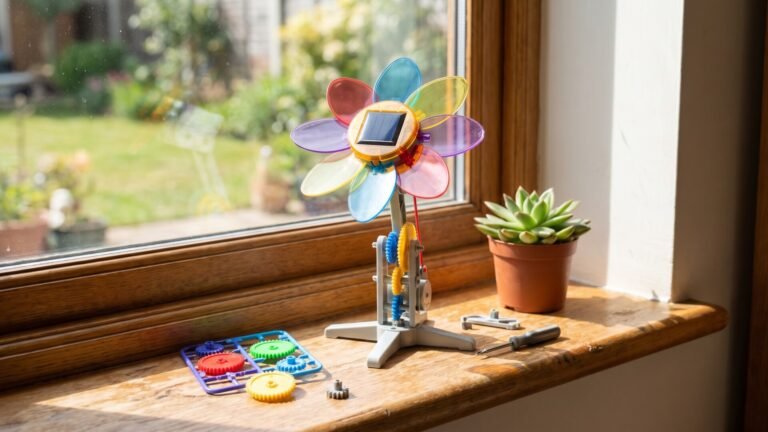
This set from Learning Resources (often sold through Melissa & Doug) is pure gear play. It includes colourful plastic gears, cranks, connectors, and a baseplate. Kids build their own gear systems, then turn the crank and watch the whole chain spin.
While simpler than other kits, it’s excellent for 8‑year‑olds who need a gentle start. They can experiment with gear ratios: a big gear turning a small gear spins faster; two gears of the same size turn at the same speed. The open‑ended building also supports creativity—you can make a gear‑powered dragon or a factory assembly line.
Check Gears! Gears! Gears! on Amazon →
Chemistry & Science Exploration (Toys 11–15)
#11 National Geographic Chemistry Lab
Skills Targeted: Chemical reactions, experimentation, observation
Affiliate Program: Amazon / Target
National Geographic’s Chemistry Lab is a great entry point for hands‑on science. It comes with test tubes, beakers, a pipette, safety goggles, and a range of chemicals (baking soda‑based, safe). The 25 experiments include creating a foaming reaction, growing crystals, and testing pH with cabbage juice.
The instructions are clear and colourful, and each experiment explains the “why” in simple language. The kit also includes a bonus experiment guide with 10 more activities using household items. A solid choice for the child who asks “what happens if I mix this with that?”
Buy National Geographic Chemistry Lab at Target →
#12 Thames & Kosmos Science Kits
Skills Targeted: Physics and chemistry, structured experimentation
Affiliate Program: Tenacious Toys / Amazon
Thames & Kosmos is a premium brand for science kits. Their Chem C1000 or Chem 2000 sets are excellent for this age range. They include real lab equipment (test tubes, stands, burner) and a detailed manual with 125+ experiments. Topics include acids and bases, chromatography, electrochemical reactions, and crystal growing.
The quality is outstanding—glass beakers (with supervision), stainless steel tools, and professional‑grade instructions. A nine‑year‑old can work through the book methodically, building real lab skills. The price is higher than average, but the set can be used for years.
Explore Thames & Kosmos at Tenacious Toys →
#13 SmartLab Chemistry Set
Skills Targeted: Lab skills, safety in science, chemical reactions
Affiliate Program: Seedling / Amazon
SmartLab’s Chemistry Set is designed for kids who want to feel like real scientists. It includes a complete lab station with a test tube rack, beakers, a funnel, a pipette, and a comprehensive manual. The 20+ experiments cover everything from making a “lava lamp” (oil, water, and effervescent tablets) to writing secret messages with pH indicators.
What sets this apart is the emphasis on safety and procedure—the manual includes a lab safety guide and encourages note‑taking. It’s a wonderful way to teach the scientific method without it feeling like school.
Shop SmartLab Chemistry Set →
#14 Snap Circuits Jr.
Skills Targeted: Electronics, problem‑solving, circuit design
Affiliate Program: Amazon / Friendly Toy Box
Snap Circuits is a classic for a reason. Instead of soldering or breadboards, components snap onto a plastic grid like puzzle pieces. Kids can build over 100 projects: a flying saucer, a doorbell, a light‑sensitive alarm, a radio, and more.
For an 8‑to‑10‑year‑old, Snap Circuits Jr. (100+ projects) is the perfect starting point. The colour‑coded pieces and easy‑to‑follow diagrams teach how electricity flows, what a resistor does, and why a capacitor stores energy. No prior knowledge needed. It’s also endlessly expandable with add‑on kits for sound, motion, or computer control.
Get Snap Circuits Jr. on Amazon →
#15 LittleBits STEM Kit
Skills Targeted: Electronics, creative building, prototyping
Affiliate Program: Amazon / LEGO
LittleBits uses colour‑coded magnetic modules that snap together to create circuits. Each bit has a function: power, input (button, sensor), output (light, motor, buzzer), and logic (wire, branch). No soldering, no wiring—just magnetically connect and go.
The LittleBits Base Inventor Kit includes 8 bits and 10 accessories, plus a free app with step‑by‑step tutorials and open‑ended challenges. Kids can build a noise‑activated alarm, a remote‑controlled car, or a game controller. The kits are compatible with LEGO, so they can attach bits to LEGO creations. It’s a fantastic introduction to electronics for creative kids who might be intimidated by Arduino.
Browse LittleBits STEM kits →
Comparison Table of the 15 STEM Building Sets
| Toy | Best For | Type | STEM Focus | Price Range | Affiliate Program |
|---|---|---|---|---|---|
| LEGO Education Spike Prime | Robotics | Kit | Coding/Engineering | $300–$350 | LEGO Affiliate |
| Makeblock mBot | Robotics | Kit | Coding/Programming | $100–$150 | Tenacious Toys / Amazon |
| VTech Robotics Workshop | Robotics | Kit | Logic/Problem‑Solving | $50–$80 | VTech / LeapFrog |
| Sphero BOLT | Coding | Robot | Programming/Experimentation | $120–$180 | Amazon / Target |
| Arduino Starter Kit | Electronics | Kit | Coding/Prototyping | $70–$100 | Amazon / Friendly Toy Box |
| K’NEX STEM Explorations | Mechanical | Kit | Engineering/Mechanics | $40–$60 | Amazon / Ryder Toys |
| LEGO Technic Kits | Mechanical | Kit | Mechanical Design | $80–$200 | LEGO Affiliate |
| Engino STEM Building Kits | Mechanical | Kit | Physics/Engineering | $50–$100 | Seedling / Amazon |
| SmartLab Engineering Lab | Mechanical | Kit | STEM Experiments | $60–$90 | Seedling / Party Toyz |
| Gears! Gears! Gears! | Mechanical | Toy | Mechanical Thinking | $30–$50 | Melissa & Doug / Amazon |
| National Geographic Chemistry Lab | Chemistry | Kit | Chemical Reactions | $40–$70 | Amazon / Target |
| Thames & Kosmos Science Kits | Chemistry | Kit | Physics/Chemistry | $50–$100 | Tenacious Toys / Amazon |
| SmartLab Chemistry Set | Chemistry | Kit | Lab Skills | $35–$60 | Seedling / Amazon |
| Snap Circuits Jr. | Electronics | Kit | Problem‑Solving | $25–$45 | Amazon / Friendly Toy Box |
| LittleBits STEM Kit | Electronics | Kit | Creative Building | $90–$130 | Amazon / LEGO |
Tips for Maximizing STEM Learning
A great kit is only the start. How you use it makes the difference between a one‑weekend toy and a lasting learning tool.
Encourage independent experimentation – When your child finishes the instruction‑book project, don’t immediately suggest the next one. Ask: “What would happen if you changed the gear ratio?” or “Can you make the robot follow a different coloured line?” The real learning happens when they try their own ideas and fail.
Support creativity without giving answers – If they’re stuck, avoid solving the problem for them. Instead, ask guiding questions: “What do you want the robot to do?” “Which part isn’t working?” “Have you checked the power connection?” This builds resilience.
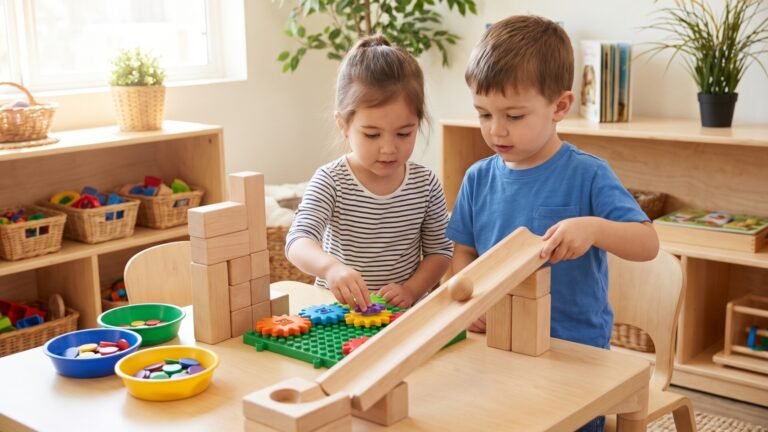
Use building sets to teach teamwork – Pair siblings or friends on a single set. One can read instructions while the other finds pieces. They can design a challenge together, like “build a bridge that holds this weight” or “code the robot to navigate this obstacle course.”
Rotate sets to maintain engagement – You don’t need to buy everything at once. Borrow from a library or swap with other families. Keep one robotics kit active for a month, then switch to chemistry. The pause makes the return feel fresh.
Integrate STEM into everyday learning – After a robotics session, talk about robots in real life (car factories, vacuum cleaners). After a chemistry experiment, point out chemical reactions in cooking (baking soda in pancakes) or cleaning (vinegar and baking soda).
Safety Considerations
Even the best STEM kits require basic safety awareness.
Age‑appropriate supervision – Many kits contain small parts that can be a choking hazard for younger siblings. Keep the workspace clean. For chemistry sets, always supervise the first few experiments, especially any involving heat or reactive substances.
Follow kit instructions carefully – Chemistry and electronics kits often include warnings for good reason. Don’t skip the safety pages. Teach your child to read and follow the manual—it’s a skill in itself.
Encourage safe handling of electronics and lab equipment – Remind them not to touch circuit boards when powered, to wash hands after chemistry experiments, and to wear safety goggles when instructed. Make safety a habit, not a lecture.
Frequently Asked Questions About STEM Building Sets For 8–10 Year Olds
What is the best STEM building set for 8–10‑year‑olds?
It depends on the child’s interest. For robotics and coding, the Makeblock mBot or Sphero BOLT are excellent starters. For mechanical engineering, LEGO Technic or K’NEX are hard to beat. For chemistry, National Geographic or Thames & Kosmos kits are reliable.
Can STEM sets improve problem‑solving skills?
Absolutely. Every time a child troubleshoots why a robot isn’t moving or why a chemical reaction didn’t work as expected, they’re practicing logical reasoning, hypothesis testing, and persistence.
Are robotics kits too complicated for beginners?
No. Kits like mBot, VTech Robotics Workshop, and LEGO Spike Prime are specifically designed for beginners. They include step‑by‑step instructions and block‑based coding that doesn’t require prior experience.
How can I encourage teamwork with STEM building sets?
Set a group challenge. For example: “Build a bridge that can hold 20 pennies using only these K’NEX pieces” or “Program the robot to navigate this maze together.” Assign roles (builder, coder, tester) and rotate.
Do STEM kits grow with children’s skills?
Many do. LEGO Technic and K’NEX have advanced sets. Arduino and LittleBits are expandable with extra sensors and modules. Snap Circuits has add‑on kits. A good starter kit can lead to years of increasing complexity.
Are electronic STEM kits safe for 8–10‑year‑olds?
Yes, when used as directed. Most kits use low voltage (3–9V) and have safety features. Always supervise the first few uses, and teach children to never modify or plug into wall outlets.
Where can I buy STEM building sets online?
Amazon, LEGO, Seedling, Tenacious Toys, VTech, Target, and Friendly Toy Box are all great sources. Use the links in this article to support ToyGuideHub while checking current prices.
Can STEM kits complement school learning?
Definitely. They reinforce concepts in science (chemical reactions, circuits), maths (measurement, ratios), and technology (coding logic). Many teachers even use these kits in classrooms.