Open-Ended Building Toys That Grow With Your Child
The best open-ended building toy is usually not the biggest set or the most expensive one. It is the system your child is still pulling off the shelf in three years, when the box art has been forgotten and the instructions went into the recycling bin the week after Christmas.
That rules out a lot of what gets sold as a building toy. A genuinely grow-with-your-child system has to do four things: let a two-year-old stack something, let a four-year-old build an enclosure, let a seven-year-old plan and revise, and let two siblings of different ages build together without a referee. Most sets clear one of those hurdles and stall at the second.
So the test this article uses is simple. Not “is this a good toy,” but “does it still offer worthwhile play after the novelty of week one has worn off.” Age progression, compatibility, replayability, storage, durability, and cost per year of actual use. That is the whole lens.
What Makes a Building Toy Truly Open-Ended?
Open-ended building toys are systems with multiple possible outcomes rather than one prescribed finished model. A bucket of bricks that can become a house, a boat, or a lumpy abstract sculpture is open-ended. A kit that builds one specific fire truck and then sits on a shelf is not, no matter how many pieces it contains.
The distinction matters because it decides what you are actually buying. A single-outcome kit is a one-time activity with a fixed lifespan. An open-ended system is a platform. You are not buying the fire truck. You are buying the ability to make a fire truck, and then a bridge, and then whatever the child thinks of next Tuesday.
Loose parts do most of the work here. So does compatibility – whether this year’s pieces still connect to next year’s. So does the ability to increase difficulty without buying a whole new category of toy. Piece count is the least important variable, and it is the one the packaging shouts about loudest.
Age range alone is not enough either. Plenty of toys are technically suitable from three to eight and become repetitive at five, because nothing about how the child uses them can change. A toy that grows has to offer a harder question each time the child gets bored, and it has to offer it without an adult standing over the build saying “now try it this way.”
How to Judge Long-Term Value
Here is a repeatable way to score any building toy before you spend money on it. Call it the ToyGuideHub Growth-Span Framework. Rate the system across four stages, and be honest about where it dies.
- First manipulation. Can a toddler pick it up, join it, separate it, and knock it over without help? Blocks and oversized bricks pass easily. Standard LEGO does not.
- Basic construction. Can a preschooler make a wall, a tower, an enclosure, a simple vehicle? This is where magnetic tiles and DUPLO pull ahead, and where loose wooden blocks start to feel limited for some children.
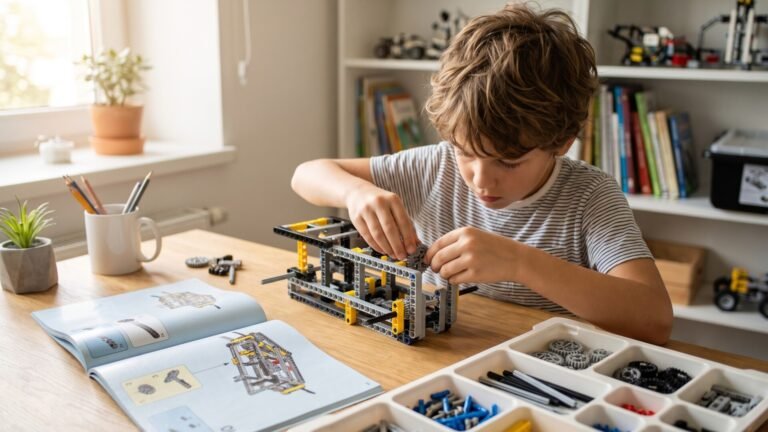
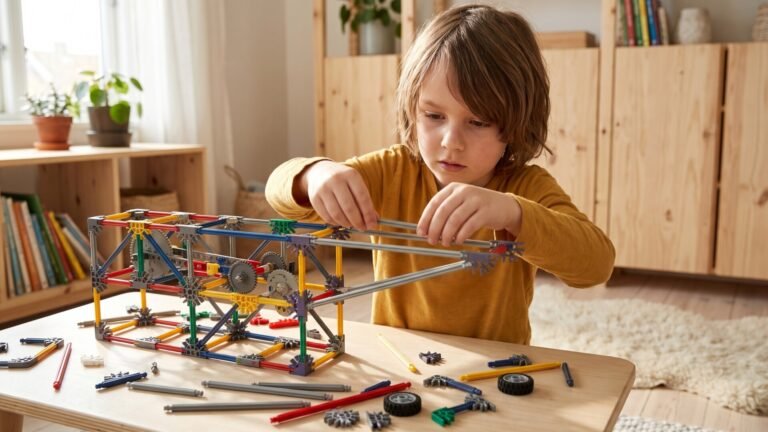
- Intentional design. Can an elementary-age child plan something, build it, find the weak point, and fix it? This is the stage that separates a real system from a pleasant toy. LEGO, KAPLA, and Plus-Plus all live here.
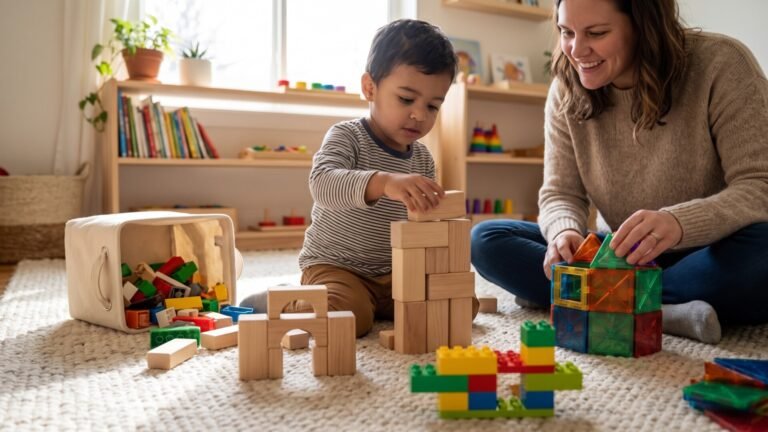
- Advanced or collaborative projects. Can two children work on one build, or can one child attempt something genuinely difficult – an arch, a working ramp, a structure that survives being moved? Magnetic tiles and KAPLA are strong here. Small-piece systems are strong if the child has the patience.
A toy does not have to pass all four stages to be worth buying. It has to be honest about where it stops. A wooden block set that peaks at stage two and costs $25 is a good purchase. A $150 magnetic tile set that also peaks at stage two is a worse one, unless the child genuinely loves it.
Then there are the practical factors that decide whether a toy survives in your house rather than in a storage bin.
- Piece size and safety. Small parts are a choking hazard for children who still mouth things. Follow the manufacturer’s age guidance and check the current packaging for the specific set, since the same brand sells both toddler and small-piece lines.
- Compatibility. Does this connect to what you already own, and to what you might buy later? Compatibility is the single biggest predictor of long-term value.
- Durability. Bricks and tiles crack, magnets can work loose if a piece is damaged, wooden blocks chip. Inspect anything magnetic or small regularly and remove damaged pieces.
- Storage footprint. A 100-piece tile set needs a bin the size of a laundry basket. A 500-piece brick collection needs a divided organizer or it becomes a permanent floor hazard.
- Cleanup time. This is the factor nobody puts on the box. If tidying up takes twenty minutes, the toy gets used less, because you are the one who has to say yes to getting it out.
- Sibling play. Can a four-year-old and a seven-year-old both use it at once without the older one taking over?
On the developmental side, building toys support fine motor practice, spatial reasoning, planning, balance, cause and effect, and early engineering thinking. Cooperative building gives children a reason to negotiate and explain, which is where the language practice comes from. That is a real set of benefits. It is also not a reason to pay $200 for a toy your child will ignore. Plenty of toys marketed as educational are just toys, and that is fine. Buy them because they get played with.
Parent friction is the quiet killer. A toy that requires adult-led instructions, loses small parts constantly, or takes forever to sort has less real-world value than its packaging suggests. If you cannot face getting it out on a Tuesday evening, it does not matter how good it is.
Best Open-Ended Building Toys That Grow With Children
| Product | Approximate Price | Best Growth Stage | Long-Term Strength | Space Demand | Best For |
|---|---|---|---|---|---|
| LEGO DUPLO Classic Brick Box | $35-$55 | Toddler to preschool | Strong transition into LEGO | Moderate | First brick system |
| LEGO Classic Large Creative Brick Box | $45-$60 | Preschool to elementary | Very strong | Moderate | Broad creative building |
| Magna-Tiles Classic 100-Piece Set | $120-$150 | Preschool to early elementary | Strong with expansion | Moderate | Magnetic construction |
| Connetix Tiles Creative Pack | $130-$180 | Preschool to elementary | Strong for large builds | Moderate to high | Complex magnetic builds |
| Melissa & Doug Wooden Building Blocks | $15-$35 | Toddler to early elementary | Good foundational play | Low to moderate | Budget-conscious families |
| KAPLA Wooden Building Planks | $50-$100+ | Preschool to older children | Excellent for patient builders | Moderate | Precision and architecture |
| Plus-Plus BIG or Standard | $15-$50 | Preschool to older children | Good for compact detail | Low | Travel and small spaces |
Prices move, and the larger sets move most. Treat these as approximate and check current listings before you commit.
LEGO DUPLO Classic Brick Box
Age range: Typically suitable for toddlers and preschoolers. Check the current packaging for the exact guidance, since DUPLO and standard LEGO are not interchangeable for a child who still mouths pieces.
Key features: Oversized interlocking bricks, simple shapes, wheels, and a handful of special pieces. Loud colors. No instructions worth following.
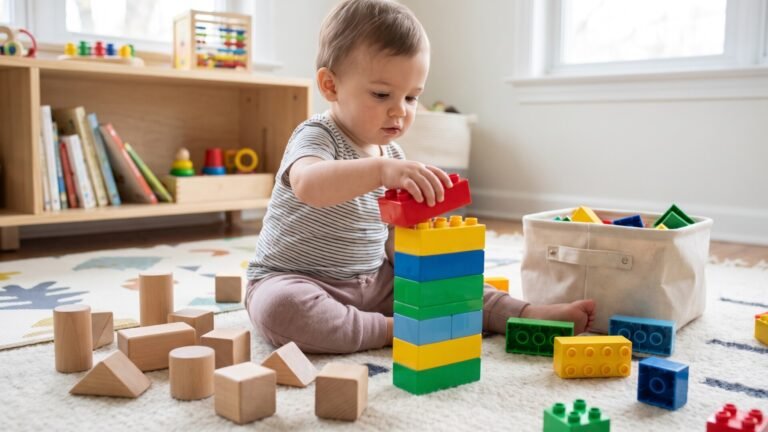
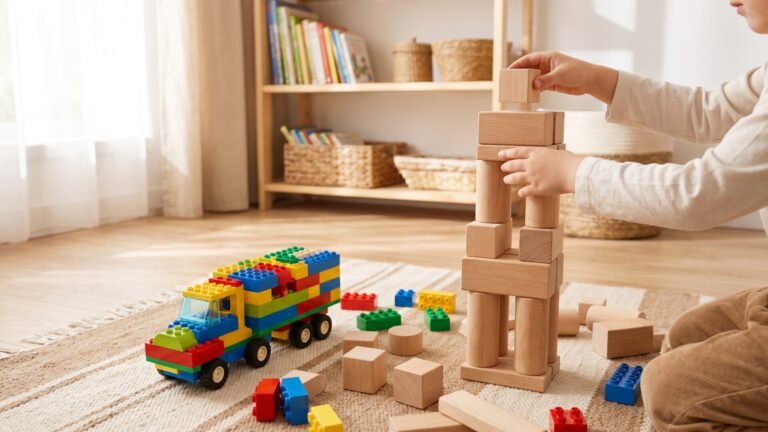
Why it grows: Early play is stacking, joining, separating, and knocking down. Then houses, vehicles, animal enclosures, and story settings. Then, crucially, a transition into standard LEGO, because the two systems connect. That handoff is the whole point.
The verdict: The best entry point for families who expect their child to stay interested in brick building. It is less architecturally flexible than a big standard-brick box, and the pieces take up more room than you think, but the upgrade path is built in.
Best for: Toddlers who will plausibly keep building.
Pros: Easy to handle; very durable; natural transition to standard LEGO.
Cons: Bulky storage; simpler creative ceiling at first; themed DUPLO sets cost more than plain bricks.
[Affiliate: Check current pricing on LEGO DUPLO]
Melissa & Doug Wooden Building Blocks
Age range: Commonly aimed at toddlers and preschoolers. Supervise, and follow the packaging guidance for the specific set.
Key features: Solid wooden blocks in basic shapes and sizes, usually in a box or a cloth bag.
Why it grows: Toddlers stack and knock down. Preschoolers use the same shapes for bridges, roads, houses, balancing challenges, and pretend-play towns. The blocks do not change, but the child’s intentions do, which is exactly what open-ended means.
The verdict: The sensible budget pick, and the unexpected win of this list. It will not give you the connection-based complexity of LEGO or magnetic tiles. It does not need to. It gives you a low-friction foundation for spatial experimentation for the price of a takeaway dinner.
Best for: First blocks, open-ended toddler play, tight budgets.
Pros: Simple, durable, affordable, useful across several kinds of play.
Cons: No connection system; limited for intricate builds; loud on hard floors, which matters at 6am.
[Affiliate: Check current pricing on Melissa & Doug blocks]
Magna-Tiles Classic 100-Piece Set
Age range: Commonly intended for preschool and older. If there is a younger sibling in the house, check the small-part and magnet guidance on the packaging.
Key features: Magnetic geometric tiles that snap together fast into flat designs and three-dimensional structures.
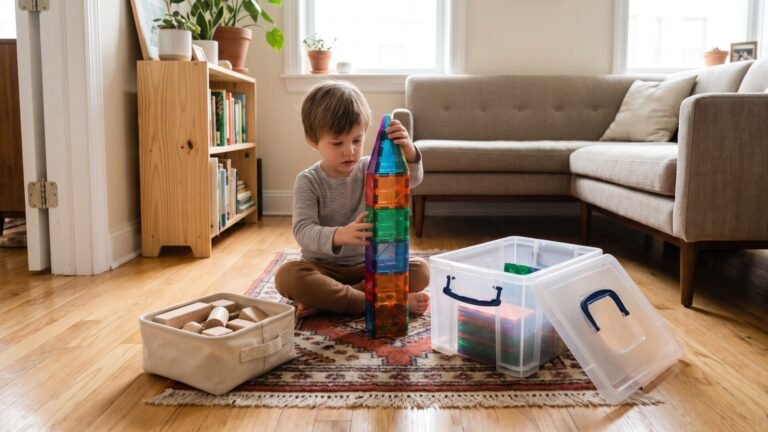
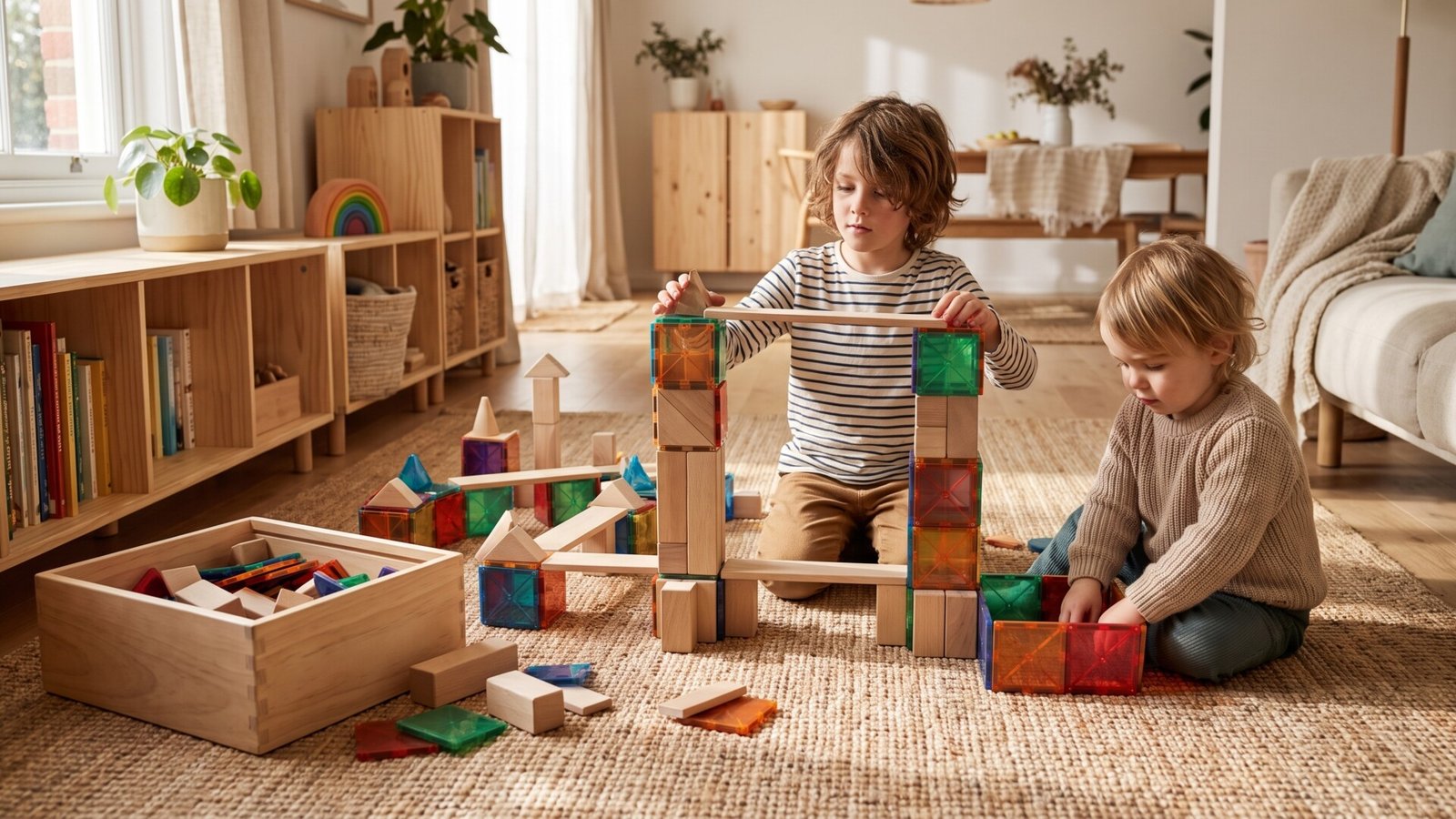
Why it grows: Younger children explore attraction, stacking, color, and enclosure-building. Older children build towers, houses, vehicles, and – with compatible accessories – ramps and marble-run-style structures. Two children can work on one build without either needing fine motor precision.
The verdict: The strongest all-around magnetic tile choice for most families. Its long-term value depends on whether you add pieces over time. A 100-piece set is a starter, not a complete system, and treating it as one is the most common mistake buyers make here.
Best for: Fast construction, siblings building together, children who get frustrated by slow assembly.
Pros: Immediate success; visually satisfying; scales up well.
Cons: High starting price; hungry for floor and shelf space; inspect tiles regularly and remove any damaged piece, because magnets do not belong in a child’s mouth.
[Affiliate: Check current pricing on Magna-Tiles]
Connetix Tiles Creative Pack
Age range: Typically aimed at preschoolers and older. Follow current manufacturer guidance for the specific pack.
Key features: Magnetic tiles in a wider range of shapes, with larger construction potential depending on the pack you choose.
Why it grows: The system rewards children moving from flat patterns into tall structures, symmetry, ramps, and ambitious group builds. The extra shapes matter more than the extra tiles once a child starts designing on purpose.
The verdict: A premium option for families who expect large-scale construction and are willing to keep expanding. It is not automatically a better first purchase than Magna-Tiles. The right answer depends on tile compatibility with what you own, floor space, and how big your child likes to build. If you are weighing the two, our Magna-Tiles vs. Connetix comparison covers the trade-offs properly.
Best for: Older preschoolers and elementary-age children who build big.
Pros: Supports substantial structures; strong visual feedback; good for group construction.
Cons: Premium pricing; large collections need dedicated storage; tall builds fall over and that is genuinely upsetting at bedtime.
[Affiliate: Check current pricing on Connetix]
LEGO Classic Large Creative Brick Box
Age range: Generally suited to preschool-age children and older, depending on whether the child can manage standard small pieces safely.
Key features: Assorted standard bricks, plates, wheels, eyes, and basic elements for free building. No licensed characters, no single model to finish.
Why it grows: Simple towers and color sorting first, then recognizable objects, then moving models, then deliberate engineering challenges. The same box supports all of it because nothing in it is tied to one outcome.
The verdict: The best overall pick for long-term creative building once the child is ready for standard-size pieces. Unlike a themed kit, a creative brick box does not become obsolete the moment the instructions are done. It also plugs into the enormous LEGO ecosystem, which means every future purchase adds to this one.
Best for: One versatile system from preschool through elementary school.
Pros: Enormous creative range; excellent replayability; strong compatibility.
Cons: Small pieces need organized storage; free building can intimidate a child used to instructions; you will find pieces with your feet.
[Affiliate: Check current pricing on LEGO Classic]
KAPLA Wooden Building Planks
Age range: Often most rewarding for preschoolers and older children who can handle repeated trial and error without losing interest.
Key features: Uniform wooden planks that rely on balance and friction. No connectors, no magnets, no snapping. If it stands, it stands because the child got it right.
Why it grows: Rows, towers, and simple bridges first. Then arches, animals, buildings, patterns, and collaborative architectural projects. The difficulty is the feature – the same planks that frustrate a four-year-old keep a ten-year-old interested.
The verdict: A specialist choice with exceptional replayability for patient children. It is less immediately rewarding than magnetic tiles and will genuinely frustrate a child who wants pieces to lock together. That is the trade.
Best for: Patient builders, architecture-minded children, screen-free group projects.
Pros: Deeply open-ended; rewards precision and planning; stays challenging for years.
Cons: Builds collapse easily; heavy to store; a bad first building toy for a child who wants instant results.
[Affiliate: Check current pricing on KAPLA]
Plus-Plus BIG or Standard Plus-Plus
Age range: BIG pieces are intended for younger builders than standard Plus-Plus. Use the current product guidance for the version you buy.
Key features: Repeated cross-shaped pieces that connect into flat mosaics and three-dimensional designs.
Why it grows: Younger children make chains and flat patterns. Older children make pixel art, animals, characters, and detailed models. Standard pieces offer a harder version of the same idea once the child can manage smaller parts.
The verdict: The best compact option, and the one that actually leaves the house. It rewards children who like detail and pattern, and it stores in a shoebox. It is not the pick for large shared floor builds.
Best for: Travel, quiet independent play, pattern-minded children.
Pros: Compact; portable; works flat or in three dimensions.
Cons: Standard pieces need supervision; unsatisfying for big structures; sorting the colors is tedious, and you will be the one doing it.
[Affiliate: Check current pricing on Plus-Plus]
What Most Buyers Get Wrong About “Growing With Your Child”
A wide printed age range does not guarantee meaningful play at every stage. It usually means the manufacturer tested the toy for safety and durability across that span, not that a nine-year-old will find it interesting. Usable for years and genuinely challenging for years are different claims, and only the second one keeps a toy in rotation.
The most expensive mistake is buying a very large set before you know whether your child likes the building method. A 500-piece brick collection bought for a child who turns out to prefer magnetic tiles is $150 of storage problem. A 200-piece collection bought for a child who loves bricks gets expanded voluntarily, because you can see the play happening.
Which leads to the counterintuitive part. A smaller, compatible starter system usually delivers better value than a premium collection. Not because it is cheaper, but because it tells you what to buy next. You learn whether your child builds for twenty minutes or two hours, whether they follow patterns or ignore them, whether they want to build alone or with a sibling. Then you spend the real money on the right thing.
There is also a storage ceiling nobody mentions. Every building system has a piece count past which it stops getting used, because getting it out and putting it away costs more than the play is worth. For most families that ceiling arrives well before the maximum set size. Buy to the ceiling, not past it.
Which Building System Still Makes Sense in Three Years?
This is the part the product pages will not tell you, so here is the honest ownership picture. Run each system through the Growth-Span Framework and look at where it gains and where it dies.
Wooden blocks are the best low-cost foundation and the most quietly reliable. They pass stage one and two easily, offer a decent stage three for a child who likes architecture, and stop there. Three years from now, a $25 block set is probably still in the cupboard and still gets used for roads and ramps by a younger sibling. Cost per year of use is close to unbeatable. It is also the toy most likely to be handed on rather than binned.
Magnetic tiles grow fast and then plateau unless you feed them. A 100-piece set is genuinely useful for years, but the play gets bigger as the collection gets bigger, and that means expansion purchases. Budget for them. The hidden costs are real: a second set, a storage bin, a base plate, maybe a car chassis or a ball run. Add those up and a $130 starter becomes a $250 system. It is still worth it for families who build together, because magnetic tiles are the best social building toy on this list. Two children, one structure, no fine motor advantage either way.
LEGO is the broadest long-term ecosystem, and the only one on this list with a genuine secondhand market. Standard bricks hold value in a way wooden blocks and magnetic tiles do not, which changes the math on a large purchase. The catch is the small pieces. A child who is not ready for them will lose interest fast, and a child who is ready will want more than the starter box within a year. Themed kits are where the money leaks – more on that below.
KAPLA has the highest ceiling and the narrowest audience. For a patient child it stays interesting longer than anything else here, because the challenge scales with ambition rather than with piece count. For an impatient one it is an expensive box of wooden planks. The cost per year is excellent if it lands and terrible if it does not.
Plus-Plus is the compact specialist. It is not a system you build a childhood around, but it is the one that goes in a bag and gets used in a restaurant, a car, and a hotel room. Judged as a travel toy rather than a main system, it is very good value. Judged as a primary building toy, it runs out of road.
The ownership verdict, plainly: LEGO Classic is the strongest general long-term investment once your child can handle standard bricks. Magna-Tiles or Connetix are better if you want rapid, collaborative, large-scale construction and will keep expanding. Wooden blocks are the best low-cost foundation and the safest first purchase. KAPLA is the specialist pick for a child who enjoys precision, and it is worth waiting until you know that about them.
The hidden costs to watch across all of them: expansion packs, replacement pieces for anything lost or damaged, storage bins and organizers, compatible accessories, and themed kits that get built once. None of those are reasons to avoid building toys. They are reasons to buy the starter set first and let the child’s actual behavior decide what comes next.
How to Choose by Child, Home, and Budget
Best Overall for Long-Term Creative Building
The LEGO Classic Large Creative Brick Box is the pick for children ready for standard-size pieces. It accepts every future expansion, it has no single finished model to exhaust, and the secondhand market means a large collection is not money set on fire. If you want one purchase that covers the most years, this is it.
Best for Toddlers and a Clear Upgrade Path
The LEGO DUPLO Classic Brick Box is the right first brick system, specifically because it hands off to standard LEGO later. That compatibility is worth more than any feature on the box. For a fuller picture of what works at this age, see our Best Building Toys for Toddlers.
Best for Fast, Social Construction
Magna-Tiles Classic 100-Piece Set wins for siblings and for children who dislike slow assembly. Magnetic connection means a four-year-old and a seven-year-old can contribute to the same structure, which is not true of most building toys. If you are still deciding between connection methods, our Magnetic Tiles vs. Building Blocks comparison walks through the age-by-age differences.
Best Premium Magnetic Option
Connetix suits families with floor space and a plan to expand. It is the better choice for large, ambitious builds and for children who have outgrown the basic tile shapes. It is not the better first purchase for everyone, and it is worth reading the Connetix vs. Magna-Tiles breakdown before spending premium money.
Best Budget and Small-Space Option
Melissa & Doug Wooden Building Blocks for foundational play at a price that does not require justification. If your child prefers detailed, portable construction, Plus-Plus is the better compact choice. Both fit in a small apartment; see our Best Building Toys for Small Spaces for storage that actually works.
Best for Older, Patient Builders
KAPLA for children who enjoy precision, balance, and redesigning the same structure five times. It pairs well with quiet, focused play – our Quiet Building Toys for Indoor and Independent Play article covers how to set that up – and it is one of the better toys for genuine problem-solving, which we look at in Best Construction Toys for Developing Problem-Solving Skills.
Skip This If: When a Popular Building Toy Is Not Worth It
Large themed construction sets are usually a poor choice for this specific goal. If your child builds the licensed model once, follows the instructions, and then the set goes on a shelf, you paid premium prices for a single afternoon and a lot of small pieces you cannot use for anything else.
Take LEGO sets built around one licensed model as the example. They are not bad toys. They are bad purchases when what you actually want is years of open-ended building. The instructions produce one outcome, the special pieces are hard to reuse, and the price reflects the license rather than the plastic.
If years of use is the priority, buy a creative brick box or a loose-piece collection instead. Same bricks, no script, and every future purchase adds to the pile rather than starting a new one.
The exception is worth naming. A themed set is a good buy for a child who genuinely loves that specific subject and will break the model down and rebuild the pieces into their own designs. You can usually tell which child you have by watching what they do with the last themed set. If it is still assembled on a shelf three months later, stop buying them.
The Verdict
If you want one purchase that covers the most years, buy the LEGO Classic Large Creative Brick Box once your child can safely handle standard pieces. If you are starting with a toddler and want a clear path upward, the LEGO DUPLO Classic Brick Box is the right first step. For fast, social, large-scale building, Magna-Tiles Classic 100-Piece Set is the pick for most families, with Connetix for those who have the space and intend to expand. On a tight budget, Melissa & Doug Wooden Building Blocks do more than their price suggests. Plus-Plus is the one that travels. KAPLA is for the child who likes a hard problem.
That is the whole decision. You do not need to read another comparison, and you do not need the largest set on the shelf. Buy the starter version of whichever system matches how your child already plays, keep the pieces where they can reach them, and add more only when you can see the play outgrowing what you own.
Check current pricing and availability through our recommended partners when you are ready. And if none of these fit your child right now, buying nothing is a reasonable outcome – the right system will still be there next year, and it will be cheaper than the one you would have bought too early. For the full picture across every age and budget, start with our Building and Construction Toys hub.
Frequently Asked Questions About Open-Ended Building Toys
What age is best for open-ended building toys?
Toddlers do best with large, easy-to-handle pieces – wooden blocks and oversized bricks. Preschoolers can move into magnetic tiles and larger construction systems. Elementary-age children can handle standard bricks, detailed systems, and precision building like KAPLA. The useful question is not the minimum age on the box but which stage of the Growth-Span Framework your child is at right now.
Are magnetic tiles or blocks better for long-term use?
Magnetic tiles win on speed and on large-scale, collaborative building. Blocks win on detail, ecosystem, and project variety, and LEGO in particular has a resale market that tiles do not. If your child gets frustrated by slow assembly or you have two children building together, tiles. If your child wants to build specific, detailed things for years, blocks.
Can one building toy really last from toddlerhood to elementary school?
Rarely as a single product. The realistic path is a compatible progression – DUPLO into standard LEGO is the cleanest example – rather than expecting one piece size to suit every stage. Wooden blocks come closest to being a genuine single purchase, but they top out earlier than a brick system does.
How many building pieces does a child actually need?
Fewer than you think, and the right number depends on how your child plays. A manageable starter collection gets used; an overwhelming one gets avoided because getting it out and putting it away is a chore. Start small, watch what actually gets built, and expand along the lines of real play rather than the biggest box on offer.
Are open-ended building toys good for independent play?
Some are better than others. Wooden blocks, Plus-Plus, and KAPLA all work well solo because they do not require a second person or a shared plan. Magnetic tiles and large brick collections tend to pull children together, which is good for siblings and less good if you need twenty quiet minutes. Younger children often still need a prompt or a starting idea.
What should parents do if a child only copies the instruction booklet?
Leave the booklet out of reach for a session and give them a constraint instead: build something that can hold a book, build a house for this toy, build the tallest thing that fits under the table. Constraint prompts work better than open invitations. Do not turn it into a lesson – if they go back to the instructions, that is fine too.
How should open-ended building toys be stored?
Bins for large blocks and magnetic tiles, divided containers for small bricks, and shallow trays or open shelves for anything used daily. The principle is visibility: pieces the child can see get used, and pieces at the bottom of a deep box do not. Keep the most-used shapes accessible and stop apologizing for the rest.