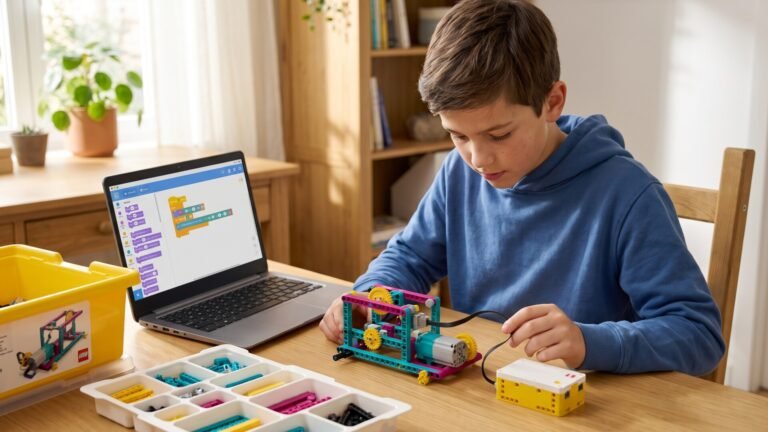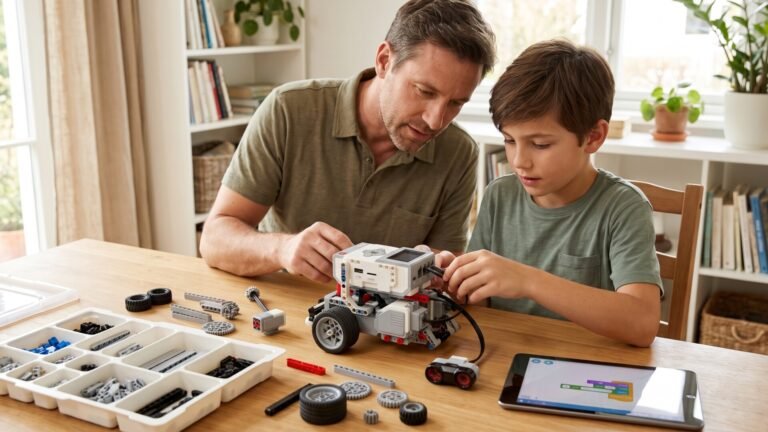
LEGO Smart Play System Review: How the New Sound Bricks Change Building
There’s a moment every LEGO builder knows: the quiet click of bricks joining, the satisfying weight of a completed creation, and the hum of imagination turning a pile of plastic into a star cruiser or a castle. For nearly 50 years, that analog magic has defined LEGO. But in 2026, LEGO is doing something that would have seemed unthinkable just a few years ago: they’re putting a tiny computer inside a standard 2×4 brick.
The LEGO Smart Play System — unveiled at CES 2026 and launched on March 1, 2026 — is the company’s most significant innovation since the minifigure debuted in 1978. Packed with motion sensors, LED lights, a tiny speaker, and a custom‑made silicon chip smaller than a single LEGO stud, the Smart Brick can detect movement, position, and proximity to other smart elements, then respond with real‑time lights and sounds.
But here’s the critical question for LEGO purists and parents alike: Do these reactive sound bricks genuinely enhance creative play, or do they distract from the open‑ended storytelling that makes LEGO special?
In this hands‑on review, I’ll walk you through exactly how the Smart Play System works, break down the top sets available in 2026, weigh the pros and cons of tech‑infused building, and help you decide if this new generation of LEGO is right for your family.
What Is the LEGO Smart Play System?
The Smart Play System is not a single set — it’s a new interactive platform that LEGO calls “the most significant evolution of their play system in nearly 50 years”. At its heart is the Smart Brick: a seemingly ordinary 2×4 brick that contains a custom ASIC chip, motion sensors, an accelerometer, an RGB LED array, a miniature speaker with an onboard sound synthesizer, and wireless charging coils. The technology is so miniaturized that the chip itself is smaller than a single LEGO stud.
But the Smart Brick doesn’t work alone. The system has three core components:
- Smart Brick – The “brain.” It detects movement, tilt, and proximity to other smart elements, then generates lights and sounds in real time.
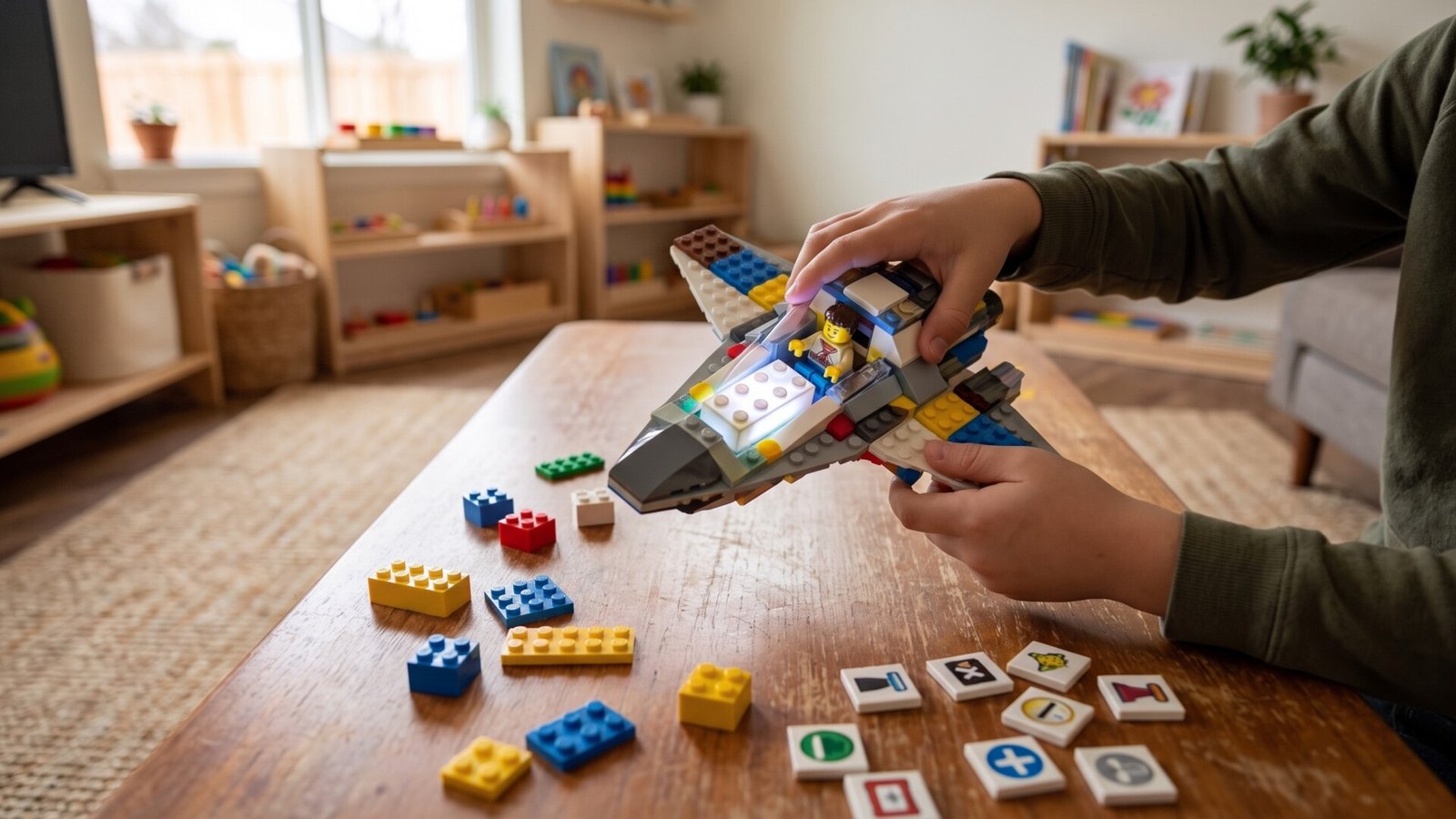
- Smart Tags – 2×2 studless tiles with unique digital IDs. Place a Smart Tag next to the brick, and it tells the brick what “mode” to be in — spaceship, helicopter, creature, or something else entirely. Swap the tag, and the same brick instantly changes its sounds and reactions.
- Smart Minifigures – These figures (which look like standard minifigs but have a tiny tag embedded inside) unlock character‑specific reactions. When a Smart Minifigure is placed near a Smart Brick, the brick responds with appropriate music, voice lines, or sound effects.
Critically, no screens or apps are required. The system uses a proprietary wireless protocol called BrickNet (based on Bluetooth) to allow multiple Smart Bricks to detect each other and operate in tandem. It’s purely physical: you move, tap, tilt, or crash your build, and the brick responds.
Key Features of the Sound Brick Technology
The Smart Brick isn’t just a novelty — it’s genuinely clever technology. Here’s a closer look at what makes it tick.
How Sensors Enable Responsive Play
The brick contains an accelerometer, proximity sensors, and color sensors. This allows it to detect whether it’s upside down, moving fast, being tilted, or stationary. In practice, this means:
- A helicopter build makes whooshing sounds when moved and spinning sounds when its rotor is turned.
- A crashed X‑Wing triggers damage sounds when flipped upside down.
- A birthday cake recognizes when you blow on it and plays a cheer.
Smart Tags as Physical Game Modes
Each Smart Tag tells the brick how to behave. Place a “spaceship” tag inside your build, and the brick emits engine roars and laser blasts. Swap it for an “animal” tag, and the same build might start growling or chirping. The system is designed to be infinitely expandable — LEGO has teased tags that animate toilets, ducks, and other humorous scenarios.
Smart Minifigures Unlock the Story
Characters are the heart of any narrative. Place Darth Vader’s Smart Minifigure next to the brick, and you’ll hear his iconic breathing. Throne Room Palpatine triggers the Imperial March. Knock Luke off his mount, and the brick plays his defeat sound.
Screen‑Free + No Setup
There’s no pairing, no app installation, and no software updates to worry about (firmware is updated via a companion app only when needed, but it’s not required for basic play). This is LEGO’s deliberate response to the over‑saturation of digital toys.
Wireless Charging & Battery Life
The Smart Brick charges inductively on a provided charging pad (similar to an electric toothbrush). Playtime ranges from 40 minutes to a few hours, depending on how active the sensors are. There’s no power button — the brick goes into sleep mode when not in use, and re‑charging is simple.
Why LEGO Is Moving Into Smart Play
LEGO’s history with technology is mixed. Mindstorms (1998) was brilliant for robotics enthusiasts. Hidden Side (2019) required a smartphone app and AR, which felt gimmicky. Super Mario (2020) was fun but relied on an interactive Mario figure. Smart Play is different: the technology is invisible, embedded entirely within the bricks, with no external screens.
The motivation is clear. In a world where kids are increasingly glued to tablets, LEGO wants to keep physical play relevant. They’re also responding to demand for “hybrid play” — toys that use technology to enhance, not replace, hands‑on engagement. Smart Play adds sensory feedback to building, potentially making it more immersive for a generation raised on video games.
Crucially, LEGO has insisted that Smart Play is compatible with existing LEGO bricks. You can still build the old‑fashioned way. The technology is additive, not mandatory.
Best LEGO Smart Play Sets in 2026
LEGO launched Smart Play with eight Star Wars sets, but only three “All‑in‑One” sets include a Smart Brick. The others are “compatible” (they work if you already have a Smart Brick from a starter set). Here are the standouts.
Best Overall: LEGO Star Wars SMART Play: Luke’s Red Five X‑Wing (75423)
Best for: The classic Star Wars fan who wants the core flight experience.
This X‑Wing is the hero ship of the original trilogy. When you insert the Smart Brick, the ship responds to how you fly it: banking triggers whoosh sounds, forward acceleration triggers engine roar, and pulling the trigger button fires laser blasts. Landing on the repair pad triggers refueling sounds. It also comes with a Smart Luke Skywalker, Smart Princess Leia, and an Imperial gun turret with firing pellets.
Key specs: 584 pieces, 1 Smart Brick, 2 Smart Minifigures (Luke, Leia), 2 Smart Tags (X‑Wing / Turret). The X‑Wing and the turret can both fire little pellets at great speed, as well as having in‑built buttons that allow you to play the sound effects as many times as you like.
| Pros | Cons |
|---|---|
| Incredibly responsive flight sounds; tactile trigger button | $99.99 is expensive for a 584‑piece model |
| High replay value for dogfighting play | Smart features only work when brick is charged |
| Works with other Smart Play sets | Some may find the scale smaller than “Ultimate” sets |
Price range: $$ (£89.99 / $99.99) | Check on Amazon | LEGO Affiliate Program
Best Premium Set: LEGO Star Wars SMART Play: Throne Room Duel & A‑Wing (75427)
Best for: Families wanting the deepest interactive experience and two Smart Bricks for the price.
This is the only set in the launch wave that includes two Smart Bricks (one for the Throne Room, one for the A‑Wing). It recreates the final confrontation from Return of the Jedi with a rotating throne, moving mounts for Luke and Vader, and an A‑Wing starfighter. The Throne Room has five distinct interactive functions: Palpatine’s Imperial March, Vader’s breathing, lightsaber duel sounds, defeat noises, and a hidden Easter egg. Received very favourable reviews for its dense play features.
Key specs: 962 pieces, 2 Smart Bricks, 3 Smart Minifigures (Luke, Vader, Palpatine), 5 Smart Tags. One of the highest play values in the lineup.
| Pros | Cons |
|---|---|
| Most interactive functions of any set | High price ($159.99) |
| Two Smart Bricks = more simultaneous play | Requires a large display area |
| Great for sibling play (one on throne, one flying) | The lightsaber duel “mounts” are slightly abstract |
Price range: $$$ | LEGO Store | Amazon
Best Budget Starter Set: LEGO Star Wars SMART Play: Darth Vader’s TIE Fighter (75421)
Best for: First‑time Smart Play buyers who want the lowest entry price.
This is the most affordable way to get a Smart Brick. The TIE Fighter features twin‑ion engine sounds when Vader is in the cockpit, and it includes a small rebel outpost and a fueling station. It has 473 pieces and comes with Smart Darth Vader and a standard rebel trooper.
| Pros | Cons |
|---|---|
| Lowest price for a Smart Brick | Fewer interactive features than the X‑Wing |
| Good introduction to the system | No light or color effects |
| Darth Vader figure is iconic | Smaller scale |
Price range: $ | Amazon | Target
Best Action Playset: LEGO Star Wars SMART Play: Endor Speeder Chase (75428)
Best for: Kids who want active, fast‑paced chase scenes.
This set features a speeder bike vs. Imperial scout trooper chase. It includes a Smart Brick with motion‑sensitive engine sounds and a Smart Scout Trooper minifigure. The set emphasizes speed and collision effects.
| Pros | Cons |
|---|---|
| Great for chase‑oriented storytelling | Smaller piece count (around 350) |
| Scout Trooper is a rare figure | Not as “iconic” as X‑Wing or Throne Room |
Price range: $ | LEGO Affiliate Program
Honorable Mention: LEGO Star Wars SMART Play: Millennial Falcon (Compatible)
Best for: Collectors who already own a Smart Brick.
This is a compatible set — it does not include a Smart Brick. The Falcon is a fantastic model, but you must buy a starter set first to enjoy its interactive sounds. If you already own an X‑Wing, you can swap the Smart Brick into the Falcon.
| Pros | Cons |
|---|---|
| Large, detailed Falcon model | Smart Brick not included (extra cost) |
| Gorgeous display piece | Frustrating to swap bricks between sets |
Price range: $$$ (compatible only)
Smart Play vs Traditional LEGO
| Feature | Smart Play System | Traditional LEGO |
|---|---|---|
| Sound & Light Effects | Real‑time, motion‑activated | None (only imagination) |
| Screen/App Required | No | No |
| Batteries | Rechargeable (wireless) | None |
| Compatibility | Works with all existing LEGO bricks | Standard |
| Price per piece | Higher (due to electronics) | Lower |
| Best For | Immersive storytelling, reactive play | Pure creativity, display, building |
Pros and Cons of LEGO Smart Play System
Pros
- Increases immersion. A child flying an X‑Wing that actually makes engine and laser sounds transforms play from pretend to sensory.
- Encourages storytelling. The smart minifigures and tags add narrative depth — Palpatine’s theme plays when he sits on the throne; Luke’s defeat sound encourages “good vs. evil” scenarios.
- Adds sensory engagement. Flashing lights and sound effects reinforce cause‑and‑effect learning.
- Expands LEGO into STEM learning. The motion sensors introduce basic principles of physics and cause‑and‑effect logic.
- No screens. In an era of digital over‑saturation, this is a deliberate and welcome design choice.
Cons
- Higher price point. The technology adds significant cost. Expect to pay a premium for the interactive features.
- Dependence on batteries. If the Smart Brick isn’t charged, the magic stops. Battery life is 40 minutes to a few hours — enough for a play session but requires regular charging.
- Potential distraction. Some play experts worry that children may focus more on triggering sound effects than on imaginative, open‑ended building.
- Limited sound library per set. Each set has a specific set of sounds tied to its Smart Tags. You can’t program new sounds — it’s not a creative audio tool.
- Not all sets include a Smart Brick. The compatible sets (like the Millennium Falcon) require you to buy a starter set first, which some buyers find frustrating.
Balance Verdict
The Smart Play System works best as an enhancement, not a replacement. For children who already love LEGO, the sounds and lights add a new dimension to play without erasing the core building experience. However, for purists who believe LEGO should be purely silent and analog, it may feel like an unnecessary gimmick.
FAQ
1. What are LEGO Smart Play sound bricks?
Smart Bricks are LEGO bricks (size 2×4) with embedded sensors, lights, a speaker, and a custom chip that detects motion, position, and other Smart elements. They respond to play with real‑time lights and sound effects.
2. Do they work with regular LEGO sets?
Yes. Smart Bricks are fully compatible with all existing LEGO bricks. You can integrate them into your own creations, not just the official Smart Play sets.
3. Are they safe for younger kids?
The recommended age for Smart Play sets is 8+ (the X‑Wing, TIE Fighter) up to 9+ (Throne Room). The electronics are sealed, but the sets contain small parts typical of standard LEGO.
4. Do they require batteries or charging?
Yes, the Smart Brick is rechargeable via a wireless charging pad (included). Battery life is approximately 40 minutes to a few hours depending on usage. There’s no power button — the brick enters sleep mode automatically.
5. Can you turn sound features off?
No — the Smart Brick behaves as designed. If you don’t want sounds, simply don’t include the Smart Brick in your build, or build with traditional bricks.
6. Are Smart Play sets worth the higher price?
For families who value immersive play and are willing to charge the brick regularly, yes. For those on a tight budget or who prefer pure building, traditional sets offer better piece‑to‑price value.
7. Do they reduce creativity compared to normal LEGO?
This is debated. Some experts argue that sound effects can narrow imaginative possibilities (the toy “tells you” what sound to hear). However, others note that children using Smart Play sets invent new stories based on the triggered sounds, expanding rather than limiting creativity.
8. Are Smart Bricks replaceable or repairable?
LEGO sells Smart Bricks only as part of sets. Replacement parts may be available through LEGO Customer Service, but they are not sold separately at retail.
9. Which Smart Play set is best for beginners?
Darth Vader’s TIE Fighter is the most affordable entry point ($69.99). Luke’s X‑Wing offers the best overall play value.
10. Where can I buy LEGO Smart Play sets through affiliate programs?
Available through LEGO Affiliate Program, Amazon, Target, and select retailers.
Conclusion
The LEGO Smart Play System is a genuine evolution in building toys. It adds sensory feedback, enhances storytelling, and pushes LEGO into interactive STEM territory — all without screens or apps. The motion‑activated sounds, light effects, and character‑specific reactions are genuinely engaging, especially for children who thrive on cause‑and‑effect play.
But traditional LEGO still wins for pure, unadulterated creativity and open‑ended building. If your child loves constructing elaborate cities or display pieces, Smart Play might feel restrictive. If they love immersive roleplay — flying a starship that actually sounds like it’s flying — Smart Play is a game‑changer.
Best Overall Pick: LEGO Star Wars SMART Play: Luke’s Red Five X‑Wing — the perfect balance of iconic design and interactive features.
Best Premium Experience: LEGO Star Wars SMART Play: Throne Room Duel & A‑Wing — the deepest storytelling and two Smart Bricks.
Best Budget Entry: LEGO Star Wars SMART Play: Darth Vader’s TIE Fighter — the most affordable way to try the system.
Because the future of LEGO isn’t just what you build — it’s what you hear, react to, and experience while building it.
Check current pricing and availability:
- LEGO Star Wars SMART Play: Luke’s Red Five X‑Wing on Amazon
- LEGO Star Wars SMART Play: Throne Room Duel & A‑Wing via LEGO Affiliate Program
- LEGO Star Wars SMART Play: Darth Vader’s TIE Fighter at Target
- Full LEGO SMART Play Collection at LEGO.com