The Top 5 Simple Science Kits for 4-Year-Olds
By the age of four, many children are bursting with “why” questions. Why does ice melt? Why do plants grow? Why does my shadow follow me? Simple science kits can turn that curiosity into short, hands-on experiments that practise observation, pouring and mixing, following steps, and talking about what happened. They are also an easy way for a parent to join in rather than watch from the sidelines.
This guide covers the top 5 kinds of simple science kits for 4-year-olds: what each one involves, what it encourages, how much adult help to expect, and what to watch for. It also names one real, widely available starter kit (the Learning Resources Primary Science Lab Set) and explains how to judge any other kit you find, because kit names and contents change often.
Quick answer: for a first science kit at this age, choose one with large, simple tools (beakers, droppers, funnels, a magnifier), picture-based instructions, and no small parts you cannot supervise. Plan to sit alongside your child for each experiment.
Why Science Kits Matter for 4-Year-Olds
At four, children are in a good stage for exploration. A kit gives that exploration some structure:
- Observation: Children notice details about color, motion and change.
- Cause and effect: Short experiments show that an action leads to a result.
- Fine motor practice: Using droppers, scoops, tweezers and funnels gives hands a workout.
- Following simple steps: Picture cards invite children to follow a sequence.
- Language: Describing what they see, and predicting what will happen next, builds vocabulary.
Kits are more structured than open-ended sensory bins. They give small, achievable experiments and a quick payoff, which suits a four-year-old’s attention span. Kits are not essential, though: a lot of early science happens in the bath, the kitchen and the garden (see the section on science without kits below).
What to Look for in a Science Kit for a 4-Year-Old
A kit for a preschooler is not the same as one for a school-age child. Keep these points in mind:
- Age grade versus real fit: The age on the box is a safety grade. A kit labelled “3+” is made for children old enough not to mouth small parts, but a kit labelled “5+” or “8+” will probably need heavy adult help or contain parts unsuitable for a four-year-old.
- Safe, simple materials: Look for kits that use kitchen-safe ingredients (water, food coloring, baking soda, vinegar) rather than chemical powders.
- Picture-based instructions: Most four-year-olds cannot read yet, so activity cards need clear images.
- Short experiments: Plan on roughly 10–20 minutes of sustained interest, though this varies a lot between children.
- Reusable tools: Kits where the beakers and droppers can be reused with household ingredients offer much better value than one-shot kits.
- Adult involvement: Expect to supervise closely, set up the experiment, and ask the questions.
A Real Starter Option: Learning Resources Primary Science Lab Set
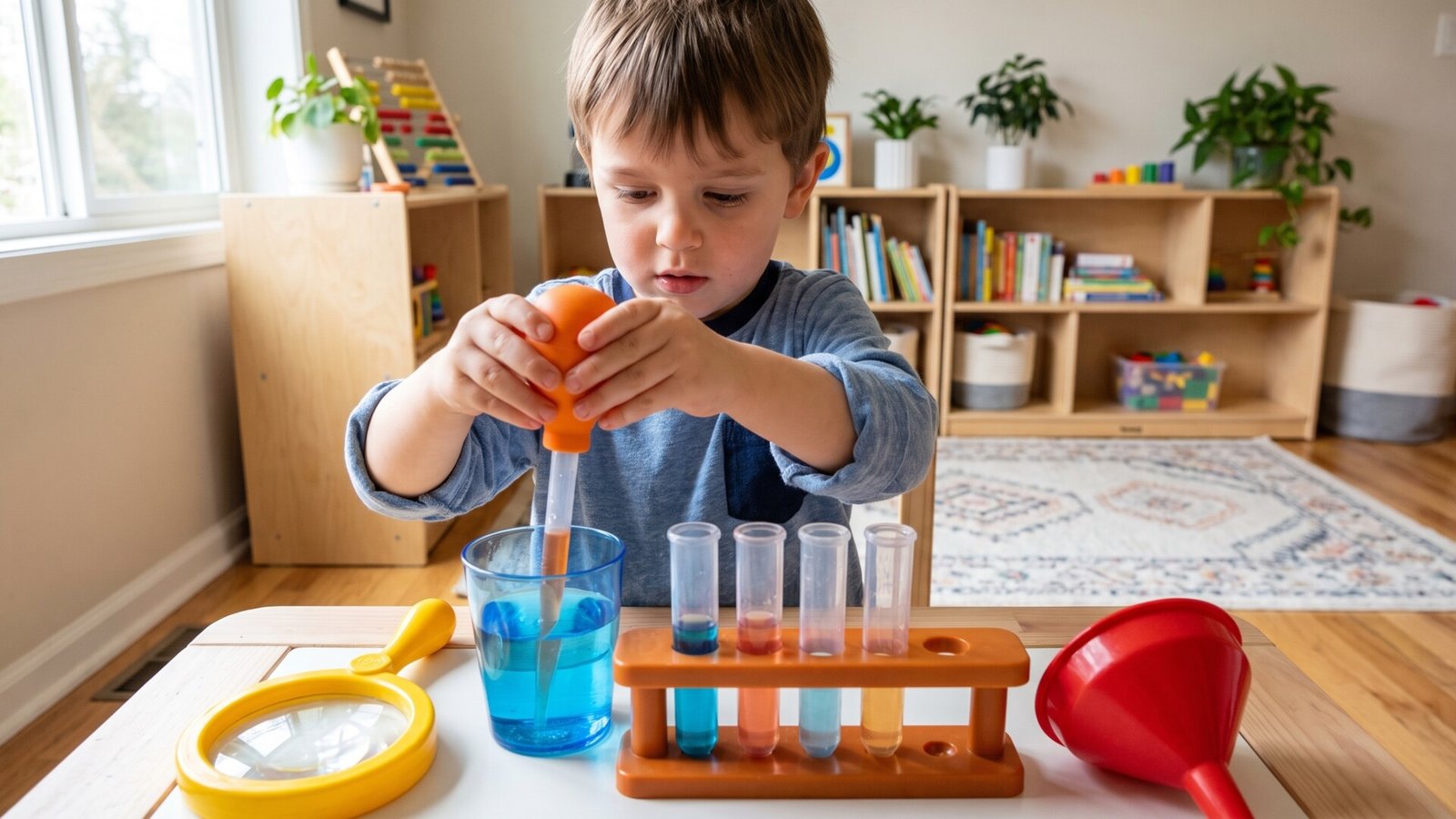
If you want one concrete kit to start with, the Learning Resources Primary Science Lab Set is a long-running, widely stocked preschool option. According to the retailer listings we checked, it is a 22-piece set graded for ages 3 and up that includes a beaker, flask, magnifying glass, funnel, eyedropper, tweezers, test tubes with lids and stands, safety goggles and 10 double-sided activity cards. Retail prices we saw ranged from about $30 to $40 in USD, and they change often, so check current pricing.
Best for: children who like pouring, mixing and “playing scientist”, and parents who want reusable tools. Trade-offs: it provides equipment and activity ideas rather than a lot of ready-made ingredients, so you will supply things like water, food coloring and kitchen items. The listing carries a choking-hazard warning (small parts, not for children under 3), so keep it away from younger siblings.
The Top 5 Types of Simple Science Kits for 4-Year-Olds
The five kit types below are categories rather than single products, so you can compare real options in each. Look for the age grade, the included tools, and a recent review before you buy.
1. First Lab Kits – Discovery and Experimentation
Overview: A first lab kit is a set of preschool-friendly lab tools (beakers, droppers, funnels, tweezers, magnifier) with activity cards. The Learning Resources Primary Science Lab Set above is the best-known example. Activities involve sorting, pouring, mixing and observing changes.
What it encourages: pouring and measuring, close looking with the magnifier, color mixing, and asking “what will happen?”
Why 4-year-olds like it: It feels like real equipment, and results appear quickly. Trade-off: you provide the ingredients and the setup.
2. Color-Change and Reaction Kits
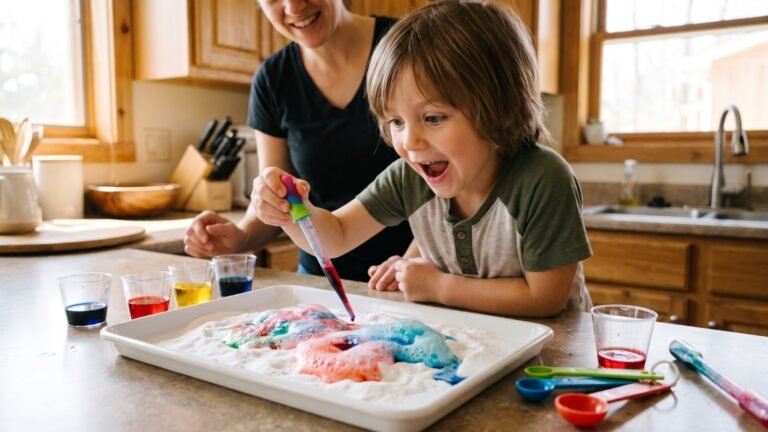
Overview: These kits focus on visual “wow” moments such as fizzing, color changes and simple volcano-style reactions, usually using baking soda, vinegar and colored water.
What it encourages: prediction, observation and action vocabulary (pour, fizz, mix, stir).
Why 4-year-olds like it: Fizzing is dramatic and quick. Trade-offs: messy, one-use ingredients run out, and vinegar can sting eyes, so goggles and a tray are worth using. You can recreate most of these experiments from the kitchen cupboard for a few dollars.
3. Nature and Planting Kits
Overview: These bring biology indoors: seeds, a clear planter so roots can be seen, a watering bottle, and a magnifier or bug viewer.
What it encourages: noticing change over days, responsibility for a living thing, and early awareness of plants and habitats.
Why 4-year-olds like it: Sprouting seeds give daily excitement. Trade-offs: results are slow, and plants can fail, which is itself a good talking point. Seeds are small parts, so keep them away from toddlers and from mouths.
4. Water, Sink-and-Float and Magnet Kits
Overview: Kits that explore floating and sinking, pouring and measuring, or magnets with large, child-safe pieces.
What it encourages: sorting, testing ideas and comparing results.
Why 4-year-olds like it: There is lots of “what happens if…?” to try. Safety note: only choose magnet sets whose magnets are large and permanently sealed. Small, loose, high-powered magnets are a serious swallowing hazard and should never be given to young children.
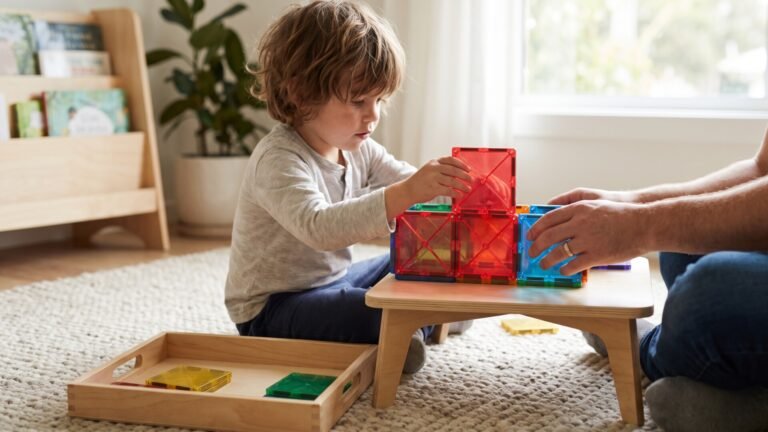
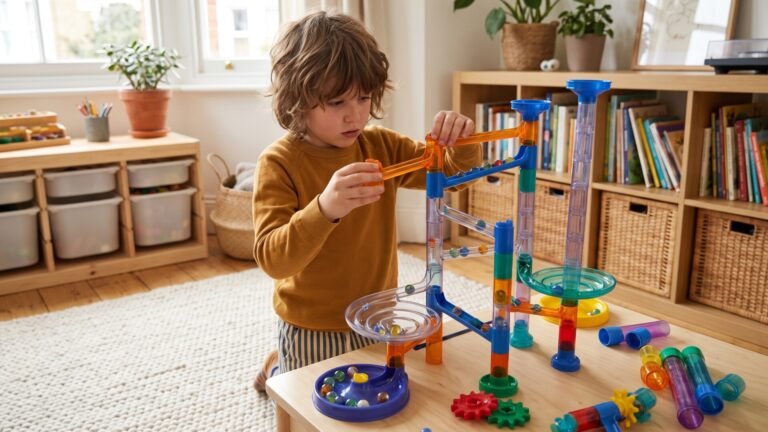
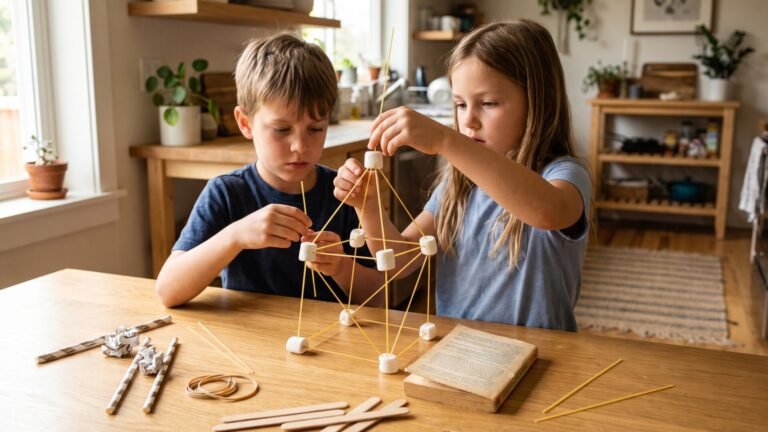
5. Early Engineering and Building Kits
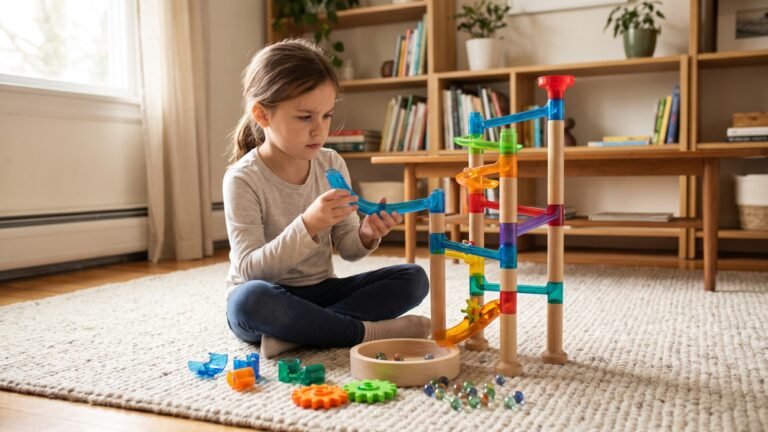
Overview: Blocks, ramps and connectors that explore balance, movement and building, often with cards suggesting challenges.
What it encourages: spatial reasoning, testing ideas, and persistence when a tower falls down.
Why 4-year-olds like it: Instant feedback: the car rolls or the tower topples. Trade-off: some “engineering” kits are really for ages 5+ or 6+. Check the age grade, and see our STEM toys for kids guide for how STEM toys change as children grow.
Comparison: Which Kit Type Fits Your Child?
| Kit type | Main concept | Mess level | Adult help | Best for |
|---|---|---|---|---|
| First lab kit | Observation, pouring, mixing | Medium | Moderate | Kids who like “grown-up” tools |
| Reaction and color-change | Cause and effect | High | High | Kids who love fizz and surprises |
| Nature and planting | Growth and change over time | Low–medium | Moderate | Patient observers, nature fans |
| Water, float and magnets | Testing and sorting | Medium | Moderate | Kids who like experimenting |
| Early engineering | Balance, structure, motion | Low | Low–moderate | Builders and ramp lovers |
Safety Checklist for Preschool Science
- Always supervise. Even kitchen-ingredient experiments involve things that should not be eaten or splashed in the eyes.
- Use child-sized safety goggles for fizzing or splashing activities.
- Keep small parts (seeds, tube lids, tweezers, connectors) away from younger siblings.
- Avoid kits with loose magnets, button batteries or chemical powders meant for older children.
- Use a tray, apron or washable mat to keep cleanup manageable.
- Wash hands after every experiment, especially after handling soil or seeds.
For official guidance on toy age labels and small parts, see the US Consumer Product Safety Commission’s toy safety information.
How to Make the Most of a Science Kit
1. Set Up a Science Corner
Choose a place where experiments happen, even a small table or mat. It keeps cleanup contained and helps children treat it as “science time”.
2. Participate and Narrate
Talk through what is happening. Open questions work well:
- “What do you think will happen when we pour this in?”
- “What do you notice?”
- “What could we try differently?”
3. Repeat and Vary
Four-year-olds often want to do the same experiment again and again. Let them, and then change one thing (more water, a different color) so they can see the difference.
4. Record Observations
A drawing pad lets children draw what they saw. Scribbles count. You can write down their words next to the picture.
5. Keep Sessions Short and Stop on a High
If your child loses interest, stop and come back another day. A short, happy session is better than a finished one that ends in tears.
What Preschoolers Can Gain from Science Play
No kit guarantees any particular result, but regular, relaxed science play gives children a chance to practise:
- Problem-solving: Working out why something worked or did not.
- Observation: Noticing changes in color, shape and motion.
- Fine motor control: Pouring, squeezing droppers and using tweezers.
- Sequencing: Following steps in order.
- Language and social skills: Explaining what they see, taking turns, or teaching a sibling.
Science Fun Beyond Kits
You do not need a kit to start. There are many ways to bring science into everyday routines:
- Water play: Float-and-sink tests, pouring and measuring in the bath or sink.
- Planting seeds: Watching beans sprout in a clear cup.
- Kitchen experiments: Baking soda and vinegar reactions on a tray.
- Nature walks: Collecting leaves and looking at insects with a magnifier.
Kits simply package these experiences in a tidy, repeatable form.
Beyond Age 4: What Comes Next
As children grow, kits get more involved. When your child is ready for longer projects, our reviews of the Thames & Kosmos SolarFlower solar kit and the Sky-Hi Roller Coaster physics kit show what upper-elementary STEM kits look like. Those are aimed at much older children than four, so treat them as a preview rather than a recommendation for now.
Frequently Asked Questions
Frequently Asked Questions About Science Kits For 4-Year-Olds
What is a good first science kit for a 4-year-old?
Look for a preschool-graded set with large, simple tools and picture instructions. The Learning Resources Primary Science Lab Set (22 pieces, graded for ages 3+) is a widely available example. Prices we saw were roughly $30–$40 USD.
Are science kits safe for 4-year-olds?
Kits graded for ages 3+ or 4+ are designed with this age in mind, but all of them need adult supervision. Use goggles for fizzing activities, keep small parts away from younger siblings, and avoid kits with loose magnets or button batteries.
How long should a science experiment last for a 4-year-old?
Many children this age stay engaged for around 10–20 minutes, though it varies. Short sessions that end while your child is still interested work best.
Do I need to buy a kit, or can I do science at home?
You can do plenty with household items: water play, baking soda and vinegar, planting beans and nature walks. Kits mainly add reusable tools and ready-made activity ideas.
Should my 4-year-old use real chemicals?
No. Choose kits built around kitchen-safe materials such as water, food coloring, baking soda and vinegar, and avoid kits with chemical powders aimed at older children.
Can I use a kit labelled for older children if I help?
Be cautious. Age grades reflect safety testing such as small-parts rules, so a kit labelled 5+ or 8+ may contain parts that are not suitable for a 4-year-old even with help.
Final Thoughts
Four-year-olds are naturally curious, and a simple science kit gives that curiosity a safe, structured outlet. Whether you pick a first lab set, a fizz-and-color kit, a planting kit, a water-and-magnet kit or an early engineering set, the best choice is the one your child will actually come back to, with an adult close by to ask questions and keep things safe.
Looking for more hands-on learning? Explore our STEM toys for kids guide for the full picture across ages, or our Montessori Math Games for Kids sub-hub for interactive games that build early numeracy and logical thinking.