Inclusive STEM Kits Every Preschool Classroom Needs
I have a confession to make. When I first started teaching preschool, I thought STEM meant buying the fanciest, most expensive robot kit I could find and hoping the kids would figure it out. I learned the hard way that the real magic of STEM isn’t in the blinking lights or the complicated instructions. It’s in the moment a child who rarely speaks points at a spinning gear and says, “I did that.”
For parents and educators, the goal is the same: we want every child to feel capable, curious, and included. But finding the right tools for a classroom full of diverse abilities, attention spans, and learning styles can feel overwhelming. You want a kit that engages the child who loves to build, the child who needs more sensory input, and the child who is just starting to find their voice. You want something that won’t end up in the back of a closet after two weeks.
The question I set out to answer is simple: What are the best inclusive STEM kits for preschool classrooms? Not the most expensive, not the most hyped, but the ones that actually work for real kids in real classrooms.
In this article, I’ll walk you through the background of why early STEM education matters for all children, what to look for when buying a kit, and my top six product recommendations. I’ll also share a comparison table to help you decide at a glance, practical buying advice for different classroom situations, and answers to the questions I hear most often from other educators and parents.
I’ve sourced these recommendations through our trusted affiliate partners, including Amazon and specialty educational suppliers, so you can check current pricing and availability easily. Let’s get started.
Background / Educational Context
I remember the first time I saw a three-year-old figure out how to make a ramp taller so her toy car would go faster. She didn’t know she was learning physics. She just knew she wanted that car to fly. That is the heart of STEM education at the preschool level. It’s not about memorizing facts or following rigid procedures. It’s about asking questions, testing ideas, and discovering that you have the power to change the world around you.
Research from the American Academy of Pediatrics and early childhood education experts consistently shows that early exposure to STEM concepts builds critical thinking, problem-solving skills, and a sense of agency in children. But here is the part that matters most to me: these benefits are not reserved for neurotypical children or children from privileged backgrounds. Every child, regardless of ability, deserves the chance to experience that spark of discovery.
Inclusivity in STEM education means designing experiences that work for children with physical disabilities, sensory processing differences, language delays, and cognitive variations. It means using materials that are easy to grip, instructions that can be followed visually, and activities that allow for multiple ways to participate. It means creating a classroom where a child who uses a wheelchair can still reach the building blocks, and a child who is nonverbal can still show you what they built.
The current trend in early childhood education is moving away from passive learning and toward hands-on, collaborative experiences. Technology is being integrated in thoughtful ways, not as a babysitter, but as a tool for exploration. Inclusive STEM kits are a natural extension of this philosophy. They provide the structure and materials we need to create those moments of discovery for every single child in our care.
Core Concepts / Product Category Overview
So what exactly is an inclusive STEM kit? Let me break it down in plain language. An inclusive STEM kit is a collection of educational materials, tools, and activities designed to teach science, technology, engineering, and math concepts to young children in a way that is accessible to all learners. The “inclusive” part is not just a buzzword. It means the kit has been intentionally designed to accommodate a range of abilities, learning styles, and developmental stages.
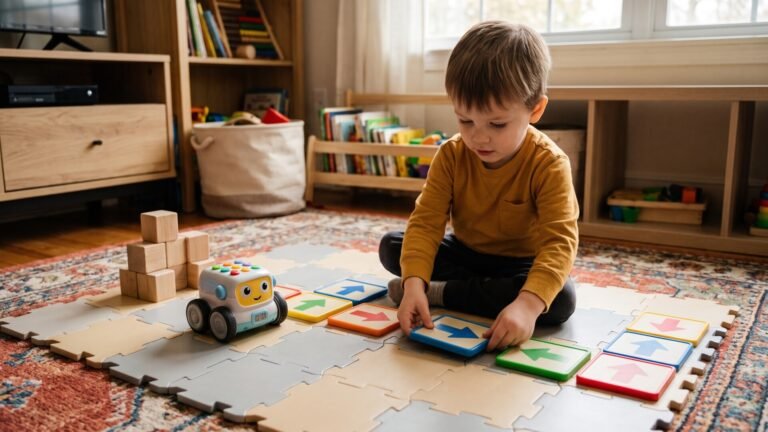
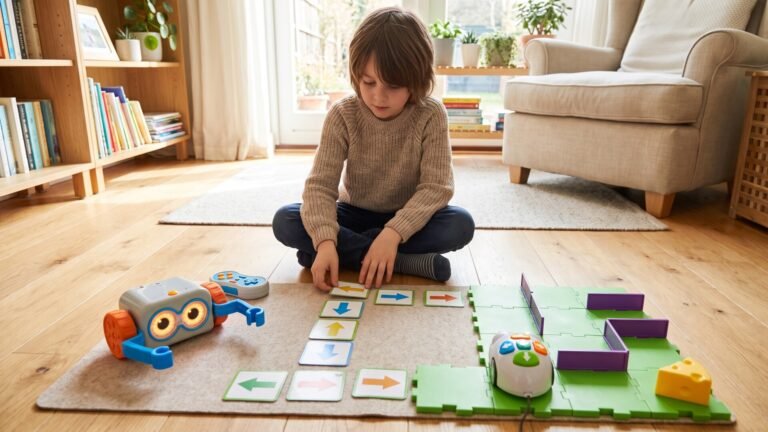
These kits work through hands-on activities that encourage exploration and collaboration. A child might build a simple machine with gears, create a circuit that lights up a bulb, or mix colors to learn about chemical reactions. The activities are usually open-ended, meaning there is no single “right” answer. This allows children to engage at their own level and in their own way.
Some key terms you will encounter include:
- STEM: Science, Technology, Engineering, and Mathematics.
- Inclusivity: Designing products and experiences that are usable by people with the widest possible range of abilities.
- Hands-on learning: Learning by doing, rather than by listening or reading.
- Collaborative play: Activities that require or encourage children to work together.
It is also important to understand the different types of STEM kits available. There are robotics kits that teach basic coding concepts, engineering kits that focus on building and construction, and science exploration kits that involve experiments and observation. The best inclusive kits often blend these categories, offering a variety of activities within a single set.
Key Buying Factors
When I am looking for a STEM kit for my classroom, I have a mental checklist that goes far beyond the marketing claims. Here is what I actually consider before making a purchase.
Safety is non-negotiable. I need to know the materials are non-toxic, that there are no sharp edges, and that all parts are large enough to pose no choking hazard. Reputable brands will clearly state their safety certifications.
Durability matters because preschool classrooms are not gentle environments. Kits get dropped, thrown, stepped on, and occasionally used as drumsticks. I look for thick plastic, reinforced joints, and materials that can be wiped clean. A kit that falls apart after a week is not a good investment.
Age appropriateness is more than just a number on the box. I want activities that match the fine motor skills, attention spans, and cognitive abilities of three- to five-year-olds. A kit that is too advanced will frustrate children. A kit that is too simple will bore them.
Educational value is the reason we are buying the kit in the first place. I look for alignment with early learning standards, such as the Head Start Early Learning Outcomes Framework or state-specific preschool guidelines. The best kits teach real STEM concepts, not just vague “problem-solving.”
Ease of use is critical for both educators and children. If the instructions are confusing or the setup is too time-consuming, the kit will sit on a shelf. I prefer kits with visual instructions, minimal prep time, and activities that children can start independently.
Storage requirements are a practical concern. Preschool classrooms are already packed with materials. I look for kits that come with their own storage containers or that can be easily organized in bins.
Maintenance is the last thing I think about, but it matters. Can the pieces be washed? Are there batteries that need replacing? Will the kit still work after a year of use? I prefer low-maintenance options that are easy to keep clean and functional.
Pros and Cons
Pros
I have seen inclusive STEM kits transform classrooms in ways I did not expect. They promote early interest in STEM by making abstract concepts tangible and fun. A child who struggles with traditional worksheets might thrive when they can physically build a model of a bridge.
These kits also encourage collaboration and teamwork. When children work together on a building project or a science experiment, they learn to share ideas, negotiate roles, and celebrate each other’s successes. This is especially valuable for children who are shy or have social communication challenges.
The best inclusive kits support diverse learning needs. A child with fine motor delays can use larger pieces. A child who is visually impaired can benefit from high-contrast colors and tactile elements. A child who is an English language learner can follow the visual instructions. The kit adapts to the child, not the other way around.
And of course, the hands-on, interactive nature of these kits keeps children engaged in a way that screens and worksheets cannot. There is a joy in discovery that is deeply motivating.
Cons
Let me be honest about the downsides. The initial investment cost for quality kits can be significant. A single LEGO Education set can cost several hundred dollars. For a classroom on a tight budget, this is a real barrier.
Some kits also require additional training for educators. I have bought kits that came with a manual that assumed I already knew how to teach coding. That is frustrating. If you are not confident in your own STEM knowledge, you may need to invest time in learning the kit yourself before introducing it to the children.
Finally, some kits have limited adaptability. A kit that is perfect for a four-year-old might be too simple for a five-year-old, or it might not offer enough challenge for a child who is advanced. You have to be strategic about which kit you choose for your specific group of children.
Main Product Recommendations
LEGO Education SPIKE Essential Set
| Feature | Details |
|---|---|
| Age Range | 4-7 years |
| Key Features | Hands-on building, coding activities, collaboration opportunities |
| Price | Approximately $400 |
| Affiliate Program | [Affiliate: Check price on Amazon] |
Why We Like It
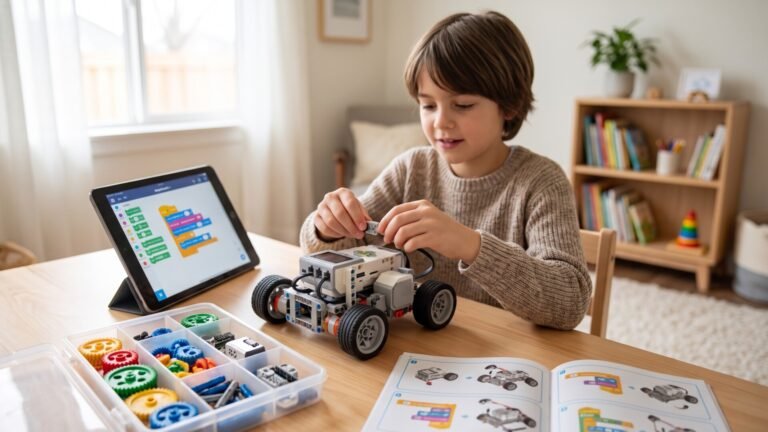
I will be honest: I was intimidated by the price tag the first time I looked at this kit. But after using it in my classroom, I understand why it costs what it does. The SPIKE Essential Set is a complete system that combines the familiar joy of LEGO building with introductory coding and engineering challenges. The pieces are large and easy for small hands to manipulate, and the coding element uses a simple, icon-based interface that requires no reading skills.
Best For
This kit is best for classrooms that want to integrate engineering and coding fundamentals in a structured yet playful way. It works well for group activities, where children can collaborate on building and problem-solving.
Pros
- Extremely versatile and adaptable for various learning styles.
- High durability; the pieces can withstand years of use.
- Excellent teacher support materials and lesson plans.
Cons
- The price point is high and may not fit every budget.
- Requires some initial teacher training to use effectively.
Little Passports Science Expeditions
| Feature | Details |
|---|---|
| Age Range | 3-5 years |
| Key Features | Monthly science projects, hands-on experiments, multicultural themes |
| Price | Approximately $20/month |
| Affiliate Program | [Affiliate: Check price on Amazon] |
Why We Like It
I love the surprise factor of a monthly delivery. It keeps the learning fresh and exciting for both the children and the teacher. Each kit focuses on a different scientific theme, from volcanoes to ocean life, and includes all the materials needed for several hands-on experiments. The multicultural themes are a wonderful bonus, introducing children to scientific discoveries from around the world.
Best For
This kit is best for encouraging ongoing interest in science over the course of a school year. It is also a great choice for classrooms that want to integrate global awareness into their STEM curriculum.
Pros
- Regular delivery keeps children engaged and curious.
- Focus on real-world science and environmental awareness.
- Easy to use with minimal prep time.
Cons
- The subscription model may not suit all classrooms or budgets.
- Some experiments require common household items that may not be on hand.
VTech Switch & Go Dinos
| Feature | Details |
|---|---|
| Age Range | 3-8 years |
| Key Features | Interactive learning, combining play with early engineering concepts |
| Price | Approximately $30 |
| Affiliate Program | [Affiliate: Check price on Amazon] |
Why We Like It
This is the kit I reach for when I want to hook a reluctant learner. The Switch & Go Dinos transform from a dinosaur into a vehicle, which is a simple but powerful engineering concept. The interactive features include sounds, lights, and facts about dinosaurs, which adds a layer of educational content to the play.
Best For
This kit is best for classrooms focused on engaging young learners who may not be naturally drawn to traditional building activities. It is also excellent for children who love imaginative play.
Pros
- Encourages storytelling and creativity alongside STEM concepts.
- Affordable price point for classroom budgets.
- Durable and easy to clean.
Cons
- The STEM depth is limited compared to more comprehensive kits.
- Some children may focus more on the imaginative play than the engineering aspect.
Learning Resources Gears! Gears! Gears! Building Set
| Feature | Details |
|---|---|
| Age Range | 3-7 years |
| Key Features | Colorful gears, hands-on building, encourages problem-solving |
| Price | Approximately $40 |
| Affiliate Program | [Affiliate: Check price on Amazon] |
Why We Like It
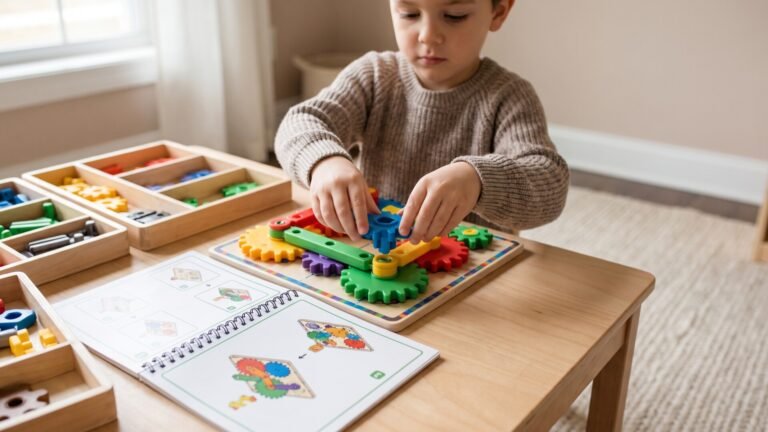
This is one of those kits that looks simple but delivers real educational value. The brightly colored gears snap together easily, and children quickly learn how to create a chain reaction that makes all the gears spin. It teaches cause and effect, spatial reasoning, and basic engineering principles without any screens or complicated instructions.
Best For
This kit is best for young children who thrive on tactile learning. It is also a fantastic choice for children with sensory processing needs, as the gears provide satisfying visual and auditory feedback.
Pros
- Simple design that is easy for children to use independently.
- Easy to clean up and store in the included container.
- Encourages trial-and-error problem-solving.
Cons
- The novelty may wear off for older children.
- Limited expansion possibilities without purchasing additional sets.
Snap Circuits Jr. Electronics Exploration Kit
| Feature | Details |
|---|---|
| Age Range | 5 years and up |
| Key Features | Hands-on electronics projects, easy-to-follow instructions |
| Price | Approximately $50 |
| Affiliate Program | [Affiliate: Check price on Amazon] |
Why We Like It
I remember the first time I saw a five-year-old’s face light up when she made a light bulb glow using a circuit she built herself. Snap Circuits Jr. makes electronics accessible to young children by using snap-together components that require no soldering or tools. The instruction manual is full of colorful diagrams that show exactly how to build each project.
Best For
This kit is best for classes that want to explore technology and basic electronics in a concrete, hands-on way.
Pros
- Wide variety of projects keeps children engaged over time.
- High durability; the components are built to last.
- Teaches real electrical engineering concepts.
Cons
- Some components are small and require adult supervision.
- The recommended age of 5+ means it may not be suitable for younger preschoolers.
GoldieBlox Engineering Toy
| Feature | Details |
|---|---|
| Age Range | 4-9 years |
| Key Features | Story-driven engineering challenges, promotes problem-solving |
| Price | Approximately $30 |
| Affiliate Program | [Affiliate: Check price on Amazon] |
Why We Like It
I love that GoldieBlox puts storytelling at the center of engineering. Each kit comes with a book that tells a story about Goldie, a young inventor who solves problems by building things. Children follow along with the story and build the machines that Goldie uses. This approach is particularly effective for children who are more drawn to narratives than to abstract building tasks.
Best For
This kit is best for encouraging girls’ interest in engineering, though it works well for all children. It is also a great choice for classrooms that want to integrate literacy and STEM.
Pros
- Combines storytelling with construction in a unique way.
- Promotes creative problem-solving.
- Affordable price point.
Cons
- The narrative may not appeal to children who are not interested in stories.
- Some kits have limited replayability after the story is completed.
Comparison Table
| Product | Age Range | Durability | Educational Value | Price Range | Best For |
|---|---|---|---|---|---|
| LEGO Education SPIKE Essential Set | 4-7 years | High | ★★★★★ | $400 | Engineering and coding |
| Little Passports Science Expeditions | 3-5 years | Medium | ★★★★ | $20/month | Ongoing science learning |
| VTech Switch & Go Dinos | 3-8 years | Medium | ★★★ | $30 | Interactive play |
| Learning Resources Gears! Gears! Gears! | 3-7 years | High | ★★★★ | $40 | Tactile learning |
| Snap Circuits Jr. Electronics Kit | 5 years+ | High | ★★★★★ | $50 | Technology exploration |
| GoldieBlox Engineering Toy | 4-9 years | Medium | ★★★★ | $30 | Girls in engineering |
How to Choose the Right Option
I know that even with all this information, making a final decision can still feel overwhelming. Let me help you narrow it down based on your specific situation.
Best for Small Classrooms: If space is limited, the Learning Resources Gears! Gears! Gears! Building Set is your best bet. It comes in a compact container and the pieces are easy to clean up and store. It also does not require any additional materials or technology.
Best for Diverse Needs: For a classroom with children of varying abilities, the LEGO Education SPIKE Essential Set is the most adaptable. The large pieces are easy to grip, the coding interface is visual, and the activities can be modified for different skill levels.
Best Budget Pick: If you are working with a tight budget, the VTech Switch & Go Dinos and GoldieBlox Engineering Toy are both excellent choices under $35. They offer real educational value without breaking the bank.
Best for Expanding Learning: The Snap Circuits Jr. Electronics Kit offers the most room for growth. With over 100 projects to build, it can keep a child engaged for months or even years. It is a fantastic long-term investment.
What Most Reviews Don’t Tell You
Here is the honest truth that most reviews will not share. After six months of use, the kits that survive are the ones that allow for open-ended play. The LEGO Education set and the Gears! Gears! Gears! set are still in heavy rotation in my classroom. The kits that rely on a single narrative or a limited set of activities tend to get abandoned once the novelty wears off.
Another thing I learned the hard way: the subscription model of Little Passports is wonderful, but it requires consistent commitment. If you forget to cancel or your budget changes mid-year, you may end up with kits you cannot use.
Finally, I want to talk about the hidden cost of teacher training. The Snap Circuits and LEGO Education kits both required me to spend a weekend learning how to use them before I could introduce them to my class. That is time I did not have, but I am glad I made the investment. If you are short on time, start with the simpler kits like Gears! Gears! Gears! or GoldieBlox.
Conclusion
Choosing the right inclusive STEM kit for your preschool classroom is about more than just picking a product. It is about making a commitment to every child in your care, saying that their curiosity matters, their ideas are valid, and they are capable of amazing things.
My best overall pick is the LEGO Education SPIKE Essential Set. It is an investment, but the versatility, durability, and educational depth are unmatched. For a budget-friendly option, the VTech Switch & Go Dinos offers a fun and engaging introduction to engineering concepts. And for a specialized pick that encourages girls in STEM, the GoldieBlox Engineering Toy is a wonderful choice.
I encourage you to check current pricing and availability through our recommended partners. The right kit is out there, and it will make a real difference in your classroom.
Frequently Asked Questions About Inclusive STEM Kits For Preschool Classrooms
What are inclusive STEM kits?
Inclusive STEM kits are educational tools designed to engage young learners of all abilities in science, technology, engineering, and mathematics through hands-on activities. They are intentionally designed to accommodate different learning styles, physical abilities, and developmental stages.
How do I know if a kit is age-appropriate?
Look for age recommendations on the packaging and ensure the activities align with preschool learning standards. I also recommend reading reviews from other educators who have used the kit with children of similar ages.
Are STEM kits safe for young children?
Yes, reputable brands prioritize safety, using non-toxic materials and ensuring small parts are appropriately sized for young children. Always check for safety certifications before purchasing.
Can STEM kits be used for collaborative learning?
Absolutely. Many STEM kits are designed for group activities, fostering teamwork and social skills. I have found that collaborative projects are where the most meaningful learning happens.
How can I integrate STEM kits into my classroom curriculum?
Use the kits as supplementary tools to support themes in your curriculum. For example, if you are teaching a unit on transportation, use a building kit to have children construct their own vehicles. Allow for hands-on exploration and real-world applications.
What should I do if a kit breaks or has missing parts?
Most manufacturers offer replacement parts or customer service to assist with issues. Check the warranty policy before purchasing. I always keep the original packaging for at least 30 days in case I need to return a defective product. —