How Sensory Toys Help with Emotional Regulation: A Parent’s Guide
Children experience a wide range of emotions daily, from excitement and joy to frustration and worry. For many kids, including those with sensory processing differences or neurodivergent profiles such as autism or ADHD, big feelings can be harder to manage. Sensory toys can support a child in settling, focusing, and finding a safe outlet for energy, even though they are a helper and not a cure.
This guide explains what sensory input is, how different kinds of toys are used to help children feel calmer, which options suit which ages, and what to check for safety before you buy. It is written for parents choosing tools for a specific child, not as clinical advice.
The Short Answer for Busy Parents
If you only have a minute: pick one or two quiet, low-risk tools that match what your child already seeks out (squeezing, watching, moving, or pressing), keep them in a place the child can reach, and use them before a meltdown peaks rather than in the middle of it. Pair them with a calm voice and a name for the feeling. Skip anything with small detachable parts, batteries you cannot secure, or loose liquids for children under three.
What Is Emotional Regulation?
Emotional regulation is the ability to recognize, understand, and manage feelings in ways that help the child and fit the situation. It develops gradually through the early years and well beyond. It supports:
- Staying with a task at school
- Building friendships
- Handling daily challenges and transitions
- Recovering after frustration or disappointment
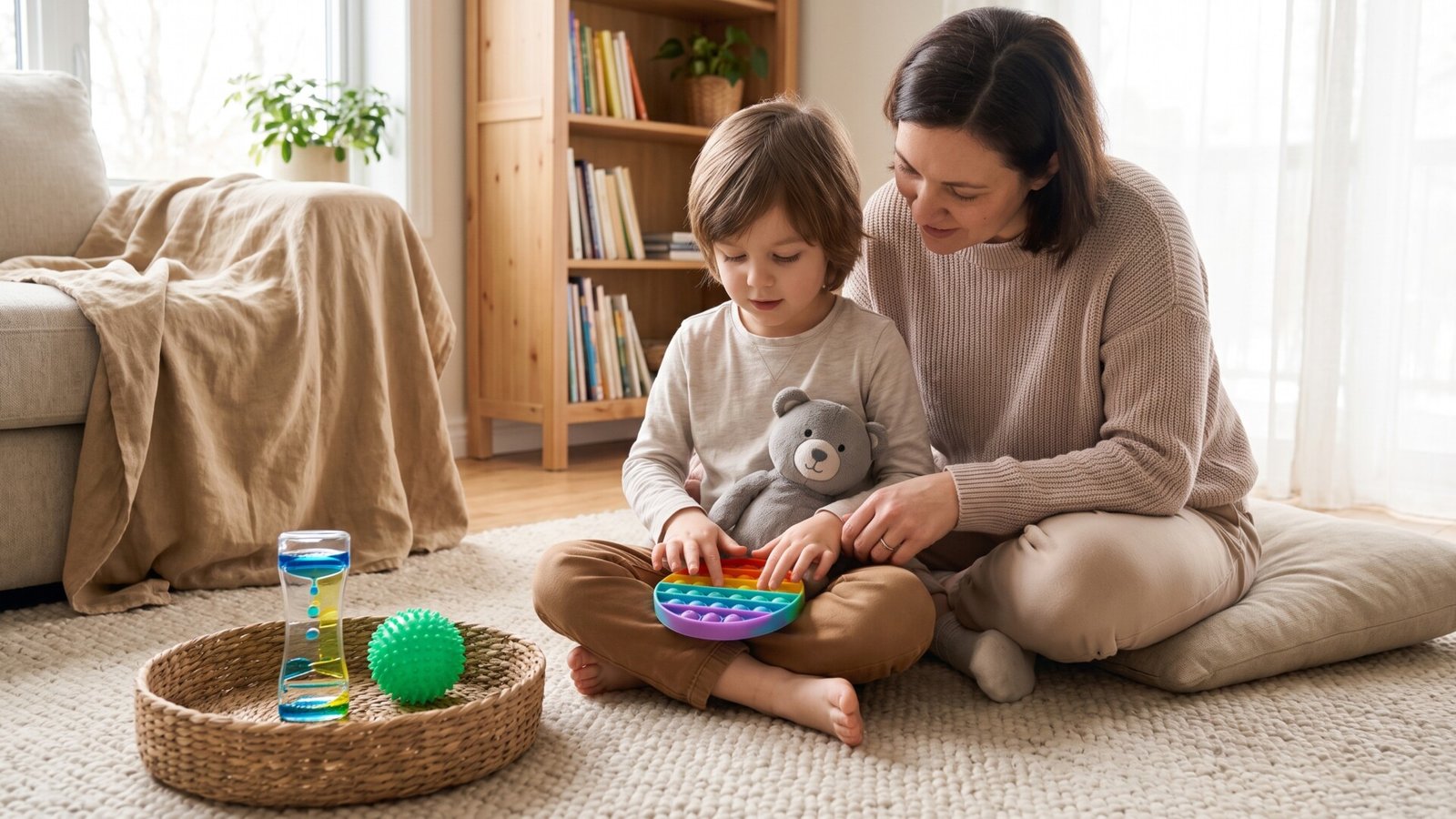
Young children are still building these skills, so they usually need co-regulation: a calm adult who stays nearby, names the feeling, and offers a tool. Sensory toys can be part of that toolkit, giving a child something concrete to do with their hands, eyes, or body while the feeling passes. They do not teach regulation on their own, and no toy guarantees fewer tantrums.
How Sensory Toys Support Emotional Regulation
Sensory toys provide tactile, visual, auditory, or movement-based input that many children find calming or organizing. Responses differ a great deal from child to child, so treat the list below as ideas to try, not predictions.
1. Easing Overstimulation
- Many children find firm squeezing, pressing, or slow repetitive motion settling when they feel wound up. Occupational therapists often describe this as grounding input, though research on specific toys is still limited.
- Items such as stress balls, soft squish toys, or textured fidgets offer steady touch input that can feel predictable.
2. Giving Hands and Attention Somewhere to Go
- A small repetitive action can help a child direct their attention instead of escalating.
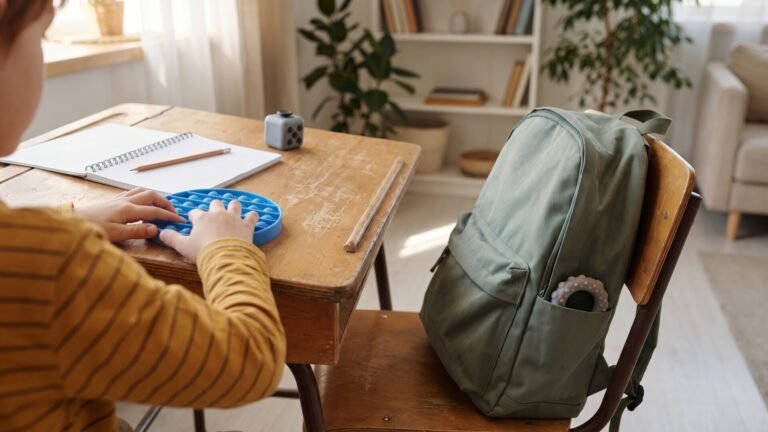
- Fidget toys, silicone pop-it toys, and textured rollers let a child channel restless energy into something quiet, which can help in class or at the dinner table.
3. Encouraging Self-Soothing
- Some children find it hard to calm down independently. A familiar tool gives them a tangible coping step they can reach for.
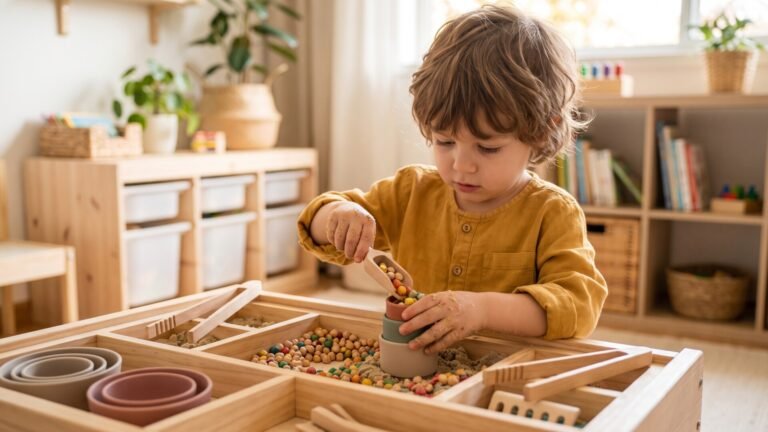
- Kinetic sand, squishy balls, or soft textured toys can be handled slowly, which gives the child a rhythm to follow.
4. Offering Predictability and Comfort
- Sensory toys give repetitive, predictable experiences. That reliability can be reassuring for children, including many autistic children, who find unpredictable environments overwhelming.
Types of Sensory Input and What Each Can Offer
Different toys target different senses. Most children have favorites, and some actively avoid certain inputs, so offer a small choice rather than a single option.
1. Tactile (Touch)
Examples: stress balls, squishy toys, textured fabric, kinetic sand, play dough
What it can offer:
- Comfort through squeezing, pressing, or squishing
- A way to release tension with the hands
- Practice with hand and finger control as a side benefit
2. Proprioceptive (Body Awareness and Deep Pressure)
Examples: weighted lap pads, resistance bands, push and pull toys, heavy-work activities such as carrying a laundry basket
What it can offer:
- Deep-pressure input that many children describe as grounding
- A feeling of body awareness through pushing, pulling, and carrying
- An outlet for children who seem restless or seek lots of movement
Weighted products need extra care. See the safety section below before buying anything weighted for a young child.
3. Vestibular (Balance and Movement)
Examples: rocking chairs, balance boards, swings
What it can offer:
- A way to regulate through rhythmic movement
- A chance to burn off energy before a quiet task
- Options for children who tend to be either over- or under-responsive to movement
4. Auditory (Sound)
Examples: soft shakers, rain sticks, chimes, calm music
What it can offer:
- Gentle, predictable sound as soothing feedback
- A focus point during stressful transitions
- A calmer alternative to chaotic background noise
Some children are sensitive to sound, so test volume first and let the child stop at any time.
5. Visual (Sight)
Examples: sealed glitter bottles, liquid motion timers, soft-glow lamps
What it can offer:
- Watching slow movement or light can help a child pause and breathe
- A visual anchor that makes “calm down” something you can watch happen
- A gentle link to mindfulness-style breathing games
Quick Comparison: Which Type Suits Which Child?
| Type of tool | Often helpful when a child… | Typical age start | Main safety note | Cost level |
|---|---|---|---|---|
| Squeeze and squish toys | is anxious, restless, or needs something for the hands | Toddler, with larger sizes | Check for small parts and burst seams | Low |
| Kinetic sand or play dough | needs slow, creative hand work at the table | Kinetic Sand is labeled for ages 3 and up; check each product label | Not edible; keep away from mouths and hair | Low to medium |
| Pop-it and silicone fidgets | needs quiet fidgeting in class or travel | Usually preschool and up | Check size and small parts | Low |
| Sealed glitter or liquid bottles | calms by watching | Best from preschool, with adult supervision | Must stay sealed; remove if damaged | Low (or free if homemade) |
| Weighted lap pads or plush | finds deep pressure settling | Ask the manufacturer and your pediatrician | Never for infants; follow weight and age limits | Medium |
| Swings, rockers, balance boards | seeks movement | Toddler and up, equipment dependent | Anchoring, fall surfaces, supervision | Medium to high |
| Chimes, rain sticks, shakers | responds to soft sound | Toddler and up | Check for small beads or loose parts | Low |
Cost levels are shown broadly in this table; typical US price ranges for specific products are listed in the section on sensory toy types further down.
Safety First: What to Check Before You Buy
Sensory toys often involve fillings, liquids, and soft squeezable parts, which are exactly the features that need a second look with young children. A few checks go a long way:
- Weighted products. The American Academy of Pediatrics advises against weighted sleep products for infants, and the US Consumer Product Safety Commission has also told caregivers not to use weighted blankets or weighted swaddles for babies, so these should never be used for babies. For older children, follow the manufacturer’s age and weight guidance, never leave a young child asleep under or wearing a weighted item without checking in, make sure the child can remove it independently, and ask your pediatrician or occupational therapist if you are unsure.
- Small parts. Anything with beads, buttons, or detachable pieces can be a choking hazard for children under three. Read the age grade on the package and treat it as a safety rating, not a skill rating.
- Fillings and liquids. Squishy toys, stress balls, and glitter bottles can split. Look for sturdy seams and sealed lids, and retire anything that leaks. Do not hand water beads or gel beads to young children, because they can be swallowed.
- Putty, sand, and dough. These are not food. Kinetic Sand is labeled for ages 3 and up, so supervise younger children closely and read each product’s label for its age grade.
- Batteries and lights. Light-up toys should have secured battery compartments. Loose button batteries are a serious hazard.
- Hygiene. Fidgets travel in school bags and mouths. Wipe silicone toys regularly and avoid sharing personal fidgets between children during cold season.
How to Use Sensory Toys Effectively
Sensory toys work best when they are part of everyday routines and used before stress peaks.
1. Identify Your Child’s Preferences
- Notice which inputs your child seeks out or avoids. Some prefer squeezing, others prefer watching or moving.
- Offer two choices at a time and see which one they reach for.
2. Pair Toys With Emotional Coaching
- Use simple language while the child uses the tool:
- “You seem frustrated. Let’s squeeze this ball together.”
- “Let’s watch the glitter settle while we take slow breaths.”
Naming the feeling while the body settles helps children connect emotions to coping strategies over time.
3. Create a Sensory Corner or Kit
- Choose a dedicated spot at home or school with a few items the child can reach.
- Include something to squeeze, something to watch, and something with gentle weight or movement if appropriate for the child’s age.
- Let the child choose. Choice builds ownership. For more on setting this up, see our guide to calm-down corner toys and tools for preschoolers.
4. Use Them During Transitions
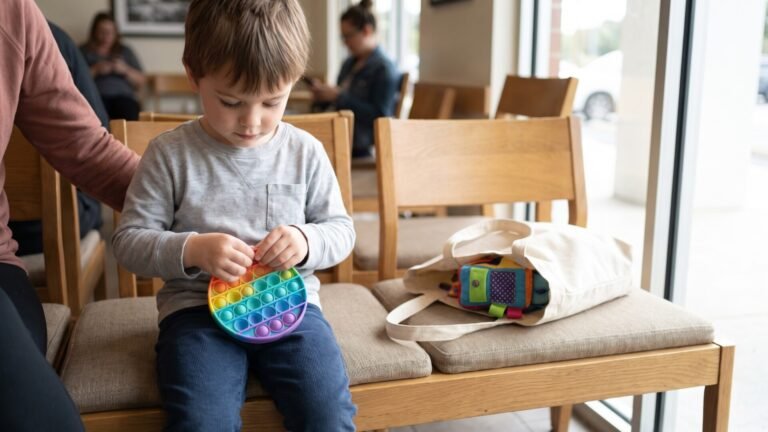
- Sensory tools are especially useful for tough transitions: leaving the house, starting school, switching activities, waiting at appointments, or traveling.
- For on-the-go ideas, read sensory toys that keep kids calm in public and safe fidget toys for school and travel.
5. Teach Gradual Independence
- At first an adult may offer and demonstrate.
- Over time, encourage the child to choose and use a tool on their own, and praise noticing the feeling rather than just calming down.
Practical Scenarios
Real-life moments are where these tools earn their place. These are ideas to adapt, not rules.
- After school. Many children hold it together all day and release it at home. A quiet snack, a squishy ball, and ten minutes without questions can ease the handover.
- Car rides and waiting rooms. Keep a small pouch with one fidget and one visual toy. Rotate the contents so they stay interesting.
- Bedtime wind-down. Soft music, a dim lamp, and a calm routine are often more useful than a toy. If you try anything weighted, check the product’s age and weight limits and speak with your pediatrician first.
- Frustration with a task. Offer a hand break: squeeze, stretch, or push against the wall for a few seconds, then return to the task.
- Big meltdowns. In the moment, a child may not use any tool. Stay close, keep your voice low, and offer tools afterward when the child can take them in.
Sensory Toys for Different Ages
Toddlers (1–3 Years)
- Soft, squishy toys that are too large to fit in the mouth
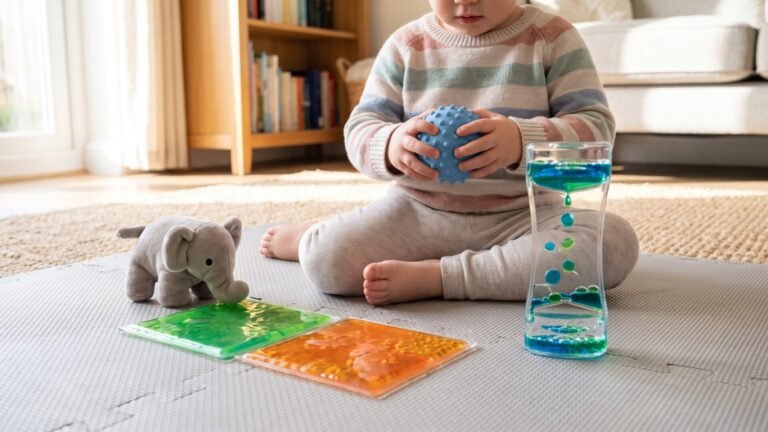
- Textured balls
- Simple shakers and drums with sealed fillings
- Everyday heavy work, such as carrying a small basket
Skip small-parts fidgets, sand-type putty, and weighted items at this age unless the manufacturer’s label clearly supports it and an adult is always present. For more ideas, see our guide to sensory play for all kids and sensory bins for picky toddlers.
Preschoolers (3–5 Years)
- Kinetic sand or play dough, with supervision
- Pop-it silicone toys
- Small stress balls or tactile fidgets
- Visual toys such as sealed glitter bottles
School-Age Children (6–10 Years)
- Fidget cubes, rings, or bracelets
- Weighted lap pads, used according to manufacturer limits and professional advice
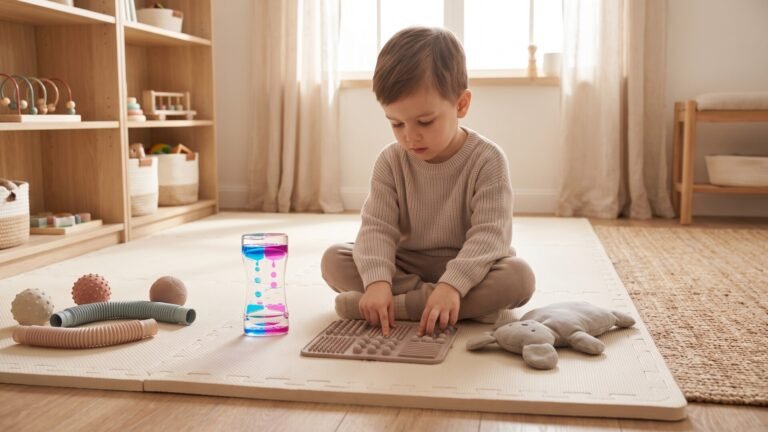
- Liquid motion toys or calming jars
- Sensory bottles with objects to watch settle
Older Children (10+)
- Compact, quiet fidget tools for discreet use at school
- Sensory balls or tactile tubes
- Weighted lap pads or shoulder wraps for concentration, if they help and the child chooses them
- Slime or putty kits for creative hands-on time
Combining Sensory Toys With Other Emotional Regulation Strategies
Sensory toys are most useful alongside other emotional regulation techniques:
- Breathing exercises – Pair slow breaths with a tactile or visual toy
- Mindfulness activities – Glitter jars and visual timers give a point of focus
- Movement breaks – Rocking, balance boards, or stretching
- Routine and predictability – Fold tools into consistent daily schedules
- Language coaching – Teach children to label feelings while they use a tool
This combined approach helps children build their own self-regulation habits for different situations.
Types of Sensory Toys Worth Considering
We have not tested individual products for this article, so instead of ranking brands we list the toy types parents most often choose, with a few well-known examples and what to look for in each:
- Weighted lap pads or plush – Provide deep pressure. Choose a size and weight within the manufacturer’s limits and never use with infants.
- Squishy balls and stress toys – Simple, portable tactile options. Look for sturdy seams.
- Kinetic Sand or play dough – Combines creativity with touch. Kinetic Sand (Spin Master) is labeled for ages 3 and up.
- Pop-it silicone toys – Quiet, repetitive, and easy to clean.
- Fidget cubes, rings, or bracelets – Handy for school or travel; check for small detachable pieces.
- Glitter bottles or liquid motion toys – Visual focus for slowing down. Buy sealed units from reputable makers or make your own with the lid glued shut.
- Textured balls or fabric swatches – A variety of touch experiences at very low cost.
Typical US prices. These ranges come from retailer listings and change often, so confirm with the store before you buy:
- Kinetic Sand (Spin Master), 2 lb bag, ages 3+: about $10 to $15.
- Play-Doh multipacks, ages 2+ (contains wheat): about $3 to $12 for a 10-pack of small cans or sticks, and about $11 to $17 for 20 cans of 3 oz.
- Pop It silicone fidgets (for example Chuckle & Roar, ages 3 to 10): about $5 to $8 for a mini or standard size.
- Tangle fidgets (Tangle Jr., ages 3 and up): from about $6 at some specialty suppliers up to about $25 for single toys from other sellers, so compare before buying.
- Weighted lap pads, typically 5 lb: about $35 to $100, with washable-cover and larger models at the top of that range.
Manufacturers of weighted lap pads generally say the pad should not be used for sleep, should never cover the face, and should only be used within the stated age and weight range, ideally with guidance from a therapist.
DIY Sensory Toy Ideas
Parents can also make low-cost DIY sensory toys and bins:
- Rice or bean sensory bags – Seal strong ziplock bags and tape the edges. Discard if they leak, because fillings are a choking risk for small children.
- Glitter water bottles – Use a bottle with a tightly sealed lid, add glitter and a little clear glue or glycerin, and glue the lid shut.
- Homemade play dough – A simple flour, salt, and water dough works. Supervise young children because it is not meant to be eaten.
- Stress balls from balloons – Fill with flour or rice. Use for older children only and replace at the first sign of tearing.
DIY options are budget-friendly, easy to personalize, and simple to rotate.
A Starter Calm Kit Under $30
If you want to try a few tools before committing to anything bigger, a small kit gives you variety without much spending. The prices below are approximate US figures for the items named earlier in this guide.
- Something to squeeze: a homemade balloon-and-flour ball made by an adult for an older child, or a store-bought squishy toy checked for sturdy seams.
- Something to press or pop: a Pop It, about $5 to $8, which is quiet, washes with soap and has no small parts.
- Something to watch: a homemade glitter bottle with the lid glued shut, which costs little beyond a bottle, glitter and glue.
- Something to shape (ages 3 and up): a bag of Kinetic Sand at about $10 to $15, or a Play-Doh multipack for younger children, with supervision.
Introduce one item at a time, when your child is calm, and notice which one they pick up again by themselves. That choice tells you more than any label. For ideas that suit a specific profile, our review of sensory toys for a 4-year-old with autism goes into more detail on features and trade-offs.
How to Tell Whether a Sensory Tool Is Helping
It is easy to assume a tool works because it keeps a child busy. A few simple observations give a clearer picture over a couple of weeks:
- Does your child choose the tool without prompting, or only when you hand it over?
- After using it, does your child seem more settled, or more wound up? Some inputs calm one child and excite another.
- Does it help with the task in front of them, such as sitting through a meal, or does it become the task?
- Is it being used as a tool, or has it turned into something to throw, trade or fight over?
If the answers are mixed, swap in a different type of input before giving up on the idea entirely. If nothing seems to help, that is useful information to take to a pediatrician or occupational therapist.
Talking to Teachers About Sensory Tools at School
Many classrooms have their own rules about fidgets, so agree on the plan before sending a toy to school. Explain what the tool is for, offer a quiet, small option, and suggest where it should live when it is not in use, such as a pencil case or desk pocket. Ask the teacher to tell you if it becomes a distraction for your child or others. Our guide to safe fidget toys for school and travel covers what tends to work well in shared spaces.
If you are still deciding which kinds of tools matter most for your child, the next section looks at when a toy is not the right answer.
When a Toy Is Not Enough
Sensory tools are everyday helpers, not a treatment. Consider talking to your pediatrician, your child’s teacher, or an occupational therapist if:
- Meltdowns are frequent, intense, or last a long time
- Your child avoids or craves sensory input in ways that interfere with eating, dressing, sleep, or school
- You notice a sudden change in behavior or mood
- A specific toy seems to make things worse
A professional can look at the whole picture and suggest strategies suited to your child. This article is general parenting information and does not replace that advice.
Tips for Parents
- Observe your child – Not every toy works for every child; trial and error is normal.
- Set limits – Tools are for calming, not for avoiding every demand. Keep expectations clear and kind.
- Rotate toys – Keep interest high and avoid overload.
- Encourage reflection – Ask which tool helped, once the child is calm.
- Integrate into routines – Mornings, homework, and bedtime can all benefit.
- Keep it quiet – Choose low-noise tools for school and shared spaces.
Key Takeaways
- Sensory toys can be useful tools for helping children settle, focus, and cope, but they work differently for every child.
- Match the tool to what your child already seeks: squeezing, watching, moving, or pressing.
- Pairing toys with emotional coaching and calm routines makes them more effective.
- Safety comes first: check age grades, small parts, fillings, and especially weighted products.
- DIY options can be as helpful as store-bought ones and cost far less.
- Talk to a professional if big emotions or sensory needs are affecting daily life.
With patient, intentional use, sensory toys can help children notice their feelings and find their own ways to settle. They are tools to support the child, not a substitute for time, attention, and a calm adult nearby.
Frequently Asked Questions About Sensory Toys And Emotional Regulation
Do sensory toys really help with emotional regulation?
Many parents and therapists find they help some children settle and focus, especially when used with a calm adult and a simple routine. Research on specific toys is limited, and results vary by child, so treat them as one tool among several.
What are the best sensory toys for a child who gets overwhelmed easily?
Quiet, predictable options tend to work best: a squishy ball, a sealed glitter bottle, or a soft textured toy. Offer one or two at a time and let the child choose.
Are weighted stuffed animals or blankets safe for kids?
Weighted products should never be used for infants, and the American Academy of Pediatrics has raised concerns about them. For older children, follow the manufacturer’s age and weight limits, make sure the child can move out from under the item, and check with your pediatrician or an occupational therapist first.
At what age can children use Kinetic Sand?
Kinetic Sand is labeled for ages 3 and up. Younger children may put it in their mouths, so use close supervision or choose another texture activity.
Are fidget toys appropriate for school?
Often yes, if they are quiet and the teacher agrees. Choose small, low-noise tools without small detachable pieces, and keep them as tools rather than toys to throw or trade.
Can sensory toys replace therapy for sensory processing differences?
No. They can be part of everyday support, but a therapist or doctor should guide care for ongoing difficulties.
How much do sensory toys for calming usually cost?
Many useful tools are inexpensive: Pop It fidgets are typically about $5 to $8, a 2 lb bag of Kinetic Sand about $10 to $15, and a Play-Doh multipack about $3 to $17. Weighted lap pads cost more, usually about $35 to $100. Prices change often, so check the retailer.
What can I use if I do not want to buy anything?
Try heavy-work activities such as carrying books, pushing a wall, or helping with groceries, plus a sealed rice bag, a homemade glitter bottle, or play dough. See our DIY sensory ideas above.
How do I introduce a sensory toy during a meltdown?
Wait until the child is a little calmer, stay close, and offer one option in a quiet voice. Introduce new tools when things are calm so they feel familiar later.