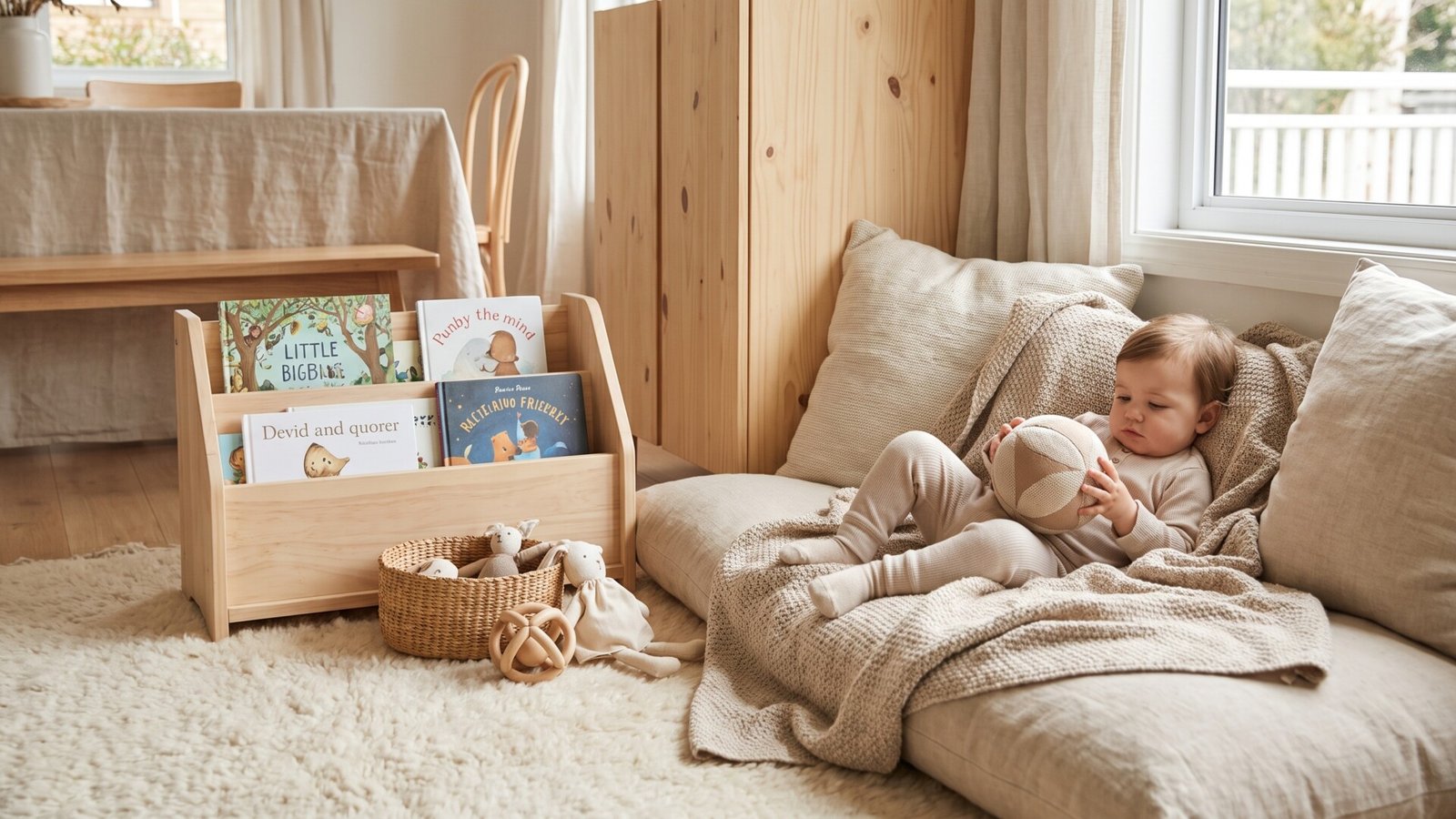
Creating a Calm Corner for Toddlers: A Parent’s Guide
Toddlers are full of energy, curiosity and sometimes very big feelings. Between learning new skills, bumping into limits and experiencing the world for the first time, meltdowns and frustration are a normal part of the age. One helpful tool is a calm corner: a designated space in your home where your child can pause, reset and do something soothing, ideally with you close by.
In this guide, we’ll cover what a calm corner is, how to set one up on a budget, which items are safe for toddlers (and which need extra care), and how to use the space well. If your child is a little older, see our guide to calm-down corner toys and tools for preschoolers.
What Is a Calm Corner?
A calm corner (also called a calm-down space, cozy corner or sensory corner) is a safe, inviting area where a toddler can take a break when they feel upset, tired or overwhelmed. Unlike a time-out spot, it is not a punishment. It is a place a child can choose to go, or be gently invited to, with a caring adult nearby.
Key features of a calm corner:
- Safe and comfortable: A soft rug, cushions or a floor pillow
- Calming, age-appropriate items: Soft textures, a few sensory tools, board books
- Low distractions: Away from loud noises, screens or active play areas
- Predictable setup: Consistency helps toddlers know where to go when emotions run high
Realistic Expectations for Toddlers
Before you build anything, it helps to know what a calm corner can and can’t do at this age. Toddlers (about 1 to 3 years old) are still developing the brain skills behind self-control, so they rely on adults to help them settle, a process often called co-regulation. A calm corner won’t make a two-year-old calm themselves on command. What it can do is give you both a predictable place to slow down together, and over time give your child a familiar routine to lean on. Our guide to how sensory toys help with emotional regulation explains the wider picture.
Many parents find the idea clicks more around age 3, when children can start choosing the space themselves. Until then, expect to walk your toddler there, sit nearby and take a few slow breaths with them.
Why a Calm Corner Matters
1. It Supports Emotional Regulation
Toddlers are still learning to identify and manage feelings. A calm corner gives them a physical place to practice calming strategies, with your help at first.
2. It Encourages Independence Over Time
As children grow, they can begin to recognize when they need a break and choose the space on their own. That sense of choice matters more than any single toy.
3. It Can Take Pressure Off the Household
Having a designated spot can make big feelings feel more manageable for everyone, because you have a go-to plan instead of improvising in the middle of a meltdown.
4. It Invites Quiet, Skill-Building Play
Calm corners often include books, sensory tools and fine motor activities, which let children practise looking, listening and using their hands. They also create regular chances to talk about feelings, which helps vocabulary for emotions grow.
Match the Corner to How Your Toddler Copes
Most calm-corner advice is a generic list of items. A more useful starting point is the pattern you actually see when your toddler is overwhelmed, because the right setup differs:
- The clinger wants to be held and cries into you. Build the corner for two: a floor cushion big enough for you both and one or two board books about feelings. Skip gadgets.
- The hider runs off, covers their face or wants to be alone. A pop-up tent or a blanket nook open on one side, a plush and a dim light out of reach suit them. Stay in sight.
- The mover kicks, stomps or throws. Put the corner on a soft mat with room to rock, roll and stretch, and keep hard or breakable items out of it. Offer movement first and a book once the energy has dropped.
- The watcher goes quiet and stares, and is easily overstimulated. A sealed sensory bottle, low light and very little noise tend to work best.
Toddlers often switch patterns depending on how tired or hungry they are, so start with the one you see most, then adjust after a few weeks. Fewer, better-matched items beat a crowded corner.
Planning Your Calm Corner
Creating a calm corner doesn’t require a large space or fancy materials. Here’s how to plan effectively:
1. Choose the Right Location
- Low-traffic area: Avoid busy hallways or spots near loud appliances
- Visible but private: You can supervise without hovering. Toddlers should never be left alone in an enclosed space.
- Accessible: Your toddler can walk or crawl to it easily
- Away from hazards: Keep cords, heaters, blinds and unsecured furniture out of reach
2. Pick a Base
Start with a soft foundation:
- Small rug or foam mat
- Floor cushions or a low, toddler-sized chair. Skip large bean bags with loose fill and unsecured zippers for toddlers; the filling beads are a choking and suffocation concern.
- A small play tent or a blanket draped over furniture for cozy privacy (stay close, and keep blankets away from cords and heat sources)
3. Add Sensory Tools
Choose items that are tactile, calming and safe for toddlers. Always read the age label, since many popular sensory products are made for ages 3 and up:
- Soft plush toys. Weighted plush is a special case; see the safety section below.
- Squishy balls or sensory blocks sized too large to fit in a toddler’s mouth
- Play dough or Kinetic Sand in small containers, with an adult present. Kinetic Sand is labeled ages 3+, and play dough grades vary by product, so check each box.
- Textured fabric swatches or sensory mats
If your toddler enjoys messier textures, our guide to sensory bins for picky toddlers shows how to introduce them one dry, safe texture at a time.
4. Include Calming Visuals
- Sealed sensory bottles or liquid motion timers (see the safety notes on checking seals)
- Soft battery-powered lights or a dimmable lamp placed out of reach. Avoid lava lamps, which get hot.
- Board books with simple, soothing images
5. Incorporate Sound or Music (Optional)
- Soft lullabies or a white noise machine kept at a low volume and placed away from your child’s ears
- Simple musical instruments like egg shakers with secure closures
- Avoid overly stimulating or loud devices
Starter Setups by Budget
You can build a useful corner in an afternoon, and none of it needs to be bought:
- Free: A blanket on the floor, two or three sofa cushions, a favourite plush and two board books you already own. Pick a spot and use it the same way each time.
- Low cost: Add a foam mat or small rug, a homemade sealed sensory bottle and a light blanket draped over a couple of chairs for a nook.
- Worth the upgrade: A pop-up tent with stable poles, a dimmable lamp out of reach, and a low shelf or basket so your toddler can see and choose the books.
Start at the free level and add one thing at a time. If a tool doesn’t get used within a few weeks, take it out rather than adding more.
Safety Notes for Calm Corner Items
Because toddlers explore with their mouths and hands, a few popular calm-corner items deserve extra thought:
- Weighted plush and lap pads: These are generally made for older children, so check the manufacturer’s age label and weight guidance before buying. Weighted products should never be used for sleep or placed on an infant or young toddler; safety groups, including the American Academy of Pediatrics, have warned about weighted infant sleep products. If your child has sensory needs, ask their pediatrician or occupational therapist first.
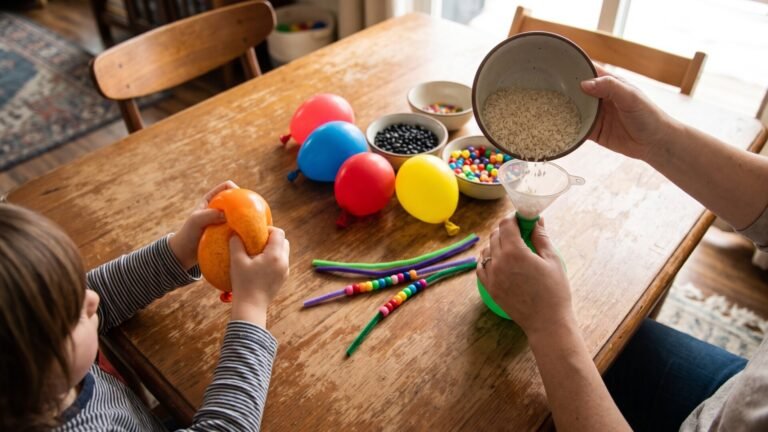
- DIY sensory bottles: Fill with water, a little glitter glue or large beads, then seal the lid with strong glue or tape. Toddlers can chew or shake loose a lid, so inspect regularly and retire any bottle that leaks.
- Rice or bean bags: If a seam splits, the contents become a choking hazard. Stitch them double or skip them until your child is older.
- Small parts and batteries: Anything that fits inside a toilet-paper tube is a choking hazard for children under 3. Keep button and coin batteries in light-up toys secured behind a screwed-shut compartment.
Activities for a Calm Corner
The goal is to offer calming activities that toddlers can do with your support, and eventually on their own.
1. Squeezing and Cuddling
- A soft plush or squishy toy can help toddlers release tension through touch.
- Try slow, steady squeezes while you breathe together. A fun image: “smell the flower, blow out the candle.”
2. Fine Motor Play
- Play dough and chunky puzzles give hands something to do while tactile input helps some children settle.
- Simple puzzles or stacking blocks can redirect attention once the big feeling has passed.
3. Visual Focus
- Sealed glitter bottles and liquid motion timers offer something slow to watch.
- Watching glitter settle gives a natural cue to keep breathing slowly.
4. Books and Storytelling
- Board books with soft colors and simple text encourage quiet reading. Books about feelings are especially useful.
- Use this time to name feelings: “I see you’re feeling frustrated. Let’s take a deep breath together.”
5. Movement and Stretching
- Gentle rocking, rolling on a soft mat or stretching can help burn off extra energy.
- A low balance board or small indoor climber may fit if you have space. Supervise closely.
Tips for Using a Calm Corner Effectively
1. Keep It Positive
Avoid using the calm corner as punishment. Present it as a cozy place to take a break, and join your child there. If they refuse to go, that’s okay; try a lap, a hug or a change of scenery instead.
2. Model Use When Everyone Is Calm
Visit the corner during happy moments. Show slow breaths, squeezing a plush or watching a sensory bottle, so the space feels familiar before it is needed.
3. Keep the Space Consistent
Use the same location and a core set of items each time. Predictability helps toddlers feel safe.
4. Talk Afterwards
Once your toddler is calm, briefly talk about what happened and what helped. Keep it simple: “Did squeezing the ball help?” Don’t expect long answers at this age.
5. Rotate Items Occasionally
Swap one or two items now and then to keep interest, but keep the base setup the same. Fewer items is usually better than more. For tips on rotation more generally, see our related guide on what to do when a toy breaks, which also covers when to retire worn items.
Common Mistakes to Avoid
- Introducing it mid-meltdown. A child in full tantrum can’t learn a new routine. Practise when everyone is calm.
- Overfilling it. A corner packed with toys becomes a play area, not a place to settle.
- Adding a screen. Tablets and TV work against the point of a low-stimulation space.
- Leaving the child alone. At this age, the adult is the calming tool and the corner is the setting.
- Expecting quick independence. Using the corner without help is usually a preschool-age skill.
Calm Corner Toy and Tool Ideas for Toddlers
| Item | What it offers | Age and safety note |
|---|---|---|
| Soft plush | Comfort and cuddling | Choose embroidered (not plastic) eyes; machine-washable is ideal |
| Weighted plush or lap pad | Deep pressure | Check age and weight label; not for sleep; ask your pediatrician if unsure |
| Squishy balls | Tactile squeezing | Must be too large to fit in the mouth |
| Play dough or Kinetic Sand | Tactile exploration | Kinetic Sand is graded 3+; check the label on any dough; adult present; not edible |
| Sealed glitter bottles / liquid timers | Slow visual focus | Check seals; retire if they leak |
| Textured mats or fabric swatches | Touch variety | Avoid loose threads or beads |
| Board books | Quiet reading and feelings vocabulary | Sturdy pages suit toddlers best |
| Egg shakers / soft instruments | Gentle sound | Make sure closures are secure |
For children with sensory needs or who benefit from fidget tools later on, our guide to safe fidget toys and the DIY fidget toy ideas are helpful next reads.
DIY Calm Corner Ideas
You don’t need to spend a lot to create a cozy space. Here are budget-friendly options:
- Blanket Fort Corner – Drape a light blanket over a couple of chairs to form a nook. Keep it open on one side so you can see in.
- Sealed Sensory Bottles – Clear plastic bottle, water, a little glitter glue; seal the lid with glue and check often.
- Soft Pillow Stack – A pile of floor cushions makes a “snuggle zone.”
- Texture Basket – A basket of safe items like a silky scarf, a soft washcloth and a smooth wooden spoon.
- Pop-Up Tent – A small play tent creates a private feel (look for ones with stable poles and no sharp edges).
Keeping the Corner Clean
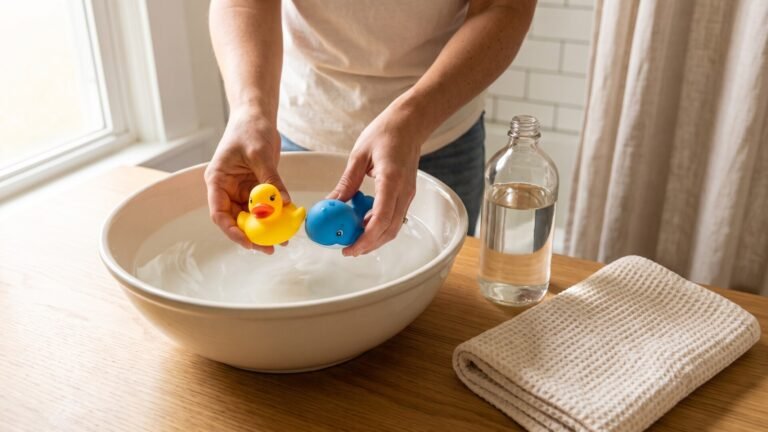
Calm-corner items get hugged, chewed and dropped, so give them a quick routine. Wash plush and fabric swatches regularly, wipe plastic squishy balls and bottles with mild soap and water, and check bottle seals each time you tidy. Soft rubber or silicone squeeze toys can trap moisture inside, so if you include any, follow our guide to sanitizing rubber and silicone toys naturally.
Integrating Calm Corners Into Daily Life
- Morning routine: A quick cuddle visit for a calm start to the day
- Transition times: Before leaving home, before nap, or after daycare or preschool
- Meltdowns: Offer the space once the worst has passed. A child in full tantrum needs safety and your calm presence first.
- Quiet play: Reading or gentle tactile play side by side
Taking the Calm Corner on the Road
Big feelings don’t only happen at home. A small pouch with the same few items from your corner, such as the usual plush, one board book and a silky scarf, brings familiarity with you to a relative’s house, a waiting room or the car. Find a quiet spot, sit with your child and use the same slow breathing you use at home. Avoid carrying a bottle with a loose lid, and keep anything small out of reach. For more outing-friendly ideas, see our guide to sensory toys that keep kids calm in public.
Benefits for Parents and Caregivers
- A concrete plan for hard moments, which can make you feel more prepared
- Natural opportunities for parent-child talk about emotions
- A foundation for the self-regulation skills children keep developing through the preschool years
Key Takeaways
- A calm corner is a positive, supportive space, not a time-out.
- Toddlers need an adult nearby; independence grows slowly.
- Choose soft, tactile and visual items, and check each one’s age label and safety.
- Keep the setup simple and consistent.
Frequently Asked Questions About Calm Corners For Toddlers
What age is a calm corner appropriate for?
You can set one up as early as the toddler years (around 1 to 3), but expect to use it together. Many children begin choosing it themselves around age 3 or later.
Is a calm corner the same as a time-out?
No. A time-out is a consequence. A calm corner is a supportive space for settling feelings, and a caring adult usually joins the child there.
Are weighted stuffed animals safe for toddlers?
It depends on the product. Many are labeled for older children, and weighted items should never be used for sleep. Check the manufacturer’s age and weight guidance and ask your pediatrician or occupational therapist if you are unsure.
What if my toddler refuses to use the calm corner?
That’s common. Try visiting during calm moments, bring a favorite book, or sit there yourself. Don’t force it. A lap or a hug works just as well.
Should a toddler’s calm corner include a tablet or TV?
No. The point of the space is low stimulation, and screens work against that. Stick to soft items, a book or two and one slow visual such as a sealed sensory bottle, and keep the corner away from the TV.
When should I talk to a professional about my toddler’s big feelings?
Raise it with your pediatrician if tantrums are very frequent, very long or intense, involve hurting themselves or others, or you simply feel worried. Meltdowns are normal at this age, and a professional can help work out whether anything more is going on.
Creating a calm corner can help toddlers build emotional awareness and self-soothing skills in a way that’s safe, supportive and low-pressure. With a thoughtful setup, steady use and your calm presence, this small space can make hard moments a little easier for the whole family.