Reviews & Comparisons: Your Parent-Friendly Guide to Choosing the Best Toys
Buying toys can feel like navigating a jungle. Walk down any toy aisle, or scroll through an online store, and you meet hundreds of options: colors, sizes, materials, price points, and endless promises that “this is the toy your child absolutely must have.” It’s overwhelming.
That’s exactly why toy reviews and comparisons exist, and why this hub is here. This page explains how to evaluate and compare toys so you can make informed decisions that save time and money, and then points you to the detailed comparisons on Toy Guide Hub.
Whether you’re trying to decide between LEGO and Playmobil, looking for the perfect ride-on toy, or hunting down the best outdoor play equipment, this hub is your starting point. We walk through the principles of evaluating toys, what to look for in reviews, and where to find in-depth comparisons and guides across the site.
By the end, you’ll know how to choose toys that are safe, durable, developmentally appropriate, and, most importantly, likely to be played with.
Why Toy Reviews & Comparisons Matter
Parents don’t just buy toys. They invest in playtime, learning, and often a little peace and quiet. Here’s why reading reviews and doing comparisons is worth your time:
1. Make Informed Decisions
Toy reviews highlight:
- Safety issues
- Durability
- Developmental value
- Ease of use
Instead of guessing, you get the experience of other buyers and the context a good comparison adds.
2. Save Money
Not all toys are worth the price tag. Reviews and comparisons help you spot:
- Overpriced gimmicks
- Better alternatives in the same price range
- Toys that last longer and grow with your child
3. Match Toys to Your Child
Every child is different. Reviews and comparisons help identify toys that:
- Fit developmental stages
- Invite practice of specific skills (fine motor, gross motor, creativity)
- Align with interests (vehicles, music, STEM, pretend play)
Start Here: Toy Guide Hub Reviews & Comparisons
These are the detailed, head-to-head comparisons currently in this section. Each one looks at age range, durability, how the toys are actually used, and who each option suits best.
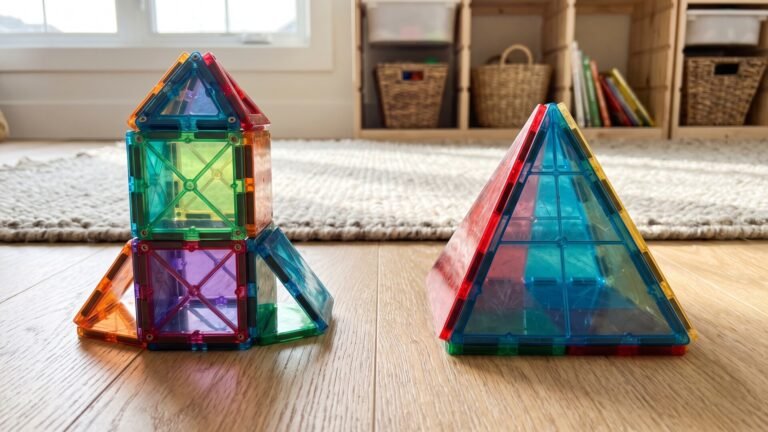
- Magnetic Tiles vs. Building Blocks: which suits which age, and what each one teaches about structure and design.
- Connetix vs. Magna-Tiles: how the two best-known magnetic tile systems compare for tall builds.
- Magna-Tiles vs. PicassoTiles: durability and long-term value compared.
Looking for something broader? Our category hubs go deeper on each type of toy: Building & Construction Toys, STEM Toys, Montessori & Early Learning Toys, Outdoor & Seasonal Toys, Toys for Children With Specific Needs, Toys by Age, Play & Activity Ideas, and Toy Brands.
Understanding Toy Categories & Features
Before diving into comparisons, it helps to understand how toys are generally classified and what features matter most. This makes reviews much more meaningful.
1. Construction & Building Toys
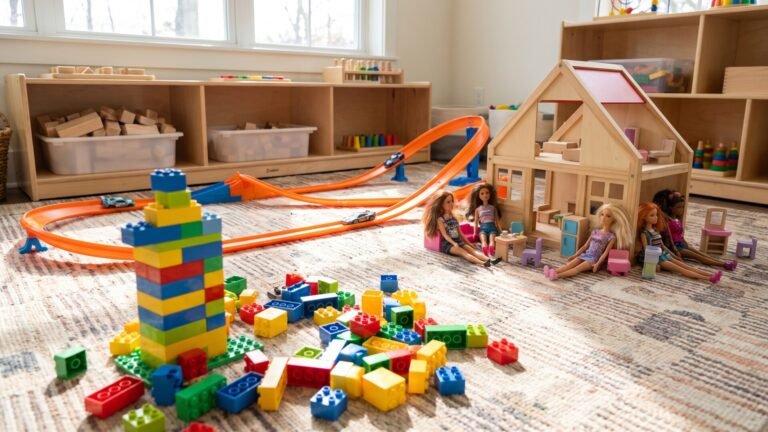
Think: LEGO, DUPLO, Playmobil, magnetic tiles. Our complete guide to building and construction toys covers this category in depth.
Key considerations:
- Age-appropriateness
- Complexity & creativity potential
- Durability
- Safety of small parts
2. Ride-On Toys & Bikes
From balance bikes to pedal cars, these toys give children a chance to practice balance and coordination.
Key considerations:
- Stability and safety
- Age and weight recommendations
- Ease of use & assembly
- Storage convenience
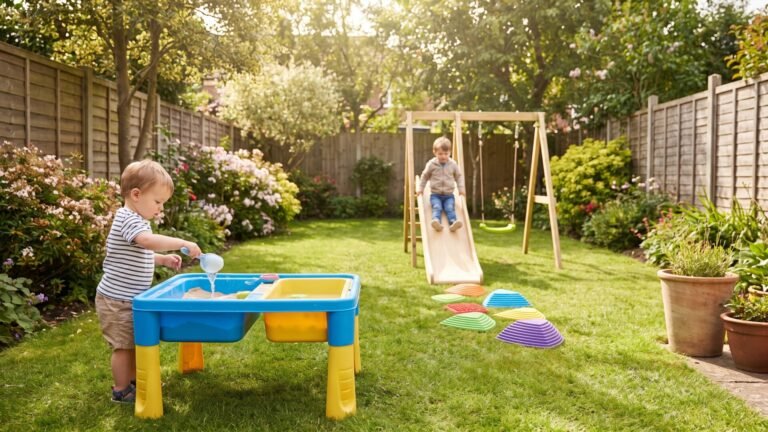
3. Outdoor Play Equipment
Swings, slides, trampolines, sandboxes.
Key considerations:
- Material quality (rust-proof, UV-resistant)
- Safety and certifications
- Assembly and maintenance
- Space requirements
4. Board Games & Puzzles
From simple toddler puzzles to complex family board games.
Key considerations:
- Age range and difficulty
- Skills practiced (memory, strategy, problem-solving)
- Number of players
- Durability of pieces
5. Musical & Art Toys
Pianos, drums, easels, and crafting kits.
Key considerations:
- Noise level (for sanity)
- Safety of materials
- Skill-building potential
- Durability
6. STEM, Montessori & Specialty Toys
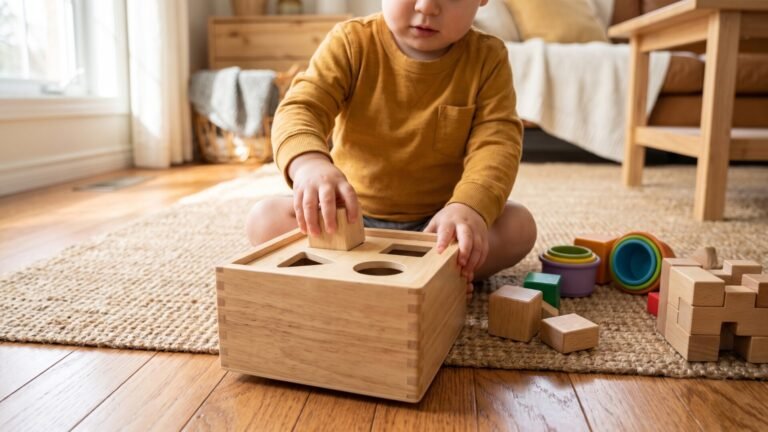
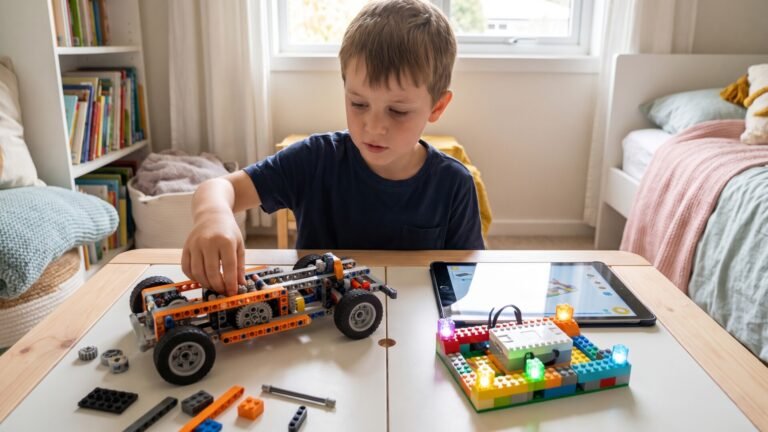
Many toys are sold with a “STEM” or “Montessori” label. Treat both as a starting point for your own questions, not a guarantee. Our STEM toys guide explains which concept (sequencing, cause and effect, measurement) a toy actually exercises, and our Montessori toys guide explains the principles behind the label: child-led play, real and purposeful materials, and uncluttered presentation. “Montessori” is not a certification for toys, so a wooden toy is not automatically Montessori-aligned. For children who need particular sensory or motor features, see toys for children with specific needs.
How to Read & Interpret Toy Reviews
Not all reviews are created equal. Here’s a friendly guide for parents:
1. Look for Reputable Sources
- Parent blogs and websites that explain their reasoning (like Toy Guide Hub)
- Trusted consumer review platforms
- Manufacturer pages for age grade, dimensions, and materials
- Official safety sources such as the U.S. Consumer Product Safety Commission for recalls and safety rules
2. Pay Attention to Recurring Themes
- One-off complaints are less concerning than repeated issues.
- If multiple reviewers mention a choking hazard, loose parts, or flimsy construction, take note.
3. Separate Hype from Reality
- Just because a toy is trending or has a million ads doesn’t mean it’s great.
- Reviews that detail durability, age fit, and real-world usability are the most valuable.
4. Consider Your Child’s Context
- Age, abilities, interests, and space at home
- Some toys shine in big open spaces; others are perfect for apartments
5. Watch for Review Red Flags
- Reviews that never mention a downside. Every toy has trade-offs, such as price, storage, or batteries.
- Reviewers who rate a toy immediately after unboxing. Durability only shows after weeks of real play.
- Vague praise (“my kid loves it”) with no age mentioned. A toy that delights a four-year-old may bore a seven-year-old.
- Claims that a toy will make a child smarter or “boost brain development.” A toy can invite practice of a skill, but no toy guarantees an outcome.
Age Grade vs. Real Readiness: A Safety Primer
The age printed on a toy box is mainly a safety and suitability guide, not a measure of how clever your child needs to be. A “4+” label on a building set often means it contains small parts that are not intended for children under three or four, whatever their skills. It does not mean a four-year-old will necessarily enjoy it. Use the label as a safety floor, then use your own knowledge of your child to judge whether the toy fits their interests and abilities.
A few safety checks are worth making before you compare anything else:
- Small parts for under-3s: In the United States, toys intended for children under 3 are not allowed to contain small parts, and toys for ages 3 to 6 that do must carry a choking hazard warning. If a younger sibling shares your home, keep pieces from sets marked for older children out of reach. The CPSC publishes small parts and choking hazard labeling FAQs if you want the details.
- Button and coin batteries: Swallowed button batteries and loose magnets are medical emergencies. Check that battery compartments close with a screw, and call your local emergency number or poison control (in the U.S., 1-800-222-1222) right away if you suspect a child has swallowed one.
- Magnets: Magnetic building tiles use larger pieces with sealed magnets, which is a different product from loose, small, powerful magnets. Inspect tiles regularly and stop using any piece that has cracked open.
- Cords and straps: Long strings on pull toys or crib-adjacent items can be a strangulation risk for babies and toddlers.
- Recalls: Before buying a second-hand or older toy, search the CPSC recall list for the product name.
DIY Comparison Tips
Even without a pre-written comparison, you can evaluate toys yourself:
- List the top contenders in the category
- Compare key features: age, size, durability, safety, price
- Check reviews for real-world experiences
- Observe your child during trial play (many stores allow testing)
- Consider long-term value: Does this toy grow with your child?
A Simple Value Check: Cost per Year of Play
A useful way to compare a cheap toy with an expensive one is to estimate how many years it will realistically stay in use. An open-ended set that a child returns to between ages 3 and 8 can be better value than a cheaper single-use toy that is set aside after a month. Also look for hidden costs: sets that need expansion packs, toys that depend on an app or batteries, and items that need dedicated storage.
| Question | Why it matters |
|---|---|
| What is the manufacturer’s age grade? | It is a safety floor, not a skill test. |
| Is it open-ended or single-use? | Open-ended toys usually stay in rotation longer. |
| Does it need extras (batteries, apps, refills)? | Running costs change the true price. |
| Can siblings or friends play together? | Shared toys tend to get more use. |
| How much space does it need to play and to store? | A toy that is a hassle to set up often goes unused. |
Common Toy Comparison Scenarios
Some toys are nearly synonymous in the minds of parents. These are the ones most people struggle to choose between.
LEGO vs Playmobil
- LEGO: Open-ended building that invites fine motor practice and creativity. Age ranges run from toddler DUPLO sets to sets for teens and adults. The standard bricks are small, so keep them away from children under three.
- Playmobil: Focused on imaginative play and storytelling. Figures and accessories encourage pretend play. Fewer pieces to assemble but less construction flexibility. Playmobil also makes a separate 1.2.3 line with larger pieces for toddlers.
Quick tip: If your child loves building and problem-solving, LEGO shines. If they love imaginative storytelling and roleplay, Playmobil is often the better fit. Many households end up with both at different stages. You can read more about both makers on our toy brands page.
DUPLO vs Classic LEGO
- DUPLO: Bigger, chunkier bricks designed for toddlers and preschoolers. LEGO lists DUPLO sets from about 18 months (1.5+) up through 4+, the last of which use starter bricks to bridge to the regular system. Easier for small hands and designed to meet the safety rules for young children.
- Classic LEGO: Smaller bricks, better for older kids. Offers more complex building opportunities, but is not intended for toddlers.
Quick tip: DUPLO suits toddlers from around 18 months, and many children are ready to move to standard LEGO sets around age 4 to 5, but let your child’s interest and the set’s age label guide the timing.
Magnetic Tiles vs Traditional Blocks
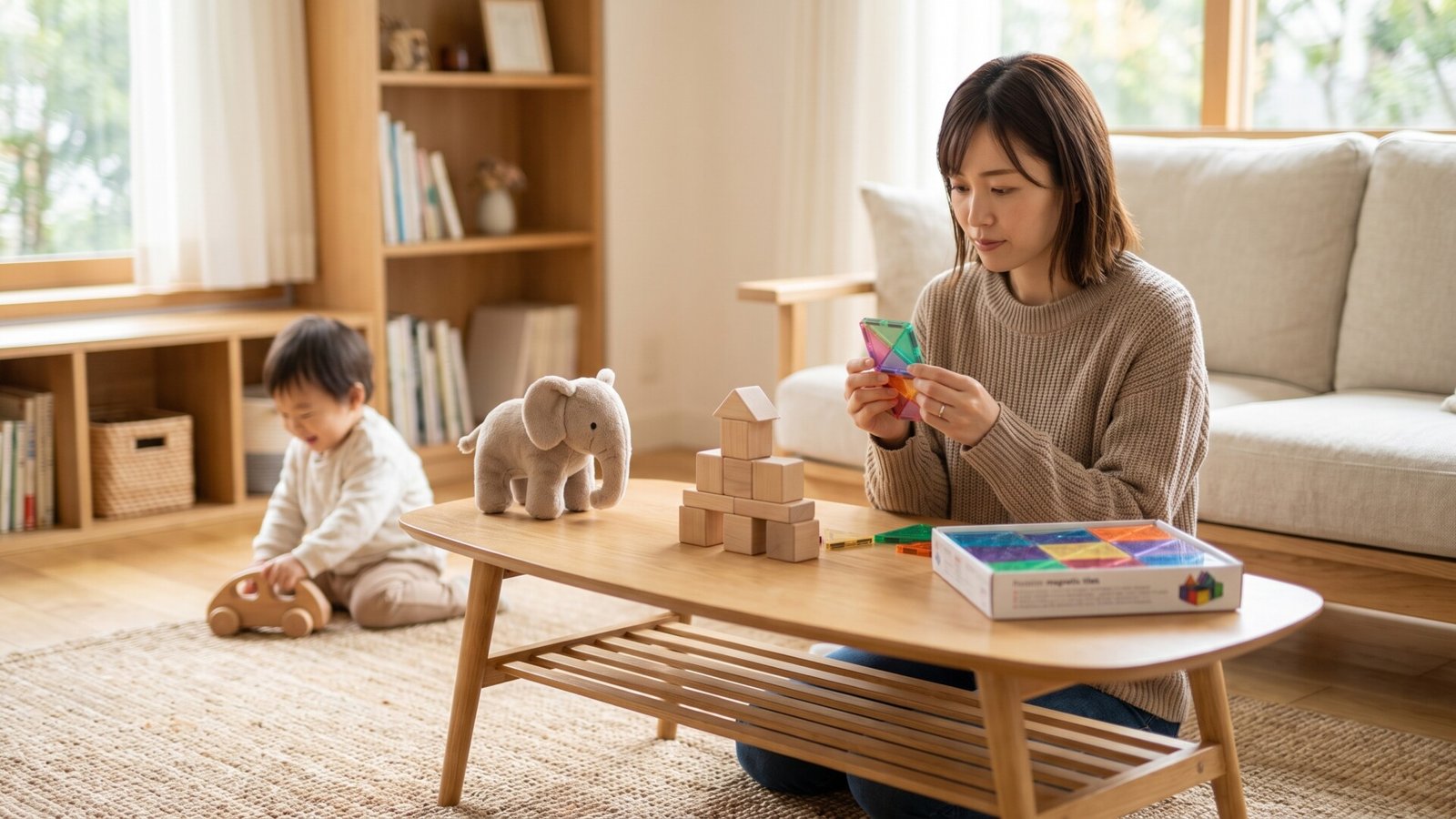
Magnetic tiles snap together instantly, which makes them easy for younger builders and good for large, translucent structures. Traditional blocks need more balance and planning, which many parents find better for patient, precise stacking. Our full comparison of magnetic tiles vs. building blocks covers age fit and price trade-offs, and you can see how specific brands stack up in Connetix vs. Magna-Tiles and Magna-Tiles vs. PicassoTiles.
Ride-On Toys & Bikes
Ride-on toys give children a chance to practice balance and coordination. Here’s what to consider in comparisons:
Types
- Push & ride-on toys (toddler cars, walkers)
- Balance bikes
- Pedal bikes with training wheels
- Scooters and tricycles
Comparison Factors
- Weight & portability
- Durability and material quality
- Age & weight limits (always check the manufacturer’s maximum rider weight)
- Safety features (brakes, stability, non-slip surfaces)
Example: A wooden push car vs a plastic ride-on car.
- Wooden cars: sturdy, longer-lasting, quieter, eco-friendly
- Plastic cars: lightweight, often more features (horns, storage), less expensive
For a worked example of how we weigh price against play value in this category, see our PonyCycle ride-on horse review. Helmets are a sensible habit for any wheeled toy, from balance bikes to scooters.
Outdoor Play Equipment
Outdoor play encourages exercise, motor skills, and social play. Choosing the right equipment can be overwhelming, and our Outdoor & Seasonal Toys hub collects our detailed guides.
Things to Compare
- Material quality: UV-resistant plastics, rust-proof metal
- Age range: Some swings and slides are toddler-friendly; others are better for older kids
- Size and space: Make sure the equipment fits your yard
- Ease of assembly: Some larger items require a weekend to set up
- Safety features: Rounded edges, stable bases, non-slip surfaces
Popular comparisons:
- Metal vs plastic slides
- Wooden vs plastic playhouses
- Inflatable vs structured trampolines
Pro tip: Outdoor toys should be durable, weather-resistant, and easy to maintain. Check the manufacturer’s weight limit and assembly instructions, and look for a soft surface under climbers and swings.
Board Games & Puzzles
Board games and puzzles are classic toys that invite practice of critical thinking, memory, and social skills.
Considerations When Comparing
- Age suitability: Make sure the game matches your child’s cognitive skills
- Number of players: Solo or group play?
- Complexity: Too easy = boredom, too hard = frustration
- Durability: Thick cardboard pieces vs thin puzzle pieces
Examples of comparisons:
- Classic puzzles vs 3D puzzles: 3D puzzles lean on spatial reasoning; classic puzzles build pattern recognition
- Simple board games (Candy Land, Chutes & Ladders) vs strategy games (Ticket to Ride, Carcassonne): Depends on age and attention span
Musical & Art Toys
Creative play encourages self-expression and fine motor practice.
Musical Toys
- Drums vs keyboards vs xylophones
- Consider volume, durability, and educational value
Art Toys
- Easels vs coloring boards vs crafting kits
- Focus on non-toxic materials, easy cleanup, and age-appropriateness
Tip: Musical and art toys are a good fit for toddlers and preschoolers, but quality matters. Cheap, noisy instruments or markers that dry out quickly can ruin the experience.
How Toy Guide Hub Approaches Reviews
Our comparisons are built on research rather than lab testing: we look at manufacturer specifications and age grades, safety guidance, and what parents consistently report about durability and play value. We explain the trade-offs so you can decide, and we say so when something is a matter of taste rather than fact. Some pages on the site contain affiliate links, which means we may earn a commission if you buy through them, at no extra cost to you. That never changes the age or safety advice we give.
As the Reviews & Comparisons section grows, expect more side-by-side guides for ride-ons, outdoor equipment, board games and puzzles, and musical and art toys. In the meantime, the category hubs linked above are the best place to find detailed guidance for each.
Quick Tips for Parents
- Always check age recommendations and safety standards.
- Rotate toys to keep children engaged.
- Look for durability. A broken toy is both frustrating and unsafe.
- Balance open-ended toys (like building sets) with targeted skill toys (like puzzles or musical instruments).
- Read multiple reviews before investing in bigger-ticket items.
- Consider your child’s interests. They’ll use a toy more if they enjoy it.
- Keep a mix of indoor, outdoor, active, and quiet play items.
Frequently Asked Questions About Toy Reviews And Comparisons
How do I know if a toy review is trustworthy?
Look for reviews that mention the child’s age, explain trade-offs, and refer to manufacturer specifications or official safety information. Be cautious of reviews that only praise a toy, or that promise it will make a child smarter.
Is the age on the box a developmental guideline?
Mostly it is a safety and suitability label. A 4+ grade often reflects small parts or complexity, not a skill your child must have. Use it as a floor and judge fit by your child’s interests and abilities.
Is it worth paying more for a well-known brand?
Sometimes. Higher-priced toys can be more durable and hold their value, but not always. Compare materials, warranty, reviews from long-term owners, and how many years of play you realistically expect.
What should I check before buying a toy for a child under 3?
Look for an age grade that includes under-3s, avoid small parts and loose magnets, check that battery compartments are secured, and avoid long cords. If a toy is meant for older children, keep it away from toddlers.
Should I buy open-ended or single-purpose toys?
A mix works well. Open-ended toys such as blocks and tiles tend to stay in use for years, while single-purpose toys like a puzzle or musical instrument target a specific interest or skill.
Where can I find detailed toy comparisons on Toy Guide Hub?
Start with the list near the top of this page, which includes our magnetic tile and building block comparisons, then explore the category hubs for building toys, STEM, Montessori, outdoor play, and more.
Final Thoughts
Toy reviews and comparisons are not about hype or trends. They’re about making informed decisions for your child’s playtime and safety. By understanding categories, reading reliable reviews, and weighing play value against price, you can build a toy collection that grows with your child and makes your life easier.
This hub is your starting point. From here, you can explore comparisons and guides for construction toys, ride-ons, outdoor equipment, board games, puzzles, musical instruments, and art toys. Bookmark it as your reference whenever a new toy enters your home.