Best Backyard Trampolines for 2026: Safety‑Rated and Durability Tested
There’s something magical about a trampoline in the backyard: the squeals of laughter, the rhythmic bounce, the way kids burn off energy before dinner. But as a parent you also know the worry. Trampolines have a reputation for injuries, and choosing the wrong one (or using it the wrong way) can turn fun into an emergency-room visit.
The good news is that modern backyard trampolines are built with far more safety thinking than the bare-frame models many of us grew up with. Enclosure nets, full spring padding, and springless designs are now common. This guide explains what to look for, how the main trampoline types differ, and which well-known models are worth a closer look in 2026, with honest trade-offs for each.
How we chose these models: this is a research-based guide. We compared manufacturer specifications, published warranty terms, and the safety standard each product states it meets. We have not run lab durability tests ourselves, so treat any “rating” as a summary of the specs, not a test score. Prices are approximate US dollar ranges and change often, so check the current price before you buy. This page contains affiliate links on Amazon, Target, and Ryder Toys; if you buy through them we may earn a commission at no extra cost to you.
This guide is part of our Outdoor & Seasonal Toys collection. If you are weighing a bigger investment, our guide to heavy-duty trampolines and enclosure netting goes deeper on net design.
Before You Buy: A Frank Word on Trampoline Safety
Trampolines are among the more injury-prone pieces of backyard equipment, and no product removes that risk entirely. The American Academy of Pediatrics has long advised against recreational home trampolines, and the American Academy of Orthopaedic Surgeons and other pediatric groups also publish guidance on trampoline injuries (sprains, fractures, and head and neck injuries are the usual concerns, often from collisions between jumpers or from falls). The AAP also advises that children under about 6 should not use full-size trampolines. Please read the current guidance from your pediatrician and the US Consumer Product Safety Commission (CPSC) and decide what is right for your family.
If you do decide a trampoline is right for you, the choices below (enclosure, padding, placement, and house rules) matter more than the brand name. One jumper at a time is the single most useful rule, because multi-jumper collisions are a common cause of injury.
Key Factors to Consider When Buying a Trampoline
Before you click “buy,” understand what makes a trampoline safe and durable. Don’t be swayed by flashy colours or low prices alone.
Safety Features
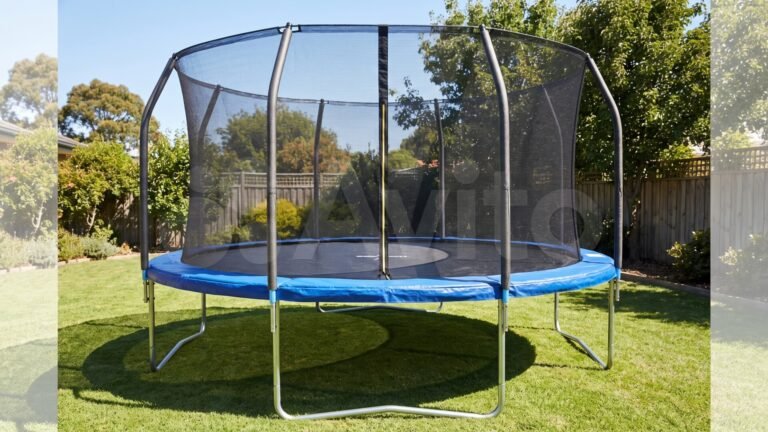
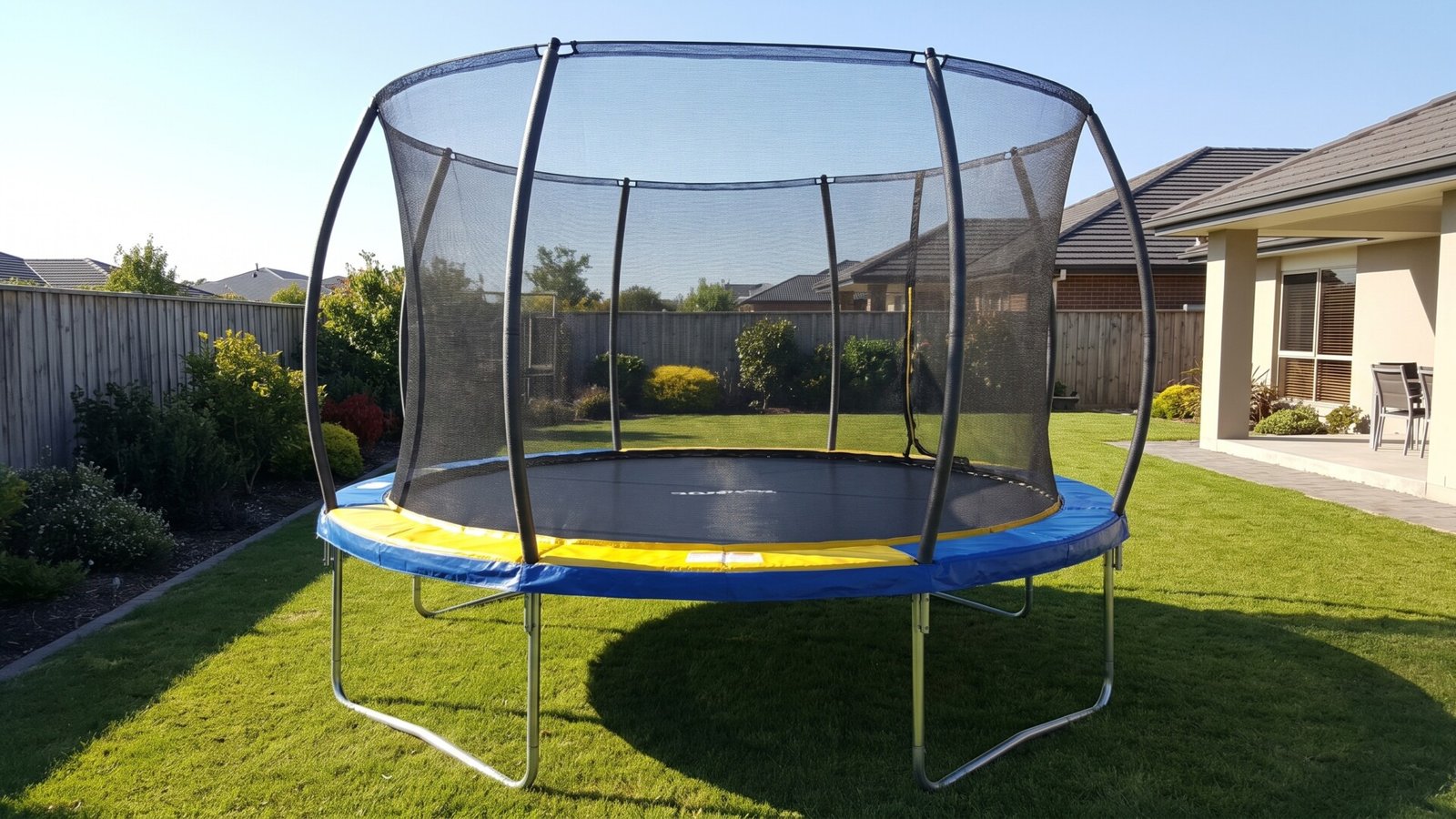
- Enclosure net: Treat it as essential. The net should attach to the jumping mat or frame with no gaps, close with a secure zipper or buckle, and be tall enough to keep a jumper from bouncing over the top. Check how the net is attached before you buy.
- Padding: Thick, weather‑resistant foam over the springs and frame. Look for closed‑cell foam (it doesn’t soak up water) and UV‑resistant vinyl covers, and replace pads that compress or tear.
- Spring covers (or springless design): Springs are a pinch hazard. Springfree-style trampolines use flexible composite rods instead, and some models use bands. Traditional trampolines need full spring padding that stays in place.
- Weight limits: Exceeding the limit stresses the frame and mat and increases injury risk. The limit is usually per jumper, so check the manufacturer’s wording on the product page and manual.
Material Quality
- Frame: Galvanized steel resists rust better than bare or thinly painted steel. Manufacturers who list tube thickness (for example, up to 1.5 mm on some models) make it easier to compare; thicker is generally sturdier.
- Jumping mat: Polypropylene is standard. Look for UV‑treated material and reinforced, multi‑row stitching at the edges.
- Springs: Galvanized steel springs are typical. Longer springs (roughly 7–9 inches on 12–15 ft models) tend to give a softer bounce than short ones, though the right number of springs matters too.
Size & Shape
- Round: Most common for backyards. The bounce tends to direct jumpers toward the centre, which can reduce the chance of landing near the edge. Best for recreational family use.
- Rectangular: Preferred by gymnasts and serious jumpers for a more even, higher bounce. Larger footprint and usually pricier.
- Oval and square: A compromise between the two; Springfree, for example, sells both oval and square models.
Weight Capacity & User Age
- Always follow the manufacturer’s stated weight limit; real limits for popular 14–15 ft models range from about 200 lb to over 400 lb depending on brand.
- Toddlers and preschoolers: choose a small, ground‑level bouncer with a handlebar rather than a full‑size backyard trampoline.
Ease of Assembly & Maintenance
Most trampolines take a couple of hours with two adults, and large models can take longer. Look for clear instructions, included tools, and labelled parts. Maintenance means checking springs, net, and padding every few months and securing or taking down the trampoline in high winds.
Warranty & Certification
- ASTM International publishes the consumer trampoline safety standard (ASTM F381). Look for a statement that the trampoline meets or exceeds it. This is a voluntary standard, and a brand’s claim is only as good as the testing behind it.
- Some European-made or European-tested models also reference TÜV or CE testing, which is useful extra evidence.
- Warranties vary widely, and the details matter: one popular budget-friendly 15 ft model lists only 1 year on the frame and 90 days on materials, while premium brands list up to 10 years. Compare frame, mat, pad, and net terms separately.
Types of Backyard Trampolines
Not all trampolines are created equal. Understanding the types helps you match the product to your yard, budget, and family’s activity level.
Round Trampolines
The classic backyard trampoline. They are ideal for casual bouncing and families who want a forgiving bounce. Sizes commonly run from about 8 feet to 15 feet. They are usually more affordable than rectangular models.
Rectangular Trampolines
Common in gymnastics training. The bounce is more uniform across the mat, and advanced jumpers get more control. They need more space, usually cost more, and do not have the centring effect of round trampolines. Only buy one if your child is serious about trampoline sports and you have a large, flat yard.
Springless (Springfree-Style) Trampolines
These replace metal springs with flexible rods or bands under the mat, so there are no springs to pinch fingers and the frame sits below the jumping surface. They carry a premium price: Springfree’s own round models list at roughly $850–$2,300 depending on size (6 ft to 13 ft).
In‑Ground Trampolines
The jumping surface sits near ground level, which lowers fall height and looks tidy in the landscape. The downsides: installation is labour‑intensive (you dig a pit), drainage must be managed, and you cannot easily move it.
Trampolines with Accessories
Many brands offer add‑ons such as basketball hoops, ladders, and weather covers. Accessories can extend play value but also add cost and, in the case of hoops, can add collision hazards. Weigh each one against your child’s age.
Quick Picks at a Glance
- Best springless option: Springfree (premium price, 10‑year warranty stated on the manufacturer’s site).
- Best long-warranty spring model: ACON Air 14 ft (10‑year frame warranty, roughly $1,400 for the package we checked).
- Best budget-friendly large model: Skywalker 15 ft round or Zupapa 15 ft, depending on warranty priorities.
- Best for preschoolers: Little Tikes 3‑foot trampoline with handle (about $70–$90).
Top 10 Backyard Trampolines for 2026
Specifications below come from manufacturer or retailer product pages and can change between model years. Where we could not confirm a detail, we left it out rather than guess; always confirm the weight limit, warranty, and certification on the listing you buy from.
1 High‑End Safety & Durability (Trampolines 1–4)
#1 Skywalker Trampolines 15’ Round with Enclosure
Amazon | Target
The Skywalker 15‑foot round is one of the most widely sold enclosed trampolines in the US. Retailer listings describe a galvanized, rust‑resistant steel frame and 96 springs, with a statement that it meets or exceeds ASTM safety standards. The enclosure net and foam‑padded poles come in the box.
Weight limit: 200 lbs per the retailer listing we checked (one jumper at a time is the safest approach).
Warranty: 1 year on the frame and 90 days on materials, according to the listing we checked.
Pros: Large 15 ft jumping area; widely available, with replacement parts and accessories easy to find.
Cons: Short warranty compared with premium brands; as with any spring model, springs are exposed if the pad shifts.
Check Skywalker 15’ on Amazon →
#2 Springfree Trampoline (Round Models)
Amazon | Ryder Toys
Springfree is the best-known springless brand. Instead of metal springs it uses flexible composite rods under the mat, so there are no springs to pinch fingers, the steel frame sits below the jumping surface, and the net is supported by flexible rods rather than rigid poles. Springfree sells round, oval, and square models in several sizes. Note that “TruBounce” was an earlier name used for the Springfree line; check the current model name (for example Medium Round, 10 ft) on the listing you are buying.
Price: roughly $850–$2,300 for round models, from the 6 ft Mini to the 13 ft Jumbo, with a 10 ft Medium Round near $1,400 on the manufacturer’s site.
Warranty: the manufacturer’s site states 10 years. Weight limits differ by model, so check the specific product page.
Pros: No springs and no exposed hard frame; long warranty; well suited to families who prioritise injury prevention.
Cons: Considerably more expensive than spring models; smaller jumping area for the money; careful installation needed.
Explore Springfree TruBounce at Ryder Toys →
#3 Upper Bounce Rectangle Trampoline
Amazon | Target
For families with serious jumpers or young gymnasts, Upper Bounce sells rectangular trampolines (such as the 8 x 14 ft and 9 x 15 ft sizes) with enclosure sets. A rectangular mat gives a more even, higher bounce than a round one. Upper Bounce also sells round 16 ft models, so check the shape and size on the listing before ordering.
Pros: More even bounce for trick practice; larger usable surface than a round trampoline of the same width.
Cons: Large footprint, so measure your yard first; clearance needs are bigger; we could not confirm weight limit and warranty details for every size, so check the listing.
Shop Upper Bounce 16’ on Amazon →
#4 Zupapa 15’ Round Trampoline
Amazon | Ryder Toys
Zupapa’s 15 ft Saffun model is a spring trampoline with an enclosure net. The manufacturer states TÜV (Germany) and ASTM compliance, steel poles up to 1.5 mm thick, and a 10‑year frame warranty with 2 years on the mat, pad, net, and springs.
Weight capacity: the manufacturer lists 425 lbs for its 12, 14, and 15 ft models. Treat that as a structural rating and still keep to one jumper at a time.
Price: roughly $600–$700 on the manufacturer’s site when we checked (the listing showed as sold out, so availability varies).
Pros: Strong warranty for the price; two independent safety standards cited.
Cons: Springs are still exposed if the pad is damaged; stock can be limited.
Get Zupapa 15’ at Ryder Toys →
2 Mid‑Range & Family‑Friendly (Trampolines 5–7)
#5 Vuly Thunder Round
Amazon | Target
Vuly is an Australian brand known for design-forward trampolines, and the Thunder line is its main enclosed family range, sold in several sizes (the Thunder Pro is a newer variant). Specs differ by size and variant, and we could not confirm a single 14 ft figure for weight limit or warranty, so we are not quoting one here.
Pros: Attractive design; a well-regarded brand with accessories such as tent walls sold separately.
Cons: Typically priced above basic spring models; confirm the size, variant, and warranty on the listing.
Check Vuly Thunder on Amazon →
#6 JumpSport Enclosed 12’ Round
Amazon | Ryder Toys
JumpSport is best known for fitness rebounders and its bungee-style, low-impact design. Do not assume a JumpSport trampoline is the same construction as Springfree: we could not confirm the specifications of a 12 ft enclosed JumpSport model, so check the listing for the spring or band design, weight limit, and warranty before buying.
Pros: Compact 12 ft footprint suits smaller yards.
Cons: Specifications unverified at the time of writing; compare against a Springfree or spring model of similar price.
Shop JumpSport 12’ at Ryder Toys →
#7 ACON Air 14’ Round
Amazon | Target
ACON is a Danish brand, and the Air 14 ft is a spring-based trampoline with 96 galvanized steel springs (8.5 inches long). The manufacturer lists ASTM, CE, and AS compliance and a 10‑year frame warranty, 5 years on the springs and mat, 2 years on the safety pad, and 1 year on the net and ladder.
Weight limit: 242.5 lbs per user (the manufacturer says an optional spring kit raises this to 331 lbs).
Price: roughly $1,300–$1,500 for the ladder-and-net package we checked.
Pros: Detailed, transparent warranty terms; certifications for several markets.
Cons: Costs several times more than budget 14–15 ft models; the net warranty is only one year.
Explore Acon Air 14’ on Amazon →
Budget & Compact Options (Trampolines 8–10)
#8 Merax 10’ Round
Amazon | Ryder Toys
Merax sells 8 ft and 10 ft kids’ trampolines with safety enclosures, and some listings add a basketball hoop and ladder. It is an entry‑level choice for smaller yards. Merax listings vary by seller, so we are not quoting a single weight limit or price; confirm both before buying.
Pros: Low entry price compared with premium brands; compact enough for small yards.
Cons: Budget padding and hardware may wear faster; warranty terms vary by seller, so read them closely.
#9 Little Tikes Jump ‘n Bounce
Amazon | Target
This is not a traditional backyard trampoline. Little Tikes sells a 3‑foot trampoline with a handlebar for children aged 3 to 6. The manufacturer lists a 55‑lb limit, one child at a time, and a handlebar about 26 inches above the jumping surface. Adult assembly is required. The product page is inconsistent about outdoor use (one feature line says “indoor use only”), so check the manual before taking it outside.
Price: roughly $70–$90.
Pros: Low to the ground; handlebar helps with balance; takes up little room.
Cons: Small jumping area; kids outgrow it quickly; does not fold on some versions.
Shop Little Tikes Jump ‘n Bounce at Target →
#10 Skywalker Mini 8’
Amazon | Ryder Toys
Skywalker also sells smaller round trampolines for younger kids and small yards. We could not confirm the exact specifications of the 8 ft model (weight limit, spring length, price), so check the current listing. As a rule, the smaller the trampoline, the lower the weight limit, so one child at a time is the sensible rule.
Pros: Compact; a familiar brand with widely available parts.
Cons: Small jumping area limits older kids; specifications unverified here.
Check Skywalker Mini 8’ at Ryder Toys →
Safety and Durability Comparison
The table summarises what the manufacturers and retailers state. “Not confirmed” means we could not verify the detail and chose not to guess.
| Trampoline | Design | Stated Standards | Weight Limit | Warranty (as listed) | Seller |
|---|---|---|---|---|---|
| Skywalker 15’ Round | 96 springs, enclosure | ASTM (stated) | 200 lbs | 1 yr frame, 90 days materials | Amazon / Target |
| Springfree (round) | Springless, rods | Not confirmed | Varies by model | 10 years | Amazon / Ryder Toys |
| Upper Bounce Rectangle | Springs, enclosure set | Not confirmed | Not confirmed | Not confirmed | Amazon / Target |
| Zupapa 15’ Saffun | Springs, enclosure | TÜV, ASTM (stated) | 425 lbs (stated) | 10 yr frame, 2 yr mat/pad/net | Amazon / Ryder Toys |
| Vuly Thunder | Springs, enclosure | Not confirmed | Not confirmed | Not confirmed | Amazon / Target |
| JumpSport 12’ | Not confirmed | Not confirmed | Not confirmed | Not confirmed | Amazon / Ryder Toys |
| ACON Air 14’ | 96 springs, enclosure | ASTM, CE, AS | 242.5 lbs | 10 yr frame, 5 yr springs/mat | Amazon / Target |
| Merax 10’ | Springs, enclosure | Not confirmed | Not confirmed | Varies by seller | Amazon / Ryder Toys |
| Little Tikes 3-ft | Ground-level, handlebar | Not confirmed | 55 lbs | Not confirmed | Amazon / Target |
| Skywalker Mini 8’ | Springs, enclosure | Not confirmed | Not confirmed | Not confirmed | Amazon / Ryder Toys |
Which Trampoline Fits Your Child’s Age?
Toddlers and preschoolers (about 2–5): A full-size backyard trampoline is generally not recommended at this age. A small ground-level bouncer with a handlebar lets little ones practise bouncing and balance with an adult close by. For more outdoor ideas at this stage, see our guide to wooden balance boards for toddlers.
Early school age (about 6–9): A round, enclosed trampoline of 10–12 ft is the usual choice, always with an adult watching and a strict one‑jumper rule.
Tweens and teens: Larger round models (14–15 ft) or a rectangular trampoline suit more energetic jumpers. This is also the age when rule-breaking (flips, double-bouncing) becomes the main risk, so keep the rules clear and consistent.
Tips for Safe Trampoline Use
Buying a safe trampoline is only half the battle. How you use it matters just as much.
Always supervise children – No trampoline is babysitter‑proof. An adult should be present and able to enforce the rules whenever children are jumping.
One jumper at a time – Multiple jumpers increase the risk of collisions, and the smaller or lighter jumper is the one most likely to be hurt. This applies to large trampolines too.
Regularly inspect mats, springs, and frames – At least once a month during use, check for:
- Tears or sagging in the mat
- Rusted or stretched springs
- Loose frame bolts
- Holes or wear in the enclosure net
- Flattened foam padding
Install on level, soft ground – Grass or a layer of rubber mulch is better than concrete, asphalt, or a deck. Keep the area above and around the trampoline clear of branches, power lines, and fences. Manufacturers typically ask for several feet of clearance on every side, so check the manual for your model.
Anchor or take down for severe weather – High winds can lift and toss even heavy trampolines. Use wind stakes or an anchor kit, and bring the net and mat indoors if a storm is forecast. Check the manufacturer’s guidance for snow loads in winter.
Enforce simple rules – No flips or somersaults. No pushing. No jumping off. No toys or shoes on the jumping surface. Post the rules near the trampoline.
Remove the ladder when not in use – This stops small children from climbing up unsupervised.
The True Cost of Owning a Trampoline
The sticker price is rarely the whole story. Plan for assembly time (or paying someone to do it), wind stakes or an anchor kit, a weather cover, replacement pads and nets (these wear first, and most warranties on them are short), and the possibility of notifying your homeowner’s insurer. Some insurers ask about trampolines or require an enclosure net, so a quick call before you buy is worthwhile. Spread over several years of use, a pricier model with a longer warranty can cost less per year than a cheaper one you replace in two seasons.
Other Backyard Play Ideas to Consider
If you are not sure a trampoline is right for your family, there are lower‑risk ways to keep kids active outdoors. See our comparison of wooden and metal swing sets, ideas for a backyard playhouse, our picks for outdoor mud kitchens, and backyard play without plastic.
Frequently Asked Questions About Backyard Trampolines
What is the safest trampoline for kids?
No trampoline is risk-free. Springless designs such as Springfree remove the spring and hard frame hazard, and any enclosed trampoline with a secure net, thick padding, and stated ASTM compliance is safer than one without. For toddlers, a small ground-level bouncer with a handlebar, such as the Little Tikes 3-foot model, keeps fall height very low. Supervision and a one-jumper rule matter as much as the product.
How often should trampoline safety gear be replaced?
Inspect the trampoline monthly during the season and do a thorough check at the start of each year. Replace the jumping mat if you see fraying, tears, or sagging, replace the enclosure net if holes appear or zippers fail, and replace foam padding when it is compressed or torn. Springs that are rusted or stretched should be replaced too. Follow your manufacturer’s guidance for parts and intervals.
Are in‑ground trampolines safer than above‑ground?
They reduce the height a child can fall from, but they are not risk-free: collisions and awkward landings still happen. In‑ground models also need proper drainage so water does not pool under the mat, and installing one is a bigger project. Check your warranty, as some manufacturers have installation requirements.
How do I choose the right size trampoline for my yard?
Measure your available space, then add the safety clearance your manufacturer specifies around all sides, away from fences, trees, and play equipment. Also allow for overhead clearance. If space is tight, consider a smaller round model rather than squeezing in a larger one.
Do trampolines come with warranties?
Yes, but terms vary widely. Examples we found include 1 year on the frame for one popular 15 ft model, 10 years on the frame for ACON and Zupapa, and 10 years on all parts for Springfree. Mats, pads, and nets usually have much shorter coverage, so compare each part and keep your receipt.
Can trampolines be used year‑round?
Often, but protect them. In snowy regions, many manufacturers advise removing the net and mat before heavy snow to prevent damage. In sunny climates, a cover helps slow UV wear on the mat, and in coastal areas rinsing the frame can help limit rust. Always check the manual for your model.
What is ASTM certification?
ASTM International publishes ASTM F381, the safety specification for consumer trampolines covering components, assembly, use, and labeling. It is a voluntary standard, so look for a manufacturer statement that the product meets or exceeds it, and for any independent testing (such as TÜV) behind that claim.
Are round or rectangular trampolines better for beginners?
Round. A round mat tends to direct jumpers toward the middle, which can reduce the chance of landing near the edge. Rectangular trampolines give a more even bounce but suit experienced jumpers.
What age is a backyard trampoline suitable for?
Pediatric guidance generally advises against full-size trampolines for children under about 6, and the American Academy of Pediatrics has long recommended against recreational home trampolines altogether. If you decide to buy one, choose an enclosed model and supervise every session. Check your pediatrician’s advice for your child.
Conclusion
A backyard trampoline can get kids moving outdoors and give them a lot of fun, but safety and durability have to come first. If injury prevention is your top priority and the budget allows, a Springfree-style springless design is the strongest option we found. For a conventional spring model, compare warranty terms and stated standards rather than marketing claims: ACON and Zupapa stand out for transparent warranties, while the Skywalker 15 ft is a widely available option with a shorter warranty. For preschoolers, a small handlebar bouncer such as the Little Tikes 3‑foot is a more appropriate size.
Remember: no trampoline is completely risk‑free. Always supervise, allow one jumper at a time, inspect regularly, and enforce clear rules. Browse more ideas in our Outdoor & Seasonal Toys hub.
Check the latest pricing and availability for these trampolines via our trusted partners: