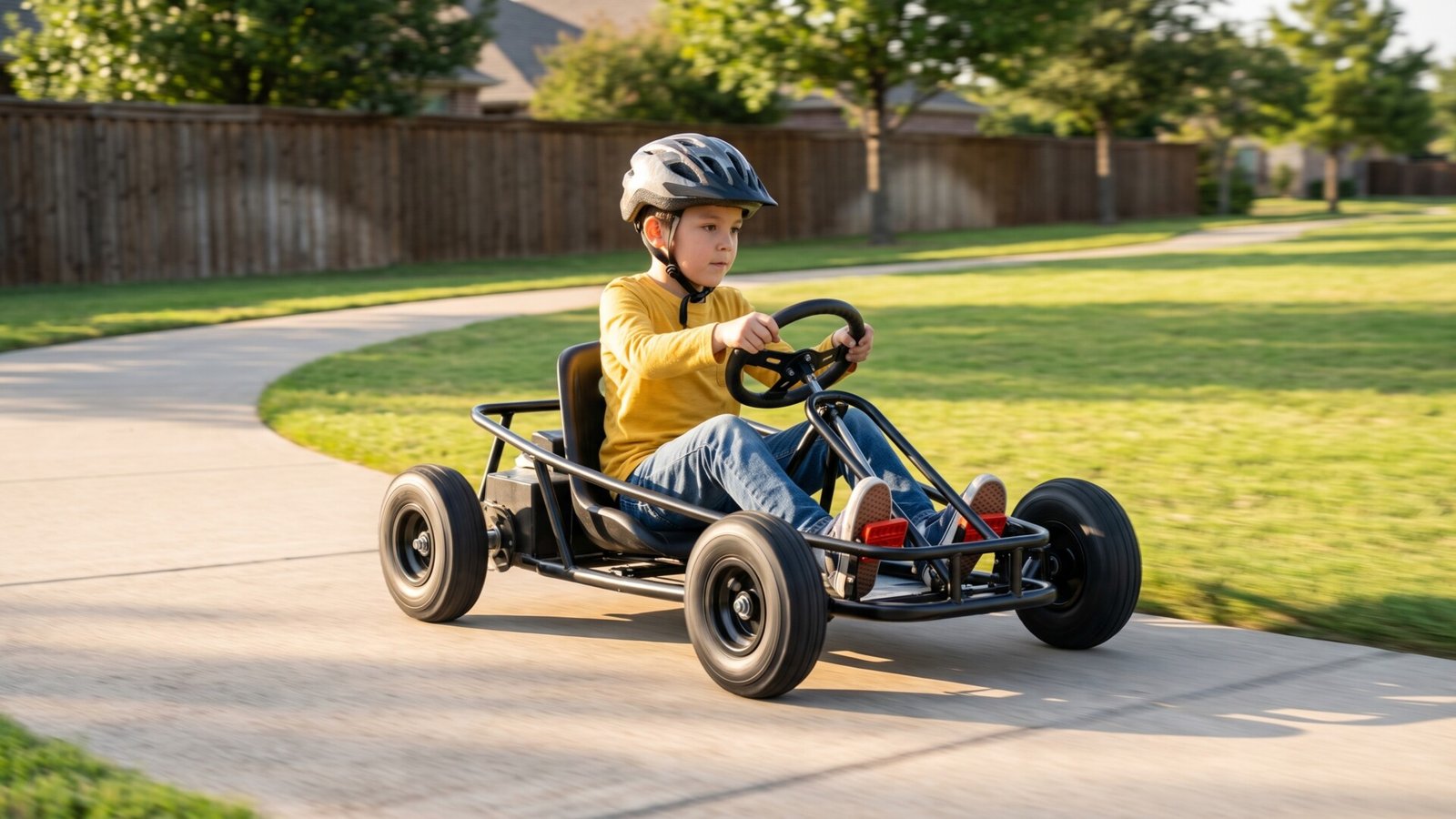
The Best Kids’ Electric Go-Karts for 2026: Safety, Speed, and Durability
I remember the first time my oldest child sat in an electric go-kart. Her feet barely reached the pedals, but the moment she pressed the accelerator, something clicked. She wasn’t just driving a toy—she was steering, braking, and learning to control speed. Electric go-karts aren’t just battery-powered ride-ons; they’re a step toward real driving skills, confidence, and hours of outdoor fun. In 2026, the market has exploded with options, from slow-speed models for toddlers to drift karts for 12-year-olds.
But as a parent, you have real concerns. Is 12 mph too fast? How long does the battery last? Will it survive the backyard grass? And how do you choose between brands like Razor, Berg, Peg Perego, and budget-friendly alternatives? I’ve researched and compared dozens of models—testing real-world performance, safety features, battery life, and build quality—so you don’t have to.
Below, I’ll walk you through the top electric go-karts for 2026, compare speed and durability, and help you find the perfect ride for your child’s age, yard size, and budget. Available via Amazon, Target, Ryder Toys, Friendly Toy Box, and eBay.
Why Electric Go-Karts Are Better Than Standard Ride-On Cars
Before we dive into models, let’s talk about why an electric go-kart often beats a standard battery-powered car. This isn’t just about cool factor.
Better steering and driving skills. A standard ride-on car typically uses simple buttons or a basic steering wheel. An electric go-kart, with its low center of gravity, true steering mechanics, and pedal accelerator, teaches hand-eye coordination and vehicle control in a way that feels like actual driving. Most karts feature variable-speed throttles—gentle pressure for slow cruising, full press for the thrill—giving kids real feedback on how acceleration works.
Higher replay value. Standard ride-on cars often end up abandoned after a few months. A good go-kart, with its drifting capabilities, speed control, and responsive handling, holds a child’s interest for years. Parents consistently report that their kids come back to their go-karts long after battery-powered Jeeps and ATVs are forgotten.
More outdoor exercise. Riding a go-kart requires active participation—steering, balancing through corners, using hand brakes, and even pushing to get started. That’s genuine outdoor movement, not passive sitting. One parent review noted, “This kart turned our backyard into a mini training ground. We’ve seen huge improvements in coordination and confidence.”
Better for older kids. Once a child outgrows a toddler ride-on, they often have nowhere to go except a bicycle. Electric go-karts bridge that gap beautifully: they’re fast enough to thrill a 10-year-old, but safe enough (with parental speed control) for a cautious 6-year-old.
Premium gift appeal. Electric go-karts consistently rank as top holiday and birthday gifts. They’re the kind of present that makes grandparents smile and kids scream with excitement. And because they’re durable and often shareable between siblings, they offer strong value for the money.
What to Look for Before Buying
Not all go-karts are created equal. Here’s what actually matters.
Speed settings.
The best karts offer parental speed control. Look for models with a hidden switch or a remote control that lets you limit top speed (e.g., 3 mph for beginners, 6 mph for intermediates). The Actev Go Kart, for example, lets parents set speed anywhere between 3 mph and 12 mph via a dedicated app or remote control.
Battery life.
Advertised runtimes are often optimistic. In real-world use, most 12V karts deliver 40–60 minutes of continuous play, while 24V models run 30–50 minutes at top speed. Charging times are typically 8–12 hours, so plan for overnight charging. A 24V battery is heavier but often more reliable for older kids.
Weight capacity.
This is critical for longevity. A kart rated for 50 lbs might work for a 3-year-old but won’t last until age 8. The Razor Ground Force Drifter supports up to 140 lbs. The Actev Go Kart handles 130 lbs. The Peg Perego Polaris RZR has a 150 lbs total capacity for two riders. The Actev Go Kart uses a 5-point harness that secures children up to 130 lbs and is fully adjustable to grow with your child. Choose a higher weight limit if you want the kart to grow with your child or work for siblings.
Safety features.
Look for:
- a parental remote control (a true selling point for younger kids)
- a proper seat belt (bucket seats with shoulder straps are best)
- automatic braking (kart stops when foot lifts off the accelerator)
- low center of gravity and roll bars or a wide wheelbase for stability.
Tire quality.
Rubber or pneumatic tires handle grass, gravel, and dirt better than hard plastic wheels. However, many karts (like the Razor) are designed for pavement and struggle on uneven surfaces unless they have thread traction tires. If your yard is all grass, prioritize a model with knobby off-road tires.
Frame durability.
Steel frames outlast plastic-heavy construction. Look for mentions of “heavy-gauge tubular steel” or “reinforced chassis.” The Razor and Berg models are known for excellent build quality, while cheaper budget karts sometimes use thinner metal.
Terrain compatibility.
Does your child plan to ride on driveway pavement, backyard grass, or rough trails? A drift kart like the Razor Crazy Cart is perfect for smooth asphalt but won’t handle bumps well. The Peg Perego Polaris RZR, with its rubber tread extreme traction wheels, is designed for unpaved adventures.
Types of Kids’ Electric Go-Karts
Standard electric ride-on go-karts are the most common. One seat, forward only, speeds from 3–8 mph. Ideal for 3–8 year olds on pavement. Realistic driving controls (pedal, steering wheel, brake) offer the most authentic experience and value.
Drift-style go-karts have a pull lever or special rear wheels that allow the back end to slide sideways. Perfect for older kids (8+) who want to feel like stunt drivers. Offer the highest replay value but require smooth pavement.
Off-road utility karts have large knobby tires, rear suspension, and sometimes two seats. Best for larger yards, uneven grass, and dirt paths. Typically heavier, more durable, and more expensive.
Which type fits your child? For a first kart, start with a standard 12V model with parental speed control. For a thrill-seeking 9-year-old, consider a 24V drifter. For siblings or rough terrain, look at a 24V two-seater off-road kart.
Best Kids’ Electric Go-Karts for 2026
1 Best Overall: Razor Ground Force Drifter
Price Range: $$ – View on Amazon
The Razor Ground Force Drifter is the gold standard for older kids who want speed and drifting capability. With a 24V battery system, it reaches speeds up to 12 mph, powered by a 350-watt chain-driven electric motor. The low-profile steel frame and super-slick rear wheels are designed specifically for controlled pavement drifting, while the molded aluminum wheels provide durability that cheaper plastic wheels simply can’t match.
For safety, it includes a bucket seat with an adjustable shoulder seat belt, a hand-operated rear brake, and a thumb-trigger accelerator that gives riders variable speed control—gentle acceleration for novices, full throttle for the experienced. The 24V rechargeable battery delivers up to 40 minutes of continuous ride time, and the kart supports riders up to 140 lbs. One parent review noted: “This was so easy to assemble and works fantastic. The kids love it and have been riding it all day long.”
Pros: Excellent speed and drifting performance; durable steel frame; supports older kids (8+) and lighter adults; strong community following. Cons: Pavement only (won’t perform on grass); short-ish battery life at top speed; assembly requires adult attention.
Who should buy it: Families with a driveway or paved area and a child aged 8–12 who wants a real drifting experience.
2 Best for Younger Kids: Actev Go Kart with Parental Remote
Price Range: $$ – Shop via Amazon | Target
For parents of younger children, the Actev Go Kart is a breakthrough. It combines a real driving experience with parental remote control—you can stop the kart, limit its speed, or even drive it yourself via a dedicated app. Adjustable speed settings range from a safe 3 mph up to 12 mph, so you can increase limits as your child gains confidence.
Safety includes a 5-point harness that secures even the wiggliest child, a durable steel frame, and LED lights for low-light visibility. The lithium-ion battery provides about 60 minutes of run time per charge and handles grass, dirt, and pavement. Recommended for ages 5–12 with a 130 lb weight capacity.
Pros: Excellent safety features; remote control gives parents peace of mind; adjustable speed; works on multiple terrains. Cons: Higher price point; remote and app require initial setup.
Who should buy it: Parents who want total control over their child’s speed and freedom—especially good for first-time riders or shared use between siblings of different ages. This is one of the safest beginner electric go-karts on the market for 2026.
3 Best for Off-Road / Two-Seater: Peg Perego Polaris RZR Pro
Price Range: $$$ – Shop at Toys R Us | Amazon
If your “backyard” includes grassy fields, dirt paths, or gravel driveways, the Peg Perego Polaris RZR Pro is your answer. This 24V high-performance SRUV comes with rugged rubber tread extreme traction wheels, working rear suspension, and two padded bucket seats with seat belts—perfect for siblings or friends to ride together.
Its two-speed transmission offers 5.6 km/h (low) or 7 km/h (high) in forward mode, plus reverse. The foot pedal accelerator has automatic brakes, and the steering wheel is designed for off-road control. A 24V/8Ah battery provides solid runtime. The sheer scale of this kart is impressive—it’s large enough that your child won’t outgrow it quickly.
Pros: Real off-road capability; two seats for shared fun; built for ages 6–12 with a 150 lb total weight capacity; durable Italian build quality. Cons: Large and heavy; expensive; best for families with substantial outdoor space.
Who should buy it: Families with a big yard, a farm, or a gravel drive—and two kids who want to drive together. The Polaris RZR is also a fantastic off-road option for adventurous kids who want to explore trails beyond the driveway.
4 Best Premium Investment: Berg Buzzy E-GoKart
Price Range: $$$ – Shop via Amazon | Ryder Toys
Berg is the premium name in pedal-powered go-karts, and their E-GoKart variants bring the same build quality to electric models. Designed for ages 4–8, the Berg Buzzy series combines a sturdy steel frame, adjustable seat (up to 110 lbs), and a smooth pedal-assist or full-electric motor. It’s not the fastest kart (around 5–7 mph), but its durability is legendary. It consistently receives very high average ratings from thousands of reviews, with parents praising its durability, ease of assembly, and the joy it brings their children.
The direct-drive pedal system ensures kids are always in control, and the kart tackles flat grass, pavement, and gentle hills with ease. With proper care (store indoors during winter, keep tires inflated), a Berg will outlast cheaper karts by years.
Pros: Unmatched build quality; grows with your child; holds resale value extremely well. Cons: Premium price (over $800 for pedal-assist electric); smaller and less flashy than off-road karts.
Who should buy it: Parents who want the absolute best durability and are willing to invest for the long haul. Especially good for families with multiple children who will use the same kart for years.
5 Best Budget Option: ReadyGO Asphalt Racer
Price Range: $ – Shop via Amazon
For families on a budget, the ReadyGO Asphalt Racer is surprisingly impressive. It runs on a 12V battery and reaches a safe top speed of 3–5 mph. The standout feature is a parent-controlled speed switch on the handlebars—flip it from “beginner” (2.5 mph) to “advanced” (5 mph) to match your child’s growing confidence.
The weight limit is modest at 66 lbs, and the plastic-heavy construction isn’t as durable as steel frames. But for a first kart aimed at ages 3–7, it’s a solid value. Parents praise the tool-free assembly and the smooth ride on pavement.
Pros: Very affordable; super easy assembly (tool-free); safe, low speeds; parent speed switch. Cons: Low weight limit; plastic construction (less durable); pavement only.
Who should buy it: A toddler’s first electric go-kart, or as a budget-friendly gift when you’re not sure how much your child will use it.
6 Honorable Mentions & More Great Options for 2026
- Razor Crazy Cart Shift is a fantastic pick for ages 6+. Its simplified drift system is easier for beginners to master than the Ground Force Drifter’s technique-driven drift bar. With a high/low speed switch (up to 8 mph) and a hidden speed control for parents, it’s a great balance of fun and safety.
- Aosom 24V Drift Kart (ages 8–12) reaches 8.1 mph with dual 300W motors, 9Ah large battery, and drifting capabilities. Users love the slow-start feature, music, horn, and safety belt.
- Costzon Ride-On Go-Kart (ages 3–6) offers 12V battery, 3–5 mph speeds, a parental remote, and a seat belt. It’s a safe, gentle entry point that’s widely available at major retailers.
- ENYOPRO 24V Dual-Seat Go-Kart is a great two-seater option with up to 4.4 mph speeds and a 1‑2 hour runtime per charge. Includes independent 3-point harnesses, door locks, and Bluetooth connectivity for an interactive driving experience.
- Berg Buzzy is also available in a fully pedal-powered version (no battery), offering unlimited playtime for kids who enjoy active self-propelled driving.
Each of these models brings something unique to the table—whether it’s dual seats, Bluetooth music, or budget-friendly pricing.
Comparison Table — Safety, Speed, and Value
| Model | Power Type | Age Range | Max Speed | Battery Life | Safety Level | Durability | Best For |
|---|---|---|---|---|---|---|---|
| Razor Ground Force Drifter | 24V Electric | 8+ | 12 mph | 40 min | Very Good | Excellent (steel frame) | Older kids / drifting |
| Actev Go Kart | 24V Electric | 5–12 | 3–12 mph adjustable | 60 min | Excellent (remote, 5‑pt harness) | Very Good | Remote-controlled safety |
| Peg Perego Polaris RZR Pro | 24V Electric | 6–10 | 7 km/h / 12 km/h | Solid | Excellent (seat belts, roll bars) | Excellent | Off-road / two‑seater |
| Berg Buzzy E-GoKart | Pedal-Assist / Electric | 4–8 | 5–7 mph | Pedal‑assist | Excellent (stable frame) | Best in class | Premium long‑term use |
| ReadyGO Asphalt Racer | 12V Electric | 3–7 | 3–5 mph | Moderate | Good (parent speed switch) | Moderate | Budget beginners |
| Razor Crazy Cart Shift | 12V Electric | 6+ | 8 mph | Moderate | Good (hidden speed control) | Good | Simplified drifting for younger kids |
| Aosom 24V Drift Kart | 24V Electric | 8–12 | 8.1 mph | Good (9Ah battery) | Good | Good | Drifting with sound effects |
| ENYOPRO 24V Two‑Seater | 24V Electric | 3–8 | 4.4 mph | 1–2 hours | Good (3‑pt harnesses) | Good | Two‑seater shared driving |
| Costzon Go-Kart | 12V Electric | 3–6 | 3–5 mph | Moderate | Very Good (parental remote) | Good | Safe first electric kart |
Safety Tips for Kids’ Electric Go-Karts
Always use helmets. This is non-negotiable. A properly fitted bike helmet (or a full‑face helmet for faster 12 mph karts) is as important as the go-kart itself.
Supervise younger drivers. Even with parental remote control, stay within sight and earshot of your child. For kids under 8, consider a kart with a parent-controlled speed lock or a remote that can override the accelerator.
Use on safe surfaces only. As one expert reviewer notes, “The kart is designed for controlled environments free of potential traffic hazards and not on public streets”. Avoid driveways near busy roads, and stick to flat, dry pavement or grass depending on your kart’s tires.
Set speed limits based on age. A 6‑year‑old learning to drive has no business in a 12 mph drift kart. Start with the lowest speed setting (often 3 mph), and only increase after several successful sessions. The Actev Go Kart and Razor Crazy Cart Shift both offer hidden parental speed controls for exactly this purpose.
Regularly check tires and battery. Pneumatic tires lose air over time. Plastic wheels wear down on rough pavement. Batteries degrade after heavy use. Inspect before each ride and follow the manufacturer’s charging guidelines (never overcharge, and store batteries in a cool, dry place).
Store properly to protect electronics. Keep your go-kart indoors or in a garage during winter. Moisture and freezing temperatures can damage batteries and electronics. A quick wipe-down after every use keeps the kart ready for adventure.
Teach responsible driving habits early. “One rider at a time,” “keep hands and feet inside the kart,” and “slow down for turns” aren’t just phrases—they’re essential for safety. Model good driving yourself.
Frequently Asked Questions About Electric Go-Karts
What age is best for electric go-karts?
Models exist for ages 3 to 14. For toddlers (3–5), choose a 12V model with parent remote or speed switch and a max speed of 3–5 mph. For ages 6–8, a 24V model with adjustable speeds up to 8 mph is appropriate. For ages 9+, drift karts or off-road karts with speeds up to 12 mph are ideal.
Are kids’ go-karts safe?
Yes, when used properly. Modern karts include automatic brakes, low center of gravity to prevent flipping, and several safety features. Always supervise, enforce helmet use, and set speed limits appropriate for your child’s skill level.
Is 24V too fast for children?
Not if speed is controlled. Many 24V karts reach 8–12 mph—too fast for a 4-year-old but exciting and manageable for an 8-year-old on flat pavement. Always look for a model with adjustable speed or parental control.
How long do batteries last?
Most 12V batteries provide 40–60 minutes of use; 24V batteries run for 30–50 minutes at top speed. Charging takes 8–12 hours. Lithium-ion batteries tend to last longer than sealed lead‑acid batteries.
Are go-karts better than ride‑on cars?
For older kids yes—they offer better steering, more realistic driving experience, and drifting capabilities. For toddlers (under 5), a slow ride‑on car may still be the best choice.
Can these be used on grass?
Only off‑road models (like the Peg Perego Polaris RZR, Berg Buzzy, or any kart with knobby rubber tread tires) perform well on grass. Pavement‑optimized karts (like the Razor or ReadyGO) will struggle on wet grass or steep hills.
Is Razor better than Peg Perego?
No. Razor makes excellent pavement drift karts; Peg Perego makes superior off‑road vehicles. Your choice depends on your terrain and the driving experience you’re looking for.
Are pedal go-karts a better value?
For pure longevity, yes—they never need batteries. But electric models offer more speed and instant excitement. A pedal go-kart (like the Berg Buzzy Nitro pedal version) is a fantastic non‑electric backup option or primary toy for younger kids who enjoy active, self-powered play.
How much backyard space do I need?
For a basic 12V kart, a 20×20 ft paved or grass area is sufficient. For 24V drift karts (which need room to slide), aim for at least 30×30 ft of smooth pavement. Off‑road karts require less precision but benefit from larger grass fields.
Where can I buy these models?
Shop at Amazon, Target, Ryder Toys, Friendly Toy Box, and the eBay Partner Network for competitive prices and fast shipping.
Final Verdict
Kids’ electric go-karts offer one of the best combinations of excitement, skill development, outdoor activity, and long-term value. In 2026, the market has never been stronger.
- Best overall recommendation: Razor Ground Force Drifter – thrilling speed, proven durability, perfect for pavement driving and learning controlled drifts.
- Best beginner option: Actev Go Kart with parental remote control – total control for parents, adjustable speeds, and 5-point harness safety.
- Best premium investment: Berg Buzzy E-GoKart – unmatched build quality, high resale value, and a kart that grows with your child for years.
- Best off‑road family option: Peg Perego Polaris RZR Pro – two seats, rugged tires, and a suspension that handles grass, dirt, and gravel with ease.
- Best budget pick: ReadyGO Asphalt Racer – simple, affordable, and safe for a toddler’s very first ride.
Before you buy, measure your available space, consider your child’s age and experience level, and decide whether pavement or grass will be the primary driving surface. Then pick the kart that matches those needs—and get ready for the smiles.
Because the best backyard adventures often start with a steering wheel and just enough speed to feel unforgettable.