Toys for Children With Hearing Impairments
The Real Question Behind Toys for Children With Hearing Impairments
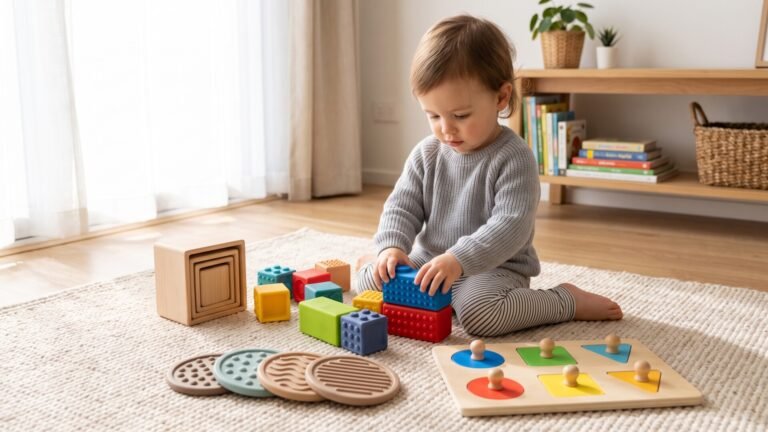
The question parents actually type into a search bar is "what toy will my child with hearing loss actually play with," and the answer is almost never a specialized product. It is a toy whose main reward is something the child can see, feel, or move. If the fun lives in a sound effect, a spoken instruction, or an audio reward, you have bought a frustration device with a battery compartment.
Hearing loss covers a wide range. A child with mild loss who uses hearing aids and spoken language has different access needs from a child with profound loss who uses sign language and a cochlear implant, or a child who uses a combination depending on the setting and the day. Some children read lips, some use picture systems, some use both sign and speech. So there is no single list that fits everyone.
The practical problem is narrower than it looks. A toy marketed as "educational" can still put its instructions, its feedback, or its safety cue behind audio. This article is about accessible play and informed buying. It is not treatment, and it is not therapy. It is about which toys leave the child with something to do once you take the sound away.
What Makes a Toy Work Well for a Child With Hearing Impairment
Hearing impairment is not one experience, and toy suitability follows from the individual child rather than the label. Age, language access, visual attention, motor skills, interests, and whether the child uses hearing technology all change the answer. A four-year-old with a cochlear implant who loves spoken stories is not shopping in the same aisle as a seven-year-old who signs and prefers to work alone.
The useful split is between toys that are fully usable without sound and toys that become accessible when an adult adds something. A talking cash register is in the second group. Blocks, dolls, art supplies, puzzles, and pretend-play sets are in the first. The second group is not automatically bad – it just means you are signing up to be the interpreter every time the toy is out, and that gets old by week three.
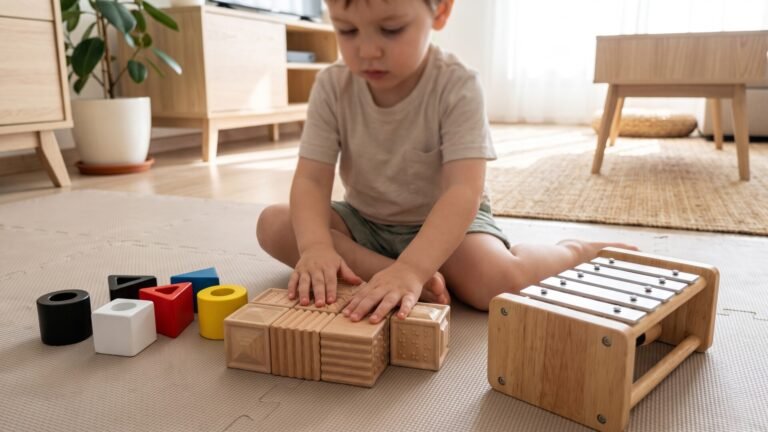
Here is the thing that surprises people: a toy does not need to be marketed as adaptive to be a strong choice. Open-ended toys are often more flexible than purpose-built accessible products, because the play does not depend on understanding a script. A bucket of wooden blocks does not care how the child communicates. It only asks that someone show them what to do with it, once.
Safety works the same way it does for any child, with one adjustment. Do not rely on an audible alarm, a beep, or a spoken warning to keep your child safe – a smoke alarm, a timer, or a toy that beeps when it is done is not a safety system for a child who cannot hear it. Supervise water and outdoor play as appropriate to the child’s age. Check detachable parts, batteries, cords, and magnets against the age on the package, and follow the manufacturer’s instructions rather than a general rule from an article.
Key Buying Factors for Hearing-Accessible Toys
Visual and tactile feedback
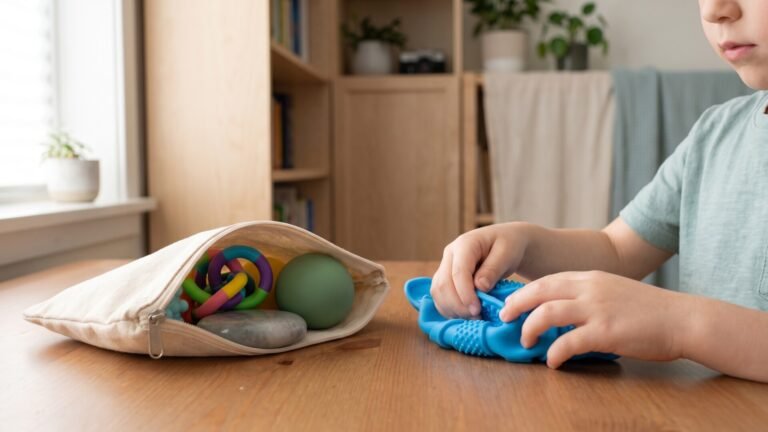
The single most useful filter is what the toy does when the child gets it right. Movement, a light, a color change, a face, a texture, a piece that clicks into place – these are feedback a child can perceive directly. A toy that only plays a chime when you press the right button has hidden its reward behind the one channel the child may not have.
Communication flexibility
Prioritize toys that work with pointing, turn-taking, gesture, signing, pretend dialogue, picture exchange, or open-ended storytelling. The best toys do not require one communication method. They let the child choose, and they let you meet them where they are that day rather than where a manual says they should be.
Independent use and adult setup
Ask two questions before you buy. Can the child understand this through demonstration rather than explanation? And are the controls visible and simple enough that they will not need you to translate spoken menus every session? A toy that requires a parent to narrate it is a toy that will sit on the shelf on the days you are tired.
Durability, storage, and technology compatibility
Sturdy construction matters more when a toy is being used heavily and independently. Check whether replacement parts exist, how many batteries it eats, and whether it is water resistant if that is relevant to how your child plays. If a toy includes headphones, a microphone, or a speaker, follow the hearing-device manufacturer’s guidance and ask your child’s care team about device use around water, impact, and magnets. Do not assume a toy is safe near a hearing device because the packaging does not mention it.
Pros and Cons of Different Toy Types
Pros
- Visual and tactile toys stay engaging without spoken instructions or sound effects.
- Open-ended toys support shared play across different communication styles, so siblings and friends can join in.
- Cause-and-effect, building, art, and pretend-play toys grow with the child’s interests instead of being outgrown in a season.
- Many mainstream toys cost less and are easier to replace than specialized accessible products.
Cons
- Some electronic toys advertise accessibility while hiding key instructions or rewards in audio-only features.
- Flashing lights and intense visual effects can be distracting or unpleasant for some children, particularly those with additional sensory sensitivities.
- Small pieces, fragile components, batteries, and complicated setup create parent frustration that the product photos never show.
- A toy that fits one child may miss another’s language access, vision, motor skills, or sensory preferences entirely.
Best Toys for Children With Hearing Impairments
Six picks across the price range. Verify current age guidance, included pieces, and price before you buy, because these lines get revised and repackaged constantly.
LEGO DUPLO Classic Brick Box
| Feature | Details |
|---|---|
| Age Range | Typically 18 months and up; verify the current package |
| Key Features | Large bricks, open-ended construction, visual models, sorting, pretend play |
| Price (approx) | $25-$45 |
| Sound dependence | None for the core activity |
The core play is handling, building, and copying a visual model, which means nothing important is locked behind audio. You can demonstrate a tower, a wall, or a bridge without saying a word, and the child can copy it or ignore it and build something else. That flexibility is the whole point.
It also survives. DUPLO bricks get handed down, washed, and stepped on, and they still work. The main cost is floor coverage, and the main frustration is that the bricks migrate. A shallow bin near the play area solves most of that.
Best for: Toddlers and preschoolers who like construction, repetition, and building alongside an adult.
Pros
- No sound needed for the main activity
- Supports open-ended building and pretend play
- Large pieces are easier for small hands
Cons
- Pieces spread across the floor fast
- Less appealing if the child prefers realistic toys over construction
- Younger children still need supervision around pieces and storage
[Affiliate: Check current pricing on LEGO DUPLO through our recommended partners]
Melissa & Doug Wooden Pattern Blocks and Boards
| Feature | Details |
|---|---|
| Age Range | Typically 3 years and up; verify the current package |
| Key Features | Wooden geometric pieces, visual pattern cards, matching, problem solving |
| Price (approx) | $20-$35 |
| Sound dependence | None |
A quiet, visually obvious activity with a clear start and finish. The child sees the pattern card, sees the shapes, and sees the gap that needs filling. No narration required, and no reward hidden in a speaker.
The honest caveat is replay value. Once a child has worked through the cards a few times, the challenge fades, and some children will simply stop. Treat the suggested designs as invitations rather than tests, and expect this to be a focused fifteen-minute activity rather than an all-afternoon one.
Best for: Preschool and early school-age children who like structured tabletop work.
Pros
- Entirely visual and tactile
- Easy to demonstrate without verbal explanation
- Compact storage compared with big construction sets
Cons
- Pattern cards can become repetitive
- Loose pieces need organizing
- Less appealing to children who prefer imaginative or active play
[Affiliate: Check current pricing on Melissa & Doug pattern blocks through our recommended partners]
Magna-Tiles Clear Colors 32-Piece Set
| Feature | Details |
|---|---|
| Age Range | Typically 3 years and up; verify the current package |
| Key Features | Magnetic geometric tiles, transparent colors, 2D patterns, 3D construction |
| Price (approx) | $45-$70 |
| Sound dependence | None |
Magnetic tiles give immediate visual feedback. The pieces snap together, the structure stands, the structure collapses, and the child sees all of it happen in real time. Nothing about that sequence requires hearing, and the tiles are easy for an adult to model.
The caution is the magnets. If a tile cracks or breaks, remove it from play immediately and keep the pieces away from young children – swallowed magnets are a serious hazard, and this is standard advice for any magnetic building toy. Check the tiles periodically for damage if they get heavy use.
Best for: Children who enjoy building, experimenting, and working alongside someone else.
Pros
- Strong visual cause and effect
- Easy for adults to model
- Works for solo or shared construction
Cons
- More expensive than basic blocks
- Structures fall during play, which some children find frustrating
- Magnets require supervision and immediate removal of broken tiles
[Affiliate: Check current pricing on Magna-Tiles through our recommended partners]
Melissa & Doug See-Inside Sorting Center
| Feature | Details |
|---|---|
| Age Range | Typically 2 years and up; verify the current package |
| Key Features | Wooden shapes, color and shape matching, visible compartments, hands-on sorting |
| Price (approx) | $20-$35 |
| Sound dependence | None |
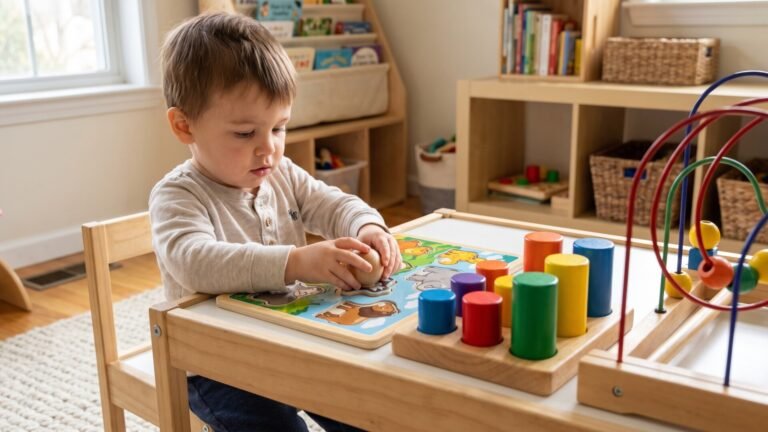
A good early-learning pick when the priority is visible matching rather than electronic feedback. The compartments show the child where pieces go, so the activity is self-explanatory after one demonstration. Repetition is the appeal here, and children who like predictable play will return to it.
The trade-off is longevity. Children who master it quickly move on, and it is not the toy you will still be stepping over in two years. It earns its place as a focused activity for a narrow age window, not as a long-term investment.
Best for: Toddlers and preschoolers building early matching and sorting routines.
Pros
- Clear visual feedback
- Quiet and easy to demonstrate
- Compact compared with many activity centers
Cons
- Limited replay value once mastered
- Not ideal for children who dislike structured tasks
- Check piece size and supervision needs for younger users
[Affiliate: Check current pricing on Melissa & Doug sorting toys through our recommended partners]
Fisher-Price Little People Caring for Animals Farm
| Feature | Details |
|---|---|
| Age Range | Commonly designed for preschool play; verify the current package |
| Key Features | Figures, animals, doors, ramps, open-ended pretend play |
| Price (approx) | $25-$45 |
| Sound dependence | Low to medium, depending on version |
Pretend play matters here because the child builds the story through movement, facial expression, gestures, and shared attention. A farm set with figures and doors gives you something to point at, name, sign, and act out together, and none of that depends on the toy’s sounds.
Some versions include electronic features. Ignore them when you are deciding. Judge the set by the figures, the layout, and whether the child enjoys role play – the sounds are optional and often the first thing to stop working anyway.
Best for: Preschoolers who like character play, repetition, and simple stories.
Pros
- Main play value remains available without sound
- Supports shared storytelling in any communication mode
- Familiar scenes are easy to demonstrate
Cons
- Some versions include sound features that are not essential
- Accessories are easy to misplace
- May feel too simple for older children
[Affiliate: Check current pricing on Little People sets through our recommended partners]
VTech KidiZoom Creator Cam or Similar Visual Video Camera
| Feature | Details |
|---|---|
| Age Range | Often intended for school-age children; verify the current model |
| Key Features | Screen-based recording, visual effects, photography, creative storytelling |
| Price (approx) | $50-$80 |
| Sound dependence | Medium; inspect the specific model |
A screen-based creative toy can fit older children who enjoy visual storytelling, self-expression, and recording their own day. The camera gives them a way to make something and show it to someone, which is a different kind of play than building or sorting.
The catch is the interface. Menus, alerts, and setup prompts vary by model, and some lean on sound or spoken cues. Before buying, look at the actual screens and controls and confirm the child can navigate the core functions without audio. Check charging, privacy settings, and whether the model needs an app or account.
Best for: School-age children interested in photography, video, visual effects, and creative projects.
Pros
- Supports visual self-expression
- Encourages shared storytelling and documentation
- Age-appropriate for children who have outgrown toddler toys
Cons
- Some functions may rely on sound or spoken prompts
- Requires charging, setup, and supervision
- Screen time and online features need family rules
[Affiliate: Check current pricing on VTech creative cameras through our recommended partners]
Comparison Table
| Product | Approx. Price | Best For | Sound Dependence | Ownership Consideration |
|---|---|---|---|---|
| LEGO DUPLO Classic Brick Box | $25-$45 | Toddlers and preschoolers | Low | Pieces reused for years |
| Melissa & Doug Pattern Blocks | $20-$35 | Structured visual play | Low | Compact but less open-ended |
| Magna-Tiles 32-Piece Set | $45-$70 | Building and collaboration | Low | Higher upfront cost, strong reusability |
| Melissa & Doug Sorting Center | $20-$35 | Early matching and sorting | Low | Often outgrown quickly |
| Little People Farm set | $25-$45 | Pretend play | Low to medium by version | Accessories go missing |
| VTech KidiZoom Creator Cam | $50-$80 | Older children’s creative play | Medium; inspect model | Tech dates quickly |
What Most Buyers Get Wrong About Toys for Hearing Impairments
"Educational" does not mean accessible. A toy can teach counting, letters, or sequencing perfectly well while putting every instruction, every reward, and every difficulty increase behind spoken audio. The learning content is real. The access is not. Parents buy it, the child loses interest in a week, and the toy gets blamed for being boring when it was never usable.
The second mistake is assuming every child needs a specialized toy. Most do not. Many of the strongest choices are the familiar, durable toys that allow visual demonstration and flexible communication – the same things their siblings play with. Specialized products earn their place when a specific toy relies heavily on audio, or when the child has additional access needs that a mainstream toy does not meet.
Adding lights is not the same as adding accessibility. Flashing effects are not a substitute for clear controls, visible outcomes, or an activity the child can understand. A toy covered in blinking lights can be harder to use than a plain wooden one, because the lights compete for attention without telling the child anything useful about what to do next.
The last one is the biggest. The child’s communication environment matters more than any label on a box. A toy that supports signing, pointing, facial expression, and shared attention will beat a toy marketed specifically for hearing loss almost every time, because it fits how that child actually communicates rather than how a marketing department imagined they might.
ToyGuideHub Independent Play Score
This is an editorial framework, not a clinical assessment and not the result of product testing. It scores four things that decide whether a toy gets used when you are not sitting next to your child: how fully it works without sound, how clear its visual or tactile feedback is, how easily a child can set it up and run it alone, and how long it stays interesting. Each is scored out of five.
| Product | Usable Without Sound | Visual or Tactile Clarity | Independent Play | Replay Value |
|---|---|---|---|---|
| LEGO DUPLO Classic Brick Box | 5/5 | 5/5 | 4/5 | 5/5 |
| Melissa & Doug Pattern Blocks | 5/5 | 5/5 | 4/5 | 3/5 |
| Magna-Tiles 32-Piece Set | 5/5 | 5/5 | 4/5 | 5/5 |
| Melissa & Doug Sorting Center | 5/5 | 5/5 | 4/5 | 3/5 |
| Little People Farm set | 4/5 | 4/5 | 4/5 | 4/5 |
| VTech KidiZoom Creator Cam | 3/5 | 4/5 | 3/5 | 4/5 |
The highest score is not automatically the winner, because the columns measure different things. Magna-Tiles and LEGO DUPLO score highest for flexible long-term play – they are the two that will still be in rotation next year. The pattern blocks and the sorting center score well on clarity but drop on replay value, which is the honest signal that they are focused activities for a specific stage rather than permanent fixtures.
Independent play is the column parents care about most, and it is the one most affected by factors outside the toy. A five-year-old who has used Magna-Tiles for a year will play alone with them. A three-year-old meeting them for the first time will need you there. The score assumes a child who is familiar with the toy and has a communication mode that works for them – it does not predict what your child will do on day one.
The KidiZoom camera scores lower on sound independence because its interface is the variable, not its play value. If the specific model you buy has visible menus and a child who can navigate them, it moves up. If it leans on spoken prompts, it does not. That is why the recommendation comes with a condition rather than a score.
Best Overall: LEGO DUPLO, for value, durability, and the way it works for one child or four. Best Premium: Magna-Tiles, for families who want a construction system that lasts years. Best for Older Children: a carefully chosen visual creative camera, after you have checked the interface yourself.
How to Choose the Right Option for Your Family
Best Budget Pick
The Melissa & Doug Wooden Pattern Blocks and Boards is the compact, quiet, visually understandable choice at the low end. It is best when the child likes matching and tabletop play. It is not a universal pick, and it will not suit a child who wants to move around or build something big.
Best Overall
LEGO DUPLO combines accessibility, durability, shared play, and long-term reuse at a moderate price. It is the one on this list that a two-year-old, a five-year-old, and a visiting cousin can all use at the same time without anyone needing to explain the rules.
Best Premium Pick
Magna-Tiles are worth the higher price if your child takes to construction and keeps coming back to it. Buy a smaller starter set first rather than a large one – you can always add tiles later, and a 32-piece set is enough to find out whether the interest is real.
Best for Pretend Play
The Little People farm set suits children who enjoy figures and familiar routines. Judge it by the figures and the play environment, not by the optional sounds. If the version you find is sound-heavy, that is not a reason to skip it – just know the sounds are not what you are paying for.
Best for Older Children
A visual creative camera such as the VTech KidiZoom Creator Cam works only after you have checked the menus, alerts, charging, privacy settings, and whether the core functions run without auditory prompts. If they do not, look at a different model or a plain digital camera instead.
Best for Small Spaces
Pattern blocks or the sorting center store more easily than large construction or pretend-play sets. If floor space is tight, these are the two that fit on a shelf and come out for a focused session rather than taking over the room.
The Hidden Costs of Choosing Wrong
The first cost is the toy that needs translating. If the instructions, the rewards, or the progression live in audio, someone has to sit with the child and convert all of it into signs, gestures, or pointing, every single time. That is fine for a week. By month two, the toy is in the bottom of the bin and you have paid full price for a lesson in what not to buy.
Electronic toys carry recurring costs that the sticker price hides. Batteries, charging cables, apps, optional subscriptions, and the privacy questions that come with anything connected. Open-ended toys do not have these, which is part of why a $35 set of blocks can end up cheaper over three years than a $30 electronic toy that needs six batteries a month and stops being interesting in February.
Storage and missing pieces are the quiet budget killers. A toy with forty small components is a toy you will be hunting for under furniture, and a set that cannot be stored securely is a set that slowly disappears. Sometimes the slightly more expensive option with fewer, larger pieces is the cheaper one over a year.
Here is a framework that takes about two minutes. Identify how your child prefers to communicate – speech, sign, pictures, gesture, or a mix. Cross off anything whose core play depends on sound. Estimate how many times a week it will realistically come out. Then pick the toy with the most play value left after those three filters. That process will eliminate most of the wrong answers before you get to the price tag.
Skip This If: Popular Features That Add Little Value
Skip sound-first toys with spoken instructions, audio-only rewards, or voice-controlled progression. Unless your child specifically enjoys and can access those features, you are buying a toy that will need an adult present for every session and will still be less fun than the box it came in.
Do not reject a toy just because it makes noise. The question is whether the sound is necessary to understand or enjoy the activity. A farm set that plays a moo when you open a door is fine – the door still opens, the animal still comes out, and the child can see all of it. A toy where the only way to know you got it right is a chime is a different problem.
Be skeptical of complicated electronic toys sold mainly on broad educational claims. Packaging can promise almost anything. What matters is whether the child can see the controls, understand the goal, and get feedback without audio. Check demonstrations, controls, visual menus, and return policies before you spend real money on anything technology-heavy.
Where This Leaves You
The rule that resolves almost every decision here: choose a toy whose essential play stays understandable and rewarding without sound. If you have to narrate it, translate it, or sit through an audio prompt every time, it is not the right toy, no matter what the box says.
The winners, plainly. Best Overall: the LEGO DUPLO Classic Brick Box, for value, durability, and the way it works across ages and communication styles. Best Budget: Melissa & Doug Wooden Pattern Blocks and Boards, for a quiet, visually clear activity that stores on a shelf. Best Premium: Magna-Tiles Clear Colors 32-Piece Set, for construction play that lasts years. Best for Pretend Play: the Fisher-Price Little People Caring for Animals Farm. Best for Older Children’s Creative Play: the VTech KidiZoom Creator Cam, after you have confirmed the specific model’s interface works without audio.
The caveat that comes with all of it: your child’s communication style, interests, and everyday environment matter more than any disability label, and more than anything on this list. A toy that scores well here can still be wrong for a child who prefers to play alone, or who has low vision alongside hearing loss, or who finds magnetic tiles frustrating rather than satisfying. If that is your child, the right answer is a different toy, not a better version of this one. Start with what they already reach for.
Check current pricing, age guidance, and availability through our recommended partners, and confirm the age rating and safety instructions on the package before you buy.
Frequently Asked Questions About Toys For Children With Hearing Impairments
Do children with hearing impairments need special toys?
Most do not. Open-ended toys with visual, tactile, and movement-based play work fully without sound, and many children use the same toys their siblings do. Specialized or modified toys help when a particular toy relies heavily on audio, or when the child has additional access needs that a mainstream product does not cover.
What are the best toys for deaf children who use sign language?
Look for toys that support shared attention, turn-taking, pretend play, construction, and visual storytelling. Dolls, blocks, figures, art materials, and simple games all support interaction without spoken instructions, and they let you sign, point, and act things out naturally while you play.
Are electronic toys suitable for children with hearing loss?
They can be, but check where the instructions, rewards, alerts, and progression live. Visible controls, screens, lights, movement, and tactile feedback make an electronic toy more accessible. If the fun depends on hearing a sound, it is not the right electronic toy.
Can children wear hearing aids or cochlear implants while playing with toys?
Device guidance varies, so follow the device manufacturer’s instructions and ask your child’s audiologist or care team. Water, magnets, impact, headphones, and microphones are the usual concerns, and a toy’s packaging will not tell you how it interacts with a specific device.
Are flashing lights safe for children with hearing impairments?
Hearing loss alone does not determine whether flashing lights are appropriate. Consider your child’s individual sensory preferences and follow product warnings, especially if they have other conditions or sensitivities. Some children love them, some find them overwhelming.
What toys help children communicate without relying on speech?
Pretend-play figures, dolls, visual storytelling tools, picture-based games, building sets, drawing materials, and turn-taking games all create reasons to interact. Be clear on what toys can and cannot do: they create opportunities for communication, but they do not replace advice from your child’s speech and language team.
How can parents make an existing toy more accessible?
Demonstrate the activity visually instead of explaining it. Use signs or pictures. Add captions or written steps where the toy allows it. Replace sound cues with gestures, and position yourself so your child can see your face and hands while you play.