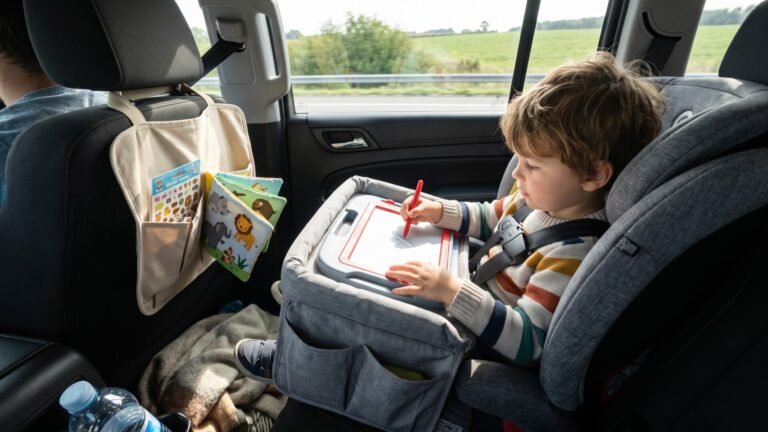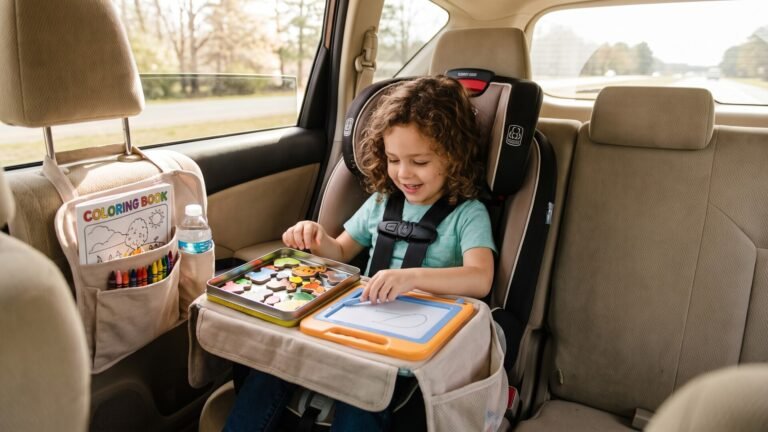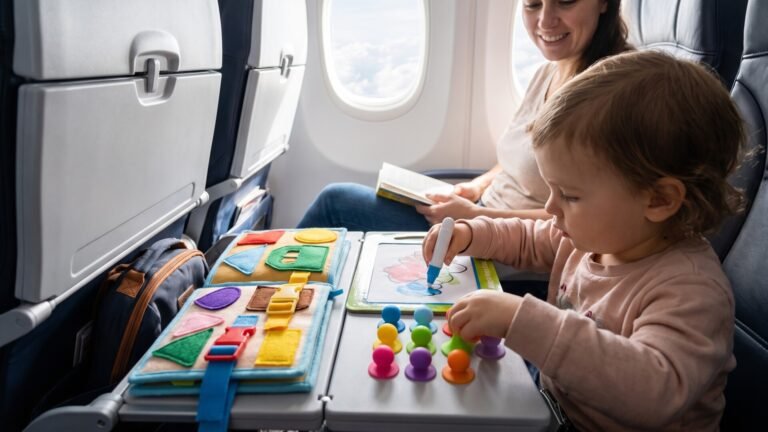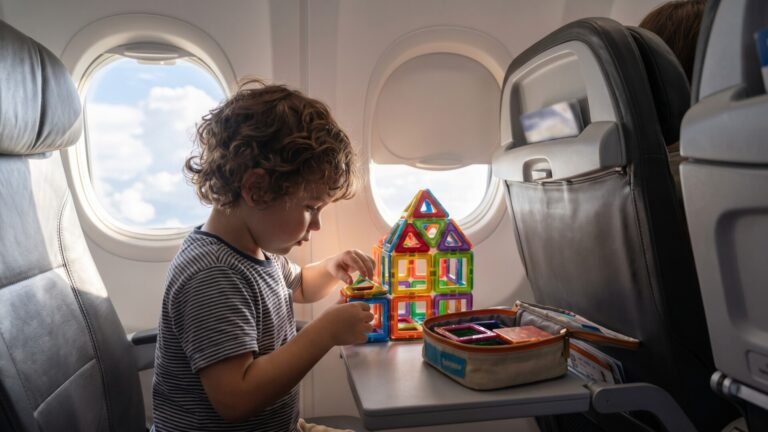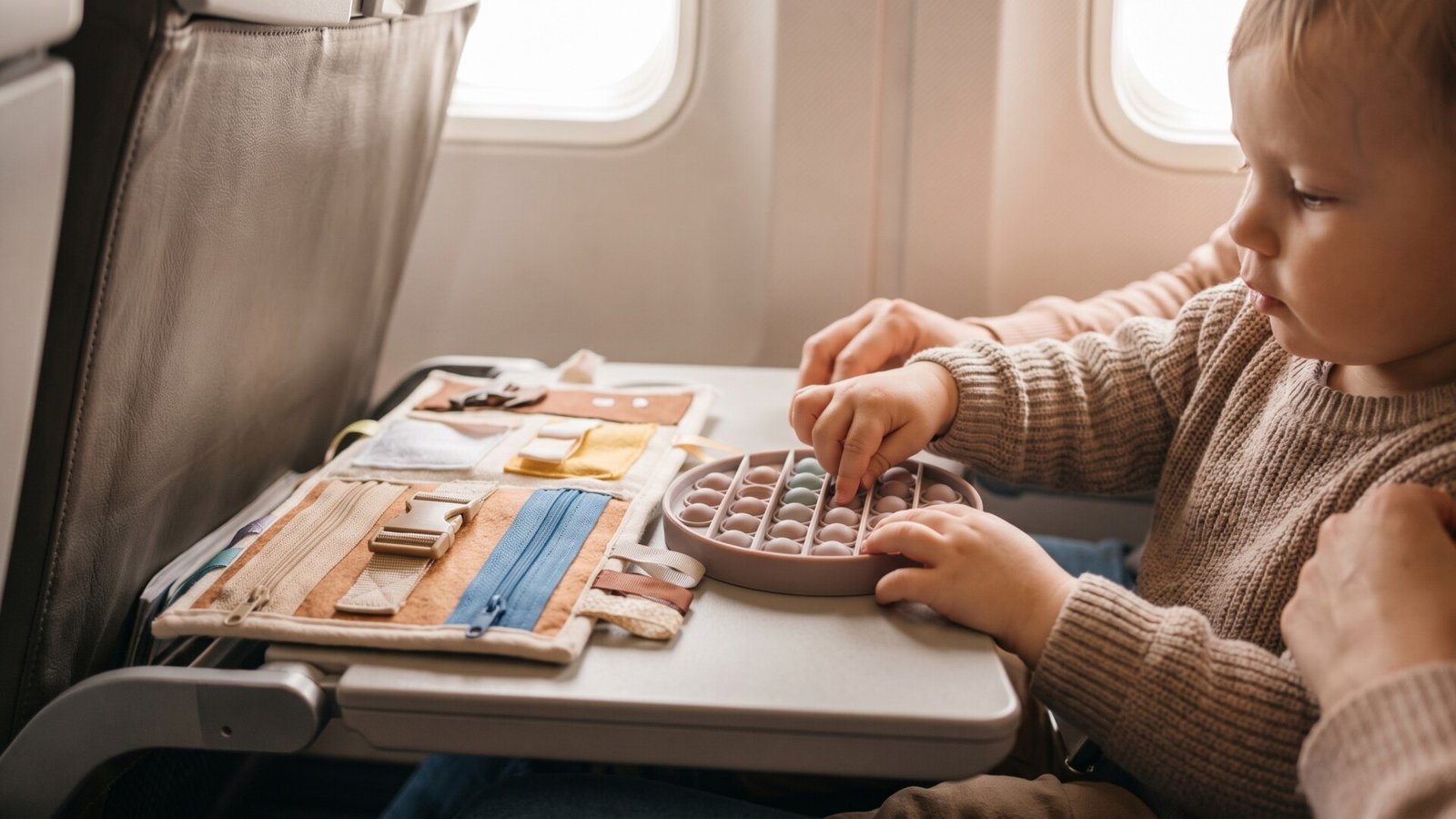
Quiet Sensory Toys for Toddlers: Airplane Travel Gift Ideas
I have a confession to make. The first time I flew with my toddler, I packed exactly one toy. One. I thought I was being strategic—minimalist, even. By the time we reached cruising altitude, that toy was on the floor, my child was wailing, and the passenger in front of us was giving me a look I will never forget.
I learned the hard way that airplane travel with a toddler requires more than a single distraction. It requires a carefully curated collection of quiet, engaging, sensory-rich toys that can hold attention, soothe anxiety, and—most importantly—keep the peace for everyone on board.
If you are reading this, you already know the stakes. You are not just buying a gift. You are buying a few hours of calm at 35,000 feet. You are buying your sanity. And you are buying the goodwill of the strangers seated around you.
So what are the best quiet sensory toys for toddlers to bring on a plane? I have tested dozens, narrowed down the ones that actually work, and built a framework to help you choose the right ones for your specific situation. Let me walk you through it.
The Science Behind Sensory Play at 35,000 Feet
Before we get to the toys themselves, let me explain why sensory toys are particularly powerful during air travel.
Toddler brains are wired for sensory input. Every new sight, sound, smell, and texture helps build neural connections. But here is the thing most parents do not realize: the airplane environment is already a sensory overload for a young child. The pressure changes, the unfamiliar sounds, the confined space, the strange smells—it is a lot. And when a toddler becomes overwhelmed, they do not have the vocabulary to say, “I am overstimulated.” Instead, they melt down.
This is where quiet sensory toys come in. They provide a focused, predictable, and calming sensory experience that helps toddlers regulate their nervous systems. According to the American Academy of Pediatrics, sensory play supports cognitive development, fine motor skills, and emotional regulation. On a plane, those benefits translate directly into fewer meltdowns and more peaceful travel.
The current trend in sensory toys leans heavily toward quiet, portable, and mess-free designs. Manufacturers have finally realized that parents need toys that work in tight spaces, do not require batteries, and can be packed in a carry-on without adding significant weight.
But not all quiet sensory toys are created equal. Some are genuinely engaging. Others get abandoned after five minutes. Some are truly quiet. Others make enough noise to earn you dirty looks from the row behind you.
Let me help you separate the winners from the duds.
What Exactly Are Quiet Sensory Toys?
Quiet sensory toys are exactly what they sound like: toys designed to engage a child’s senses—touch, sight, sound, sometimes smell—without producing significant noise. They are not silent, but they are quiet enough to use in shared spaces like airplanes, waiting rooms, and restaurants.
These toys work by providing sensory input that helps children focus, calm down, or simply stay entertained. Common features include:
- Tactile stimulation: Different textures, silicone bubbles, squishy materials
- Visual engagement: Colorful patterns, moving parts, water-based effects
- Fine motor challenges: Buttons to push, pieces to stack, objects to manipulate
- Predictable feedback: Consistent responses that help children feel in control
The key distinction between sensory toys and regular toys is intentionality. A sensory toy is designed specifically to provide sensory input in a way that supports development or regulation. A regular toy might provide sensory input incidentally, but it is not the primary purpose.
For airplane travel, the most important distinction is between toys that are genuinely quiet and toys that claim to be quiet but actually produce enough noise to bother other passengers. I have tested both, and I will be honest with you about which ones work.
What to Look for When Buying Quiet Sensory Toys for Air Travel
After countless hours of testing (and several flights I would rather forget), I have identified six critical factors for choosing the right quiet sensory toys for airplane travel.
Safety
This should go without saying, but I will say it anyway: every toy you bring on a plane must be age-appropriate and made from non-toxic materials. Look for BPA-free, phthalate-free, and lead-free certifications. Avoid toys with small parts that could become choking hazards, especially for children under three.
Durability
Airplane travel is rough on toys. They get dropped, stepped on, shoved into tight spaces, and occasionally thrown across the aisle. Choose toys that can survive this treatment. Silicone, thick plastic, and reinforced fabric are your friends. Avoid anything with thin plastic that could crack or sharp edges that could break.
Size
Your carry-on space is precious. Every toy should earn its place. Look for compact options that can fit in the seatback pocket, a diaper bag, or even a small pouch. Larger toys might seem like a good idea, but they will quickly become a burden.
Ease of Use
On a plane, you do not have the luxury of a spacious play area. Your toddler will be using their tray table, their lap, or the seat beside them. Choose toys with simple mechanisms that toddlers can operate independently. If a toy requires adult setup or constant supervision, it will add to your stress, not reduce it.
Educational Value
I am not saying every toy needs to teach something. Sometimes you just need a distraction. But toys that also support development—fine motor skills, problem-solving, creativity—offer better value for your money. They keep children engaged longer and provide benefits that extend beyond the flight.
Maintenance
Things get messy on planes. Spills happen. Sticky fingers touch everything. Choose toys that are easy to clean—dishwasher-safe silicone, wipeable plastic, or washable fabric. Avoid toys with fabric that stains easily or electronic components that cannot survive a spill.
The Good, the Bad, and the Quiet
Let me be honest with you about the trade-offs.
Pros of quiet sensory toys for airplane travel:
- They genuinely engage toddlers for longer periods than regular toys
- They promote learning and development even during travel
- Many are compact enough to fit in a small bag
- They minimize disruption to fellow passengers
Cons you need to know about:
- Some toys have limited playtime value—your child might lose interest after 15 minutes
- Small pieces can easily get lost in the seat crevices (I have lost more toys than I care to admit)
- Certain toys require adult supervision, which defeats the purpose of independent play
- Some “quiet” toys are not actually quiet enough for a plane
Now let me show you the toys that actually deliver.
The Quiet Sensory Toys That Survived My Flights
Melissa & Doug Water Wow! Travel Activity Pad
| Feature | Details |
|---|---|
| Age Range | 3+ |
| Key Features | Reusable water pen, mess-free coloring |
| Price | $15 |
| Check the price on Amazon |
I will be honest: I was skeptical about these when I first saw them. A water pen that somehow creates color? It sounded like magic that would fail after two uses. But I was wrong.
Why I like it: The Water Wow! pads use a special water-activated paper that reveals colors when wet and dries back to white. No markers, no paint, no mess. Just a pen you fill with water and a pad that keeps your child entertained for surprisingly long stretches.
Best for: Toddlers who enjoy art but are not yet ready for real coloring supplies. Also great for children who tend to make messes with traditional art materials.
What happens after the first week: The novelty does wear off eventually, but the pads are reusable. Each set comes with multiple pages, and the water pen lasts for many uses. I have seen children return to these pads on multiple flights.
The hidden downside: You need access to water to refill the pen. On a plane, this means asking a flight attendant or using bottled water. It is not a dealbreaker, but it is worth knowing.
ToyGuideHub Longevity Score: 8/10. These pads survive multiple trips and are easy to pack.
Tobbles Neo
| Feature | Details |
|---|---|
| Age Range | 2+ |
| Key Features | Stacking and balancing game |
| Price | $20 |
| Check the price on Amazon |
Tobbles Neo is one of those toys that looks simple but somehow captivates toddlers for far longer than you would expect. It consists of weighted, textured spheres that stack on a wobbling base.
Why I like it: The stacking and balancing challenge engages fine motor skills and spatial awareness. The weighted spheres provide satisfying tactile feedback. And the wobbling base adds an element of unpredictability that keeps children coming back.
Best for: Toddlers who enjoy hands-on, construction-style play. Also great for children who need a calming, repetitive activity.
What happens after the first week: The stacking challenge remains engaging for months. Children experiment with different configurations, and the wobbling base keeps things interesting.
The hidden downside: The spheres can roll away if dropped. On a plane, this means they might end up under seats or in the aisle. Keep a close eye on them.
ToyGuideHub Longevity Score: 7/10. The toy itself lasts, but the pieces are easy to lose.
Fat Brain Toys Dimpl
| Feature | Details |
|---|---|
| Age Range | 1+ |
| Key Features | Silicone bubbles that pop |
| Price | $15 |
| Check the price on Amazon |
The Dimpl is exactly what it sounds like: a silicone frame with colorful bubbles that you push through to the other side. It is simple, satisfying, and surprisingly addictive.
Why I like it: The tactile feedback is immediate and predictable. Push a bubble, it pops through. Push it back, it pops again. For toddlers, this cause-and-effect relationship is deeply satisfying. The silicone is easy to clean and virtually indestructible.
Best for: Younger toddlers who are still exploring cause and effect. Also great for children who need a calming, repetitive sensory experience.
What happens after the first week: The novelty does fade for some children, but the Dimpl remains a reliable calming tool. I have seen children return to it during moments of stress or boredom.
The hidden downside: The educational value is limited. This is a pure sensory toy with no built-in learning objectives. That is fine if you are just looking for a distraction, but do not expect it to teach letters or numbers.
ToyGuideHub Longevity Score: 6/10. The toy itself is durable, but engagement can wane.
Gus & Me Sensory Fidget Toy
| Feature | Details |
|---|---|
| Age Range | 3+ |
| Key Features | Textured fidget toy for sensory play |
| Price | $10 |
| [Affiliate: Check the price on Amazon] |
This is a simple, portable fidget toy with multiple textures designed to engage tactile senses. It is small enough to fit in a pocket and quiet enough to use anywhere.
Why I like it: The variety of textures provides ongoing sensory exploration. The size makes it easy to pack multiple toys without adding weight. And the price point means you can buy several without breaking the bank.
Best for: Children who need a calming, fidget-friendly activity during stressful moments. Also great for children who lose interest in single-function toys.
What happens after the first week: The textures remain engaging, but the toy does not offer much variety. Some children will return to it regularly; others will lose interest after a few uses.
The hidden downside: The toy is small, which means it is easy to lose. On a plane, this is a significant risk. Keep it attached to a clip or store it in a secure pouch.
ToyGuideHub Longevity Score: 5/10. The toy is durable but engagement is limited.
Boon Squigz
| Feature | Details |
|---|---|
| Age Range | 10 months+ |
| Key Features | Suction toys for building and stacking |
| Price | $25 |
| Check the price on Amazon |
Squigz are colorful silicone pieces that stick to smooth surfaces and to each other. They can be stacked, pulled apart, and rearranged in countless configurations.
Why I like it: The versatility is unmatched. Children can stick them to the tray table, the window, or each other. The suction provides satisfying resistance, and the bright colors engage visual senses. The silicone is dishwasher-safe and virtually indestructible.
Best for: Toddlers who enjoy building and construction. Also great for children who need a toy that can be used in multiple ways.
What happens after the first week: The open-ended nature of Squigz means they remain engaging for months. Children find new ways to use them, and the suction never seems to wear out.
The hidden downside: The suction can be too strong on some surfaces. I have seen Squigz stick so firmly to a tray table that they were difficult to remove. And on a plane, the noise of pulling them apart might be louder than you expect.
ToyGuideHub Longevity Score: 9/10. These toys last for years and remain engaging.
How the Toys Compare
| Product | Age Range | Durability | Educational Value | Price | Best For |
|---|---|---|---|---|---|
| Melissa & Doug Water Wow! | 3+ | High | High | $15 | Art lovers |
| Tobbles Neo | 2+ | Medium | Medium | $20 | Hands-on play |
| Fat Brain Toys Dimpl | 1+ | High | Low | $15 | Sensory play |
| Gus & Me Fidget Toy | 3+ | Medium | Medium | $10 | Quiet fidgeting |
| Boon Squigz | 10 months+ | High | Medium | $25 | Building fun |
Choosing the Right Toy for Your Situation
Not every toy works for every family. Here is how to match toys to your specific needs.
Best for small spaces: The Water Wow! pad and the Dimpl are both compact and can be used on a tray table without taking up too much room.
Best for younger toddlers (1-2 years): The Dimpl and Squigz are both safe for younger children and provide satisfying sensory feedback without small parts.
Best for quiet engagement: The Gus & Me fidget toy and the Dimpl are both virtually silent. The Water Wow! pad makes no noise at all.
Best for educational value: The Water Wow! pad teaches fine motor control and creativity. Tobbles Neo builds spatial awareness and problem-solving skills.
Best budget pick: The Gus & Me fidget toy at $10 offers good value for a calming, portable option.
Best premium pick: Boon Squigz at $25 offer the best longevity and versatility of any toy on this list.
The Toy You Carry in Your Heart
I have tested a lot of quiet sensory toys over the years. Some have become staples in my travel bag. Others have been abandoned after a single flight. But the ones that survive are the ones that understand what toddlers actually need: engagement without overwhelm, stimulation without stress, and the freedom to explore in a space that does not allow for much exploration.
The best quiet sensory toy for your toddler is the one that matches their personality, your travel style, and the realities of airplane travel. It might be a Water Wow! pad for your little artist. It might be Squigz for your builder. It might be a simple fidget toy for your sensory seeker.
Whatever you choose, remember this: the goal is not perfection. The goal is connection. The goal is a few moments of calm in a chaotic environment. The goal is getting off that plane with your sanity intact and your child still smiling.
Check current pricing and availability through our recommended partners.
Frequently Asked Questions About Quiet Sensory Toys For Toddlers: Airplane Travel Gift Ideas
What are quiet sensory toys?
Quiet sensory toys are toys designed to engage a child’s senses—touch, sight, sound—without producing significant noise. They are specifically created for use in shared spaces like airplanes, waiting rooms, and restaurants.
Why are sensory toys beneficial for toddlers during travel?
Sensory toys help toddlers regulate their nervous systems during the overstimulating experience of air travel. They provide focused, predictable sensory input that can prevent meltdowns and keep children calm and engaged.
What safety features should I look for in travel toys?
Look for BPA-free, phthalate-free, and lead-free materials. Ensure the toy is age-appropriate and contains no small parts that could become choking hazards. Avoid toys with sharp edges or fragile components.
How can I keep sensory toys engaging for my toddler?
Rotate toys during the flight to maintain novelty. Introduce new toys gradually rather than all at once. And choose toys with multiple functions or open-ended play possibilities.
Are there toys that can be easily cleaned after use?
Silicone toys like the Dimpl and Squigz are dishwasher-safe. The Water Wow! pad can be wiped clean with a damp cloth. Avoid toys with fabric that stains easily or electronic components that cannot survive spills.
How can I prevent losing toys while traveling?
Use a small pouch or bag to keep toys organized. Attach small toys to a clip or lanyard. And designate a specific storage spot for toys when they are not in use.