Adaptive Toys for Limited Mobility
Six months from now, the toy that gets used will not be the one that looked most therapeutic on the product page. It will be the one your child can reach from where they actually sit, activate with the movement they actually have, and enjoy without you rebuilding the setup every fifteen minutes. That is the whole game, and it is not what most shopping guides measure.
Limited mobility is not one profile. One child has restricted reach. Another has low endurance and tires after four presses. Another can grasp but not release. Another has one reliable hand, or involuntary movement that makes small buttons a lottery, or the strength to press something but not the precision to find it. A toy that solves reach may do nothing for grasp, and a toy that solves grasp may be unreachable from a wheelchair tray.
This guide judges options by access, control effort, adjustability, durability, and whether the thing is still worth playing with after the novelty fades. No toy here treats, improves, or rehabilitates anything. The question is narrower and more useful: can your child run it themselves?
What Makes a Toy Adaptive for Limited Mobility?
An adaptive toy changes how a child gets into the play, not what the play is. The interests stay the same – cause and effect, music, building, posting, pretending. What changes is the entry point: a larger activation surface, a grip that does not demand a pincer, a control that responds to a whole-arm sweep instead of a fingertip, a base that stays put, or a switch that moves the button to wherever the child’s reliable movement happens to be.
That splits into two categories, and the distinction matters at checkout. Some toys are inherently accessible – they were designed with broad surfaces, big pieces, or forgiving controls, and they work out of the box. Others are adaptable – they can be made accessible with an accessory, a mounting bracket, an external switch, or a caregiver modification. The second category is where money gets wasted, because adaptability is almost never universal. A toy that accepts one switch type will not accept another. A button that looks huge in a photo may need more force than your child can generate. Compatibility has to be confirmed with the seller or manufacturer before you order, not discovered on arrival.
“Limited mobility” also hides several different practical problems. Reaching, grasping, pressing with enough force, coordinating two hands, holding a stable posture while playing, and sustaining effort over a session are separate skills, and a toy can be fine on one and hopeless on another. A child who can reach a button may not be able to hold their arm there long enough to press it. A child who can press may not be able to keep the toy from sliding away when they do.
One more thing worth saying plainly: play does not have to produce a measurable outcome to be worth the money. A toy that gives your child thirty seconds of independent control over something that makes noise is doing its job. You do not need a developmental justification to buy it.
Key Buying Factors for Families
Four things decide whether an adaptive toy survives in your house. None of them is the feature list.
Access and control. Watch how your child starts things. Do they press with a palm, a fist, a whole arm, a head turn, a foot? Then check whether the toy’s activation point can be reached from their usual seating position without leaning, overreaching, or you holding them in place. The control has to match the movement that already works reliably, not the movement you are hoping will develop.
Stability and setup. A toy that slides, tips, or rolls away when pressed is not accessible, no matter how big the button is. Weighted bases, nonslip mats, and trays solve a surprising number of problems. So does thinking about where the toy lives – table height, floor space, lap tray clearance, and where the cable runs if there is one. Setup time is the hidden tax. If it takes four minutes to position before every session, it will get used twice.
Effort, adjustability, and fatigue. Controls that need precise force or repeated small movements wear a child out fast. Adjustable positioning – an angled surface, a raised platform, a mount that moves the switch closer – often matters more than any additional feature. Short sessions that end in success beat long ones that end in frustration, and a toy that respects that gets picked up again tomorrow.
Safety and supervision. Follow the age label on the specific model, not the brand. Watch for small parts, cords, batteries, charging, overheating, and pinch points on anything that folds or clamps. Electrical modifications, switch wiring, and mounting hardware should follow the manufacturer’s instructions or qualified professional advice – not a forum thread. If a switch interface, seating system, or positioning question is involved, an occupational therapist or another qualified professional is the right person to ask, and worth asking before you spend.
Recommended Adaptive Toys and Accessible Play Options
Suitability depends on your child’s movement pattern, seating, and control method, so treat these as starting points rather than matches. Prices are approximate and move around; check current pricing and availability through our recommended partners.
Fat Brain Toys Dimpl
- Approximate price: Usually around $15-$25
- Age range: Check the current manufacturer age guidance; commonly marketed for young children and preschoolers.
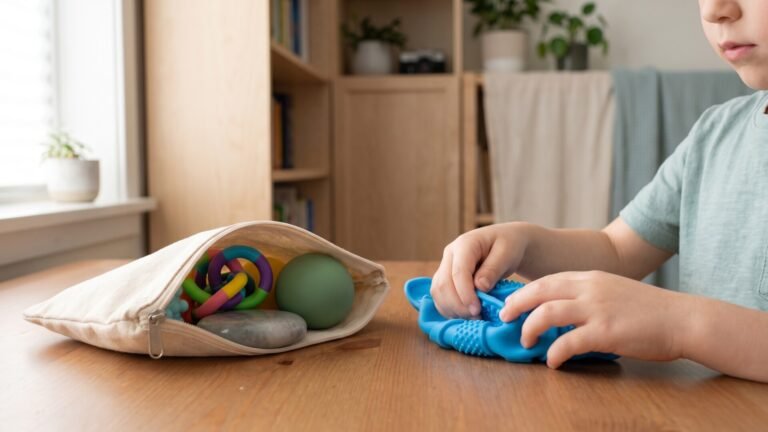
- Key features: Large silicone bubbles, push-and-pop interaction, compact footprint, high-contrast colors.
- Why it may work: Immediate feedback from a broad surface rather than a tiny button. The whole top of the toy is the control, which means almost any downward hand movement lands somewhere useful.
- Limitations: It slides on a smooth tray without a nonslip mat, and it is not a substitute for a true switch-adapted toy if your child cannot reliably press the bubbles at all.
- Best for: Children who can use a palm, finger, or broad hand movement for simple cause-and-effect play.
Large-Button Musical Toy (Fisher-Price Little People Music Adventure Ride-On or Similar)
- Approximate price: Usually around $25-$60, depending on model and retailer.
- Age range: Follow the specific model’s manufacturer guidance.
- Key features: Oversized controls, music or sound feedback, familiar pretend-play theme, multiple activation points.
- Why it may work: Large buttons are far more forgiving than the miniature electronic controls on most toys, especially when the toy sits close to the child rather than across the room.
- Limitations: Sound and lights overstimulate some children. A ride-on is only appropriate as a ride-on if your child can safely use it that way – otherwise use it as a stationary activity only where the manufacturer permits and you can supervise.
- Best for: Young children who benefit from simple, motivating push-button interaction without fine finger placement.
Melissa & Doug Wooden Take-Along Sorting Barn or Large-Piece Posting Toy
- Approximate price: Usually around $20-$40
- Age range: Use the exact model’s current age label; generally intended for toddlers or preschoolers.
- Key features: Large pieces, posting or matching actions, contained storage, tactile materials, no electronics.
- Why it may work: Big pieces are easier to grasp, push, or knock into place than small components, and the play can be modified – your child might choose the pieces while you hold the setup, which is still participation.
- Limitations: Traditional sorting needs reach, release, and visual-motor control. Making it genuinely accessible often means a tray, an angled surface, or careful positioning.
- Best for: Families wanting a quiet, low-tech option that adapts to the child’s current range of movement.
Learning Resources Big Feelings Pineapple or Large-Handle Fine-Motor Toy
- Approximate price: Usually around $20-$35
- Age range: Follow the current product label.
- Key features: Oversized pieces or handles, removable components, simple matching or pretend-play interaction.
- Why it may work: Larger handles reduce the precision needed to grasp compared with miniature manipulatives. That is an access advantage – not a guaranteed fine-motor training effect.
- Limitations: Your child may still need to pull, twist, or place pieces. It is not appropriate for every child with limited mobility, and it should not be sold to you as if it is.
- Best for: Children who can manage larger objects but find small pieces difficult or tiring.
LEGO DUPLO My First Number Train or Another Large-Brick DUPLO Set
- Approximate price: Usually around $20-$50
- Age range: Commonly designed for preschool-age children, but use the current set’s label.
- Key features: Large bricks, simple assembly, recognizable themes, reusable construction, open-ended play.
- Why it may work: DUPLO bricks are larger and separate more easily than standard LEGO. A child can participate by selecting pieces, pressing bricks together on a stable surface, or directing a caregiver – all legitimate forms of building play.
- Limitations: Separating bricks still takes real hand strength, and pieces scatter. The play value depends heavily on positioning and whether your child actually likes construction.
- Best for: Children who want building play but need larger components and a slower, more flexible setup.
Switch-Accessible Toy From an Accessible Toy Specialist
- Approximate price: Commonly around $40-$100 or more, depending on the toy and switch arrangement.
- Age range: Varies by the underlying toy; follow the seller’s and manufacturer’s guidance.
- Key features: Large external activation button or switch interface, cause-and-effect response, toys chosen for adapted access.
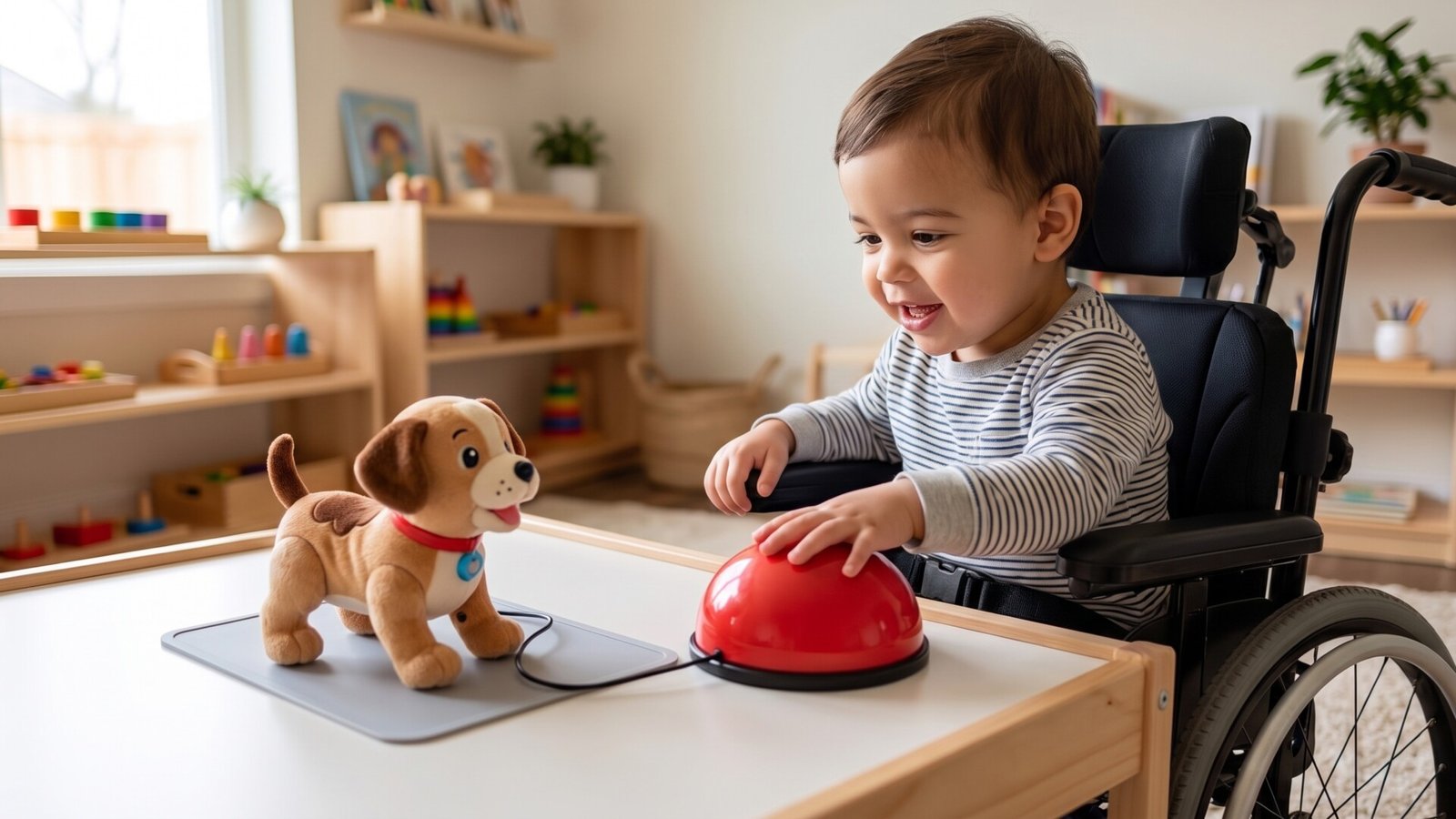
- Why it may work: An external switch relocates activation to wherever your child has a reliable voluntary movement – a hand, elbow, head turn, or foot, when appropriate. That can turn a toy they cannot operate into one they run entirely themselves.
- Limitations: Compatibility, wiring, power, and mounting add setup work. Some products need a separate switch or professional guidance. Do not assume universal compatibility.
- Best for: Children who cannot reliably operate a conventional toy button but have a consistent movement they can use to activate a suitable switch.
Fun and Function Accessible Musical or Cause-and-Effect Toy
- Approximate price: Often around $30-$100, depending on the product.
- Age range: Varies by product.
- Key features: Large activation surfaces, sensory feedback, stable construction, accessible design, switch compatibility where explicitly stated.
- Why it may work: Specialist suppliers tend to document access features more clearly than mass-market listings, which means fewer surprises. Dimensions, activation force, and return policy are the three things to read before ordering.
- Limitations: Specialist toys cost more and often offer fewer entertainment modes than mainstream alternatives. A higher price does not automatically mean a better match.
- Best for: Families prioritizing clear accessibility information over the lowest purchase price.
Comparison Table
| Product | Approx. Price | Access Strength | Setup Burden | Best For |
|---|---|---|---|---|
| Fat Brain Toys Dimpl | $15-$25 | Broad push surfaces | Low | Simple tactile cause-and-effect play |
| Large-button musical toy | $25-$60 | Oversized controls | Low to moderate | Push-button sound and light play |
| Melissa & Doug large-piece posting toy | $20-$40 | Large pieces, low-tech play | Moderate | Quiet tabletop play |
| Large-handle fine-motor toy | $20-$35 | Easier grasp points | Moderate | Children who manage larger objects |
| LEGO DUPLO set | $20-$50 | Large construction pieces | Moderate | Flexible building play |
| Switch-accessible specialist toy | $40-$100+ | External switch control | Moderate to high | Reliable alternative activation |
| Fun and Function accessible toy | $30-$100 | Purpose-designed access features | Low to moderate | Families seeking specialist options |
ToyGuideHub Parent Hassle Score: What Will Actually Get Used?
The Parent Hassle Score runs from 1 to 5, where 1 means minimal setup and maintenance and 5 means substantial positioning, charging, compatibility, or supervision demands. It is an editorial framework based on likely ownership factors – not a clinical assessment and not a laboratory test. It exists because a toy can be perfectly accessible on paper and still die in a cupboard, and hassle is usually the reason.
Here is how the categories shake out. Dimpl and large-piece tabletop toys sit at 1 to 2. They live on a tray, they do not need batteries, and they are ready in seconds. Large-button musical toys land at 2 to 3 – mostly easy, but they eat batteries and some children find the sound hard to tolerate on a bad day. DUPLO and large-handle fine-motor toys sit at 3, because positioning and piece management take some thought. Switch-accessible systems run 4 to 5: charging or batteries, a switch to mount, a cable to route, compatibility to confirm, and a setup that may need rebuilding between sessions.
Higher hassle is not automatically the wrong call. If a switch gives your child the only reliable way to start a toy by themselves, a score of 5 is worth paying. The mistake is buying hassle you did not need because the product looked more serious.
The question that separates the two is this: can your child use it from their usual chair, tray, bed, or floor position without an adult rebuilding the activity first? If yes, it gets used spontaneously, which is when most real play happens. If no, it becomes a planned activity, and planned activities happen less often than anyone intends.
So the framework is simple. Choose low hassle for everyday, spontaneous play – the toy that is just there and works. Choose moderate hassle for planned tabletop sessions where you are present anyway. Choose higher hassle only when the access gain is substantial enough to justify the setup every single time.
The verdict from that framework: the best overall purchase for most families is a stable, motivating toy with broad activation and almost no setup. A specialist switch-accessible toy is the better buy when conventional controls are the actual barrier – not when they are merely inconvenient.
What Most Buyers Get Wrong About Adaptive Toys
The most expensive assumption in this category is that the most specialized product is automatically the most accessible. It is not. A $15 toy with one big push surface can outperform a $120 adapted device if the cheap one sits within reach and the expensive one needs a mount your child cannot tolerate. Specialization buys access features, and access features only help when they solve your child’s specific problem.
The second mistake is reading “one-handed” as “effortless.” One-handed play still requires stabilizing the toy, managing pieces, and holding a posture that gets tiring. A one-handed child playing with DUPLO is doing three jobs at once, and only one of them is the fun one. Contained activities – a shallow tray, a posting toy where pieces stay put – quietly remove two of those jobs.
The third is judging accessibility from the product photo. A button can look enormous and still need more force than your child can produce. It can be on the wrong side for a left hand, or positioned so it is unreachable from a wheelchair without leaning forward, which changes the whole calculation. Photos do not show activation force, and they never show your seating setup. Ask for dimensions and force specifications, or ask someone who has the toy in front of them.
The fourth is buying adaptation before interest. If the toy offers no appealing sound, story, movement, or creative possibility, physical accessibility will not save it. A toy your child can operate easily but does not care about is still a toy that sits in the corner. Interest comes first; adaptation is what lets interest turn into play.
How to Choose by Movement Pattern and Play Setting
Best for Broad Pressing or Whole-Hand Movement
Start with Dimpl, large-button musical toys, and other stable cause-and-effect options. Look for surfaces that respond to a palm rather than a fingertip, because palm presses are more forgiving of aim. Then test the thing you cannot test in a store: does the toy move away when pressed? If it does, a nonslip mat or a weighted base usually fixes it, and that fix costs less than a better toy.
Best for One-Handed Play
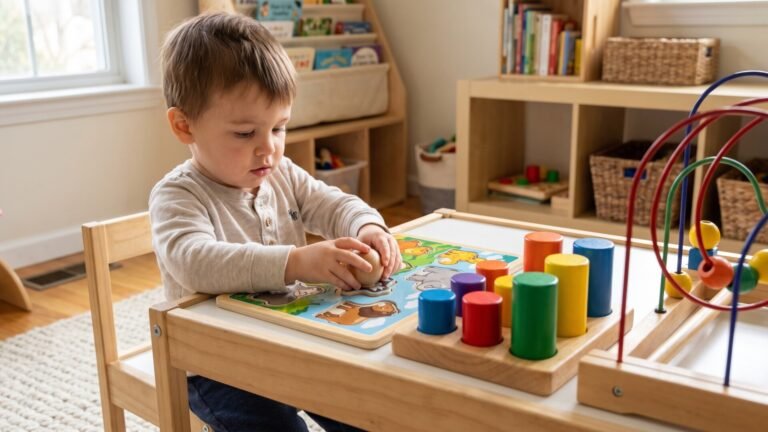
DUPLO, large-handle toys, and contained posting activities work here, especially when pieces can be gathered in a tray rather than chased across a table. A shallow bin, an angled board, or a suction-backed base reduces the need for a second hand. Be honest about brick separation – if it takes two hands and real strength, building becomes a spectator sport, and some children are fine with that while others are not.
Best for External Switch Access
Prioritize products that explicitly state switch compatibility rather than assuming a standard toy can be modified safely. Before ordering, confirm the switch type, the connector, the power requirements, the mounting options, and the return policy. If you are unsure which activation movement or switch arrangement suits your child, that is exactly the question an occupational therapist is trained to answer, and it is worth asking before you spend.
Best for Wheelchair, Tray, or Bedside Play
Favor compact, stable, contained toys with controls that can be positioned within comfortable reach. Think about clearance, cable safety, lap-tray stability, and whether the toy can be used without leaning or overreaching – because overreaching is tiring, and tired children stop playing. No product works with every wheelchair or seating system, so check dimensions against your actual setup, and involve a qualified professional when positioning is the sticking point.
The Hidden Cost of Choosing the Wrong Toy
The first cost is the wasted purchase, and it usually comes from buying for age instead of access. Age labels tell you what a toy is designed for, not whether your child can activate it. A toy labeled for the right age with the wrong activation force is still the wrong toy, and it will sit in the cupboard looking like a mistake you made.
The recurring costs are less obvious. Replacement batteries, a separate switch, mounting accessories, nonslip mats, lost pieces, charging cables, and return shipping all add up, and none of them appear in the product photo. A $50 toy that needs a $60 switch and a $20 mount is a $130 decision, and it is worth knowing that before you start rather than after.
Then there is the cost that does not show up on a receipt: fatigue and frustration. A toy can be technically usable and functionally unsuitable if your child needs repositioning every few minutes or cannot sustain the action long enough to feel in charge of it. That is not a failure of effort on anyone’s part. It is a mismatch, and mismatches are cheaper to avoid than to fix.
The replacement strategy is boring and it works. Before buying anything, write down five things: the movement your child makes reliably, how far they can reach from their usual position, the surface they play on, the feedback they actually enjoy, and the maximum effort they can sustain before getting tired. Then match the toy to that list instead of to the marketing copy. If a toy fails the list, it does not matter how good it looks.
Pros and Cons of Adaptive Toys for Limited Mobility
Pros
- Give children more control over how and when play starts, which is the part that matters most
- Make familiar play formats accessible through larger controls, stable bases, or external switches
- Let a child participate alongside siblings without needing to perform the identical physical action
- Span a wide price range, from inexpensive low-tech toys to specialist accessible products
Cons
- Accessibility varies enormously between children and movement patterns, so one recommendation rarely transfers
- Specialist products and switch systems cost more, sometimes several times more
- Setup, positioning, batteries, and compatibility create ongoing work for the adult
- Some toys marketed as accessible still require reach, grip strength, or precise coordination
- Supervision remains necessary with cords, batteries, small parts, and unfamiliar switches
How to Choose the Right Option
- Best overall: A stable large-button or broad-surface cause-and-effect toy. Fat Brain Toys Dimpl is the budget-friendly starting point when your child can press with a hand or finger.
- Best budget pick: Dimpl or a large-piece Melissa & Doug tabletop toy – inexpensive ways to find out whether broad, simple interaction motivates your child before you spend more.
- Best for building: A LEGO DUPLO set, provided your child can manage the pieces or participate through selecting and assisted construction.
- Best for one-handed play: A contained large-piece posting or matching toy, supported by a tray or nonslip surface.
- Best for external switch access: A clearly switch-compatible toy from an accessible specialist supplier, chosen only after confirming switch type and positioning.
- Best specialist option: A Fun and Function accessible toy, when the specifications and support information justify the extra cost.
- Best for low setup: A compact, stable, non-electronic toy with broad surfaces and few loose parts.
See our Best Toys for Children With Specific Needs article for the wider picture, and Toys for Children With Fine Motor Challenges if grasp and release are the main barriers rather than reach. Toys for Children With Visual Impairments and Sensory-Friendly Toys for Different Environments cover the cases where sensory tolerance shapes the decision as much as movement does.
Conclusion
Start with the simplest toy that matches the movement your child already has and the play they already like. That is the whole strategy, and it beats starting with the most specialized product on the market. Fat Brain Toys Dimpl and large-piece Melissa & Doug tabletop toys are the cheap test of whether broad, simple interaction lands. DUPLO is the answer if your child wants to build. A verified switch-compatible toy from a specialist supplier is the right call when conventional controls are the actual barrier, and a Fun and Function accessible toy earns its price when its access features solve a specific problem you can name.
The right toy is the one your child can control with reasonable effort, use from a position that works in your home, and come back to because they enjoy it – not because it is good for them.
The next question is usually about the toys that do not fit this category at all: the ones where the barrier is sensory rather than physical, or where the child’s play style is solitary by preference. See our Best Toys for Children With Specific Needs for that, and check current pricing, product dimensions, compatibility, and availability through our recommended partners before you commit.
Frequently Asked Questions About Adaptive Toys For Limited Mobility
Are adaptive toys only for children who use wheelchairs?
No. Adaptive toys suit any child whose movement, reach, grasp, endurance, or control makes standard toy operation difficult. Wheelchair use is one context among many, and plenty of children who walk independently still need broader activation surfaces or lighter controls.
How can I tell whether a toy is accessible for my child?
Match the toy’s activation method to the movement your child already makes reliably, then test reach, force, stability, and positioning from their normal seat or play surface. If you cannot test it in person, ask the seller for dimensions and activation force specifications before ordering.
What is a switch-adapted toy?
It is a toy designed or modified so an external switch can trigger its function. Switch compatibility is not universal – connector types, power requirements, and mounting differ between products – so verify the details with the seller or manufacturer rather than assuming.
Do adaptive toys help children develop motor skills?
Accessible play can offer opportunities for participation, choice, grasping, pressing, reaching, and coordination, but outcomes vary from child to child. No specific toy treats a condition or guarantees developmental progress, and anyone telling you otherwise is selling something.
Are expensive specialist toys worth the money?
They are worth it when they solve a specific access problem ordinary toys cannot – typically when an external switch is the only way your child can activate a toy independently. If a lower-cost toy already matches their movement and interests, the specialist option usually does not add enough to justify the price.
Can I adapt a regular toy myself?
Be cautious. Simple supports like a stable tray or a nonslip mat are reasonable. Electrical modifications, switch wiring, batteries, and mounting hardware should follow manufacturer guidance or qualified professional advice, because these are the areas where a shortcut can create a real hazard.
What should I do if my child loses interest quickly?
Check whether the toy is genuinely accessible, too tiring, poorly positioned, overly stimulating, or simply not aligned with what your child finds interesting. Any one of those can end a toy’s life, and a short successful session is worth more than a long forced one.
How many adaptive toys does a child actually need?
Fewer than you would think. Two or three toys that match your child’s reliable movement and preferred feedback will outperform a cupboard full of near-misses, because the ones that work get used daily and the ones that almost work never get used at all.