Age-Based Toy Guides: Finding the Right Toys for Every Stage
Buying toys for kids isn’t just about picking the brightest, noisiest, or trendiest option. The best toys are those that match your child’s age, developmental stage, and interests. A toy that’s perfect for a 2-year-old might frustrate a 6-month-old — or bore a 10-year-old to tears.
That’s where age-based toy guides come in. They help parents understand what kinds of toys support growth, learning, and play at each stage, from newborns discovering their hands to preteens diving into strategy games and STEM challenges.
This hub is your starting point for all things age-appropriate play. It links to our more detailed guides for specific age groups and gives you the principles to make smart toy choices no matter your child’s stage. For the full, long-form version, see our complete Toys by Age guide.
Why Age Matters in Toy Selection
Selecting toys based on age is more than a safety precaution — it’s a practical way to match play to what your child can do right now.
What Each Stage Tends to Look Like
Every child develops at their own pace, but these broad patterns hold for many children:
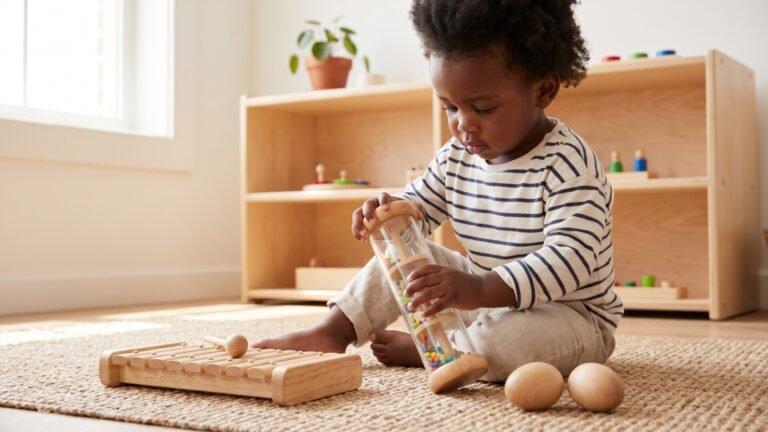
- Infants focus on sensory exploration and early motor skills
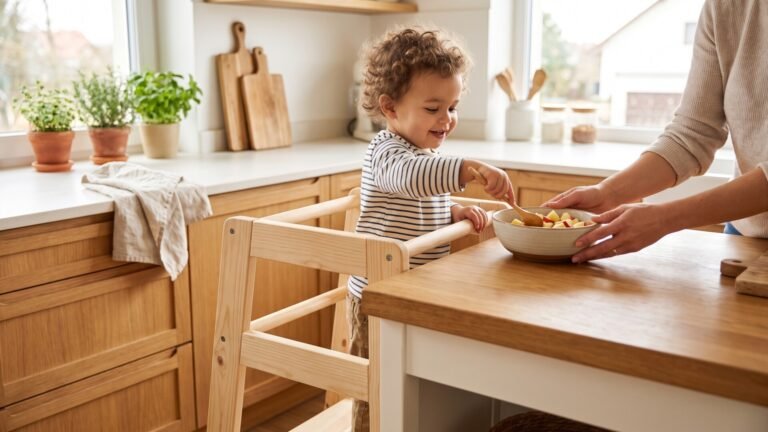
- Toddlers are learning independence, language, and problem-solving
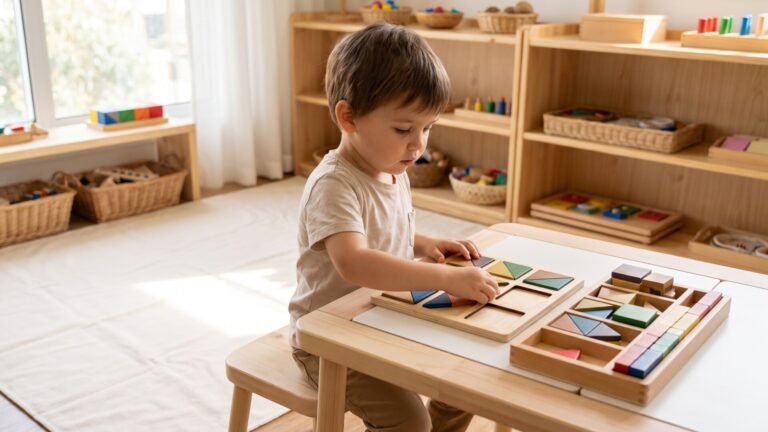
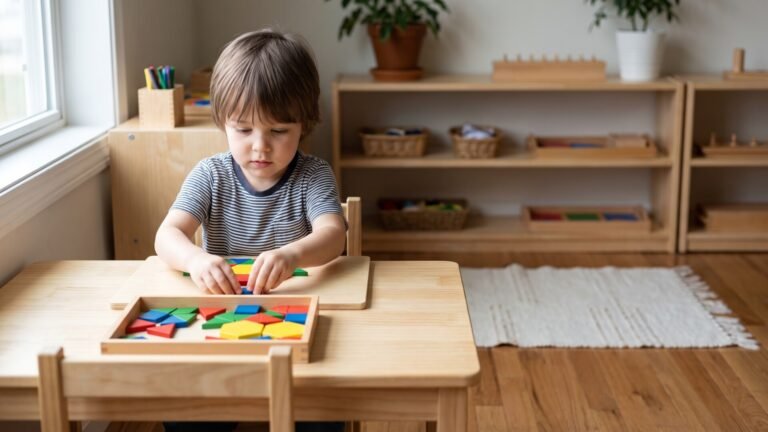
- Preschoolers explore creativity, social skills, and structured play
- School-age children enjoy strategy, logic, and complex building or imaginative play
Safety Considerations
- Small parts are choking hazards for infants and toddlers. In the US, toys intended for children under 3 are not supposed to have parts that fit inside the small-parts test cylinder, which the US Consumer Product Safety Commission defines as 1.25 inches wide and 2.25 inches deep, roughly the size of a young child’s fully expanded throat. A toilet paper tube is slightly wider, so it works as a cautious home check: if a toy or a piece fits inside one, keep it away from babies and toddlers. Balls for under-3s face an even stricter rule and must be at least 1.75 inches across.
- Certain physical toys are unsafe for younger children
- Age labels on toys aren’t arbitrary — manufacturers set them using safety rules as well as typical abilities at each age
Engagement & Learning
A toy that matches your child’s abilities tends to keep them:
- Focused and curious
- Confident as they practice new skills
- Motivated to explore and play independently
Reading the Age Label: Safety Grade vs. Skill Level
The age on the box is the most misunderstood part of toy shopping. It is chosen by the manufacturer, and it combines two things: whether the toy is safe for that age (for instance, no small parts for under-3s), and whether the typical child of that age can use it. A toy marked 3+ may be unsafe for a younger child, but a toy marked 3+ is not a promise that every 3-year-old will enjoy it. A child who is advanced or delayed may be happier one step either way.
Treat the label as a minimum for safety and use your knowledge of your own child for the rest. Two cautions apply especially to homes with younger siblings: keep older children’s toys with small parts out of reach of babies and toddlers, and be strict about button batteries and magnets, which can cause serious harm if swallowed. If you suspect a child has swallowed either, seek emergency medical care straight away. Check the US Consumer Product Safety Commission’s recall list before buying secondhand.
Principles for Choosing Age-Appropriate Toys
Even without a detailed guide, a few principles help parents make smart choices:
1. Consider Developmental Milestones
- Fine motor skills: stacking, grasping, manipulating objects
- Gross motor skills: climbing, running, balance
- Cognitive skills: matching, sorting, cause and effect
- Social and emotional skills: sharing, turn-taking, role-play
If you want a milestone-by-milestone view for toddlers, our developmental checklist for 18-month-olds is a good example of how to match toys to what your child is practicing.
2. Look for Open-Ended Play
Toys that grow with your child allow more creativity and flexibility. Examples: blocks, art supplies, or building kits. To understand why, read the science of open-ended play.
3. Match Complexity to Age
- Simple toys for infants and toddlers (rattles, soft blocks)
- Slightly more complex toys for preschoolers (puzzles, pretend play sets); our guide to when to introduce puzzles shows how to step up
- Challenging toys for school-age kids (board games, LEGO sets, coding kits)
4. Safety First
Always check:
- Small parts for young children
- Sharp edges or breakable pieces
- Button batteries, strong magnets, and loose cords or strings
- Safe materials (non-toxic paints and finishes; look for toys that meet recognized safety standards)
5. Observe Your Child
Every child develops at a slightly different pace. Watch what excites them, what they can manipulate easily, and when they need more challenge. If you have concerns about your child’s development, talk with your pediatrician rather than relying on a toy guide.
Age-Based Play Strategies
Here’s a high-level overview of play focus by age, with links to our in-depth guides for each stage.
0–6 Months
- Focus: Sensory stimulation, visual tracking, grasping
- Toy Examples: Soft rattles, high-contrast books, teething rings, a play mat. Mobiles should be hung out of reach and removed once the baby can push up on hands and knees.
- Key Idea: Toys should be safe, easy to grasp, and engaging visually or by sound
- Read next: Montessori toys for newborns (0–3 months), toys for 3–6-month-olds, and high-contrast baby toys
6–12 Months
- Focus: Sitting, crawling, pulling up, early motor skills, cause and effect
- Toy Examples: Activity cubes, stacking rings, push toys, textured balls. Everything goes in the mouth at this stage, so choose toys that are large enough not to be swallowed and easy to clean.
- Key Idea: Toys that invite movement and experimentation give babies a chance to practice coordination
- Read next: toys for 6–9-month-olds, toys for 9–12-month-olds, and the infant overview (0–12 months)
1-Year-Olds
- Focus: Walking, early language, problem-solving
- Toy Examples: Pull and push toys, simple shape sorters, sturdy board books
- Key Idea: Choose toys that reward effort and encourage exploration
- Read next: Montessori toys for 1-year-olds, language toys for 18-month-olds, and toddler toys (1–3 years)
2-Year-Olds
- Focus: Pretend play, fine motor skills, independence
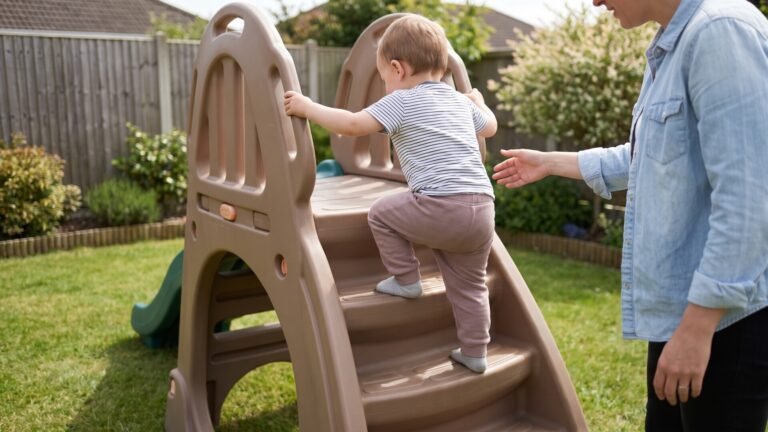
- Toy Examples: Pretend kitchen sets, stacking blocks, large chunky puzzles, a low climber for outdoor play
- Key Idea: Toys that invite creativity, problem-solving, and role-play
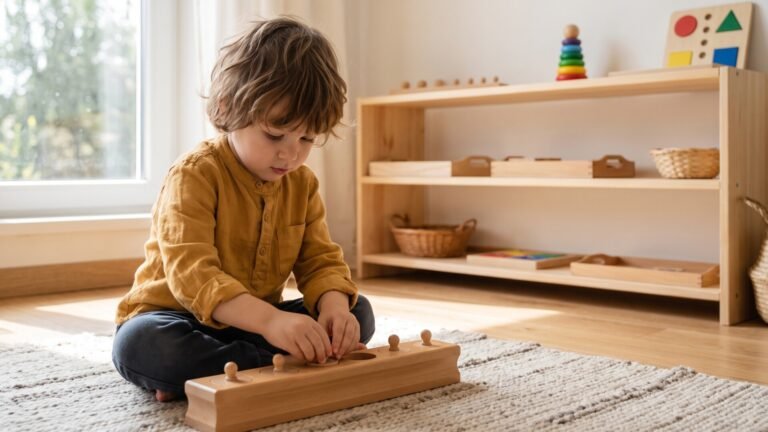
- Read next: 15 Montessori toys for 2-year-olds, durable outdoor toys for toddlers that climb, quiet-time toys for 2-year-olds, and practical life activities for 2-year-olds
3-Year-Olds
- Focus: Social play, early reasoning, imaginative storytelling
- Toy Examples: Dress-up costumes, art supplies, simple board games, small-world sets with large pieces
- Key Idea: Introduce cooperative and imaginative play opportunities
- Read next: educational Montessori toys for 3-year-olds and math kits for ages 3–5
4–5-Year-Olds
- Focus: School readiness, fine motor refinement, structured play
- Toy Examples: More complex puzzles, building sets, early science kits, interactive books
- Key Idea: Look for toys that combine learning with fun
- Read next: Montessori toys for 4-year-olds, for 5-year-olds, simple science kits for 4-year-olds, and top 10 STEM toys for preschoolers
6–8-Year-Olds
- Focus: Problem-solving, strategy, teamwork
- Toy Examples: Board games, LEGO sets, science kits, beginner coding kits
- Key Idea: Offer challenge-based toys that can grow with your child’s thinking skills
- Read next: best building toys for ages 6–8, family board games for 6-year-olds, beginner coding kits for 5–7-year-olds, and Montessori toys for 6–9-year-olds
9–12-Year-Olds
- Focus: Advanced problem-solving, creative construction, social play
- Toy Examples: Coding kits, advanced LEGO or building sets, complex board games, robotics kits
- Key Idea: Encourage creativity, independent projects, and cooperative group play
- Read next: robotics kits for 10–12-year-olds, STEM building sets for 8–10-year-olds, and Montessori toys for 9–12-year-olds
Age Guide at a Glance
| Age | Play focus | Good starting points | Key safety note |
|---|---|---|---|
| 0–6 months | Senses, grasping | Rattles, play mat, high-contrast cards | No small parts, cords, or loose bedding items |
| 6–12 months | Sitting, crawling, pulling up | Stacking rings, soft blocks, push toys | Everything goes in the mouth; check size and cleanliness |
| 1 year | Walking, early words | Shape sorters, board books, pull toys | Keep under-3 rules: no small parts or button batteries |
| 2 years | Pretend play, independence | Play kitchen, chunky puzzles, large blocks | Supervise climbing and riding |
| 3 years | Social and story play | Dress-up, art supplies, simple games | Watch for small parts around younger siblings |
| 4–5 years | School readiness | Building sets, science kits, longer puzzles | Check batteries, magnets, and craft materials |
| 6–8 years | Strategy, teamwork | Board games, LEGO, coding kits | Keep small pieces away from babies |
| 9–12 years | Complex projects | Robotics, advanced building, strategy games | Follow tool, heat, and battery instructions |
Classic Starter Toys by Age (With Price Ranges)
If you want a concrete starting point, these long-selling toys show what a good fit looks like at each stage. Each one is widely available in the US, has a clearly stated manufacturer age grade, and has stayed in production for years, which usually signals durable design. Prices are typical US retail ranges and change often, so treat them as a guide.
| Toy | Age grade | What it invites | Typical price (USD) | Worth knowing |
|---|---|---|---|---|
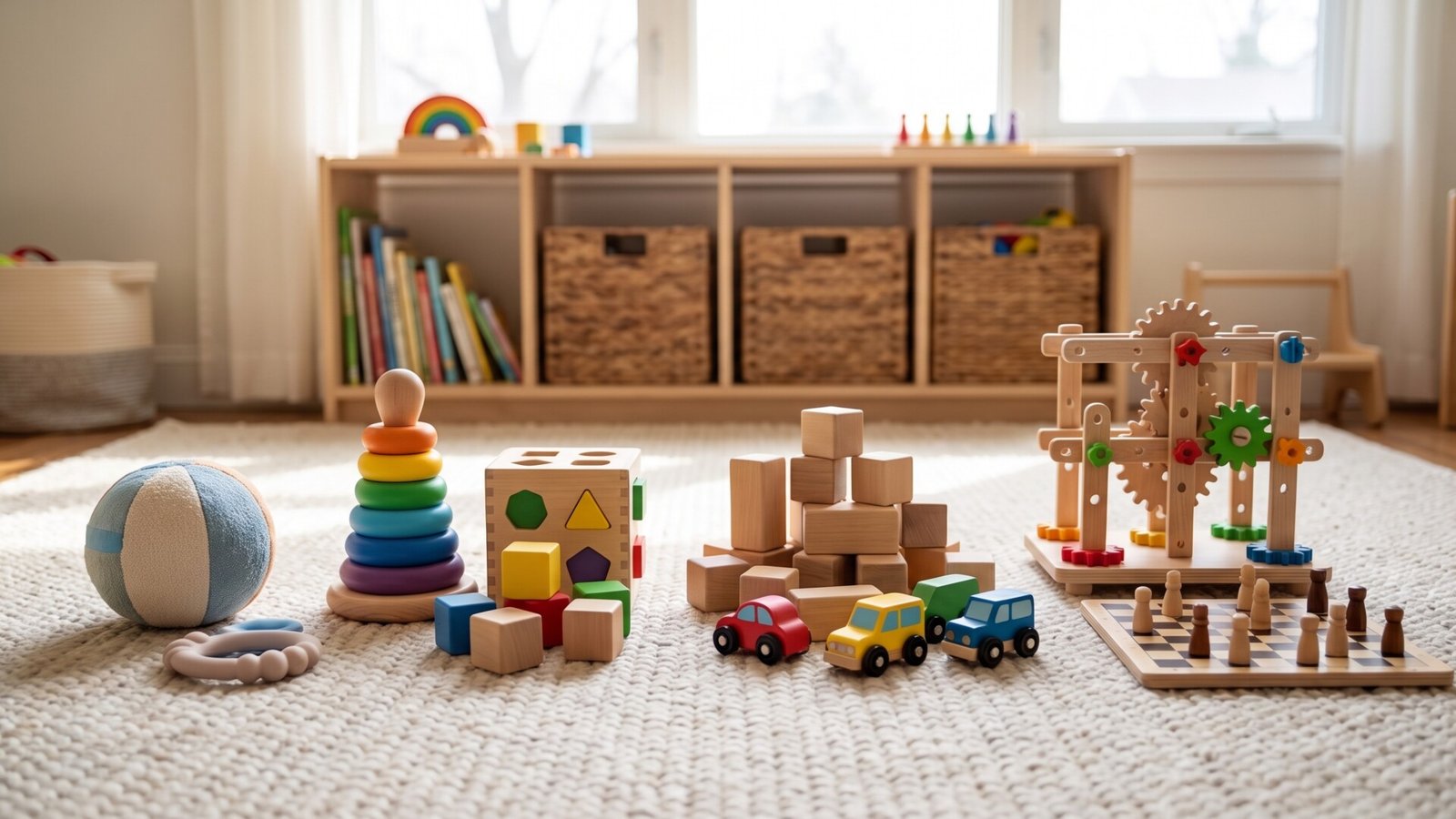
| Fisher-Price Rock-a-Stack | 6 months+ | Grasping, shaking, early stacking by size | About $8 to $15 | Five rings on a rocking base; babies play with the rings long before they stack in order |
| LEGO DUPLO Classic Brick Box (10913) | 18 months+ | Building, early pretend play, colours | About $25 to $35 | 65 pieces in a storage box; DUPLO bricks are sized for under-3s and connect with standard LEGO later |
| Melissa & Doug Shape Sorting Cube | 2 years+ | Shape matching, problem-solving, fine motor control | About $13 to $24 | Wooden cube with 12 shapes; some shapes are tricky, so expect help at first |
| Magna-Tiles Classic 32-Piece Set | 3 years+ | Open-ended building, early geometry | About $35 to $55 | Contains magnets sealed inside the tiles; check regularly for cracks and keep from babies |
| Snap Circuits Jr. SC-100 (Elenco) | 8 years+ | Basic circuits, following diagrams, cause and effect | About $30 to $55 | 100+ projects from 30+ snap-together parts; needs batteries and some adult help at the start |
Notice how the toys build on one another. Stacking rings lead naturally to DUPLO and shape sorters, which lead to open-ended construction like magnetic tiles, which in turn prepare a child for building sets and electronics kits with instructions. If you are choosing a single gift, open-ended toys such as DUPLO and Magna-Tiles usually give the most years of play, which is why our building and construction toys guide and STEM toys guide lean on them so heavily.
Homes With Children of Different Ages
Most age guides assume one child, but many families have a baby and an older sibling sharing the same floor. A few habits make that easier:
- Zone the toys. Keep sets with small parts, magnets, or button batteries on a high shelf or in a lidded box, and let the older child use them at a table or in a room the baby cannot reach.
- Choose bridge toys. Some toys work for both ages at once, such as DUPLO, large wooden blocks, a play kitchen, or a ball run with big pieces. They let siblings play side by side without constant policing.
- Do a quick floor sweep. After older children play, check the floor for stray pieces before the baby comes back in.
- Give the older child ownership. A shelf or box that is just theirs makes it easier for them to keep small pieces tidy and away from a sibling.
Budgeting for Toys Across the Years
Toys do not need to be expensive to be well matched to age. Babies are often happiest with a few simple items and everyday objects, and spending tends to rise later, when children want larger building sets, games, and kits. A practical approach is to put more of your budget into a small number of open-ended toys that span several years, such as blocks or construction sets, and less into single-use novelty toys that suit only a short window. Expansion costs matter too: some systems, from building sets to subscription kits, are designed so that you keep buying add-ons, so factor that in before you commit. Hand-me-downs and secondhand toys are a sensible way to save, as long as you check the CPSC recall list and inspect older toys for wear, loose parts, and missing battery covers.
How Age-Based Guides Help
Our detailed age-based toy guides provide:
- Curated lists of age-appropriate toys
- Safety tips for each stage
- Play ideas to help you get the most from each toy
- Recommendations for both indoor and outdoor play
By following these guides, parents can save time and make confident purchases while supporting their child’s play.
Tips for Using Age-Based Toy Guides
- Combine age-based recommendations with interest-based selection
- Rotate toys within each age group to maintain novelty
- Encourage independent play whenever possible; see quiet time and independent play
- Mix in open-ended and structured toys for balance
- Use guides as a framework, but adjust based on your child’s abilities and preferences
Choosing by Learning Style, Not Just Age
Age is only the first filter. Once you know the age range, you can narrow by approach. If you like calm, child-led, real-world materials, start with the Montessori toys by age group overview and the guide to toys for different developmental stages. If you want to see how toys evolve as a child grows, read how Montessori toys change from baby to elementary age. If your child loves to build, experiment, or code, our STEM toys guide and building and construction toys guide are the next stop. And if your child has specific sensory or developmental needs, see toys for children with specific needs and the sensory toys hub.
Gift Shopping by Age
When you are buying for someone else’s child, age is the one fact you reliably know, so a few extra checks help. Ask a parent about interests and what the child already owns, avoid anything with small parts for under-3s, and keep the receipt for exchanges. For seasonal ideas, see 15 Montessori stocking stuffers and must-have toys for Christmas 2026. Brand-specific questions are covered in our toy brands hub and reviews and comparisons.
Quick Tips for Parents
- Use age as a starting point, not the only factor.
- Observe your child’s interests and abilities.
- Rotate toys to keep engagement high.
- Prioritize safety and long-lasting play value over trends.
- Mix indoor, outdoor, creative, and active toys.
By keeping these strategies in mind, parents can create a play environment that grows alongside their child.
Final Thoughts
Age-based toy selection is one of the most practical ways to support your child’s safety, enjoyment, and engagement. From newborns exploring textures and sounds to preteens tackling strategy games and creative projects, the right toys at the right time make play easier and more rewarding.
Use this hub as your starting point, then follow the links above to the age-specific guide that matches your child. Our complete Toys by Age guide brings everything together in one place.
Frequently Asked Questions About Age-Based Toy Guides
What does the age on a toy box really mean?
It is the manufacturer’s recommended minimum age and is based on both safety (such as small parts) and the skills a typical child at that age has. A toy marked 3+ can be unsafe for a younger child, but the label does not guarantee that every child of that age will enjoy it.
Can I give my child a toy meant for an older age?
Only if it is safe. Check for small parts, button batteries, magnets, and cords, and supervise closely. A toy that is too advanced may also frustrate the child, so offer it alongside age-appropriate options.
What is the best toy for a 1-year-old?
There is no single best toy, but sturdy, simple toys that invite movement, stacking, and sorting tend to work well. See our guide to Montessori toys for 1-year-olds and the toddler overview for ideas.
How do I find toys that grow with my child?
Look for open-ended toys such as blocks, play silks, art supplies, and building sets. They can be used in new ways as your child grows, which usually gives better value than single-purpose toys.
How can I check whether a toy part is too small for a toddler?
The US Consumer Product Safety Commission uses a small parts cylinder 1.25 inches wide and 2.25 inches deep. Anything that fits inside it is a choking hazard for children under 3. At home, a toilet paper tube is slightly wider and makes a cautious check: if it fits inside the tube, keep it away from babies and toddlers.
At what age are magnetic tiles appropriate?
Popular sets such as Magna-Tiles are rated for ages 3 and up. The magnets are sealed inside the tiles, but cracked or broken tiles should be removed straight away because swallowed magnets can cause serious internal injuries.
How many toys does a child need?
Fewer than most households own. A smaller set of well-chosen toys, rotated regularly, keeps play fresh and makes tidying easier.
My child seems ahead of or behind the age range. What should I do?
Children develop at different paces, so choose toys that match what your child can do and enjoys right now. If you have concerns about development, speak with your pediatrician.