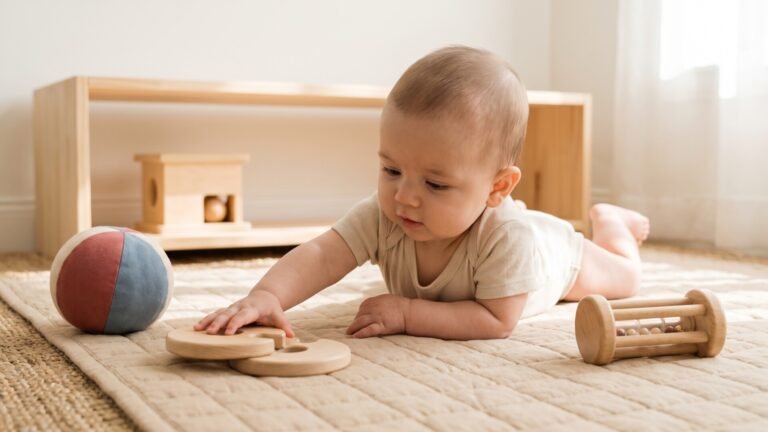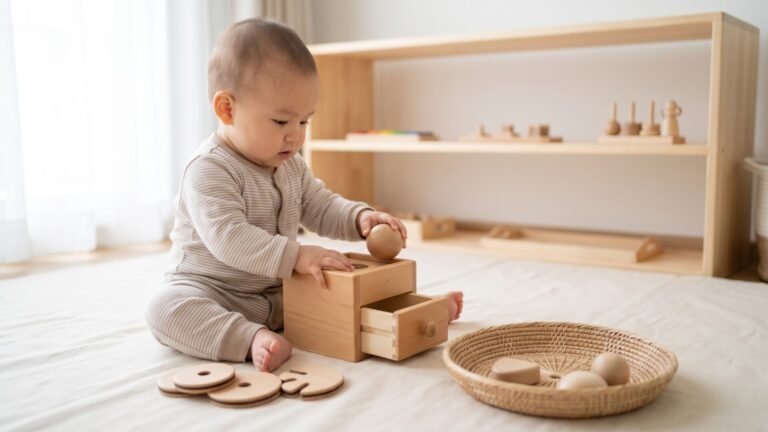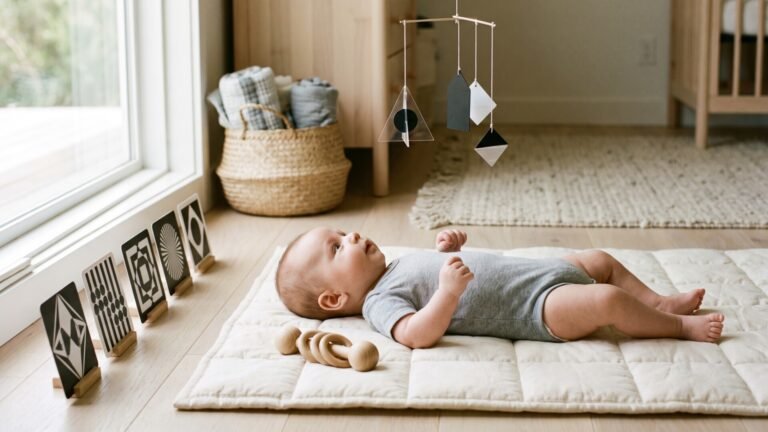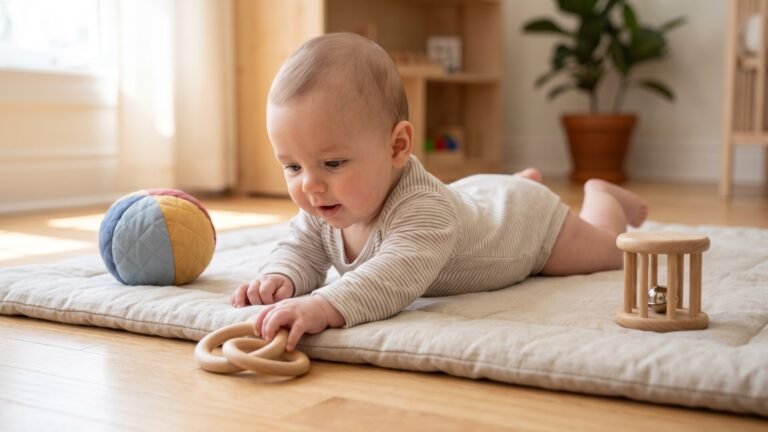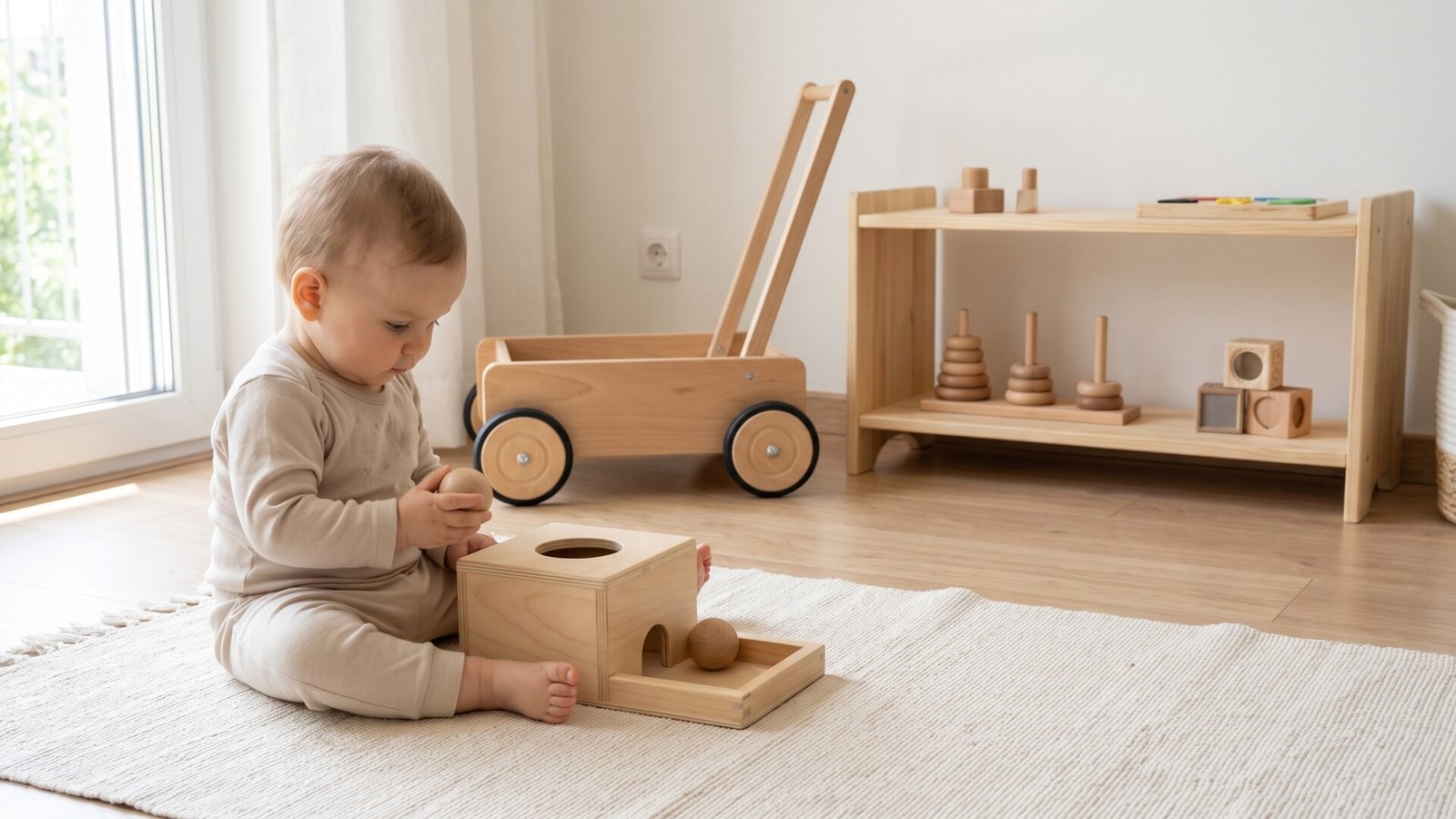
Best Montessori Toys for 9–12 Month Old Babies
The period between 9 and 12 months is an exciting stage for babies and the adults who watch them. Many infants at this age are crawling, pulling to stand, cruising along furniture, babbling, and exploring objects with real purpose. Every baby moves through these steps on their own timeline, so treat the ages in this guide as a rough map, not a checklist.
Montessori-style toys for 9–12 month-olds are simple, real-feeling objects that invite hands-on exploration and self-directed play. Unlike many battery-powered toys, they leave the baby in charge of what happens next, which suits a child who is busy practising new movements and discovering how things work.
This guide sorts toys by what a baby at this stage tends to practise (movement, sensory exploration, cause and effect, early language), with safety notes and trade-offs, so you can pick a few good things rather than a lot of things. It sits inside our Montessori Toys for Infants (0–12 Months) guide, and the full age range is laid out in Montessori Toys by Age Group.
At a Glance: 9–12 Month Montessori Shelf
- Typical interests: moving through space, pulling up, dropping and retrieving objects, putting things into containers, mouthing, and copying sounds and gestures.
- How many toys: a small, rotated selection of roughly 3–5 items on a low shelf or in a basket.
- Safety priorities: nothing small enough to choke on, no loose cords, no button batteries, and sturdy items for anything the baby will lean on.
- Budget note: several of the best items here are household objects (a metal bowl, wooden spoon, or cardboard box) that cost little or nothing.
Pick by Stage: Crawler, Puller-Upper or Cruiser
Most toy lists are organised by age, but a 10-month-old who is still crawling needs different things from one who is cruising. Start from where your baby is today:
| Where your baby is | Offer first | Hold off on |
|---|---|---|
| Crawling, not yet pulling up | Floor-level ball ramp or object permanence box, nesting cups, sensory basket, secure floor mirror | Push wagons and anything meant to be pulled up on |
| Pulling up to stand | Anchored low shelf or other sturdy pull-up surface, soft climbing blocks, nesting cups | Lightweight carts that skid; furniture that is not anchored |
| Cruising along furniture | Weighted wooden push wagon, a basket to carry and dump | Pull-along toys with long strings |
| Taking first steps | Stable push toy, pull-along animals with short strings (adult watching) | Seated, wheeled baby walkers |
A common mistake: the shape sorters, screw-and-bolt sets and peg puzzles that fill many “9–12 month” lists are usually built for older toddlers. At this age most babies mouth and drop the pieces, and real matching comes closer to 12–18 months. Spend on items that work now and still work at 18 months, such as nesting cups, a ramp or a stable push toy, and skip anything whose main trick is a skill your baby does not have yet.
Why Montessori Toys Suit 9–12 Month Olds
Maria Montessori emphasized a prepared environment where young children can explore and learn independently. Note that “Montessori” is a teaching approach, not a certification for toys, so a product labelled Montessori is not automatically better or safer than one that isn’t. What matters is whether the toy follows the principles: simple, real, purposeful, and led by the child. Neither wooden nor battery toys are automatically better. Judge each one on safety, durability and whether your baby keeps coming back to it. For babies approaching their first birthday, good toys tend to:
- Give a reason to pull up, cruise, and grasp small objects
- Offer practice for fine and gross motor skills
- Invite sensory exploration through touch, sight, and sound
- Let a baby discover cause and effect on their own
- Support curiosity and concentration through simple, self-contained activities
Toys cannot make development happen faster, but they can give a baby interesting things to practise on. For more on the principle behind this approach, see what makes a toy Montessori.
Safety First: Small Parts, Cords, Batteries and Furniture
Almost everything a baby this age picks up goes straight into the mouth, so safety deserves more space than the toys themselves. The U.S. Consumer Product Safety Commission (CPSC) bans small parts in toys intended for children under three, and the usual home check is a toilet paper tube: if an object or a piece that could break off fits inside the tube, it is a choking risk for a baby.
- Small parts and loose pieces: check wooden pegs, beads, eyes on figurines, and any pieces that could detach. Inspect toys regularly for cracks, splinters, or loose parts, and retire anything damaged.
- Button and coin batteries: swallowed button batteries can cause serious internal injury within hours. Choose toys where the battery compartment is screw-secured, and keep spare batteries and remote controls out of reach. If you suspect a swallowed battery, seek emergency medical help immediately.
- Cords, ribbons and strings: pull-along toys with long strings should only be used with an adult watching, and the string should be short.
- Magnets and water beads: keep both well away from babies. They are not appropriate for this age.
- Finishes and materials: look for toys that state they meet U.S. toy safety standards (ASTM F963) and use non-toxic finishes, since everything will be chewed.
- Furniture and climbing: anything a baby pulls up on has to be stable and not tip. Anchor shelving and furniture to the wall, and block stairs with a properly installed gate.
For more on storage, toy chests, and keeping hazards out of the play space, see our guide to toy storage and safety.
Quick Comparison: Toy Types for 9–12 Months
| Toy type | What it invites a baby to practise | Free or household version | Main trade-off |
|---|---|---|---|
| Sturdy push toy / wooden wagon | Standing, cruising, early steps | Heavy, stable box to push, adult close by | Needs to be weighted and stable; check for wobble |
| Soft climbing blocks / foam steps | Crawling over, pulling up | Firm floor cushions, adult watching | Bulky storage; adult watching needed |
| Nesting cups or bowls | Stacking, nesting, filling and dumping | Metal bowls and large measuring cups | Very simple; lasts well into toddlerhood |
| Ball drop / simple ramp toy | Cause and effect, tracking, releasing | Large ball and a wide cardboard tube | Balls must be too big to choke on |
| Object permanence box | Dropping, searching, hand-eye coordination | Large ball dropped in a basket, hidden under a cloth | Pieces must be large enough to be safe |
| Board books with real photos | Pointing, naming, turning pages | Library board books | Pages are often chewed |
| Sensory basket | Texture exploration, grasping | Items from the kitchen that pass the tube test | Needs adult selection and watching |
Montessori Toys for Motor Development
At this stage, babies are increasingly mobile. Many are crawling, pulling up, and cruising along furniture, and some take first steps close to the first birthday, though walking anywhere from roughly 9 to 18 months is common. Toys that give them reasons to move are welcome, and none of them are required.
Push and Pull Toys
These encourage standing and early walking, leg and core strength, coordination and balance. Good options:
- Wooden Push Wagons – Good for cruising or gentle walking support, as long as the wagon is weighted and does not run away from the baby.
- Montessori Pull-Along Toys – Wooden animals on wheels that follow a baby once they are walking confidently. Keep strings short.
- Baby Walker Cubes – Multifunctional toys that can be pushed, pulled, and used to carry stacking toys.
Push toy vs. seated baby walker: a push toy that the baby stands behind is not the same thing as a seated, wheeled baby walker. The American Academy of Pediatrics recommends against seated walkers because of fall and injury risks, so if you want something to support early walking, choose a stable push toy and stay close, and avoid lightweight carts that skid out on smooth floors.
Climbing and Exploration Toys
These build upper and lower body strength, spatial awareness and confidence. Use them under supervision, on a flat, clear floor:
- Soft Climbing Blocks or Foam Steps – Safe for indoor exploration on a flat, clear floor.
- Montessori Play Cubes – For climbing, pulling up, and learning about shapes.
- Stackable Soft Blocks – For building, climbing, and knocking down.
Fine Motor Toys
Around 9–12 months, many babies begin using a pincer grasp (thumb and finger) and enjoy placing, dropping, and stacking things. That makes this a good time for simple grasping and container toys:
- Nesting Cups or Bowls – For stacking, nesting, and endless filling and dumping.
- Simple Shape Sorters – Many babies at this age will mostly mouth and drop the shapes; matching usually comes closer to 12–18 months, so choose chunky pieces and expect the toy to grow with your child.
- Large Wooden Knobbed Puzzles and Peg Toys – Look for oversized pegs sized for infants. Screw-and-bolt sets are usually designed for toddlers around 18 months or older, so skip them at this stage unless the manufacturer’s age grade says otherwise.
Montessori Toys for Sensory Development
Sensory exploration is central to the Montessori approach. At this age, babies enjoy textures, weights, colors, and sounds, and they learn a great deal by touching and mouthing objects. For related ideas, see our Montessori sensory toys guide.
Textured and Tactile Toys
- Crochet or Knit Sensory Balls and Soft Textured Toys – Good for grasping, squeezing, and mouthing; check that stitching is tight and nothing can come loose.
- Silicone Teething Toys – Provide tactile variety and chewing relief; choose one-piece designs.
- Wooden Rings and Rattles – Smooth, durable, and easy to grasp.
Rotate tactile toys regularly to keep your baby interested. If your child chews a lot, our guide to safe sensory toys for children who chew has more ideas.
Sensory Baskets
Sensory baskets work well at 9–12 months because they let a baby explore several textures and shapes in one container they can reach into themselves. Good contents include:
- Wooden spoons and large wooden rings
- Fabric swatches or scarves of different textures (larger than a hand, so they cannot be swallowed)
- Silicone or wooden tactile toys
- Soft balls and blocks
Buy a pre-made basket or build one from household objects. Either way, run every item through the small-parts check above, stay close while your baby explores, and refresh the basket weekly.
Montessori Cognitive Toys
At this stage, babies are working out cause and effect, object permanence (things still exist when out of sight), and simple problem-solving. Games of dropping, hiding, and finding are not mischief, they are practice.
Cause-and-Effect Toys
- Ball-drop or ramp toys with balls large enough to be safe for a baby
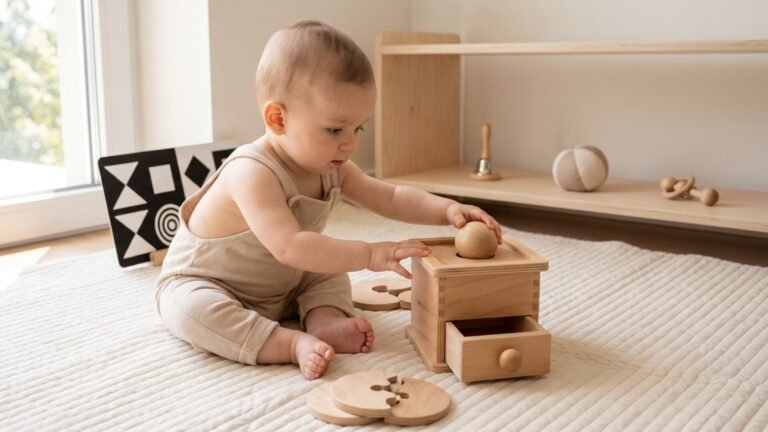
- Object permanence boxes (a ball is dropped in, and it reappears)
- Nesting and stacking blocks
Offer one or two at a time, and let your baby repeat the same action as many times as they like. Repetition is how babies learn at this age.
Shape and Color Recognition
Babies begin to notice simple shapes and colors, although actually sorting and matching by shape tends to come later. Chunky shape sorters, large-piece wooden peg boards (check peg size) and soft stacking rings or cups give early exposure through looking and handling.
For the next step up, see our best Montessori toys for 1-year-olds and the Montessori puzzle progression guide.
Montessori Toys for Language and Communication
Between 9 and 12 months, babies typically babble with more variety, imitate sounds and gestures, and begin to understand familiar words. Toys help most when an adult is talking alongside them.
- Sturdy board books with clear, realistic images and simple words
- Animal or object figurines large enough to be safe, for naming and sound imitation
- Baby-safe music makers such as shakers, wooden bells, or a small drum
These support listening, imitation, turn-taking, and pointing, but talking, singing, and reading aloud together matter more than any single product. When your child is older, see our guide to toys that support early language skills.
Free and Household Montessori Options
Montessori-aligned play does not need a shopping trip. Many of the best things for this age are everyday objects, provided they are safe and watched:
- A stainless steel mixing bowl and wooden spoon for banging and exploring sound
- A shallow basket of different-sized cardboard tubes, lids that are too large to swallow, and silicone spatulas
- A low mirror fixed securely at floor level, so your baby can watch themselves move
- A cardboard box to crawl into, push, or pull up on, if it is sturdy enough
If you want to buy wooden toys on a budget, our guide to finding real wood toys on a budget may help.
Montessori Play Area Setup for 9–12 Month Babies
- Use a clear, soft floor area for crawling and cruising practice
- Keep 3–5 toys available at a time on a low shelf or in baskets, and rotate them roughly weekly
- Include a mix of movement, sensory, cause-and-effect, and book or language items
- Make sure all toys are age-appropriate, non-toxic, and safe for mouthing
- Add an unbreakable, securely mounted mirror and a sturdy pull-up surface
A tidy, uncluttered space helps babies focus, explore, and play safely. Always stay within sight and reach during floor play.
How to Choose (and Gift) Montessori Toys at This Age
- Non-toxic, durable materials (wood, cotton, silicone) and a manufacturer age grade that includes babies under 12 months
- Size and weight that suit small hands, with no part that fits through a toilet paper tube
- Open-ended use that will still interest a toddler in a few months
- Multi-sensory interest without flashing lights or constant noise
- Easy to clean, since everything will be chewed
A manufacturer’s age grade is largely a safety rating, not a promise about development. A toy marked 12 months+ is not safe for a younger baby simply because the baby seems ready. If you are buying a gift, two or three open-ended toys (stacking cups, a ball ramp, sturdy board books) usually beat a big pile, and our Montessori stocking stuffers cover small-budget ideas.
Explore Other Ages
- Best Montessori toys for newborns (0–3 months)
- Best Montessori toys for 3–6 month old babies
- Best Montessori toys for 6–9 month old babies (the stage just before this one)
- Best Montessori toys for 1-year-olds (the next stage)
- Montessori toys for toddlers (1–3 years)
Final Thoughts
You do not need many products. A handful of well-chosen, open-ended toys, a safe floor space, and an adult who is nearby and talking with the baby will do more than a crowded shelf. Match what you offer to what your baby is practising this week, and let them lead.
For recommendations across all infant stages, see Best Montessori Toys for Infants (0–12 Months), or browse our Montessori Toys & Activities for Kids hub and the full Montessori & Early Learning Toys overview.
Frequently Asked Questions About Montessori Toys For 9–12 Month Olds
What are the best Montessori toys for a 9–12 month old?
Good starting points are nesting cups, a simple ball ramp or object permanence box, a stable wooden push toy, soft climbing blocks, sturdy board books, and a small sensory basket. Choose a few and rotate them rather than offering everything at once.
My baby is not crawling or pulling up yet. Are these toys still right?
Yes, start with floor-level items such as nesting cups, a ramp and a sensory basket. Babies reach movement milestones at different times, and toys do not speed them up. If you have concerns about your baby’s development, talk to your pediatrician.
Are second-hand wooden toys safe?
They can be, if you check them. Look for cracks, splinters, loose parts and worn finishes, run small pieces through the toilet paper tube test, and search the CPSC recall list for the brand. If you are unsure what finish was used, skip it for a baby who mouths everything.
Does my baby need toys that light up or play music?
No. Babies are often as happy with a wooden spoon and a metal bowl as with an electronic toy. If you do choose a battery toy, make sure the battery compartment is secured with a screw.
How much should I spend on a 9–12 month old's toys?
Very little is needed. Household objects cover much of what the shelf needs, so spend on two or three durable items that will still work at 18 months, such as nesting cups, a ramp or a stable push toy.
When should I move on to toddler toys?
There is no set date. As your baby starts walking, stacking and engaging with simple puzzles, you can add toddler-level materials, following each toy’s age grade. Our toys for 1-year-olds guide is the natural next step.