Amazon Montessori Hacks: How to Find Real Wood Toys on a Budget
I remember standing in my living room, staring at a pile of plastic toys that had already lost their magic. My toddler had abandoned them within days, and I was frustrated. Then I discovered Montessori wood toys—beautiful, durable, and designed to spark real learning. But when I saw the price tags, my heart sank. How could I afford these for my child?
I learned the hard way that finding real wood toys on a budget isn’t about settling for less. It’s about knowing where to look, what to look for, and how to spot the deals that actually deliver quality. Amazon is a goldmine for budget-friendly Montessori toys if you know the hacks.
In this article, I’ll share the strategies I’ve developed over years of trial and error. We’ll explore what makes a wood toy truly Montessori-friendly, how to spot the real deals from the duds, and my top picks for affordable options that won’t break the bank. By the end, you’ll feel confident shopping for quality wood toys without the guilt of overspending.
Let’s start with why these toys matter so much.
Why Real Wood Toys Matter for Montessori Learning
Montessori education isn’t just about teaching children—it’s about respecting their natural development. Dr. Maria Montessori believed that children learn best through hands-on, purposeful play. And wood toys fit this philosophy like a glove.
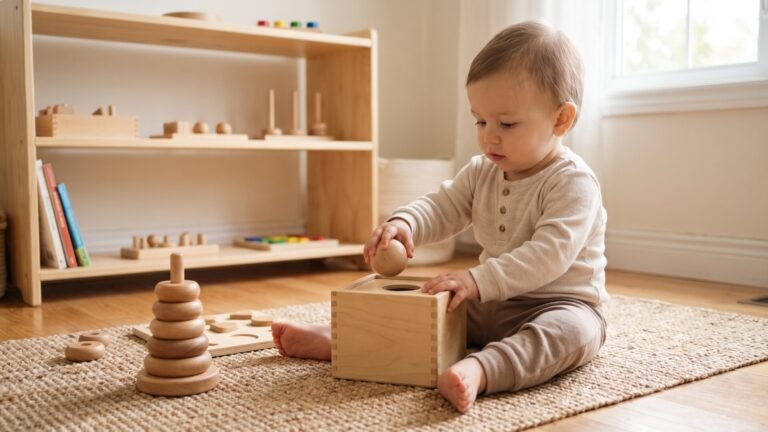
Here’s the thing: wood toys offer sensory experiences that plastic simply can’t match. The weight, the texture, the subtle grain—each piece feels different in a child’s hands. This tactile feedback helps develop fine motor skills and spatial awareness in ways that smooth, uniform plastic cannot.
I’ve watched my own child spend twenty minutes just exploring the surface of a wooden block. That kind of deep engagement doesn’t happen with a plastic toy that lights up and makes noise. Wood toys invite children to slow down, to notice, to think.
But there’s more. Wood toys are inherently durable. A well-made wooden toy can survive multiple children, even generations. I’ve seen PlanToys pull-along ducks that have been passed down through three families and still look beautiful. That’s not just good for your wallet—it’s good for the planet.
Safety is another concern parents often raise. Quality wood toys use non-toxic finishes and are free from BPA, phthalates, and other chemicals found in many plastics. When you buy from reputable brands, you’re choosing materials that are safe for little mouths and hands.
The current trend toward sustainable living has only amplified this. More families are seeking out eco-friendly toys that don’t end up in landfills after a few months. Wood toys, especially those made from sustainably sourced rubberwood or bamboo, align perfectly with these values.
Yet here’s the paradox: the very qualities that make wood toys so valuable also make them expensive. Quality wood costs more than plastic. Skilled craftsmanship costs more than injection molding. And sustainable practices add overhead that gets passed to consumers.
This is where the frustration sets in. You want the best for your child, but your budget has limits. I’ve been there. Let me show you how to navigate this.
Understanding Real Wood Toys
Before you start shopping, you need to know what you’re actually looking for. Not everything labeled “wood” on Amazon is what it seems.
Real wood toys are made from solid wood—meaning the entire piece is carved or shaped from a single piece of timber. Common types include rubberwood, maple, beech, and birch. These are hardwoods that resist wear and tear.
Then there are composite wood toys. These are made from wood particles or fibers bonded together with adhesives. Think MDF (medium-density fiberboard) or plywood. While these can be durable, they’re not the same as solid wood. They may contain glues that off-gas, and they don’t have the same weight or feel.
The terminology matters. “Solid wood” means the toy is made entirely from natural wood. “Wood” on its own could mean anything from solid wood to particleboard with a wood veneer. Always check the product description carefully.
Non-toxic finishes are crucial. Look for toys finished with water-based paints, beeswax, or natural oils. Avoid anything that mentions “lacquer” or “varnish” without specifying it’s non-toxic. The safest options are certified by organizations like the ASTM (American Society for Testing and Materials) or carry the CE mark for European safety standards.
Hardwood versus softwood is another distinction. Hardwoods like maple and beech are denser and more durable. Softwoods like pine are lighter and more prone to dents and scratches. For toys that will see heavy use, hardwoods are worth the investment.
The manufacturing process also matters. High-quality wood toys are sanded smooth to prevent splinters, then finished with multiple coats of safe sealant. Cheaper options may have rough edges or uneven finishes that can fray over time.
Now that you know what to look for, let’s talk about the factors that should guide your buying decisions.
Key Buying Factors for Wood Toys
When I shop for wood toys on Amazon, I run through a mental checklist. Here’s what I consider:
Safety standards come first. Always check the age recommendation. Toys for children under three should have no small parts that could become choking hazards. Look for certifications like ASTM F963 (the U.S. safety standard for toys) or EN71 (the European equivalent). These ensure the toy has been tested for lead, phthalates, and other hazards.
Durability matters more than you think. A toy that falls apart after a month isn’t a bargain at any price. Read reviews specifically about durability. Look for phrases like “survived my toddler” or “still looks new after a year.” Brands like Melissa & Doug, Hape, and PlanToys have strong reputations here.
Educational value is the whole point. Montessori toys are designed to teach specific skills—fine motor control, problem-solving, concentration. A good wood toy should have a clear purpose. Does it encourage open-ended play? Does it challenge the child without frustrating them? Does it grow with the child?
Ease of use and child engagement go hand in hand. The best toys are ones children can use independently. No batteries, no complicated instructions, no adult assembly required for play. If your child needs you to set it up, they’ll lose interest waiting.
Storage and maintenance are practical realities. Wood toys need to be cleaned with a damp cloth and mild soap. They shouldn’t be soaked or left in direct sunlight. Some toys, like kitchen sets, require significant floor space. Consider your home’s layout before buying.
These factors will help you separate the worthwhile options from the ones that will gather dust. Now let’s look at the pros and cons of wood toys.
Pros and Cons of Wood Toys
Pros
Durability and longevity. A quality wood toy can last for years, even decades. I’ve seen Hape blocks that have been through three children and still look pristine. This makes them excellent hand-me-downs.
Eco-friendly materials. Wood is renewable, biodegradable, and often sourced from sustainably managed forests. Brands like PlanToys use rubberwood trees that no longer produce latex, giving them a second life.
Educational benefits. Wood toys naturally encourage open-ended play. A set of blocks can become a castle, a bridge, a spaceship. This flexibility fosters creativity and problem-solving in ways that single-purpose plastic toys cannot.
Aesthetic and sensory appeal. There’s something calming about the look and feel of natural wood. It fits beautifully into any home decor. And the sensory input—the weight, the texture, the sound—helps children develop their senses.
Cons
Higher upfront costs. This is the biggest barrier. A quality wooden toy can cost two to three times more than its plastic counterpart. But remember: you’re paying for longevity and educational value.
Limited availability of budget options. Not all brands offer affordable lines. You’ll need to hunt for sales, clearance items, and open-box deals.
Potential for splinters if not well-made. This is rare with reputable brands, but cheap imports can have rough edges. Always inspect toys carefully before giving them to your child.
May require more care and maintenance. Wood toys can’t go in the dishwasher. They need gentle cleaning and occasional conditioning with food-grade mineral oil to prevent drying and cracking.
Now, let’s get to the part you’ve been waiting for—the actual products.
Main Product Recommendations
Melissa & Doug Classic Wooden Toy
| Feature | Details |
|---|---|
| Age Range | 2+ |
| Key Features | Non-toxic, durable wood, promotes creative play |
| Affiliate Program | Melissa & Doug |
Why We Like It
Melissa & Doug has been a staple in my home for years. Their classic wooden toys—like the wooden pizza set or the cutting food set—are beautifully made and endlessly engaging. The pieces are chunky enough for small hands, and the non-toxic paints give me peace of mind.
Best For
Toddlers and preschoolers who love pretend play.
Pros
- High-quality construction that survives rough play.
- Great for open-ended play—no batteries required.
Cons
- Limited complexity for older children. These toys shine best for ages 2–4.
Hape Wooden Building Blocks
| Feature | Details |
|---|---|
| Age Range | 3+ |
| Key Features | Colorful, child-safe paint, encourages STEM learning |
| Affiliate Program | Hape |
Why We Like It
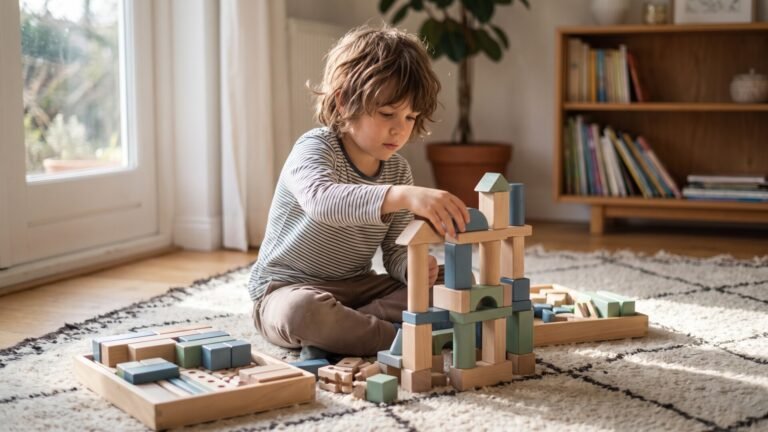
Hape’s building blocks are a masterpiece of design. The colors are vibrant but not overwhelming, and the blocks are precisely cut so they stack easily. My son spent hours creating towers, bridges, and imaginary cities.
Best For
Kids interested in engineering and design.
Pros
- Promotes fine motor skills and spatial reasoning.
- Comes in a sturdy storage box.
Cons
- Requires supervision for younger children to avoid choking hazards with smaller pieces.
PlanToys Wooden Pull-Along Duck
| Feature | Details |
|---|---|
| Age Range | 1+ |
| Key Features | Encourages walking, made from sustainable rubberwood |
| Affiliate Program | PlanToys |
Why We Like It
This little duck was a game-changer when my daughter was learning to walk. The gentle clacking sound as it moves encourages her to take steps, and the rubberwood construction is incredibly durable. Plus, PlanToys uses formaldehyde-free glues and organic pigments.
Best For
Babies and toddlers who are just starting to walk.
Pros
- Eco-friendly production from sustainable materials.
- Encourages gross motor development.
Cons
- Limited play options as the child grows. It’s a single-purpose toy.
Tegu Magnetic Wooden Blocks
| Feature | Details |
|---|---|
| Age Range | 1+ |
| Key Features | Magnetic connection, promotes creativity |
| Affiliate Program | Tegu |
Why We Like It
Tegu blocks are genius. The magnets inside each block allow children to build structures that defy gravity—floating bridges, spinning wheels, and more. The tactile experience of connecting the magnets is deeply satisfying.
Best For
Kids who enjoy building and construction.
Pros
- Engages problem-solving skills and creativity.
- No small parts to lose—the magnets keep everything together.
Cons
- Higher price point than traditional blocks. But the unique play value justifies it.
Janod Wooden Puzzle
| Feature | Details |
|---|---|
| Age Range | 2+ |
| Key Features | Bright colors, educational themes |
| Affiliate Program | Janod |
Why We Like It
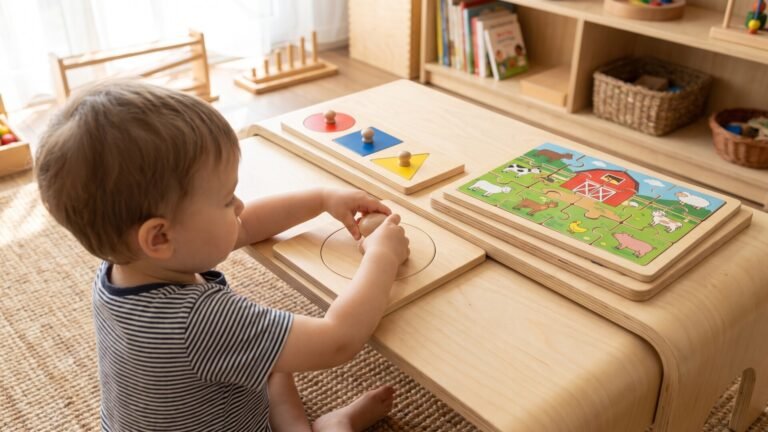
Janod puzzles are works of art. The pieces are thick and easy for small hands to grasp, and the themes—animals, numbers, letters—are educational without feeling like a lesson. My daughter learned her numbers while doing a puzzle, and she didn’t even realize she was learning.
Best For
Early learners.
Pros
- Encourages cognitive skills like pattern recognition and problem-solving.
- Beautiful illustrations that spark conversations.
Cons
- Limited replay value once the puzzle is mastered. But you can rotate puzzles.
Green Toys Wooden Farm Playset
| Feature | Details |
|---|---|
| Age Range | 3+ |
| Key Features | Durable, eco-friendly, promotes role play |
| Affiliate Program | Green Toys |
Why We Like It
Green Toys is known for their recycled plastic toys, but their wooden line is equally impressive. This farm playset includes animals, a barn, and a fence—everything your child needs for hours of imaginative play. The wood is smooth and the paint is non-toxic.
Best For
Kids who love animals and farming.
Pros
- Made from recycled materials, so it’s good for the planet.
- Encourages social play and storytelling.
Cons
- Some assembly required for the barn. It’s not complicated, but it takes a few minutes.
Tinkertoy Classic Construction Set
| Feature | Details |
|---|---|
| Age Range | 3+ |
| Key Features | Versatile building options, promotes STEM learning |
| Affiliate Program | Tinkertoy |
Why We Like It
Tinkertoys are a classic for a reason. The wooden rods and spools allow children to build everything from simple shapes to complex machines. The open-ended nature means the play evolves as the child grows.
Best For
Future engineers and architects.
Pros
- Stimulates creativity and logical thinking.
- Durable pieces that withstand years of use.
Cons
- Small pieces may pose a choking hazard for younger kids. Best for ages 3+.
KidKraft Wooden Kitchen Set
| Feature | Details |
|---|---|
| Age Range | 3+ |
| Key Features | Realistic design, encourages pretend play |
| Affiliate Program | KidKraft |
Why We Like It
A wooden kitchen set is the crown jewel of any playroom. KidKraft’s version is sturdy, realistic, and packed with features like a working oven door, a sink, and storage shelves. My children have spent countless hours "cooking" for me.
Best For
Kids who love role play.
Pros
- Durable and attractive design that looks great in any room.
- Encourages social skills and language development.
Cons
- Requires larger storage space. It’s a substantial piece of furniture.
Comparison Table
| Product | Age Range | Durability | Educational Value | Price Range | Best For |
|---|---|---|---|---|---|
| Melissa & Doug Classic Wooden Toy | 2+ | ✔️ | ✔️ | $25-$35 | Toddlers |
| Hape Wooden Building Blocks | 3+ | ✔️ | ✔️ | $20-$30 | Builders |
| PlanToys Wooden Pull-Along Duck | 1+ | ✔️ | ✔️ | $15-$25 | Early Walkers |
| Tegu Magnetic Wooden Blocks | 1+ | ✔️ | ✔️ | $30-$50 | Creative Builders |
| Janod Wooden Puzzle | 2+ | ✔️ | ✔️ | $15-$25 | Early Learners |
| Green Toys Wooden Farm Playset | 3+ | ✔️ | ✔️ | $40-$60 | Role Play |
| Tinkertoy Classic Construction Set | 3+ | ✔️ | ✔️ | $25-$45 | Future Engineers |
| KidKraft Wooden Kitchen Set | 3+ | ✔️ | ✔️ | $100-$150 | Pretend Play |
How to Choose the Right Option
Best for Small Budgets
If you’re working with a tight budget, focus on multipurpose toys. A set of Hape building blocks costs around $25 and provides endless play options. Janod puzzles are also affordable, often under $20. Look for Amazon’s “Open Box” or “Used – Like New” options, which can save you 20–30 percent. Subscribe to Amazon’s “Today’s Deals” page and set alerts for your favorite brands.
Best for Educational Value
For maximum learning, choose toys that target specific skills. Tegu blocks are excellent for problem-solving and spatial reasoning. Tinkertoys encourage STEM thinking. Melissa & Doug’s pretend play sets build language and social skills. If you can only buy one, go with the blocks—they offer the most developmental bang for your buck.
Best for Versatility
Toys that grow with your child are worth the investment. Hape blocks work for toddlers and school-aged children alike. Tinkertoys can be used for simple constructions at age three and complex machines at age eight. The KidKraft kitchen set remains engaging for years as children develop more elaborate pretend scenarios.
Best for Eco-Conscious Families
PlanToys and Green Toys lead the way in sustainability. PlanToys uses rubberwood from trees that no longer produce latex, ensuring no waste. Green Toys uses recycled materials and avoids excess packaging. Both brands are certified by organizations like the Forest Stewardship Council (FSC).
Best for Gift Giving
For a gift that wows, consider a bundle. A Melissa & Doug wooden pizza set paired with a Janod puzzle makes a thoughtful, coordinated present. Or go big with the KidKraft kitchen set—it’s a gift that will be remembered for years. Always include a gift receipt, as wood toys can be returned if they don’t suit the child.
Conclusion
Finding real wood toys on a budget isn’t about luck—it’s about strategy. By understanding what makes a quality wood toy, knowing where to look, and being patient with sales, you can build a beautiful Montessori-inspired collection for your child without breaking the bank.
My top pick for the best overall value is the Hape Wooden Building Blocks. They offer endless play possibilities, grow with your child, and come from a brand that prioritizes safety and sustainability. At around $25, they’re an investment that will pay dividends for years.
But remember: the best toy is the one your child actually plays with. Don’t stress about having the perfect collection. Start with one high-quality piece and see how your child responds. You might be surprised at how much joy a simple wooden block can bring.
[Affiliate: Check current pricing and availability through our recommended partners on Amazon]
Frequently Asked Questions About Wood Toys On A Budget
What are the benefits of wooden toys over plastic?
Wooden toys offer superior durability, sensory engagement, and environmental sustainability. They encourage open-ended play and are free from harmful chemicals like BPA and phthalates. They also tend to last longer, making them better value over time.
How do I identify quality wood toys on Amazon?
Read the product description carefully. Look for terms like “solid wood,” “non-toxic paint,” and “ASTM certified.” Check reviews for mentions of durability and safety. Avoid toys with vague descriptions or no certifications.
Are wood toys safe for toddlers?
Yes, when chosen correctly. Ensure the toy is age-appropriate with no small parts. Look for smooth finishes and non-toxic materials. Always supervise play with new toys until you’re confident of their safety.
What are the average price ranges for quality wooden toys?
Simple puzzles and pull toys range from $15 to $25. Building block sets cost $20 to $40. Larger playsets like kitchens can run $100 to $200. Always check for sales and open-box deals.
How do I care for wooden toys to ensure longevity?
Clean with a damp cloth and mild soap. Avoid soaking. Dry immediately. Every few months, apply food-grade mineral oil to prevent drying. Store away from direct sunlight and extreme temperatures.
Can wooden toys aid in special needs development?
Absolutely. The sensory input from wood—its weight, texture, and sound—can be calming for children with sensory processing issues. The open-ended nature of wood toys encourages focus and problem-solving, which benefits children with autism and ADHD.
Are there specific brands known for affordable wood toys?
Melissa & Doug, Hape, and Janod offer excellent value. PlanToys and Tegu are pricier but worth the investment for their unique features. Green Toys offers a middle ground with recycled materials.
How do I find sales or discounts on wooden toys?
Subscribe to Amazon’s “Today’s Deals” and set price alerts for specific brands. Check warehouse deals for open-box items. Follow your favorite brands on social media for coupon codes. Holiday sales like Prime Day and Black Friday are excellent opportunities.