Best First Bikes for Toddlers: Balance Bikes vs. Training Wheels
I remember the first time I put my daughter on a tiny bike. She was two and a half, full of determination and absolutely no fear. I had bought a brightly coloured little bicycle with training wheels, just like the one I learned on decades ago. She sat on it, pushed the pedals, and promptly tipped sideways because she hadn’t yet figured out that you need to steer into a lean. The training wheels kept her upright, but she looked more like a wobbly bumper car than a cyclist.
That’s when I started questioning everything I thought I knew about teaching toddlers to ride. Was I doing it right? Should I have started with a balance bike instead? After years of research, trial and error, and watching dozens of kids learn to ride, I’ve come to a clear conclusion – but the answer isn’t the same for every child.
Choosing the right first bike is a big milestone. It builds motor skills, confidence, and a love for outdoor activity that can last a lifetime. In this guide, I’ll break down the balance bike vs. training wheels debate, review the top models for 2026, and help you decide which path is right for your toddler. Many of these bikes are available through Amazon, Target, Ryder Toys, and Friendly Toy Box affiliate programs – look for links throughout the article to check current pricing and availability.
Why Choosing the Right First Bike Matters
A toddler’s first bike is not just a toy. It’s a tool for developing essential motor skills, coordination, and confidence that will serve them long after they’ve outgrown the bike itself.
Motor skill development – Riding any bike requires gross motor coordination: steering, balancing, pedalling, and braking. Balance bikes focus on the hardest part first (balancing and steering), while training wheels bikes focus on pedalling. The order matters because children learn best when they master one skill before adding another.
Confidence and independence – There’s a reason kids beam when they ride a bike without help. That feeling of “I did it myself!” is powerful. The right first bike sets them up for small successes that build momentum. A bike that frustrates them (too heavy, too hard to balance, awkward pedals) can turn them off cycling for years.
Safety considerations – Toddlers fall. It’s part of learning. But a well‑chosen bike reduces the risk of serious injury. Look for lightweight frames (easier to control), low seat heights (feet can touch the ground), and smooth, rounded edges. Helmets are non‑negotiable, but the bike itself should also have features like hand brakes (for older toddlers) and stable training wheels if you go that route.
Long‑term impact – Studies and countless parent reports show that children who start on balance bikes often transition to pedal bikes much earlier – sometimes as young as three or four – and with less fear. Kids who learn on training wheels may take longer to master balance, but they already understand pedalling. The choice affects not just the first bike, but the second one too.
Understanding Balance Bikes
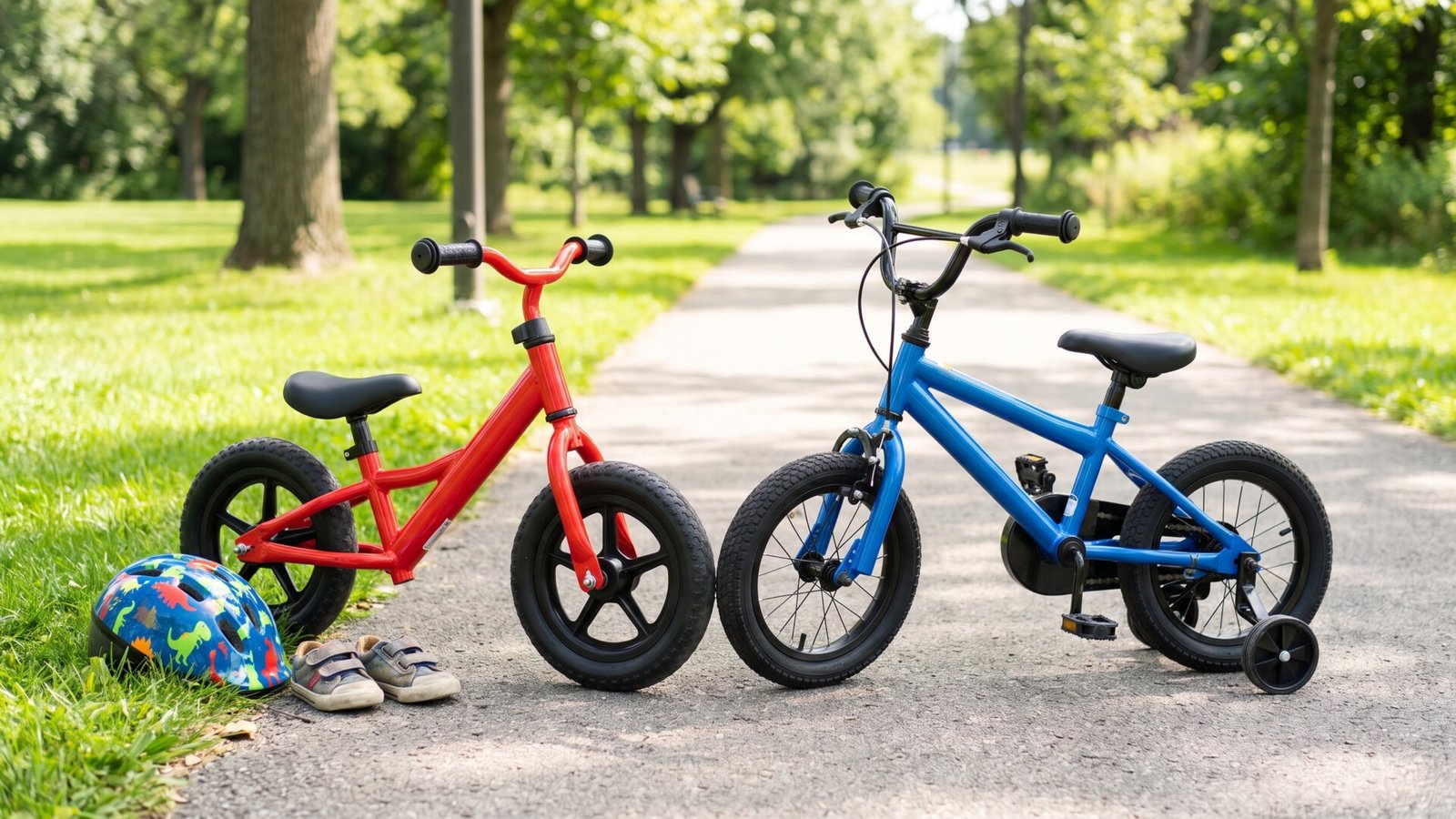
A balance bike (also called a run bike or push bike) has no pedals, no chain, and no training wheels. It looks like a miniature bicycle, but the child sits on the seat and pushes the ground with their feet to move. Over time, they lift their feet and glide, learning balance naturally.
How they work – The child starts by walking while sitting on the seat. As they gain confidence, they take longer strides, then lift both feet for a few seconds. They learn to steer, lean, and stop by putting their feet down. The bike is low to the ground, so falls are short and rarely scary.
Key features to look for – Adjustable seat height (so the child’s feet can rest flat on the ground), lightweight frame (aluminium is best, steel is heavier), and tires that can handle grass and pavement. EVA foam tires never go flat; air tires offer more grip but need maintenance. Some balance bikes add a hand brake, which is useful for older toddlers but not essential for beginners.
Pros – Develops balance and steering first (the hardest skills). Reduces fear of falling because feet are always near the ground. Very lightweight – toddlers can carry their own bike. Transitions to a pedal bike are often seamless; many children skip training wheels entirely.
Cons – No pedalling practice, so you’ll eventually need a pedal bike. Some children miss the “bike” look and want pedals. Can be more expensive than basic training‑wheel bikes.
Recommended age range – 18 months to 4 years. Many balance bikes grow with the child via adjustable seat and handlebars.
Understanding Bikes with Training Wheels
Training wheels (stabilisers) are small wheels attached to the rear axle of a standard pedal bike. They keep the bike upright, allowing the child to focus on pedalling and steering without worrying about balance.
How they work – The child sits, pedals, and steers. The training wheels prevent tipping past a certain angle. As the child gains confidence, you can raise the training wheels slightly so the bike can lean a little, teaching balance gradually. Eventually, you remove them entirely.
Key features to look for – Removable training wheels (so the bike becomes a regular two‑wheeler later). Adjustable seat and handlebars. Coaster brakes (pedal backwards to stop) are common for young children; hand brakes are better for older kids. Steel frames are heavier but durable.
Pros – Familiar bike experience with pedals from day one. Good for children who are eager to pedal like older siblings. Training wheels are removable, extending the bike’s life. Often more affordable than premium balance bikes.
Cons – Delays balance development because the bike stays upright artificially. Children may lean on training wheels instead of learning to lean into turns. Can be heavy (steel frames, extra hardware). Transitions to two wheels can be abrupt and scary.
Recommended age range – 2 to 5 years, depending on the bike size (12‑inch, 14‑inch, or 16‑inch wheels).
Key Features to Consider in First Bikes
Whether you choose balance or training wheels, these features matter for safety, comfort, and longevity.
Frame material – Aluminium is lightweight (ideal for balance bikes and small toddlers). Steel is heavier but cheaper and very durable. Plastic frames exist but are generally less sturdy.
Wheel type – EVA foam tires are puncture‑proof and lightweight, perfect for balance bikes. Air‑filled rubber tires offer better traction and a smoother ride, but require occasional inflation. Solid rubber is a middle ground.
Seat & handlebar adjustability – The bike should grow with your child. Look for tool‑free seat adjustments (quick release or knob) and at least 2‑3 inches of height range.
Weight & portability – A toddler should be able to lift and carry their bike. Balance bikes typically weigh 4‑8 lbs. Training wheel bikes often weigh 12‑18 lbs, which can be heavy for a three‑year‑old to manage alone.
Safety features – Hand brakes are useful for older toddlers (3+). Coaster brakes (pedal backwards) are easier for little hands but can cause skidding. Reflectors and a bell add visibility and fun.
Brand reliability & warranty – Reputable brands like Strider, WOOM, Cruzee, RoyalBaby, and Huffy offer better quality control and customer support. Check warranty length – at least one year is standard.
Top First Bikes for Toddlers in 2026
1 Best Balance Bikes (Bikes 1–3)
#1 Strider 12 Sport Balance Bike
Amazon | Target
The Strider 12 Sport is the most popular balance bike on the market for good reason. It weighs only 6.7 lbs, thanks to a steel frame that’s surprisingly light. The seat adjusts from 11 to 16 inches, fitting toddlers from 18 months to 5 years. The EVA foam tires never go flat and provide enough grip for pavement and packed dirt. The bike also includes a padded seat, a handlebar pad, and a footrest for gliding.
Key features: Adjustable seat and handlebars, foam tires, footrest, 6.7 lbs.
Pros: Extremely durable; huge adjustment range; great resale value.
Cons: No hand brake (not needed for beginners).
Best for: Families who want a single balance bike that will last for years and possibly multiple children.
Check Strider 12 Sport on Amazon →
#2 WOOM 1 Balance Bike
Amazon | Ryder Toys
WOOM is an Austrian brand known for perfectionist engineering. The WOOM 1 is an aluminium balance bike weighing just 8 lbs. It features a very low stand‑over height, making it easy for even 18‑month‑olds to mount. The bike includes a rear hand brake designed for small hands (the only balance bike with a truly usable brake for toddlers). The air‑filled tires offer excellent traction on grass or gravel.
Key features: Aluminium frame, hand brake, air tires, low step‑over.
Pros: Superior build quality; brake teaches early stopping skills; very comfortable.
Cons: Expensive (often $200+); tires require occasional inflation.
Best for: Parents who want the absolute best and don’t mind paying for premium design.
#3 Cruzee Ultralight Balance Bike
Amazon | Friendly Toy Box
The Cruzee Ultralight is the lightest balance bike you can buy – just 4.5 lbs. That’s lighter than many winter coats! The aluminium frame is anodised, not painted, so it won’t scratch or fade. The seat adjusts from 11 to 18 inches, and the handlebar also adjusts. It comes with EVA foam tires and a footrest. The bike is available in 10 colours, including neon pink and lime green.
Key features: 4.5 lbs, anodised aluminium, foam tires, tool‑free seat adjustment.
Pros: Incredibly light – toddlers can carry it easily; no rust; great for travel.
Cons: No hand brake; seat clamp can loosen over time (check periodically).
Best for: Very young toddlers (18 months) or families who need a portable bike for trips.
Explore Cruzee Ultralight at Friendly Toy Box →
2 Best Bikes with Training Wheels (Bikes 4–5)
#4 RoyalBaby Freestyle 12″ Training Wheel Bike
Amazon | Target
RoyalBaby makes some of the best‑looking and most reliable training‑wheel bikes for toddlers. The Freestyle 12″ model has a sturdy steel frame, removable training wheels, and a padded seat. It features a coaster brake (pedal backwards) and a front hand brake – a rare combination that prepares kids for real bikes. The tyres are air‑filled rubber, and the bike comes with a water bottle and a bell.
Key features: 12″ wheels, coaster + hand brakes, removable training wheels, steel frame.
Pros: Good value ($100–$130); includes both brake types; very stable.
Cons: Heavy (14 lbs); assembly requires some patience.
Best for: Children aged 2–4 who are eager to pedal and have parents who will help them transition off training wheels.
Check RoyalBaby Freestyle on Amazon →
#5 Huffy 16″ Disney Princess / Hot Wheels Bike
Amazon | Ryder Toys
Huffy’s licensed bikes are hugely popular for their themed graphics – Disney Princess for some kids, Hot Wheels or Spider‑Man for others. The 16″ model (suitable for ages 3–5) comes with training wheels, an adjustable seat, a padded handlebar, and a coaster brake. The steel frame is heavy but very durable. The bike also includes a streamer and a doll seat on some versions.
Key features: 16″ wheels, themed design, training wheels, coaster brake.
Pros: Kids love the characters; very affordable ($80–$110); easy to find parts.
Cons: Heavy (16+ lbs); training wheels are small and can dig into soft ground.
Best for: Children who are motivated by their favourite characters and will ride because the bike looks cool.
Shop Huffy Disney Princess at Ryder Toys →
Balance Bikes vs. Training Wheels
| Bike | Type | Age Range | Weight | Balance Skill Development | Ease of Transition to Pedal Bike | Safety Features | Affiliate Program |
|---|---|---|---|---|---|---|---|
| Strider 12 Sport | Balance | 18 mo–5 yrs | 6.7 lbs | Excellent | Very easy | Foam tires, footrest | Amazon / Target |
| WOOM 1 | Balance | 18 mo–3 yrs | 8 lbs | Excellent | Very easy | Hand brake, air tires | Amazon / Ryder Toys |
| Cruzee Ultralight | Balance | 18 mo–5 yrs | 4.5 lbs | Excellent | Very easy | Reflectors | Amazon / Friendly Toy Box |
| RoyalBaby Freestyle | Training | 2–4 yrs | 14 lbs | Moderate | Moderate | Coaster + hand brakes, training wheels | Amazon / Target |
| Huffy Disney/Hot Wheels | Training | 3–5 yrs | 16 lbs | Moderate | Moderate | Training wheels, coaster brake | Amazon / Ryder Toys |
Tips for Teaching Your Toddler to Ride
No matter which bike you choose, how you teach matters just as much as the equipment.
Start in a safe, flat area – A smooth driveway, a park path, or an empty parking lot. Avoid grass initially – it’s harder to push and balance. Make sure there are no steep hills or traffic.
Adjust seat height for proper foot placement – On a balance bike, your child’s feet should rest flat on the ground with knees slightly bent. On a training‑wheel bike, they should be able to touch the ground with their toes when seated.
Encourage balance and confidence first – For balance bikes, let them walk with the bike, then run, then glide. Don’t rush the gliding phase. For training‑wheel bikes, let them pedal in circles while you hold the back of the seat, then slowly let go.
Gradually remove training wheels when ready – Raise them slightly so the bike can lean. When your child can ride without the training wheels touching the ground, take them off. Expect a few falls – that’s learning.
Always wear helmets and protective gear – A properly fitted helmet is non‑negotiable. Knee and elbow pads are optional but helpful for nervous kids. Make it a rule from day one: no helmet, no bike.
Practice sessions should be short and fun – Ten to fifteen minutes is plenty for a toddler. Stop before they get tired or frustrated. End each session with a success, even a small one.
Use positive language – Instead of “Don’t fall,” say “You’ve got this!” Celebrate effort, not just success. “I saw how you kept your feet up for two whole seconds – amazing!”
Frequently Asked Questions About First Bikes For Toddlers
Which is better for a first bike: balance or training wheels?
For most children, a balance bike is better because it teaches the hardest skill first – balance. Children who master balance on a run bike often transition to a pedal bike without ever needing training wheels. However, some children are very pedal‑motivated and may be frustrated by a balance bike. If your child watches older siblings pedal and wants to copy them, a training‑wheel bike might be more engaging.
At what age can my child start a balance bike?
As early as 18 months, as long as they can walk confidently and sit on the seat with both feet flat on the ground. Many balance bikes have very low minimum seat heights (11 inches), fitting toddlers with an inside leg measurement of about 12 inches.
How long does it take to transition from training wheels to pedals?
It varies widely. Some children need only a few weeks; others take a full season. The key is not to rush. When the training wheels are raised and the child can ride without them touching the ground, they’re ready. Expect a week or two of wobbles.
Are hand brakes necessary for toddlers?
For balance bikes under age 3, no – they stop by putting feet down. For older toddlers (3+), a hand brake can be useful, especially if they will transition to a pedal bike with hand brakes. For training‑wheel bikes, coaster brakes (pedal backwards) are easier for small hands.
Can a balance bike replace a training‑wheel bike entirely?
Yes, many families skip training wheels altogether. After mastering a balance bike, children can move directly to a lightweight pedal bike (without training wheels) and often learn to ride it within an hour.
Where can I buy these bikes via affiliate programs?
Use the links in this article to support ToyGuideHub. Amazon, Target, Ryder Toys, and Friendly Toy Box are all trusted partners.
How do I choose the right size?
Measure your child’s inseam (from crotch to floor). For a balance bike, the seat should be about 1 inch lower than the inseam. For a training‑wheel bike, your child should be able to touch the ground with their toes while seated. Most bikes list a minimum seat height – compare that to your child’s inseam.
What about a bike that converts from balance to pedal?
Some bikes (like the Strider 14x or the Cruzee with a conversion kit) can add a pedal kit later. These are a great middle ground, but the pedal kit often adds weight and complexity.
Conclusion
After watching dozens of toddlers learn to ride, I’ve seen the magic of balance bikes. A two‑year‑old gliding with their feet up, grinning ear to ear, then effortlessly riding a pedal bike at three – it never gets old. Balance bikes teach balance, steering, and confidence in a natural, low‑fear way.
But training wheels aren’t evil. For some kids, the familiar look of a “real” bike with pedals and characters is the motivation they need. And with removable training wheels and gradual leaning, they can still learn balance – just a bit later.
My advice: if your child is under three and you can afford a quality balance bike, start there. The Strider 12 Sport is my top pick for most families – durable, adjustable, and easy to resell. If your child is already three or older and desperate to pedal, a RoyalBaby Freestyle or a Huffy themed bike will bring joy and eventually teach them to ride.
Whichever path you choose, the real victory is getting outside together. The wobbly first rides, the proud shouts of “Look, Dad!”, and the scraped knees that turn into stories – that’s what matters.
Check current pricing and availability for these first bikes through our trusted partners: