15 Montessori Stocking Stuffers That Are Actually Educational
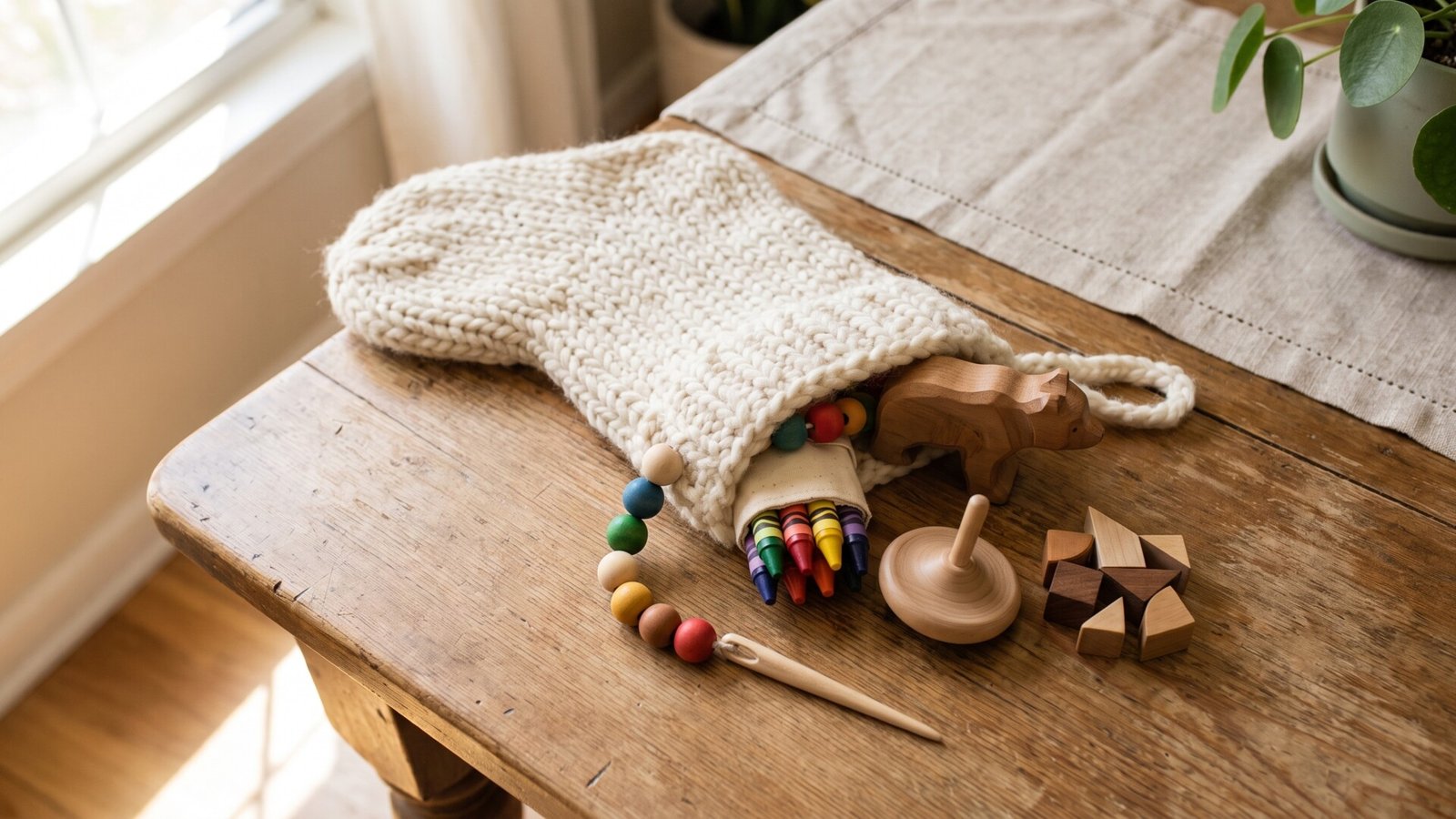
The toe of a stocking is small, but it is the first thing little hands find on Christmas morning. Filling it with a few simple, hands-on items instead of a pile of noisy plastic is an easy way to bring some calm into the day. This guide rounds up fifteen modestly priced, Montessori-style stocking stuffers, with realistic ages, price ranges, and the safety checks that matter most for little ones.
One honest note first: “Montessori” is not a protected or certified label, so any toy can be marketed with the word. Throughout this list we look at whether an item reflects Montessori principles, and we say plainly when something is Montessori-inspired rather than traditional. For a deeper primer, read what makes a toy Montessori or browse our hub on Montessori and early learning toys.
Quick Picks and Age Guide
- Ages 18 months to 3: stacking rings, egg shakers (check the label), a wooden spoon and small bowl, large-piece puzzles. Everything must be bigger than a small-parts tester.
- Ages 3 to 5: lacing cards, wooden cutting fruit, sorting with tongs, felt story sets, a bug jar, counting bears, mini figurines.
- Ages 5 and up: more detailed figurines, balancing games, and anything with many tiny pieces.
- Tightest budget: play dough, a wooden spoon and whisk, egg shakers, or a bug jar, each often well under $15.
- Biggest stretch: wooden cutting fruit and balancing stones, which tend to run $20 or more.
For more by-age ideas, see our toys by age hub.
What Montessori Actually Means for a Stocking Stuffer
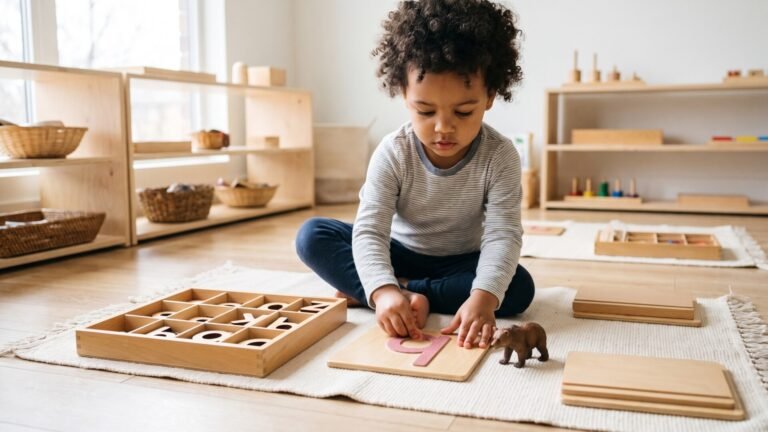
Dr. Maria Montessori developed her educational approach in the early 1900s. Her classroom materials were built around a few ideas that translate well to small gifts:
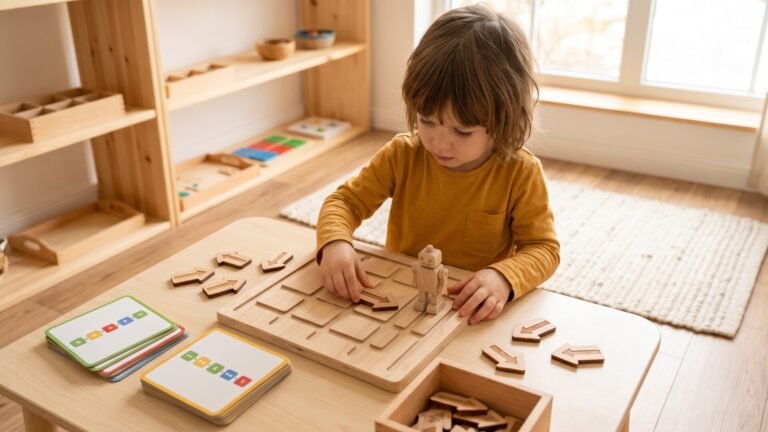
- One clear purpose. Traditional materials isolate a single idea, such as size, color, or fastening, so a child can focus on it.
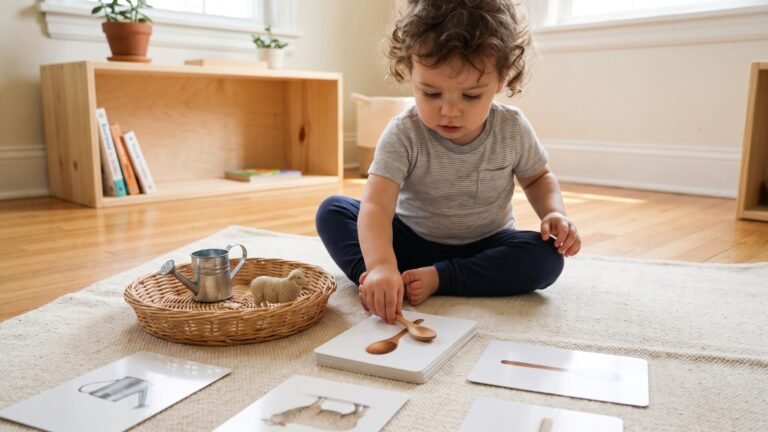
- Control of error. The material itself shows when something is not right (a ring will not sit on the post, for example), so the child can self-correct without an adult hovering.
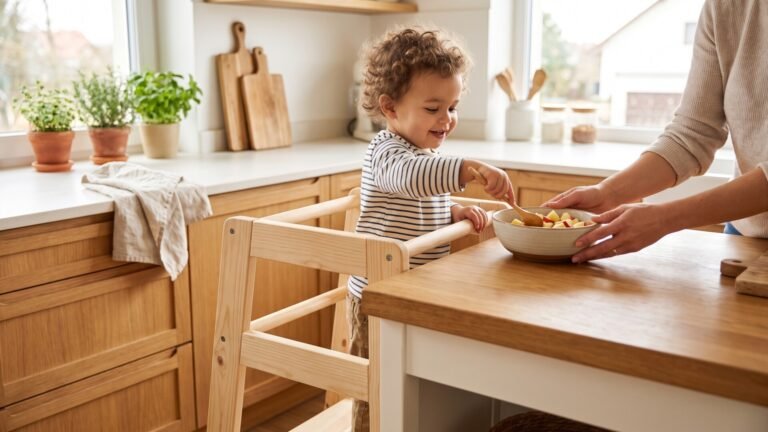
- Real-life activities. Pouring, scooping, spooning, and food preparation sit in the “practical life” area. Real tools in child-size form are favored over novelty versions.
- Simple, tactile materials. Many Montessori materials are wood or other natural materials, but the principle is simplicity and sensory feedback, not a particular material.
What this means in practice: a basic stacking toy or a wooden spoon fits the spirit well. A “Montessori” busy board covered in cartoon stickers, or a plastic counter set, may be useful, but it is more Montessori-friendly than truly Montessori. We note that distinction item by item. If you are weighing materials, our guide to wooden toys vs plastic goes deeper.
Safety First: Small Parts, Batteries, Magnets, and Water Beads
Stocking stuffers are small by nature, and that is exactly where the hazards hide. Run through these checks before anything goes in the stocking.
- Small parts and children under 3. In the US, toys intended for children under 3 may not have parts that fit inside a small-parts test cylinder (roughly 1.25 inches wide and 2.25 inches long). A good home check is a toilet-paper tube: if a piece fits through it, keep it away from under-3s. Many labels say “not for children under 3”; follow them.
- Button batteries. Coin-sized batteries can cause severe internal burns within hours if swallowed. Avoid toys, light-up items, and greeting-card gadgets where the battery compartment is not secured with a screw. If you suspect a swallowed battery, go to emergency care right away and call the US National Poison Help line at 1-800-222-1222 on the way.
- Magnets. Swallowed magnets can pull together inside the body and cause serious injuries. Loose small magnets and magnet sets are not toddler stocking stuffers. If you do give magnetic building tiles to an older child, choose a reputable maker that tests to the ASTM F963 toy standard, keep them away from younger siblings, and inspect for cracked housings. Our article on whether magnetic tiles are Montessori-aligned covers this in detail. For that reason, no magnet sets appear on this list.
- Water beads. Water-absorbing gel beads can swell to many times their size after being swallowed and have caused intestinal blockages and recalls. Skip them for any child who still mouths objects, and for households with younger siblings; they are not a good stocking stuffer.
- Certification. Look for statements that a product meets ASTM F963 (US) or EN 71 (EU), and for a Children’s Product Certificate on products made for children under 12. These are minimums, not a guarantee of quality.
Always supervise play with small items, and check the age label on the actual package. Our guide to the best first toys for early motor skill development lists options that are safe for younger children.
How to Choose: A Simple Checklist
- Age label first. Pick for the youngest child likely to get hold of it, not just the recipient.
- Does the child do the work? Good Montessori-style items need hands and thinking, not a battery.
- One idea at a time. A stacker, a sorter, or a lacing card is easier to master than a multi-feature gadget.
- Durable and cleanable. Wood and silicone wipe clean; felt can be spot-washed.
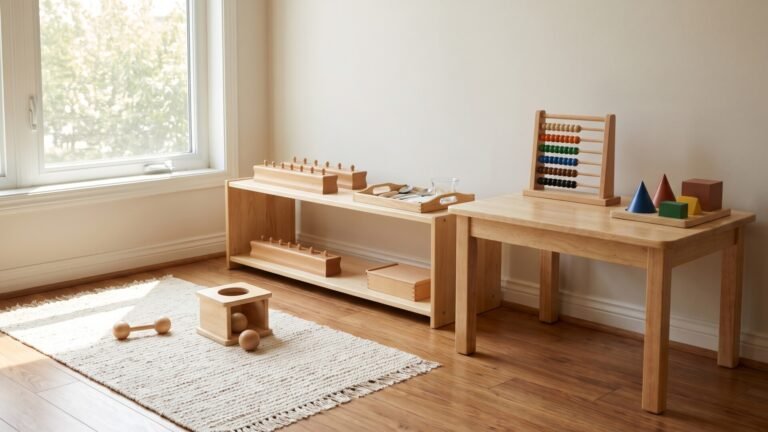
- Where will it live? Plan a spot on a low shelf. Our minimalist Montessori play shelf guide shows how to keep the number of toys manageable.
- Price. Stocking stuffers work best around $5 to $25. Ranges below are approximate and vary by retailer, so check the current price.
The Upside and the Downside
Upsides: These items are quiet, simple, and often reusable for years. Many invite open-ended play, and the practical-life items let children copy real household activities. They also tend to survive being handed down to a sibling.
Downsides: Wooden toys often cost more than plastic ones, which is a real consideration for a stocking. Children used to lights and sounds may need a moment to warm up to quieter toys, and some items need a quick demonstration from an adult at first. Marketing can also overpromise: no stocking stuffer will guarantee any particular skill, and children simply enjoy and use these in their own time.
15 Montessori-Style Stocking Stuffers
Ages and prices reflect manufacturer listings where a specific product is named, and general expectations for the product type otherwise. Always confirm on the package.
1. Wooden Ring Stacker
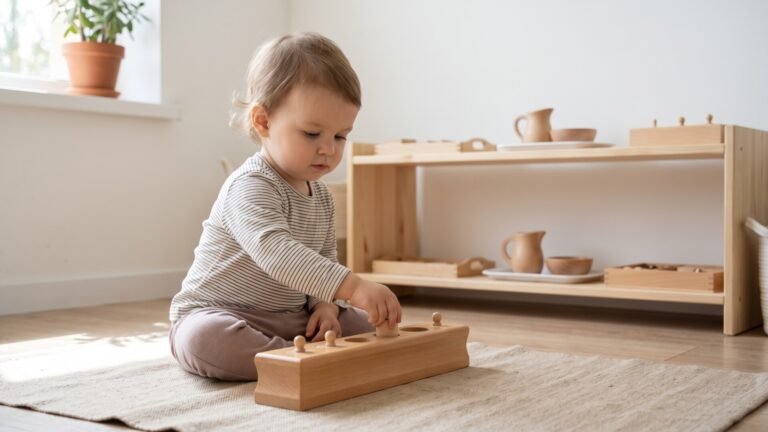
A classic: colored rings stack onto a post, and the child discovers the size order through trial and error, which is a good example of control of error. The Melissa & Doug Rainbow Stacker has eight pieces on a rocking wooden base and is listed for ages 18 months to 3 years, with prices around $10 to $15 at the time of review. Because the pieces are large, it suits toddlers well. [Affiliate: Check the price on Amazon] for the Melissa & Doug version.
2. Play Dough and Simple Tools
Squeezing, rolling, and pressing dough works little hands, and it is quiet, creative play. A classic Play-Doh multipack is labeled for ages 2 and up and usually costs about $5 to $12. Note that Play-Doh contains wheat, so avoid it for children with a wheat allergy, and offer a few basic tools such as a small rolling pin. Montessori purists would call this Montessori-friendly rather than traditional. [Affiliate: See the BrightyToys options here].
3. Wooden Cutting Fruit
Food prep is a core practical-life activity. The Melissa & Doug Cutting Fruit Set has wooden fruits held together with hook-and-loop strips and a wooden knife, with 17 pieces for ages 3 and up and a list price of about $25, so it is the high end of stocking-stuffer pricing. Real-food slicing with a child-safe knife is the more traditional Montessori version; this is a pretend-play cousin. [Affiliate: Find the Seedling set on Amazon].
4. Small Animal Figurines
Realistic animals invite sorting, storytelling, and lining up on a windowsill. Safari Ltd. Good Luck Minis are pocket-sized figurines sold in packs of about eight, listing around $7 to $8 per pack. They are tiny, so they are a small-parts hazard for under-3s and are best for ages 3 and up. Check the age label on the pack. Figurines like these are plastic, so describe them as open-ended rather than strictly Montessori. [Affiliate: Browse Friendly Toy Box animal sets].
5. Color Sorting With Tongs
A tray, a few small bowls, and a pair of child-size tongs or tweezers let a child sort pom-poms or large wooden beads by color. This transfer activity comes straight from the practical-life tradition. Expect roughly $8 to $15 for a kit, or assemble one at home. For ages 3 and up, since pom-poms and beads are small parts. [Affiliate: Check Fun and Function for their sorting sets].
6. Wooden Knobbed Puzzle
A small puzzle with chunky knobs is self-correcting: a piece only fits in its own space. Look for a simple 4 to 6 piece puzzle for ages 2 and up, typically about $8 to $15. [Affiliate: See Smiling Tree Toys for their beautiful wooden blocks].
7. Egg Shakers and Rhythm Sticks
Egg shakers (Hohner Kids makes a well-known set) and rhythm sticks are simple ways to explore sound and keep a beat. They usually cost about $5 to $12. Check the age label: some are for toddlers, but any that can come apart should be supervised. [Affiliate: Check Duncan Toys for their toddler-friendly instruments].
8. Lacing Cards
Lacing is a long-standing fine-motor activity that matches the Montessori interest in threading and dressing frames. Melissa & Doug makes lacing sets for ages 3 and up, but their large alphabet set lists at about $50, which is too much for a stocking. Look for a small single-set of 4 to 6 cards, typically about $8 to $15. [Affiliate: Find Tenacious Toys lacing card sets].
9. Felt Story Set
A small felt board with animals, shapes, or simple scenery supports storytelling and quiet play. Prices run about $10 to $20. Pieces can be small, so this is best for ages 3 and up; for younger children, make a few oversized felt shapes yourself. [Affiliate: Browse ArchiesToys for felt board kits].
10. Bug Jar or Magnifier
Observing nature is a lovely outdoor habit. The Learning Resources Big View Bug Jar is made for children roughly 3 to 10 years old and generally costs about $5 to $12. Pair it with a small notebook and let kids release what they catch. [Affiliate: Check Geeks Toy for their nature sets].
11. Wooden Balancing Stones
Smooth wooden stones in different shapes invite careful stacking and patience. Sets vary, and good ones often run about $15 to $30, so this is a stretch for a stocking. Pieces should be large enough that they cannot be swallowed, so choose sets labeled for your child’s age. [Affiliate: See Ryder Toys for their balancing stone sets].
12. Small Wooden Block Set
A mini set of plain wooden blocks is the safer, magnet-free way to give construction play in a stocking. Typical prices are about $10 to $20 for a small set, and large blocks suit ages 18 months and up. When your child is older, explore more in best building toys for toddlers. [Affiliate: Check VTech for their magnetic building sets].
13. Mini Latch or Fastener Board
Busy boards with latches, zippers, and snaps echo Montessori dressing frames, which teach real fasteners. Quality varies widely, and cheap ones may have small detachable parts, so choose a sturdy board labeled for your child’s age (most are ages 3 and up). Expect roughly $15 to $30. [Affiliate: Find busy boards on Amazon].
14. Counting Bears With Sorting Cups
Plastic counters are not traditional Montessori materials, but they are handy for counting, sorting, and patterns. Learning Resources Three Bear Family Counters come as 80 pieces for ages 3 and up and cost about $22; the label carries a choking-hazard warning and says not for children under 3. Smaller sets cost less. For more math play, see Montessori STEM toys. [Affiliate: Check Target for counting bear sets].
15. Real Kitchen Helpers
A small wooden spoon, a whisk, and a little bowl turn into stirring, pouring, and pretend cooking, and they also let a toddler help with real baking. Usually under $10 total. Choose smooth tools without splinters and let your child use them with supervision. [Affiliate: Browse eBay for play kitchen accessories].
At a Glance: Comparison Table
| Item | Suggested Age | Approx. Price | Watch For |
|---|---|---|---|
| Ring stacker | 18 months+ | $10 – $15 | Check ring size |
| Play dough | 2+ | $5 – $12 | Contains wheat |
| Wooden cutting fruit | 3+ | $20 – $25 | Top of budget |
| Animal figurines | 3+ | $5 – $8 | Small parts |
| Color sorting with tongs | 3+ | $8 – $15 | Pom-poms are small |
| Knobbed puzzle | 2+ | $8 – $15 | Chunky knobs |
| Egg shakers / rhythm sticks | Check label | $5 – $12 | Parts can separate |
| Lacing cards | 3+ | $8 – $15 | Long laces; supervise |
| Felt story set | 3+ | $10 – $20 | Small pieces |
| Bug jar | 3+ | $5 – $12 | Release critters |
| Balancing stones | Check label | $15 – $30 | Often pricey |
| Mini wooden blocks | 18 months+ | $10 – $20 | Piece size |
| Latch or fastener board | 3+ | $15 – $30 | Detachable parts |
| Counting bears | 3+ | $15 – $22 | Choking hazard under 3 |
| Kitchen helpers | 18 months+ | Under $10 | Supervise |
Which Ones Fit Your Situation
Best for toddlers: the ring stacker, large blocks, and kitchen helpers, which are simple and have no small parts.
Best for preschoolers: lacing cards, color sorting with tongs, a felt story set, and the bug jar.
Best for small spaces: play dough, egg shakers, and lacing cards all fit in a toe and store in a shoebox.
Best on a tight budget: kitchen helpers, play dough, or a bug jar often come in around $5 to $10.
Best splurge: wooden cutting fruit, if your child loves pretend cooking.
Gifting Tips
- Offer a few, not many. Three to five well-chosen items beat fifteen. Save the rest for birthdays or a quiet mid-winter rotation.
- Build a theme. A kitchen stocking (spoon, whisk, bowl, cutting fruit) or a nature stocking (bug jar, notebook, magnifier) feels coherent.
- Check siblings. A toy that suits a four-year-old may be hazardous to a toddler in the same house.
- Show it once. A thirty-second demonstration is often enough, then step back.
- Save the packaging for later. Keep age labels and receipts, and use a small tray or basket to display each item on a low shelf.
- Skip the extras. Do not add batteries, loose magnets, or water beads to the stocking.
If you want more ideas after the holidays, browse Montessori activities for kids, our guide to open-ended play toys that grow with your child, or the simple Montessori activities you can do at home.
Frequently Asked Questions About Montessori Stocking Stuffers
What are Montessori stocking stuffers?
They are small, simple, hands-on items that reflect Montessori ideas such as one clear purpose, real-life activities, and self-correction. Because Montessori is not a protected label, check the item itself rather than the marketing.
Are Montessori toys safe for toddlers?
Only when the specific item is age-appropriate. Toys for children under 3 should have no parts that fit in a small-parts tester, no loose button batteries, and no loose magnets. Always follow the age label on the package.
Is a toy Montessori if the box says so?
Not necessarily. The word is not regulated, so any maker can use it. Look for a simple design, one clear skill, and child-led use instead.
What is a good price range for stocking stuffers?
Most items on this list fall between about $5 and $25. Prices vary by store and season, so check the current listing before you buy.
Are magnets or water beads good stocking stuffers?
No. Swallowed magnets and water beads can cause serious internal injuries, so keep them away from toddlers and households with young children.
How do Montessori-style toys compare with traditional toys?
Many traditional toys rely on lights, sounds, and characters. Montessori-style items are usually simpler and quieter and ask the child to do the work, though plenty of ordinary toys can be used in the same open-ended way.
What are good Montessori-style stocking stuffers for a 2-year-old?
Large ring stackers, chunky knobbed puzzles, big wooden blocks, play dough with supervision, and kitchen tools like a wooden spoon and small bowl are common choices. Avoid anything with small parts.
How often should I rotate toys?
Many families rotate a small selection every few weeks and store the rest. There is no fixed rule, so follow your child’s interest.
Are there Montessori-style gifts for infants?
Yes, such as a simple wooden rattle or soft grasping toys. Choose items made for babies, and see our guide to the best first toys for early motor skill development.
What should I look for in a quality toy?
Look for solid construction, smooth edges, safe finishes, a clear age label, and a design that a child can use without help.