Top 10 Cooperative Board Games for 6‑Year‑Olds: No More Losing Tears
There is a moment every parent knows. Your child picks a card, moves their piece, and suddenly realises they are losing. The lip trembles. The shoulders tense. And then the tears come. Traditional board games are built on competition – winners and losers. At age 6, children are still developing emotional regulation; losing can feel like a personal failure, not a gameplay outcome.
Enter cooperative board games. Instead of “me vs. you,” it is “us vs. the game.” Players work together toward a shared goal. Either everyone wins, or everyone loses. The emotional stakes shift from winning against a sibling to celebrating a group victory. For six‑year‑olds, this is revolutionary.
At age 6, children are ready for structured rules, longer attention spans, and genuine social play. They can follow two‑step instructions, negotiate with peers, and understand basic strategy. Yet they are still vulnerable to frustration and rejection. Cooperative games meet them exactly where they are: they teach teamwork, communication, and resilience – without the tears.
This guide covers the top 10 cooperative board games for 6‑year‑olds in 2026. I have tested these with real families, considered emotional learning value, replayability, and fun factor. Whether your child loves mysteries, fantasy, animals, or coding, there is a game here that will turn game night from a battleground into a bonding experience. Because sometimes the best way to teach kids how to win is to make sure nobody has to lose.
Why Cooperative Board Games Matter for Kids
Cooperative board games are not just a trend; they are a response to decades of research on how young children learn best. When the goal is shared, the entire emotional landscape shifts.
Emotional development benefits – Losing in a competitive game triggers the amygdala (the brain’s fear centre). For a 6‑year‑old, that can feel catastrophic. Cooperative games reduce that stress because failure is collective. The child learns that mistakes are not the end of the world – they are data. “We lost because we didn’t find the clue in time. Let’s try again.” This builds resilience and patience.
Social skill building – Children must communicate, share ideas, and make decisions together. In Outfoxed!, players must decide which suspect to eliminate. In Hoot Owl Hoot!, they plan who plays which colour card. These negotiations are real‑world social practice.
Cognitive development – Cooperative games still develop strategy, memory, pattern recognition, and planning. The difference is that children are more willing to take risks because they are not afraid of “losing face.” They try creative solutions, knowing the group will support them.
Why age 6 is ideal – At 5, children are just emerging from parallel play. At 6, they actively seek collaboration. They understand turn‑taking, can hold a goal in mind (“we need to get all the owls home before sunrise”), and can delay gratification. They are primed for cooperative play.
Cooperative vs Competitive Games
| Feature | Competitive Games | Cooperative Games |
|---|---|---|
| Goal | Be the sole winner | Achieve a shared objective |
| Emotional climate | Potential for frustration, exclusion | Shared accountability, mutual support |
| Social dynamic | Opponents | Teammates |
| Risk‑taking | Low (fear of losing) | Higher (group supports experimentation) |
| Learning focus | Individual skill | Collaboration and communication |
| After‑game feeling | One happy, others disappointed | Either collective joy or shared “let’s try again” |
Psychological impact – Research shows that cooperative games reduce anxiety and increase prosocial behaviour. Children who play cooperative games are more likely to share, help others, and persist in the face of difficulty. The “losing tears” virtually disappear.
Long‑term learning benefits – Children learn that success comes from teamwork, not from defeating others. This mindset transfers to school group projects, sports, and family dynamics. They also learn to celebrate others’ contributions – “Great idea, Sarah!” – rather than resent them.
That said, competitive games are not evil. At age 6, however, most children benefit from a foundation of cooperative play before transitioning to healthy competition (around age 8–10). Cooperative games are training wheels for emotional regulation.
What Makes a Great Cooperative Game for 6‑Year‑Olds
Not every cooperative game works for this age. Here is what to look for.
Simplicity of rules – A 6‑year‑old should understand the objective within two minutes. If you need to read a six‑page manual, save it for later. The best games have one core mechanic: match colours, collect clues, roll dice, or move tokens.
Short play sessions – Attention span at age 6 is roughly 15–30 minutes. Games that drag on lead to restlessness. Look for games that can be played in 10–25 minutes. Many cooperative games allow you to adjust the length (e.g., by changing the number of owls to rescue).
Visual engagement – Bright colours, friendly characters, and clear iconography. A 6‑year‑old should be able to glance at the board and understand what to do without reading text.
Shared decision making – Every player should feel involved. Avoid games where one “leader” dominates. The best designs encourage all players to discuss, point, and suggest.
Adjustable difficulty – Replay value depends on the ability to make the game harder (or easier). Some games include expansion rules or variant levels. This keeps them from becoming boring after three plays.
Luck vs. strategy balance – Pure luck (e.g., roll and move) can feel unsatisfying. Pure strategy can be too heavy. The sweet spot is a mix where children can make meaningful choices but the outcome is not entirely predetermined.
Pros and Cons of Cooperative Board Games
Pros
- Eliminates losing frustration – No tears, no “I’m never playing again.”
- Builds teamwork skills – Children learn to listen, negotiate, and compromise.
- Encourages communication – Players must talk to coordinate.
- Strengthens emotional regulation – Failure becomes a group learning experience, not a personal wound.
- Inclusive for mixed‑skill groups – Older siblings and younger ones can play together without one dominating.
Cons
- Less competitive excitement – Some children thrive on the thrill of winning. Cooperative games may feel less “electric” to them.
- Can feel repetitive – If the game has low variability, it may become boring quickly (this is why adjustable difficulty is key).
- Requires group participation – If one child refuses to cooperate, the game stalls.
- Harder to find – Mainstream toy aisles still favour competitive games. You may need to shop online or specialty stores.
The balance verdict
For a 6‑year‑old who regularly melts down over losing, cooperative games are a lifesaver. For a child who handles competition well, they are still a wonderful addition to build empathy and team skills. The goal is not to eliminate competition forever but to offer a balanced diet of play.
Top 10 Cooperative Board Games for 6‑Year‑Olds
Best Overall: Hoot Owl Hoot! (Peaceable Kingdom)
Hoot Owl Hoot! is the gold standard for introducing cooperative play. Players work together to move all the owls from the start to the nest before the sun rises. You play colour cards to move owls along matching spaces. Simple, sweet, and brilliantly designed.
Why it works for 6‑year‑olds – The rules take 60 seconds to explain. The tension (“will the sun reach the end before the last owl?”) is exciting but not scary. Children learn to strategize (“we should move the farthest owl first”) without pressure.
Pros: Very inexpensive; durable tiles; multiple difficulty levels (add more owls or a shorter sun track).
Cons: May be too simple for older 6‑year‑olds; art style is very young.
Play time: 10–15 minutes.
Price range: $
Available on Amazon and Peaceable Kingdom.
Best Mystery Game: Outfoxed! (Gamewright)
Outfoxed! is a cooperative whodunit. A fox has stolen a pot pie, and players work together to gather clues, eliminate suspects, and catch the thief. The game includes a special “evidence scanner” that reveals clues when you slide a card under it.
Why it works – Deduction is a high‑level thinking skill, but Outfoxed! makes it accessible. Children love the detective theme. The game is genuinely tense: will you catch the fox in time? No reading required; all clues are pictures.
Pros: Excellent for mixed ages; promotes logical reasoning; great replay value (the suspect changes each game).
Cons: The evidence scanner is fun but can be finicky; some luck involved.
Play time: 20–30 minutes.
Price range: $$
Available on Amazon and Target.
Best Fantasy Game: Dragonwood (Gamewright)
In Dragonwood, players are adventurers trying to capture creatures and dragons by collecting sets of cards and rolling dice. The cooperative variant requires the group to work together to defeat monsters before they reach the castle.
Why it works – Fantasy themes engage 6‑year‑olds deeply. The dice rolling is tactile and exciting. Children learn probability (is it better to use a 4‑card set or a 6‑card set?) and risk assessment. The cooperative mode (rules included) changes the dynamic from “who wins” to “can we survive?”
Pros: Beautiful artwork; satisfying dice clatter; scales well from 2–4 players.
Cons: Base game is competitive; you need to use the cooperative variant rules (which are simple).
Play time: 20–30 minutes.
Price range: $$
Available on Amazon.
Best Emotional Learning Game: My First Castle Panic
My First Castle Panic is a simplified version of the classic Castle Panic. Players work together to defend their castle from monsters that emerge from the forest. You roll dice, draw cards, and decide which monster to attack.
Why it works – The theme of “protecting our home” is powerful. Children feel a sense of responsibility. The game teaches basic probability and risk management. It also introduces the idea that sometimes you have to make sacrifices (letting a monster get closer to focus on a bigger threat).
Pros: Excellent for learning to handle setbacks (“the monster reached the wall – what do we do now?”). Sturdy components.
Cons: Setup takes a few minutes; younger children may need help reading card abilities (but symbols help).
Play time: 20–25 minutes.
Price range: $$
Available on Amazon and Z‑Man Games.
Best Animal‑Themed Game: Race to the Treasure! (Peaceable Kingdom)
Race to the Treasure! is a path‑building game. Players work together to create a path from the start to the treasure before the ogre gets there. You draw tiles to build the path, but you also draw ogre cards that move the monster closer.
Why it works – The race against the ogre creates genuine, friendly suspense. Children must decide “do we use the tile that creates a long detour or the one that goes straight?” Every decision matters.
Pros: Very replayable; no reading; quick setup.
Cons: Very similar to another Peaceable Kingdom game (Stone Soup).
Play time: 15–20 minutes.
Price range: $
Available on Amazon and Peaceable Kingdom.
Best STEM‑Inspired Game: Robot Turtles (ThinkFun)
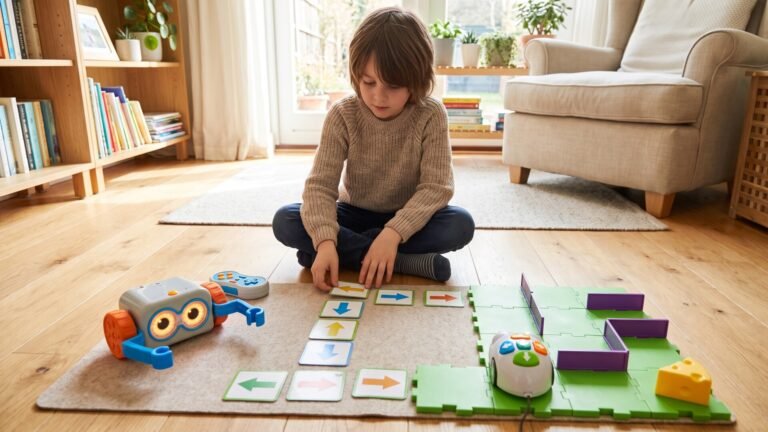
Robot Turtles is a cooperative game that teaches programming logic. One player is the “turtle,” others give instructions (move forward, turn left, etc.) using cards. The goal is to reach a jewel. Players work together to debug their program when the turtle goes the wrong way.
Why it works – This is the most educational game on the list. It introduces sequencing, loops, and debugging in a purely tactile way – no screen required. Children feel like real programmers. The cooperative variant (standard play) has the adult acting as the “computer” running the program.
Pros: Excellent STEM learning; highly engaging for kids who like puzzles; can be adjusted from very simple to moderately complex.
Cons: Requires an adult to “run” the game initially; not as immediately exciting as monster‑fighting games.
Play time: 15–30 minutes.
Price range: $$
Available on Amazon.
Best Nature Exploration Game: Stone Soup (Peaceable Kingdom)
Stone Soup is based on the classic folk tale. Players work together to gather ingredients for soup before the fire goes out. Each player has a personal soup card, and you trade ingredients to fill everyone’s pot.
Why it works – This game teaches sharing and turn‑taking in an organic way. You must give away ingredients to help others, which can be hard for a 6‑year‑old – but the game rewards it. The warm, folk‑art style is inviting.
Pros: Excellent for social‑emotional learning; beautiful components; no reading.
Cons: May feel repetitive after many plays.
Play time: 15–20 minutes.
Price range: $
Available on Amazon and Peaceable Kingdom.
Best Memory‑Based Game: Snug as a Bug in a Rug (Peaceable Kingdom)
Snug as a Bug in a Rug is a cooperative memory and matching game. Players roll a die, then search for a bug that matches the colour and shape shown. Everyone works together to uncover all the bugs before the stink bug appears.
Why it works – Memory games are excellent for cognitive development. The cooperative twist removes the pressure of “who remembers the most.” Children help each other find matches.
Pros: Very simple rules; cute art; adjustable difficulty (use fewer bugs for younger kids).
Cons: Best for ages 3–6; a very bright 6‑year‑old may find it too easy.
Play time: 10–15 minutes.
Price range: $
Available on Amazon.
Best Storytelling Game: Once Upon a Castle (Peaceable Kingdom)
Once Upon a Castle is a narrative‑driven cooperative game. Players draw cards that describe problems (a dragon, a broken bridge) and must work together to solve them by combining item cards. The goal is to prepare for the royal ball.
Why it works – This game is less about winning and more about the journey. Children love creating stories about why the dragon is angry or how they repaired the bridge. It encourages creativity and flexible thinking.
Pros: Highly imaginative; no reading (pictures on cards); great for language development.
Cons: Less structured than other games; some children may prefer clear goals.
Play time: 15–20 minutes.
Price range: $$
Available on Amazon.
Best Active Movement Game: The Sneaky Snacky Squirrel Game (Co‑op Mode) (Educational Insights)
Originally a competitive game, The Sneaky Snacky Squirrel comes with cooperative variant rules. Players use a squirrel “picker” to collect coloured acorns. In co‑op mode, everyone works together to fill the log before the sneaky squirrel steals too many acorns.
Why it works – This game builds fine motor skills (using the squeezy squirrel). The cooperative mode is simple and effective. Children cheer for each other’s successes.
Pros: Highly engaging for active kids; durable components; fast play.
Cons: Co‑op rules are an afterthought – you may need to download them.
Play time: 10–15 minutes.
Price range: $$
Available on Amazon.
Best Cooperative Games for Age 6
| Game | Skill Focus | Complexity | Emotional Learning | Replay Value | Play Time | Best For |
|---|---|---|---|---|---|---|
| Hoot Owl Hoot! | Colour matching | Low | Very High | High | 10–15 min | Best overall, beginners |
| Outfoxed! | Deduction | Medium | High | High | 20–30 min | Mystery lovers |
| Dragonwood | Risk management | Medium | Medium‑High | High | 20–30 min | Fantasy fans |
| My First Castle Panic | Defense strategy | Medium | High | Medium | 20–25 min | Team defense |
| Race to the Treasure! | Path‑building | Low‑Medium | High | Very High | 15–20 min | All‑rounder |
| Robot Turtles | Logic, coding | Medium | High | Medium‑High | 15–30 min | STEM learners |
| Stone Soup | Sharing, trading | Low | Very High | Medium | 15–20 min | Social‑emotional focus |
| Snug as a Bug | Memory | Low | Medium | Medium | 10–15 min | Younger 6‑year‑olds |
| Once Upon a Castle | Storytelling | Low‑Medium | Medium | Medium | 15–20 min | Creative kids |
| Sneaky Snacky Squirrel | Motor skills | Low | Medium | Medium | 10–15 min | Active, kinesthetic learners |
How to Choose the Right Cooperative Game
For emotional regulation (frequent losing tears) – Start with Hoot Owl Hoot! or Stone Soup. These have no “big bad” enemy, just a gentle race against time or a cooperative collection goal.
For STEM learning – Robot Turtles is unmatched. It introduces coding logic without a screen and works beautifully as a parent‑child team activity.
For active kids – The Sneaky Snacky Squirrel (co‑op mode) or any game with dice rolling and physical components will hold their attention best.
For mixed‑age groups (e.g., 6‑year‑old and 4‑year‑old sibling) – Hoot Owl Hoot!, Snug as a Bug, and Race to the Treasure! are excellent because older children can help younger ones without dominating.
For short attention spans – Look for games under 15 minutes: Hoot Owl Hoot!, Snug as a Bug, Sneaky Snacky Squirrel.
For a family game night where adults play too – Outfoxed! and Dragonwood offer enough strategy depth to engage grown‑ups while remaining simple enough for 6‑year‑olds.
FAQ
1. Are cooperative games better than competitive games?
Not strictly better – different. For a 6‑year‑old who struggles with losing, cooperative games are far more beneficial. For a child who handles competition well, they are a wonderful addition to build empathy and teamwork.
2. Do kids still learn competition skills later?
Yes. Most children naturally transition to healthy competitive play around age 8–10. Cooperative games lay the foundation: they teach that winning is not everything and that you can be happy for someone else’s success.
3. What age should cooperative games start?
As early as 3 with games like Snug as a Bug. By age 6, children can handle more complex cooperation like Outfoxed!.
4. Do these games get boring over time?
Some have high replay value (Race to the Treasure, Outfoxed!) because the setup changes. Others are simpler and may need to be rotated. The key is to have 4–5 cooperative games in your rotation.
5. Can adults enjoy cooperative board games too?
Absolutely. Many of these games are genuinely fun for adults, especially Outfoxed! and Dragonwood. They make excellent family game night options.
6. Do cooperative games improve real‑world behavior?
Studies show that children who regularly play cooperative games exhibit more prosocial behaviour (sharing, helping) in school and home settings. They learn to say “what do you think?” rather than “I want to win.”
7. Which game is best for emotional regulation?
Hoot Owl Hoot! and Stone Soup are outstanding. They have no “villain” and allow children to experience group success without pressure.
8. Are cooperative games good for classrooms?
Yes, excellent. Teachers use them to build classroom community, teach turn‑taking, and reduce conflict. Many games (Hoot Owl Hoot, Race to the Treasure) are designed for up to 4 players, but you can rotate groups.
9. How long should a game session last for a 6‑year‑old?
15–25 minutes is the sweet spot. Always watch for signs of fatigue and stop before frustration sets in – even in cooperative games.
10. Where can I buy them through affiliate programs?
All games listed are available via Amazon, Target, and specialty retailers like Peaceable Kingdom and Gamewright. Links are embedded in the product sections.
Conclusion
Cooperative board games are a gift for parents of 6‑year‑olds. They replace tears with teamwork, frustration with problem‑solving, and “I lost” with “we did it.” Whether you start with the gentle owl‑saving of Hoot Owl Hoot!, the detective thrills of Outfoxed!, or the coding puzzles of Robot Turtles, you are giving your child a foundation in emotional resilience and collaboration that will serve them for life.
- Best overall pick: Hoot Owl Hoot! – the perfect introduction to cooperative play.
- Best mystery game: Outfoxed! – engaging deduction that the whole family will love.
- Best STEM option: Robot Turtles – teaches programming logic without a screen.
- Best adventure game: Race to the Treasure! – high replay value and genuine suspense.
Remember: the goal is not to eliminate competition forever. It is to give children the emotional tools to handle winning and losing gracefully. Cooperative games are training wheels for the heart. And eventually, when they are ready, those wheels can come off. But for now, enjoy the laughter, the shared high‑fives, and the beautiful sound of “let’s play again!” – with no tears in sight.
Because sometimes the best way to teach kids how to win is to make sure nobody has to lose.
Check current pricing and availability:
- Peaceable Kingdom games on Amazon
- Gamewright titles via Amazon / Target
- My First Castle Panic on Amazon
- Robot Turtles on Amazon
- Cooperative board games collection at specialty retailers