How STEM Toys Improve Critical Thinking
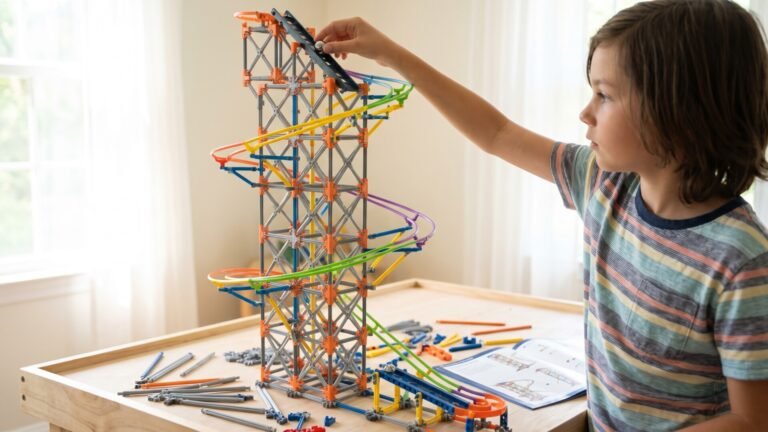
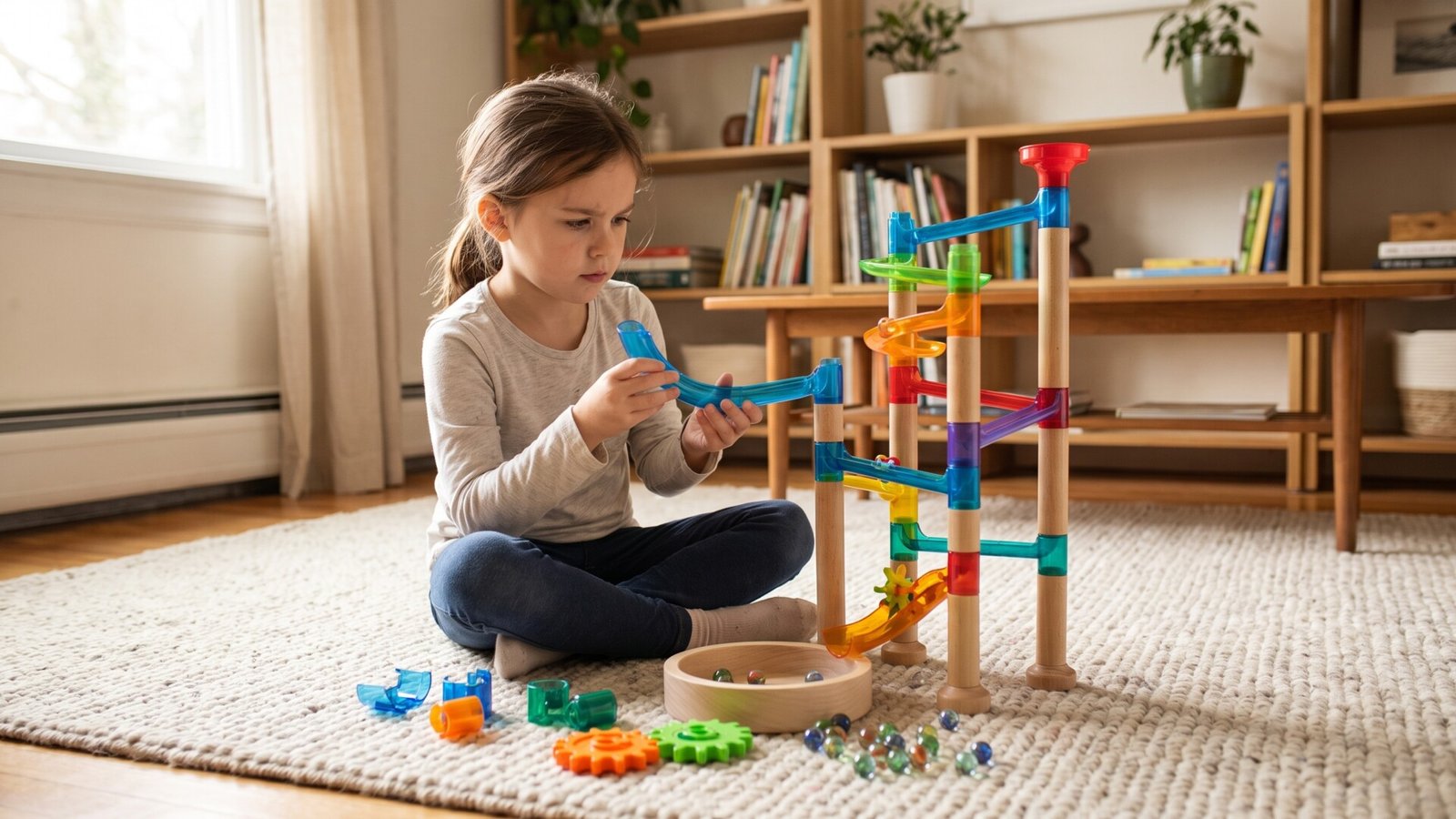
Picture a child building a marble run. A piece is set at the wrong angle, and the marble tumbles off course. After a few failed attempts, frustration builds—until the child stops, studies the track, and says, “I think this piece needs to be higher.” They adjust it, and the marble sails through. That small moment is critical thinking in action: noticing a problem, forming an idea about the cause, testing a change, and checking the result.
STEM toys have become increasingly popular among parents and educators, and for good reason. We’re living in a world where information is everywhere, but the ability to analyze, question, and solve problems matters more than ever. Critical thinking isn’t just a buzzword—it helps kids navigate everything from homework to friendships to future careers.
But here’s the struggle many parents describe: “I want my child to practise critical thinking, but how do I find toys that actually deliver? Everything on the shelf claims to be educational.”
This guide explains how STEM toys can support critical thinking, what to look for when buying them, how to choose by age, and a handful of well-known products worth considering, with honest notes on their limits. You’ll find these toys at major retailers like [Amazon](Affiliate: Amazon), [Target](Affiliate: Target), and specialty educational stores. This article is part of our STEM Toys for Kids: The Complete Parent Guide and our wider STEM & Educational Toys hub.
The short version: look for toys with open-ended challenges, clear feedback when something doesn’t work, multiple possible solutions, and room to grow. Pair them with questions like “What do you think will happen?” and “What could we change?” Toys help, but the conversation around them matters just as much.
The Educational Foundation: Why STEM Matters Before the Toy Box
It’s easy to assume STEM learning starts in middle school or later. In reality, a three-year-old working out how to stack blocks so they won’t topple is already experimenting with balance and cause and effect. They’re doing early engineering, even if nobody calls it that.
Child-development organizations, including the American Academy of Pediatrics, describe play as an important context for building executive function skills such as planning, flexible thinking, and self-control, and critical thinking draws on all of these. We can’t promise any single toy will “boost brain development,” but well-designed play gives children regular chances to practise the habits that support critical thinking.
Children who regularly meet low-stakes challenges often start to adopt a mindset of “I can figure this out.” Instead of giving up when something doesn’t work, they ask questions, test ideas, and try again. That’s the pattern parents and teachers describe, and it’s the behavior good STEM toys are designed to invite.
This matters because many toys encourage passive play. Electronic toys that light up and make noise without requiring much engagement can keep a child occupied, but they don’t ask for much thinking. STEM toys, on the other hand, ask for active participation: build, test, adjust, repeat.
You don’t need to be a scientist or engineer to guide STEM play. Your job is simply to be present, ask open questions—“What do you think will happen next?”—and celebrate the process, not just the outcome. For ideas on getting started with younger children, see Introduce STEM Early: A Parent’s Roadmap and Learning Through Play: STEM Activities for Preschoolers.
What Actually Qualifies as a STEM Toy?
Just because a toy has the word “science” or “tech” on the box doesn’t make it a meaningful STEM toy. Some overpriced kits claim to teach coding but are really glorified remote controls.
A good STEM toy has specific characteristics. It encourages open-ended exploration. It requires problem-solving. It allows for more than one solution. And, importantly, it creates safe opportunities for failure and iteration.
The types of STEM toys you’ll encounter include:
Robotics kits that combine building with programming. These practise sequencing, cause and effect, and debugging—core critical thinking skills.
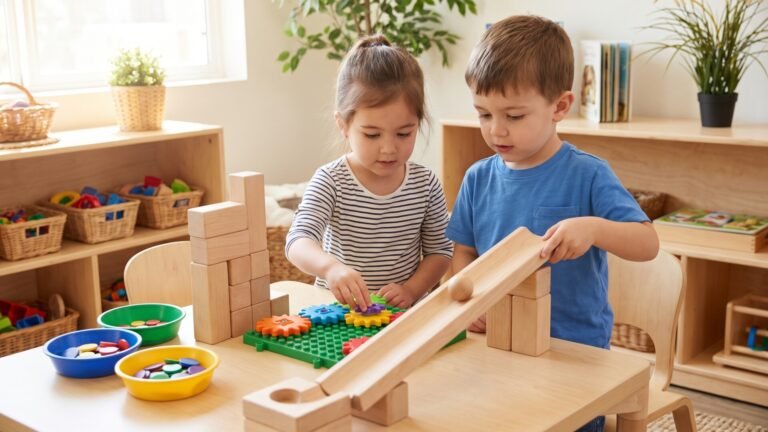
Building sets that go beyond simple stacking. Think marble runs, magnetic tiles, and construction systems that require planning and spatial reasoning. See our guide to open-ended toys that grow with your child.
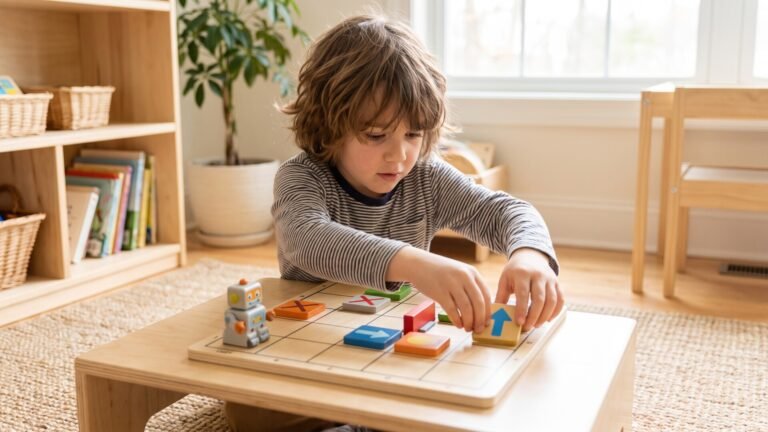
Coding games that introduce logic through play, from screen-free coding boards to app-based systems. For younger children, see our beginner coding kits for 5–7 year olds and coding toys for preschoolers.
Science kits that let children run real experiments. The best ones don’t just show a reaction—they ask children to predict, observe, and explain. Browse fun science experiments to try at home and astronomy and space science kits.
Logic and engineering challenges like ThinkFun’s Gravity Maze, which require planning and systematic thinking. For no-purchase options, try our DIY STEM challenges.
You’ll also see terms like “open-ended play” (toys that can be used in many ways), “scaffolding” (challenges that increase in difficulty as skills grow), and “hands-on learning” (learning through physical manipulation). When children are engaged and enjoying themselves, they tend to persist longer, and persistence is what gives critical thinking time to happen.
How Critical Thinking Shows Up at Different Ages
Children develop at different speeds, so treat these as rough guides.
Toddlers and preschoolers (about 1–5): Critical thinking looks like trial and error: will this block balance? Which shape fits? Open-ended toys such as blocks, simple puzzles and magnetic tiles (check the age label, and keep loose magnets away from children who mouth objects) are better suited than complex kits. Fine-motor-focused play is also helpful; see STEM toys that build fine motor skills in young kids.
Early elementary (about 6–8): Children can follow simple rules, predict outcomes and compare ideas. Beginner circuits, logic games, and screen-free coding games work well here.
Upper elementary and beyond (about 9–12+): Kids can handle multi-step problems and longer projects such as robotics, which involve building, programming, and debugging.
What to Look for When Buying STEM Toys
Here are the factors that matter most when choosing a STEM toy:
Safety comes first. Look for toys made from non-toxic materials, with no small parts for young children, and a statement of compliance with US standards such as ASTM F963 and CPSC requirements. Age recommendations exist for a reason: they reflect safety considerations as well as developmental fit. Be especially careful with loose magnets and button batteries, and check the CPSC recall list when buying secondhand.
Durability matters. A toy that breaks after three uses teaches frustration, not critical thinking. Brick-based systems and wooden building sets tend to last through multiple children and years of use.
Educational value is the whole point. Does the toy actually require thinking, or does it just entertain? Look for multiple difficulty levels, room for experimentation, and room for creativity. The best STEM toys grow with the child.
Ease of use for both children and parents. Some STEM toys need extensive setup or adult help. Some guidance is fine, but look for a toy your child can engage with independently after the first session.
Storage requirements. Some STEM kits come with dozens of small pieces that need organizing. Consider whether you have room for the toy and its components.
Longevity and ecosystem. Will this still be interesting in six months? Also check whether it depends on an app, a tablet, or a company’s continued support. Some app-based toys stop working when the app is withdrawn.
The Real Upsides and Downsides
STEM toys aren’t perfect, and pretending otherwise doesn’t help anyone.
The good news: These toys can give children regular chances to practise problem-solving. They foster creativity because there’s often more than one right answer—they invite experimentation. Many are designed for group play, which supports collaboration and communication. And they can make science and math feel concrete instead of abstract or intimidating.
The honest challenges: Quality STEM toys can be expensive; robotics systems in particular can cost several hundred dollars. The number of choices can be overwhelming. Some require adult help. And the research on whether STEM toys on their own improve critical thinking is limited and mixed: children seem to benefit most when an adult asks questions and talks through what happened, rather than leaving the toy to “do the teaching.”
You don’t need the most expensive option. A simple marble run or logic game and a patient adult can offer a great deal of practice.
Products Worth Considering
The picks below are well-known products whose designs match the criteria above. We haven’t tested them ourselves; specs come from manufacturer and retailer listings and can change, so confirm age, price and availability before buying.
LEGO Education SPIKE Prime
| Feature | Details |
|---|---|
| Age Range | 10+ (set 45678) |
| Key Features | 523-piece set combining LEGO building with block-based coding, a programmable hub, motors and sensors |
| Affiliate Program | [LEGO Affiliate Program](Affiliate: LEGO Affiliate Program) |
Why It’s Worth Considering
SPIKE Prime takes the building appeal of LEGO and adds a programmable hub, motors, and sensors. Children build physical models and then bring them to life through block-based coding.
What makes this kind of kit useful for critical thinking is debugging. When the robot doesn’t move the way they expected, children have to ask: Is the build correct? Is the code right? What did I miss? That systematic troubleshooting is what critical thinking looks like in practice.
Important availability note: LEGO set databases list SPIKE Prime 45678 as released in 2020 with a list price of $399.95, and as retired in mid-2026. LEGO Education continues to update its robotics line, so check LEGO Education directly for the current equivalent before buying; for a related round-up, see our best robotics kits for 10–12 year olds.
Best For
Kids around 10 and up who are already interested in robotics, engineering, or coding, and who have an adult or classroom to help with setup. It also works for siblings or friends collaborating on one project.
Pros
- Versatile and expandable with additional sets
- Works for individual and group projects
- Clear progression from simple to complex challenges
Cons
- Learning curve, especially for younger users
- Significant investment, and the original set is now retired
[Check current pricing and availability through our recommended partners](Affiliate: Check current pricing and availability)
Snap Circuits Jr. Electronics Exploration Kit (SC-100)
| Feature | Details |
|---|---|
| Age Range | 8+ (check the box) |
| Key Features | Snap-together components; 100+ projects; needs 2 AA batteries |
| Affiliate Program | [Amazon Associates](Affiliate: Amazon Associates) |
Why It’s Worth Considering
Snap Circuits Jr. is a classic first electronics kit. The components snap together on a base grid, so there’s no soldering or complicated wiring. Children build working circuits that light bulbs, spin motors, and sound alarms; retailer listings describe the kit as offering over 100 projects.
The critical thinking happens naturally. When a circuit doesn’t work, children have to trace the path, find the break, and fix it. They see cause and effect in a tangible way.
Best For
Young inventors and budding engineers, and children who like seeing immediate results from their efforts.
Pros
- Hands-on learning with immediate feedback
- Encourages exploration and experimentation
- More affordable than robotics kits (one retailer listed it at about $53)
Cons
- Limited complexity for advanced users
- Small parts that are easy to lose, so not for young children who mouth objects
[Check current pricing and availability](Affiliate: Check current pricing and availability)
Osmo Genius Starter Kit (iPad)
| Feature | Details |
|---|---|
| Age Range | Check current listing (marketed for elementary-age children) |
| Key Features | Physical tiles and pieces played in front of a tablet camera |
| Affiliate Program | [Amazon Associates](Affiliate: Amazon Associates) |
Why It’s Worth Considering
Osmo bridges screen time and hands-on play: children place physical tiles and pieces in front of the tablet, and the camera recognizes their actions. They might arrange letter tiles to spell words or solve tangram-style puzzles.
Availability note: Osmo’s apps stopped working in 2024 after the company’s parent collapsed, and Osmo says on its website that former employees acquired the brand in late 2025 and that apps have been returning to iPad and Amazon Fire tablets, with some titles unavailable due to licensing. Because of that history, check the official Osmo store for what is currently supported and sold, and think twice before buying a secondhand kit.
Best For
Kids who enjoy interactive learning and already have a compatible tablet. A reasonable fit for children who enjoy a mix of digital and physical manipulation.
Pros
- Blend of digital and tangible play
- Different games and difficulty levels
- Encourages imaginative play
Cons
- Requires a compatible tablet and working apps
- Product and app support has been uncertain in recent years
- Small pieces can be lost over time
[Check current pricing and availability](Affiliate: Check current pricing and availability)
ThinkFun Gravity Maze Marble Run
| Feature | Details |
|---|---|
| Age Range | 8+ |
| Key Features | Logic game: build a path for a marble with towers and ramps; listed with 60 challenges |
| Affiliate Program | [Amazon Associates](Affiliate: Amazon Associates) |
Why It’s Worth Considering
Gravity Maze is a compact logic game. Players follow a challenge card that shows where certain towers and a target belong, then work out how to place the remaining pieces so the marble reaches the target. The constraints are what make it a good critical thinking toy: players must plan, test, and revise.
Children learn to picture the marble’s path before placing the first piece. When the marble doesn’t reach the target, they analyze where the plan went wrong and adjust. It exercises spatial reasoning, logic, and patience.
Best For
Kids who love mazes, puzzles, and logic games, and an easy solo activity when you need something quiet.
Pros
- Clear challenges that reward planning
- Works for solo or small-group play
- Compact and easy to store
Cons
- Harder challenges can frustrate some children
- Replay value drops once all challenges are solved
[Check current pricing and availability](Affiliate: Check current pricing and availability)
National Geographic Science Kits for Kids
| Feature | Details |
|---|---|
| Age Range | Varies by kit (many are labelled 8+; check the box) |
| Key Features | Hands-on experiments with instructions explaining the science |
| Affiliate Program | [Amazon Associates](Affiliate: Amazon Associates) |
Why It’s Worth Considering
National Geographic sells a range of kids’ science kits covering topics such as crystals, chemistry and earth science. The instructions typically explain the science behind each experiment, and the best use of them is to go beyond the steps.
Critical thinking happens when children start asking “what if” questions. What if I use more water? What if I change the temperature? Encourage predictions before each experiment and a short discussion of the result afterward.
Best For
Aspiring young scientists and children who like hands-on discovery, and a good fit for rainy days.
Pros
- Clear instructions with science explanations
- Encourages curiosity and exploration
- Several experiments per kit
Cons
- Some experiments need extra household items and adult supervision
- Experiments are consumable; once materials are used, they’re gone
[Check current pricing and availability](Affiliate: Check current pricing and availability)
How They Compare Side by Side
| Product | Age Range | Type | Reported Price | Best For |
|---|---|---|---|---|
| LEGO Education SPIKE Prime (45678) | 10+ | Robotics + coding | RRP $399.95; retired mid-2026 | Robotics enthusiasts |
| Snap Circuits Jr. (SC-100) | 8+ | Electronics | About $50–$55 (one retailer: $52.99) | Young inventors |
| Osmo Genius Starter Kit | Check listing | Tablet + physical pieces | Check current store | Interactive learners |
| ThinkFun Gravity Maze | 8+ | Logic game | Check retailer | Logic game lovers |
| National Geographic science kits | Varies (often 8+) | Science experiments | Check retailer | Future scientists |
Choosing the Right STEM Toy for Your Family
Every family is different, and the right STEM toy depends on your situation.
Best for small spaces: ThinkFun Gravity Maze and a science kit are compact and store easily.
Best for toddlers and preschoolers: The kits above are aimed at school-age children. For ages 1–5, look to blocks, simple puzzles, and magnetic tiles (with the safety notes above). Our guides to STEM activities for preschoolers and the science of open-ended play are good places to start.
Best for hands-on learning: Snap Circuits Jr. and science kits provide immediate, tangible results that children can see and touch.
Best for collaborative play: Robotics kits and logic games both work well for siblings or friends sharing a project.
Best on a budget: A logic game like Gravity Maze or a basic circuit kit offers a lot of thinking practice at a relatively modest price, and free options like our DIY STEM challenges cost almost nothing.
Children who need a different approach: Some children do best with quieter, lower-stimulation activities. See quiet STEM activities for sensitive children and STEM toys for autistic preschoolers.
How to Get More Critical Thinking Out of Any STEM Toy
- Ask before you tell. “What do you think will happen?” beats “That piece goes there.”
- Let failure happen. Wait a minute before jumping in. Struggling a little is where the thinking occurs.
- Name the process. “You tried a different angle—what did you notice?” helps children reflect on how they solved a problem.
- Change one thing at a time. Show that testing one variable makes it easier to learn from the result.
- Take breaks. If frustration is high, stepping away and coming back often helps more than pushing through.
The Bottom Line
STEM toys aren’t just about preparing children for careers in technology or science. They’re a chance to practise how to think: how to approach problems with curiosity instead of fear, how to fail and try again, and how to ask better questions.
For most school-age families, a logic game like Gravity Maze or a circuit kit like Snap Circuits Jr. is an accessible place to start, and robotics kits suit older kids with a strong interest. For families who want a blend of digital and physical play, check the current status of Osmo before buying.
But the most important factor isn’t the toy itself—it’s how you engage with your child during play. Sit down with them. Ask questions. Celebrate the process, not just the successes. Let them see you struggle and try again. The toy is just the tool; the learning happens in the moments of confusion, the lightbulb realizations, and the shared joy of figuring something out together.
Frequently Asked Questions About STEM Toys And Critical Thinking
What are STEM toys?
STEM toys are tools designed to support learning in science, technology, engineering, and mathematics through play. They emphasize hands-on exploration and problem-solving rather than passive entertainment.
How do STEM toys improve critical thinking?
They give children chances to ask questions, test ideas, look at results, and try again when something doesn’t work. That cycle of investigation and revision is a core part of critical thinking. The benefit is strongest when an adult asks questions and talks through what happened, and research on the effect of toys alone is limited.
Are STEM toys safe for children?
Reputable STEM toys are tested to meet relevant standards, but safety still depends on matching the toy to the child. Always check the age label, small parts, batteries and magnets, and supervise younger children.
Can STEM toys be used for collaborative play?
Yes. Many are designed for group activities, which supports teamwork and communication. Building sets, robotics kits and logic games work well for siblings and friends.
How do I choose the right STEM toy for my child?
Consider your child’s interests, age, and current skill level. Look for toys with several difficulty levels that can grow with your child, and check whether the toy depends on an app or tablet that might not be supported in future.
Do STEM toys cater to different age groups?
Yes. For toddlers and preschoolers, open-ended toys like blocks and simple puzzles are better suited than kits. School-age children can move on to circuits, logic games, and coding, and older kids to robotics.
Are STEM toys worth the investment?
Often, if they match your child’s interests and keep being used. Expensive kits are not necessary for good critical thinking practice; inexpensive logic games, building toys and DIY challenges can be just as valuable.
Is LEGO SPIKE Prime still available?
Set database listings show the SPIKE Prime set 45678 as retired in mid-2026, with a list price of $399.95 and a recommended age of 10+. Check LEGO Education for the current successor before buying.
Do STEM toys replace good teaching or screen-free play?
No. They complement everyday play, reading, conversation and outdoor time. Use them as one tool among many, and focus on time spent together.