Sensory Toys That Keep Kids Calm in Public
(A Parent-Friendly Guide to Stress-Free Outings)
If you’ve ever found yourself whispering “Please, not right now…” while your child melts down in the middle of Target, a restaurant, or a crowded doctor’s waiting room—you’re not alone.
Public places can be overwhelming for kids. The noise, the lights, the unpredictable schedule, and the pressure to “behave” all at once can push even typically calm children into sensory overload. And for kids who struggle with regulation, transitions, or sensory processing in general, the challenge is even bigger.
This is where sensory toys can be a true lifesaver.
Sensory toys aren’t just distractions; they’re tools. They help kids regulate, focus, and feel grounded when the world around them feels chaotic. And with the right toys in your bag, you can prevent a meltdown before it even begins.
This guide walks you through the best sensory toys for staying calm in public, why they work, how to choose the right ones for your child, and how to use them on the go—without lugging around half the playroom.
Let’s make outings calmer, smoother, and genuinely enjoyable again.
Why Public Spaces Trigger Sensory Overload
(And Why Toys Help)
Public spaces can overwhelm kids for a few reasons:
1. Too much sensory input
Bright lights, loud noises, unpredictable crowds—kids don’t yet have the ability to filter incoming information like adults do.
2. Too little control
Kids are often told to “wait,” “hurry,” “sit still,” or “stay quiet,” and they don’t control the environment.
3. Transition stress
Switching from one activity or location to another can be hard, especially if a child thrives on routine.
4. Social expectations
Kids are suddenly expected to behave “better” in public, even if their emotional capacity is running low.
Why Sensory Toys Work
Sensory toys help kids stay calm because they give the nervous system something to focus on:
- Something to squeeze
- Something to stretch
- Something to roll or push
- Something soft to touch
- Something rhythmic to move
These small actions help regulate:
- Proprioception (awareness of the body)
- Tactile needs
- Vestibular input (motion and balance)
- Emotional grounding
- Self-regulation
A sensory toy provides a way for kids to quietly reset in overstimulating moments—and you can keep one in your pocket.
The Best Sensory Toys for Keeping Kids Calm in Public
Below are the sensory toys that work in real-world places: restaurants, airplanes, stores, waiting rooms, playdates—anywhere your child might need a calming tool.
1. Simple, Quiet Fidget Toys
(Perfect for Restaurants, Churches, or Airplanes)
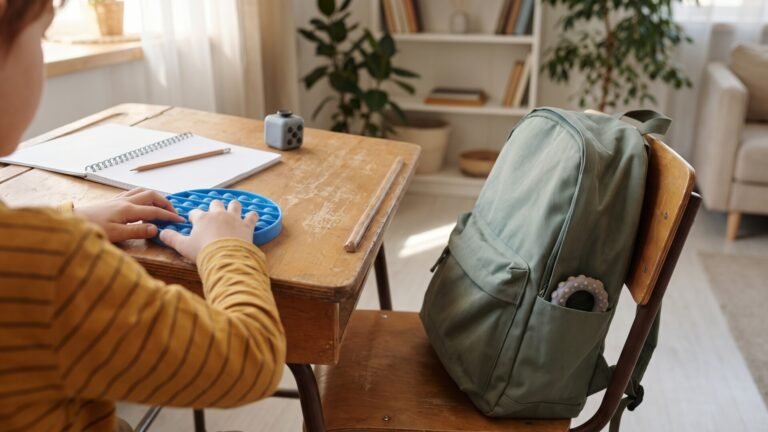
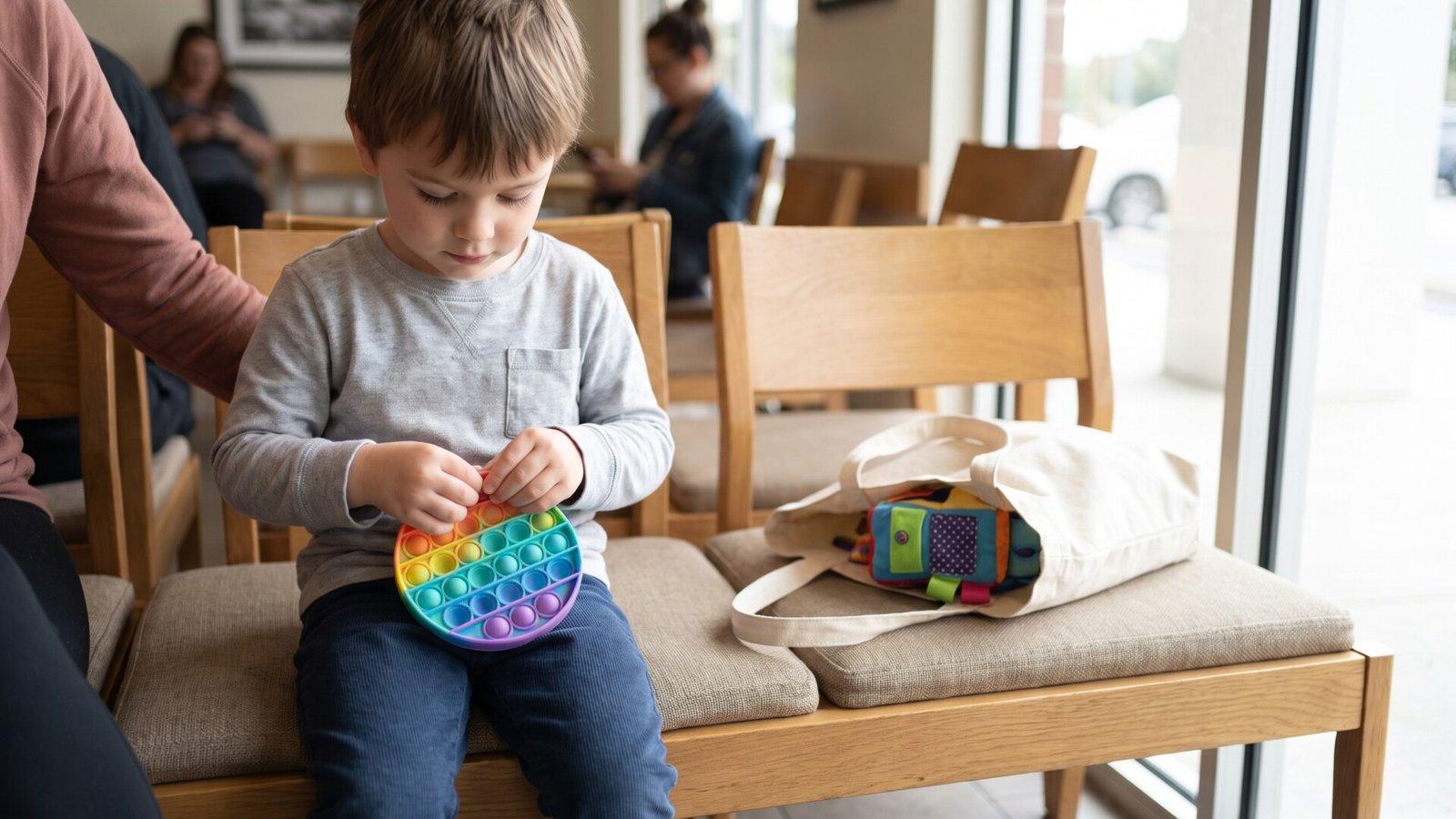
These are small, discreet, and easy to rotate. They keep hands busy without distracting others.
Fidget Rings
Smooth, silent, and pocket-sized. Kids can spin, roll, or twist them without making a sound. They’re great for older kids who don’t want to “look like they’re playing with toys.”
Fidget Cubes (silent versions)
Look for cubes with soft buttons or silent switches. They’re great for grounding a child who likes repetition or clicking—but without the noise.
Marble Mesh Fidgets
A small mesh sleeve with a marble inside that kids can slide back and forth. Simple, repetitive, soothing.
Tangle Toys
Curvy pieces that twist and turn. They’re quiet and ideal for helping kids focus when waiting.
When you’re out in public, it helps to offer your child something they can fiddle with without drawing attention. These toys satisfy that need beautifully.
2. Tactile Sensory Toys
(For Kids Who Need Touch to Self-Soothe)
Tactile toys give kids a sense of grounding. These are especially helpful in places with lots of unpredictable noise.
Squish Balls
Whether gel-filled, foam, or stress ball style, they help kids release tension through squeezing.
Pop Tubes (mini versions)
Stick to the silent, smaller versions—the full-size ones can be loud. Kids love the stretchy feel and gentle pull.
Sensory Putty or Therapy Putty
Even a small amount offers resistance, which is incredibly calming for anxious or overwhelmed kids.
Textured Stones or Smooth Worry Stones
Kids can rub or hold them discreetly in their pocket.
Great for:
- Crowded places
- Waiting rooms
- Grocery stores
- Car rides
- Lines or transitions
3. Movement-Based Sensory Tools
(For Kids Who Need Proprioception or Pressure)
Some kids calm best when their muscles are engaged in a soothing way.
Chewlery (Chew Necklaces)
Perfect for kids who chew on their sleeves, lips, or fingers. Chewlery gives a safe, socially-acceptable outlet for oral sensory needs.
Weighted Plushies (small travel size)
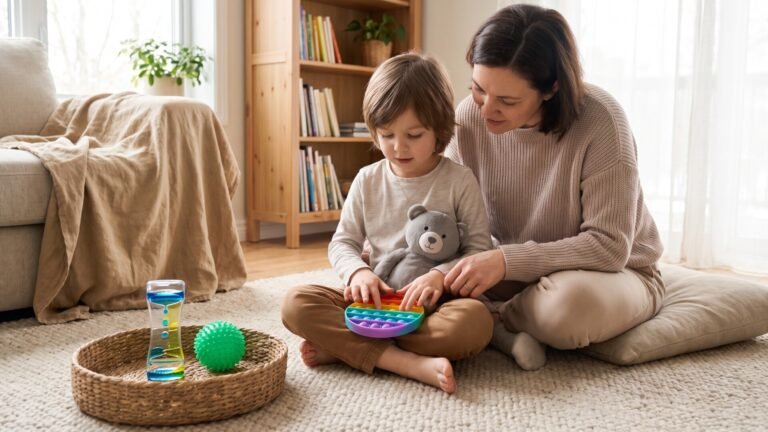
Kids can hold them in their lap or hug them for grounding. The weight provides deep pressure input that calms the nervous system.
Resistance Bands or Stretchy Fidgets
Slip a mini-band around a child’s feet in a car seat or stroller—they can stretch quietly without disturbing anyone.
Handheld Massagers (manual only)
The gentle rolling or pressure can soothe kids who need tactile input.
These tools are incredibly effective for kids who get “wiggly” or overwhelmed.
4. Visual Sensory Toys
(Soothing for Kids Who Need Something Calm to Look At)
Visual toys help kids center themselves when their environment feels chaotic.
Liquid Motion Bubblers
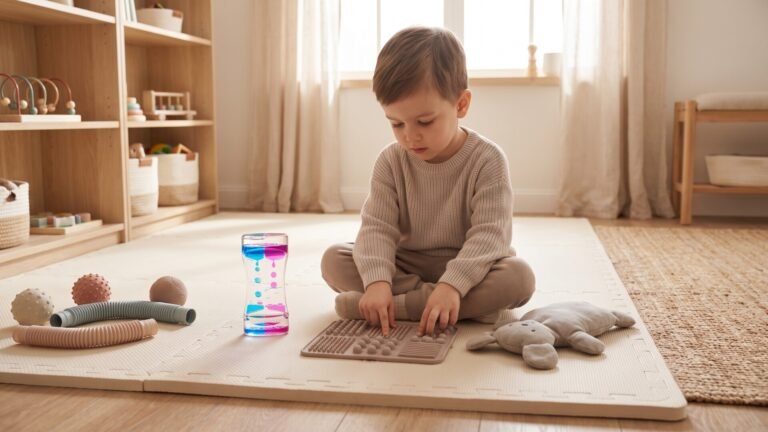
Kids can watch the slow movement of the droplets to calm down.
Mini Sensory Bottles
Filled with glitter, beads, or slow-moving liquid. They’re quiet, mesmerizing, and perfect for travel.
Small Kaleidoscopes
Not the old-fashioned noisy ones—many modern versions are quiet and pocket-friendly.
LCD Writing Tablets
Kids can draw quietly, erase instantly, and doodle endlessly without mess or sound.
Visual toys are great for:
- Diners
- Airplanes
- Family gatherings
- Long lines
5. Pretend Play Items (Tiny Versions!)
(Fantastic for Kids Who Calm Through Imagination)
Pretend play can be grounding because it gives kids control in an environment where they have none.
Mini Figurines
Small animals, cars, dinosaurs, or people give kids something familiar and comforting to hold.
Small Play Food or Mini Cooking Sets
Some kids love “ordering” or “cooking” imaginary meals while waiting at a restaurant.
Tiny Dolls or Action Figures
Not too many—just a couple they can hold easily.
Pretend play works wonders for kids who self-regulate through storytelling or imagination.
How to Pack a Sensory “Go Bag”
Every parent should have a small sensory kit in the car or diaper bag. It doesn’t have to be complicated.
Here’s what works well:
- A small zipper pouch
- 3 quiet fidgets (rotate them weekly)
- 1 tactile toy (putty, stress ball, or mesh marble)
- 1 visual toy (tablet, liquid bubbler, sensory bottle)
- 1 movement tool (chew necklace, stretchy band)
- 1 comfort item (small weighted plush, favorite toy)
Keeping it small prevents overwhelm and makes it easy to grab on the way out the door.
How to Use Sensory Toys in Public
(Without Making It a Battle)
1. Offer the toy before stress begins
If you know your child struggles in loud stores, give them a fidget the moment you walk in—not after a meltdown starts.
2. Give choices
Kids regulate better when they choose their tool. Offer two options instead of asking open-ended questions.
3. Use predictable routines
For example:
- “When we get into the car, you can choose one toy to hold.”
- “At the restaurant, you can use your drawing tablet while we wait.”
4. Keep a calm tone
Your child mirrors your energy. Treat sensory toys as normal—not as “special tools for behaving.”
5. Model how to use them
If you act like sensory toys are interesting and fun, your child will too.
When a Toy Isn’t Enough
(Some Kids Need More Support)
If your child:
- Consistently melts down
- Gets overwhelmed often
- Struggles with transitions
- Has trouble processing noise or crowds
- Acts aggressively when overstimulated
…sensory toys can help, but they might not be the whole solution. You may want to explore:
- Occupational therapy
- Sensory integration evaluation
- Behavior support services
- Calming strategies at home (calm corners, visual schedules, etc.)
Sensory toys support regulation, but they don’t replace deeper support when needed.
Recommended Toys to Include in Your Go Bag
These toys consistently help kids stay calm on outings:
- Fidget rings
- Silent fidget cubes
- Marble mesh toys
- Tangle fidgets
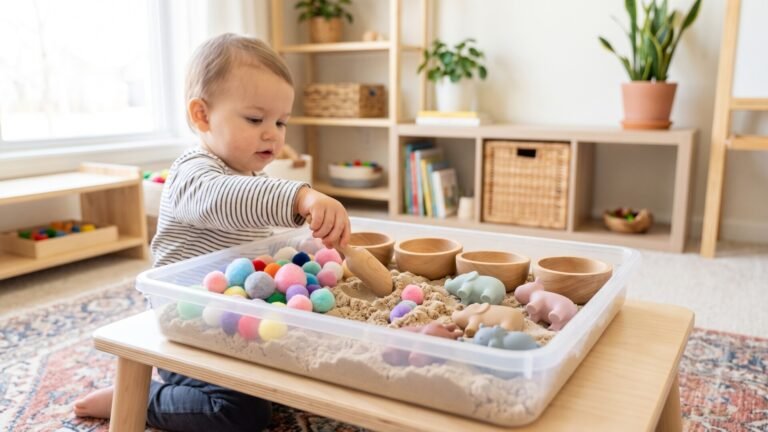
- Kinetic sand or sensory putty (travel size)
- Stress balls (gel, foam, or dough)
- Weighted stuffed animals (small)
- Chew necklaces
- LCD writing tablets
- Liquid motion bubblers
- Mini sensory bottles
- Small figurines or dolls
- Magnetic drawing boards
All of these toys can fit into a small bag and provide calming sensory input wherever you go.
Conclusion
Taking kids out in public doesn’t have to be stressful. With the right sensory tools, you can prevent meltdowns, help your child stay grounded, and transform outings from chaotic to calm.
Whether your child needs something to squeeze, stretch, watch, chew, or quietly fiddle with, there’s a sensory toy that can help them stay regulated in any environment.
A little preparation—and a small bag of calming tools—can make your day go from overwhelming to manageable, and sometimes even enjoyable.