Why the Order and Logic of Montessori Toys Support Autistic Toddlers
I remember the first time I watched my nephew, who is on the autism spectrum, interact with a simple wooden puzzle. He wasn’t interested in the colorful picture or the animals. What captivated him was the way each piece fit perfectly into its designated spot. He lined them up, studied the shapes, and then methodically placed each one where it belonged. There was no frustration, no meltdown — just pure, focused satisfaction.
That moment changed how I think about toys entirely.
As a parent or caregiver of an autistic toddler, you already know that the world can feel overwhelming for your child. Bright lights, loud noises, unpredictable routines — these aren’t just minor annoyances. They can be genuinely distressing. And when it comes to play, many traditional toys add to that chaos rather than providing comfort.
Montessori toys offer something different. They are built on principles of order, logic, and predictability. They don’t flash, beep, or demand attention. Instead, they invite exploration on the child’s own terms. And for autistic toddlers, that invitation can be life-changing.
Let me walk you through why these toys work so well, what to look for, and which ones have earned a permanent spot in my own recommended list.
The Montessori Method and Autism: A Natural Fit
I used to think Montessori was just about expensive wooden toys and fancy classrooms. But then I started digging into the philosophy behind it, and everything clicked.
Dr. Maria Montessori developed her educational approach by observing how children naturally learn. She noticed that kids thrive when they have control over their environment, when materials are orderly and accessible, and when learning happens through hands-on exploration rather than passive instruction.
Now, here’s where it gets interesting for autistic toddlers.
Many autistic children struggle with sensory processing. Too much input — visual noise, competing sounds, unexpected touches — can lead to overwhelm. Traditional toys often make this worse. Think about a typical electronic toy: flashing lights, loud music, multiple buttons that do different things. For a neurotypical child, that might be fun. For an autistic toddler, it can be a sensory assault.
Montessori toys strip all that away. They focus on one skill at a time. A single puzzle teaches shape recognition. A set of stacking rings teaches size ordering. There’s no distraction, no confusion. Just clear, logical cause and effect.
The American Academy of Pediatrics has noted that structured, predictable environments can significantly reduce anxiety in autistic children. Montessori toys create that predictability in miniature form. When a child knows that the red ring goes on the smallest peg, and it always will, they feel safe. They can predict the outcome. And that predictability builds confidence.
I’ve seen this play out in real time. A friend of mine has a three-year-old son with autism who struggles with transitions. But when he’s working with his Montessori materials, he can focus for thirty minutes straight. The order of the activity grounds him. It’s not just play — it’s therapy.
What Makes a Toy Montessori?
Let me clear up a common misconception. Montessori toys aren’t just any wooden toys. They have specific characteristics that set them apart.
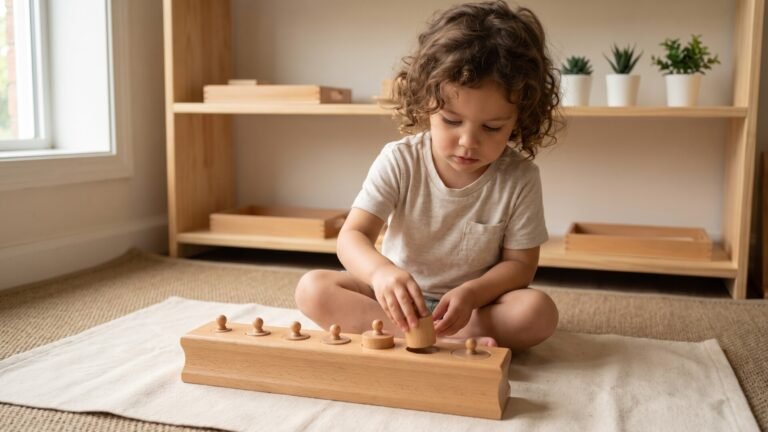
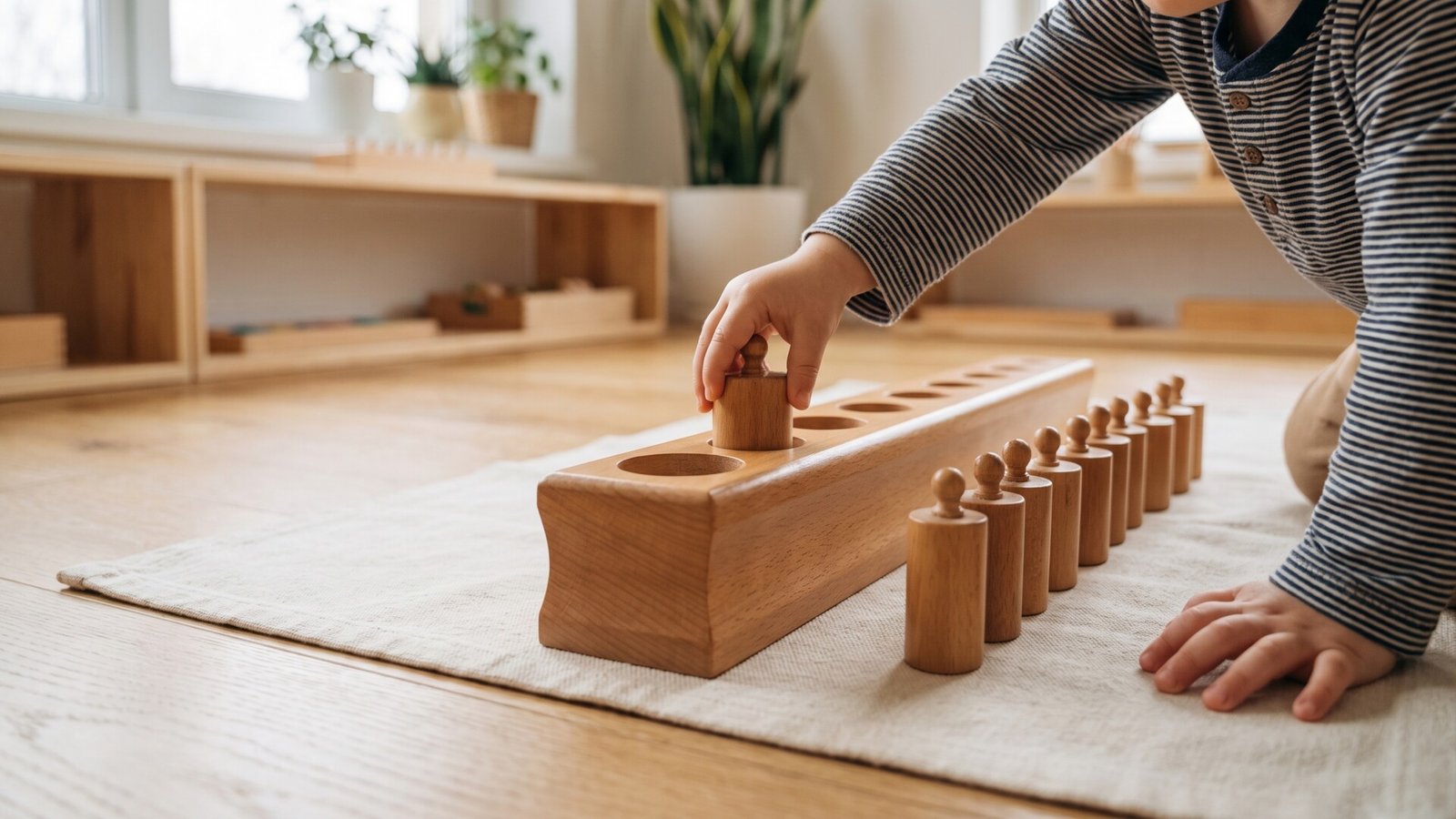
First, they are self-correcting. This means the child can see for themselves whether they’ve done something correctly. A puzzle piece either fits or it doesn’t. A cylinder block either slides into its hole or it won’t. There’s no external judgment, no adult saying “good job” or “try again.” The material itself provides the feedback.
Second, they isolate one skill at a time. A Montessori toy for color sorting doesn’t also teach numbers. A toy for fine motor development doesn’t also play music. This focus helps children master one concept before moving to the next.
Third, they are made from natural materials. Wood, metal, fabric, and glass replace plastic and electronics. This isn’t just about aesthetics. Natural materials provide richer sensory feedback. The weight of a wooden block, the smoothness of a sanded surface, the sound of two pieces clicking together — these subtle inputs help autistic children connect with their environment in a grounded way.
Finally, Montessori toys encourage repetition. In a world that constantly pushes novelty, Montessori honors the child’s need to repeat an activity until they’ve mastered it. For autistic toddlers, who often thrive on routine and repetition, this is deeply comforting.
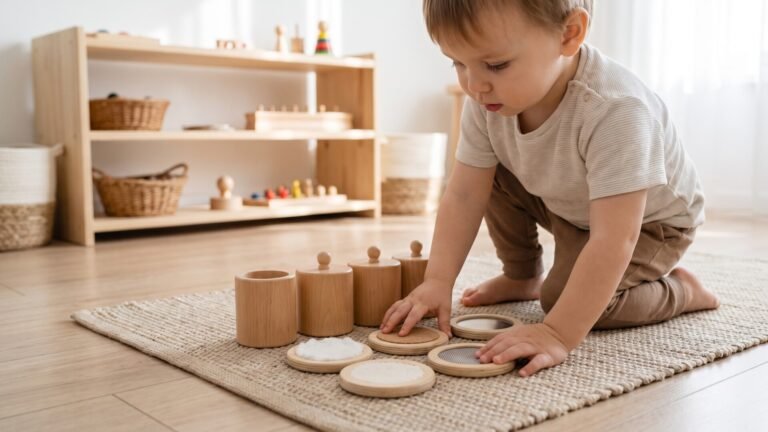
Let me give you an example. A traditional toy might have a button that plays a song when pressed. The child presses it once, hears the song, and moves on. A Montessori version might be a set of sound cylinders. The child shakes each one, listens, and matches it to another cylinder with the same sound. There’s no right or wrong answer until they compare. The activity can be repeated dozens of times, each time deepening their understanding of sound discrimination.
Key Buying Factors for Montessori Toys
Before I share my specific recommendations, let me walk you through what I consider when choosing toys for autistic toddlers. These criteria have saved me from wasting money on toys that looked good but didn’t deliver.
Safety
This is non-negotiable. Montessori toys should be made from non-toxic materials. Look for water-based paints, solid wood (not particle board), and finishes that are free from lead and phthalates. For toddlers who mouth toys, ensure all pieces are large enough to prevent choking hazards. I always check for third-party safety certifications like ASTM or CPSC compliance.
Durability
Autistic toddlers can be intense with their play. They might drop, throw, or repeatedly bang toys. Cheap plastic won’t survive. Solid wood construction, reinforced seams, and sturdy hardware are worth the investment. I’ve seen a single Melissa & Doug puzzle survive three children over a decade.
Age Appropriateness
This is trickier than it sounds. Developmental age and chronological age don’t always align for autistic children. A four-year-old might have the fine motor skills of a two-year-old but the cognitive interest of a five-year-old. Look for toys that offer adjustable difficulty or multiple ways to play. The VTech Touch and Learn Activity Desk, for example, has different activity levels that grow with the child.
Educational Value
Every Montessori toy should teach something specific. Ask yourself: What skill is this toy developing? Fine motor coordination? Visual discrimination? Problem-solving? Cause and effect? If you can’t answer that question, the toy probably isn’t worth buying.
Ease of Use
Autistic toddlers can become frustrated with toys that are too complex or require fine motor skills they haven’t developed yet. Look for intuitive designs. Pieces should be easy to grasp. Actions should have clear, predictable results. A toy that requires adult intervention every few minutes isn’t fostering independence.
Storage Requirements
I learned this the hard way. Montessori toys often come with multiple pieces, and losing even one can render the toy useless. Consider how the toy stores. Does it have a dedicated box or tray? Can pieces be organized in a way that makes sense to your child? Some of the best toys come with their own storage solutions.
Pros and Cons of Montessori Toys for Autistic Toddlers
Let me be honest with you. Montessori toys aren’t perfect for every situation. Here’s what I’ve observed.
Pros
The biggest win is independent learning. When a toy is self-correcting, your child doesn’t need you to tell them they’re right or wrong. They figure it out themselves. That builds confidence and reduces the anxiety that can come from adult evaluation.
The sensory engagement is profound. Natural materials, varied textures, and focused activities help autistic children regulate their sensory systems. I’ve watched a child calm down within minutes of starting a tactile matching game.
Problem-solving skills develop naturally. Because Montessori toys isolate concepts, children learn to approach challenges methodically. They try one solution, see if it works, and adjust. That cognitive flexibility is invaluable.
Cons
The cost is real. A high-quality wooden puzzle can cost three times as much as a plastic alternative. And because these toys are built to last, you’re paying for durability. But that doesn’t make the upfront cost easier.
Parental guidance is still needed, especially at first. Montessori philosophy emphasizes child-led learning, but young toddlers need help understanding how to use materials. You’ll need to model the activity, then step back and let them explore.
Availability can be an issue. Not every store carries authentic Montessori toys. You’ll often need to order online from specialty retailers. And some of the most popular items sell out quickly.
Product Recommendations
After years of testing and observing, here are the toys I consistently recommend for autistic toddlers. Each one has earned its place through real-world use.
Melissa & Doug Wooden Puzzles
| Feature | Details |
|---|---|
| Age Range | 2+ years |
| Key Features | Easy-to-grasp pieces, bright colors, develops spatial awareness |
| Affiliate Program | Melissa & Doug Affiliate Program |
Why We Like It
These puzzles are a gateway to logical thinking. Each piece fits only one way, teaching children that order matters. The chunky wooden knobs are easy for small hands to grasp, reducing frustration. And the bright, high-contrast colors help with visual discrimination.
Best For
Toddlers who enjoy hands-on activities and need practice with fine motor skills.
Pros
- Durable and safe materials that withstand rough play
- Engaging design that holds attention
Cons
- Limited complexity as children grow beyond basic shapes
[Affiliate: Check current pricing on Amazon]
VTech Touch and Learn Activity Desk
| Feature | Details |
|---|---|
| Age Range | 2-5 years |
| Key Features | Interactive features, encourages exploration, versatile play options |
| Affiliate Program | VTech Affiliate Program |
Why We Like It
This desk adapts to your child’s growing abilities. It starts with simple letter and number recognition and progresses to more complex activities. The interactive elements provide immediate feedback, which autistic toddlers often find motivating.
Best For
Toddlers who benefit from interactive learning and need structured activities.
Pros
- Multi-functional design that grows with your child
- Adaptable for various learning stages
Cons
- Requires batteries for full functionality
[Affiliate: Check current pricing on Amazon]
Seedling DIY Craft Kits
| Feature | Details |
|---|---|
| Age Range | 4+ years |
| Key Features | Encourages creativity and fine motor skills through hands-on projects |
| Affiliate Program | Seedling Affiliate Program |
Why We Like It
For autistic toddlers who enjoy creating, these kits provide a structured way to explore art. Each kit has clear steps and all necessary materials. The finished product gives a sense of accomplishment that builds self-esteem.
Best For
Creative toddlers who enjoy crafting and need practice with sequencing.
Pros
- Develops both fine motor skills and creativity
- High-quality materials that produce satisfying results
Cons
- Some kits can be complex for younger toddlers
[Affiliate: Check current pricing on Amazon]
Fun and Function Sensory Fidget Kits
| Feature | Details |
|---|---|
| Age Range | 3+ years |
| Key Features | Designed to enhance focus, calmness, and sensory exploration |
| Affiliate Program | Fun and Function Affiliate Program |
Why We Like It
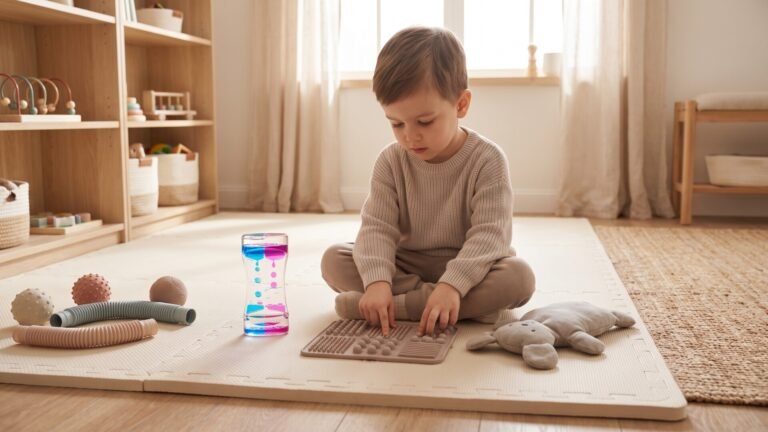
These kits are specifically designed for sensory processing needs. They include a variety of fidgets — textured balls, stretchy bands, squishy toys — that help children regulate their sensory systems. I’ve seen these calm an overwhelmed child in minutes.
Best For
Toddlers with sensory processing needs who benefit from tactile stimulation.
Pros
- Variety of fidgets to suit individual preferences
- Encourages self-soothing techniques
Cons
- May require adult supervision during use
[Affiliate: Check current pricing on Amazon]
BrightlyToys Building Blocks
| Feature | Details |
|---|---|
| Age Range | 1-3 years |
| Key Features | Safe, colorful building blocks that encourage imaginative play |
| Affiliate Program | BrightlyToys Affiliate Program |
Why We Like It
Building blocks are the ultimate open-ended Montessori toy. They teach spatial awareness, cause and effect, and problem-solving. The lightweight foam construction makes them safe for even the youngest toddlers.
Best For
Younger toddlers exploring building concepts and cause-and-effect relationships.
Pros
- Safe and lightweight materials
- Encourages creativity and logical thinking
Cons
- Limited complexity for older toddlers
[Affiliate: Check current pricing on Amazon]
Duncan Toys Beginner Diabolo
| Feature | Details |
|---|---|
| Age Range | 6+ years |
| Key Features | Develops hand-eye coordination and motor skills in a fun way |
| Affiliate Program | Duncan Toys Affiliate Program |
Why We Like It
For older toddlers who need gross motor challenges, the diabolo is excellent. It requires bilateral coordination, timing, and focus. The repetitive motion can be calming for autistic children.
Best For
Active toddlers ready to explore more challenging motor skills.
Pros
- Engaging and fun
- Promotes physical activity and coordination
Cons
- May be too challenging for younger or less coordinated toddlers
[Affiliate: Check current pricing on Amazon]
Comparison Table
| Product | Age Range | Durability | Educational Value | Price Range | Best For |
|---|---|---|---|---|---|
| Melissa & Doug Wooden Puzzles | 2+ years | High | High | $10 – $20 | Hands-on activities |
| VTech Touch and Learn Activity Desk | 2-5 years | Medium | High | $40 – $60 | Interactive learning |
| Seedling DIY Craft Kits | 4+ years | High | High | $20 – $35 | Creative crafting |
| Fun and Function Sensory Fidget Kits | 3+ years | Medium | Medium | $15 – $30 | Sensory exploration |
| BrightlyToys Building Blocks | 1-3 years | High | High | $15 – $25 | Imaginative play |
| Duncan Toys Beginner Diabolo | 6+ years | Medium | Medium | $20 – $30 | Physical coordination |
How to Choose the Right Option
Every child is different. Here’s how to match a toy to your specific situation.
Best for Small Spaces
If your home is tight on space, go with the [Melissa & Doug Wooden Puzzles](Affiliate: Check current pricing on Amazon). They store flat, take up minimal room, and provide hours of engagement without clutter.
Best for Toddlers
For toddlers aged 1-3, the [BrightlyToys Building Blocks](Affiliate: Check current pricing on Amazon) are ideal. They’re safe, lightweight, and encourage foundational skills like stacking and sorting.
Best for Sensory Needs
The [Fun and Function Sensory Fidget Kits](Affiliate: Check current pricing on Amazon) are specifically designed for sensory processing challenges. They offer variety and can be used anywhere.
Best for Creative Expression
The [Seedling DIY Craft Kits](Affiliate: Check current pricing on Amazon) provide structured creativity. They’re perfect for children who enjoy making things with their hands.
Best Budget Pick
The [Melissa & Doug Wooden Puzzles](Affiliate: Check current pricing on Amazon) offer exceptional value. At $10-$20, they’re affordable without sacrificing quality.
Best Premium Pick
The [VTech Touch and Learn Activity Desk](Affiliate: Check current pricing on Amazon) is an investment at $40-$60, but its versatility and longevity make it worth the price.
Final Thoughts
I’ve seen the difference these toys make. The calm that settles over a child when they find the right piece. The pride in their eyes when they complete a task on their own. The way a simple wooden puzzle can become a sanctuary from an overwhelming world.
The best Montessori toys aren’t the most expensive or the most popular. They’re the ones that meet your child where they are. They’re the ones that invite exploration without demanding it. They’re the ones that say, “You can do this, and I’ll help you figure it out.”
[Affiliate: Check current pricing and availability through our recommended partners]
Frequently Asked Questions About Montessori Toys Support Autistic Toddlers
What are Montessori toys?
Montessori toys are designed to promote self-directed learning through hands-on, sensory-rich experiences. They focus on one skill at a time and are made from natural materials.
How do Montessori toys support autism?
They provide structured, predictable play environments that cater to the unique needs of autistic children. The order and logic of these toys help reduce anxiety and build confidence.
Are Montessori toys safe for toddlers?
Yes, quality Montessori toys are made from non-toxic materials and are designed for specific age ranges to ensure safety. Always check for safety certifications.
What age group benefits most from Montessori toys?
Montessori toys are available for various age groups but are particularly beneficial for toddlers aged 1-5 years.
How do I know if a toy is appropriate for my child?
Look for toys that match your child’s developmental stage, interests, and sensory needs. Don’t be afraid to try something and adjust based on their response.
Can Montessori toys help with social skills?
Yes, many Montessori toys encourage cooperative play and social interaction, which can enhance social skills over time. —