Best Montessori Kitchen Helpers: Top-Rated Learning Towers for 2-Year-Olds
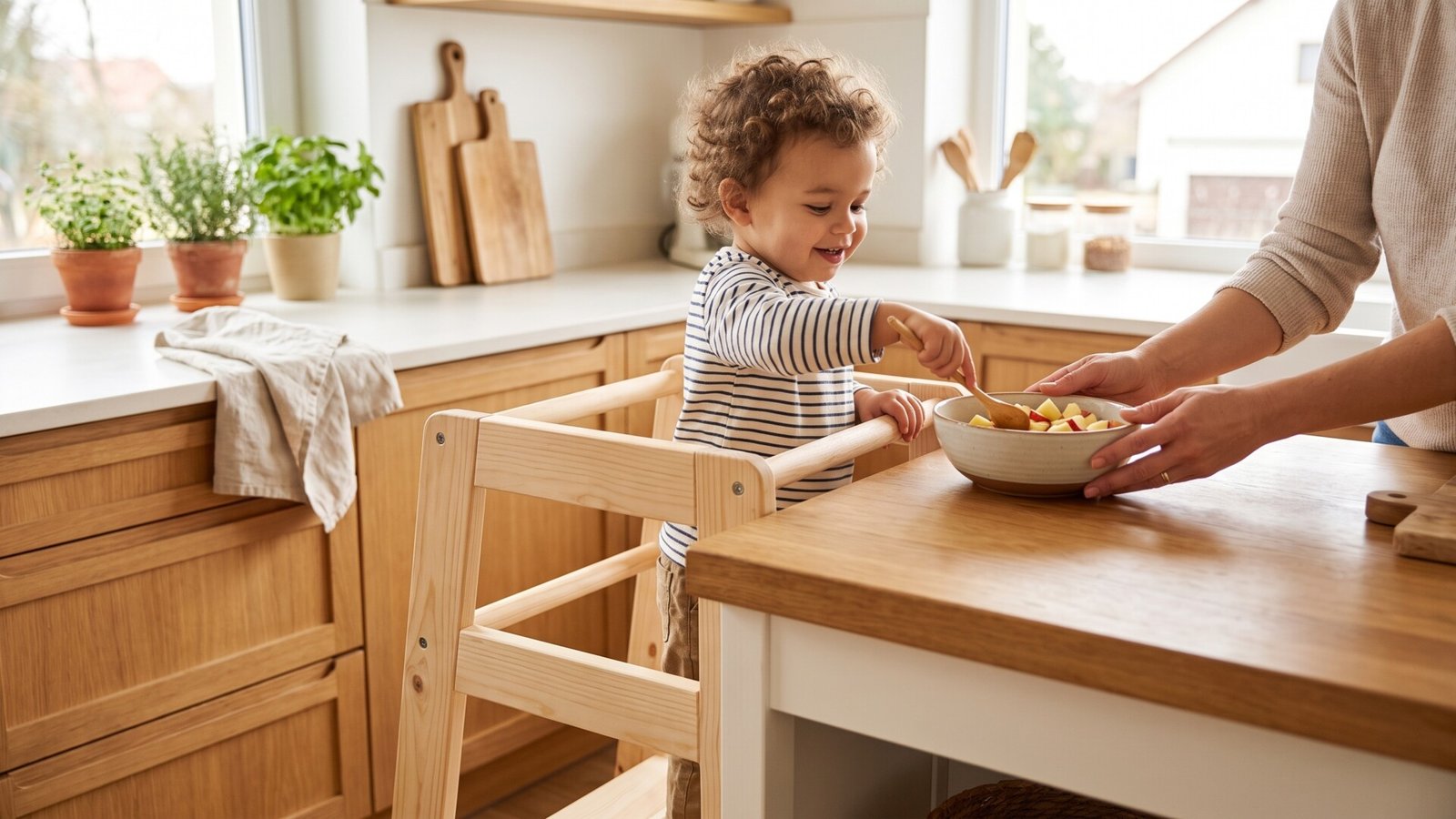
There’s a moment every parent knows: you’re busy at the kitchen counter, and a small voice pipes up, “Me too. I help.” You want to encourage that curiosity, but holding a wiggly toddler on one hip while chopping vegetables isn’t safe or practical. A learning tower (also called a kitchen helper or toddler tower) is a raised, enclosed platform that brings a toddler up to counter height, so they can join in washing, stirring and tidying.
Learning towers fit the Montessori idea of “help me do it myself”: real tasks, a child-sized setup, and a child who is trusted to take part. This guide explains what to look for, compares the towers we found the most information on, and covers the safety points that matter most for 2-year-olds. We rely on manufacturer and retailer listings, not hands-on testing, and prices below are what we saw listed (in USD) and can change. For the wider topic, see our Montessori toys for toddlers (1–3 years) guide, our Montessori & early learning toys hub, and Montessori practical life toys.
What Is a Montessori Learning Tower?
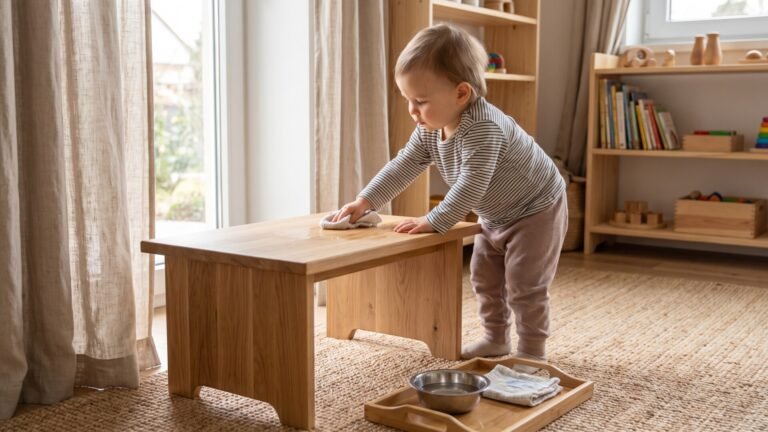
A learning tower is a child-sized standing platform with rails or sides, designed to let a toddler stand safely at counter height. Unlike a plain step stool, the enclosure helps stop a child from stepping off backward or sideways. Families use them for kitchen activities like washing vegetables and stirring ingredients, handwashing at the sink, sensory play, and other practical life activities.
Most towers are listed for roughly 18 months to 5 or 6 years, and a 2-year-old who can stand steadily and follow simple instructions is a good candidate. Whatever the listing says, a tower is not a babysitter: an adult needs to stay close, particularly in the first weeks.
What Children Can Practise at the Counter
We would not promise developmental outcomes from a piece of furniture, but a tower makes several things possible. Climbing in and out invites balance and coordination. Pouring, scooping, spreading and stirring give hands and wrists plenty to do. Following a short sequence such as “first pour, then stir” gives practice with simple instructions, and being included in family routines often makes toddlers feel valued. Pair it with the best Montessori toys for 2-year-olds for more independence-building ideas.
Safety Features That Matter
Stability. Look for a wide base, a tapered or outward-angled design, and a tower that does not rock when you push it. Test it on your own floor; towers can still tip if a child leans or climbs the sides.
Enclosure. Rails or solid sides on at least three sides help keep a 2-year-old inside. Gaps in rails should not be big enough for a child’s head to get stuck; check the manufacturer’s guidance rather than relying on a rule of thumb.
Adjustable platform height. The child’s elbows should sit comfortably near counter height. Adjustable platforms keep the tower useful for longer.
Non-slip surfaces and materials. Grip tape or a mat on the platform and rubber feet help. Look for non-toxic finishes and third-party certifications such as GREENGUARD Gold where the maker states them. Check the stated weight capacity and age range.
Keep the counter safe. Move knives, hot pans, cords and appliances out of reach, and set the tower away from the stove. A tower makes counters reachable, which is exactly why this matters.
Learning Towers to Consider
Guidecraft Classic Kitchen Helper
One retailer listing describes this as solid hardwood and birch plywood with a non-toxic finish, an adjustable platform at 15 or 18 inches, a 125 lb weight capacity, ages 18 months to 5 years, GREENGUARD Gold certification and a 5-year limited warranty. It requires assembly, measures about 23 x 23 x 36 inches when assembled, folds for storage, and includes a non-slip mat. The listing stresses that adult supervision is required at all times. Check current USD pricing on the listing.
Best for: Families who want a well-documented, adjustable tower with a solid warranty. Trade-offs: Only two heights, and it needs floor space even when folded.
Price range: $$. Check on Amazon | Target (affiliate placeholder, add /go/ link).
Little Partners Explore ’n Store Learning Tower
Little Partners is the brand most closely associated with learning towers. This model is listed at about $171 at one retailer for ages 2 to 6, with a 150 lb weight capacity, a four-height tool-free adjustable platform, four-sided railings, a step that locks in place and folds up, layered birch and poplar construction, and GREENGUARD Gold certification, plus a lifetime warranty per the listing. We could not confirm the “desk conversion” described in earlier versions of this article, so check the listing for current features.
Best for: Parents who want four-sided enclosure and a tower that lasts into the early school years. Trade-offs: Larger and heavier than a simple stool; compare final price with shipping.
Price range: about $170–$200. Check on Amazon | Target (affiliate placeholder, add /go/ link).
Sprout Kids Sous-Chef Toddler Tower
Sprout Kids’ tower is made from Baltic birch plywood with tool-less assembly and disassembly. The retailer listing gives an overall height of 34.5 inches, a base of 17.5 x 17.5 inches, and three platform heights (12, 15 and 18 inches), plus flat steps with grip tape, a tapered design for stability, handles for moving, solid sides, and a guard plate for children under 32 inches tall. We could not verify its price or weight capacity, and earlier versions of this article described four heights and a fully assembled delivery, which we could not confirm.
Best for: Smaller kitchens that want a compact base and solid sides. Trade-offs: Check the price and availability before ordering.
Affiliate placeholder: add /go/ link and verified price.
COSYLAND Foldable Toddler Tower
COSYLAND sells several foldable and adjustable toddler towers on Amazon and other marketplaces. Because their listings and models change often and we could not verify current specs, we do not state a price, weight capacity or height settings here. If you choose a foldable tower, check the weight capacity, number of height settings, whether it includes a rail on all sides, and reviews that mention wobble or hinge wear.
Affiliate placeholder: add /go/ link and verified price.
IKEA BEKVÄM Step Stool “Hack” (Caution)
Many DIY learning-tower guides start from the IKEA BEKVÄM step stool and add rails or a conversion kit. A plain stool is not a learning tower and does not protect a toddler from falls, so we only suggest this route if you buy a proper conversion kit and attach it according to its instructions. We could not verify current USD prices for the stool or kits, so compare the total with a purpose-built tower.
Quick Comparison
| Tower | Listed ages | Weight capacity | Heights | Price seen (USD) |
|---|---|---|---|---|
| Guidecraft Classic Kitchen Helper | 18 months–5 years | 125 lb | 15 or 18 in | Check listing |
| Little Partners Explore ’n Store | 2–6 years | 150 lb | 4 heights | About $171 |
| Sprout Kids Sous-Chef | Not stated | Not stated | 12, 15, 18 in | Check listing |
How to Choose
- Long-term use: choose an adjustable platform with a clearly stated age range and weight limit.
- Small kitchens: look for a compact base, fold-up step or foldable design, and measure your space first.
- Maximum security: favour a full enclosure on all four sides and test the tower for wobble.
- Toddlers who also like sensory play: see Montessori sensory toys for 1–3 year olds; younger or older children may prefer toys for 1-year-olds or toys for 3-year-olds.
Frequently Asked Questions About Montessori Kitchen Helpers
Are learning towers safe for 2-year-olds?
They are safer than a standard stool or chair because of the enclosure, but they are not risk-free. Choose a stable, well-reviewed model, follow the age and weight limits, and supervise at all times.
What age can children start using them?
Listings commonly say about 18 months or 2 years and up. Check the manufacturer’s stated range for the model you choose.
Do I need to supervise constantly?
Yes. A learning tower is a tool, not a babysitter. A child can still lean, climb the rails or reach hazards on the counter.
Can they tip over?
Any tall platform can tip if misused. A wide, tapered base and a firm, level floor reduce the risk. Test the tower yourself before your child uses it.
How long will my child use it?
Many listings give a range of roughly 18 months or 2 years up to 5 or 6 years, depending on the model and the child’s height.
Can they be used outside the kitchen?
Yes, families use them at the bathroom sink, craft table or for water play, as long as the floor is stable and dry.
Do learning towers help development?
They make it easier for toddlers to take part in real tasks, which invites practice with balance, hand skills and following simple steps. They do not guarantee any specific skill.
Conclusion
A learning tower can turn kitchen time into shared time, but it works best when the tower is stable, the counter is toddler-safe, and an adult stays close. Compare age ranges, weight limits, adjustability and enclosure, and check current prices before buying. ToyGuideHub may earn a commission from qualifying purchases made through links on this page, at no extra cost to you.