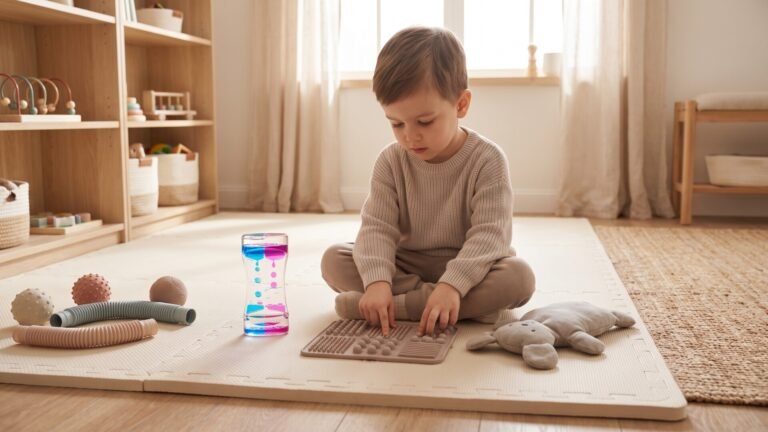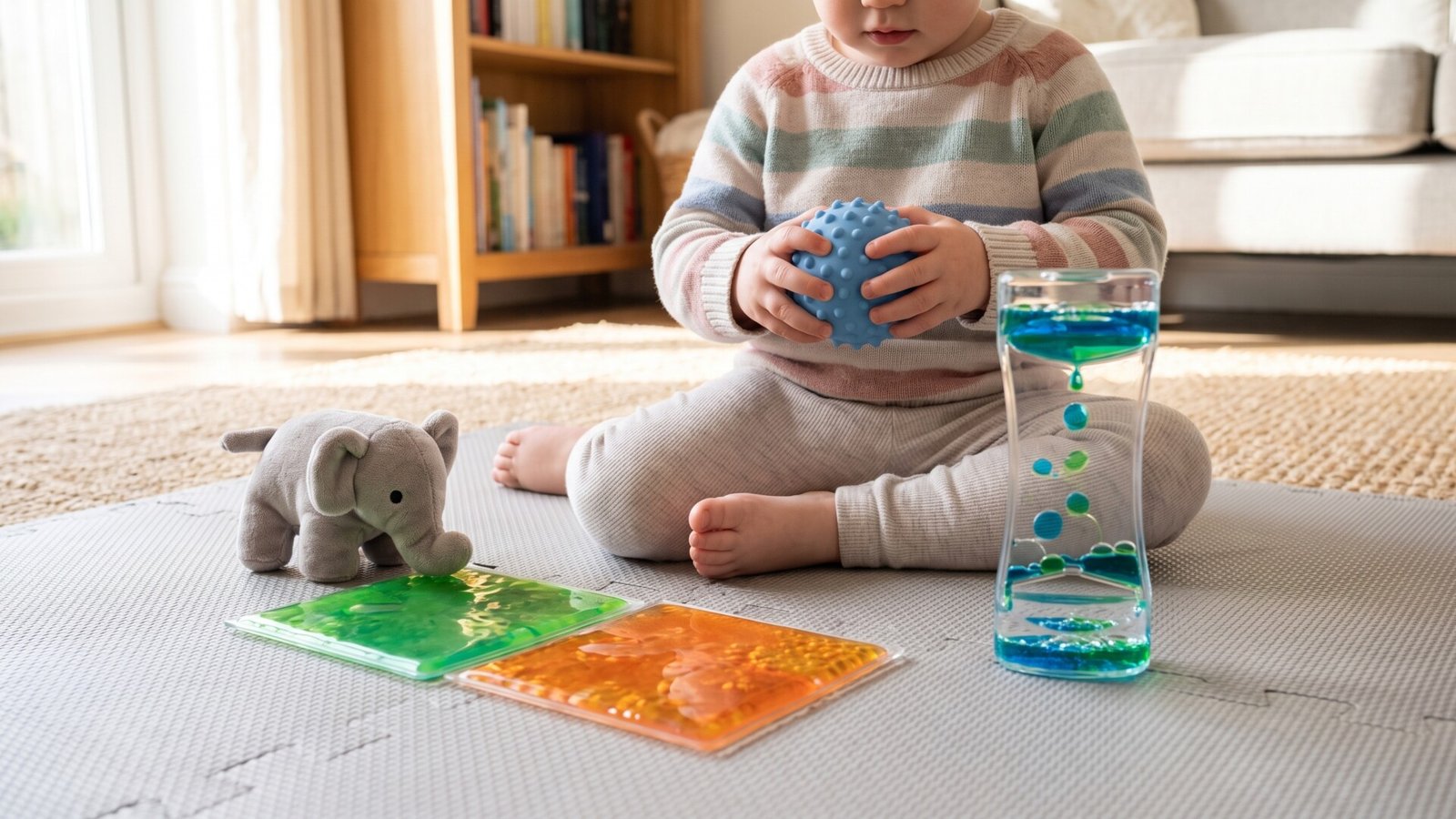
Best Sensory Toys for Toddlers with Autism: Calming and Engaging Options
Every child experiences the world differently. For toddlers with autism, everyday sensations—the hum of a light, the tag on a shirt, the feel of a carpet—can feel overwhelming. Or, sometimes, they may seek out more input: spinning, crashing, touching everything in sight. Sensory toys are not just “nice to have.” They can be essential tools for helping a child regulate, focus, and explore at their own pace.
Sensory play matters because it meets a child where they are. A toy that provides gentle vibration or deep pressure can calm a child who is feeling overstimulated. A set of textured blocks can invite a cautious child to explore new tactile sensations in a safe, controlled way. The right sensory toy can reduce frustration, build fine motor skills, and open the door to joyful, self‑directed play.
This guide covers 15 of the best sensory toys for toddlers with autism, organised by sensory type: tactile, auditory/visual, and calming multi‑sensory options. Many of these toys are available through Melissa & Doug, Fun and Function, Seedling, and Amazon—look for links throughout the article to check current prices and availability.
Why Sensory Toys Matter for Toddlers with Autism
Sensory processing differences are common in autism. Some toddlers are hypersensitive—they may cover their ears at a normal speaking voice or refuse to touch certain textures. Others are hyposensitive—they might seek out deep pressure, spinning, or loud noises. Many children are a mix of both, depending on the day or the situation.
Sensory toys are designed to provide specific, controlled sensory input. They help a child’s nervous system find a “just right” state. Here’s what well‑chosen sensory toys can do:
- Emotional regulation – A weighted lap pad or a squishy ball can lower anxiety and prevent meltdowns.
- Fine motor skills – Squeezing, pinching, and manipulating small toys builds hand strength.
- Tactile exploration – Children who avoid touch can gradually accept new textures through playful, low‑pressure materials.
- Cognitive development – Cause‑and‑effect toys (like a light‑up ball that activates when rolled) teach logical thinking.
- Reducing overstimulation – A bubble tube or liquid motion toy gives a focal point that helps a child tune out chaotic surroundings.
The right toy respects the child’s unique sensory profile. It doesn’t force them to “toughen up” or “calm down.” Instead, it offers a bridge—a way to interact with the world that feels safe and satisfying.
Affiliate programs for high‑quality sensory toys include Fun and Function, Melissa & Doug, Seedling, and Smiling Tree Toys.
Key Features to Look for in Sensory Toys
Not every toy labelled “sensory” is appropriate for a toddler with autism. Use these criteria when shopping.
Safety first – Materials must be non‑toxic, BPA‑free, and free of small parts that could break off and become choking hazards. Soft silicone, natural wood, and durable plastics are best. Avoid toys with loose batteries or sharp edges.
Multi‑sensory engagement – The best sensory toys stimulate more than one sense. A light‑up ball that also vibrates or makes a soft sound gives a child multiple ways to engage.
Calming vs. stimulating – Know your child’s needs. A child who is easily overwhelmed needs calming toys: weighted items, slow visual motion, gentle sounds. A child who seeks input needs engaging toys: bright lights, strong textures, satisfying clicks or crinkles. Many children need both at different times.
Adaptable for growth – A toy that works for an 18‑month‑old may still be useful at age 4 if it offers different levels of challenge (e.g., a shape sorter that can be used for matching, then later for counting).
Independent play – Sensory toys should invite self‑directed exploration. Avoid toys that require adult operation for every function.
Relevant affiliate programs – Many of the toys below are available through Fun and Function, Melissa & Doug, Seedling, Smiling Tree Toys, Ryder Toys, Amazon, and BrightyToys.
Top 15 Sensory Toys for Toddlers with Autism
3.1 Tactile & Touch‑Based Toys (Toys 1–5)
#1 Fidget & Tactile Balls
Skills Targeted: Fine motor, calming, tactile discrimination
Affiliate Program: Fun and Function / Amazon
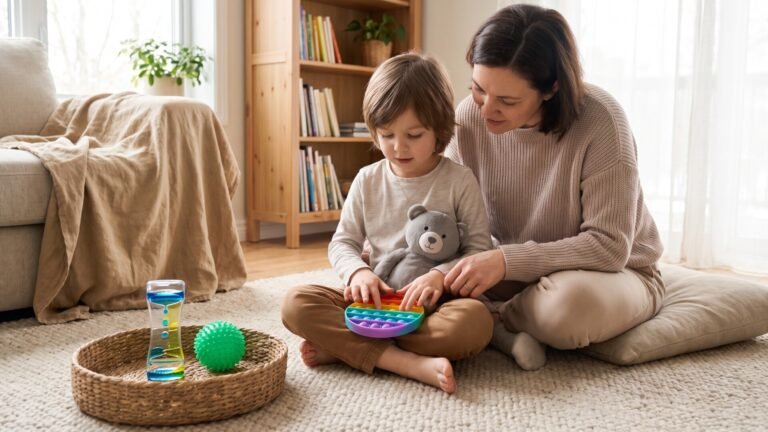
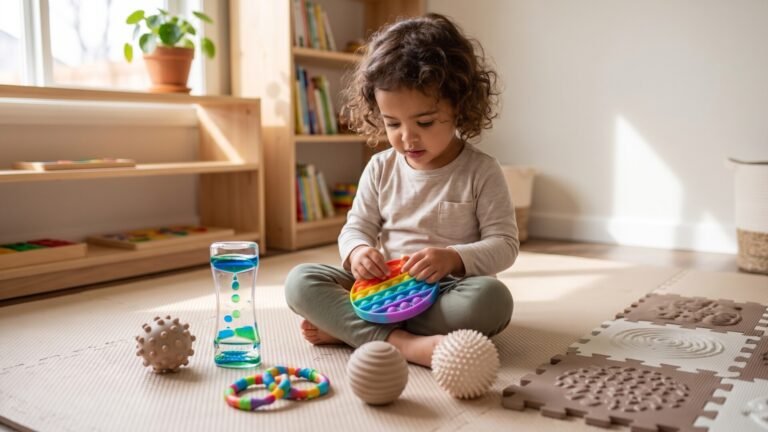
Fidget balls come in many textures: spiky, bumpy, smooth, or squishy. For a toddler who needs calming input, squeezing a soft, gel‑filled ball provides deep pressure that lowers stress. For a child who seeks tactile stimulation, a spiky ball rolled over their hands or feet gives satisfying feedback without being overwhelming.
Look for sets that include different resistance levels. Fun and Function’s “Sensory Fidget Balls” are sized for small hands and made from safe, non‑toxic rubber. They’re also easy to clean—a must for toddlers who mouth toys.
Shop Fun and Function fidget balls →
#2 Textured Sensory Blocks
Skills Targeted: Tactile exploration, fine motor, matching
Affiliate Program: Melissa & Doug / Smiling Tree Toys
These wooden blocks have different textures on each face: smooth, bumpy, ridged, soft (fabric), or rough (sandpaper). A toddler can sort them by texture, stack them, or simply rub their fingers over the surfaces.
For a child who avoids touch, textured blocks offer a low‑pressure way to explore new sensations—they control how long and how firmly they touch. Melissa & Doug’s “Texture Blocks” are beautifully made and safe for ages 1+.
Check Melissa & Doug texture blocks →
#3 Squishy Sensory Toys
Skills Targeted: Stress relief, tactile input, hand strength
Affiliate Program: Ryder Toys / Amazon
Squishy toys—often shaped like animals, fruit, or simple pillows—are filled with a slow‑rise foam or gel. Squeezing them provides proprioceptive input (feedback from muscles and joints) that is deeply calming for many children with autism.
The slow return to shape is visually satisfying too. Ryder Toys offers a “Sensory Squeeze Set” with different resistance levels. Always check that squishies are sealed and have no small parts that could detach.
Explore Ryder Toys squishy set →
#4 Soft Fabric Sensory Books
Skills Targeted: Touch, early literacy, visual attention
Affiliate Program: ArchiesToys / Amazon
Fabric books with different textures—furry, crinkly, silky, bumpy—invite toddlers to touch while being read to. Look for books with attached tags, flaps, and safe mirrors. These are wonderful for children who are visually overstimulated by bright screens but still benefit from shared reading.
The crinkle pages provide auditory feedback as well. ArchiesToys carries a “My First Sensory Book” series designed by occupational therapists.
Shop ArchiesToys sensory books →
#5 Gel & Water Bead Toys
Skills Targeted: Tactile focus, visual tracking, calming
Affiliate Program: Seedling / Party Toyz
Water beads (hydrated polymer beads) are squishy, slippery, and fascinating. Place them in a sealed sensory bag or a shallow bin. Toddlers can squish, sort, or simply watch them roll. The cool, wet texture is calming for many children.
Safety note: Always supervise water bead play, as dehydrated beads are a choking hazard. Use ready‑to‑use gel beads or seal them in a strong, double‑sealed bag. Seedling’s “Sensory Gel Pads” are mess‑free and safe for toddlers.
Get Seedling sensory gel pads →
Auditory & Visual Sensory Toys (Toys 6–10)
#6 Musical Instruments
Skills Targeted: Auditory processing, coordination, self‑expression
Affiliate Program: Tenacious Toys / BrightyToys
Simple, pleasant‑sounding instruments—a wooden rainstick, a small drum, a set of jingle bells—let toddlers explore sound in a controlled way. For children who are sensitive to loud noises, start with a rainstick (soft shushing sound) or a wooden frog rasp (gentle croak).
Instruments also build cause‑and‑effect understanding: “I shake this, and it makes a sound.” Tenacious Toys’ “Toddler Orchestra” set includes six safe, easy‑grip instruments.
Browse Tenacious Toys instruments →
#7 Light‑Up Sensory Balls
Skills Targeted: Visual stimulation, tracking, cause‑and‑effect
Affiliate Program: Amazon / Target
A ball that lights up when rolled or tapped captures visual attention without the overstimulation of a screen. Some have adjustable brightness or colour‑changing LEDs. Toddlers can roll them back and forth, watch the lights swirl, or simply hold them as a comforting nightlight.
Look for balls with a soft, bumpy surface for added tactile input. Amazon carries several OT‑recommended options.
Shop light‑up sensory balls on Amazon →
#8 Bubble Tubes / Liquid Motion Toys
Skills Targeted: Visual tracking, focus, calming
Affiliate Program: Fun and Function / Seedling
A bubble tube is a tall, water‑filled cylinder with an air pump that creates a slow, mesmerising stream of bubbles. Liquid motion toys are smaller—think of a sealed plastic “timer” with two coloured liquids that drip slowly through a maze.
Both provide a focal point that helps a child regulate their breathing and attention. They are especially useful for transitioning between activities or winding down before sleep. Fun and Function’s “Calming Bubble Tube” has a dimmable LED light.
Explore Fun and Function bubble tubes →
#9 Rainbow Stacker or Spin Toys
Skills Targeted: Visual‑motor skills, fine motor, cause‑and‑effect
Affiliate Program: Melissa & Doug / Amazon
A classic rainbow stacker (wooden arches in graduating sizes) is both visual and tactile. Toddlers can stack, nest, or line up the arches. The bright, ordered colours are visually pleasing and calming to many children.
Spin toys—like a wooden spinning top or a fidget spinner designed for toddlers—provide visual feedback through motion. Melissa & Doug’s “Rainbow Spin Set” includes several spinning discs with different patterns.
Check Melissa & Doug rainbow stacker →
#10 Color & Shape Sorters
Skills Targeted: Cognitive + visual focus, matching, fine motor
Affiliate Program: LEGO / Friendly Toy Box
Sorting toys are naturally engaging for many toddlers with autism because they bring order to a chaotic world. A simple shape sorter or colour‑matching game provides clear visual structure and a satisfying “right place” for each piece.
LEGO Duplo’s “Sorting & Stacking” sets combine building with sorting. The bright colours and chunky pieces are easy to grasp and safe to mouth.
Shop LEGO Duplo sorting sets →
Calming & Multi‑Sensory Toys (Toys 11–15)
#11 Weighted Plush or Lap Pads
Skills Targeted: Proprioception, calming, emotional regulation
Affiliate Program: Fun and Function / Amazon
Weighted items provide deep pressure input that calms the nervous system, similar to a firm hug. A small weighted lap pad (1–2 pounds) or a weighted plush animal (designed to be draped over the lap or shoulders) can be used during quiet time, car rides, or before sleep.
Safety: Always follow the manufacturer’s weight guidelines—typically 5–10% of the child’s body weight. Fun and Function’s “Weighted Hugging Plush” has removable weights and a washable cover.
Get Fun and Function weighted plush →
#12 Sensory Swings
Skills Targeted: Vestibular input, self‑regulation, core strength
Affiliate Program: Ryder Toys / Party Toyz
A sensory swing (a snug, fabric hammock that hangs from a ceiling or a sturdy frame) provides gentle, rhythmic swinging. The vestibular input (sense of balance and motion) is deeply organising for many children with autism.
Swings can be calming (slow, linear motion) or alerting (fast, circular). Many families install a swing in a doorway or corner. Ryder Toys’ “Therapy Swing” holds up to 150 lbs and comes with a ceiling mount.
Explore Ryder Toys sensory swing →
#13 Kinetic Sand or Dough
Skills Targeted: Fine motor, tactile creativity, calming
Affiliate Program: Melissa & Doug / Seedling
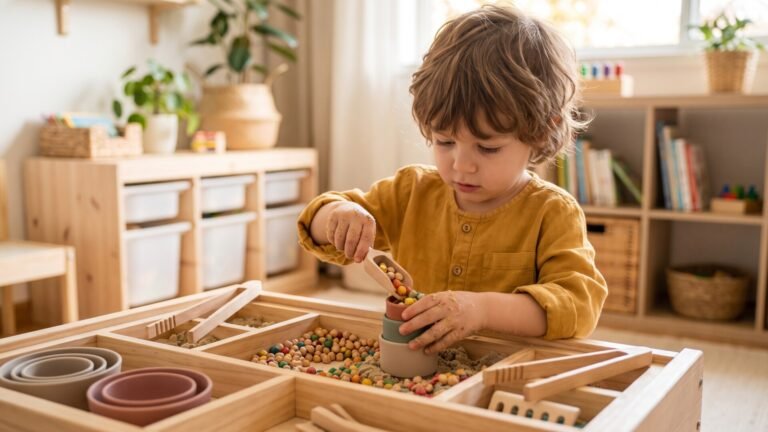
Kinetic sand sticks to itself, not to hands. It can be moulded, cut, and squished. The texture is uniquely satisfying—not wet, not dry. Many children who refuse play dough or clay will touch kinetic sand.
Dough (like Play‑Doh) is another classic. For a child who is tactile defensive, start with a single colour and simple wooden tools. Melissa & Doug’s “Kinetic Sand Kit” includes a tray and moulds, keeping mess contained.
Shop Melissa & Doug kinetic sand →
#14 Chewable or Oral Sensory Toys
Skills Targeted: Oral motor, self‑soothing, focus
Affiliate Program: Smiling Tree Toys / Amazon
Some toddlers with autism seek oral input: chewing on shirt collars, toys, or fingers. Safe chewable jewellery (necklaces or pendants) or chewable pencil toppers give a designated, hygienic outlet.
Look for medical‑grade silicone, free of BPA, lead, and phthalates. Smiling Tree Toys’ “Chewable Sensory Pendants” come in different firmness levels (soft for gentle chewing, firm for deep pressure). Always supervise use and replace when worn.
Find Smiling Tree Toys chewables →
#15 Montessori Sorting & Stacking Toys
Skills Targeted: Cognitive + sensory integration, fine motor
Affiliate Program: LEGO / Melissa & Doug
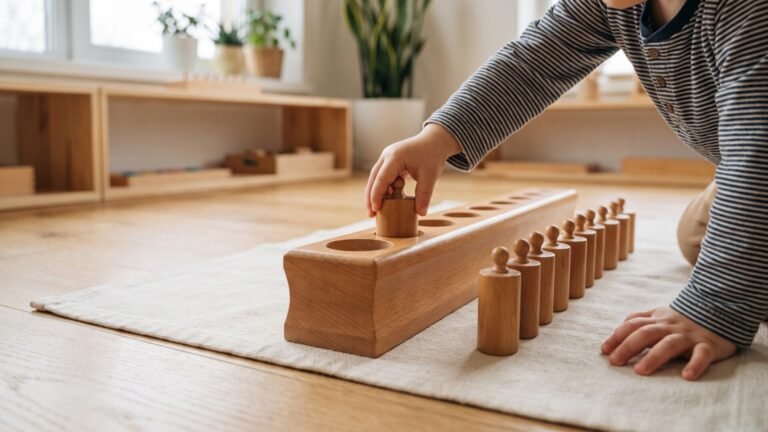
Montessori‑inspired toys like wooden sorting trays, nesting cups, or stacking rings engage multiple senses: sight (bright colours), touch (smooth wood), and sometimes sound (clinking of cups). They also teach pre‑math skills like size seriation and classification.
For a child with autism, the clear, predictable structure of a stacking ring (largest to smallest) can be very comforting. LEGO Duplo’s “Number Train” adds a counting element.
Shop Montessori stacking toys at Melissa & Doug →
Comparison Table of the Top 15 Sensory Toys
| Toy | Best For | Sensory Type | Age Range | Material | Calming/Engaging | Affiliate Program |
|---|---|---|---|---|---|---|
| Fidget & Tactile Balls | Fine motor | Tactile | 1–4 | Plastic/Rubber | Calming | Fun and Function / Amazon |
| Textured Sensory Blocks | Tactile play | Tactile | 1–4 | Wood | Engaging | Melissa & Doug / Smiling Tree Toys |
| Squishy Sensory Toys | Stress relief | Tactile | 2–5 | Soft rubber | Calming | Ryder Toys / Amazon |
| Soft Fabric Sensory Books | Touch + literacy | Tactile | 1–3 | Fabric | Engaging | ArchiesToys / Amazon |
| Gel & Water Bead Toys | Focus & tactile | Tactile | 2–5 | Gel/Plastic | Calming | Seedling / Party Toyz |
| Musical Instruments | Auditory | Sound | 2–5 | Wood/Plastic | Engaging | Tenacious Toys / BrightyToys |
| Light‑Up Sensory Balls | Visual stimulation | Visual | 1–4 | Plastic | Calming | Amazon / Target |
| Bubble Tubes / Liquid Motion | Visual tracking | Visual | 2–6 | Plastic | Calming | Fun and Function / Seedling |
| Rainbow Stacker / Spin Toys | Visual‑motor | Visual/Tactile | 1–4 | Wood/Plastic | Engaging | Melissa & Doug / Amazon |
| Color & Shape Sorters | Cognitive + visual | Visual | 2–5 | Plastic/Wood | Engaging | LEGO / Friendly Toy Box |
| Weighted Plush / Lap Pads | Proprioception | Tactile | 2–5 | Fabric/Filled | Calming | Fun and Function / Amazon |
| Sensory Swings | Vestibular input | Multi‑sensory | 2–6 | Fabric/Metal | Calming | Ryder Toys / Party Toyz |
| Kinetic Sand / Dough | Tactile & creativity | Tactile | 2–6 | Sand/Dough | Engaging | Melissa & Doug / Seedling |
| Chewable / Oral Sensory Toys | Oral motor | Oral | 1–4 | Silicone/Rubber | Calming | Smiling Tree Toys / Amazon |
| Montessori Sorting & Stacking | Cognitive + sensory | Multi‑sensory | 2–5 | Wood/Plastic | Engaging | LEGO / Melissa & Doug |
Tips for Using Sensory Toys Effectively
Having the right toys is only the start. How you use them matters just as much.
Observe your child’s sensory preferences – Watch what they seek out (spinning, touching certain textures) and what they avoid (loud noises, bright lights). Choose toys that match their profile. If you’re unsure, start with a calming toy (weighted, slow motion) and an engaging toy (bright colours, sound) and see how they respond.
Create safe, structured play areas – Designate a corner with soft mats, low shelves, and limited visual clutter. A calm environment helps the toy do its job. For active toys like swings or bubble tubes, ensure the space is free of hazards.
Use toys for self‑regulation, not just entertainment – When you see early signs of overstimulation (covering ears, crying, rocking), offer a calming toy before a meltdown escalates. Similarly, if your child seems sluggish or under‑responsive, an engaging toy (musical instrument, light‑up ball) can help them wake up their nervous system.
Rotate toys to maintain engagement – Keep 6–8 toys available at a time. Put the rest in a closet. Every week or two, swap in a few different ones. This prevents boredom and reduces the overwhelm of too many choices.
Encourage multi‑sensory exploration – Let your child combine toys: listen to a rainstick while squishing a fidget ball. Or pour kinetic sand over a light‑up ball. Sensory integration happens naturally when you give them permission to experiment.
Safety Considerations
Choking hazards – Many sensory toys contain small parts (e.g., water beads, small squishies). Always supervise play and check the manufacturer’s age recommendation. For children who still mouth objects, avoid toys with detachable pieces.
Durability – Toddlers with autism may chew, throw, or hit toys. Choose items that are sealed, washable, and free of toxic materials. Avoid cheap plastic that cracks into sharp shards.
Supervision for water beads or gel toys – Never leave a toddler alone with water beads, as they are a serious choking hazard if swallowed. Use mess‑free sensory gel pads or double‑sealed bags instead.
Non‑toxic, hypoallergenic materials – Look for BPA‑free, phthalate‑free, lead‑free labels. For chewable toys, only use medical‑grade silicone or natural rubber.
Frequently Asked Questions About Sensory Toys For Toddlers With Autism
What types of sensory toys are best for toddlers with autism?
It depends on the child’s sensory needs. Tactile toys (squishy balls, textured blocks) are great for exploring touch. Auditory toys (rainsticks, drums) support sound processing. Visual toys (bubble tubes, light‑up balls) provide calming focus. Vestibular toys (swings) help with balance and body awareness. Oral toys (chewable jewellery) offer a safe outlet for mouthing.
Can sensory toys help with self‑regulation?
Absolutely. Weighted items, squishy toys, and liquid motion timers give the nervous system predictable, calming input. Many parents report fewer meltdowns and longer periods of focused play when sensory toys are used proactively.
How do I know which toy suits my child’s sensory needs?
Observe them in daily life. If they constantly seek deep pressure (hugging, crashing into furniture), try weighted lap pads or a swing. If they cover their ears at normal sounds, start with quiet tactile toys. Trial and error is normal—you may need to try a few before finding a match.
Are these toys safe for all toddlers?
Only when age‑appropriate and used under supervision. A toy suitable for a 3‑year‑old may be dangerous for a 1‑year‑old who still mouths everything. Always read labels and supervise play.
How many sensory toys should a toddler with autism have?
Eight to twelve well‑chosen toys, rotated regularly, is plenty. Too many choices can be overwhelming. Focus on variety across sensory types (tactile, visual, auditory, etc.) rather than sheer number.
Can sensory toys double as learning tools?
Yes. Sorting toys teach classification and early math. Cause‑and‑effect toys (light‑up balls, musical instruments) build logical thinking. Stacking toys develop fine motor and spatial reasoning. Sensory play is learning play.
Do sensory toys help with tantrums or overstimulation?
They can, when used before a meltdown escalates. A weighted lap pad during a car ride, a bubble tube during a transition, or a squishy ball when you see early distress signals—these give the child a way to regulate. They are not a cure, but they are powerful tools.
Conclusion
Sensory toys are not “extra” for toddlers with autism. They are essential tools for navigating a world that can feel too loud, too bright, or too unpredictable. A well‑chosen sensory toy can turn a moment of distress into a moment of calm. It can invite a hesitant child to reach out and explore. It can turn a fight over getting dressed into a game of squishing a fidget ball.
You don’t need to buy everything at once. Start with one or two toys that address your child’s most pressing sensory needs—maybe a weighted lap pad for calming, or a set of textured blocks for exploration. Watch how they respond. Add more as you learn what works.
And remember: the goal is not to “fix” your child’s sensory differences. The goal is to honour them, to give your child the tools they need to feel safe, engaged, and joyful. The imperfect, squished, well‑loved sensory toy that your child reaches for again and again—that’s the one that matters.
Ready to build your sensory toy collection? Check prices and availability from our trusted partners using the links throughout this article.