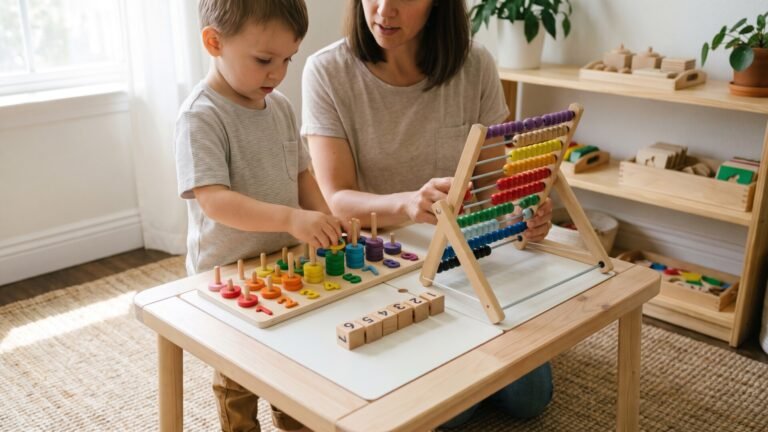
STEM Games That Support Children with Developmental Delays
I have a confession to make. When my nephew was diagnosed with a developmental delay at age four, I spent weeks searching for the “perfect” educational toys. I bought expensive tablets, flashy electronic games, and complicated building sets. And you know what happened? Most of them ended up in the back of the closet within a month.
The problem wasn’t the toys themselves. The problem was that I didn’t understand how to match them to his specific needs. I was shopping for the child I wished he was, not the child he actually was.
If you’re reading this, you probably know exactly what I’m talking about. You want to give your child every advantage, but the sheer number of STEM games on the market is overwhelming. And when you add the complexity of developmental delays—whether that’s autism spectrum disorder, ADHD, speech delays, or motor skill challenges—the decision becomes even harder.
Here’s what I’ve learned after three years of trial and error, countless conversations with occupational therapists, and watching my nephew go from struggling with a three-piece puzzle to building his own marble run: The right STEM game can be transformative. The wrong one can be a source of frustration for everyone involved.
In this guide, I’ll walk you through the best STEM games that actually work for children with developmental delays. I’ll share what to look for, what to avoid, and most importantly, how to choose the right option for your child’s unique needs. Because the perfect game for one child might be completely wrong for another.
Let’s start with understanding why STEM games matter so much for these kids.
Understanding Developmental Delays and STEM Learning
Before we dive into specific products, I want to share something that surprised me when I first started researching this topic. Developmental delays aren’t a single condition—they’re an umbrella term that covers a wide range of challenges. Some children struggle with fine motor skills. Others have difficulty with language processing, attention span, or social interaction. And many kids have a combination of these challenges.
Here’s what the research tells us: STEM games work differently for children with developmental delays than they do for typically developing kids. For a neurotypical child, a STEM game might be a fun way to learn about physics or coding. For a child with developmental delays, that same game can be a tool for building foundational skills they’ll use for the rest of their lives.
Think about what STEM games actually require: following instructions, sequencing steps, problem-solving, pattern recognition, cause and effect, and sometimes collaboration with others. These are exactly the skills that many children with developmental delays need to practice.
But here’s the catch—and this is where most parents get frustrated. A game that’s perfect for one child with developmental delays might be completely overwhelming for another. The key is understanding what type of delay your child is dealing with and choosing games that target those specific challenges.
I remember watching my nephew try to use a popular coding game that required precise finger movements on a tablet screen. He had fine motor delays, and within two minutes, he was in tears. That game wasn’t bad—it was just wrong for him. The same child now spends hours building with Gears! Gears! Gears!, which requires gross motor movements he can manage.
The current trend in educational gaming is moving toward greater inclusivity. More companies are designing games with adjustable difficulty levels, multiple ways to interact, and built-in supports for different learning styles. But the market still has a long way to go, which is why knowing what to look for matters so much.
What Makes a STEM Game Truly Supportive?
Let me break down what I mean when I say “STEM game.” We’re talking about any play activity that engages children with science, technology, engineering, or mathematics concepts. This can include physical building sets, digital apps, board games, or hybrid experiences that combine both.
The best STEM games for children with developmental delays share several key characteristics. First, they offer multiple entry points. A child who can’t read instructions shouldn’t be excluded from the game. A child who needs visual cues shouldn’t be stuck with purely verbal directions.
Second, these games provide clear feedback. When a child does something correctly, they know it immediately. When something goes wrong, the feedback is constructive, not punishing. This is crucial for children who may struggle with frustration tolerance.
Third, the best games allow for different levels of engagement. Some days, your child might be able to handle complex challenges. Other days, they might need a simpler version. Games that lock you into a single difficulty level often lead to abandonment.
Here’s something I wish someone had told me earlier: The most expensive STEM game isn’t always the most supportive. Some of the best options for children with developmental delays are surprisingly simple and affordable. The key is matching the game’s demands to your child’s current abilities, not their age or grade level.
Key Buying Factors for Parents
I’ve made enough mistakes buying STEM games that I’ve developed what I call the ToyGuideHub Parent Reality Check—a set of questions I ask myself before making any purchase. Let me share them with you.
Safety Comes First
This seems obvious, but it’s worth stating. Children with developmental delays may mouth objects, throw them, or use them in unexpected ways. Look for non-toxic materials, no small parts that could be choking hazards, and rounded edges. I’ve learned to check not just the manufacturer’s age recommendation but also the actual physical characteristics of the game.
Durability Matters More Than You Think
Here’s a reality check: Children with motor skill challenges may drop, throw, or accidentally break things more often. A flimsy plastic game that would survive typical use might not last a week in your home. I’ve found that games from companies like LEGO and ThinkFun tend to hold up better than cheaper alternatives.
Educational Value Isn’t One-Size-Fits-All
Every STEM game claims to be educational. But educational for whom? A game that teaches coding concepts might be perfect for a child with strong visual-spatial skills but terrible for a child with attention deficits. I’ve started asking: “What specific skill is this game actually teaching, and does my child need to practice that skill?”
Ease of Use Is Critical
The instructions should be simple, clear, and ideally visual. Games that require reading lengthy rulebooks are often non-starters for children with language delays or reading difficulties. Look for games with picture-based instructions or video tutorials.
Storage and Maintenance
I can’t tell you how many times I’ve bought a game with dozens of small pieces only to realize I had nowhere to store it. For children with developmental delays, organization can be a challenge. Games with built-in storage or simple piece counts are often better choices.
The Pros and Cons of STEM Games for Developmental Delays
Let me be honest with you. STEM games aren’t a magic solution. They have real benefits and real drawbacks.
The Good
The cognitive development benefits are well-documented. These games challenge children to think in new ways, build problem-solving skills, and develop persistence. I’ve seen my nephew go from giving up at the first sign of difficulty to working through complex problems for twenty minutes at a time.
Social interaction is another major benefit. Many STEM games can be played with siblings, parents, or friends. For children who struggle with social skills, these games provide a structured way to practice turn-taking, cooperation, and communication.
And here’s something I didn’t expect: These games can be genuinely fun. When you find the right match, your child isn’t just learning—they’re playing. That engagement is priceless.
The Challenges
The biggest downside is that many STEM games require adult supervision or assistance. This isn’t necessarily a problem, but it’s something to plan for. You can’t just hand a child with developmental delays a complex game and expect them to figure it out independently.
Some games are simply too complex for certain developmental levels. I’ve learned to start with the simplest version of any game and work up from there. Pushing too hard too fast leads to frustration for everyone.
And yes, frustration is real. When a child can’t figure out a game, they may act out, shut down, or have a meltdown. This doesn’t mean the game is bad—it means the match isn’t right yet.
Our Top STEM Game Recommendations
After testing dozens of games with my nephew and consulting with occupational therapists, here are the ones that actually work.
Osmo Genius Starter Kit for iPad
| Feature | Details |
|---|---|
| Age Range | 6-10 years |
| Key Features | Interactive games, hands-on learning, physical pieces that interact with digital screen |
| Price | $99.99 |
| Best For | Tech-savvy children who need visual and tactile feedback |
Why We Like It
Osmo does something unique—it bridges the physical and digital worlds. Your child places physical pieces in front of an iPad, and the game responds in real time. For children with developmental delays, this is powerful. They get the engagement of screen time combined with the sensory input of physical objects.
I watched my nephew play the Numbers game for forty-five minutes straight. He was practicing counting and addition, but he thought he was just playing. The immediate visual feedback kept him engaged in a way that worksheets never could.
Best For
Children who are drawn to technology but need hands-on interaction. It’s particularly good for kids with attention challenges because the game constantly changes and provides new stimuli.
Pros
- Combines physical and digital play
- Adapts difficulty based on performance
- Provides immediate, positive feedback
Cons
- Requires an iPad (not included)
- Some children may be overstimulated by the screen
- Pieces can be lost if not stored properly
[Affiliate: Check current pricing on Amazon]
LEGO Education SPIKE Prime Set
| Feature | Details |
|---|---|
| Age Range | 10+ years |
| Key Features | Robotics, programming, building |
| Price | $329.99 |
| Best For | Aspiring engineers and children who love building |
Why We Like It
This is not your average LEGO set. SPIKE Prime is designed for classroom use, which means it’s built to withstand repeated use and abuse. The programming interface uses drag-and-drop blocks, making it accessible for children who struggle with reading or typing.
What impressed me most was the scaffolding. The set comes with structured lessons that build on each other. Your child starts with simple builds and gradually works up to complex robots. This progressive approach is ideal for children who need to master one skill before moving to the next.
Best For
Older children who are interested in how things work. It’s particularly good for kids with autism who thrive on structure and clear expectations.
Pros
- Extremely durable
- Clear, sequential learning path
- Encourages teamwork and collaboration
Cons
- High price point
- Requires significant adult involvement initially
- May be overwhelming for children under 10
[Affiliate: Check current pricing on Amazon]
Learning Resources Gears! Gears! Gears! Super Building Set
| Feature | Details |
|---|---|
| Age Range | 3-10 years |
| Key Features | Creative building, motor skills development |
| Price | $49.99 |
| Best For | Younger children and tactile learners |
Why We Like It
This was the first STEM game that really clicked for my nephew. The pieces are large, colorful, and easy to manipulate. There are no right or wrong ways to build—just gears that either turn or don’t. The cause-and-effect relationship is immediate and obvious.
Here’s what surprised me: The open-ended nature of this set actually works better for some children with developmental delays than more structured games. There’s no pressure to “get it right.” Your child can just explore and experiment.
Best For
Young children who need to build fine motor skills. It’s also excellent for kids who get frustrated with games that have single correct answers.
Pros
- Simple to use
- Encourages open-ended play
- Excellent for fine motor development
Cons
- Limited STEM focus compared to other products
- Pieces can be scattered across the room
- May not challenge older children
[Affiliate: Check current pricing on Amazon]
ThinkFun Gravity Maze Marble Run Logic Game
| Feature | Details |
|---|---|
| Age Range | 8+ years |
| Key Features | Logic skills, spatial reasoning |
| Price | $29.99 |
| Best For | Puzzle enthusiasts and children who enjoy challenges |
Why We Like It
Gravity Maze is deceptively simple. You place towers on a grid to guide a marble from start to finish. But the logic required to solve the puzzles is surprisingly complex. For children with developmental delays, this game builds sequential thinking and spatial reasoning in a highly engaging way.
The best part? The puzzles range from beginner to expert. Your child can start with simple two-piece solutions and work up to complex ten-piece configurations. This built-in progression means the game grows with your child.
Best For
Children who enjoy puzzles and have good fine motor control. It’s particularly good for kids who need to practice following multi-step instructions.
Pros
- Highly engaging
- Develops critical thinking
- Compact storage
Cons
- May be challenging without guidance
- Small pieces could be lost
- Not suitable for children who mouth objects
[Affiliate: Check current pricing on Amazon]
VTech Switch & Go Dinos
| Feature | Details |
|---|---|
| Age Range | 3-8 years |
| Key Features | Interactive learning, storytelling |
| Price | $29.99 |
| Best For | Children who love dinosaurs and imaginative play |
Why We Like It
This is the most playful option on our list. The Switch & Go Dinos transform from vehicles to dinosaurs with a simple motion. Each dinosaur has interactive features that teach facts about the species. For children with developmental delays, the combination of physical transformation and digital feedback is engaging.
What I love about this toy is that it meets children where they are. If your child is obsessed with dinosaurs, this toy leverages that interest to teach STEM concepts. The learning feels natural, not forced.
Best For
Young children who are motivated by specific interests. It’s excellent for kids who need a bridge between imaginative play and structured learning.
Pros
- Encourages imaginative play
- Engaging and educational
- Affordable price point
Cons
- Limited STEM components
- Batteries required
- May not hold interest for older children
[Affiliate: Check current pricing on Amazon]
Comparison Table
| Product | Age Range | Durability | Educational Value | Price Range | Best For |
|---|---|---|---|---|---|
| Osmo Genius Starter Kit | 6-10 | High | ★★★★★ | $99.99 | Tech-savvy children |
| LEGO SPIKE Prime | 10+ | Very High | ★★★★★ | $329.99 | Aspiring engineers |
| Gears! Gears! Gears! | 3-10 | Medium | ★★★★ | $49.99 | Tactile learners |
| Gravity Maze | 8+ | High | ★★★★★ | $29.99 | Puzzle enthusiasts |
| Switch & Go Dinos | 3-8 | Medium | ★★★ | $29.99 | Imaginative play |
How to Choose the Right Option
Let me help you narrow down the choices based on your specific situation.
Best for small spaces: Gravity Maze is your winner. The entire game fits in a box smaller than a shoebox, and the pieces are easy to keep organized. No bulky storage required.
Best for toddlers and young children: Gears! Gears! Gears! is the clear choice. The large pieces are safe for younger children, and the open-ended play means you won’t outgrow it quickly. Plus, at $49.99, it won’t break the bank.
Best for social play: The LEGO SPIKE Prime set shines here. It’s designed for multiple children to work together, building collaboration and communication skills. Just be prepared for the higher price tag.
Best for screen-free engagement: Gravity Maze and Gears! Gears! Gears! are both excellent screen-free options. No batteries, no apps, no Wi-Fi required. Just pure hands-on learning.
Best budget pick: Gravity Maze at $29.99 offers incredible value. The puzzles are challenging enough to engage older children, and the compact design means it travels well.
Best premium pick: The LEGO SPIKE Prime set at $329.99 is an investment, but it’s built to last. If you have an older child who’s serious about engineering, this set will provide years of use.
ToyGuideHub Longevity Analysis
Here’s what most reviews won’t tell you: The games that look most impressive in the box often get abandoned fastest. I’ve seen this pattern repeatedly.
The Osmo Genius Starter Kit is a good example. It’s incredibly engaging for the first few weeks. But after the novelty wears off, many children lose interest. The games are structured, which is great for learning, but they don’t offer the open-ended exploration that sustains long-term play.
In contrast, Gears! Gears! Gears! has surprising longevity. Because there’s no “right” way to play, children keep coming back to it. My nephew has been playing with his set for two years now, and he still finds new ways to build.
Gravity Maze falls somewhere in between. Once your child solves all sixty puzzles, the replay value drops. But at $29.99, the cost per use is still excellent. And you can always create your own challenges.
The LEGO SPIKE Prime set has the best longevity of the group. The combination of building, programming, and endless customization means it stays relevant as your child grows. The price is high, but the value per year of use is actually quite good.
Final Thoughts
I remember the day my nephew built his first working gear system. He stepped back, watched the gears turn, and looked up at me with the biggest smile I’ve ever seen. In that moment, I realized something important: The right STEM game doesn’t just teach skills—it builds confidence.
The games I’ve recommended here aren’t perfect for every child. No single game can be. But they represent the best options I’ve found after years of searching. Start with one that matches your child’s current abilities. Play alongside them. Celebrate the small victories. And don’t be afraid to try something different if the first choice doesn’t work.
The best STEM game for your child is the one they actually want to play. The one that challenges them without overwhelming them. The one that makes them feel capable and smart.
If you’re ready to try one of these games, check current pricing and availability through our recommended partners. And please, come back and tell me how it goes.
Frequently Asked Questions About STEM Games For Children With Developmental Delays
What are developmental delays, and how do they affect learning?
Developmental delays refer to when a child doesn’t reach developmental milestones at the expected times. This can affect motor skills, language, cognition, or social-emotional development. For learning, this often means children need more time, repetition, and different approaches to grasp concepts that come more easily to their peers.
Are STEM games safe for children with developmental delays?
Yes, with proper supervision and selection. Always check for small parts, non-toxic materials, and age-appropriate design. Some children with developmental delays may need extra supervision, especially if they tend to mouth objects.
What age range are these STEM games appropriate for?
Age ranges on boxes are guidelines, not rules. A child with developmental delays may need games designed for younger children. Focus on your child’s current abilities rather than their chronological age.
How can STEM games help children with developmental delays?
These games build foundational skills: following instructions, problem-solving, sequencing, cause and effect, and persistence. They also provide structured opportunities for social interaction and can be adapted to different learning styles.
What features should I look for in a STEM game for my child?
Look for adjustable difficulty, clear feedback, multiple ways to interact, visual instructions, and durable construction. Avoid games with single correct answers or rigid play patterns.
How do I ensure my child stays engaged with STEM games?
Start with the simplest version of any game. Celebrate small successes. Play alongside your child. And don’t be afraid to put a game away for a few months and try again later.
Are there any online resources for parents of children with developmental delays?
Yes. Organizations like Understood.org, the CDC’s Milestones Tracker app, and local early intervention programs offer excellent resources. Many occupational therapists also provide recommendations for specific games.