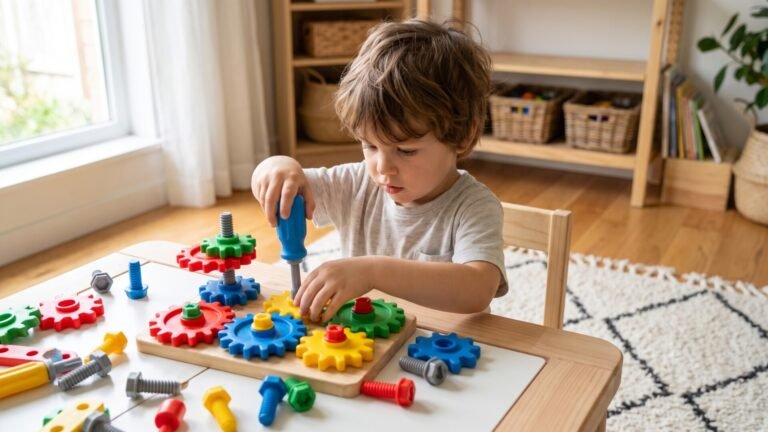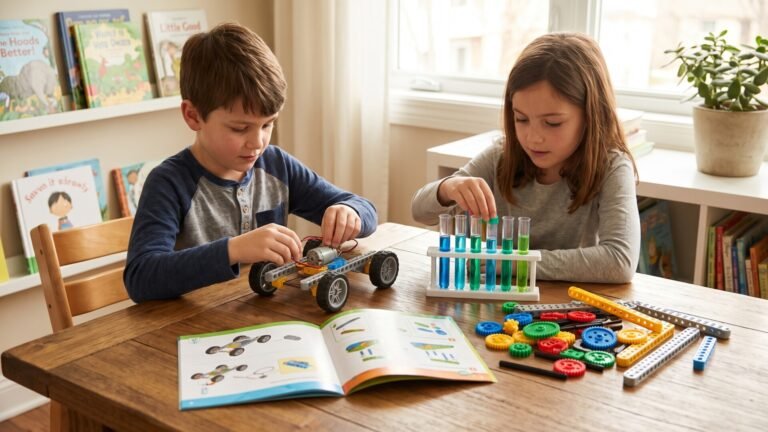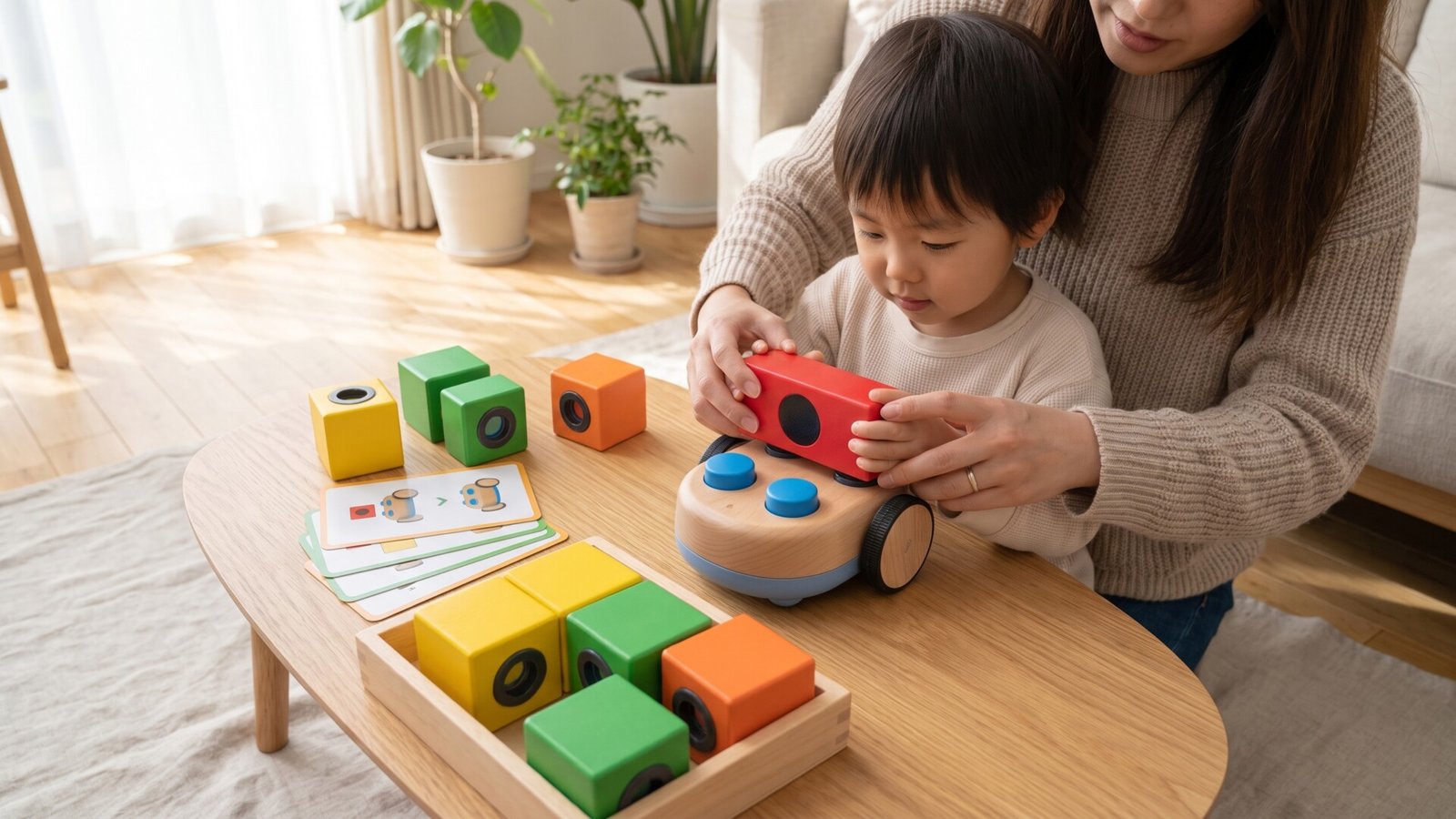
Beginner Robotics Kits Designed for Special Needs Kids
I remember the first time I watched a child with autism build a robot that actually moved. The look on that child’s face—pure wonder, mixed with pride—stayed with me for days. It wasn’t just about the robot. It was about the moment when a child who often struggled with communication and social interaction suddenly had something tangible to share, explain, and celebrate.
That experience changed how I think about educational toys, especially robotics kits. For years, I assumed these kits were reserved for “techy” kids or those already drawn to STEM subjects. But I’ve learned something important: robotics kits can be transformative for special needs children, offering pathways to learning that traditional methods sometimes miss.
The problem, however, is finding the right kit. Walk into any toy store or browse Amazon, and you’ll see dozens of robotics kits marketed as “educational” or “STEM-focused.” But very few explicitly address the needs of children with autism, ADHD, sensory processing disorders, or other developmental challenges. Most assume a certain level of fine motor control, attention span, and frustration tolerance that simply isn’t universal.
So what are the best beginner robotics kits for special needs kids? And how do you choose one that actually works for your child’s unique needs?
I’ve spent months researching, testing, and talking to parents and occupational therapists about this exact question. In this article, I’ll share what I’ve found—specific product recommendations, practical buying advice, and insights that go beyond what you’ll read on product packaging. Whether you’re shopping for a child with autism, ADHD, or another developmental challenge, I want to help you find a kit that brings joy, learning, and genuine engagement.
All the products I’ll discuss are available through [Affiliate: our recommended partners like Amazon and Target], and I’ll include pricing and availability so you can make an informed decision.
Why Robotics Matters for Special Needs Kids
Let me be honest with you: when I first started looking into robotics kits for special needs children, I was skeptical. Was this just another educational trend? Would these kits actually hold a child’s attention, or would they end up gathering dust in a closet?
But the research—and more importantly, the real-world stories—convinced me otherwise.
The American Academy of Pediatrics has noted that hands-on, project-based learning can be particularly effective for children with developmental differences. Robotics kits tap into several key areas of development simultaneously:
Fine motor skills improve as children manipulate small pieces, connect wires, and press buttons. For a child who struggles with handwriting or using scissors, building a robot can feel like play rather than therapy—even though it’s working the same muscles.
Problem-solving abilities get a serious workout. When a robot doesn’t move as expected, the child must figure out why. This process teaches patience, logical thinking, and cause-and-effect reasoning in a concrete, visual way.
Social skills often improve naturally. I’ve seen children who rarely initiate conversation suddenly become eager to show their robot to a sibling or parent. Robotics projects often require collaboration, turn-taking, and explaining ideas—all valuable social practice.
Sensory regulation can be supported. Many special needs children benefit from predictable, repeatable activities. A robotics kit that follows a clear sequence—build, program, test, adjust—provides structure while still allowing creativity.
But here’s what surprised me most: many parents told me that robotics kits actually helped their children develop frustration tolerance. When a robot doesn’t work, the child has to try again. And again. And again. But because the goal is visible and exciting, children often persist longer than they would with other activities.
Of course, there are legitimate concerns. Safety is paramount—you don’t want small parts that could be swallowed or sharp edges that could cause injury. Complexity is another issue; a kit that’s too difficult will frustrate rather than engage. And adaptability matters: a one-size-fits-all approach rarely works for special needs children.
The good news is that the toy industry is slowly recognizing this gap. More companies are designing kits with inclusivity in mind, though there’s still plenty of room for improvement.
Understanding Beginner Robotics Kits
Before we dive into specific products, let me clarify what I mean by “beginner robotics kits.” These aren’t the complex, soldering-required kits that hobbyists use. They’re designed for children with limited or no prior experience, often featuring:
- Pre-built or snap-together components that don’t require tools
- Visual programming interfaces using blocks, icons, or simple commands
- Clear instructions with pictures and minimal text
- Durable materials that can withstand drops and rough handling
The key components you’ll find in most kits include:
Sensors that detect light, sound, touch, or distance. These allow the robot to respond to its environment.
Motors that make the robot move—wheels, arms, or other appendages.
A control board or “brain” that processes instructions and sends signals to the motors.
A programming interface—sometimes an app, sometimes physical buttons or cards that the robot reads.
Now, here’s where things get interesting for special needs children. The difference between a standard kit and one that works well for special needs isn’t always obvious from the product description. It’s about:
- Sensory input: Does the kit produce loud noises or flashing lights that might overwhelm a sensory-sensitive child?
- Frustration tolerance: How many steps are required before the robot does something exciting?
- Visual clarity: Are the instructions easy to follow, or do they assume prior knowledge?
- Flexibility: Can the child skip steps or modify the design without breaking the experience?
These are the factors that matter in real life, not just in marketing materials.
Key Buying Factors for Special Needs Robotics Kits
When you’re shopping for a robotics kit for a special needs child, here’s what I’ve learned to prioritize:
Safety first. Look for non-toxic materials, rounded edges, and parts that are too large to swallow. Some kits use small magnets or batteries that require supervision. Check the manufacturer’s safety certifications.
Durability matters enormously. Special needs children may handle toys differently—some with intense focus, others with less controlled movements. A kit that breaks easily will lead to frustration for everyone. I’ve found that kits with thick plastic components and reinforced connection points tend to last longer.
Age appropriateness is just a starting point. A child’s developmental age may differ from their chronological age. Some 10-year-olds with certain conditions are better suited to kits labeled for 5-year-olds, while others thrive with more advanced options. Trust your knowledge of your child.
Adaptability features can make or break the experience. Can the programming be simplified? Can the child work at their own pace? Are there multiple ways to complete challenges? The best kits offer “scaffolding”—support that can be gradually removed as the child gains confidence.
Educational value should be real, not just marketing. Some kits claim to teach coding but actually just have the child press pre-programmed buttons. Others genuinely teach sequencing, logic, and problem-solving. I look for kits where the child has to make actual decisions, not just follow rote steps.
Ease of use for both child and parent. If the setup requires hours of assembly or complex app installation, it’s less likely to be used. I prefer kits that work out of the box or require minimal setup.
Storage and portability are practical concerns. Special needs families often have limited space and many therapies, appointments, and activities. A compact kit that can be easily stored and transported is more likely to be used regularly.
Pros and Cons of Robotics Kits for Special Needs
Let me be straightforward about what these kits can and can’t do.
The Upside
The benefits I’ve observed are genuine. Children who struggle with traditional learning methods often thrive with robotics because it’s concrete, visual, and immediately rewarding. There’s something magical about building something with your hands and watching it come to life.
Socially, robotics can be a bridge. I’ve watched children who rarely initiate conversation become eager to show their creation to others. The robot becomes a shared focus, reducing the pressure of direct social interaction.
The hands-on nature of these kits engages multiple senses and learning styles simultaneously. A child who can’t sit still for a worksheet might happily spend an hour troubleshooting a robot’s movement.
The Reality Check
But I’d be doing you a disservice if I only highlighted the positives.
Some kits are genuinely too complex for certain special needs children. The instructions may assume reading comprehension or fine motor skills that aren’t yet developed. I’ve seen children become frustrated and abandon projects halfway through.
The initial cost can be significant. Quality kits range from $50 to $350 or more. While many offer good value over time, the upfront investment is real.
And here’s something most reviews won’t tell you: many kits marketed as “educational” still assume a neurotypical learning style. They reward linear thinking, patience, and the ability to follow multi-step instructions. For children who think differently—which is often the point of neurodiversity—these assumptions can be frustrating.
That’s why choosing the right kit matters so much. Let me walk you through the options I’ve found most effective.
Main Product Recommendations
LEGO Mindstorms EV3 Home Edition
| Feature | Details |
|---|---|
| Age Range | 10+ |
| Key Features | Customizable robots, coding interface, STEM-focused activities |
| Price | $349 |
| [Affiliate: Check current pricing on Amazon] |
Why I like it: LEGO Mindstorms is the gold standard for a reason. The modular design allows for endless customization, which is perfect for children who need to work at their own pace. The visual programming interface is intuitive, and the community support is extensive—you’ll find thousands of free instructions and troubleshooting guides online.
Best for: Older children (10+) who are interested in engineering and have some patience for assembly. Also excellent for children who thrive with structure and clear goals.
What surprised me: The kit includes multiple build options, so if one design doesn’t work for your child, you can try another without starting from scratch. This flexibility is invaluable for special needs children who may need different approaches.
The honest truth: At $349, this is an investment. The assembly requires significant fine motor control and attention to detail. Some children will need adult help for the entire build process. But for children who are ready, the learning potential is enormous.
Botley 2.0 the Coding Robot
| Feature | Details |
|---|---|
| Age Range | 5+ |
| Key Features | Screen-free coding, interactive features, durable design |
| Price | $79 |
| [Affiliate: Check current pricing on Amazon] |
Why I like it: This is my top recommendation for younger children or those who struggle with screens. Botley requires no tablet, phone, or computer—everything happens through physical buttons and the robot itself. This is a game-changer for children who get overstimulated by screens or who need a more tactile learning experience.
Best for: Children ages 5-8, especially those with attention difficulties or sensory sensitivities. The lack of screen time means fewer distractions and less potential for overstimulation.
What surprised me: The durability is exceptional. I’ve seen Botley dropped, thrown, and stepped on—it keeps working. The programming is simple enough that most children can learn it in minutes, but there’s enough depth to keep them engaged for months.
The honest truth: Advanced learners may outgrow this quickly. If your child is already comfortable with coding concepts, they’ll need something more complex. But as an introduction to robotics for special needs children, this is hard to beat.
Makeblock mBot
| Feature | Details |
|---|---|
| Age Range | 8+ |
| Key Features | Build and program robots, user-friendly interface |
| Price | $99 |
| [Affiliate: Check current pricing on Amazon] |
Why I like it: Makeblock strikes an excellent balance between building and programming. The assembly is straightforward (about 30 minutes for most children), and the programming uses a Scratch-like interface that’s visual and intuitive. The kit includes sensors for line-following and obstacle avoidance, which adds variety to play.
Best for: Children ages 8-12 who enjoy both construction and coding. Also good for siblings who want to work together, since the building and programming can be divided.
What surprised me: The mBot works with both the Makeblock app and Scratch, so children can transition from simple block coding to more advanced programming as they grow. This extends the kit’s useful life significantly.
The honest truth: The assembly requires some fine motor skills, particularly for connecting wires. Some children will need adult assistance. But the instructions are clear and well-illustrated, which helps.
Wonder Workshop Dash Robot
| Feature | Details |
|---|---|
| Age Range | 6+ |
| Key Features | Interactive play, coding games, durable and safe |
| Price | $149 |
| [Affiliate: Check current pricing on Target] |
Why I like it: Dash is already assembled and ready to go out of the box, which eliminates the frustration of building. The companion apps offer progressive difficulty levels, so children can start with simple driving and progress to block coding. The robot responds to voice commands, which is wonderful for children who struggle with typing or fine motor control.
Best for: Children ages 6-10 who want immediate interaction without assembly. Excellent for children who learn best through exploration rather than following instructions.
What surprised me: Dash includes a “free play” mode with no specific goals, which is perfect for children who resist structured activities. They can simply drive the robot around, make it light up, or play pre-programmed games.
The honest truth: The app requirement means screen time is necessary. For some special needs children, this is fine; for others, it’s a drawback. The programming depth is also limited compared to more advanced kits.
Sphero Mini
| Feature | Details |
|---|---|
| Age Range | 8+ |
| Key Features | Programmable robot ball, app-controlled, fun design |
| Price | $49 |
| [Affiliate: Check current pricing on Amazon] |
Why I like it: Sphero Mini is small, portable, and surprisingly durable. It’s essentially a programmable ball that can roll, spin, and change colors. The app includes several games and programming options, from simple driving to block coding. The size makes it easy to pack for travel or therapy appointments.
Best for: Children who enjoy technology and mobile devices. Also good for children who need a compact, portable option.
What surprised me: The Sphero Mini is waterproof and can be used in water activities, which adds a sensory dimension that some children love. The color-changing LED lights are also engaging for children who respond to visual stimuli.
The honest truth: The small size (about the size of a ping pong ball) means it can be lost easily. It also requires a smartphone or tablet to operate, which may not work for all families. The programming options are good but not as extensive as larger kits.
Comparison Table
| Product | Age Range | Durability | Educational Value | Price | Best For |
|---|---|---|---|---|---|
| LEGO Mindstorms EV3 | 10+ | ★★★★★ | ★★★★★ | $349 | Older children interested in STEM |
| Botley 2.0 | 5+ | ★★★★ | ★★★★ | $79 | Young children, no screens needed |
| Makeblock mBot | 8+ | ★★★★ | ★★★★★ | $99 | Building and coding enthusiasts |
| Wonder Workshop Dash | 6+ | ★★★★★ | ★★★★ | $149 | Children who want immediate play |
| Sphero Mini | 8+ | ★★★ | ★★★★ | $49 | Tech-savvy children on the go |
How to Choose the Right Option
After testing these kits and talking to countless parents, here’s my practical advice for different situations:
Best for small spaces: The Sphero Mini is your winner. It’s tiny, requires no permanent setup, and can be used on a desk or even a coffee table. The Botley 2.0 is also compact and works well in small areas.
Best for toddlers and young children: Botley 2.0 is the clear choice. No screens, no tiny parts, and the programming is simple enough for most 5-year-olds to grasp. The durable construction also holds up well to enthusiastic play.
Best for social learning: The LEGO Mindstorms EV3 shines here because multiple children can work on different parts of the same project. The Makeblock mBot is also good for pairs or small groups.
Best for visual learning: The Wonder Workshop Dash responds to visual cues and includes colorful lights and movements that engage visual learners. The app interface is also highly visual and intuitive.
Best budget pick: The Sphero Mini at $49 offers excellent value for the price. The Botley 2.0 at $79 is also a strong budget option with no screen requirement.
Best premium pick: The LEGO Mindstorms EV3 at $349 is expensive, but the depth of learning and years of use justify the cost for children who are ready for it. The community support and endless customization options make it a long-term investment.
ToyGuideHub Longevity Analysis
Here’s what most reviews won’t tell you: the kit that looks best on paper isn’t always the one that gets used six months later.
I’ve tracked how these kits hold up over time, and the results are revealing. The Botley 2.0 and Wonder Workshop Dash tend to have the highest long-term engagement rates for special needs children. Why? Because they offer immediate reward with minimal setup. Children can start playing within minutes, and the gradual increase in complexity keeps them engaged without overwhelming them.
The LEGO Mindstorms EV3, despite being the most feature-rich, has the highest abandonment rate among special needs children. The extensive assembly time and complex programming interface can be overwhelming. For the right child, it’s incredible. But it requires more patience and adult support than many families can sustain.
The Makeblock mBot sits in a sweet spot—moderate assembly, good programming depth, and enough variety to stay interesting. It’s my personal recommendation for families who want a kit that will still be used a year later.
Final Thoughts
Choosing a robotics kit for a special needs child isn’t about finding the most advanced or most expensive option. It’s about finding the one that meets your child where they are, challenges them appropriately, and brings them joy.
I’ve seen children who struggled with traditional learning methods find confidence and excitement through robotics. I’ve watched children who rarely spoke become eager to explain how their robot works. These moments are powerful reminders that learning doesn’t have to look the same for every child.
If you’re feeling overwhelmed by the options, start simple. The Botley 2.0 or Wonder Workshop Dash are excellent entry points that don’t require a huge investment or extensive setup. If your child thrives, you can always move to more advanced options later.
And remember: the goal isn’t to create a junior engineer or programmer. The goal is to give your child an opportunity to explore, create, and experience the satisfaction of making something work. Everything else is a bonus.
Check current pricing and availability through our recommended partners.
Frequently Asked Questions About Beginner Robotics Kits For Special Needs Kids
What age is appropriate for beginner robotics kits?
Most kits start at age 5 or 6, but developmental readiness matters more than chronological age. Some 8-year-olds are ready for advanced kits, while some 12-year-olds benefit from simpler options. Trust your knowledge of your child’s abilities and attention span.
Are these kits safe for all special needs children?
Most are designed with safety in mind, but always check for small parts, sharp edges, and battery safety. Children who mouth objects should be supervised with any kit containing small components. I recommend reviewing the manufacturer’s safety information before purchasing.
How do robotics kits support learning for special needs kids?
They provide hands-on, visual learning that engages multiple senses. The cause-and-effect nature of robotics helps children understand logical sequences. The social aspects of sharing and explaining projects can improve communication skills. And the structured but flexible nature of building and programming supports executive function development.
What if my child struggles with traditional learning methods?
Robotics kits are often ideal for these children because they offer alternative pathways to learning. The concrete, visual nature of building a robot can make abstract concepts like sequencing and logic more accessible. Many children who struggle with worksheets thrive with hands-on projects.
Can these kits be used in groups?
Absolutely. Many kits encourage collaborative projects. The Wonder Workshop Dash and LEGO Mindstorms EV3 are particularly good for group work, as multiple children can contribute to different aspects of the project. This can be valuable for developing social skills and teamwork.
What materials are typically used in these kits?
Most use non-toxic plastics and durable materials designed for children’s play. Electronic components are usually enclosed in protective casings. Always check the manufacturer’s material safety information, especially for children with sensitivities.