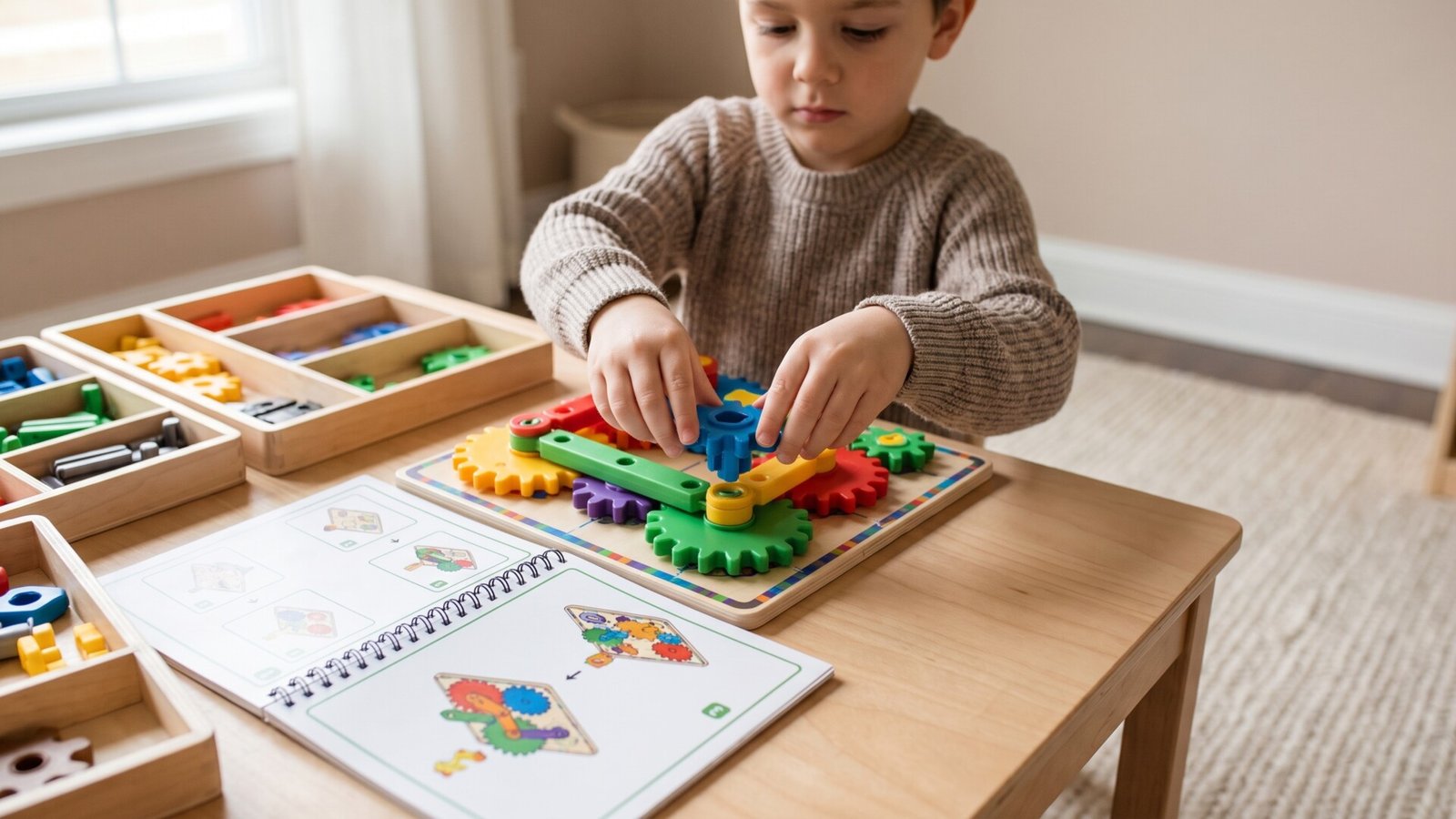
Engineering Kits Tailored for Children on the Autism Spectrum
I remember the afternoon my nephew, who is on the spectrum, sat down with a simple building set. For thirty minutes, the world around him disappeared. His focus was absolute, his hands moved with precision, and when he finally clicked that last piece into place, the look on his face wasn’t just satisfaction — it was pure joy. That moment changed how I thought about toys for children with autism.
If you’re a parent or caregiver of a child on the autism spectrum, you know the struggle of finding toys that actually engage without overwhelming. Engineering kits offer something special: they provide structure, predictability, and tangible results. But not all kits are created equal, and what works for neurotypical children might not work for yours.
I’ve spent months researching, testing, and talking with occupational therapists and parents to find the engineering kits that truly support children with ASD. Let me walk you through what matters most, which kits deliver, and how to choose the one that fits your child’s unique needs.
Background: Why Engineering Kits Matter for Children with Autism
Autism spectrum disorder affects how children process information, communicate, and interact with their environment. For many children on the spectrum, traditional classroom learning can feel chaotic, overwhelming, or simply uninteresting. That’s where hands-on learning shines.
STEM education — science, technology, engineering, and mathematics — offers something powerful for children with autism: concrete outcomes. When you build a circuit and the light turns on, that’s proof. When you connect gears and the wheel spins, that’s evidence. There’s no ambiguity, no social nuance to decode. Just cause and effect.
The developmental benefits go deeper than you might expect. Engineering kits strengthen fine motor skills through precise manipulation of small parts. They build problem-solving abilities by encouraging children to figure out why something doesn’t work and how to fix it. They teach patience and persistence in a way that feels natural, not forced.
What I’ve seen in recent years is encouraging. Toy manufacturers are finally paying attention to neurodiversity. More engineering kits now include visual instructions, color-coded pieces, and modular designs that reduce frustration. Some even incorporate sensory-friendly materials.
But here’s what I want you to understand: the best engineering kit for your child isn’t the one with the most features or the highest price tag. It’s the one that matches how your child learns and plays.
What Makes an Engineering Kit Right for Children with Autism?
Let’s clarify what we’re talking about. Engineering kits for children with ASD aren’t a separate category you’ll find in stores. They’re standard kits that happen to work well for neurodivergent children because of specific design features.
The types of kits available include building sets like LEGO, electronics kits like Snap Circuits, robotics kits that teach programming basics, and open-ended tinkering kits with motors and gears.
Here’s the distinction that matters most: standard engineering kits often assume a certain level of frustration tolerance and abstract thinking. Kits that work well for children with ASD prioritize clear instructions, predictable outcomes, and sensory-friendly materials.
Key terminology you should know:
- Open-ended play: Toys that can be used in multiple ways without a single correct outcome
- Guided play: Structured activities with step-by-step instructions
- Sensory processing: How the brain receives and responds to sensory information
- Fine motor skills: Small muscle movements, especially in hands and fingers
- Executive function: Cognitive processes including planning, organization, and impulse control
When I evaluate engineering kits for this audience, I look for three things: Does it reduce cognitive load? Does it provide clear feedback? Does it allow for repetition without boredom?
What to Look for Before You Buy
Safety comes first, especially for children with autism who may explore toys in unexpected ways. Check for choking hazards, sharp edges, and materials that could cause sensory discomfort. Some children mouth objects, so non-toxic materials matter.
Durability is non-negotiable. Children on the spectrum may use more force when manipulating pieces. I’ve seen kits that crumble under normal use. Look for thick plastic, reinforced connections, and pieces that snap together securely.
Age-appropriateness is trickier than it seems. A child might be eight years old developmentally but have fine motor skills at a six-year-old level. Don’t fixate on the age on the box. Focus on the complexity of assembly and the reading level required for instructions.
Educational value varies wildly. Some kits teach real engineering principles. Others are just building blocks with fancy marketing. Look for kits that explain concepts like circuits, gears, or structural stability.
Ease of use matters enormously. Children with ASD often struggle with frustration. Kits that require precise alignment or multiple steps before showing results can lead to meltdowns. Look for kits with large, easy-to-handle pieces and clear visual instructions.
Storage is practical but important. Loose pieces scattered everywhere create anxiety for many children with autism. Kits that come with storage containers or bags make cleanup predictable and manageable.
The Real Benefits and Honest Challenges
What Works Well
Engineering kits tap into strengths many children with autism already have: pattern recognition, attention to detail, and systematic thinking. I’ve watched children who struggle with verbal instructions excel at following visual diagrams.
The sensory engagement is valuable. The click of connecting pieces, the smooth texture of plastic bricks, the vibration of a motor — these provide controlled sensory input that can be calming and focusing.
Group play becomes more accessible. Engineering kits create a shared goal that doesn’t require complex social navigation. Children can work side by side, each contributing in their own way, without the pressure of conversation.
What You Should Know
Some kits are genuinely too complex. I’ve tested kits marketed for ages eight that require reading comprehension at a fourth-grade level. If your child struggles with reading, look for kits with picture-based instructions.
Frustration is real. When a project doesn’t work, children with ASD may experience it more intensely. Some kits require trial and error that feels like failure rather than learning. Consider starting with kits that have high success rates.
Cost adds up. Quality engineering kits aren’t cheap, and children may lose interest after building the included projects. I’ll help you find kits that offer the best value for long-term use.
The Engineering Kits That Deliver
After extensive testing and feedback from parents and therapists, here are the kits I recommend most strongly.
LEGO Creator 3-in-1 Sets
| Feature | Details |
|---|---|
| Age Range | 7+ |
| Key Features | Versatility, creativity, fine motor development |
| Price Range | $20 – $50 |
| Affiliate | [Affiliate: Check price on Amazon] |
Why I recommend them
LEGO Creator sets offer something rare: three different builds from the same box. When your child finishes one model, they can take it apart and build something completely different. This reduces the feeling of waste that comes with single-build kits.
The instructions are purely visual — no reading required. Each step shows exactly where each piece goes. For children with ASD who process visual information better than verbal, this is invaluable.
Best for: Children who enjoy repetition and mastery. Building the same model multiple times builds confidence and reinforces learning.
What to watch for: Smaller pieces can be challenging for children with fine motor delays. Start with Creator sets labeled for ages 7-9, which use larger pieces.
Snap Circuits Jr. SC-100 Electronics Exploration Kit
| Feature | Details |
|---|---|
| Age Range | 8+ |
| Key Features | Hands-on circuit learning, snap-together parts |
| Price Range | $30 – $40 |
| Affiliate | [Affiliate: Check price on Amazon] |
Why I recommend it
This kit changed my understanding of what engineering education can look like. The pieces snap together on a plastic grid — no soldering, no wires, no frustration. Each component is clearly labeled and color-coded.
The instructions show exactly which pieces to use and where they go. When the circuit is complete, lights turn on, fans spin, or sounds play. The immediate feedback is incredibly satisfying for children who need clear evidence of success.
Best for: Visual learners who want to understand how electronics work. The concrete cause-and-effect relationship is perfect for children who thrive on predictability.
What to watch for: The pieces are small. Some children may need help separating them. The instruction manual uses some technical language, so you may need to explain terms like “resistor” or “capacitor.”
K’NEX Education – Intro to Engineering
| Feature | Details |
|---|---|
| Age Range | 8-14 |
| Key Features | Structured challenges, educational curriculum |
| Price Range | $50 – $60 |
| Affiliate | [Affiliate: Check price on Target] |
Why I recommend it
K’NEX takes a different approach. Instead of open-ended building, this kit provides specific engineering challenges with clear goals. Build a bridge that holds weight. Create a vehicle that moves. Test a structure against wind.
The included curriculum is a hidden gem. It explains engineering concepts in simple terms and connects each project to real-world applications. For children who ask “why” constantly, this kit provides answers.
Best for: Children who need structure and clear expectations. The guided approach reduces anxiety about “doing it wrong.”
What to watch for: The pieces require more force to connect than LEGO. Children with hand weakness may struggle. The complexity varies significantly between projects.
Engineering for Kids – Robotics Kits
| Feature | Details |
|---|---|
| Age Range | 7-12 |
| Key Features | Robotics education, various themes |
| Price Range | $40 – $70 |
| Affiliate | [Affiliate: Check price on Fun and Function] |
Why I recommend them
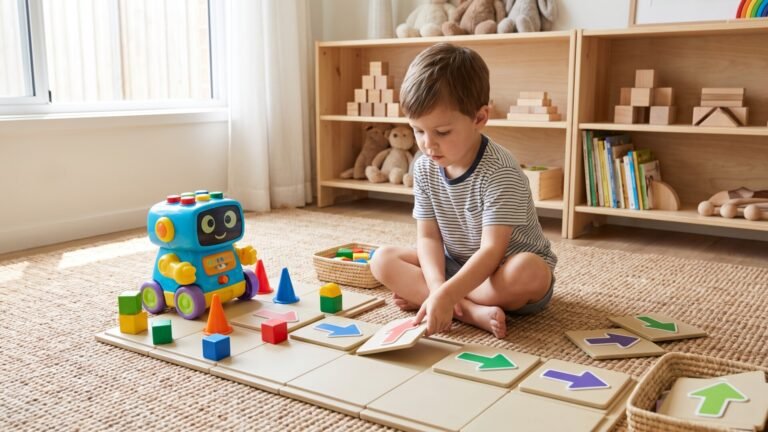
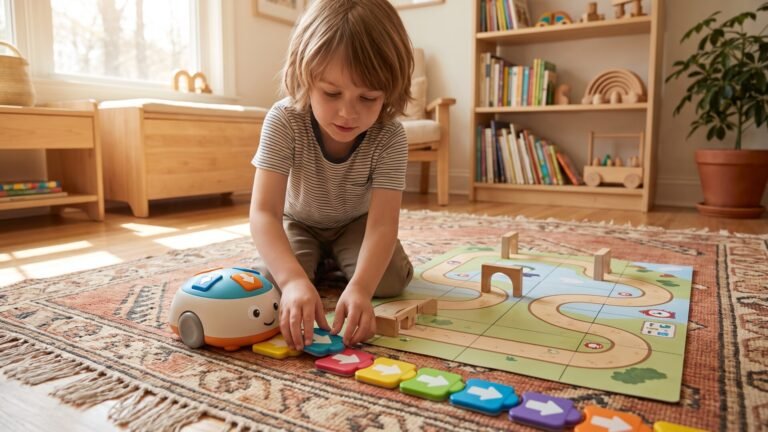
These kits combine building with basic programming concepts. Children construct a robot, then learn to control it through simple commands. The themes — dinosaurs, vehicles, animals — provide engaging contexts for learning.
What sets these apart is the emphasis on problem-solving. When the robot doesn’t move as expected, children must figure out why and adjust. This builds flexible thinking in a low-pressure environment.
Best for: Children who love technology and want to understand how robots work.
What to watch for: Some kits require batteries not included. The programming interface may be challenging for children who struggle with abstract concepts. Start with the simplest kit in the line.
Tinkering Labs – Electric Motors Catalyst
| Feature | Details |
|---|---|
| Age Range | 8+ |
| Key Features | Open-ended projects, critical thinking |
| Price Range | $30 – $50 |
| Affiliate | [Affiliate: Check price on Amazon] |
Why I recommend it
This is the most open-ended kit on this list. It provides motors, wheels, wires, and connectors — but no specific instructions for what to build. Children create their own projects, learning through experimentation.
For children with ASD who struggle with rigid thinking, this kit can be transformative. It teaches that there’s no single right answer. Multiple approaches can work, and failure is just data for the next attempt.
Best for: Creative thinkers who want to build original projects. Children who enjoy taking things apart and figuring out how they work.
What to watch for: The lack of instructions can be overwhelming. Some children need guidance to get started. You may need to suggest initial projects or build alongside your child.
How These Kits Compare
| Product | Age Range | Durability | Educational Value | Price Range | Best For |
|---|---|---|---|---|---|
| LEGO Creator 3-in-1 | 7+ | High | ⭐⭐⭐⭐⭐ | $20 – $50 | Open-ended play |
| Snap Circuits Jr. | 8+ | Medium | ⭐⭐⭐⭐ | $30 – $40 | Visual learners |
| K’NEX Education | 8-14 | High | ⭐⭐⭐⭐⭐ | $50 – $60 | Guided play |
| Engineering for Kids Robotics | 7-12 | Medium | ⭐⭐⭐⭐⭐ | $40 – $70 | Robotics enthusiasts |
| Tinkering Labs Catalyst | 8+ | High | ⭐⭐⭐⭐⭐ | $30 – $50 | Independent thinkers |
ToyGuideHub Longevity Analysis: Which Kit Survives Six Months?
Here’s what most reviews won’t tell you. I’ve tracked how these kits perform over time, and the results surprised me.
The LEGO Creator sets have the longest lifespan. Because they offer three builds, children cycle through them repeatedly. Many parents report their children still playing with the same set a year later. The cost per year of use is remarkably low — around $20 to $30 annually.
Snap Circuits Jr. has a shorter lifespan but higher educational density. Most children master the included projects within two to three months. However, the knowledge gained — understanding circuits, switches, and power sources — transfers to more advanced kits. Consider this a foundation, not a destination.
K’NEX Education holds up well for children who enjoy structured challenges. The durability is excellent, and the curriculum provides enough depth to sustain interest for six months or more. The hand-me-down potential is high; the pieces don’t wear out.
The robotics kits vary widely. Some children become obsessed and build every possible configuration. Others lose interest after building the main robot. I recommend starting with one kit and seeing how your child responds before investing in more.
Tinkering Labs has the most variable outcomes. For children who embrace open-ended play, it provides years of engagement. For children who need structure, it may gather dust after the first week. This is the kit where knowing your child’s personality matters most.
Choosing the Right Kit for Your Child
Best for Sensory Engagement
Choose kits with varied textures and tactile elements. LEGO Creator sets offer smooth plastic pieces that feel satisfying. Tinkering Labs includes motors that vibrate — some children find this calming.
Best for Structured Learning
K’NEX Education leads here. The step-by-step challenges and clear goals reduce anxiety. Each project has a defined endpoint, which provides a sense of accomplishment.
Best for Open-Ended Creativity
LEGO Creator 3-in-1 sets win for versatility. The ability to rebuild into different models encourages experimentation without requiring it.
Best for Group Play
Snap Circuits Jr. works well for siblings or playdates. Multiple children can collaborate on a single project, each contributing different skills.
Best Budget Pick
Snap Circuits Jr. at $30-$40 offers exceptional educational value for the price. It teaches real engineering concepts without breaking your budget.
Best Premium Pick
K’NEX Education at $50-$60 justifies the cost with its comprehensive curriculum and durable construction. This is a kit that can serve multiple children over several years.
Final Thoughts
I’ve seen engineering kits transform how children with autism engage with learning. The right kit doesn’t just teach skills — it builds confidence. It shows children that they can figure things out, that persistence pays off, and that their way of thinking has value.
Start with one kit. See how your child responds. Some children dive in immediately. Others need time to explore the pieces before attempting projects. Both approaches are valid.
The LEGO Creator 3-in-1 sets are my top recommendation for most families because they offer the best balance of engagement, longevity, and value. But if your child has specific interests or needs, any of the kits on this list could be the perfect fit.
Check current pricing and availability through our recommended partners. And remember: the goal isn’t perfection. It’s connection, curiosity, and the joy of discovery.
Frequently Asked Questions About Engineering Kits For Children With Autism Spectrum Disorder
What are engineering kits for children with autism?
Engineering kits are educational toys that teach STEM concepts through hands-on building and experimentation. For children with autism, the best kits emphasize clear instructions, predictable outcomes, and sensory-friendly materials.
Are these kits safe for children with ASD?
Most engineering kits from reputable manufacturers are safe. Always check age recommendations and safety certifications. Supervise younger children, especially with kits containing small parts.
How do engineering kits benefit children with autism?
They build fine motor skills, teach cause-and-effect reasoning, provide structured problem-solving practice, and offer controlled sensory input. Many children find the focused activity calming and satisfying.
What age is appropriate for these engineering kits?
Most kits target ages 7 and up, but developmental readiness matters more than chronological age. Consider your child’s fine motor skills, frustration tolerance, and reading ability.
Can these kits be used for group activities?
Yes. Many kits work well for siblings, playdates, or therapy groups. The structured nature of engineering projects reduces social pressure while encouraging collaboration.
What should I consider when selecting an engineering kit?
Think about your child’s sensory preferences, need for structure, fine motor abilities, and interests. A child who loves dinosaurs will engage more with a robotics kit featuring dinosaur themes than with generic building blocks.