Top 7 STEM Toys Perfect for Autistic Preschoolers
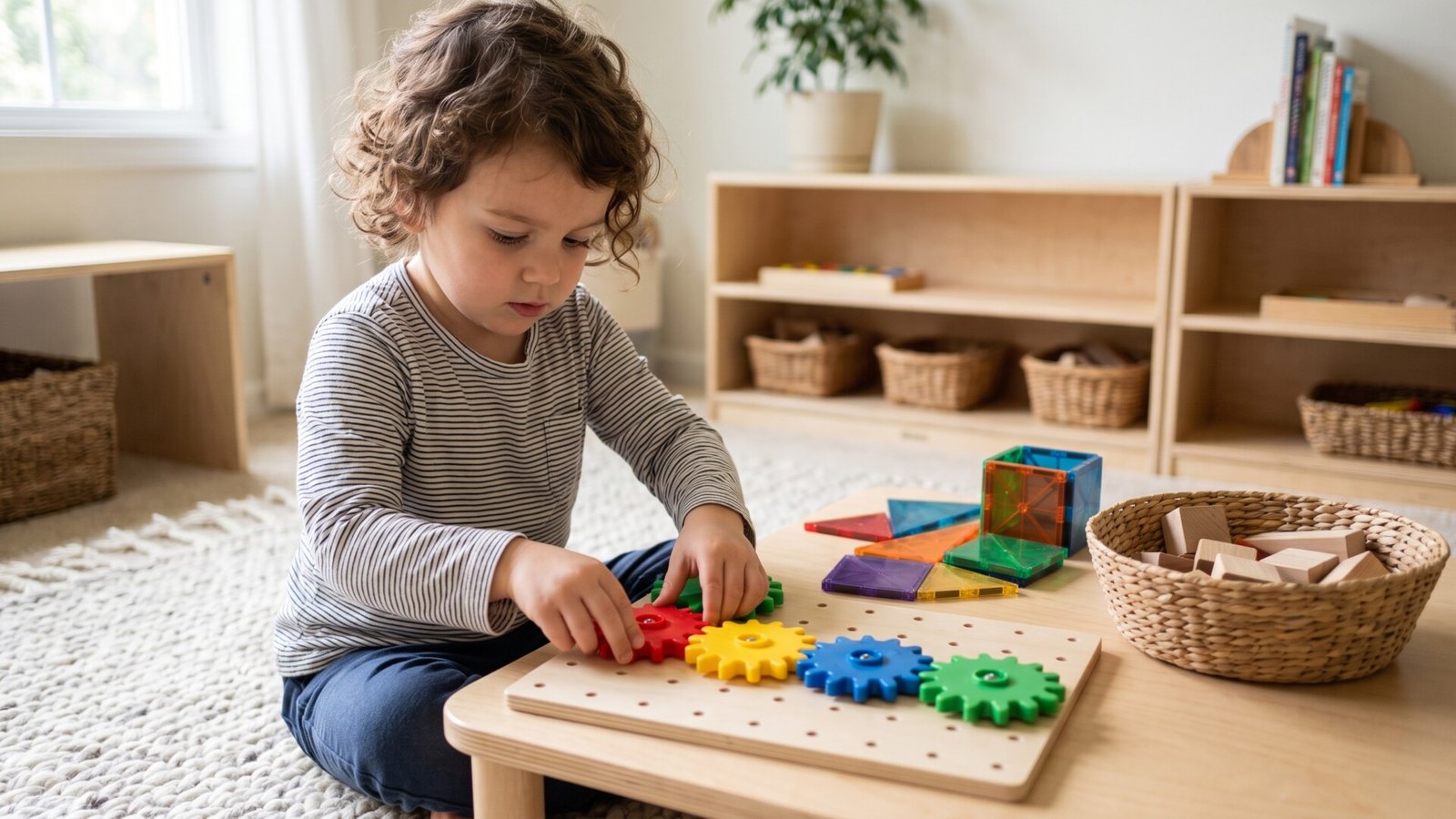
Picture a preschooler lost in a simple set of interlocking gears: turning one, watching the others spin, and trying the same thing again to see if it always works. For many autistic children, that kind of predictable, hands-on cause and effect is exactly what makes a toy absorbing. STEM toys aren’t just educational buzzwords; the right ones can be a comfortable way for children who process the world differently to explore, experiment, and feel capable.
As a parent of an autistic preschooler, you face a particular challenge. You need toys that engage without overwhelming, challenge without frustrating, and invite curiosity without causing sensory overload. The toy aisle is full of flashing lights and loud sounds that some children enjoy and others find distressing. So where do you start?
How we picked these: this guide is based on manufacturer product information, age grades, and widely reported features of each toy, filtered through what autism-focused organisations and occupational therapists commonly suggest looking for (predictability, adjustable sensory input, open-ended play). We have not run hands-on tests with children, and every autistic child is different, so treat the picks as starting points. Prices are approximate US dollar ranges and change often. This page contains affiliate links; if you buy through them we may earn a commission at no extra cost to you.
This article is part of our STEM Toys for Kids: The Complete Parent Guide. Below you’ll find seven options, what each one is genuinely good at, who it may not suit, and how to choose.
Why STEM Play Can Suit Autistic Preschoolers
STEM (Science, Technology, Engineering, and Mathematics) play at the preschool level isn’t about future careers. It’s about noticing patterns, testing what happens when you change something, and building one step at a time. Many autistic children are drawn to patterns, sequences, and repeating actions, and some have intense, focused interests, so STEM-style toys can fit naturally with how they like to play. This isn’t true of every autistic child, and it’s worth watching what your own child gravitates toward rather than assuming.
Hands-on toys can also reduce the pressure to speak or perform. A child who finds verbal communication hard may still show you what they understand by building, sorting, or making something work. Sharing the moment, such as pointing to a gear that’s turning, can open a low-pressure route to joint attention.
Many toys labelled “educational” are designed around typical sensory tolerance and pacing. Toys with muted colors, predictable responses instead of random sounds, and open-ended possibilities tend to be more comfortable for children who are sensitive to input or who prefer routine.
A note on language: we use “autistic” because many autistic people and families prefer identity-first language, but some prefer “child with autism.” Use whatever feels right for your family. Nothing on this page is medical or therapeutic advice; your child’s occupational therapist, speech-language pathologist, or teacher knows their needs best.
What Makes a STEM Toy Different?
Not every toy with blinking lights and a “STEM” label earns it. Useful STEM toys for this age share a few traits.
First, they invite hands-on exploration. Your child isn’t watching something happen; they’re moving pieces and seeing the result. This tactile engagement suits children who learn best through physical interaction.
Second, they allow open-ended play. A building set can become a tower, a bridge, a train, or a pattern on the floor. Open-ended toys let the child set the goal, which can be freeing for children who find rigid “right answer” tasks stressful, and equally good for children who enjoy repeating a favourite arrangement.
Third, they handle sensory input thoughtfully. The best options offer tactile elements, clear visual feedback, and sounds that are predictable or can be turned off. For more on this, see our guides to low-stimulation toys and how sensory toys support emotional regulation.
Fourth, the learning happens through play. Concepts such as cause and effect, counting, sorting, and spatial reasoning are practised without a lesson.
What to Look for When Buying STEM Toys for Autistic Preschoolers
Here is the checklist we use when evaluating a toy for this age and need:
Safety and materials come first. Check the manufacturer’s age grade, and remember it is a safety guideline as well as a skill guide: anything labelled “not for children under 3” has small parts that are a choking hazard for younger siblings and for children who still mouth objects. Look for non-toxic materials, smooth edges, and securely closed battery compartments. Avoid loose button batteries and small, powerful magnets for this age group.
Durability matters. Preschoolers repeat actions, drop things to watch them fall, and sometimes use more force than expected. A toy that breaks quickly can be upsetting for a child who has grown attached to it.
Genuine educational value means a real concept is being exercised: cause and effect, counting, spatial reasoning, simple mechanics. Be sceptical of claims that a toy will “boost” development; a good toy invites practice, it doesn’t guarantee outcomes.
Independent play potential is crucial if you need a few minutes to yourself. The best STEM toys allow children to explore on their own once they understand the basic mechanics, though many are more fun with a calm adult nearby.
Adjustable sensory features. Can you turn sounds off? Are colors muted or bright? Is there a texture the child will tolerate? A toy you can tune is usable for a wider range of children.
Storage. Sets with their own container make tidy-up predictable, which many children find easier than an open toy box.
The Real Trade-offs: Pros and Cons of STEM Toys for Autistic Preschoolers
What Works Well
Well-chosen STEM toys invite problem-solving by presenting small challenges a child wants to figure out, which can build sustained attention on something they enjoy. Connecting pieces, turning gears, and handling small objects give plenty of practice for fine motor skills, though no toy replaces therapy your child’s team has recommended. When siblings or peers join in, a shared goal such as building a track or making a gear turn can create a low-pressure context for communication.
Where It Gets Tricky
Not every STEM toy works for every child. Some have too many pieces or steps, and the frustration of not being able to make something work can lead to meltdowns. Many require adult help with setup or troubleshooting. And interest can fade if a toy doesn’t offer enough variety, so toys with several difficulty levels or open-ended possibilities tend to last longer. Some of the best-known STEM kits are also aimed at school-age children, so check the age grade honestly rather than assuming a “gifted” label means it suits a preschooler.
The Seven Best STEM Toys for Autistic Preschoolers
These picks balance genuine preschool suitability with a couple of “grow-into” options. For each, check the age grade printed on the box and the small-parts warning, and watch your own child’s reaction before investing in extras.
LEGO DUPLO My First Number Train
| Feature | Details |
|---|---|
| Age Range | Designed for toddlers and young preschoolers; check the age grade on the current box |
| Key Features | Large building blocks, vibrant colors, number recognition |
| Price | Check current price; DUPLO sets of this size typically sit in the budget range |
| [Affiliate: Check price on Amazon] |
Why It Works
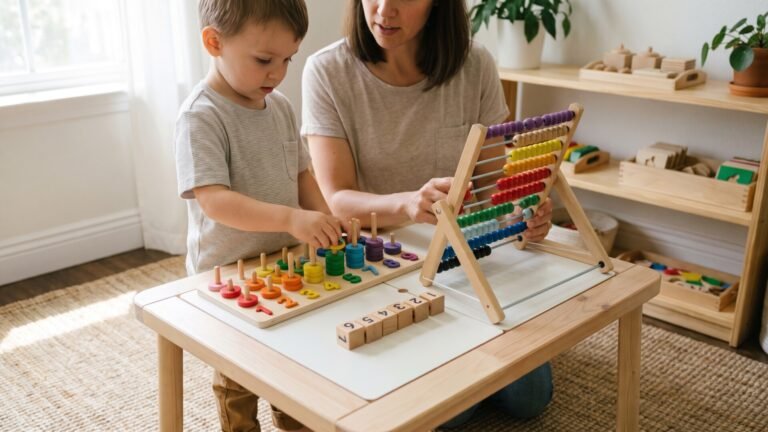
This train set is simple by design. The large DUPLO bricks are easy for small hands, and the number bricks give counting practice while the child builds. The cars click together and roll across the floor, which gives clear, predictable feedback. Because the set’s availability and numbering can change, confirm the exact set on the retailer page before you buy.
Best For
Children who enjoy construction and trains. A train theme can offer a familiar, comforting context for children who love vehicles or lines and sequences. For more building ideas, see our quiet construction sets for sensitive toddlers.
Pros
- Large pieces designed for young children
- Encourages building and early counting
- Easy to clean and store
Cons
- Some children may need help connecting the cars at first
- A small set means shorter play sessions unless you add more DUPLO bricks
Learning Resources Gears! Gears! Gears! Building Set
| Feature | Details |
|---|---|
| Age Range | Not for children under 3 (small parts); suited to roughly preschool through early elementary |
| Key Features | Interlocking gears, colorful and tactile; the Beginner’s Building Set has about 100 pieces |
| Price | Roughly $20–$36 depending on retailer |
| [Affiliate: Check price on Amazon] |
Why It Works
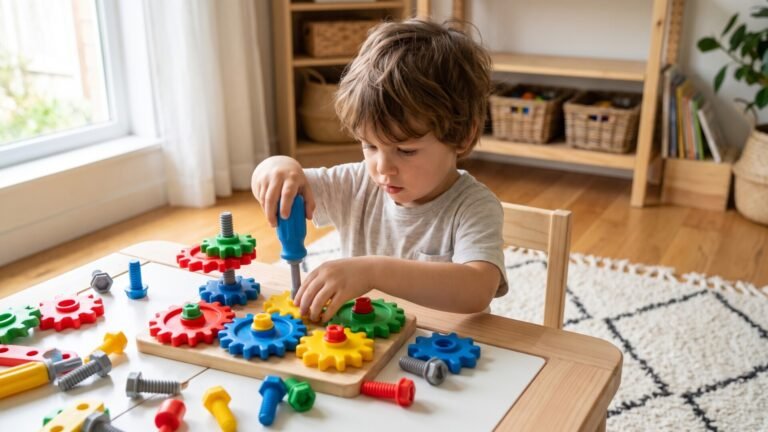
The set includes gears, pillars, axles, interlocking bases, and a crank handle. Turning the crank and watching several gears move gives immediate visual feedback, and children can rebuild the layout many ways. The cause-and-effect link between turning one gear and seeing the others spin is easy to grasp.
Best For
Children who benefit from visual and tactile learning, and who enjoy movement and repetition.
Pros
- Works well for shared play with a parent or sibling
- Introduces basic mechanical ideas through play
- Easy to sort and store by piece type
Cons
- Small parts pose a choking hazard; not for children under 3, and keep it away from younger siblings
- Pieces can be fiddly to connect for some small hands
Osmo Genius Starter Kit for iPad
| Feature | Details |
|---|---|
| Age Range | Genius Starter Kit is marketed for ages 6–10; Osmo’s Little Genius kit is aimed at ages 3–5 |
| Key Features | Physical pieces plus an iPad app; requires a compatible iPad |
| Price | Varies widely; some listings are discontinued or resold, so verify current stock and price |
| [Affiliate: Check price on Amazon] |
Why It Works
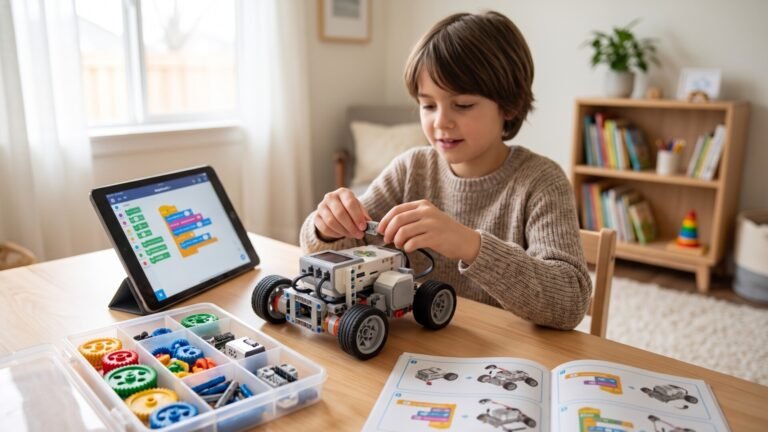
Osmo pairs real, hands-on pieces with an iPad that responds as the child plays. For children who are drawn to screens, that can be a structured way to link digital play with physical manipulation. The key caveats are availability and age: some Genius Starter Kit listings are marked discontinued by the manufacturer, and the Genius kit is aimed at school-age children. For a preschooler, look at the Little Genius kit instead, and confirm it is still sold and supported on your device.
Best For
Families already comfortable with tablets who want a structured, hands-on alternative to passive viewing. Use it together with your child, at least at first.
Pros
- Combines physical manipulation with digital feedback
- Multiple games in one kit
Cons
- Requires an iPad, which is an additional expense
- Screen-time concerns for some families, and app support depends on the manufacturer
- Sounds and on-screen effects may be too much for children who are sensitive to input
Melissa & Doug Wooden Building Blocks Set
| Feature | Details |
|---|---|
| Age Range | Ages 2 and up per most retailer listings (some say 2–5) |
| Key Features | 100 solid wood blocks in four colors and nine shapes, with a storage box |
| Price | Roughly $15–$30 depending on retailer and sales |
| [Affiliate: Check price on Amazon] |
Why It Works
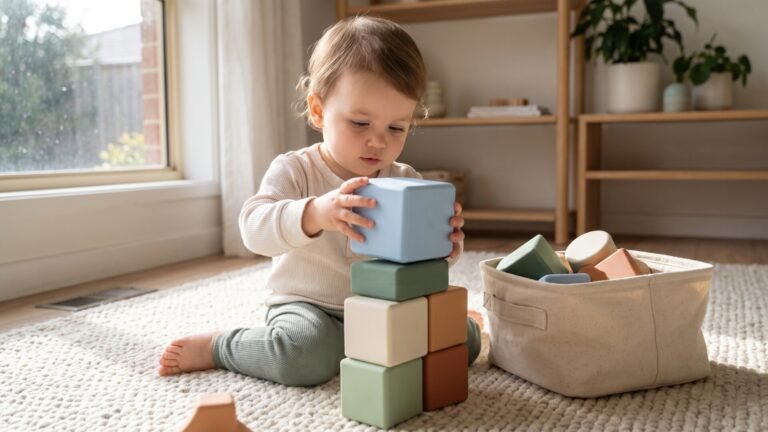
Sometimes the simplest toys are the most flexible. These wooden blocks have no electronics, no sounds, and no required steps. The natural wood texture offers calm tactile input, and the range of shapes supports sorting, stacking, symmetry, and balance.
Best For
Children who like lining up, stacking, or sorting, and children who find sounds and lights overwhelming.
Pros
- Very durable and long-lasting
- Completely silent and predictable
- Grows with the child from stacking to more complex builds
Cons
- Little built-in structure, so some children need an adult to model ideas
- Blocks can be noisy when dropped or knocked over, which bothers some sound-sensitive children
Snap Circuits Jr. Electronics Exploration Kit
| Feature | Details |
|---|---|
| Age Range | 8+ years (a “grow-into” pick, not a preschool toy) |
| Key Features | Snap-together components for building circuits, instructions for over 100 projects, requires 2 AA batteries |
| Price | Roughly $25–$55 depending on retailer |
| [Affiliate: Check price on Amazon] |
Why It Works
The manufacturer grades this kit for ages 8 and up, so it is not appropriate for most preschoolers and has small parts. We include it as a “what’s next” option for a child who is deeply interested in how things work. The components snap together without soldering, and the step-by-step manual shows each build visually.
Best For
Families planning ahead for early elementary years, or older siblings who will play together with a preschooler watching. If your child is a preschooler, an adult should build alongside them.
Pros
- Real electronics concepts through visual, clear instructions
- Can grow with the child through expansion sets
Cons
- Rated 8+, so too advanced for most preschoolers
- Small parts and batteries require supervision
Tinkering Labs Electric Motors Catalyst
| Feature | Details |
|---|---|
| Age Range | Listed by one retailer for grades 3–6; not for children under 3 (small parts). A “grow-into” pick |
| Key Features | Two motors, battery pack (2 AA), wooden chassis, wheels, axles, bolts, safety glasses, and challenge cards |
| Price | About $70 at the retailer we checked |
| [Affiliate: Check price on Amazon] |
Why It Works
This kit encourages open-ended engineering: children attach motors to a wooden chassis and watch their build move. The motor gives immediate feedback, and challenge cards offer structure without a single right answer. It is better suited to a school-age child or a preschooler building with a patient adult.
Best For
Children who enjoy building and experimenting, with an adult handling the screwdriver and small hardware.
Pros
- Open-ended build with immediate motor feedback
- Includes tools, safety glasses, and a storage bag and tin
Cons
- Higher price than other picks here
- Needs adult help with bolts and tools; small parts and rubber bands present choking hazards for younger children
Play-Doh Kitchen Creations
| Feature | Details |
|---|---|
| Age Range | 3+ years |
| Key Features | Modeling compound with kitchen-themed tools; sets vary (for example a mixer set with stamper attachments and several cans of dough) |
| Price | Varies by set; many sit in the budget range, so check the specific set |
| [Affiliate: Check price on Amazon] |
Why It Works
Play-Doh isn’t classic STEM, but squeezing, rolling, measuring, and shaping explore texture, volume, and cause and effect. The kitchen theme gives familiar, real-world context for pretend play.
Best For
Children who enjoy tactile experiences. For some, the squishy texture is calming; for others, the feel or smell may be unpleasant, so let your child try a small amount first. Play-Doh contains wheat, so check the label if your child has a wheat allergy.
Pros
- Familiar, widely available, affordable
- Encourages imaginative role-play and fine motor practice
Cons
- Can be messy and needs cleanup
- Dries out if not stored properly; texture and smell can bother some children
Quick Comparison Table
| Product | Age Guidance | Skills It Invites | Sensory Profile | Adult Help Needed | Best For |
|---|---|---|---|---|---|
| LEGO DUPLO Number Train | Toddler/preschool | Building, counting | Quiet; clicking bricks | Low | Building and early math |
| Gears! Gears! Gears! | 3+ (small parts) | Cause and effect, spatial reasoning | Visual movement, light clicking | Low to medium | Visual and tactile learners |
| Osmo (Little Genius) | 3–5 (Genius kit 6–10) | Matching, early letters and shapes | Screen sounds and visuals | Medium | Interactive learning with a tablet |
| Melissa & Doug Blocks | 2+ | Stacking, sorting, balance | Quiet; wooden texture | Low | Open-ended building |
| Snap Circuits Jr. | 8+ (grow-into) | Circuits, following diagrams | Small sounds and lights | High at preschool age | Future electronics fans |
| Tinkering Labs Catalyst | School-age (grow-into) | Simple machines, motors | Motor noise | High | Hands-on building with an adult |
| Play-Doh Kitchen | 3+ | Shaping, pretend play | Strong texture and smell | Low | Sensory and creative play |
How to Choose the Right STEM Toy for Your Autistic Preschooler
Making the final decision can feel overwhelming, but a simple process helps.
Start with your child’s interests. If your child loves trains, the DUPLO train is an obvious start. If they gravitate toward spinning things, gears may click. Building on an existing interest increases the odds of engagement.
Consider their sensory profile. Children who seek sensory input might love the feel of Play-Doh or the sight of spinning gears. Children who avoid sound or touch might prefer wooden blocks. Notice how your child reacts to textures, noise, and visual clutter, and if you can, ask their occupational therapist what to try.
Think about your own capacity. Some toys require more facilitation than others. If you need independent play time, choose toys like the Melissa & Doug blocks or DUPLO that children can explore on their own.
Evaluate long-term value. A toy with room to grow, or one that works with other sets, can cost less per year of play than one that is abandoned in a week. Remember that expansion sets add to the price.
Budget realistically. You don’t need to buy everything at once. Start with one or two toys and see how your child responds.
Introducing a New STEM Toy Gently
How you introduce a toy matters almost as much as which toy you pick. Many autistic children do best with a few simple supports:
- Let them look first. Place the toy where your child can see it and approach in their own time rather than handing it over.
- Show one thing. Demonstrate a single action, like turning a crank or clicking two bricks, then step back.
- Keep sessions short and predictable. A familiar routine, such as the same spot and time each day, can make new toys easier to accept.
- Follow their lead. If your child lines pieces up rather than building, that is still play. Join in with the same pattern before suggesting a new one.
- Know when to stop. Signs of overload, such as covering ears or turning away, mean it is time to put the toy away and try again another day.
More STEM Ideas for Autistic and Sensitive Children
If you want more options, these related guides on Toy Guide Hub go deeper: inclusive STEM kits for preschool classrooms, engineering kits for children on the autism spectrum, coding board games for children with autism, sensory-friendly science kits, quiet STEM activities for sensitive children, STEM toys that build fine motor skills, beginner robotics kits for special needs kids, and beginner coding toys for preschoolers.
Making the Right Choice for Your Family
Three picks stand out for different needs, based on their specifications and the traits that matter for this age.
Best Overall: The Learning Resources Gears! Gears! Gears! Building Set offers a good balance of visual feedback, open-ended building, and price, as long as your child is past the mouthing stage and small parts can be kept away from younger siblings.
Best Budget Pick: The Melissa & Doug Wooden Building Blocks Set is affordable, quiet, and open-ended, with natural materials that make it a versatile addition to any toy collection.
Best Screen-Based Pick: An Osmo kit pitched at your child’s age (the Little Genius kit for ages 3–5) offers a hands-on way to use a tablet, provided you already own a compatible iPad and your family is comfortable with some screen time. Check current availability first.
Frequently Asked Questions About STEM Toys For Autistic Preschoolers
What are the benefits of STEM toys for autistic preschoolers?
STEM toys invite logical thinking, problem-solving, and pattern recognition, which many autistic children enjoy. They can also provide structured, predictable sensory input. Every child is different, so watch how yours responds rather than expecting a specific outcome.
How do I know if a toy is suitable for my autistic child?
Match the toy to your child’s current skills and interests, check the sensory profile (sound, light, texture), and read the age grade and small-parts warnings. Try it together first, watch for signs of overload, and ask your child’s occupational therapist if you are unsure.
Are there any safety concerns related to STEM toys?
Yes. Check for small parts that are choking hazards for children under 3 and for younger siblings, confirm materials are non-toxic, and supervise play with electronic components. Avoid loose button batteries and small, powerful magnets for this age group.
Can STEM toys help with social skills development?
They can create low-pressure opportunities for shared attention and parallel play. Building something together or figuring out how a mechanism works gives you and your child something to focus on side by side. Toys do not replace therapy or support your child’s team recommends.
What age range is appropriate for STEM toys?
The age grade on the box is partly a safety rating, mainly about small parts, so don’t ignore it. Within that limit, some autistic preschoolers enjoy toys aimed at slightly older children and others prefer simpler options. Use your knowledge of your child, and supervise closely if a toy is graded above their age.
How can parents integrate STEM play into daily routines?
Keep STEM toys in a consistent play area and rotate them gradually to maintain interest. Weave simple STEM ideas into everyday activities, such as counting steps, measuring ingredients, or noticing patterns on a walk.
Are there any specific features to look for in STEM toys for autistic children?
Look for predictable responses, adjustable difficulty, and sensory features you can control. Toys with clear visual instructions and minimal unnecessary sounds or lights often work best.
Is Snap Circuits suitable for preschoolers?
Snap Circuits Jr. is graded for ages 8 and up, so it is not designed for preschoolers. If your child is very interested in electronics, an adult can build with them, but consider it a toy to grow into.