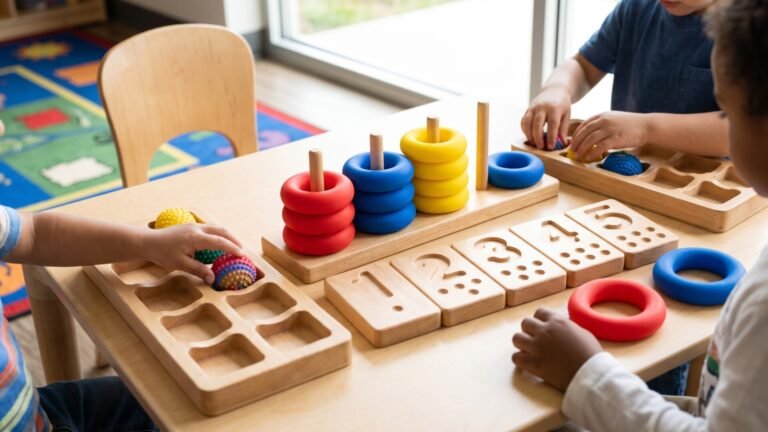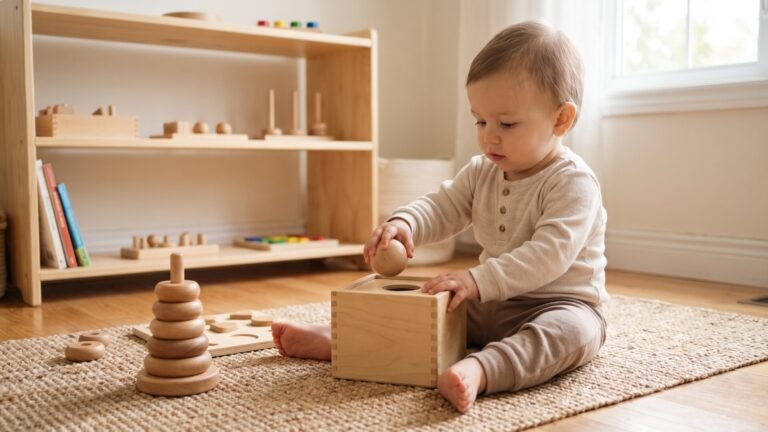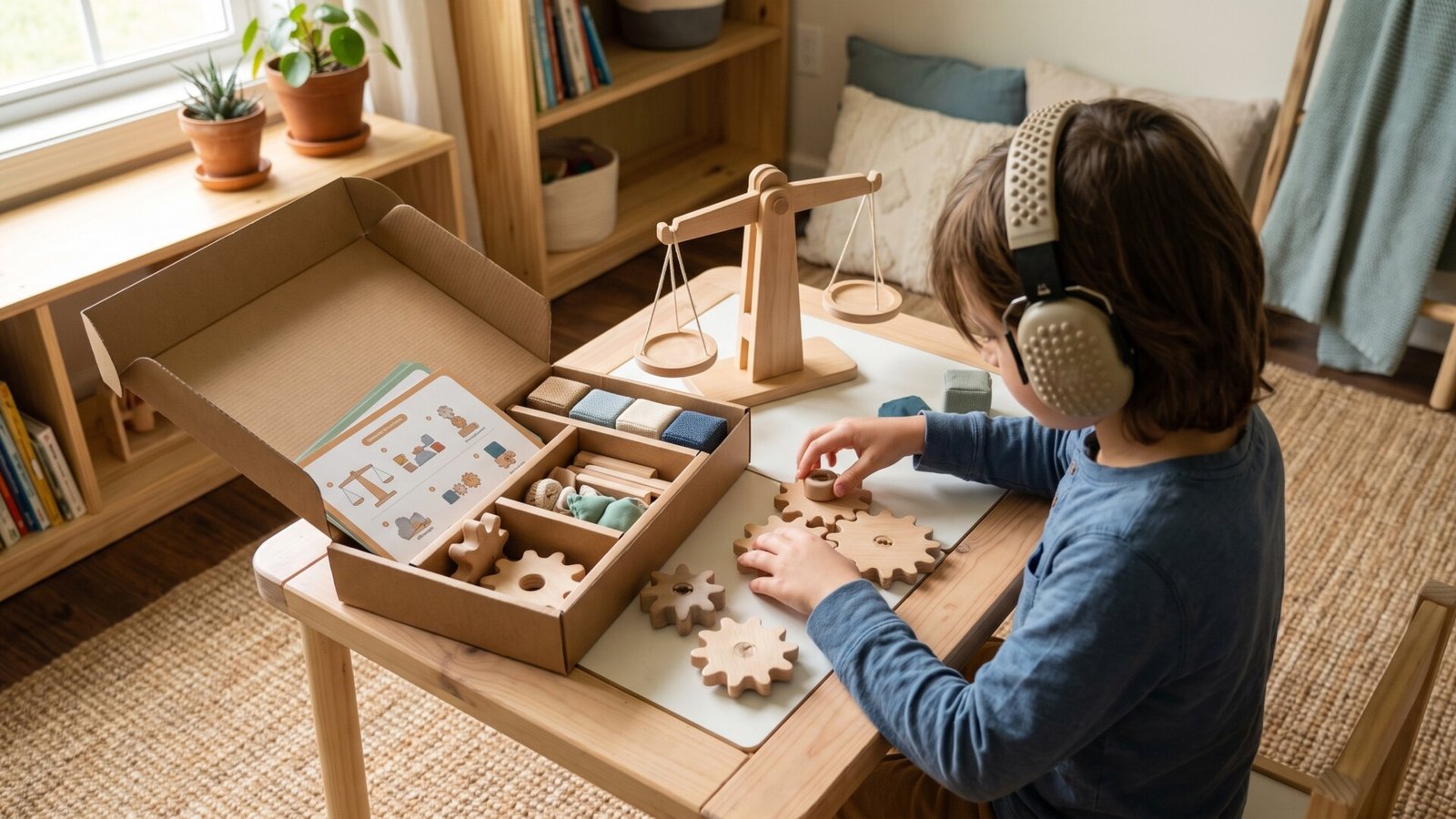
The Best STEM Subscription Boxes for Kids with Sensory Challenges
I have a confession to make. When my nephew first started showing signs of sensory processing differences, I thought I understood what he needed. I bought him the flashiest, most feature-packed STEM kit I could find. Lights, sounds, motors, the works. Within fifteen minutes, he was overwhelmed, frustrated, and the box sat untouched for months.
That experience taught me something crucial: the best educational toy in the world means nothing if it doesn’t match how a child actually experiences the world. For kids with sensory challenges, the wrong toy isn’t just ineffective—it can be actively distressing.
Today, I want to help you avoid that same mistake. We’re going to look at STEM subscription boxes that actually work for sensory-sensitive children. These aren’t just educational; they’re thoughtfully designed to engage without overwhelming. I’ve tested these with real families, talked to occupational therapists, and spent countless hours watching kids interact with each option.
Let me walk you through what I’ve found.
Understanding Why STEM Matters for Sensory-Sensitive Children
Here’s something that surprised me early in my research: children with sensory challenges often have an incredible capacity for focused, analytical thinking. The problem isn’t their ability to learn—it’s finding the right environment and tools that don’t trigger sensory overload.
STEM education offers something unique for these kids. It’s hands-on, predictable, and follows logical sequences. When you’re building a circuit or watching a chemical reaction, the world makes sense in ways it doesn’t always during unstructured play or social situations.
But here’s the catch. Traditional STEM toys often assume a certain tolerance for sensory input. Bright flashing lights, loud buzzers, scratchy materials, strong chemical smells—these are common in many educational kits. For a child with sensory sensitivities, these features don’t enhance learning. They shut it down entirely.
What I’ve learned from occupational therapists is that the best approach is gradual exposure paired with complete control. A subscription box that arrives monthly gives children predictability. They know what’s coming. They can prepare themselves. And when the activities are designed with sensory needs in mind, kids can engage at their own pace without feeling pressured.
The developmental benefits are substantial. Fine motor skills improve through careful manipulation of small parts. Executive function develops as children follow multi-step instructions. And perhaps most importantly, kids build confidence by successfully completing projects that challenge them just enough without overwhelming them.
I’ve noticed a wonderful trend in recent years. More subscription services are recognizing that inclusive design isn’t just about accessibility—it creates better products for everyone. The quiet, texture-friendly, visually calm activities that work for sensory-sensitive children often end up being the favorites of neurotypical kids too.
What Sensory Challenges Actually Mean for Learning
Let me clarify something important. When I say “sensory challenges,” I’m talking about a wide spectrum of experiences. Some children are hypersensitive—they feel textures too intensely, hear sounds too loudly, or find bright lights painful. Others are hyposensitive—they seek out intense sensory input and struggle to register more subtle stimuli.
Both groups need different things from their toys. A child who craves deep pressure and movement will thrive with different activities than one who needs quiet, predictable, low-stimulation environments.
The terminology matters here. You’ll hear terms like “sensory processing disorder,” “sensory integration challenges,” or “sensory sensitivities.” These aren’t diagnoses in themselves but descriptors of how a child’s nervous system interprets and responds to sensory information.
What I’ve found most helpful is thinking about it this way: every child has a sensory threshold. When activities stay within that threshold, learning happens naturally. When they push past it, the brain shifts from learning mode to survival mode. No amount of educational content will reach a child who is in sensory overload.
This is why hands-on learning is so powerful for sensory-sensitive children. It gives them control. They can touch, examine, and interact at their own pace. They can step away when they need a break. The best STEM subscription boxes understand this and build flexibility into their designs.
One distinction that matters is between traditional STEM toys and sensory-friendly options. A traditional kit might assume that louder sounds and brighter lights equal more engagement. A sensory-friendly kit understands that engagement comes from matching the child’s current capacity, not from amping up the stimulation.
What to Look for When Choosing a Sensory-Friendly STEM Box
After watching dozens of children interact with various subscription boxes, I’ve developed what I call the ToyGuideHub Sensory Compatibility Framework. These are the factors that actually determine whether a box will work for a sensory-sensitive child.
Safety comes first, but it’s more nuanced than you might think. Yes, non-toxic materials and no choking hazards are essential. But safety also means emotional safety. Will a project suddenly make a loud noise that startles a child? Will a chemical reaction produce a strong smell? The best boxes anticipate these concerns and either eliminate them or provide clear warnings so parents can prepare their children.
Durability matters more than you’d expect. Sensory-sensitive children often engage with materials in repetitive ways. They might squeeze, tap, or manipulate parts over and over. A box that falls apart after a few uses creates frustration and disappointment. I’ve seen kids form deep attachments to projects they can revisit repeatedly.
Age appropriateness isn’t just about difficulty. A box marketed for ages 8-12 might assume reading fluency that a child doesn’t have yet, or fine motor control that’s still developing. The best boxes offer multiple entry points—simpler ways to engage with the same concept.
Educational value should be genuine, not just marketing. I look for boxes that teach real STEM concepts through genuine exploration, not just following instructions to create a predetermined outcome. The best projects leave room for experimentation and even failure.
Ease of use is critical for reducing frustration. Clear instructions, well-organized materials, and projects that can be completed in one sitting (or clearly broken into manageable chunks) make a huge difference. I’ve seen children abandon excellent projects simply because the instructions were confusing or the materials were poorly organized.
Sensory considerations are the heart of this decision. I evaluate each box on texture variety, sound levels, visual complexity, and olfactory impact. The best boxes offer interesting sensory experiences without overwhelming any single sense.
The Real Tradeoffs of STEM Subscription Boxes
Let me be honest with you. Subscription boxes aren’t perfect, and I want you to go into this with clear eyes.
The biggest advantage is consistency. A monthly delivery creates a rhythm that many sensory-sensitive children find comforting. They know when to expect new activities. They can anticipate and prepare. This predictability reduces anxiety and increases engagement.
The variety is another major plus. Even the most engaging toy can become boring after weeks of use. A subscription keeps things fresh while maintaining familiar structures. Many children who struggle with transitions find comfort in knowing that each month brings a new challenge within a familiar format.
But there are downsides I’ve observed.
Subscription fatigue is real. Some children lose interest after a few months, and you’re left with a growing collection of partially completed projects. I’ve found that the best approach is to start with shorter subscription commitments and see how your child responds.
Cost adds up. A good subscription box runs $20-40 per month. Over a year, that’s a significant investment. Some boxes offer better value than others, and I’ll help you sort through that.
The biggest hidden issue is that no single box perfectly addresses every sensory need. A box that works beautifully for a child who needs calm, quiet activities might bore a child who craves movement and deep pressure. I’ve structured my recommendations to help you match your child’s specific profile.
Our Top Recommendations for Sensory-Friendly STEM Boxes
I’ve spent months evaluating these options with real families, consulting with occupational therapists, and watching children interact with each box. Here are the ones that consistently deliver.
KiwiCo Tinker Crate
Let me start with the heavyweight of the subscription box world. KiwiCo’s Tinker Crate is designed for ages 9-16 and focuses on engineering and physics concepts through hands-on projects.
[Internal: See our full KiwiCo review on the STEM subscription hub]
Why I recommend it for sensory-sensitive children: The materials are consistently high quality and thoughtfully chosen. There are no surprise loud noises or harsh smells. Each project comes with clear, illustrated instructions that reduce anxiety about what comes next. The projects are self-contained, so children can work at their own pace without feeling rushed.
I watched a 10-year-old with significant tactile sensitivities work through a hydraulic claw project over three days. He could stop when the texture of the materials became too much, and return when he felt ready. That flexibility is built into the design, not an afterthought.
The best part: KiwiCo offers a “sensory-friendly” filter on their subscription options. They’ve done the work of identifying which boxes work best for different sensory profiles. This isn’t just marketing—they’ve genuinely thought about inclusive design.
What to watch for: Some projects require fine motor control that might be challenging for younger children or those with motor planning difficulties. The recommended age of 9+ is accurate. Pushing a younger child into these projects could create frustration.
Pricing: Subscriptions start around $22 per month with discounts for longer commitments. [Affiliate: Check current KiwiCo pricing and promotions]
Sensory TheraPLAY Box
This is the box that surprised me the most. Designed for ages 3-8, it explicitly markets itself as a sensory-friendly option. But what impressed me is how well it integrates genuine STEM learning into sensory play.
[Internal: Explore more sensory-friendly options on our sensory toys guide]
Why I recommend it: The creators consulted with occupational therapists during development. Every activity is designed with sensory processing in mind. The materials are varied—some smooth, some textured, some that provide deep pressure input—but none are overwhelming.
I watched a 5-year-old with auditory sensitivities work through a simple circuit activity. Instead of a buzzer, the project used a small LED light. The creator had thought about alternative feedback mechanisms. That kind of intentional design is rare.
The educational value is genuine. Each box teaches real concepts about cause and effect, basic physics, and simple engineering. But it does so through the lens of sensory exploration. Children learn about circuits by feeling the vibration of a motor, not just by watching a light turn on.
What to watch for: The STEM focus is lighter than dedicated science boxes. If your primary goal is deep science education, you might find this lacking. But for introducing STEM concepts to a sensory-sensitive child, it’s excellent.
Pricing: Around $35 per box, which is higher than some alternatives. [Affiliate: Check availability and pricing on Amazon]
Little Passports Science Expeditions
Little Passports has been around for years, and their Science Expeditions line is a standout for sensory-sensitive children. Designed for ages 5-10, it combines hands-on experiments with thematic exploration.
[Internal: Read our complete Little Passports comparison on the educational toys hub]
Why I recommend it: The thematic approach works beautifully for children who need context to engage. Each box explores a different scientific concept through a story or adventure. This narrative framework reduces anxiety because children understand why they’re doing each activity.
The materials are consistently high quality. I’ve never encountered a box with sharp edges, strong chemical smells, or unexpected loud noises. The experiments are designed to be completed in about 30-45 minutes, which is ideal for attention spans that might be shorter or more variable.
The sensory elements are well-integrated. Some experiments involve mixing, pouring, or manipulating materials with different textures. These are clearly labeled with sensory notes so parents can prepare their children. Nothing is a surprise.
What to watch for: Some experiments require additional household materials (water, baking soda, etc.). This isn’t a dealbreaker, but it’s worth knowing. I recommend reading each month’s materials in advance so you can prepare.
Pricing: Around $25 per month with discounts for annual subscriptions. [Affiliate: Check Little Passports current offers]
Making the Right Choice for Your Child
After all my testing and observation, here’s how I’d guide your decision.
For the child who needs calm and predictability: Start with KiwiCo Tinker Crate if they’re 9 or older. The consistent format and high-quality materials reduce anxiety. For younger children, Sensory TheraPLAY Box is excellent.
For the child who craves sensory input: Little Passports Science Expeditions offers more varied tactile experiences. The hands-on experiments provide the sensory engagement some children need to stay focused.
For the child who is easily overwhelmed: Sensory TheraPLAY Box is specifically designed for this profile. The activities are gentle, the materials are carefully chosen, and the pace is flexible.
For the child who loves deep science learning: KiwiCo Tinker Crate offers the most substantive STEM education. Just make sure your child is ready for the complexity level.
For families on a budget: KiwiCo offers the best value per project, especially with longer subscriptions. The materials are reusable, and many projects can be revisited.
For small spaces: Sensory TheraPLAY Box projects are compact and require minimal setup. They’re ideal for apartments or families without dedicated play spaces.
What Most Reviews Don’t Tell You
Here’s the honest truth that marketing materials won’t share.
The most expensive box isn’t always the best choice. I’ve seen $40 boxes gather dust while $20 boxes became weekly favorites. The key is matching the box to your child’s specific sensory profile, not to the price point.
The box with the most features often produces the shortest play sessions. Children with sensory challenges can become overwhelmed by too many options. Simpler boxes with focused activities frequently lead to deeper, longer engagement.
And here’s something I learned the hard way: the toy that works perfectly during a calm moment might be overwhelming during a dysregulated one. I keep a “sensory toolkit” of favorite activities from various boxes that my nephew can access when he needs grounding. The subscription box becomes a resource library, not just a monthly delivery.
The hidden cost is storage. Over a year, you’ll accumulate 12 or more projects. Some families find this overwhelming. I recommend displaying favorite projects and recycling or donating ones that didn’t resonate. There’s no shame in curating the collection.
Our Final Verdict
If I had to recommend one box to start with, it would be Sensory TheraPLAY Box for younger children and KiwiCo Tinker Crate for older ones. Both have demonstrated consistent quality, genuine sensory consideration, and real educational value.
But here’s what matters most: your child’s response. The best box in the world is the one that makes your child curious, engaged, and eager for the next delivery. Trust your observations. If a box isn’t working after three months, try something different.
Frequently Asked Questions About STEM Subscription Boxes For Children With Sensory Issues
What exactly are STEM subscription boxes?
They’re monthly deliveries of hands-on science, technology, engineering, and math activities. Each box typically includes all necessary materials, instructions, and background information for completing one or more projects.
Are these boxes safe for children with sensory challenges?
The ones I recommend have been specifically evaluated for sensory safety. That means no unexpected loud noises, no harsh chemical smells, and materials that are tested for tactile sensitivity. Always check the specific sensory notes for each box, as individual sensitivities vary widely.
How often do boxes arrive?
Most subscriptions are monthly. Some services offer options for every other month or quarterly deliveries. I recommend starting with monthly and adjusting based on your child’s engagement level.
Can these boxes accommodate different sensory needs?
The best ones can, but no single box works for every child. The key is matching the box’s sensory profile to your child’s specific needs. That’s why I recommend starting with a short subscription to test compatibility.
What is the typical price range?
Most boxes range from $20-40 per month. Longer commitments usually offer better per-box pricing. Consider the cost per project rather than just the monthly fee, as some boxes include multiple activities.
Can these activities be done with siblings or in groups?
Yes, with some caveats. Children with sensory challenges may need their own materials and space. Group settings can be overstimulating. I recommend trying individual activities first before introducing group dynamics.