From One Piece to Twelve: The Montessori Puzzle Progression Guide
A box says “ages 3+”, but your three-year-old either finishes the puzzle in thirty seconds or gives up in frustration. That mismatch is the most common puzzle problem parents describe, and it happens because the age on the box is a safety grade, not a skill level. This guide walks through the Montessori puzzle progression step by step, from a single-piece knob puzzle to a twelve-piece puzzle, so you can match each puzzle to what your child can actually do right now.
You’ll find what to look for at each stage, specific products worth considering, an honest look at the trade-offs, and the mistakes that lead to a closet full of puzzles nobody uses. Whether you’re shopping on [Affiliate: Amazon], browsing [Affiliate: Melissa & Doug], or exploring specialty Montessori retailers, the aim is the same: fewer wasted purchases and more of those quiet, absorbed moments of independent play.
Quick answer: start with a knob puzzle of one to four large pieces around 12–18 months, move to chunky peg or inset-frame puzzles of four to eight pieces between about 18 months and 3 years, and introduce simple jigsaw-style puzzles of up to twelve pieces from around 3 to 4. Children vary a lot, so let their current success, not their birthday, decide when to move up.
Why Puzzles Fit the Montessori Approach
Montessori education is built around child-led work with purposeful materials. Puzzles suit that philosophy because they offer a clear, achievable goal that a child can pursue without an adult stepping in.
Handling puzzle pieces invites children to practise the pincer grasp (thumb and forefinger), the same hand position later used to hold a pencil. Lining a piece up with its space exercises hand-eye coordination, and turning a piece to see whether it fits gives children early practice with spatial reasoning. Puzzles also give toddlers a low-stakes way to practise trying something, seeing it fail, and trying again. Those are skills puzzles encourage; no single toy guarantees a specific outcome, and every child develops at their own pace.
A core Montessori idea is the “control of error”: the material itself shows the child whether they got it right. In a well-made puzzle a piece either fits its space or it doesn’t, so the child doesn’t need an adult to say “no, try again”. Mistakes become information rather than failures.
As Montessori has become more popular, the word has also become a marketing label. It isn’t a protected certification, so a puzzle labelled “Montessori” may or may not follow the principles. What matters is the design: natural materials where possible, one clear purpose per puzzle, and a self-correcting fit, without flashing lights, sounds, or cartoon-heavy distractions. For the bigger picture on choosing authentic materials on a budget, see our guide to finding real wood toys on Amazon.
What Makes a Puzzle Montessori-Aligned?
Not every wooden puzzle is a Montessori puzzle, and not every Montessori-aligned puzzle is wooden. These are the traits worth checking.
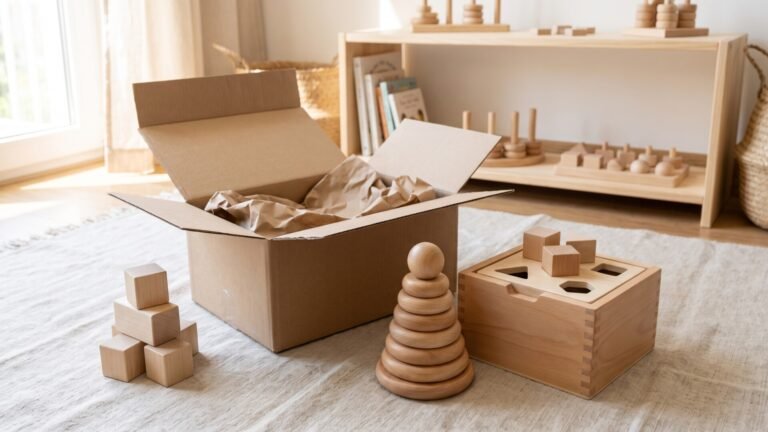
Materials. Natural wood with a smooth finish, rounded edges, and non-toxic paint or stain is the classic choice. Pieces should be sturdy enough for small hands to grasp without being heavy.
Isolation of difficulty. A good puzzle teaches one skill at a time. A knob puzzle with one piece teaches the basic idea of fitting a shape into a space. Adding more pieces introduces matching and sequencing. Each step should build on the last without overwhelming the child.
Self-correction. The child can see for themselves whether a piece fits, which keeps them engaged and motivated.
You’ll come across several types:
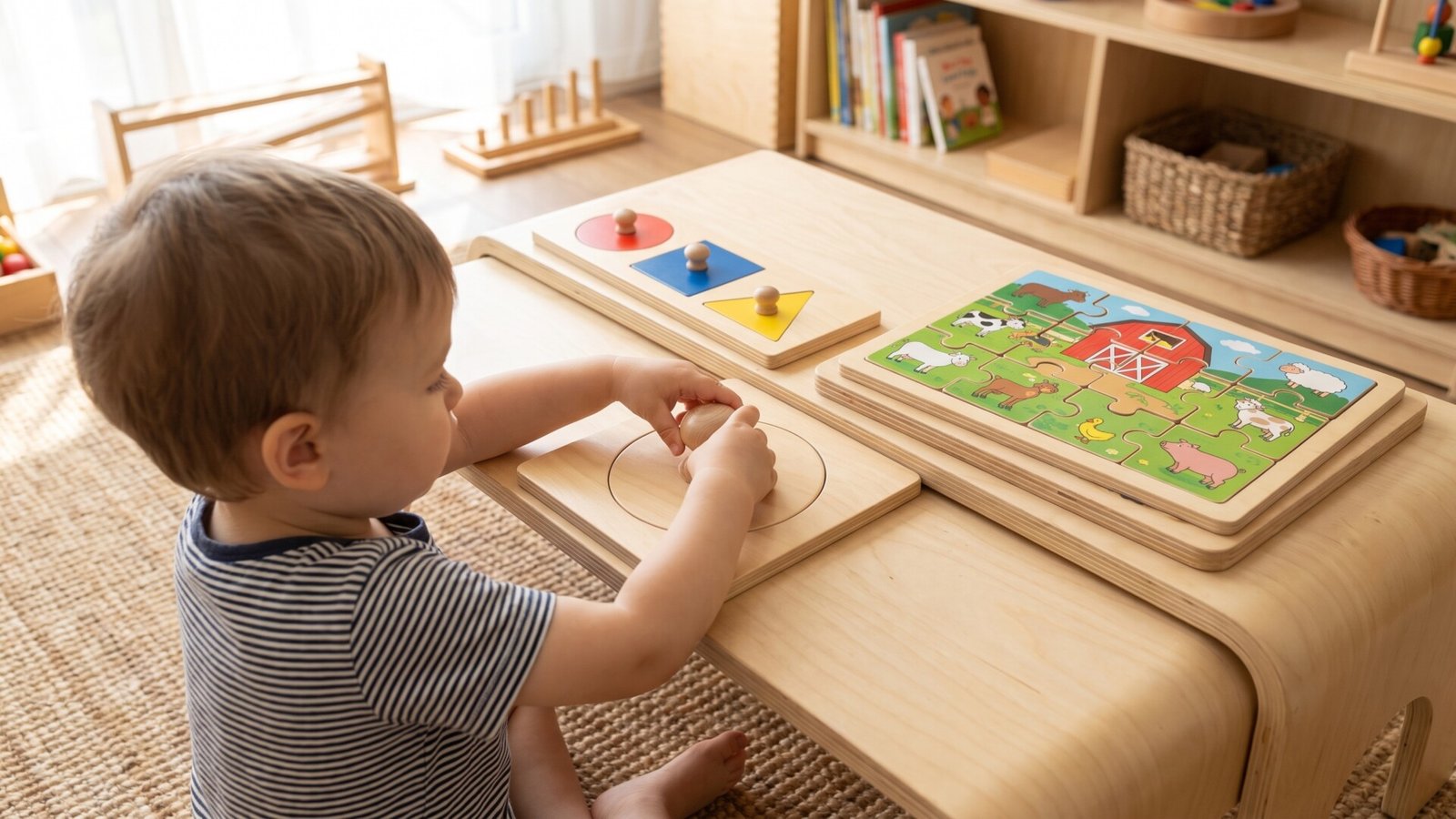
- Knob puzzles: Each piece has a small knob for gripping, which makes them a common starting point for toddlers.
- Chunky inset (frame) puzzles: Thick pieces sit in cut-out spaces in a board. These typically run from a few pieces to around a dozen.
- Peg puzzles: Similar to knob puzzles but with pegs on pieces such as letters or animals.
- Jigsaw-style and floor puzzles: Interlocking pieces without a frame, usually introduced once a child is comfortable with inset puzzles.
Piece count matters, but it isn’t the only factor. A well-designed four-piece puzzle with distinct shapes can be easier than a six-piece puzzle where every piece looks alike. Match the puzzle to your child’s current stage, not just their age.
Safety First: Small Parts, Knobs and Finishes
Puzzles for under-threes need a little extra attention, because toddlers explore with their mouths.
- Check the age grade. Products for children under 3 are tested against stricter small-parts rules in the US (CPSC) and EU. If a puzzle’s age label starts at 3+, it may contain pieces small enough to be a choking hazard for younger siblings. As a rule of thumb, a piece that fits through a toilet-paper roll tube is too small for a child under 3.
- Inspect knobs and pegs regularly. Wiggle them occasionally; a loosened knob or chipped paint means it’s time to retire the piece.
- Look for compliance information. In the US, children’s products carry a Children’s Product Certificate and are tested to ASTM F963; in Europe look for CE marking and EN 71. Reputable brands list this on the packaging or product page.
- Supervise early puzzle play, especially before a child stops mouthing objects.
What to Look for When Buying Montessori Puzzles
Durability. Wooden puzzles from brands such as [Affiliate: Melissa & Doug] and [Affiliate: Hape] hold up well to dropping, stepping, and the occasional chewing. Cardboard jigsaws such as Ravensburger’s are durable for their type but generally won’t survive a teething phase, so choose wood for children who still mouth everything.
The right level of challenge. It’s tempting to buy ahead of your child’s age, but a puzzle that is too hard tends to end in frustration. If you’re unsure, pick the slightly easier option; success builds the confidence that makes harder puzzles appealing later.
Learning focus. Some puzzles highlight a specific skill (shapes, letters, counting). Others are simply about the satisfaction of completing a picture. Both have value; know which you’re buying.
Ease of handling. Can your child grip the pieces? Are the knobs sized for small hands? Pieces that fit too snugly can frustrate adults as well as children.
Storage. Puzzles with a built-in tray or frame keep pieces together. Loose-piece puzzles are easier to lose; a small cloth bag or labelled tray on a low shelf helps.
Care. Wipe wood with a slightly damp cloth and dry it straight away; avoid soaking, which can warp the wood or lift the paint. Keep cardboard puzzles dry and out of direct sunlight.
The Pros and Cons of Montessori Puzzles
Pros:
Puzzles invite practice of fine motor control, spatial reasoning, and persistence. They also support independent play: a child who enjoys a well-pitched puzzle may stay absorbed for ten to twenty minutes, giving you a little breathing room. And the range of themes (shapes, letters, animals, vehicles, numbers) makes puzzles a flexible way to explore many topics.
Cons:
Puzzles pitched too high can frustrate and put a child off puzzles for a while. Pieces get lost, and once one is missing the puzzle loses much of its appeal. Costs also add up: a single wooden puzzle commonly costs somewhere between $8 and $25, so building a full one-to-twelve progression can reach $100 or more if you buy new. Secondhand shops and toy libraries are worth checking.
The Montessori Puzzle Progression: Product Recommendations
The products below illustrate each stage. Prices change often, so the ranges shown are approximate and worth confirming on the retailer’s page. We haven’t included lab-style test results; the notes reflect manufacturer specifications and the general design of each puzzle type.
Stage 1: One- to Few-Piece Knob Puzzles (about 12 months and up)
Product Name: Melissa & Doug First Shapes Jumbo Knob Puzzle
| Feature | Details |
|---|---|
| Age range | Marketed for toddlers; check the current box for the exact age grade |
| Key features | Large wooden knobs, a handful of big shape pieces (retailers list about five) |
| Typical price | Roughly $8–$16 |
| Affiliate program | Melissa & Doug |
Why it suits this stage: The oversized knobs are easy for new grippers to hold, and the pieces are thick enough to survive being dropped. Basic shapes (circle, square, triangle) give toddlers a simple first lesson in matching a piece to a space.
Best for: A child’s very first puzzle.
Trade-offs: Durable and easy to grasp, but the challenge is limited, so many children outgrow it within months. At this stage, success may simply mean holding, mouthing, and carrying pieces. Fitting them in comes later.
[Affiliate: Check current pricing and availability for the Melissa & Doug First Shapes Jumbo Knob Puzzle]
Stage 2: Chunky Inset Puzzles of About Four to Eight Pieces (roughly 18 months to 3 years)
Product Name: Melissa & Doug Farm Animals Chunky Puzzle
| Feature | Details |
|---|---|
| Age range | 2+ (per retailer listing) |
| Key features | 8 wooden pieces: seven farm animals and a barn, on a picture board |
| Typical price | Roughly $5–$16 |
| Affiliate program | Melissa & Doug |
Why it suits this stage: Each piece is a distinct, recognisable shape (a cow looks nothing like a barn), so the picture underneath acts as a clue. That makes it a gentle step from single-piece knob puzzles toward matching several pieces at once.
Best for: Children who can already place a single shape and are curious about animals.
Trade-offs: A themed picture puzzle rather than an isolated-skill puzzle, and it carries a 2+ age grade, so younger siblings should be kept away from the pieces if they’re still mouthing everything. Many parents like that the theme opens up conversation (animal sounds, what lives on a farm).
[Affiliate: Check current pricing and availability for the Melissa & Doug Farm Animals Chunky Puzzle]
Stage 2b: Letter Pegs for Early Literacy (about 3 years)
Product Name: Hape Chunky Alphabet Puzzle
| Feature | Details |
|---|---|
| Age range | 3+ (per Hape) |
| Key features | 26 solid wood uppercase letter pieces, non-toxic paint finishes |
| Typical price | Roughly $18–$25 (Hape lists $22.99) |
| Affiliate program | Hape |
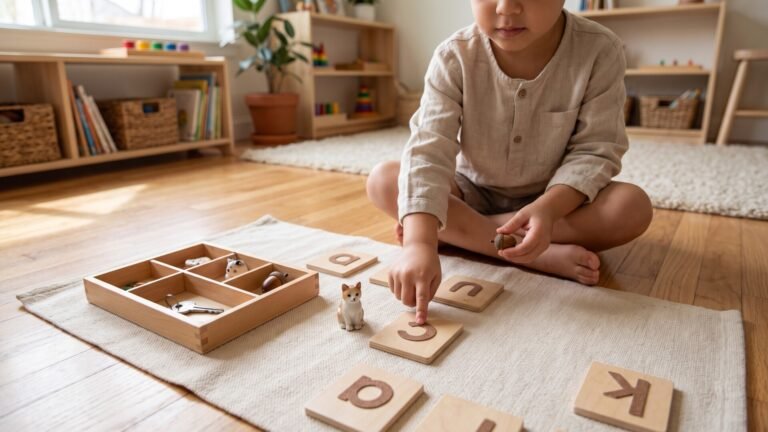
Why it suits this stage: This isn’t a two-piece puzzle. It’s a 26-piece letter set where children match each letter to its space, so it pairs well with simple sandpaper-letter or phonics work for children who are showing early interest in letters. Pair it with our Montessori language activities for preschoolers.
Best for: Preschoolers beginning to notice letters.
Trade-offs: Sturdy and self-correcting, but 26 pieces is a lot for a young toddler and the 3+ grade reflects small-parts considerations. Offer a few letters at a time rather than the whole board.
[Affiliate: Check current pricing and availability for the Hape Chunky Alphabet Puzzle]
Stage 3: Seven- to Eight-Piece Themed Puzzles With Varied Shapes
Product Name: Janod Chunky Puzzle (Forest)
| Feature | Details |
|---|---|
| Age range | Check current Janod listing for the age grade |
| Key features | 7 wooden pieces, each painted on all sides |
| Typical price | Varies by retailer; confirm before buying |
| Affiliate program | Janod |
Why it suits this stage: The pieces differ in shape and size (animals, trees, background elements), so children start to notice how different shapes combine into one picture.
Best for: Children who have mastered four- to six-piece inset puzzles.
Trade-offs: Attractive artwork and sturdy construction, but availability has been patchy (at least one retailer lists it as no longer available), so confirm it is in stock before planning around it.
[Affiliate: Check current pricing and availability for the Janod Forest Animals Puzzle]
Stage 4: First Jigsaw-Style Puzzles
Product Name: Ravensburger My First Puzzles (farm-themed sets)
| Feature | Details |
|---|---|
| Age range | Toddler and preschool; confirm on the current box |
| Key features | Multi-puzzle sets that step up in piece count (farm sets are listed as 2, 3, 4 and 5 pieces) |
| Typical price | Varies by set; confirm before buying |
| Affiliate program | Ravensburger |
Why it suits this stage: Ravensburger’s “My First Puzzles” sets bundle several small cardboard puzzles at increasing piece counts, which builds in a mini-progression: the child can begin with the easiest and move up as each is mastered.
Best for: A child who is comfortable with inset puzzles and ready for interlocking pieces.
Trade-offs: Cardboard is lighter and cheaper than wood but less durable, especially around drool, juice, or heavy handling.
[Affiliate: Check current pricing and availability for the Ravensburger My First Puzzle]
Stage 5: Reaching Twelve Pieces
By about 3 to 4 years old, many children are ready for twelve-piece puzzles, though plenty are not, and that’s fine. Signs of readiness include completing six- to eight-piece puzzles independently, sorting corner or edge pieces by sight, and returning to puzzles without being asked. Look for large pieces and clear, high-contrast images so that visual cues help the child find each spot. Avoid abstract or low-contrast pictures at this stage.
[Affiliate: Check current pricing and availability for the Melissa & Doug Farm Friends Puzzle]
Comparison Table
| Puzzle | Stage | Pieces | Material | Approx. price | Best for |
|---|---|---|---|---|---|
| Melissa & Doug First Shapes Jumbo Knob Puzzle | 1 | About 5 | Wood | $8–$16 | First puzzle |
| Melissa & Doug Farm Animals Chunky Puzzle | 2 | 8 | Wood | $5–$16 | Animal-loving toddlers |
| Hape Chunky Alphabet Puzzle | 2b | 26 | Wood | $18–$25 | Early letter interest (3+) |
| Janod Chunky Puzzle (Forest) | 3 | 7 | Wood | Confirm | Varied-shape practice |
| Ravensburger My First Puzzles (farm) | 4 | 2–5 per puzzle | Cardboard | Confirm | First interlocking puzzles |
How to Choose the Right Puzzle for Your Child
Just starting out (about 12–24 months): A jumbo knob puzzle like the Melissa & Doug First Shapes set. Expect mouthing, carrying, and dumping before any fitting happens.
Ready for more pieces (about 2–3 years): A chunky inset puzzle such as the Melissa & Doug Farm Animals Chunky Puzzle, where the picture beneath each piece offers a clue.
Curious about letters (about 3+): The Hape Chunky Alphabet Puzzle, offered a few letters at a time.
Ready for varied shapes: A seven- or eight-piece themed puzzle like the Janod Forest chunky puzzle, if you can find it in stock.
Ready for jigsaws: A stepped set such as Ravensburger’s My First Puzzles, then a twelve-piece puzzle once six- to eight-piece puzzles feel easy.
Long-Term Value: Cost Per Month of Use
Think in cost per month of real use rather than sticker price. A $15 puzzle that holds a child’s interest for six months works out to $2.50 a month; a $25 puzzle that stays in rotation for two years is a little over $1 a month. Wooden puzzles tend to last longest and can be handed down to siblings. Cardboard sets such as Ravensburger’s are cheaper up front and can often be resold, though condition and demand vary widely, so don’t count on a specific resale percentage.
Puzzles that grow with a child last longest: a letter puzzle can later be used for sounds and simple spelling, and a stepped set lets a child work upward through harder puzzles in the same box. Single-shape knob puzzles, by contrast, are outgrown quickly. To make the budget stretch, our Amazon Montessori hacks guide covers how to find real wood toys at lower prices.
Rotation: Keeping Puzzles Interesting
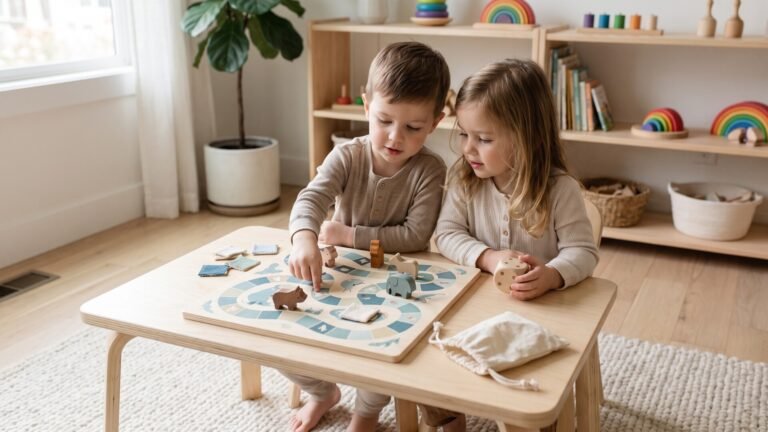
Montessori classrooms offer a limited selection of materials on low, open shelves, and the same approach works at home. Put out two or three puzzles at a time at the child’s current level, and swap them every week or two. Rotation reduces clutter, keeps puzzles feeling fresh, and makes it easier to notice when a puzzle has become too easy.
Tips for Puzzle Time
- Show once, then step back. Demonstrate slowly with minimal words, then let the child try.
- Offer a tray or rug to define a workspace and contain pieces.
- Resist fixing mistakes. The puzzle’s design lets the child discover the error.
- Move down a level if the child melts down, and up if they finish quickly and walk away. Either is useful information.
The Downsides Parents Discover Later
Puzzles create a particular kind of mess: small pieces that end up under sofas and in toy bins. Wooden pieces dumped on a hard floor are loud, so a rug or play mat helps in apartments. And some children simply aren’t interested in puzzles right now. That’s perfectly normal. Try again in a few months, or lean into the activities they do enjoy, such as building or pretend play. If your child enjoys building, see our guide to whether magnetic tiles are Montessori-aligned; if they prefer quiet, solo activities, toys for children who prefer solitary play may help.
Where Puzzles Fit in the Bigger Montessori Picture
Puzzles are one part of a broader set of materials. Older children can move on to more complex materials; see our roundup of best Montessori toys for 6–9-year-olds. Puzzles can also lead naturally into math play, as covered in inclusive math manipulatives for preschoolers, and into cooperative play, as covered in Montessori-aligned board games.
Conclusion
The route from one piece to twelve is gradual, and it works best when each step is mastered before the next. For most families, the [Affiliate: Melissa & Doug First Shapes Jumbo Knob Puzzle] is an affordable, durable entry point. When your child is ready for something bigger, the [Affiliate: Ravensburger My First Puzzle] sets build a progression into a single box, and when you are ready for the twelve-piece milestone, the [Affiliate: Melissa & Doug Farm Friends Puzzle] is one option to check.
The goal isn’t speed or perfection. It’s the trial and error, the persistence, and the small victories that build confidence over time.
Frequently Asked Questions About Montessori Puzzle Progression
What age should children start with puzzles?
Many children are introduced to simple knob puzzles from around 12 months. At first the goal isn’t completion but exploration: holding, carrying, and mouthing the pieces. Fitting pieces into a frame usually develops gradually between about 18 months and 2 years, though children vary a great deal.
How do I know if a puzzle is safe for my child?
Check the age grade on the box and avoid puzzles with small pieces for children under 3. In the US, children’s products are tested to ASTM F963 and must carry a Children’s Product Certificate; in Europe, look for CE marking and EN 71. Check knobs and pegs regularly for looseness and chipped paint.
What are the benefits of Montessori puzzles?
Puzzles invite children to practise fine motor control, hand-eye coordination, spatial reasoning, and persistence. Their self-correcting design lets children discover for themselves whether a piece fits, which supports independent play.
How do I move from one puzzle level to the next?
Watch your child rather than the calendar. When they complete a puzzle independently several times and choose to repeat it, offer one with a few more pieces or more varied shapes. If they get frustrated, step back a level for a while.
How can I look after wooden and cardboard puzzles?
Wipe wooden puzzles with a slightly damp cloth and dry them straight away; avoid soaking them. Keep cardboard puzzles dry, out of direct sunlight, and stored in a box or bag so pieces stay together.
What if a piece goes missing?
It happens to nearly every family. Check whether the manufacturer sells replacement pieces, which some do, though many don’t. If not, the remaining pieces can be reused for sorting, tracing, or matching games.
Can siblings share puzzles?
Yes. Puzzles can be a shared activity, or each child can work on a puzzle at their own level. Keep puzzles with small pieces away from younger siblings under 3 who may still mouth objects.