DIY Sensory Bin Recipes: Cheap & Quick Ideas for Kids
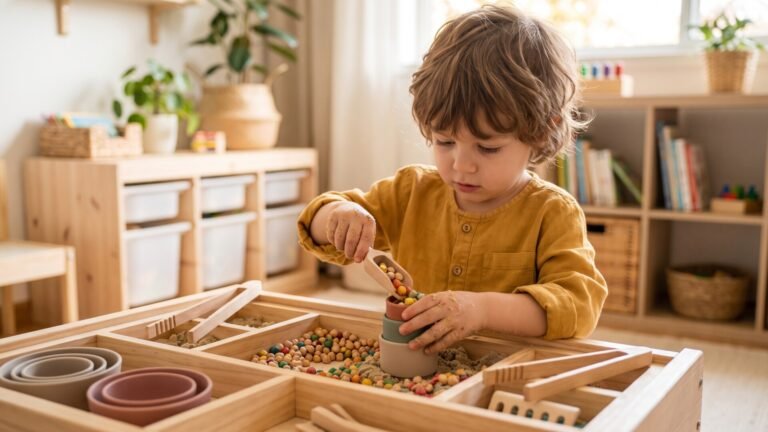
A sensory bin is a shallow container filled with a base material, such as rice, sand, water, or dough, plus a few scoops, cups, and small toys. Children dig, pour, hide, and find things in it, and it asks very little of you: most of the recipes below use pantry items and household containers. Sensory bins invite hands-on, open-ended play that gives children practice with scooping, pouring, sorting, and pretend play, and many children find the repetitive motions soothing.
This guide gives you ten DIY sensory bin recipes with materials, steps, and an honest note on which ages each one suits. It also covers which fillers to avoid for babies and toddlers, how to clean up, how to store and refresh a bin, and how to adapt the idea for children who are sensitive to touch. If your child is a picky toddler, read this alongside our guide to sensory bins for picky toddlers, and for the bigger picture see our sensory and special needs toys hub.
Why Sensory Bins Are Worth Setting Up
Before the recipes, here is what a bin can realistically offer. Sensory play is not a shortcut to a milestone, but it gives children low-pressure practice with skills they use everywhere else. For a wider look at the topic, see our overview of sensory play and its benefits for all kids.
1. Fine Motor Practice
Scooping, pouring, pinching, and rolling work the small muscles of the hands and fingers. These movements are the same ones children later use for:
- Holding a pencil and drawing
- Buttoning and zipping clothes
- Feeding themselves with a spoon or fork
A bin does not guarantee any of these skills, but it offers plenty of repetition in a form children enjoy.
2. Early Math and Science Thinking
Sensory bins invite children to experiment, explore, and problem-solve. For example:
- Sorting colored pasta into containers
- Counting scoops of rice or beans
- Mixing materials to see what happens
This kind of play lets children try out cause and effect, comparing quantities, and early scientific ideas such as “what happens when ice meets warm water?”
3. A Calming Activity
Many children find repetitive, tactile activities soothing. Running fingers through dry rice or squishing kinetic sand can be a calm way to wind down after a busy day. It does not work for every child, and some children dislike certain textures. Our guide on how sensory toys help with emotional regulation goes deeper on this.
4. Open-Ended, Imaginative Play
Sensory bins are open-ended. Children decide what to do, and there is no wrong way to play.
- A bin of rice can become a beach, a garden, or a treasure hunt.
- A tray of hydrated water beads can turn into a pretend aquarium for older children (see the safety notes first).
Safety First: What to Know Before You Fill the Bin
Most bin materials are harmless, but a few need careful choices depending on your child’s age. Read this section before choosing a recipe.
Age and Choking Hazards
- Under 3: Children this age still put things in their mouths. Choose bases that are safe if tasted (dry oats, cooked pasta, cereal) and keep small items such as buttons, beads, coins, and small pom-poms out of the bin. A common rule of thumb is that anything that fits through a toilet paper tube is a choking risk for a child under 3.
- Always stay within arm’s reach of babies and toddlers during bin play, even with taste-safe fillers.
- Age labels on packaged materials (for example, 3+ on kinetic sand) are safety ratings, not a measure of whether your child is ready or will enjoy it. Follow them.
Water Beads: Use Extra Caution
Water beads (also sold as water gel beads) are small polymer balls that swell when soaked. They look appealing to children and are the one filler in this guide that regulators have flagged as a serious hazard. The U.S. Consumer Product Safety Commission (CPSC) says swallowed beads can swell and block the digestive tract, and the agency reports an estimated 6,300 water bead ingestion injuries treated in U.S. emergency departments between 2017 and 2022, as well as at least one death of a 10-month-old girl in 2023. A federal safety standard for water bead toys took effect on March 12, 2026, setting limits on how large beads can expand, limiting acrylamide content, and requiring warning labels. Products made before that date, and products not sold as toys, may not meet it.
Our recommendation: skip water beads entirely if there is a baby, toddler, or any child who still mouths objects in the house, and do not use them with children who might put beads in their mouths, ears, or nose. If you use them with an older child, supervise closely, count the beads before and after play, clean up every one, and follow the package instructions. For a sea-themed bin without the risk, use the rice-and-pasta or ice recipes below.
Other Materials to Handle Carefully
- Raw flour (cloud dough): The FDA advises against eating raw flour because it can carry harmful bacteria. Keep children from tasting cloud dough and wash hands afterward.
- Salt dough: Very salty and not safe to eat in quantity; keep it away from pets as well.
- Shaving cream: Not taste-safe. Choose an unscented, dye-free product and rinse it off the skin if your child has sensitive skin or eczema.
- Dried herbs and spices: Check for allergies, and avoid strongly scented or peppery ones near eyes.
- Allergy check: Wheat (pasta, flour, oats), nuts, and legumes can all be allergens. If your child has a known allergy, choose a different base.
- Food coloring: Can stain hands, clothing, and some surfaces. Test on a small area first.
Setting Up a Good Play Space
- Use a plastic storage bin or shallow tray. A shallow under-bed storage box (roughly 40 quarts) gives a lot of surface area at low height. You can also use a rimmed baking sheet for small bins.
- For toddlers, choose a sturdy, wide-based container that will not tip.
- Put a sheet, shower curtain, or mat underneath, or play at a table or on a hard floor that sweeps easily.
- Keep a small hand brush and dustpan nearby, and let children help sweep up as part of the game.
Tools You Already Own
Simple kitchen items double as sensory tools:
- Scoops, spoons, and tongs
- Measuring cups
- Small containers for pouring and filling
- Cookie cutters or molds
- Funnels, ladles, and a sieve
What a Sensory Bin Costs
Most bins cost very little. The container is often something you already have (an under-bed storage box, a dishpan or a rimmed baking sheet), and pantry fillers such as rice, oats and pasta cost a few dollars per bin and can be reused for months if kept dry. The main bought filler in this guide is Kinetic Sand: a 2 lb resealable bag of Spin Master’s Kinetic Sand (labelled 3+) usually sells for about $10–$20 in the US, and it lasts a long time if you keep it covered. Themed kits with molds and tools cost more, but plain sand plus kitchen tools does the same job.
Quick Guide: Which Recipe Fits Which Age?
Ages below are our suggested starting points based on the materials and the hazards involved. Every child is different, and you know yours best.
| Recipe | Suggested ages | Mess level | Taste-safe? | Main caution |
|---|---|---|---|---|
| Rice & Pasta Rainbow Bin | 3+ (toddlers: only with supervision and large pasta) | Medium | Dry rice and pasta are not meant to be eaten raw | Choking on small grains and shapes; allergens |
| Water Bead Ocean Bin | Older children only, with close supervision (not for anyone who mouths objects) | Medium | No | Ingestion and airway hazard; see safety section |
| Kinetic Sand Treasure Bin | 3+ (manufacturer label) | Low | No | Do not eat; keep sand off carpets and out of drains |
| Taste-Safe Bin | From when a baby sits well, with close supervision | Medium | Yes, if you choose appropriate foods | Choking on larger pieces; allergens |
| Shaving Cream & Pom-Pom Bin | 3+ | High | No | Skin and eye irritation; small pom-poms |
| Ice & Water Bin | 2+ with supervision | Medium | Water and ice only | Cold hands; supervise any water play |
| Nature Bin | 2+ with supervision | Medium | No | Check for allergens and sharp sticks |
| Cloud Dough or Salt Dough | 3+ | Medium to high | No | Raw flour; salt |
| Sensory Art Bin | 3+ | High | No | Colorants; stains |
| Smell & Touch Bin | 3+ | Low | Not meant to be eaten | Allergies; strong scents |
DIY Sensory Bin Recipes
Here are ten cheap and quick sensory bin ideas using ingredients you may already have at home. Most take about 10 minutes to set up. Each includes who it suits and what to watch for.
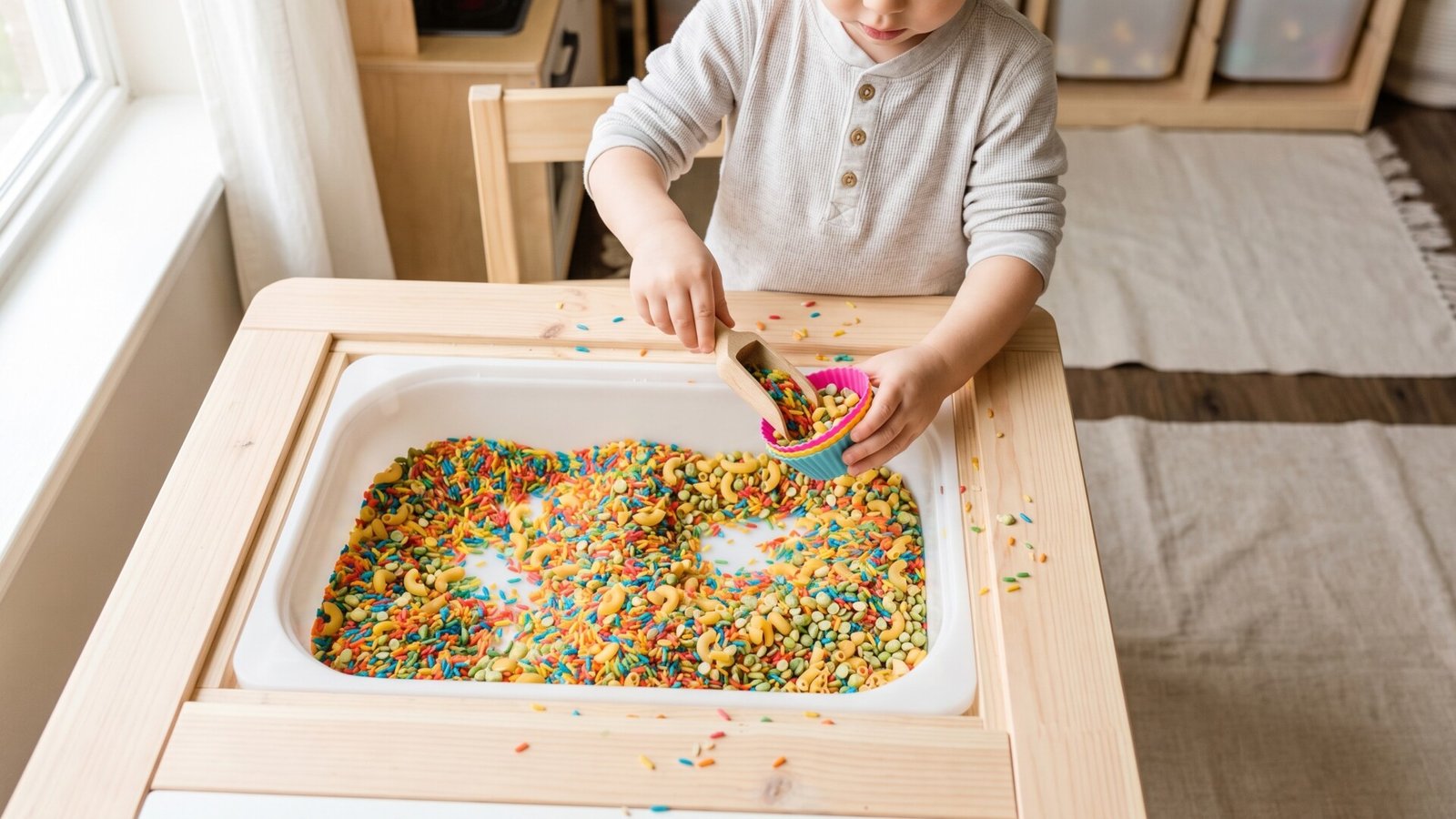
1. Rice & Pasta Rainbow Bin
Best for: children about 3 and up, or toddlers who are past the mouthing stage
Safety note: Dry rice and pasta are a choking risk for children who still mouth objects. For toddlers, use large pasta shapes (rigatoni, penne) and stay close.
Materials:
- White rice (or colored rice if you want to dye it)
- Dry pasta in different shapes
- Small cups, scoops, and funnels
Instructions:
- To color the rice, put it in a zip-top bag with a few drops of food coloring and a small splash of white vinegar, shake well, and spread it on a baking sheet to dry completely before play.
- Mix in various pasta shapes and colors.
- Provide small containers and scoops for sorting, pouring, and mixing.
Skills it invites children to practice: color recognition, scooping and pouring, sorting, and counting.
Tip: Dyed rice must be fully dry or it will clump, stain, and mold. Store it in a sealed container and throw it out if it smells musty.
2. Water Bead Ocean Bin (Older Children Only)
Best for: older children who no longer put objects in their mouths, with an adult present the whole time
Safety note: This is the riskiest recipe in the guide. Read the water bead section above, and skip this recipe if any child in the home is under 3 or still mouths objects.
Materials:
- Water beads from a reputable seller, soaked according to the package instructions
- Small plastic sea animals or boats
- Cups and scoops
Instructions:
- Soak the beads exactly as the package directs and check that they have finished expanding.
- Fill a container with hydrated beads and add sea animals and play accessories.
- Encourage pretend swimming, fishing, or scooping, and count the beads back into a lidded container at the end.
Skills it invites children to practice: tactile exploration, pretend play, and hand-eye coordination.
Tip: Do not keep water beads for weeks. Throw them in the household trash when you are done (never down the sink, drain, or toilet, where they can swell and clog pipes) and wipe the play area to catch strays. If you are not sure, use the ice recipe below for a similar slippery, cool experience.
Safer ocean swap for younger children: fill the bin with blue-dyed rice (fully dried) or a shallow layer of water with a drop of blue food coloring, add large sea-animal figures, shells too big to swallow and a small net, and you have the same “aquarium” game without the bead risk.
3. Kinetic Sand Treasure Bin
Best for: children 3 and up (kinetic sand is labeled for ages 3+)
Safety note: Skip coins and tiny gems. Coins are a swallowing hazard for young children, so use larger toys and shapes.
Materials:
- Kinetic sand (the Spin Master brand is widely sold; any moldable play sand will work)
- Larger “treasures”, such as plastic gems, toy animals, or large wooden shapes
- Shovels, spoons, or small molds
Instructions:
- Fill a bin with kinetic sand.
- Hide the treasures inside.
- Let children dig, mold, and explore.
Skills it invites children to practice: hand strength, fine motor control, and imaginative play.
Tip: Kinetic sand clings to itself rather than to hands, which makes cleanup easier than loose sand, but it is still best used on a tray or table. Do not wash it down the sink. Keep it covered when not in use so it does not dry out or collect hair and crumbs.
4. Taste-Safe Sensory Bin (Babies and Toddlers)
Best for: babies who can sit steadily with support and toddlers, with close supervision
Safety note: Use this one for supervised play only, and throw out the contents when playtime is over.
Materials:
- Dry oats, cooked and cooled pasta, or plain puffed cereal
- Soft spoons, cups, and bowls
- Optional: a few large pieces of soft fruit for older toddlers
Instructions:
- Fill the bin with the chosen base.
- Add cups and spoons for pouring and scooping.
- Sit with your child and narrate what they are doing and feeling.
Skills it invites children to practice: tactile exploration, scooping, pouring, and early vocabulary.
Tip: This is the best first bin for the youngest children, but “taste-safe” does not mean “choke-proof”. Skip whole nuts, whole grapes, popcorn, and hard chunks, and check for allergies before you start. It also works well alongside a snack routine, since the food is already close at hand. If your toddler chews on everything, our guide to safe sensory toys for toddlers who chew has mouth-safe options to keep beside the bin.
5. Shaving Cream & Pom-Pom Bin
Best for: children 3 and up who are comfortable with messy textures
Safety note: Shaving cream is not for tasting, and it can irritate skin and eyes. Rinse well and avoid it on children with sensitive skin.
Materials:
- Unscented shaving cream (foam type)
- Medium or large pom-poms (not tiny ones)
- Cookie cutters or molds
Instructions:
- Spread shaving cream across the bin or tray.
- Hide pom-poms inside.
- Encourage children to find and sort objects using fingers or tools.
Skills it invites children to practice: tactile exploration, sorting, color recognition, and fine motor control.
Tip: Shaving cream is messy, so use a mat or play outside, or even better, in a bathtub or on a wipeable surface. Some children dislike the slippery, cold feel, and that is a perfectly good reason to switch to a drier recipe.
6. Ice & Water Sensory Bin
Best for: toddlers and preschoolers, with supervision
Materials:
- Ice cubes (plain or colored with a drop of food coloring)
- Cups and tongs
- Small waterproof toys
Instructions:
- Fill a bin with ice cubes and a little cool water.
- Add toys for children to find, move, or “rescue”.
- Encourage exploration of temperature and texture, and watch ice melt over time.
Skills it invites children to practice: fine motor control, cause and effect, tactile exploration, and early science ideas about melting and temperature.
Tip: This recipe works well outdoors on a warm day. Use a shallow layer of water, and never leave a young child alone around any amount of water. Frozen toy “rescues” (small toys frozen inside blocks of ice) add a challenge for older children.
7. Nature-Themed Sensory Bin
Best for: toddlers and up, with supervision
Materials:
- Leaves, small sticks, flowers, and pinecones
- Pebbles or sand (optional; skip for very young children)
- Small animal figurines
Instructions:
- Fill a bin with natural materials collected on a walk, and check them for insects and sharp edges.
- Add small figurines for imaginative play.
- Encourage exploration and storytelling.
Skills it invites children to practice: imaginative play, tactile exploration, and noticing the natural world.
Tip: Collecting the materials together is half the activity. Avoid anything from plants you cannot identify, and wash your hands afterward.
8. Cloud Dough or Salt Dough Bin
Best for: children 3 and up
Safety note: Neither is meant to be eaten. Raw flour can carry bacteria, and salt dough is very salty.
Materials:
- Cloud dough: 8 cups flour and 1 cup vegetable or baby oil
- Salt dough: 2 cups flour, 1 cup salt, and 1 cup water
- Rolling pins, cookie cutters, and small toys
Instructions:
- Mix the dough ingredients until you reach the right texture. Cloud dough should hold its shape when squeezed but crumble when poked.
- Place the dough in a bin with tools.
- Encourage sculpting, rolling, and stamping.
Skills it invites children to practice: fine motor control, hand strength, creativity, and tactile exploration.
Tip: Cloud dough keeps for a few weeks in an airtight container, but discard it if it smells off or looks damp. Salt dough creations can be baked at a low oven temperature until hard if you want to keep them.
9. Sensory Art Bin
Best for: children 3 and up
Materials:
- Dry pasta, rice, or beans
- Washable watercolor paint or a few drops of food coloring
- Brushes, spoons, or hands for painting
Instructions:
- Fill a bin with dry ingredients.
- Add small amounts of paint or colored water.
- Let children swirl, mix, and create colorful textures.
Skills it invites children to practice: fine motor control, creativity, color recognition, and artistic expression.
Tip: Use washable paint, and work on newspaper or a wipeable tray, because this one gets messy. Let the bin dry completely before storing or discarding it.
10. Smell & Touch Bin
Best for: children 3 and up, as a calm indoor activity
Materials:
- Dried herbs (such as lavender, rosemary, or mint)
- Small containers or jars
- Cotton balls or small scoops
Instructions:
- Fill the bin with scented herbs.
- Encourage children to smell, squeeze, and sort by texture.
- Talk about scents and textures as they play.
Skills it invites children to practice: using descriptive words, noticing differences, and fine motor control.
Tip: Keep scents mild and offer jars with a lid so that children can sniff without breathing in dust. Check for allergies first, and stop if your child coughs or rubs their eyes.
Sensory Bins for Children Who Avoid Messy Textures
Not every child enjoys getting their hands in a bin, and that is fine. Some children are sensitive to wet, sticky, or gritty textures, and pushing them can make them avoid sensory play altogether. If that sounds like your child, try these gentler approaches:
- Start with dry, smooth materials such as large pasta, beans in a sealed bag, or smooth stones, and add tools so that hands do not have to touch the filler.
- Offer scoops, tongs, and spoons so that your child can explore without touching the material directly.
- Use a clear zip-top bag or sealed bottle filled with rice, beads, or hair gel and taped shut, which gives the look and movement without the mess.
- Let your child choose the filler, and let them stop whenever they want. Pressure often backfires.
- Keep a damp cloth nearby so that hands can be wiped immediately.
Our guides to sensory bins for picky toddlers and the best sensory toys for a 4-year-old with autism have more product and texture ideas, and the sensory toys that keep kids calm in public guide covers portable options. If you are concerned about your child’s sensory responses, an occupational therapist can offer individual guidance. A bin is a play activity, not a treatment.
Themes and Add-Ins to Keep Bins Fresh
The same base material can feel new with a different theme. A few ideas:
- Farm: oats or dry corn kernels with toy tractors and animals.
- Construction site: kinetic sand or dry black beans with toy diggers and dump trucks.
- Dinosaur dig: cloud dough with hidden dinosaur figures to excavate.
- Winter wonderland: cotton balls and white rice with toy polar animals (for children past the mouthing stage).
- Bakery: salt dough with cookie cutters, a rolling pin, and pretend cupcake liners.
- Alphabet or number hunt: hide foam or wooden letters or numbers in rice and let children find and name them.
- Ocean: blue-dyed rice with sea animals and shells.
Look for add-ins that are larger than a toilet paper tube opening if there are any young children in the house.
Tips for Making Sensory Bins Last Longer
- Store materials separately. Keep dry items dry and wet items covered.
- Use resealable containers. A bin with a snap-on lid doubles as storage and keeps dust and pests out.
- Rotate items. Swap materials every week or two to keep play interesting, and keep the unused ones out of sight.
- Clean tools and bins. Wash scoops and containers with warm soapy water, especially after wet or taste-safe bins, to prevent mold and bacteria.
- Add toys. Small cars, animals, or figurines extend imaginative play, as long as they are the right size for your child’s age.
- Know when to throw it out. Dyed rice that gets damp, cooked pasta, fruit, cloud dough that smells off, and anything that looks moldy should be discarded.
How Long Should Sensory Play Last?
There is no set time, and children vary a lot. Some toddlers stay with a bin for twenty minutes, while others dip in for two. A short, relaxed session that ends before your child gets frustrated is better than a long one that turns into a battle. If your child loses interest quickly, that is useful information: try changing the tools, the theme, or the texture before deciding they do not like bins.
Sensory Bins by Age: A Quick Starter Plan
- Sitting babies to about 18 months: taste-safe bins only (oats, cooked pasta, plain puffed cereal), a couple of large cups and spoons, and you right beside them. Five minutes is a good session.
- 18 months to 3 years: taste-safe bins plus ice-and-water play and a nature bin with large items. Introduce tongs and funnels. Keep rice, beans, small pasta and anything labelled 3+ for later unless your child has fully stopped mouthing objects.
- 3 to 5 years: the full range: dyed rice and pasta, kinetic sand, cloud dough, shaving cream and themed hunts. Add counting, sorting and letter games. For learning-focused bin ideas, see the DIY learning bins section of our learning through play guide.
- 5 and up: children can help make the dough or dye the rice, design a theme, and run small experiments (what dissolves, what floats). Science-minded children may enjoy our sensory-friendly science kits as a next step.
Using Sensory Bins at Calm-Down Time, Indoors and on the Go
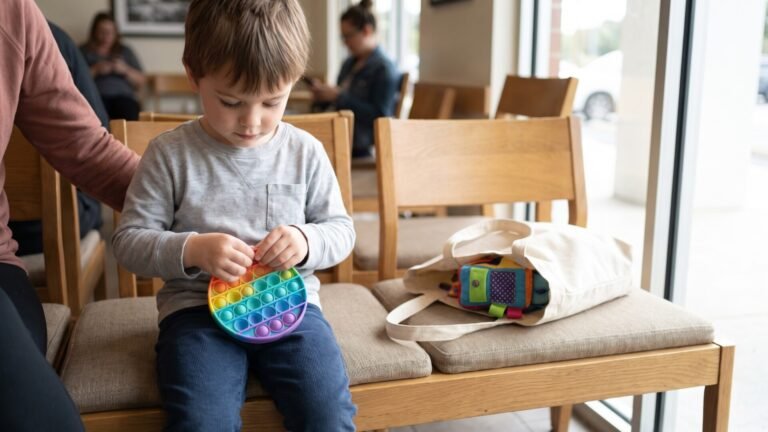
A small lidded tub of dry rice or kinetic sand can sit in a calm corner and come out when a child needs a quiet few minutes; our guide to calm-down corner toys shows how to set one up without overcrowding it. On wet days, a rotating bin is one of the easiest indoor and rainy day activities. And for children who need sensory input in different places, from the classroom to a waiting room, see sensory-friendly toys for different environments. Children who enjoy the structure of Montessori trays may also like the ideas in Montessori sensory toys.
Frequently Asked Questions About DIY Sensory Bins
What is the best base for a sensory bin?
For babies and young toddlers, dry oats, cooked and cooled pasta, or plain cereal are good taste-safe options. For preschoolers, dry rice, beans, and pasta are inexpensive and easy to find. Kinetic sand and cloud dough offer a moldable texture for children ready for the 3+ age grade.
What age can children start using sensory bins?
Babies who can sit steadily can explore a taste-safe bin with an adult close by. Many other bins suit ages 3 and up, and the age labels on products like kinetic sand are safety ratings you should follow.
Are water beads safe for sensory bins?
The CPSC has issued warnings about water beads because swallowed beads can swell and block the digestive tract, and a federal safety standard for water bead toys took effect in March 2026. We suggest skipping them in homes with babies, toddlers, or any child who mouths objects.
How do I keep sensory bins from making a huge mess?
Use a shallow bin with sides, put a sheet or mat underneath, choose less messy fillers like kinetic sand, play outside when you can, and keep a small broom and dustpan close.
How long does a DIY sensory bin last?
Dry fillers such as rice, pasta, and beans can last for months if kept clean and dry. Wet or taste-safe fillers should be thrown out after each session, and cloud dough lasts a few weeks in an airtight container.
Can sensory bins help with calming down?
Many children find the repetitive scooping and pouring soothing, although it does not work for everyone. For more calming ideas, see our guide on how sensory toys help with emotional regulation.
What if my child will not touch the bin?
Let them watch first, offer tools so they can play without touching the filler, and try a dry, smooth material. Do not force it.
How can I make a sensory bin without food coloring?
Use naturally colorful materials such as dried beans, colored pasta shapes from the store, leaves, pebbles, or fabric scraps.
How much does it cost to make a sensory bin?
Often only a few dollars. Pantry fillers such as rice, oats and pasta are cheap and reusable if kept dry, and the container can be a storage box or baking sheet you already own. A 2 lb bag of Kinetic Sand usually costs about $10 to $20 in the US.
What can I use instead of water beads for an ocean bin?
Blue-dyed rice, a shallow tray of tinted water, or ice cubes all give an ocean feel. Add large sea-animal figures and shells too big to swallow.
Conclusion
DIY sensory bins are an affordable, quick, and flexible way to give children open-ended hands-on play at home. Match the filler to your child’s age, keep small items and risky materials out of reach of little ones, and let your child set the pace. Rotate fillers and tools to keep bins interesting, and use them as one of many ways your child plays and explores.
Looking for more ideas? Read our guides on understanding sensory play, safe fidget toys for school and travel, and sensory swings for a home setup.