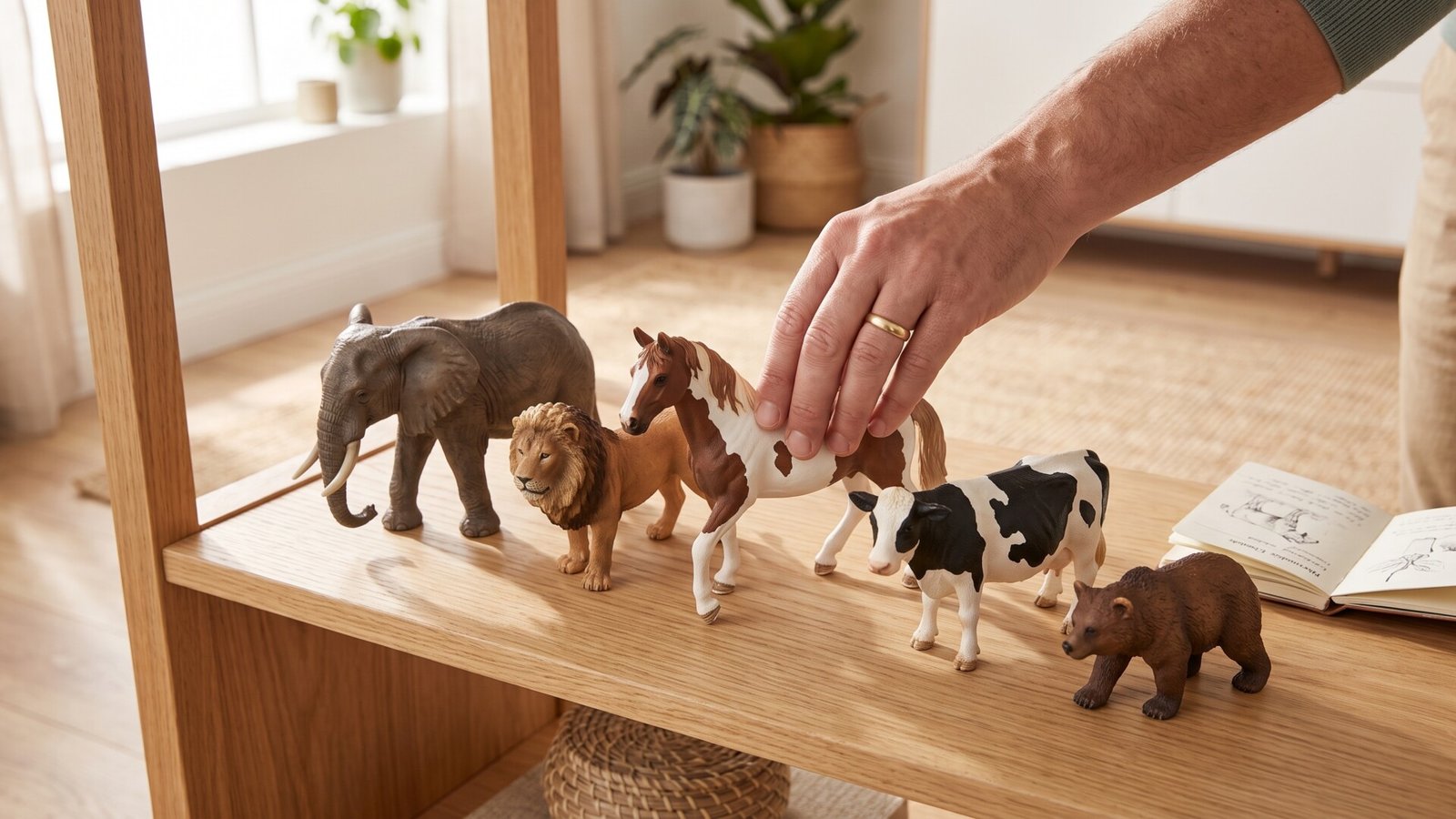
The Complete Beginner’s Guide to Schleich Animal Collecting
Discover the world of realistic animal figures for kids and collectors
If you’ve ever been captivated by realistic miniature animals, you’re not alone. Schleich figures have become a staple in playrooms, classrooms, and collectors’ shelves. Known for their detailed sculpting, hand-painted finish, and sturdy build, Schleich animals give children a way to explore wildlife, tell their own stories, and, for some families, start a long-running collecting hobby.
In this guide, we’ll walk you through everything you need to know as a beginner: how Schleich is organized, which figures to start with, what they cost in US dollars, how to keep them safe around younger siblings, organizing and displaying your collection, and ideas for expanding it responsibly. If you are still comparing toy makers more broadly, our guide to toy brands puts Schleich in context.
Schleich at a Glance
Here is the short version for parents who want the key facts before reading on.
| Question | Answer |
|---|---|
| Who makes them? | Schleich, a German company founded in 1935 by Friedrich Schleich and based in Schwäbisch Gmünd, Germany. |
| What are they? | Injection-moulded, hand-painted animal and character figures, plus playsets and accessories. |
| Typical age grade | Most animal figures and playsets carry a 3+ label. Always check the individual package, because some fantasy and licensed items are aimed at older children. |
| Main lines | Wild Life, Farm World, Horse Club, Dinosaurs, bayala, Eldrador Creatures, plus licensed lines such as Harry Potter and The Smurfs. |
| Typical US price | Single animal figures are often found at roughly $8 to $20; larger playsets commonly run from about $60 to well over $100 (see the budget section). |
| Best for | Children who enjoy pretend play with animals, and families who like a collection that grows slowly. |
Why Schleich Figures Are So Popular
Schleich has been around for decades, producing hand-painted figurines that stand out for realism. Unlike many generic plastic toys, Schleich figures are:
- Detailed: Texture, color, and proportions are designed to look like the real animal, which gives children something accurate to point at and name.
- Sturdy: Figures are solid plastic and are designed to be played with. Schleich states that its materials comply with the EU Toy Directive and the EN 71 toy safety standard.
- Themed: Many sets group animals by habitat, farm, or fantasy world, which makes it easy to build a coherent scene.
- Collectible: Regular new releases and retired figures give hobbyists something to look for.
These qualities make Schleich figures a good fit for hands-on exploration, imaginative storytelling, and independent play.
Age Grade vs. Developmental Fit
The age printed on the box is a safety label, not a promise about what your child will enjoy. A 3+ grade tells you the manufacturer considers the product suitable for children aged three and over from a safety point of view, usually because of small parts. It says little about when a child will actually be interested.
- Around 3 years: Children often enjoy naming animals, making animal noises, and walking figures between a barn and a field. Chunky single figures such as a cow, horse, or elephant are easiest to handle.
- Around 4 to 6 years: Story lines get longer. Many children start building habitats, sorting animals by where they live, and acting out little dramas with several characters. This is a good age for playsets such as barns and stables.
- Around 7 years and up: Some children shift toward collecting, completing a set, or arranging detailed displays. Fantasy lines and larger horse sets often appeal to this group, and some listings for Eldrador Creatures suggest older ranges, so check the package.
These bands are general guidance, not milestones. If you are choosing for a particular birthday, our toys by age guide helps you compare options across stages.
Types of Schleich Animals
Schleich offers a variety of themed lines. Understanding them helps you choose which to start collecting:
1. Farm World
- Features farm animals like cows, pigs, horses, sheep, and chickens.
- Includes farm accessories: barns, fences, vehicles, and farmer figures.
- A friendly way to talk with children about farm life and where food comes from.
2. Wild Life
- Includes realistic wild animals like lions, elephants, tigers, wolves, and bears.
- Often sold with accessories like trees, rocks, or small habitats.
- Invites conversation about habitats, animal behavior, and ecosystems.
3. Horse Club
- Focuses on horses, ponies, riders, and stables.
- Popular with children who love equestrian play and role-playing scenarios.
- Includes specialty sets and accessories such as stables and tack rooms. Horse sets tend to have the most small pieces, so check these before handing them to a younger sibling.
4. Dinosaurs & Prehistoric Figures
- Dinosaurs and prehistoric creatures come with detailed poses and textures.
- A natural starting point for library books and museum visits, which is where the real learning tends to happen.
- Works for science-flavored play and imaginative storytelling. Keep in mind that figure poses and colors are artistic interpretations, not settled science.
5. Fantasy & Creatures: bayala and Eldrador Creatures
- bayala is the fairy-tale line, with elves, unicorns, and magical settings.
- Eldrador Creatures covers dragons and other mythical beasts, usually with a more action-oriented look.
- Both lines give children a blank canvas for fantasy play and their own narratives.
6. Licensed Lines
- Schleich also makes licensed figures, including The Smurfs and Harry Potter.
- These are character figures rather than animals, and they often suit older children and collectors. Check the age grade on the package.
Comparing the Main Lines
| Line | What you get | Best for | Watch out for |
|---|---|---|---|
| Farm World | Farm animals, barns, farmers, vehicles | First collections, ages 3 and up | Barns and playsets are the costliest items |
| Wild Life | Zoo and safari animals, wild habitats | Animal-loving children, classroom-style learning | Large animals take shelf space |
| Horse Club | Horses, riders, stables, accessories | Children who love horses, 5 and up for the larger sets | Many tiny accessories |
| Dinosaurs | Prehistoric animals | Dinosaur fans of any enthusiasm level | Interpretations vary between figures |
| bayala / Eldrador | Fairy-tale and mythical creatures | Story-driven play | Some items are labeled for older ages |
How to Start Your Schleich Collection
Starting a Schleich collection doesn’t have to be overwhelming. Here’s a step-by-step approach:
Step 1: Pick a Theme
Decide whether you want farm animals, wildlife, horses, or dinosaurs as your main focus. Let your child’s current obsession lead; a child who loves tractors will usually care more about Farm World than a more exotic line.
- Beginners often start with a single category to build a cohesive collection.
- You can expand later as interests grow.
Step 2: Choose Key Figures
Start with core animals within the theme. For example:
- Farm World: cow, horse, pig, chicken
- Wild Life: lion, elephant, wolf
- Horse Club: horse, rider, stable
Mix adults and babies where you can. A mare with a foal or a cow with a calf gives children natural roles to act out without any extra accessories.
Step 3: Consider Accessories
Many Schleich sets include fences, barns, or trees. Accessories support imaginative play and allow for building small habitats. They are also where costs climb, so add them after the animals. Household items such as shoeboxes, blocks, and fabric scraps work as free habitats; our guide to open-ended building toys has ideas for pairing blocks with figures.
Step 4: Keep it Manageable
- Avoid buying too many figures at once.
- Focus on quality over quantity, which makes the collection easier to organize.
A Sample Starter Plan
Here is one way to think about a first purchase. It is a planning framework, not a product recommendation, and prices are rough ranges from retail listings that change often.
| Stage | What to buy | Approximate budget (USD) |
|---|---|---|
| Gift or first try | 1 to 3 single figures from one line | About $10 to $40 |
| Small family herd | 5 to 10 figures with a few adult and baby pairs | About $50 to $150 |
| Habitat or playset | One barn, stable, or large set | About $60 to $130 or more |
Organizing Your Collection
A well-organized collection makes play easier to start and helps you see what you have.
1. Display Options
- Shelves or cubbies work well for quick access.
- Clear bins can separate animals by type or habitat.
- Consider mini dioramas for display and storytelling.
2. Labeling
- Small cards or labels can help children identify species and learn facts.
- Labels give children new vocabulary to practise as they play.
3. Rotation
- Rotate figures in and out of active play.
- Fewer figures out at a time reduces clutter, and a returning animal often feels new again. The same idea works across a whole playroom, as we explain in our guide to quiet time and independent play.
Integrating Schleich Figures into Play
Schleich figures suit open-ended play, because there are no buttons or fixed outcomes. Children can explore narratives and try out their own ideas. For more on the pretend-play side, see our themes and pretend play guide.
1. Imaginative Play
- Children can create stories: a day at the farm, a safari adventure, or a unicorn rescue mission.
- Narrating events and interactions gives children plenty of chances to practise vocabulary, especially when an adult asks open questions.
2. Science-Flavored Play
- Create animal habitats or ecosystems.
- Talk about food chains, animal behaviors, and conservation.
- Pair the figures with a picture book or nature walk, which is a good fit for preschool and early elementary-age curiosity. Our animal-themed learning kits for preschoolers offer more ideas in the same spirit.
3. Art and Storytelling
- Combine figures with drawing, dioramas, or crafting.
- Children can design backdrops or make their own animal homes.
Play Value and Honest Trade-Offs
Schleich is a good fit for many families, but it is not the right choice for everyone. Weigh these points before you buy.
- Price per figure: Figures cost more than generic bagged animal sets. In return they are detailed and sturdy, so many families treat them as keepers rather than throwaways.
- No batteries, no screens: The play comes entirely from the child, which suits some children and bores others who prefer toys that do something.
- Expansion costs: Collections grow quickly because every new theme, baby animal, and accessory is a separate purchase. Setting a budget up front helps.
- Scale: Figures are not built to a single scale, so a large animal can dwarf a barn or a farmer. Most children do not mind, but it can bother detail-minded collectors.
- Storage footprint: Figures are compact, but playsets and barns take real floor and shelf space.
- Shared play: Siblings and friends can play together easily, though arguments over a favorite animal are common.
Safety and Care Notes
- Under 3 years: Schleich animal figures are generally labeled 3+. Small figures, accessories, and fences can be choking hazards for babies and toddlers, so keep them away from younger siblings and supervise closely if they share a play space.
- Check the package: Each product has its own age grade. Do not assume a figure is suitable just because other items in the line are.
- Cleaning: Wash with mild soap and warm water and let figures dry fully. Avoid harsh chemicals that may damage the paint, and check the manufacturer’s care guidance for your specific figure.
- Wear and tear: Check older or well-loved figures for chips, cracks, or loose parts, and retire any that have broken into small pieces.
- Buying secondhand: Used figures are fine in principle, but wash them first and inspect them for damage. Safety standards and materials can differ between older and newer production runs.
Tips for Parents
- Supervision for Small Parts: Some figures or accessories may be small and unsuitable for toddlers.
- Encourage Independent Play: Allow children to arrange and narrate scenes on their own.
- Rotate Accessories: Change props and habitats regularly to maintain novelty.
- Teach Respect for Collectibles: Even if children play with the figures, show them how to care for their collection.
Buying and Budget Considerations
Schleich figures are premium plastic toys, so prices can add up. Retail prices vary by store, size, and season. At the time of writing, we saw single animal figures listed from about $8 to $12 at US retailers, larger or special figures costing more, and playsets ranging from roughly $60 for a mid-size farm set to well over $100 for a large barn. Treat these as rough ranges and check current prices before you buy. Some links on this site may be affiliate links; see our affiliate disclosure for details.
- Start small: Buy essential animals first, then expand gradually.
- Check for sets: Starter sets and bundles can offer better value than single figures, but compare the per-figure price rather than assuming.
- Seasonal or limited editions: These are special but optional for beginners.
- Used figures: Sometimes gently used figures are available for a lower cost. Inspect and clean them as described above.
- Gift-giving: Grandparents and relatives can help by gifting a single animal tied to a theme, which keeps the collection focused.
Expanding Your Collection
Once the basics are in place, consider these ways to grow your collection:
- Add less common species: Unusual farm animals, exotic wildlife, or specialty horse breeds.
- Build scenes: Add barns, stables, jungle trees, or fences.
- Introduce fantasy: Unicorns or dragons can expand imaginative storytelling.
- Combine collections: Mix Wild Life and Farm World for crossover adventures.
Schleich vs. Other Animal Figure Brands
Schleich is not the only maker of realistic animal figures, and it is worth knowing the alternatives before you commit to a collection.
| Brand | Origin | What it is known for | Worth considering when |
|---|---|---|---|
| Schleich | Germany | Hand-painted figures plus playsets, horse and fantasy lines | You want a broad range with matching accessories and playsets |
| Safari Ltd. | United States | Realistic wildlife figures and small multi-figure tubes (TOOBS) | You want lots of small, varied animals for a lower cost per figure |
| Papo | France | Hand-painted figures with a strong focus on wild animals, dinosaurs, and medieval or fantasy themes | You like highly detailed sculpting and a wider choice of dinosaurs |
| CollectA | Asia-based (Procon) | Many species, including less common animals and dinosaurs | You are filling gaps with unusual species |
Sizes and scales differ between brands, so mixed collections can look uneven. Always check the age grade and any small-parts warning on each package, and compare current prices before choosing.
How Schleich Compares With Other Toy Systems
Many parents wonder whether animal figures or a building system is the better buy. They do different jobs. Schleich gives children realistic characters to build stories around, while construction systems give them something to build. Our comparison of Playmobil vs. LEGO for creative storytelling explains how two other brands approach story play, and our guide to best building toys for toddlers is useful if you want blocks to build habitats for your animals. For brand history on another long-running toy maker, see Fisher-Price through the years.
What Children Can Practise With Schleich Figures
No toy guarantees a particular skill, but open-ended animal play invites children to practise several things:
- Hands-On Exploration: Kids can look closely at animal features, habitats, and behavior.
- Language: Describing animals, actions, and stories gives children a chance to use new words.
- Creative Thinking: Open-ended play lets children invent problems and storylines and work out how to resolve them.
- Social Play: Playing with siblings or friends offers practice in sharing, turn-taking, and cooperation.
- Observation: Painted details encourage children to notice color, shape, and texture.
- Hand Skills: Standing figures up, placing fences, and fitting animals into stables gives small hands plenty of grasping and placing practice. For more on this, see our guide to STEM toys that build fine motor skills in young kids.
If you want to see how play shapes learning more broadly, our STEM & educational toys: learning through play guide is a good next read.
Tips for Displaying and Storing
- Open shelves: Easy for children to reach and organize animals by type or theme.
- Clear bins: Perfect for quick access and sorting.
- Dioramas: Combine animals with props for storytelling setups.
- Label habitats: Teach children about geography, species, or ecosystems.
- Out of reach for little ones: If you have a baby or toddler at home, keep the collection on a high shelf or in a lidded bin in a separate room.
Creative Play Ideas
- Safari Adventure: Use Wild Life animals to create a jungle or savanna scene.
- Farm Day: Set up a farm with barns, fences, and Farm World animals.
- Rescue Mission: Horse Club or Wild Life figures can act out rescue scenarios.
- Fantasy Story: Mix in unicorns or dragons for imaginative adventures.
- Habitat Challenge: Build habitats that meet animals’ needs, discussing food, water, and shelter.
- Rainy-Day Zoo: Set up a zoo with ticket booth, cages made of blocks, and a map. See our play and activity ideas guide for more ideas.
Common Collector Questions
Frequently Asked Questions About Schleich Animal Collecting
Are Schleich figures safe for young children?
Schleich animal figures are generally labeled for ages 3 and up, and the company states its materials meet the EU Toy Directive and EN 71. Small figures and accessories can still be a choking hazard for children under 3, so follow the age grade on each package and keep them away from younger siblings.
Can I wash or clean them?
Yes. Wash figures with mild soap and warm water, then let them dry completely. Avoid harsh chemicals that may damage the paint, and check the manufacturer’s guidance for your specific figure.
How do I know which figures are worth collecting?
Focus on the animals and themes your child actually plays with. Some retired figures sell for more on the secondhand market, but values vary and nothing is guaranteed, so buy for play first and treat any resale value as a bonus.
How many figures should I buy at first?
Five to ten core figures in one theme is a comfortable start. Add accessories or secondary figures as your child’s interest grows.
What age are Schleich animals for?
Most animal figures and playsets carry a 3+ age grade. That is a safety label rather than a measure of when a child will enjoy them, and children often get the most from them between roughly 3 and 8, though collectors of all ages enjoy them. Some fantasy and licensed items suggest older ranges, so always read the package.
Are Schleich figures hand-painted?
Yes. The figures are made by injection moulding and then painted by hand at several production sites, which is why small differences in detail can appear between two copies of the same figure.
How much does a Schleich collection cost?
Single animal figures commonly sell for roughly $8 to $20 in the US, while playsets range from about $60 to well over $100. Prices vary by retailer and season, so check current listings.
Where does Schleich come from?
Schleich is a German company founded in 1935 by Friedrich Schleich and headquartered in Schwäbisch Gmünd, Germany.
Conclusion
Schleich animals offer a solid combination of play, learning, and collecting. They give children hands-on, imaginative experiences and are generally labeled for ages 3 and up. By starting small, organizing thoughtfully, and encouraging storytelling, you can build a collection that fits your child’s interests and your budget.
Whether your child loves horses, wild animals, dinosaurs, or mythical creatures, there is likely a Schleich figure that fits. Collecting can be a hobby, and it can also be a starting point for talking about the animal world together. If you would like more brand guides, browse our toy brands hub, or explore themes and pretend play for more ways to use animal figures.