Best Sensory Bins for Picky Toddlers (Texture-Focused)
If your toddler is picky about textures, mealtime, clothing and even playtime can feel like a minefield. A sensory bin is one of the gentlest ways to offer tactile experiences on the child’s own terms: a shallow container, a handful of materials the child already tolerates, and no pressure to touch anything they don’t want to.
This guide covers the sensory bin options worth considering for texture-sensitive toddlers, which textures make the easiest starting points, how to set a bin up so it feels predictable, and the safety points that matter most for children under three. Two honest notes up front. First, the age on a product box is a safety grade, not a skill rating: of the five options below, only the two Lakeshore items are graded for children under three, because most popular fillers contain small parts. Second, a sensory bin is a play activity, not a treatment. If texture aversions are affecting your child’s eating, clothing or daily life, mention it to your pediatrician, who can point you to an occupational therapist if that makes sense.
For the bigger picture on why children seek and avoid different sensations, start with our guide to understanding sensory play. If you want to build bins from kitchen supplies, our DIY sensory bin recipes go step by step.
Quick Picks: Which Bin for Which Toddler?
| Option | Manufacturer age | Approx. price | Texture | Best for |
|---|---|---|---|---|
| Lakeshore Toddler-Safe Washable Sensory Balls | 12 months to 3 years | About $50 | Squishy, bumpy plastic | Younger toddlers who want a dry, washable filler with a little texture |
| Lakeshore Soft & Safe Sensory Shapes | Birth to 4 years | About $28 | Squeezable plastic with a textured surface | Gentle first exposure to bumpy textures |
| Educational Insights Playfoam Pluffle | 3+ | About $10-$35 by pack size | Fluffy, dry, mouldable foam | Preschoolers who like squishy but not messy |
| Melissa & Doug Primary Lacing Beads | 3+ | $15-$20 | Smooth, firm wood | Fine-motor practice with a predictable feel |
| DIY rice and pasta bin | Supervised use only | Pantry staples | Dry, grainy, easy to customise | Budget-conscious families, fully adjustable |
Prices are approximate US retail ranges in USD and change often, so check the current listing before you buy.
Why Sensory Bins Suit Picky Toddlers
Toddlers learn about the world through touch, sight, sound, taste and smell. A bin gives that exploration a clear boundary, which is exactly what a texture-wary child often needs. Used well, bins invite children to practise:
- Fine motor skills. Scooping, pouring, pinching and sifting give small hands plenty to do.
- Sorting and early problem-solving. Finding, grouping and matching objects by colour, size or feel.
- Curiosity at their own pace. A child can watch, touch with one finger, or use a scoop as a buffer before committing a whole hand.
- Calm, focused play. Predictable materials can feel soothing; see our parent’s guide to sensory toys and emotional regulation.
What bins can’t promise is a change in your child’s eating habits or a faster path through a developmental stage. Think of them as low-stakes, repeatable exposure that keeps touch fun rather than a battle.
Texture Types That Work Well for Picky Toddlers
Every child’s comfort zone is different, so treat this as a menu rather than a ladder. Watch which textures your child already accepts and build outward from there. The rule that matters most is change one thing at a time: texture, wetness, temperature, smell or noise. A scented, damp bin full of unfamiliar toys changes five things at once, which is usually why a bin gets refused.
- Smooth and dry. Large plastic balls, wooden beads, uncooked large pasta shapes. These are usually the lowest-risk starting point because nothing sticks, stains or feels unexpectedly wet.
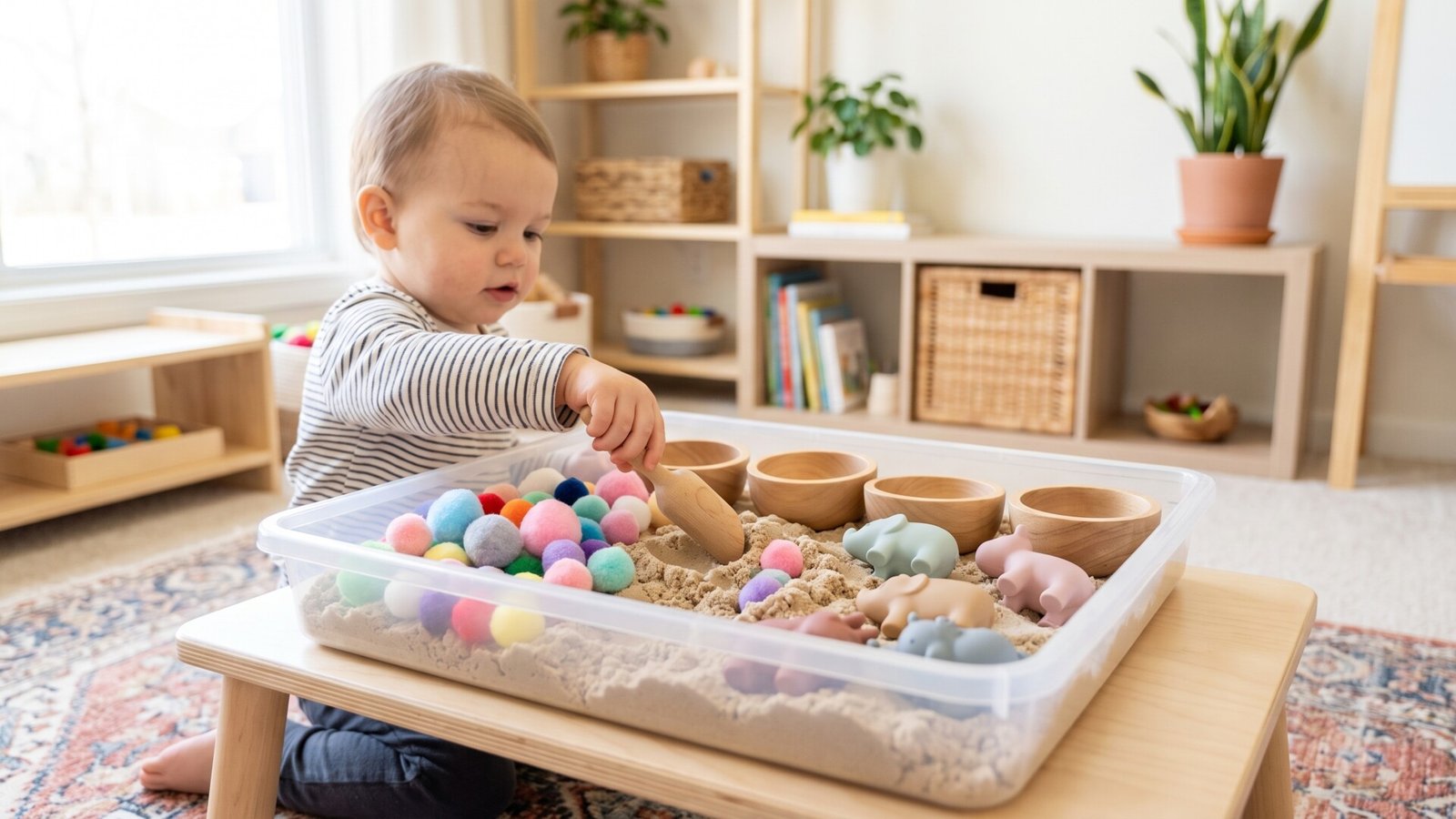
- Soft and squishy. Foam shapes, felt pieces, soft pom-poms (large enough not to be a choking risk), and mouldable foam such as Playfoam Pluffle. Squishy is tactile without being wet.
- Firm and manipulable. Wooden beads, big blocks, felt shapes. Good for pincer grasp and sorting, and the feel never changes mid-play.
- Mixed textures. Once a base texture feels safe, add one contrasting item, such as soft toy animals buried in rice, so variety arrives in small doses.
- Save for later: sticky, wet and smelly. Glue-like slime, wet clay, cooked food and strongly scented materials are the usual triggers for sensitive children. Introduce them last, if at all, and let the child opt in.
If you’d like Montessori-style, single-quality materials such as texture boards and fabric tablets, see our guide to Montessori sensory toys and the age-specific picks for 1-3 year olds.
Top 5 Sensory Bin Options for Picky Toddlers
The details below come from the manufacturers’ and retailers’ own product pages at the time of writing. Listings change, so confirm the current age grade, piece count and price before purchasing.
1. Lakeshore Toddler-Safe Washable Sensory Balls
| Feature | Details |
|---|---|
| Manufacturer age | 12 months to 3 years |
| What’s included | 50 durable plastic balls in light and dark green (bins sold separately) |
| Price (approx) | About $50 |
| Texture and care | Squishy, bumpy surface; fully washable |
Overview: A large set of extra-chunky balls made for toddlers, a natural fit for a bin because they are dry, washable and identical from ball to ball. Nothing here is wet, sticky or surprising, which is the main reason it suits cautious children. Parent reviews on the Lakeshore page mention that the size is a relief when a child still mouths everything.
Pros
- Predictable, easy-to-wash surface.
- Made for the 12-month-plus range, so it works for younger toddlers than most fillers.
- Mess-free; scooping, dumping and burying toys all work.
Cons
- Only one texture, and the bumpy surface may not suit a child who wants a perfectly smooth feel.
- Price is high for what is essentially a bin filler.
- Two shades of green only, so there is little colour variety for sorting games.
Play ideas: Bury a few favourite toy animals and go on a “rescue” hunt; scoop balls from one container into another; roll them down a cardboard tube.
2. Lakeshore Soft & Safe Sensory Shapes
| Feature | Details |
|---|---|
| Manufacturer age | Birth to 4 years |
| What’s included | 6 chunky shapes in 6 colours, the tallest about 4 inches |
| Price (approx) | About $28 |
| Texture | Squeezable plastic with a textured surface |
Overview: A small set of large, grippy shapes that offer a mild bumpy texture. Because the pieces are big, they sit comfortably in a bin alongside a base filler such as rice or the sensory balls above.
Pros
- A gentle introduction to bumpy textures without being scratchy.
- Wide age range, so it keeps working as the child grows.
- Easy to wipe clean.
Cons
- Only six pieces, so it’s an accessory rather than a complete bin.
- Plastic only; no soft or squishy contrast.
Play ideas: Stack, sort by colour, or hide a shape under a cloth for a feel-and-guess game.
3. Educational Insights Playfoam Pluffle
| Feature | Details |
|---|---|
| Manufacturer age | 3 and up |
| Format | Sold in packs from 2-piece and 4-piece sets to Sensory Station bin fillers |
| Claims | Marketed as non-toxic, fluffy, dry and never drying out |
| Price | About $10-$35 depending on pack size |
Overview: Pluffle is a fluffy, mouldable foam from the Playfoam line. It’s dry to the touch and doesn’t stick to hands the way slime does, which can make it a good bridge for children who like squish but dislike wet or sticky.
Pros
- Soft, squishy feel without wetness.
- Reusable; stores in the tub it comes in.
- Can be mixed into a bin with other textures.
Cons
- Rated 3+, so it isn’t a fit for children who still mouth objects.
- Small bits can get into carpets and need a tray or mat underneath.
Play ideas: Squeeze, press handprints, or hide small figures inside for a treasure hunt.
4. Melissa & Doug Primary Lacing Beads
| Feature | Details |
|---|---|
| Manufacturer age | 3 and up (listed as ages 3 to 6) |
| What’s included | 30 hand-painted wooden beads, 2 laces and a wooden storage case |
| Price (approx) | $15-$20 |
Overview: Smooth, firm wooden beads suit children who prefer a texture that never changes. Because of the small pieces and long laces, this is a preschool-age activity, not one for younger toddlers.
Pros
- Excellent for hand-eye coordination and pattern-making.
- Durable, and the case keeps pieces together.
- Smooth firm surfaces are often well tolerated.
Cons
- Not suited to under-3s; beads and laces need adult supervision.
- Less texture variety than the other options, and it’s a lacing toy rather than a true bin.
Play ideas: Sort beads by colour, copy a simple pattern, or count them into a bowl. For a wider look at fine-motor and calming options, see our list of safe fidget toys.
5. DIY Rice & Pasta Sensory Bin
| Feature | Details |
|---|---|
| Age | Only with close supervision for toddlers; older children can play more independently |
| Cost | Pantry staples |
| Texture | Dry, grainy and smooth; easy to adjust |
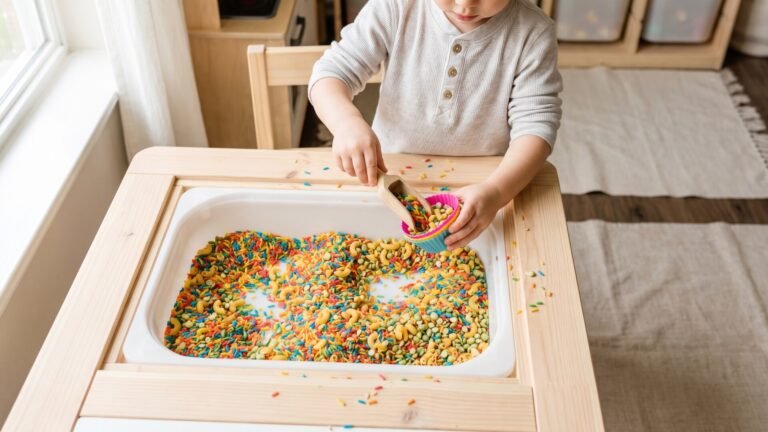
Overview: Dry rice, large pasta shapes or beans in a shallow tub is the classic starter bin: cheap, refillable, and endlessly adjustable. You can control the texture exactly, which matters when your child is picky.
Pros
- Cheapest option by far.
- Fully customisable: swap in larger pasta, remove anything your child dislikes.
- Uses familiar food items, which some children find reassuring.
Cons
- Messy; grains travel. Use a tray, a baking sheet with a lip, or a sheet underneath.
- Uncooked rice and beans are small and can be put in the mouth or nose; this bin always needs an adult nearby.
- Food allergens (wheat pasta, certain beans) are a consideration for some families.
Play ideas: Pour and scoop with a measuring cup, hide small animals for a dig, or sort pasta shapes into muffin tin cups. More filler recipes are in our DIY sensory bin guide.
How to Choose: A Quick Decision Guide
- Child is under 2 or still mouths everything: Stick to the Lakeshore pieces rated for toddlers, or a single large soft item in a shallow tray, and stay within arm’s reach.
- Child hates wet and sticky: Choose dry fillers first. Playfoam Pluffle is a middle step once they’re 3 or older.
- Child likes squish but not mess: Playfoam Pluffle, felt pieces, or soft foam shapes.
- Budget is tight: Start with the DIY bin and add one purchased item later if the child takes to it.
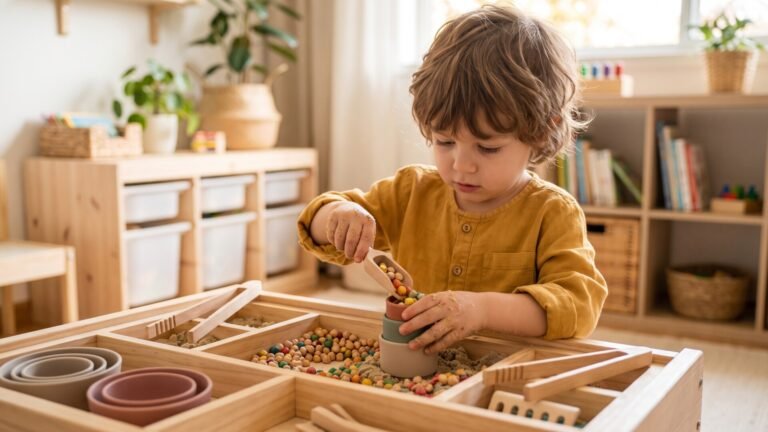
- Child is 3 or older and loves fine-motor tasks: Lacing beads or a bin with scoops, tongs and cups.
Tips for Introducing Sensory Bins to Picky Toddlers
- Start small. Offer a single texture your child already accepts. One scoop and one container is plenty for the first week.
- Use a tray or mat. A clear boundary reduces mess and helps the child feel the activity has edges.
- Add familiar toys. Favourite figurines or cars make a new texture feel like a known game.
- Offer tools. Scoops, spoons, tongs and cups let a child engage without touching. Many children move to hands on their own later.
- Model, don’t push. Sit nearby and play with the material yourself. Never press a child’s hand into a texture they’ve refused.
- Keep sessions short. Five to ten minutes is a success. End on a good note, before the child shows signs of overwhelm.
- Let avoidance be an answer. If a child steps away, put the bin away without comment and try again another day. Pressure tends to create negative associations.
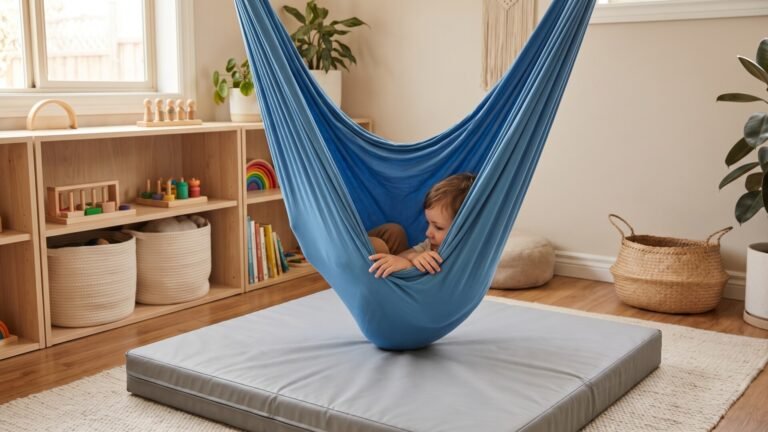
If your child is highly distressed by everyday textures, or if sensory sensitivities are part of a wider picture, our guides to sensory toys for a 4-year-old with autism and sensory and special needs toys go further. For children who respond to movement as much as touch, see indoor sensory swings.
Safety Considerations
Safety matters more with sensory play than almost any other kind, because the materials are small, loose and meant to be handled. The points below apply to every bin in this guide.
- Stay within reach. Never leave a toddler alone with a sensory bin, even for a minute.
- Small parts and choking. In the US, toys intended for children under three must not contain parts small enough to fit inside the CPSC’s small-parts test cylinder, and toys for ages 3 to 6 carry a choking-hazard warning if they do. Many loose fillers (beads, buttons, dried beans, uncooked rice) fail that test. When your child is under three, choose pieces much bigger than their fist, or keep small items out entirely.
- Avoid water beads. Water beads (superabsorbent polymer beads) are small, swell significantly when wet, and have caused serious injuries when swallowed or put in ears and noses. The US Consumer Product Safety Commission publishes a dedicated Water Beads Information Center. This guide no longer suggests them as a smooth-texture filler for toddlers.
- Button batteries and magnets. Keep any toy with a battery compartment or magnets out of the bin and out of reach.
- Allergies and food fillers. Check for wheat, nut and soy allergens when using pasta or beans. Keep dry rice and pasta for play only, and discard it after use or if it gets damp, to prevent mold.
- Wet play. Any water-based bin needs constant supervision; toddlers can drown in very little water.
Themes and Upkeep
A theme gives a bin a story and makes it feel familiar, which helps reluctant children. Keep every theme dry and mild: an ocean bin with blue felt waves and soft toy fish, a farm bin with shredded paper “hay” and large pasta shapes, a colour-sorting bin of big pom-poms or sensory balls with matching cups, or a treasure hunt with favourite toys buried in dry rice. Seasonal swaps, such as soft fabric leaves in autumn, keep the same story fresh with one small change at a time.
- Clean regularly. Wipe plastic bins and wash washable items after use.
- Rotate one element. Swap a single item every week or two, not everything at once.
- Store properly. Airtight containers prevent moisture, mold and pests, especially with food-based fillers.
- Introduce change gradually. Add one new texture at a time. For toys that live in the bath, see our guide to sensory-rich bath toys.
For a broader set of ideas for calming a child away from home, our guide to sensory toys that keep kids calm in public pairs well with a home bin routine.
Conclusion
The best sensory bin for a picky toddler is the one they are willing to approach. For younger toddlers that’s usually something dry and chunky, like Lakeshore’s washable sensory balls. For preschoolers who like squish without wet, Playfoam Pluffle is worth a look, and a simple DIY rice and pasta bin remains the most flexible and affordable place to begin.
Whatever you choose, supervise closely, keep small parts away from children under three, skip water beads, and let your child set the pace. A few calm minutes of play on their terms builds more comfort than any amount of coaxing.
Frequently Asked Questions About Sensory Bins For Picky Toddlers
At what age can toddlers start using sensory bins?
Many children enjoy simple bins from around 12 months, but only with filler designed for that age and an adult within arm’s reach. Check the manufacturer’s age grade on every item, and remember that rice, beans and beads count as small parts.
What can I use if my toddler still puts everything in their mouth?
Choose oversized, washable pieces made for under-3s, such as Lakeshore’s toddler-safe balls, or a single large soft item in a shallow tray. Skip rice, beans, beads and Playfoam for now, stay within arm’s reach, and revisit smaller fillers once mouthing fades.
Is Playfoam Pluffle safe for a 2-year-old?
Educational Insights grades Pluffle for ages 3 and up and markets it as non-toxic, but a 3+ grade means it is not designed for children who still mouth objects. For a 2-year-old, wait until mouthing has passed or choose a toddler-graded alternative.
Will a sensory bin help my child eat more foods?
Gentle, pressure-free tactile play can make touch feel less stressful for some children, but a sensory bin is not a treatment for picky eating. If feeding or texture aversions affect nutrition or daily life, talk to your pediatrician, who may suggest an occupational therapist or feeding specialist.
When should I ask a professional about texture aversion?
Raise it with your pediatrician if your child avoids many foods, resists clothing or hair care, or becomes distressed by everyday textures. Persistent patterns across settings, rather than one disliked texture, are the useful thing to describe. They can advise whether an occupational therapist evaluation makes sense.