Best Building Toys for Kids Ages 6–8
If you are shopping for a five-year-old who still eats the occasional brick, this is not your article. Neither is it for the parent of a nine-year-old who wants a 1,200-piece Technic model and the patience to match. This is for the specific, awkward middle: the six-to-eight-year-old who is too old for chunky preschool blocks and not yet ready to be left alone with a thousand tiny pieces and a 200-step manual.
That age band is where most building toy money gets wasted. Not because the toys are bad, but because parents buy for the wrong thing. They buy the biggest box, or the highest age rating, or the set that looked impressive in the store, and it sits in the corner by February while a $25 tub of magnetic tiles gets used every single day.
The best building toys for kids ages 6-8 are not the ones with the most pieces. They are the ones that match how your particular child likes to build. Get that wrong and no amount of brick count will save you. Get it right and you will still be finding pieces under the couch in three years, which is the closest thing to a compliment this category offers.
What Changes Between Ages 6 and 8
Somewhere in this range, building stops being about stacking and starts being about planning. A six-year-old can follow a picture and copy a simple model. An eight-year-old can look at a finished build, work out what needs to support the roof, and rebuild it from memory. The gap between those two skills is enormous, and it is why a set that delights one child bores the other.
There are really three modes of building here, and most toys only do one of them well.
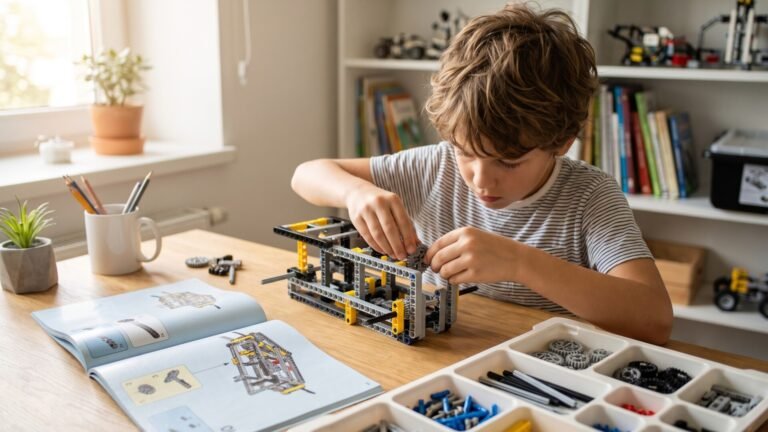
Guided building is instruction-led. The child follows steps, finishes a model, and feels the specific satisfaction of a thing that looks like the box. This builds persistence and the ability to read a diagram, which is a genuinely useful skill. It also has a short shelf life if the child never rebuilds.
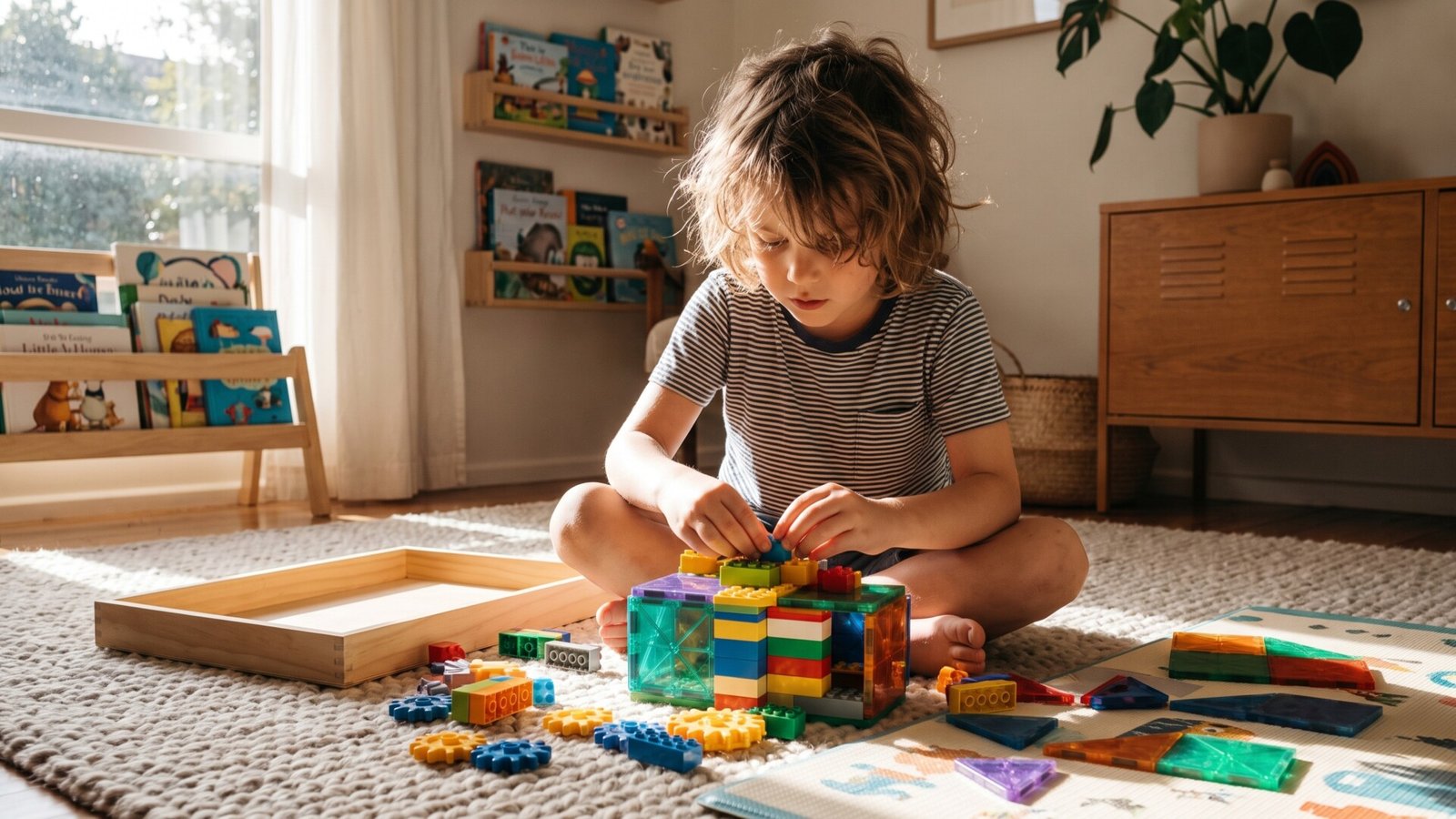
Open-ended building is loose parts and no rules. Bricks, tiles, wooden blocks. The child invents, fails, adjusts, and invents again. This is where originality and problem-solving live, and it is the mode that survives the longest.
Engineering-style building sits in between. Gears, rods, connectors, moving parts. The child is building something that has to actually work, which means the failure is instructive rather than just annoying.
Most children lean toward one of these. A child who loves guided building will be frustrated by a tub of loose bricks with no instructions. A child who loves open-ended building will build the instruction model once and then ignore the manual forever. Knowing which one you have is worth more than any recommendation on this page.
Age ratings matter here, but not the way parents assume. A set rated 7+ is not automatically better for a seven-year-old than one rated 4+. The rating is mostly about small parts and choking risk, plus a rough guess at difficulty. A confident six-year-old can handle a set rated for eight-year-olds. A cautious eight-year-old may still prefer something simpler. If you want to see how the difficulty curve shifts across the range, Best Building Toys for Preschoolers covers the earlier stage, and Best Building Toys for Kids Ages 9-12 picks up where this one stops.
Key Buying Factors for School-Age Building Toys
Before the shortlist, here is what actually separates a set that gets used from one that gets stored. None of these are on the front of the box.
Challenge without frustration. The sweet spot is instructions clear enough that the child succeeds alone, but loose enough that they can modify the build. A set the child cannot finish without you is a set that gets abandoned the moment you are busy. Look for builds that take 20 to 45 minutes, not two hours.
Replayability and independent play. Ask one question: can this child make more than one thing? A single-model kit has one good afternoon in it. A system with compatible parts has years. This is the single biggest predictor of whether your money was well spent, and it is why expandable systems beat one-time kits almost every time.
Durability and storage. Connection strength matters more than parents expect. Cheap generic bricks that grip loosely make a child feel like a bad builder when the real problem is the plastic. On storage: any set with more than about 200 small pieces needs a sorting system, or cleanup becomes a punishment and the child stops getting it out.
Space, noise, and family use. Tabletop sets suit small homes. Floor-based construction eats the living room. Almost nothing in this category is loud (the exception is anything with a motor or a sound brick, which will have a volume switch and an off switch your child will find instantly). If siblings will build together, magnetic tiles and wooden blocks handle two kids far better than a single-owner brick kit.
Value over time. A $40 expandable system that gets used for three years beats a $120 one-time kit used for a weekend. The math is not close. When you are comparing, divide the price by the number of months you realistically expect it to stay in rotation. That number, not the sticker price, is what you are actually paying.
The Shortlist
This is a deliberately mixed list: classic bricks, open-ended construction, engineering kits, magnetic building, and budget options. Prices are approximate and move around with piece count and retailer, so treat them as a rough guide rather than a quote.
LEGO Classic Large Creative Brick Box
| Feature | Details |
|---|---|
| Age Range | Commonly suitable from age 4 and up; especially useful for ages 6-8 |
| Key Features | Assorted bricks, wheels, eyes, windows, doors, and building inspiration |
| Price (approx) | $35-$60 |
The Verdict
A strong all-purpose choice for the child who invents vehicles, houses, creatures, and small scenes rather than following one fixed model. Its greatest strength is compatibility with the wider LEGO system, which means it grows instead of expiring. The tradeoff: the open-ended format can feel flat to a child who wants a specific finished build and clear instructions.
Best For
Children who want maximum creative flexibility, and families planning to add compatible LEGO sets later.
Pros
- Highly reusable and expandable
- Supports both guided and original building
- Combines with any other LEGO bricks you already own
Cons
- Storage and sorting get harder as the collection grows
- No single substantial themed model
- Less confident builders may need design prompts
[Affiliate: Check current pricing on the LEGO Classic brick box]
LEGO Creator 3-in-1 or LEGO City Set
Pick a current Creator 3-in-1 set or a LEGO City vehicle set that fits the child’s interests. Confirm the specific model and price at the time you buy, since these rotate constantly.
| Feature | Details |
|---|---|
| Age Range | Commonly designed for ages 6-8 and up, depending on the model |
| Key Features | Step-by-step instructions, themed parts, alternate models in 3-in-1 sets |
| Price (approx) | $15-$60 |
The Verdict
The best route for a child who wants the satisfaction of following instructions and then rebuilding. Creator 3-in-1 models offer more replay value than most single-model kits because the same parts make three different things. LEGO City adds vehicles, characters, and story-based play, which suits children who build in order to play.
Best For
Children who enjoy clear goals, themed play, and rebuilding familiar parts in new ways.
Pros
- Instructions accessible to independent builders
- Good blend of construction and imaginative play
- 3-in-1 formats give more than one design
Cons
- Some children rebuild once and stop
- Small pieces vanish at a rate that defies physics
- Themed sets get expensive when a child wants the whole line
[Affiliate: Check current LEGO Creator and City sets]
K’NEX 70 Model Building Set
| Feature | Details |
|---|---|
| Age Range | Generally intended for children around 7 and up; check the current package |
| Key Features | Rods, connectors, model instructions, and parts for multiple builds |
| Price (approx) | $25-$45 |
The Verdict
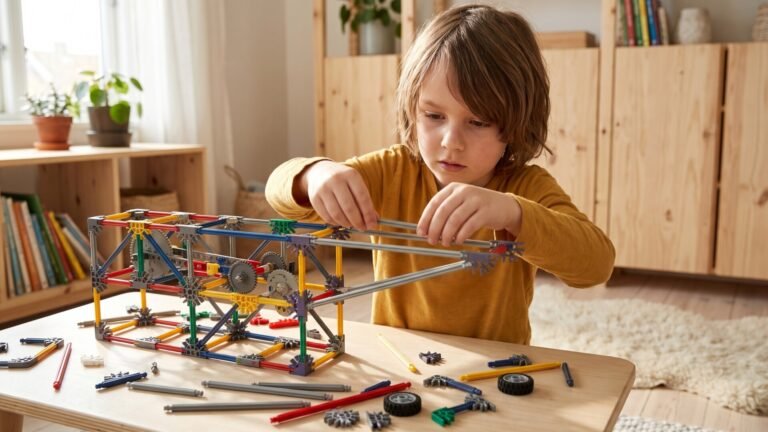
K’NEX gives a completely different building experience from interlocking bricks. Children build frameworks, moving structures, and three-dimensional forms from rods and connectors, which is closer to real engineering than anything else on this list. Early builds can look less polished than a brick model, and some children find the connectors stiff at first. The ones who push through tend to build things bricks cannot make.
Best For
Children interested in engineering, structures, moving parts, and building beyond brick walls.
Pros
- Encourages genuine structural reasoning
- Supports many model types from one set
- Compact compared with a large block collection
Cons
- Connections frustrate some children at first
- Finished models are less stable than brick builds
- Small parts demand organized storage
[Affiliate: Check current pricing on the K’NEX model set]
MAGNA-TILES Classic 32-Piece Set
| Feature | Details |
|---|---|
| Age Range | Commonly recommended for ages 3 and up; still useful for open-ended building at ages 6-8 |
| Key Features | Magnetic geometric tiles for flat patterns and three-dimensional structures |
| Price (approx) | $45-$60 |
The Verdict
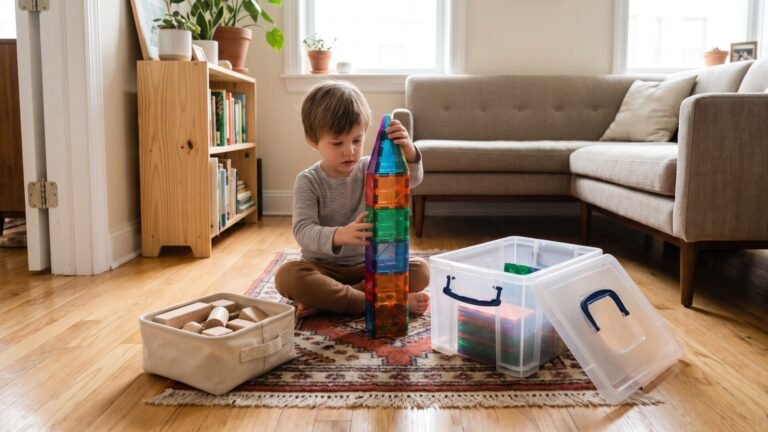
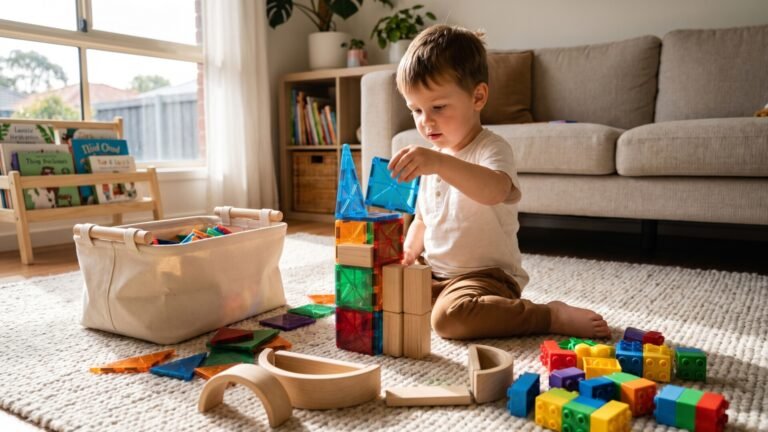
Magnetic tiles stay useful well past preschool, which surprises parents who assume they are a toddler toy. At six to eight, children use them for larger structures, ball runs, architecture, and combining with figures and vehicles. They are not the tool for detailed models, but for fast construction with low frustration they are hard to beat. A 32-piece set is a starting point, not a full collection, and two children building at once will want more.
Best For
Children who like building quickly, playing collaboratively, or creating large structures without complicated instructions.
Pros
- Fast setup and easy rebuilding
- Strong open-ended and group-play value
- Useful for visualizing shapes and balance
Cons
- Smaller sets feel limited for ambitious structures
- Magnets cannot match the detail of brick systems
- Large tile collections need real storage space
[Affiliate: Check current pricing on MAGNA-TILES]
Plus-Plus BIG or Plus-Plus Basic
Choose BIG for children who need larger pieces, or Basic for children ready for smaller, more detailed construction.
| Feature | Details |
|---|---|
| Age Range | Plus-Plus BIG is commonly suited to younger children; Plus-Plus Basic is generally aimed at ages 5 and up |
| Key Features | One-piece geometric construction system for flat mosaics and three-dimensional builds |
| Price (approx) | $15-$40 |
The Verdict
Plus-Plus sits between a mosaic activity and a construction toy. It takes almost no space, supports quiet independent play, and suits children who like patterns, repetition, and compact projects. It is also the best travel option on this list, which is not a small thing if you have ever tried to pack a brick collection into a car.
Best For
Small spaces, travel, quiet play, and children who enjoy patterns more than large structures.
Pros
- Very compact storage
- Encourages patterning and spatial planning
- Available at modest price points
Cons
- Less satisfying for children who want big builds
- Small pieces require care around younger children
- Gets repetitive without project ideas
[Affiliate: Check current Plus-Plus pricing]
Learning Resources Gears! Gears! Gears! Building Set
| Feature | Details |
|---|---|
| Age Range | Commonly designed for preschool and early elementary use; check the current set |
| Key Features | Interlocking gears, bases, connectors, and construction pieces |
| Price (approx) | $25-$45 |
The Verdict
This is the pick for a child who wants their construction to move. The cause-and-effect element gives the building an obvious purpose: if the gears do not mesh, nothing turns, and the child has to work out why. That is real problem-solving, not the label on the box. It is narrower than a general brick collection, though, and children seeking elaborate architecture or storytelling will outgrow it.
Best For
Children interested in motion, gears, cause and effect, and hands-on STEM play.
Pros
- Makes mechanical relationships visible
- Easy to start without lengthy instructions
- Supports experimentation and troubleshooting
Cons
- Less versatile than a general construction system
- Large builds need a stable, flat surface
- Some children lose interest once they crack the gear pattern
[Affiliate: Check current Gears! Gears! Gears! pricing]
Melissa & Doug Standard Unit Blocks or Wooden Building Blocks
Use a current Melissa & Doug wooden block set or another clearly identified standard-unit set available through approved partners.
| Feature | Details |
|---|---|
| Age Range | Often suitable from age 3 and up; particularly useful for open-ended play at ages 6-8 |
| Key Features | Solid wooden blocks in varied shapes for structures, roads, bridges, and imaginative play |
| Price (approx) | $30-$80 |
The Verdict
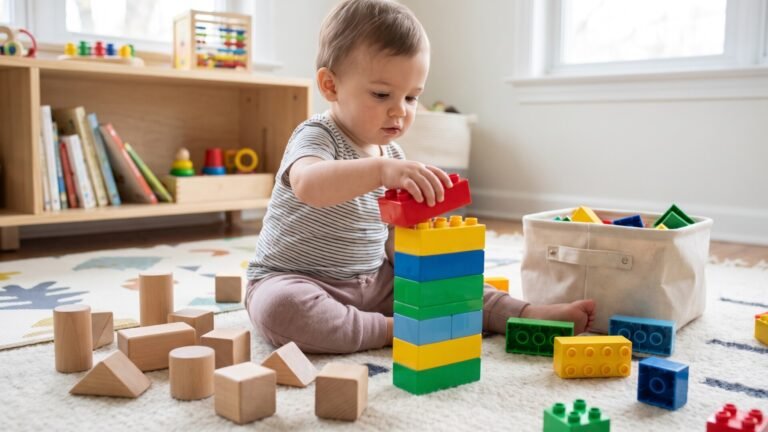
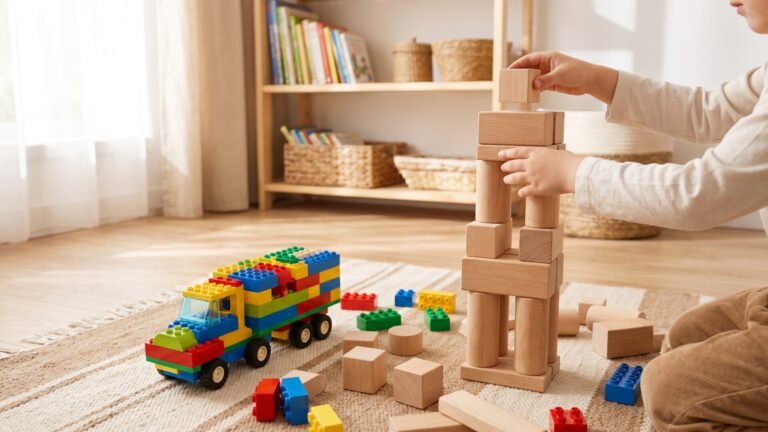
Wooden blocks are the quiet, screen-free option that rewards planning and patience rather than speed. They take more floor space than a small brick set and offer none of the model detail, but they last for years and work across ages, which almost nothing else here does. A child who builds towns, ramps, marble runs, and pretend-play settings will get more from these than from any themed kit.
Best For
Families prioritizing open-ended play, quiet construction, durability, and compatibility with pretend play.
Pros
- Durable and visually simple
- Encourages balance, proportion, and spatial reasoning
- Works across multiple ages at once
Cons
- Needs more storage space
- Structures collapse easily, which some children find upsetting
- Less appealing to children who want characters and instructions
[Affiliate: Check current wooden block set pricing]
Skip This If: Oversized Sets Bought for Piece Count Alone
A very large mixed-brick box is not automatically better than a smaller, well-matched system. It is more to sort, more to lose, and more to step on. If the child cannot manage the pieces they already have, doubling the pile does not fix it.
Skip the complex premium engineering kit if your child mainly wants quick imaginative builds. A 12-stage mechanical model that requires adult help for two hours is not a gift, it is a project you have been assigned. Buy it when the child asks for it specifically, not because it looked impressive online.
Skip cheap generic magnetic or brick sets. Poor connection strength and inconsistent sizing are the two most common complaints, and both make a child feel like they are bad at building when the fault is the plastic. Compatibility is worth paying for.
And skip anything bought before you know the child’s play style. If you cannot answer whether they build vehicles, patterns, mechanisms, or pretend worlds, you are guessing. Watch them for a week first.
Comparison Table
| Product | Approx. Price | Best For | Replayability | Space Demand | Main Tradeoff |
|---|---|---|---|---|---|
| LEGO Classic Large Creative Brick Box | $35-$60 | Open-ended brick building | High | Medium | Sorting and storage |
| LEGO Creator 3-in-1 or City set | $15-$60 | Guided builds and themed play | Medium to high | Low to medium | Less open-ended than a brick box |
| K’NEX 70 Model Building Set | $25-$45 | Engineering and structures | High | Low to medium | Can frustrate at first |
| MAGNA-TILES Classic 32-Piece | $45-$60 | Fast, collaborative construction | High | Medium to high | Limited fine detail |
| Plus-Plus | $15-$40 | Quiet, compact building | Medium to high | Low | Small pieces, repetitive format |
| Gears! Gears! Gears! | $25-$45 | Motion and cause-and-effect play | Medium | Medium | Narrower type of construction |
| Melissa & Doug wooden blocks | $30-$80 | Durable open-ended play | High | High | Needs floor or shelf space |
What Most Buyers Get Wrong About Ages 6-8
The most common mistake is assuming an older child needs the most complicated set. In practice, a toy the child can use independently is worth more than a technically advanced kit that needs an adult standing over it. Independence is the feature. Everything else is packaging.
The second mistake is treating open-ended and instruction-led play as rivals. They are not. Instruction sets build confidence, teach diagram-reading, and give a child the vocabulary of how parts fit. Loose parts let them apply it. The strongest household collection has one of each, which is why a Creator set plus a Classic brick box outperforms either alone.
Piece count is a weak measure of value, and the industry knows it. A 500-piece box of loose generic bricks creates less useful play than a 200-piece compatible system the child understands. What matters is whether the parts work together and whether the child can find them.
The counterintuitive one: repetition is not wasted play. A child who rebuilds the same vehicle eleven times is refining planning and motor control, not failing to be creative. Parents often push for novelty when the child is doing exactly the work they need. Leave them to it.
ToyGuideHub Replayability Analysis
This framework scores building toys on five things that predict whether they are still in use next year. It is an editorial judgment based on how each system works, not a lab test. Score each out of 10 and weight them however suits your child.
- Build variety: How many substantially different creations are possible from the same parts?
- Independence: Can a typical 6-8-year-old start and continue without constant adult help?
- Expansion value: Can new pieces or compatible sets extend the system over time?
- Play after construction: Does the finished build support pretend play, experiments, or redesign?
- Storage and recovery: How easily can the child find pieces and restart after cleanup?
Run the leaders through it and the picture gets clear.
LEGO Classic Large Creative Brick Box takes the top spot on build variety and expansion value. The wider LEGO ecosystem means this box is a foundation, not a purchase. Its weak point is storage and recovery, which drops as the collection grows.
MAGNA-TILES wins on speed and independence. A child can start building in seconds and rebuild just as fast, which makes it the best option for a child who gets frustrated by fiddly connections. It loses points on fine detail.
K’NEX and Gears! Gears! Gears! score highest on play after construction when the build is meant to move. Both reward experimentation. Gears is the easier entry point; K’NEX extends further.
Plus-Plus is the compact champion. Small footprint, easy storage, good for quiet independent work. It scores lower on build variety because the format pushes toward patterns rather than large structures.
Wooden blocks take the long-life prize. They score well on variety and independence, and they never break. The tradeoff is storage, which is the highest on this list.
The honest caveat: replayability depends partly on the child’s building style, which no framework can score. Use this to narrow the field, then watch how your child actually plays. The set that matches their behavior beats the set that scores highest on paper.
Which Building Toy Makes Sense After Six Months?
This is the question almost no buying guide answers, and it is the one that decides whether you wasted your money.
LEGO systems tend to grow with the child. The first box becomes a base, and birthdays and holidays add to it. By the six-month mark, a child who took to LEGO usually has a collection, not a set, and the parts cross-pollinate. This is why the Classic box edges out themed kits for most families: it is the thing everything else attaches to.
Magnetic tiles often stay in rotation for collaborative and large-scale builds. They get less solo use than bricks, but they come out when a friend visits or a sibling wants to build together. Six months in, they are usually still on the shelf and still getting used.
Wooden blocks get used less often but across more types of play. They come out for towns, ramps, and pretend setups rather than dedicated building sessions. A child may go weeks without touching them and then use them every day for a month.
Instruction-heavy kits are the ones that most often become display pieces. The model gets built once, admired, and left on a shelf. This is not a failure exactly, but it is an expensive way to buy a decoration. If your child rebuilds the model a second time, you bought well. If not, you learned something about their play style for the price of one set.
The hidden costs show up around month three. Expansion purchases, because the child wants more of a system that works. Missing parts, which matter more in some sets than others. Sorting time, which is real and usually falls on the adult. Storage bins, which nobody budgets for. And adult support for the difficult kits, which is a cost measured in evenings.
The practical test before you buy: identify which of these your child does repeatedly.
- Builds vehicles and machines
- Builds structures and buildings
- Makes patterns and flat designs
- Builds things that move
- Builds pretend-play environments
Match the system to the behavior and you will beat the odds. Buy for the child you have, not the one in the marketing photos.
How to Choose the Right Building Toy
Best Overall
LEGO Classic Large Creative Brick Box for families wanting one flexible system that supports guided projects, original designs, and future expansion. It is the safest single purchase in this category because it does not lock you into one theme.
Best Budget Pick
LEGO Creator 3-in-1 if the child likes themed models with instructions, or Plus-Plus if they prefer compact, pattern-based building. Both come in under $40 and neither wastes money on packaging.
Best for STEM and Engineering
K’NEX 70 Model Building Set for structural and mechanical reasoning. Learning Resources Gears! Gears! Gears! for younger or less experienced builders who need immediate cause-and-effect feedback before they can handle a rod-and-connector system.
Best for Independent Play
LEGO Creator 3-in-1 for children who can follow instructions alone, or Plus-Plus for quiet, low-footprint building with minimal setup and no adult help required.
Best for Siblings and Open-Ended Play
MAGNA-TILES Classic 32-Piece Set, with the caveat that two children building at once will want a larger collection. Tiles handle parallel play better than a single-owner brick kit.
Best for Small Spaces
Plus-Plus or a modest LEGO set. Both store in a small container and work on a table, which matters if the floor is not available. See Best Building Toys for Small Spaces for the full breakdown.
Best for Long-Term Open-Ended Use
Wooden building blocks for families with storage space and a child who enjoys architecture, pretend play, and experimenting with balance. They will still be usable when the child is ten.
Safety, Setup, and Parent Guidance
Follow the manufacturer’s age guidance and check pieces for damage, especially with younger siblings in the house. Small parts, magnets, and tiny connectors are the real risk here, and the risk is not the child you bought the toy for. It is the toddler who finds a stray piece. Keep magnet sets and small connectors away from any child who still mouths objects, and check current safety guidance and product instructions rather than relying on memory.
Set up a shallow tray, a sorting box, or a clearly labeled container so the child can start building without emptying the entire collection onto the floor. This one change does more for long-term use than any upgrade you could buy.
Start with a manageable number of pieces rather than presenting everything at once. A child overwhelmed by 800 bricks builds less than one with 200 they can see and reach.
When you are drawn into the build, ask planning questions instead of taking over. “What needs to support the top?” gets a child thinking. “No, put it there,” gets you a child who stops trying. Resist correcting every design. The wobbly tower is the lesson.
The Bottom Line
For most families, the LEGO Classic Large Creative Brick Box is the best building toy for kids ages 6-8. It is flexible, expandable, compatible with everything else in the LEGO system, and it does not lock you into a theme your child will lose interest in by spring. If you want the budget version, LEGO Creator 3-in-1 or Plus-Plus will do the job depending on whether the child prefers models or compact independent play. For the engineering-minded child, K’NEX is the specialized pick. For collaborative open-ended construction, MAGNA-TILES. And if you have the storage, wooden blocks are the option that outlasts everything else on this list.
You do not need to solve this perfectly. Any of the systems above will teach your child something useful, and the difference between the top two or three is smaller than the difference between buying the right play style and the wrong one. If you have watched your child build for a week, you already know more than any review can tell you.
Check current pricing and availability through our recommended partners, and if you want to see what comes next as the builds get more complex, Best Building Toys for Kids Ages 9-12 picks up the thread. For related decisions, see Open-Ended Building Toys That Grow With Your Child and Quiet Building Toys for Indoor and Independent Play.
Frequently Asked Questions About Building Toys For Kids Ages 6–8
Are building toys good for 6-year-olds?
They can support spatial reasoning, fine-motor coordination, planning, persistence, and imaginative play when the difficulty is appropriate. The catch is “appropriate.” A six-year-old given a set two years above their level learns frustration, not engineering. Match the challenge to the child, and the developmental benefits follow. The best option depends on whether they prefer instructions, open-ended construction, patterns, or moving mechanisms.
What is the best building toy for a child who gets frustrated easily?
Magnetic tiles, larger construction pieces, and simpler LEGO or wooden block sets are the lower-frustration starting points. Stable connections and visible progress matter more than advanced features for this child. A set that clicks together easily and shows results in five minutes builds confidence. Save the fiddly connectors for later.
Are LEGO sets too structured for open-ended play?
Themed sets are more structured at the start, but the parts stay reusable forever. Most children who build the instruction model once will cannibalize it for their own designs within a month. If your child enjoys both following and inventing, pair an instruction-based set with a creative brick box and let them mix.
Are magnetic tiles still useful after preschool?
Yes, and this surprises a lot of parents. Children ages 6-8 use them for larger structures, architecture, ball runs, geometry, collaborative play, and pretend worlds. They are less suitable for detailed model building, so they work best alongside a brick system rather than instead of one. See Magnetic Tiles vs. Building Blocks: Which Is Better for Different Ages? for the full comparison.
Which building toys are best for STEM learning?
K’NEX, Gears! Gears! Gears!, age-appropriate LEGO Technic-style sets, magnetic tiles, and wooden blocks all have a case. The STEM value comes from experimenting and solving problems, not from the label on the box. A child troubleshooting why their gear train jams is doing engineering. A child following steps to assemble a model is doing something useful but different. Buy for the first kind of play if STEM is your goal.
How many pieces should a building set for ages 6-8 have?
There is no ideal number. A smaller set can be more usable if the pieces are compatible and the child can manage them independently. A larger collection suits children who already build frequently and have a storage system. Piece count is a weak proxy for value. Compatibility and how the child uses the parts matter far more.
What building toys are easiest to store in a small home?
Plus-Plus, compact LEGO sets, and smaller K’NEX collections are the most space-efficient. Wooden blocks and large magnetic-tile collections need shelf or floor space you may not have. If storage is tight, favor a system that fits in one bin over one that needs a dedicated shelf.