Toys for Children With Visual Impairments
The people who work in this category will tell you the same thing once the shop door closes: the toy labeled “for blind children” is often the one that gets returned. Not because it is bad, but because it was designed to reassure the adult holding the box, not the child holding the toy.
The real question behind this search is not which products carry the right label. It is which toys still work when the instructions are pictures, the pieces are tiny and color-coded, the buttons are flat glass, and the whole thing assumes you can see where you are going. That is a design problem, not a diagnosis.
Visual impairment varies enormously. A child with light perception, a child with usable central vision, and a child with no vision at all are three different buyers with three different needs. A toy that delights one will frustrate another. So the recommendations below are chosen on one principle: the toy has to offer a strong nonvisual way in, through sound, texture, shape, movement, or clear physical feedback. Everything else is packaging.
What Makes a Toy Accessible for Visual Impairment?
There are two routes. The first is a toy built for nonvisual play from the start, with braille markings, tactile symbols, or audio navigation. The second is an ordinary toy that happens to have the right bones, and can be adapted with labels, tactile markers, larger components, or a parent who describes what is happening.
Most families end up using both. The specialist products solve specific problems well. The mainstream toys cover the rest of childhood, which is mostly stacking, knocking down, and pretending.
The access features that actually matter
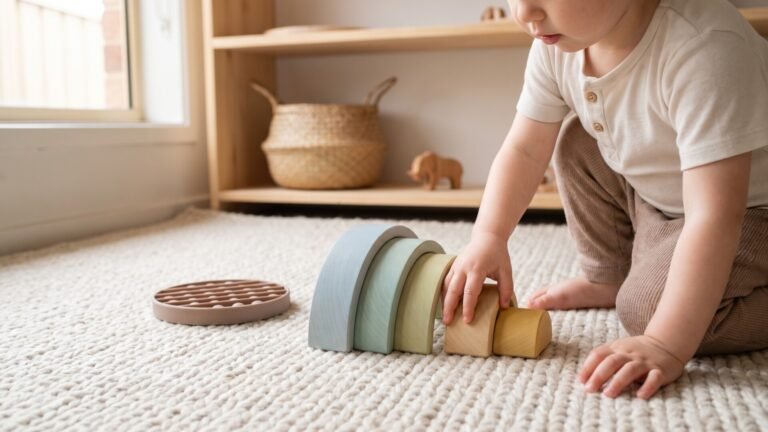
- Distinct textures and shapes. A child has to be able to tell pieces apart by feel, in a bin, without emptying it onto the floor first.
- Sound or voice feedback. Useful when it is predictable and controllable. Less useful when it plays a jingle every time someone breathes near it.
- High contrast for usable vision. Strong black-and-white or bold color contrast helps children who have some sight, especially in the toddler years.
- Large, findable controls. A big drum surface beats a row of identical flat buttons every time.
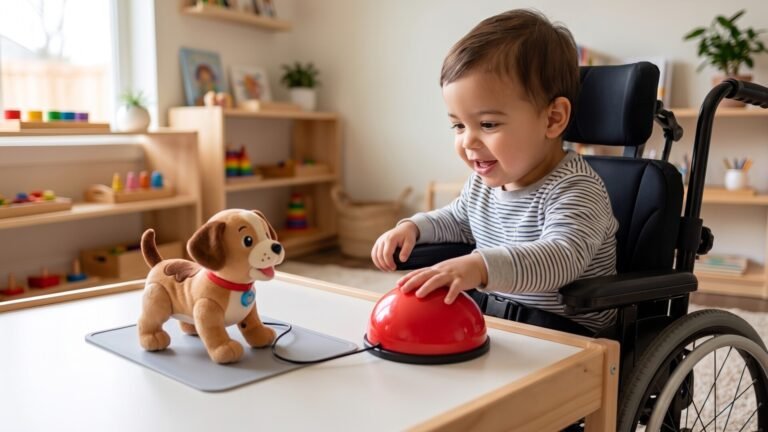
- Predictable cause and effect. Press this, that happens. Every time. This is the single most underrated feature in accessible toys.
- Pieces you can locate again. If a piece rolls under the sofa and cannot be found by feel, the toy is effectively broken until an adult rescues it.
Age labels are a starting point, not an answer
A toy can be correctly rated for a five-year-old and still be wrong for your five-year-old. Age bands assume a typical interface: read the picture, match the color, find the small button. A child may need a simpler interface, larger pieces, or several weeks longer to learn the sequence even when the age on the box is technically right.
Buy below the age band when the interface is the problem. Buy at the age band when the interface is fine and only the theme needs to be older. Those are different purchases and parents mix them up constantly.
Tactile, auditory, and sensory are not the same thing
This is where a lot of well-meant buying goes wrong. Some children want sound everywhere and will happily live inside a noisy toy. Others find loud, unpredictable audio genuinely distressing and will avoid the toy entirely after one session. Some want deep pressure and heavy pieces; others want light, precise, quiet work.
A sensory toy is not automatically an accessible toy, and an accessible toy is not automatically a calming one. If you are not sure which camp your child is in, buy the quiet option first. It is easier to add sound later than to un-buy a siren.
Key Buying Factors for Parents
Match the toy to functional vision and play style
Ask what your child actually does with their hands and ears. Do they use light, color, contrast, or magnification? Do they prefer construction, pretend play, music, puzzles, movement, or games with other people? A construction kid will get more out of a building set than out of a perfect audio toy, and vice versa.
Prioritize discoverability and independence
The test is simple: can the child find the pieces, start the toy, and keep it going without you narrating every step? A toy that technically works but needs an adult to set up each round has limited real-world value, because you are not always available and the child knows it.
This is the trade-off most reviews skip. A feature-rich toy that requires constant assistance often delivers less independent play than a plain block set the child can run alone.
Check safety and supervision needs
Choking hazards, small detachable pieces, loud sounds close to the ears, magnets, batteries, cords, and toys that move unpredictably all deserve a hard look. Follow the manufacturer’s age guidance on the box, and inspect toys regularly for cracks, loose parts, and worn battery compartments.
If a piece is damaged, it leaves the rotation that day. That is not caution for its own sake; a child who cannot see a cracked magnet housing is the child most likely to find it with their mouth.
Account for storage and maintenance
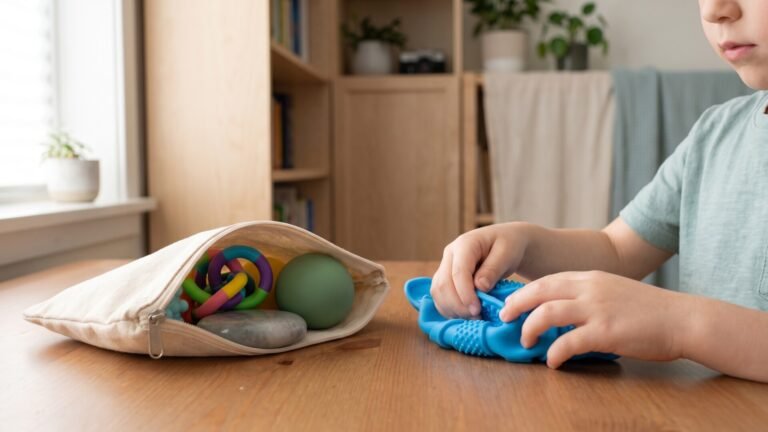
Labeled bins, tactile markers on the outside, and one consistent home for each toy do more for independent play than most upgrades you can buy. Keep spare batteries for anything electronic, and use a durable case for toys that travel to school or grandparents’ houses.
Toys for Children With Visual Impairments: Recommended Picks
This list mixes mainstream toys with strong nonvisual play value and specialist accessible options. Prices are approximate and move around with sales and retailer stock.
Best Overall: Fisher-Price Think & Learn Code-a-Pillar
| Feature | Details |
|---|---|
| Age Range | Approximately 3-6 years; confirm current manufacturer guidance |
| Key Features | Tactile connecting segments, programmable movement, cause-and-effect play |
| Price (approx) | $40-$70 |
The segments are the point. They are large, they connect with a satisfying click, and each one does something different to the toy’s path, which means the child can build a sequence with their hands and then watch it happen on the floor.
You can describe each segment by shape and function, then build a simple tactile routine: straight, turn, straight. That routine is the whole coding concept, delivered without a screen.
It is not a fully nonvisual coding system, and it needs floor space and some adult setup at first. The noise is also real, though most versions give you a volume control.
The Verdict: A strong choice for children who enjoy movement and sequencing, especially when an adult introduces the pieces through touch and verbal description. Its physical, modular design makes the concept more accessible than screen-first coding toys.
Best For: Preschoolers who enjoy active cause-and-effect play and early sequencing.
Pros:
- Large, tactile components
- Immediate movement feedback
- Encourages shared play and simple problem-solving
Cons:
- Can be noisy
- Requires clear floor space
- Adult guidance may be needed initially
[Affiliate: Check current pricing on Amazon]
Best Budget Tactile Option: Melissa & Doug Textured Wooden Blocks
| Feature | Details |
|---|---|
| Age Range | Approximately 2-5 years; confirm current manufacturer guidance |
| Key Features | Wooden blocks with varied shapes and textures, open-ended construction |
| Price (approx) | $20-$35 |
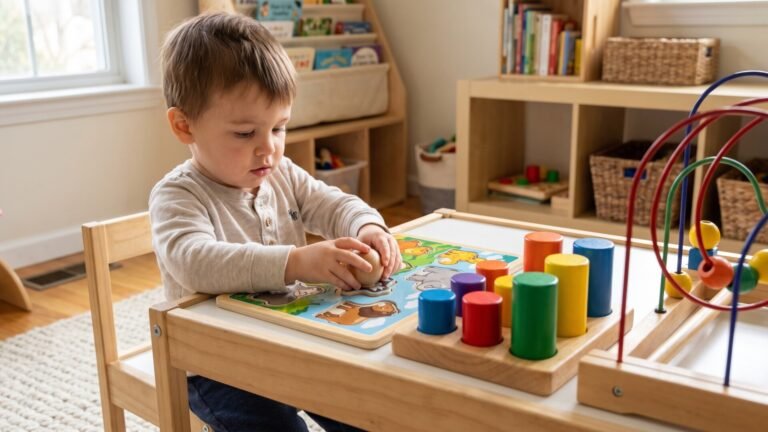
This is the unglamorous thing that outlasts almost everything else in the toy cupboard. The child sorts, stacks, builds, and knocks down without a single printed instruction, which is exactly what you want from a first tactile set.
Be honest about what it is. It is not a toy designed for visual impairment. Its value comes from the shapes and textures being genuinely different from each other, plus an adult who introduces them by feel and name.
Check that any applied textures are firmly attached and that the block sizes suit your child’s age and stage.
The Verdict: A practical, affordable foundation for tactile building and pretend play. It works best when the pieces have clearly different forms and the child has a consistent storage system.
Best For: Toddlers and preschoolers who enjoy open-ended, hands-on play.
Pros:
- Low-tech and reusable
- Supports many kinds of play
- Easier to organize than a set with many tiny parts
Cons:
- Not an accessible toy out of the box
- Some children may need tactile labeling or verbal guidance
- Texture and finish should be checked over time
[Affiliate: Check current pricing on Amazon]
Best for Audio and Interactive Learning: VTech KidiBeats Drum Set
| Feature | Details |
|---|---|
| Age Range | Approximately 2-5 years; confirm current manufacturer guidance |
| Key Features | Electronic drums, sound modes, rhythm activities, tactile controls |
| Price (approx) | $25-$45 |
Large, distinct drum surfaces are easier to locate by touch than a row of small buttons on a screen-based toy, and the feedback is instant. Hit the drum, hear the drum. That loop is the entire appeal, and it is a good one.
The volume control matters more here than on almost anything else in this list. So does the off switch, and whether your child can find it, because they will.
Repeated electronic sounds tire some children quickly. If yours is sound-sensitive, this is the wrong purchase regardless of how well the drums are laid out.
The Verdict: A useful audio-led toy for children who enjoy rhythm and imitation. Its accessibility depends on the controls being easy to distinguish and the sound level being comfortable.
Best For: Young children who prefer music, rhythm, and immediate auditory feedback.
Pros:
- Sound provides clear feedback
- Large playing surfaces
- Encourages turn-taking and imitation
Cons:
- Electronic sounds may overstimulate some children
- Batteries add maintenance
- Less suitable for children who prefer quiet play
[Affiliate: Check current pricing on Amazon]
Best for Tactile Construction: LEGO DUPLO Classic Brick Box
| Feature | Details |
|---|---|
| Age Range | Approximately 1.5-5 years; confirm current manufacturer guidance |
| Key Features | Large interlocking bricks, open-ended building, optional character and vehicle pieces |
| Price (approx) | $25-$50 |
DUPLO bricks are easier to locate, grasp, and connect than standard LEGO, and the click when two bricks meet is one of the better bits of physical feedback in the toy aisle. The strongest use is open-ended building, not following the picture on the box.
Sort the bricks by shape into containers that feel different from the outside, and build alongside your child while describing what you are doing. The set instructions are visually dependent, so treat them as optional.
Keep an eye on the smaller accessory pieces, and check your child’s ability to handle the bricks before handing over a full box.
The Verdict: A durable construction platform that grows with shared play and verbal storytelling. It is not automatically accessible, but its large parts and physical feedback make it more adaptable than many visually dependent building sets.
Best For: Toddlers and preschoolers who like building, vehicles, and pretend play.
Pros:
- Large, easy-to-connect bricks
- Strong resale and hand-me-down value
- Supports construction and storytelling
Cons:
- Set instructions are visually dependent
- Some accessory pieces are small
- Loose pieces can be difficult to find
[Affiliate: Check current pricing on Amazon]
Best Specialist Tactile Puzzle: Uncle Goose Braille Alphabet Blocks
| Feature | Details |
|---|---|
| Age Range | Typically intended for young children with adult supervision; confirm current product guidance |
| Key Features | Wooden blocks with tactile alphabet and braille elements |
| Price (approx) | $30-$50 |
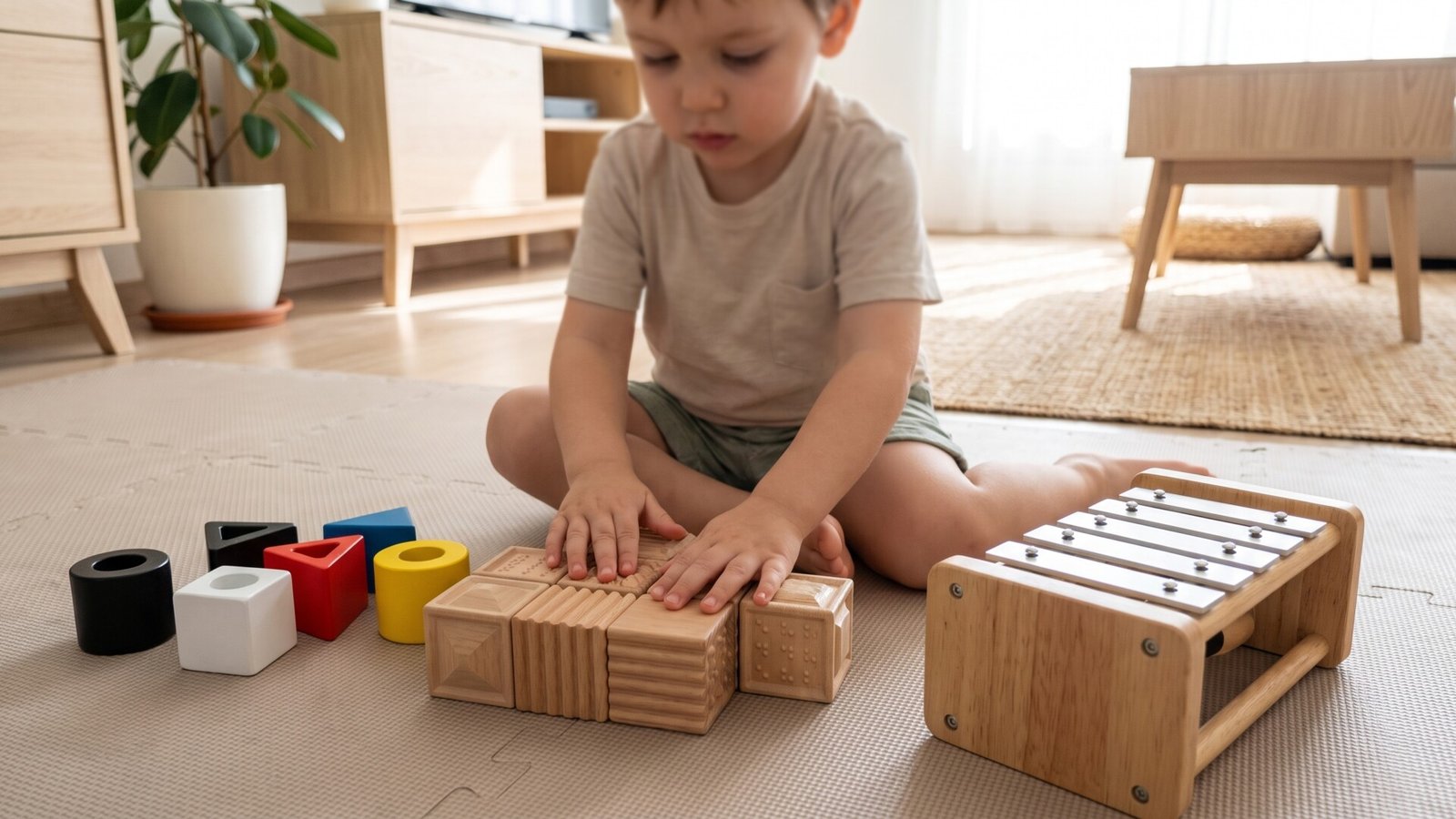
These introduce tactile symbols and letter exploration through shared play. They are not a substitute for formal braille instruction, and no block set is.
Use them for matching, stacking, tactile sorting, and storytelling rather than turning every session into a lesson. A child who is not yet reading braille can still enjoy these as blocks, which is the point.
Inspect the raised markings periodically and keep the blocks in one consistent container so they do not migrate around the house.
The Verdict: A thoughtful specialist option for families who want tactile literacy exposure in an open-ended format. Its usefulness is highest when the child already enjoys blocks and an adult can explain the symbols without pressure.
Best For: Families seeking tactile alphabet exploration alongside ordinary block play.
Pros:
- Combines tactile play with symbol exposure
- Durable wooden format
- Works for shared play
Cons:
- More expensive than ordinary blocks
- Requires adult explanation
- Not a complete braille learning program
[Affiliate: Check current pricing on Amazon]
Best for Accessible Family Games: Uno Braille
| Feature | Details |
|---|---|
| Age Range | Often suitable for school-age children and families; confirm current manufacturer guidance |
| Key Features | Braille markings on cards, familiar matching game format |
| Price (approx) | $10-$20 |
The value here is social. A familiar card game puts your child in the same activity as siblings and grandparents, using the same rules, rather than off in a separate corner with a separate toy.
Teach the card layout deliberately, establish how cards are held and passed, and give your child time to identify markings quickly. That takes practice, and the first few games will be slower than the box suggests.
Game rules and supervision should flex to the age and the group. Competitive games are not for every child, and that is fine.
The Verdict: One of the most practical specialist purchases for families who want inclusive play with siblings and adults. The experience still depends on the child being comfortable handling cards and learning the tactile marking system.
Best For: School-age children who enjoy turn-based games and family play.
Pros:
- Supports inclusive social play
- Familiar rules reduce learning overhead
- Relatively affordable
Cons:
- Cards can be misplaced or damaged
- May require practice to identify markings quickly
- Not ideal for children who dislike competitive games
[Affiliate: Check current pricing on Amazon]
Best Premium Open-Ended Option: Magna-Tiles Clear Colors 32-Piece Set
| Feature | Details |
|---|---|
| Age Range | Approximately 3 years and up; confirm current manufacturer guidance |
| Key Features | Magnetic geometric tiles, construction play, strong shape and connection feedback |
| Price (approx) | $50-$80 |
The appeal for a child with visual impairment is the shape, the edge, and the magnetic snap, not the transparent color design that sells these to everyone else. Tiles pull themselves into place, which is a genuinely satisfying thing to do with your hands.
Magnetic building sets are not suitable for every child, and they require careful supervision. Inspect tiles regularly and remove any cracked or damaged piece immediately, following the manufacturer’s magnet safety guidance.
Some builds lean heavily on visual patterning. Skip those and stay with free construction.
The Verdict: A premium construction option for children who like exploring shape and connection. It can be engaging without relying entirely on sight, but the magnetic safety requirements and higher price make it a considered purchase.
Best For: Preschool and school-age children who enjoy tactile geometry and building with an adult or sibling.
Pros:
- Distinct shapes and magnetic feedback
- Strong open-ended replay value
- Works well for collaborative construction
Cons:
- Higher purchase price
- Damaged pieces require immediate removal
- Some designs rely heavily on visual patterning
[Affiliate: Check current pricing on Amazon]
Skip This If: Screen-First Learning Toys With Small Touch Controls
If you are looking at a learning tablet or an app-dependent toy, be cautious rather than dismissive. Some of these do have real audio navigation and accessibility settings. Many do not.
The pattern to watch for is a toy that advertises audio or educational content while requiring the child to locate tiny visual targets, navigate menus, or wait for an adult to operate it. That is a toy you will end up running, not your child.
Before buying, check the size of the controls, whether menus can be navigated by sound, whether there is a headphone or volume option, and what accessibility settings exist. If the answer is unclear from the listing, assume the worst.
A simple tactile, audio, or open-ended toy usually buys more independent play than a feature-rich device that needs constant assistance.
Comparison Table: Which Toy Fits Which Child?
| Product | Approx. Price | Strongest Access Feature | Best For | Parent Effort |
|---|---|---|---|---|
| Fisher-Price Think & Learn Code-a-Pillar | $40-$70 | Tactile segments and movement feedback | Early sequencing | Medium |
| Melissa & Doug Textured Wooden Blocks | $20-$35 | Shape and texture exploration | Budget open-ended play | Medium |
| VTech KidiBeats Drum Set | $25-$45 | Large sound-producing surfaces | Rhythm and audio play | Low to medium |
| LEGO DUPLO Classic Brick Box | $25-$50 | Large pieces and connection feedback | Building and pretend play | Medium |
| Uncle Goose Braille Alphabet Blocks | $30-$50 | Raised tactile symbols | Tactile literacy exploration | High |
| Uno Braille | $10-$20 | Braille card markings | Inclusive family games | Medium |
| Magna-Tiles Clear Colors 32-Piece Set | $50-$80 | Shape and magnetic feedback | Premium construction play | Medium |
Parent Effort refers to setup, verbal description, organization, and supervision. It is not a comment on your child’s ability or developmental level.
What Most Buyers Get Wrong About Accessible Toys
The first mistake is assuming a toy has to be marketed for blind or visually impaired children to be useful. Plenty of ordinary toys offer strong tactile or audio play. Plenty of specialist products still lean on sight more than the box admits.
The second is believing more sound is better. Predictable, controllable audio supports play. Loud, repetitive audio that the child cannot turn down or off reduces it, and sometimes ends the session in tears.
The third is confusing piece count with value. A toy with fewer pieces can offer more independence than a large kit with impressive educational claims and visually complex instructions. Fewer pieces means fewer things to find, fewer things to lose, and a tidier end to the afternoon.
The fourth, and the one that costs the most money, is treating “educational” as a property of the toy rather than of the play. A basic block set used independently and repeatedly has more practical value than a sophisticated toy used only with adult help. The learning happens in the repetition, and repetition needs access.
ToyGuideHub Independent Play Score
This is an editorial planning framework, rated from 1 to 5 stars. It is based on accessible play features, ease of discovery, durability, replay value, supervision burden, and safety considerations. It is not a clinical or laboratory result, and it is not a measure of your child.
| Product | Access Pathways | Independent Play Potential | Replay Value | Parent Hassle | Editorial Summary |
|---|---|---|---|---|---|
| Fisher-Price Think & Learn Code-a-Pillar | 4/5 | 3/5 | 4/5 | 3/5 | Strong physical coding play with setup help |
| Melissa & Doug Textured Wooden Blocks | 4/5 | 3/5 | 5/5 | 3/5 | Excellent open-ended value after tactile introduction |
| VTech KidiBeats Drum Set | 4/5 | 4/5 | 3/5 | 4/5 | Easy to start, but sound tolerance matters |
| LEGO DUPLO Classic Brick Box | 4/5 | 3/5 | 5/5 | 3/5 | Durable and adaptable for shared construction |
| Uncle Goose Braille Alphabet Blocks | 5/5 | 2/5 | 4/5 | 2/5 | Specialist tactile value with high adult involvement |
| Uno Braille | 4/5 | 3/5 | 4/5 | 3/5 | Best for inclusive family play rather than solo use |
| Magna-Tiles Clear Colors | 4/5 | 3/5 | 5/5 | 3/5 | High replay value, but safety and organization matter |
Read the table as a set of trade-offs, not a leaderboard. The highest score should not automatically determine the purchase. A child who wants solitary, quiet play may prefer blocks over a noisy electronic toy, even though the drum set scores higher on independent play. A child who wants social play may gain more from Uno Braille than from a premium building set.
The best purchase is the one whose access pathway matches the child’s actual interests. A toy that scores well but sits untouched has a real score of zero.
How to Choose the Right Toy for Your Child
Best for Toddlers and Preschoolers
Start with large, washable, easy-to-locate pieces and clear cause-and-effect feedback. LEGO DUPLO, textured wooden blocks, and simple musical instruments belong here, before smaller tactile symbols or complicated rules.
Avoid assuming that age-appropriate visual complexity will translate into accessible play. It usually does not, and the mismatch shows up as a toy that gets abandoned in week two.
Best for School-Age Children
Uno Braille, tactile alphabet blocks, structured construction, and audio-led games all make sense at this stage. Give more weight to social inclusion, personal interests, and the child’s ability to manage rules or symbols.
Include older children in the choice. A toy picked entirely around disability, without them, tends to read as babyish and gets rejected on principle.
Best for Quiet or Low-Stimulation Play
Favor wooden blocks, tactile puzzles, shape sorters, and open-ended construction over toys with constant electronic effects. Check whether sound can be disabled or controlled before you buy, not after.
For more on this, see our guide to Low-Stimulation Toys.
Best for Shared Family Play
Prioritize games and building sets that let siblings and adults participate using the same rules. Uno Braille is the clearest specialist recommendation, while DUPLO and Magna-Tiles support collaborative building.
Inclusion is a practical feature, not a sentimental one. A toy that the whole family can use gets picked up far more often than one that only works in a single-child session.
Best for Travel and Small Spaces
Choose compact, self-contained options: Uno Braille, a small textured block set, or a tactile matching activity. Use a zippered pouch or labeled container, put tactile labels on the storage itself, and check for missing pieces before you leave the house.
For more options, see our [Internal: Travel Toys hub].
The Hidden Costs of Choosing Wrong
The biggest hidden cost is your time. A toy that needs constant visual setup, a hunt for missing pieces, or an adult reading instructions aloud gets used less than a simpler option, no matter how good it looked in the listing.
Then there is replacement cost. Magnetic tiles and construction sets lose pieces to cracks, sofas, and car seats. A $70 set that is missing four tiles is a $70 set that does not build what the picture showed.
There is also the cost of sensory mismatch. A loud toy that gets put away after one day, or a visually complex game that ends in frustration, is money spent on a lesson rather than a toy. It happens to everyone once.
Before you buy, run four checks. What is the main access pathway, sound, texture, shape, or movement? How will the child find the pieces without you? What happens when the batteries die? And where will this live in your home, specifically?
If you cannot answer all four, you are not ready to buy yet. That is not a failure. It is the cheapest version of this decision you will ever make.
The Bottom Line
If you want one recommendation: the Fisher-Price Think & Learn Code-a-Pillar is the best overall pick for active, tactile sequencing play, provided you have floor space and patience for the first few sessions. For budget open-ended use, the Melissa & Doug Textured Wooden Blocks are the sensible starting point. For audio play, the VTech KidiBeats Drum Set, if your child tolerates sound. For tactile literacy, the Uncle Goose Braille Alphabet Blocks with an adult alongside. For family inclusion, Uno Braille. For premium construction, the Magna-Tiles Clear Colors 32-Piece Set, with the magnet safety guidance followed properly.
The strongest choice comes down to access pathway, interest, supervision needs, and storage reality, not the word “adaptive” on a box. [Affiliate: Check current pricing and availability through our recommended partners] on the options that fit, and start with one rather than three.
The question you will ask next is whether any of this counts as education or therapy. It does not, and it does not need to. These are play and learning tools, and the useful ones are the ones your child reaches for without being asked. For the broader picture across other needs and play styles, our Best Toys for Children With Specific Needs hub covers the ground this article does not, including Toys for Children With Fine Motor Challenges and Sensory-Friendly Toys for Different Environments.
Frequently Asked Questions About Toys For Children With Visual Impairments
Are toys for children with visual impairments different from ordinary toys?
Some are. Specialist toys may include braille, tactile markings, audio feedback, or high-contrast features. Many ordinary toys are accessible when they offer large pieces, clear shapes, strong tactile differences, or predictable sound. The label matters less than the access pathway.
What are the best toys for a blind toddler?
Large, durable, washable toys with simple cause-and-effect feedback work best: chunky blocks, textured objects, shape-based construction, and carefully selected musical toys. Follow the age guidance on the box and supervise small parts closely.
Are noisy toys helpful for children with visual impairments?
Sound can provide useful feedback, but loud or repetitive audio is not suitable for every child. Look for volume control, predictable sounds, and the ability to turn effects off where possible.
Should I buy a braille toy if my child does not read braille yet?
Tactile alphabet and braille toys can support shared exploration without any formal instruction attached. Your child should be able to enjoy the toy through stacking, sorting, matching, or storytelling as well. If it only works as a lesson, it is not a toy.
How can I make ordinary toys more accessible?
Verbal descriptions, tactile labels, consistent storage, high-contrast tape where it helps, larger replacement pieces, and simplified instructions all work. Check that any modification does not create a choking, battery, cord, or magnet hazard.
Are magnetic building toys safe for children with visual impairments?
Visual impairment itself does not determine magnet safety. The difference is that a child may have more difficulty identifying a damaged or missing piece. Follow the manufacturer’s age guidance, inspect pieces regularly, and remove any cracked or damaged magnetic component immediately.
What should I do if my child needs a lot of help with an accessible toy?
Assistance at the introduction stage is normal and expected. If the toy still requires constant adult operation after the child understands it, it is probably not the right match for their current interests or access needs. That is information, not a setback.
How many toys should be out at once?
Fewer than you think. Two or three accessible options in rotation beat a full shelf, because a child can find what they want without searching. Rotate the rest and the same toys feel new again in a month.
Do I need to spend more for a genuinely accessible toy?
No. The cheapest item on this list is also one of the most socially useful, and the budget blocks outlast most of the electronics. Spending more buys durability, specialist features, or open-ended replay value. It does not buy a better outcome on its own.