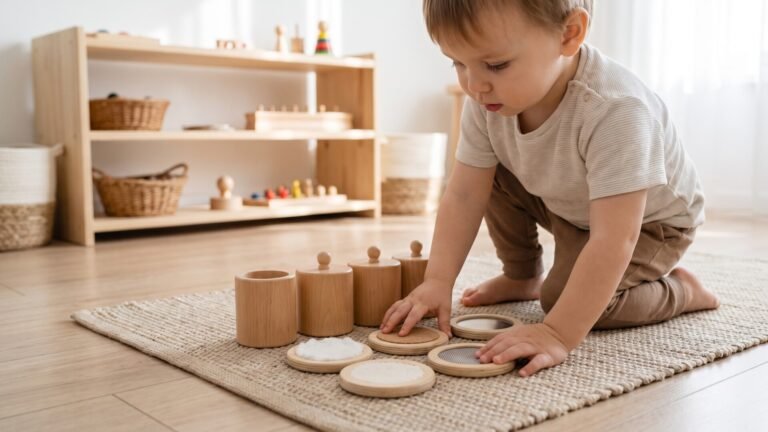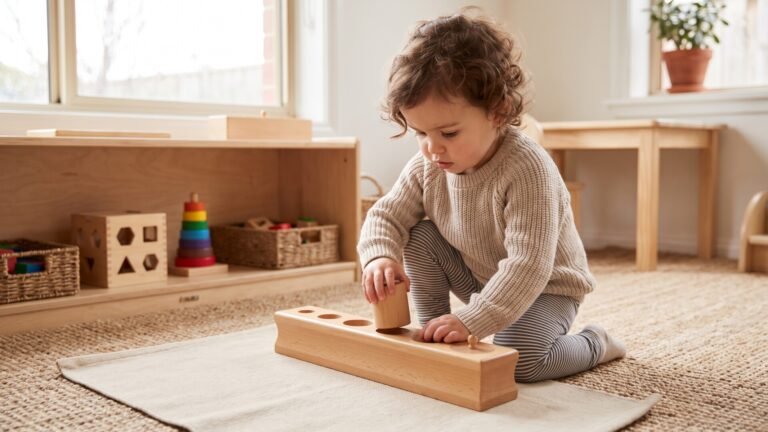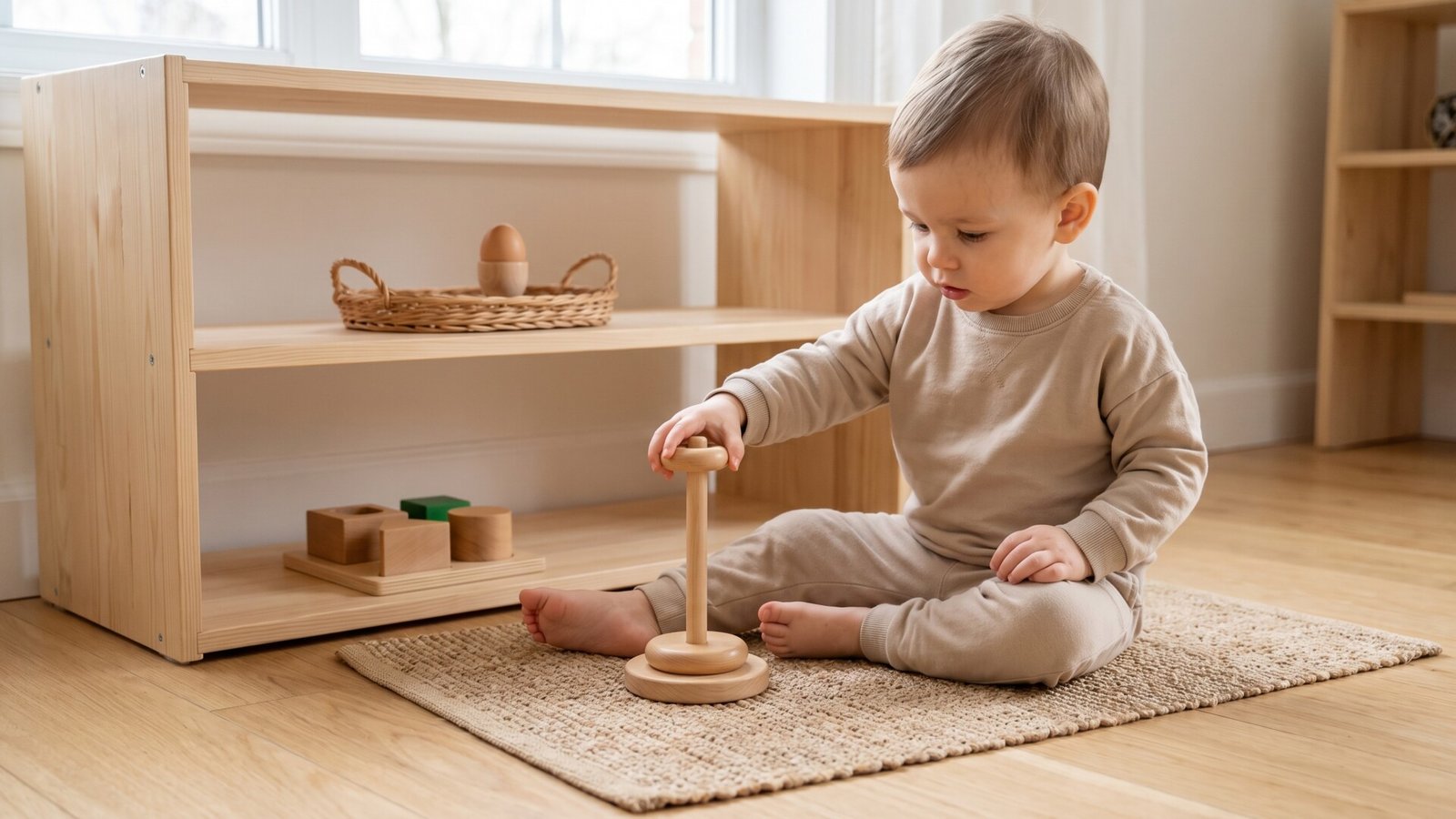
Montessori Toys for Toddlers (1–3 Years Old)
Toddlerhood is one of the most transformative stages of childhood. Between the ages of one and three, children move from simple sensory exploration to intentional action, problem-solving, and early independence. In Montessori education, this period is often called the time of the “absorbent mind in action”—when children are driven to do things for themselves, over and over, until mastery is achieved.
Montessori toys for toddlers are designed to meet this powerful internal drive. Rather than distracting or entertaining, they provide purposeful challenges that support fine motor development, language growth, coordination, concentration, and confidence. These toys do not rush children into academic learning; instead, they lay the groundwork by strengthening the skills that make learning possible.
This page serves as a sub-hub for Montessori toys for toddlers, focusing on practical life skills, sensory refinement, early language, problem-solving, and creative play. It also acts as a gateway to deeper guides, reviews, and age-specific recommendations across ToyGuideHub.
If you’re looking beyond early toddler years, our Montessori Toys & Activities for Kids hub organizes learning materials by age, skill level, and developmental stage.
Understanding the Montessori Toddler Stage
Toddlers are no longer passive observers of their environment. They want to touch, carry, pour, open, close, stack, match, and imitate the adults around them. Montessori recognized that toddlers learn best when they are allowed to participate meaningfully in real-life activities, using tools designed specifically for their size and abilities.
Key characteristics of the Montessori toddler stage include:
- A strong desire for independence (“I do it myself”)
- Repetition of actions to build mastery
- Rapid development of coordination and balance
- Growing language comprehension and expression
- Sensitivity to order, routine, and consistency
Montessori toys for toddlers respect these needs by offering realistic, hands-on materials that allow children to practice skills safely and successfully.
Why Montessori Toys Are Ideal for Toddlers
Conventional toddler toys often rely on flashing lights, loud sounds, and scripted interactions. Montessori toys take a different approach, emphasizing self-correction, simplicity, and purposeful movement.
Well-chosen Montessori toys help toddlers:
- Strengthen fine and gross motor skills
- Develop longer attention spans
- Practice problem-solving independently
- Build confidence through real accomplishment
- Transition naturally toward preschool learning
Because Montessori toys focus on one primary skill at a time, toddlers can concentrate deeply without becoming overwhelmed.
Core Categories of Montessori Toys for Toddlers
Montessori toddler toys generally fall into several overlapping categories. Each supports a different area of development while reinforcing independence and concentration.
Practical Life Toys for Toddlers
Practical life activities are at the heart of Montessori toddler education. These activities allow children to practice everyday skills that adults often take for granted.
What Are Practical Life Toys?
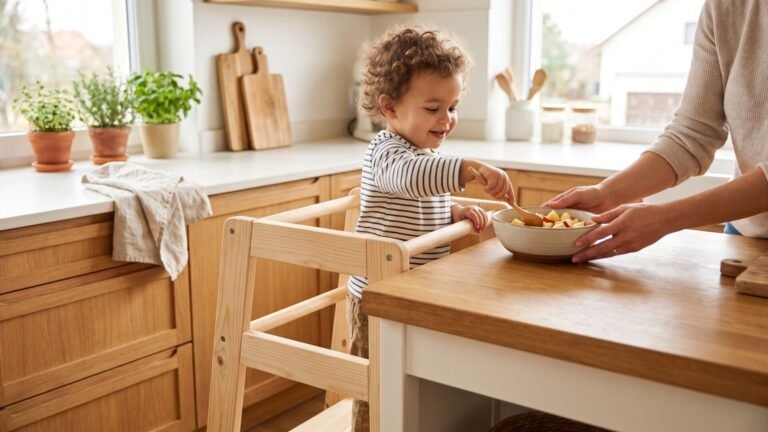
Practical life toys are not “pretend” tools. They are real, functional objects scaled to a toddler’s size, allowing children to participate meaningfully in daily life.
Examples include:
- Pouring sets with small pitchers and cups
- Spoon and scooping activities
- Dressing frames with zippers, buttons, or snaps
- Cleaning tools like child-sized brooms and dustpans
These activities help toddlers:
- Improve hand-eye coordination
- Strengthen fine motor control
- Develop focus and patience
- Build independence and self-esteem
Practical life toys are often some of the most engaging materials in a Montessori toddler environment because they align perfectly with a child’s natural desire to imitate adults.
Sensory Toys for Toddlers
While infants explore broad sensory input, toddlers begin refining their senses. Montessori sensory toys for toddlers help children notice differences in texture, weight, size, color, and sound.
Common Montessori Sensory Toys
- Texture boards or matching cards
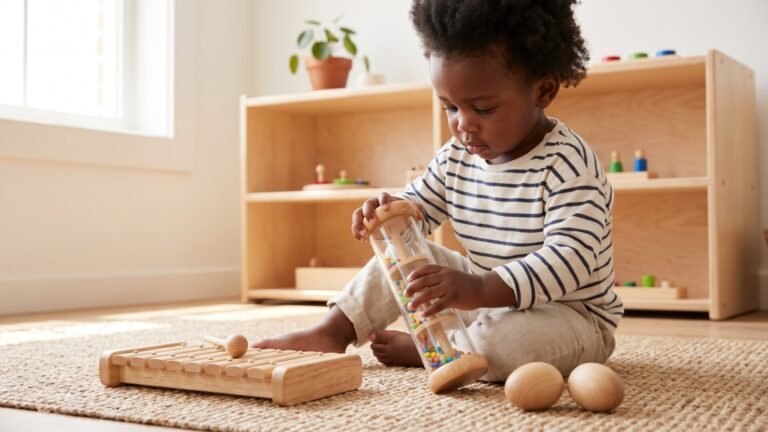
- Sound cylinders or shakers
- Color tablets or sorting trays
- Weighted objects for comparison
These toys support:
- Sensory discrimination
- Early classification skills
- Vocabulary development through description
- Focused, calm exploration
Because Montessori sensory toys isolate one variable at a time, toddlers can explore deeply without confusion.
Encourage exploration and early learning with age-appropriate Montessori toys. For a closer look at toys designed to engage the senses safely, see Montessori Sensory Toys for 1–3 Year Olds, perfect for fostering curiosity, fine motor skills, and independent play.
Fine Motor and Hand Skill Toys
Between ages one and three, toddlers rapidly develop the hand strength and coordination needed for later writing, drawing, and tool use.
Montessori fine motor toys often include:
- Peg boards
- Threading beads
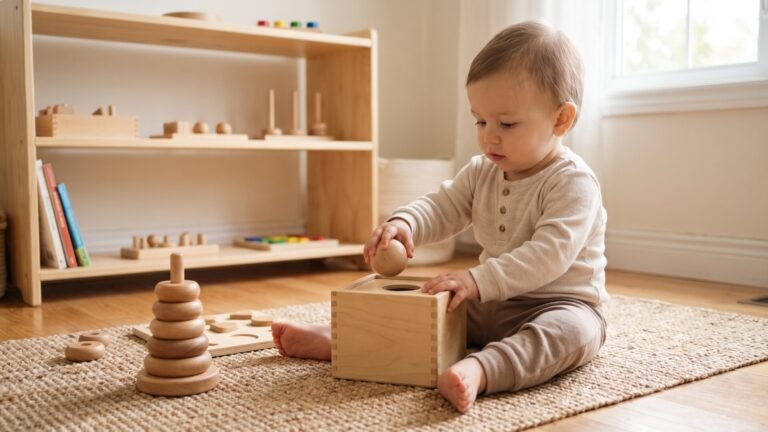
- Coin and posting boxes
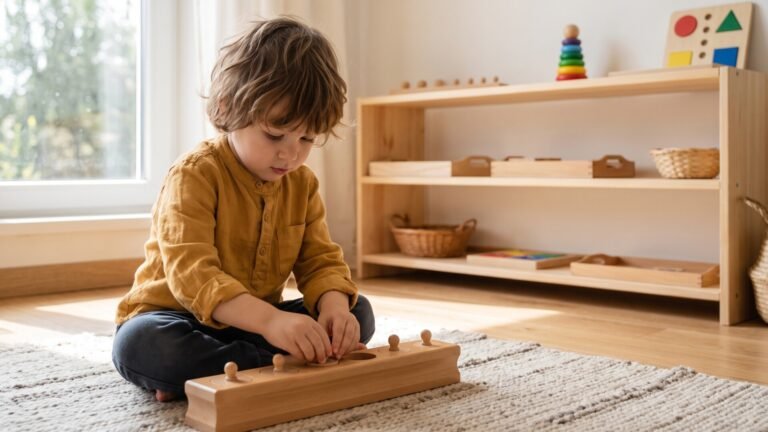
- Simple puzzles with knobs
These toys help toddlers:
- Strengthen finger muscles
- Coordinate both hands together
- Practice precise movements
- Build problem-solving skills
Unlike electronic toys that provide instant feedback, Montessori materials reward effort with tangible results.
Language Development Toys
Language explodes during the toddler years. Montessori language toys support vocabulary growth, sound awareness, and early communication without forcing reading too early.
Montessori Language Materials for Toddlers
- Object-to-picture matching cards
- Realistic animal or object figurines
- Simple wooden puzzles with labeled pieces
- Books with clear, realistic images
These materials encourage:
- Naming and categorization
- Vocabulary expansion
- Listening and comprehension
- Confidence in verbal expression
Language development in Montessori is deeply connected to real-world experiences, not abstract symbols.
Problem-Solving and Cognitive Toys
Toddlers are natural problem-solvers. Montessori toys channel this curiosity into structured challenges that build logical thinking.
Examples include:
- Shape sorters with limited pieces
- Stacking and nesting toys
- Size-grading towers
- Simple cause-and-effect toys
These toys help toddlers:
- Understand spatial relationships
- Develop persistence
- Learn through trial and error
- Experience self-correction
Because Montessori toys are self-correcting, toddlers can recognize and fix mistakes independently.
Creative and Open-Ended Play
Although Montessori emphasizes purposeful activity, creativity plays an important role in toddler development. Montessori creative toys are open-ended rather than scripted.
Examples include:
- Wooden blocks
- Simple art materials (large crayons, washable paints)
- Musical instruments like drums or xylophones
- Pretend play objects rooted in real life (kitchen tools, dolls)
These materials allow toddlers to:
- Express ideas freely
- Explore rhythm and movement
- Engage in early imaginative play
- Build confidence through self-expression
Montessori creative play remains grounded in reality, especially during the toddler years.
Montessori Toy Recommendations by Toddler Stage
Toddlers develop at different rates, but certain skills tend to emerge in predictable stages.
Early Toddlers (12–18 Months)
At this stage, toddlers focus on movement, simple manipulation, and repetition.
Recommended toy types:
- Posting boxes
- Stacking rings
- Push toys without electronics
- Simple shape sorters
The goal is exploration and mastery through repetition.
Help your little one explore safely while building essential skills with carefully selected Montessori toys. For a closer look at options designed for toddlers who explore with their mouths, see our guide: 7 Safe Sensory Toys for Toddlers Who Chew. These toys are made to be both engaging and completely safe for teething toddlers.
Mid Toddlers (18–24 Months)
Toddlers begin refining coordination and expressing independence.
Recommended toy types:
- Practical life pouring activities
- Peg boards
- Object matching games
- Simple puzzles
Children at this stage benefit from increased challenge and choice.
Older Toddlers (24–36 Months)
Problem-solving, language, and creativity expand rapidly.
Recommended toy types:
- Dressing frames
- Size-grading toys
- Language matching cards
- Beginner art and music materials
These toys prepare children for preschool-level Montessori work.
Setting Up a Montessori Toddler Toy Environment
A prepared environment is just as important as the toys themselves.
Key elements include:
- Low shelves with limited choices
- Clearly defined activity spaces
- Child-sized furniture and tools
- Regular toy rotation based on interest
Rather than overwhelming toddlers with options, Montessori environments emphasize order and accessibility, allowing children to choose and return materials independently.
Montessori Toys vs. Traditional Toddler Toys
Montessori toys differ from traditional toddler toys in meaningful ways:
Montessori toys:
- Encourage independence
- Focus on real-world skills
- Promote deep concentration
- Avoid overstimulation
Traditional toys often:
- Rely on electronic feedback
- Entertain rather than engage
- Limit creativity
- Encourage short attention spans
These differences become especially important during the toddler years, when habits around focus and learning are forming.
How Montessori Toddler Toys Support Preschool Readiness
Montessori toys for toddlers are not about early academics. Instead, they prepare children by strengthening foundational skills such as:
- Attention and focus
- Fine motor control
- Language comprehension
- Confidence and independence
Children who experience Montessori-aligned play often transition more smoothly into preschool environments, whether Montessori-based or not.
Exploring More Montessori Guides
This page connects naturally to other Montessori content across ToyGuideHub, including:
- Montessori Toys for Infants
- Montessori Toys for Preschoolers
- Montessori Practical Life Activities
- Montessori Sensory Toys
- Montessori Language Games
Each guide dives deeper into specific developmental needs while reinforcing the same core principles.
Choosing Montessori Toys as Toddler Gifts
Montessori toys make thoughtful gifts for toddlers because they grow with the child and support real development.
When choosing a gift:
- Prioritize simplicity and quality
- Avoid batteries and screens
- Choose materials that encourage hands-on use
- Consider toys that can be used in multiple ways
A well-chosen Montessori toy often becomes a daily favorite rather than a short-lived novelty.
Common Questions About Montessori Toys for Toddlers
Do toddlers get bored with Montessori toys?
Typically, no. Because Montessori toys allow for repetition and mastery, toddlers often return to them again and again.
How many toys should a toddler have access to?
A small selection—usually 6–10 toys—is ideal, rotated regularly based on interest.
Can Montessori toys be used in non-Montessori homes?
Absolutely. Montessori toys work well in any environment that values intentional play.
Final Thoughts: Supporting Independence Through Play
The toddler years are a time of powerful growth, curiosity, and determination. Montessori toys honor this stage by giving children the tools they need to explore the world independently, confidently, and joyfully.
By choosing toys that emphasize hands-on learning, real-world skills, and focused engagement, parents create an environment where toddlers can thrive—not through instruction, but through experience.