Montessori Toys & Activities for Kids
A Complete Guide to Self-Directed Learning Through Purposeful Play
Montessori toys are often misunderstood as simply “wooden toys” or “educational toys without batteries.” In reality, Montessori toys and activities are not defined by their appearance, price, or branding, but by a deeper philosophy of how children learn, grow, and interact with the world around them. When chosen thoughtfully, Montessori toys become tools that support independence, concentration, confidence, and lifelong curiosity, rather than sources of short-term entertainment.
This hub page serves as a complete, parent-friendly guide to Montessori toys and activities for kids, covering the philosophy behind Montessori learning, the benefits for different age groups, and clear pathways to age-based and category-based toy recommendations. Whether you are new to Montessori or simply looking to make more intentional choices about the toys in your home, this guide is designed to help you understand not just what to buy, but why it matters.
Throughout this page, you’ll find links to detailed sub-guides, product roundups, and activity ideas, allowing you to explore Montessori learning in depth at your own pace.
Understanding the Montessori Philosophy
At the heart of Montessori education is a simple but powerful belief: children are naturally motivated to learn when given the right environment. Rather than relying on constant instruction, rewards, or external pressure, Montessori focuses on preparing a space where children can explore, practice, and master skills independently.
Self-Directed Learning
Montessori learning is child-led. This does not mean children are left without guidance, but rather that they are given meaningful choices within clear boundaries. Montessori toys are designed to be intuitive, allowing children to understand how they work through exploration rather than explanation. When a child chooses an activity, repeats it, and improves through practice, learning becomes intrinsic rather than forced.
Hands-On, Concrete Experience
Young children learn best through their hands. Montessori toys emphasize manipulation, movement, and sensory feedback, helping children build understanding through real-world interaction. Abstract concepts such as quantity, sequence, or language are introduced only after a solid foundation of concrete experience has been established.
Practical Life Skills
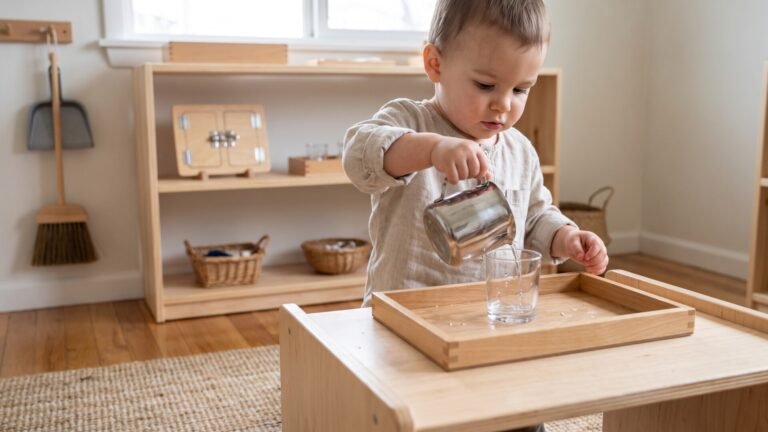
One of the most distinctive aspects of Montessori is its emphasis on practical life. Children are encouraged to participate in real activities such as pouring, cleaning, dressing, cooking, and organizing. Montessori toys often mirror these real-world tasks, helping children develop coordination, independence, and a sense of responsibility.
Why Montessori Toys Matter More Than Ever
Modern children are surrounded by noise, screens, and constant stimulation. While technology has its place, early childhood development thrives on simplicity, repetition, and focus. Montessori toys offer a counterbalance to overstimulation by encouraging slower, deeper engagement.
Unlike many mainstream toys that entertain the child, Montessori toys require the child to do the work. This active involvement strengthens concentration, problem-solving skills, and emotional regulation. Over time, children learn that satisfaction comes from mastery and effort, not instant gratification.
Benefits of Montessori Toys by Developmental Area
Montessori toys are often praised for their educational value, but their true benefits go far beyond academics.
Fine Motor Skill Development
Many Montessori toys involve precise movements such as grasping, transferring, threading, stacking, or turning. These actions strengthen the small muscles of the hands and fingers, preparing children for writing, self-care tasks, and coordinated movement.
Problem-Solving and Logical Thinking
Montessori toys often include built-in control of error, meaning the toy itself shows whether the task has been completed correctly. This allows children to recognize mistakes, adjust their approach, and try again independently, fostering resilience and analytical thinking.
Concentration and Focus
Because Montessori toys are purposeful and uncluttered, children are able to engage for longer periods of time. Sustained concentration is a skill that develops through practice, and Montessori activities naturally support this process.
Confidence and Independence
When children are able to complete tasks on their own, they develop a strong sense of competence. Montessori toys are designed to match a child’s developmental abilities, allowing success without constant adult intervention.
Montessori Toys by Age Group
While Montessori emphasizes following the child rather than rigid age rules, age-based guidance can help parents choose developmentally appropriate materials.
Montessori Toys for Infants (0–12 Months)
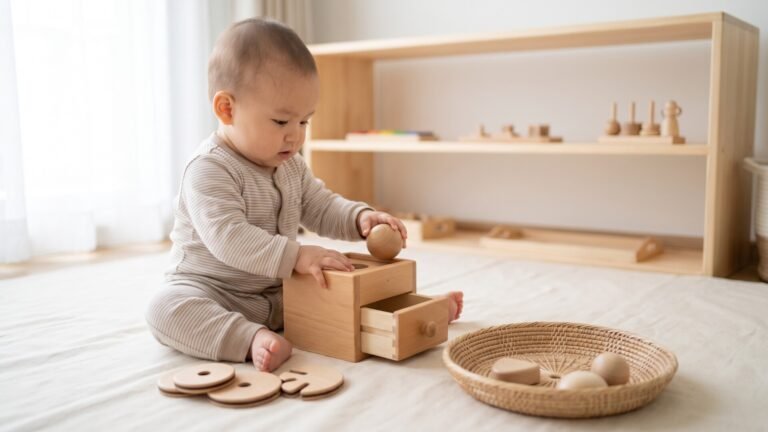
During the first year of life, babies are developing basic sensory awareness, motor control, and trust in their environment. Montessori toys for infants are simple, safe, and focused on movement and sensory exploration.
Common Montessori infant toys include:
- Grasping toys and wooden rattles
- Object permanence boxes
- Soft balls and textured materials
- Low mirrors for self-recognition
These toys encourage babies to explore cause and effect, refine their grip, and begin understanding that the world is predictable and responsive.
Explore the full guide: Montessori Toys for Infants
Montessori Toys for Toddlers (1–3 Years)
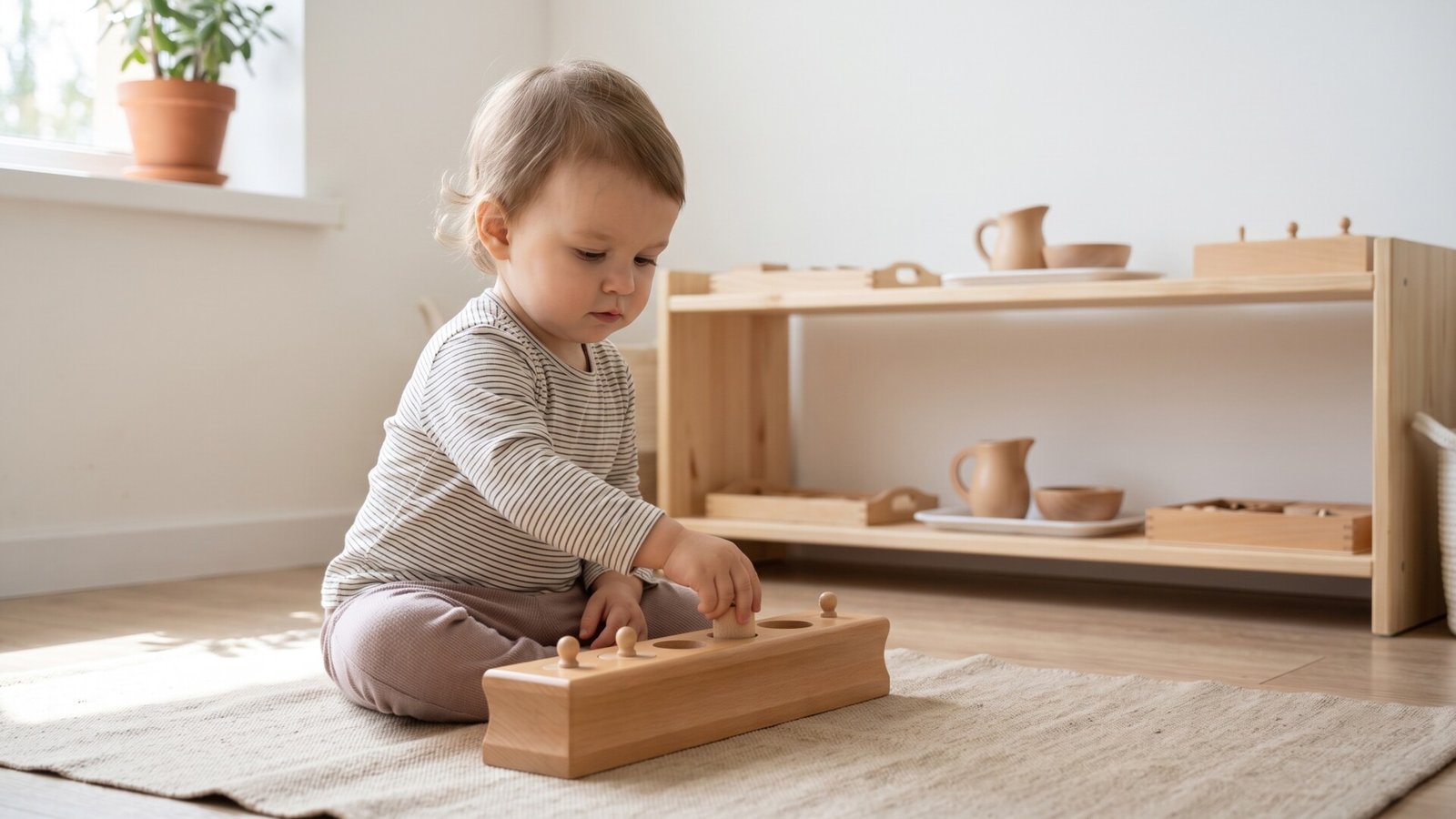
Toddlers are driven by movement, independence, and a desire to imitate adults. Montessori toys for this age group focus heavily on practical life and sensory refinement.
Popular Montessori toddler toys include:
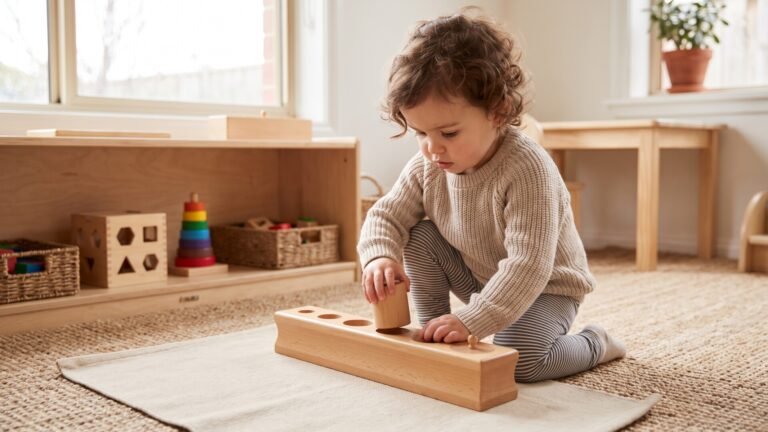
- Shape sorters and stacking toys
- Pouring and transferring activities
- Simple puzzles with knobs
- Sensory balls and texture boards
At this stage, children benefit from activities that allow repetition and real-world application, helping them build coordination and self-confidence.
Explore the full guide: Montessori Toys for Toddlers
Montessori Toys for Preschoolers (3–6 Years)
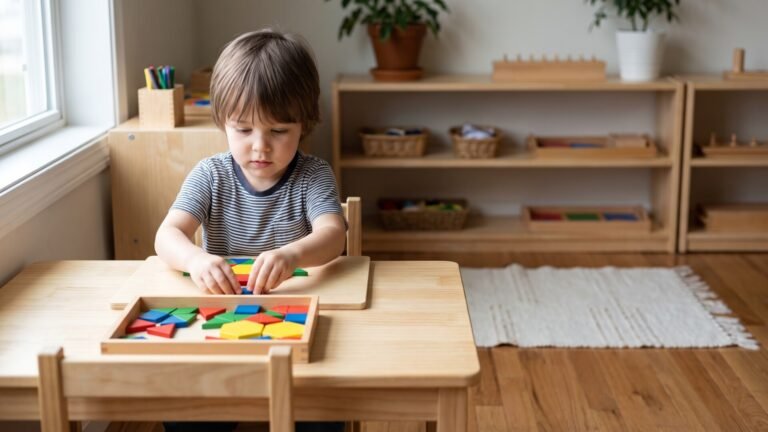
Preschoolers enter a period of intense cognitive growth, language development, and curiosity about how things work. Montessori toys for this age group support early math, language, and problem-solving, while still emphasizing hands-on learning.
Common materials include:
- Counting and number materials
- Language games and phonemic activities
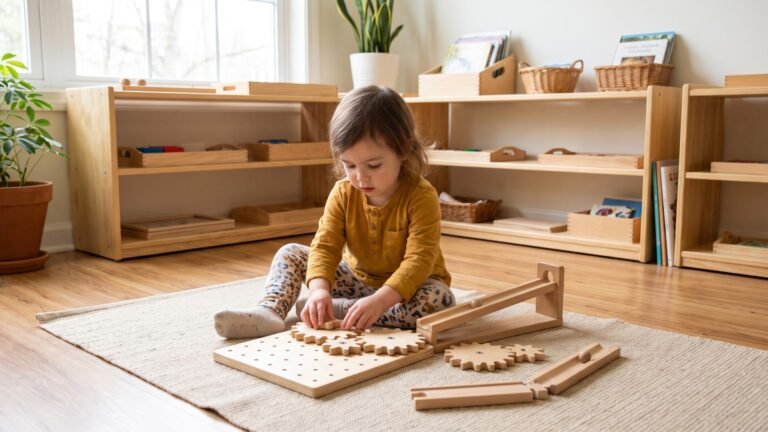
- Early coding and logic toys
- More complex practical life tools
This is also the age when children develop longer attention spans and benefit from activities that challenge them intellectually.
Explore the full guide: Montessori Toys for Preschoolers
Montessori Toys for Early Elementary (6–9 Years)
While Montessori is often associated with early childhood, its principles extend into the elementary years. Toys and activities for this stage emphasize reasoning, creativity, and real-world application.
Examples include:
- Math manipulatives
- Science and exploration kits
- Construction and engineering toys
- Advanced practical life projects
Children at this age benefit from materials that allow experimentation, hypothesis testing, and independent research.
Explore the full guide: Montessori Toys for Early Elementary
Montessori Toy Categories Explained
Beyond age-based navigation, Montessori toys are commonly organized by learning area. Below are the core Montessori categories you’ll encounter throughout ToyGuideHub.
Practical Life Toys & Activities
Practical life activities are the foundation of Montessori learning. They help children develop coordination, focus, and independence through everyday tasks.
Examples include:
- Pouring, spooning, and transferring sets
- Dressing frames and lacing boards
- Cleaning tools sized for children
- Food preparation activities
These activities may look simple, but they play a critical role in helping children feel capable and involved in their environment.
Explore more: Montessori Practical Life Toys & Activities
Sensory Toys
Sensory materials help children refine their senses by isolating specific qualities such as texture, weight, color, sound, or size. Montessori sensory toys are calm, purposeful, and designed for deep exploration.
Common sensory toys include:
- Texture boards and fabric books
- Sound cylinders and shakers
- Visual discrimination materials
- Sorting and matching sets
Sensory refinement lays the groundwork for later academic skills by helping children organize their perception of the world.
Explore more: Montessori Sensory Toys
Language Toys & Games
Language development in Montessori begins with spoken language and gradually progresses toward reading and writing. Montessori language toys emphasize vocabulary, sound awareness, and expression.
Popular materials include:
- Object-to-picture matching cards
- Classified vocabulary sets
- Phonemic awareness games
- Storytelling and sequencing cards
These toys help children build a rich vocabulary and confidence in communication before formal literacy instruction.
Explore more: Montessori Language Games for Kids
Math Toys & Materials
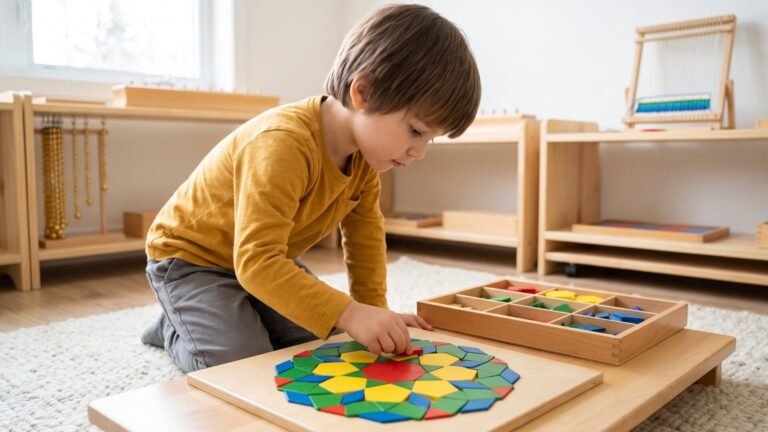
Montessori math materials introduce numerical concepts in a concrete, visual way, allowing children to understand quantity before symbols.
Examples include:
- Counting beads and number rods
- Sorting and grouping sets
- Early addition and subtraction tools
- Pattern and sequence materials
By engaging the hands and the mind together, Montessori math toys help children develop true numerical understanding rather than rote memorization.
Explore more: Montessori Math Toys
Creative Play & Open-Ended Toys
Creativity in Montessori is not about crafts or outcomes, but about open-ended exploration. Creative Montessori toys allow children to express themselves freely while developing focus and imagination.
Examples include:
- Wooden blocks and construction sets
- Art materials with simple tools
- Music and movement instruments
- Role-play materials rooted in real life
These toys encourage children to create, experiment, and express ideas without rigid rules.
Explore more: Montessori Creative Play Toys
How to Choose the Right Montessori Toys
Choosing Montessori toys is not about buying everything labeled “Montessori,” but about selecting materials that truly support your child’s development.
When evaluating a toy, ask:
- Does this encourage active engagement?
- Can my child use it independently?
- Is it aligned with real-life skills?
- Will it grow with my child over time?
Less is often more. A small, well-curated collection of Montessori toys will provide more value than a crowded shelf of overstimulating options.
Setting Up a Montessori-Friendly Home Environment
Montessori toys work best in an environment designed for independence. Low shelves, accessible materials, and a calm, organized space allow children to choose activities freely and return them when finished.
Toy rotation is another important strategy. By rotating toys periodically, you maintain interest without overwhelming the child, and each toy feels fresh when reintroduced.
Montessori Activities Beyond Toys
Montessori learning does not rely solely on toys. Everyday activities such as cooking, gardening, sorting laundry, and caring for pets are powerful learning experiences.
On ToyGuideHub, you’ll also find:
- Montessori activity ideas for home
- Seasonal Montessori projects
- Screen-free learning activities
- DIY Montessori-inspired setups
These activities complement Montessori toys and help integrate learning into daily life.
Explore more: Montessori Activities for Kids
Common Myths About Montessori Toys
One common myth is that Montessori toys are only for affluent families. In reality, many Montessori activities can be created using everyday household items, and thoughtful selection matters more than price.
Another misconception is that Montessori toys limit creativity. On the contrary, by removing distractions and unnecessary features, these toys allow creativity to emerge naturally.
Are Montessori Toys Worth the Investment?
For families who value intentional parenting and long-term development, Montessori toys offer exceptional value. They support not only cognitive growth, but also emotional regulation, independence, and a love of learning that extends far beyond childhood.
Rather than asking how many toys a child has, Montessori invites us to ask how deeply a child engages with the materials available to them.
Not every toy labeled “Montessori” truly follows Montessori principles. Understanding what actually defines a Montessori toy—such as simplicity, purpose, and support for independent learning—can help you make better choices. Learn the essentials in What Makes a Toy “Montessori”? (Beginner’s Guide).
Montessori toys are designed to support independence, focus, and hands-on learning, helping children develop essential skills while they play. For a deeper dive into age-appropriate activities that strengthen problem-solving, concentration, and early learning, explore Montessori & Early Learning Toys: Building Skills Through Play, where we highlight practical ideas and expert-recommended toys for every stage.
A thoughtfully prepared environment is a key part of the Montessori approach, and a simple, well-organized play shelf helps children focus, choose activities independently, and engage more deeply with their toys. If you’re looking to create a calm, functional play space at home, see our guide on How to Set Up a Minimalist Montessori Play Shelf for practical tips and easy setup ideas.