Best Sensory Swings for Sensory Processing Disorder: Indoor Home Setup
There is a reason occupational therapists have used swings for decades. The slow, rhythmic motion of swinging directly stimulates the vestibular system—the sensory system in our inner ear responsible for balance, spatial orientation, and emotional regulation. For children with Sensory Processing Disorder (SPD), autism, ADHD, or sensory-seeking behaviors, a well-chosen home swing can be transformative, providing calming input that lasts for hours.
In 2026, more families are installing indoor sensory swings than ever before. With increased awareness of sensory needs and a desire to bring therapeutic tools home, parents are turning to pod swings, lycra compression swings, and platform swings as daily regulation aids. But choosing the wrong swing—or installing it incorrectly—can be ineffective or even dangerous.
This guide covers everything you need to know: how sensory swings work, which types suit different needs, critical safety and installation requirements, and detailed reviews of the best swings for home use. Whether you have a sensory-seeking child who craves spinning motion or a sensory-avoidant child who needs a cozy cocoon, you will find the right fit here.
What Is Sensory Processing Disorder and How Swings Help
Sensory Processing Disorder (SPD) affects how the brain interprets and responds to sensory information. Some children are over-responsive (sensory avoidant), finding ordinary sensations overwhelming. Others are under-responsive (sensory seeking), craving intense input to feel regulated. Many children fall somewhere in between.
The vestibular system, located in the inner ear, detects head position, movement, and gravity. It is the foundation of balance, posture, and visual stability. For children with SPD, the vestibular system may send too strong or too weak signals to the brain, leading to poor coordination, attention difficulties, or emotional dysregulation.
Swings are exceptionally effective at providing controlled vestibular input. Swinging activates the vestibular system directly, helping the brain organize sensory information. Different swing motions produce different effects:
- Slow, gentle, linear swinging (back-and-forth or side-to-side) has a calming, organizing effect, reducing anxiety and preparing the child for focused activities (like homework or bedtime)。
- Fast, rotational, or unpredictable swinging is alerting and organizing for sensory seekers who need more intense input to feel regulated。
The benefits extend far beyond the swing session itself. A single 15-minute swing session can calm the central nervous system for up to 8 hours, making it one of the most efficient regulation tools available. Regular swinging improves balance, coordination, body awareness, and emotional self-regulation.
Types of Sensory Swings for Home Use
Different sensory needs require different swing types. Some children need the comforting pressure of a cocoon; others need the open freedom of a platform. Understanding the differences helps you make the right choice.
Cocoon / Pod Swings
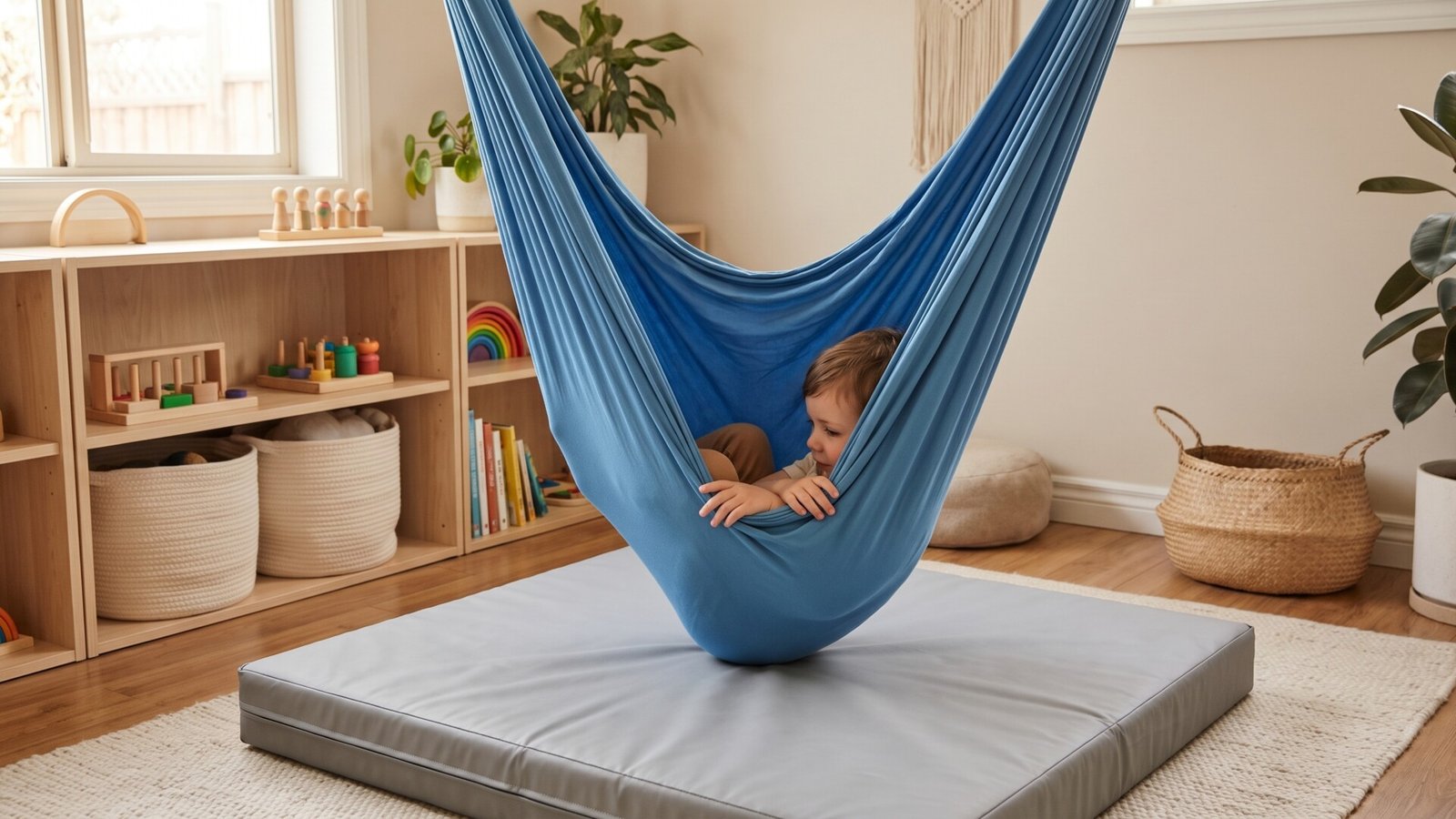
Enclosed fabric swings that wrap around the child, providing gentle, all-over compression. They feel like a hug, promoting calmness and security. Best for sensory avoiders, children who are easily overstimulated, or those who need a quiet retreat.
Lycra Compression Swings
Similar to pod swings but made from stretchy, body-hugging fabric. The 4-way stretch material conforms to the child’s body, delivering deep pressure input (proprioception) that is highly organizing. Excellent for sensory seekers who crave deep touch, as well as for children who need help regulating between activities.
Platform Swings
Flat, rigid swings that provide an open space for the child to sit, lie, or stand. They are less about compression and more about fast, dynamic movement. Ideal for sensory seekers who love speed, spinning, and active therapy-style play. They also accommodate multiple children or sibling play.
Hammock Swings
Traditional crescent-shaped swings made of soft fabric. They offer a more open, lounge-like feel, often with a gentle swinging motion. Good for both relaxation and moderate vestibular input, particularly for older users or those who find pod swings too enclosed.
Rotation-Friendly Spinning Swings
Some swings incorporate 360° swivel hardware, allowing the child to spin while in the swing—a highly alerting form of vestibular input. Children with a strong craving for rotational movement will benefit most from this type.
Safety Considerations for Indoor Installation
A sensory swing is only as good as its installation. Improper mounting is the leading cause of injury. Commit to doing it right.
Ceiling Mount vs. Frame Systems
Ceiling mount requires a solid ceiling joist or engineered beam that can handle not just the child’s static weight but also the dynamic forces of swinging. When a child bounces or swings vigorously, the load can momentarily double or triple. For this reason, hardware should be rated for a minimum of 500 to 700 pounds, and the ceiling anchor should support at least 500 kg at a 45° angle in any direction.
If your ceiling is not suitable, consider a freestanding frame (A-frame, O-frame, or C-frame). These stand on the floor, require no ceiling modifications, and can be moved between rooms. They are ideal for renters or homes with uncertain ceiling structures.
Weight Limits and Anchoring
- Always check the weight rating of the swing itself, the mounting hardware, and the ceiling anchor. The lowest number is your true limit.
- Plan for dynamic loads: choose hardware rated for well above the expected user weight, aiming for 2–3 times the user’s weight.
- For drywall ceilings, you must anchor into a wooden stud. Use a stud finder; never hang from drywall alone.
- For concrete ceilings, use concrete anchors rated for the load。
Proper Swing Height and Clearance
- The swing should hang low enough that the child’s feet can touch the ground when seated (providing a sense of safety).
- Maintain at least 3–4 feet of clearance on all sides to prevent collisions with walls or furniture.
- For dual-point swings (platform swings), space the two ceiling anchors 40–50 cm apart to create a stable, linear swing arc and reduce pendulum collision risk。
Supervision Guidelines
- Children should never use a sensory swing unsupervised. Active, eyes-on supervision is required at all times.
- Check the swing fabric for tears, frayed stitching, or wear before each use. Replace immediately if you notice any damage.
- The 2026 Harkla Sensory Swing includes rock climbing‑rated hardware (up to 300 lb) and double‑layered washable nylon, setting a high industry standard for safety。
Benefits of Sensory Swings for SPD
The therapeutic benefits of regular sensory swing use are well-documented by occupational therapists.
Emotional Regulation
Children who use sensory swings learn to self-soothe. The predictable, rhythmic motion reduces cortisol (stress hormone) and increases serotonin and dopamine, which promote calm and well-being. Many families schedule 15 minutes of swing time before challenging tasks (homework, transitions, bedtime).
Focus and Attention Improvement
A sensory swing can be used as a preparatory activity before seated work. a child who is “wiggly” or easily distracted benefits enormously from 10–15 minutes of swinging before attempting to focus — the controlled sensory input helps the brain achieve a “just right” state for learning。
Anxiety Reduction
For children who experience sensory overload in school or social settings, the swing becomes a safe retreat. Many OTs recommend a mini “sensory break” schedule throughout the day, using the swing as a calming reset.
Body Awareness Development
Proprioception—the sense of where your body is in space—is often impaired in SPD. Compression swings (lycra pods) force the child to push and pull against the fabric, giving rich feedback to the muscles and joints and building body awareness。
Sleep and Relaxation Support
A slow, gentle swing session before bed is an excellent way to transition from high-energy activities to drowsy calm. The vestibular input tells the body that it is safe to relax.
Pros and Cons of Home Sensory Swings
Pros
- Highly effective sensory regulation tool (often more effective than weighted blankets for active children)
- Reusable daily therapy support, available whenever needed
- Adaptable for different sensory needs (calming vs. alerting)
- Improves emotional self-regulation and reduces meltdowns
- Integrates into home routines (school breaks, after-school decompression, before-bed calming)
Cons
- Requires proper installation space (at least 3–4 feet clearance on all sides)
- Risk of overstimulation if misused (too fast, too long, or the wrong swing type for the child’s needs)
- Cost of high-quality systems (premium swings range from $70 to $300)
- Adult supervision required at all times (not a play-alone toy)
- Not a standalone therapy solution (best used as part of a comprehensive sensory diet)
Best Sensory Swings for Home SPD Setups
Best Overall: Harkla Sensory Pod Swing
The Harkla Sensory Swing is consistently rated the best overall compression swing. Made from double-layered, washable nylon tricot fabric (40 denier, 2-way stretch), it provides a snug, “hug-like” feeling without being restrictive. The swing comes with rock climbing-rated hardware and supports up to 300 pounds, making it suitable for both children and adults.
The fabric does not sag, even after heavy use, and the sewn-in seams are reinforced for durability. A 360° swivel is included, allowing gentle spinning for children who need that extra alerting input.
The swing is 110 inches long (from hardware to fabric end), with a 59-inch width when fully spread, offering a generous cocoon space. It works for linear swinging (back‑forth, side‑to‑side) as well as rotational spinning. Machine‑washable (gentle cycle) for easy cleaning.
- Best for: children (and adults) seeking a calming, compression‑friendly cocoon; ideal for sensory avoiders and mixed sensory seekers
- Weight capacity: 300 lb
- Includes: 360° swivel and all mounting hardware
- Pros: excellent deep pressure input; durable, sag‑resistant fabric; usable by adults too.
- Cons: requires proper ceiling mounting; fabric may be too warm for hot climates
- Price range: $$–$$$
Best Premium Setup: Sensory University Deluxe Indoor Swing System
For families wanting a complete, versatile sensory room, the Sensory University Deluxe System is the most comprehensive option. This freestanding steel frame (O‑frame or A‑frame) accommodates multiple swing types: pod, platform, hammock, or lycra compression swing, which can be purchased separately.
The frame is powder‑coated for durability and includes adjustable height hanging points. It can be floor‑anchored for extra safety, and the maximum weight capacity is 300 kg on certain models.
Customer reviews note the system is “extremely easy to install” (taking about 10 minutes) and “comes with very strong and quality components”. However, the frame is large and requires significant floor space (minimum 6×6 ft).
- Best for: families who want a dedicated sensory space and the ability to swap between different swing types
- Weight capacity: varies by swing (frame supports heavy use)
- Installation: freestanding; no ceiling modification required
- Pros: highly versatile; high weight capacity; portable (can be moved between rooms)
- Cons: expensive; takes up floor space
- Price range: $$$$
Best Budget Option: Amazon Basics Therapy Swing Set
For families testing the waters, a basic hammock‑style sensory swing is an affordable entry point. Several third‑party Amazon sellers offer therapy swings with included hardware, typically made of soft nylon or cotton blend. A typical model holds up to 220 lb, with a 110″×59″ fabric bed. Customer reviews note that it “calms [a child] right down until he was happily relaxed” and is “a great tool to have for big emotions”.
- Best for: beginners, budget‑conscious families, or as a travel swing
- Weight capacity: 220 lb (check each listing)
- Pros: low cost; lightweight fabric; hardware often included
- Cons: less durable than premium swings; fabric may pill or sag over time; swivel not always included
- Price range: $
Best Lycra Compression Swing: Fun and Function Body Sock Swing
The Fun and Function Body Sock is a stretchy spandex compression sack, not a traditional hanging swing. The child climbs inside and moves against the 4‑way stretch fabric, receiving deep pressure and resistance to all parts of the body. This is a powerful tool for improving body awareness, spatial orientation, and motor planning, and it can be used on the floor or while gently swinging.
The fabric hugs the user, providing strong proprioceptive input, and is recommended for children with ADHD, sensory integration disorders, or autism. You can suspend the body sock from a single‑point ceiling mount, creating a snug cocoon swing. For families who already have a swing frame, this is an excellent add‑on.
- Best for: children who crave deep pressure; those who need help with body‑in‑space awareness
- Weight capacity: varies by size (small child to adult)
- Pros: very calming; targets proprioceptive system; can be used with or without swinging motion
- Cons: not a standalone swing; requires ceiling mount or frame
- Price range: $$
Best Indoor/Outdoor Combo: HearthSong Deluxe Platform Swing
The HearthSong Deluxe Platform Swing is the top choice for active, sensory‑seeking children. It consists of a 40×30‑inch padded steel frame platform, held by rope suspension. The swing holds up to 250 lb and is large enough for two children or a child and parent to swing together.
Unlike compression swings, this open platform allows the child to sit, lie down, stand, or move while swinging—supporting both fast, alerting motion and slow, calming sway. It can be used indoors (mounted to a ceiling) or outdoors (from a tree branch or frame). The padded frame makes it comfortable for long sessions.
- Best for: sensory seekers, active children, sibling play
- Weight capacity: 250 lb
- Pros: versatile movement options; durable steel frame; works indoors and out
- Cons: no deep pressure input; requires significant clearance space
- Price range: $$–$$$
Sensory Swings for SPD
| Swing Type | Sensory Input | Calming Level | Space Needed | Installation Difficulty | Durability | Price Range | Best For |
|---|---|---|---|---|---|---|---|
| Harkla Pod Swing | Deep pressure + vestibular | Very High | Medium | Medium | High | $$ | Best overall |
| Sensory University Deluxe | Mixed (all types) | Very High | High | High | Very High | $$$$ | Full sensory setups |
| Amazon Basics Therapy Swing | Light‑moderate vestibular | Medium | Low | Low | Medium | $ | Budget beginners |
| Fun and Function Body Sock | Compression + proprioceptive | High | Low | Medium (needs mount) | High | $$ | Deep pressure needs |
| HearthSong Platform Swing | Fast vestibular | Medium‑High | High | Medium (ceiling mount) | High | $$ | Active sensory seekers |
How to Choose the Right Sensory Swing
For sensory seekers (crave movement, love spinning) → Choose a platform swing (HearthSong) or a pod swing with 360° swivel. These provide the fast, rotational input that helps these children feel organized 。
For sensory avoiders (easily overwhelmed, need calm) → Choose a lycra compression swing or a pod swing. The enclosed design blocks out visual clutter and provides deep pressure for a grounding effect 。
For small spaces or beginning families → Choose a single‑point, lightweight hammock swing (basic Amazon model) that can be mounted on a single ceiling hook. Budget $60–100 for the complete setup.
For whole‑house sensory integration → Invest in a freestanding frame system (Sensory University) and buy multiple swing attachments (pod, platform, lycra) to swap as your child’s needs change.
For outdoor use → Choose a platform swing or a heavy‑duty nylon pod swing with rust‑resistant hardware. Avoid cotton swings for outdoor use, as they will mildew.
Installation Guide for Home Use
Ceiling Mount Installation
You will need a heavy‑duty swing hook or eye bolt (rated for 500+ lb), a swivel (for 360° rotation), lag screws (⅜” or ½” for wood studs), and a stud finder, drill, measuring tape, pencil, and level.
- Locate the ceiling joist using a stud finder.
- Mark the center of the joist and pre‑drill a pilot hole slightly smaller than your lag screw.
- Screw the heavy‑duty hook into the joist until tight.
- Attach the swivel to the hook (if using).
- Clip the swing’s suspension hardware to the swivel or hook.
Important safety check: After installation, test the swing with your full body weight before letting a child use it.
Frame‑Based Systems
Freestanding frames are easier to install correctly. Most arrive with step‑by‑step instructions; assembly time is 20–40 minutes.
Safety Clearance Rules
- Minimum 36 inches of clearance on all sides of the swing.
- No furniture or hard objects within the swing’s arc.
- Ceiling height: At least 8 feet for a child’s swing; taller for adults.
- Fall zone: The entire swinging area should be carpeted or covered with a soft play mat.
Maintenance and Inspection
- Before each use: Check fabric for tears, frayed stitching, or worn spots. Inspect all hardware for looseness or rust.
- Every month: Tighten lag screws and check ceiling hook stability.
- When to replace: Immediately if you find any damage to fabric or hardware. The Harkla swing includes a lifetime guarantee on the fabric and hardware.
FAQ
1. Are sensory swings safe for home use?
Yes, when installed correctly according to the manufacturer’s weight and hardware specifications, with adult supervision at all times.
2. What age can children start using them?
Most swings are rated for ages 3 and up. Always check the individual product’s age recommendation.
3. Do sensory swings really help SPD?
Yes. They provide controlled vestibular input, which is one of the most effective ways to regulate a child’s sensory system. Many OTs prescribe home swing use as part of a daily sensory diet.
4. Can they be used every day?
Absolutely. In fact, daily use is often recommended for consistent regulation.
5. What type is best for calming?
Pod swings, lycra compression swings, or hammock swings are best for calming, as they provide gentle compression and linear swinging.
6. What type is best for active sensory seekers?
Platform swings or pod swings with a 360° swivel are ideal. Seek alerting, fast, rotational input.
7. Do I need professional installation?
For ceiling mounts in old buildings or uncertain joists, hiring a professional handyman is wise. For standard modern homes, a confident DIYer can handle the installation.
8. Can adults use sensory swings too?
Many swings, including the Harkla pod swing (300 lb limit) and HearthSong platform swing (250 lb limit), are rated for adult use.
9. How long should a child use a swing session?
15 minutes is often enough. Observe your child: if they seem more dysregulated after swinging, you may need a different swing type or shorter sessions.
10. Where can I buy them through affiliate programs?
Links are embedded in the product sections. Major retailers include Amazon, Harkla, Fun and Function, and specialty therapy stores.
Conclusion
A well‑chosen sensory swing can be one of the most effective tools in your home sensory toolkit. It offers safe, controlled vestibular input that helps children with SPD regulate their emotions, focus their attention, and build body awareness—all while having genuine fun.
The Harkla Sensory Pod Swing stands out as the best overall choice, combining a high weight limit (300 lb), durable double‑layered fabric, and rock climbing‑rated hardware. For families wanting a complete room setup, the Sensory University Deluxe System is unmatched. On a budget? A basic Amazon therapy swing still delivers real benefits.
Take the time to install your swing correctly. Measure your space, find a strong stud (or buy a freestanding frame), supervise every use, and you will have years of regulation support for your child. Because sometimes the most powerful way to help a child regulate their world isn’t to stop the motion—it’s to give them a safe place where motion finally makes sense.
The imperfect, slightly swinging start—the first time they settle into the cocoon and their shoulders drop in relief—that is always the best moment.
Check current pricing and availability:
- Harkla Sensory Pod Swing on Amazon / Harkla
- Fun and Function Body Sock Swing via therapy retailers
- Sensory University Deluxe System on Amazon / therapy stores
- HearthSong Deluxe Platform Swing on Amazon / HearthSong
- Budget sensory swings on Amazon