The Top 5 Simple Science Kits for 4-Year-Olds
Curiosity is built into toddlers like a superpower, and by the age of four, many children are bursting with “why” questions. Why does ice melt? Why do plants grow? Why does my shadow follow me? At this age, simple science kits can help satisfy curiosity while teaching early STEM concepts, fine motor skills, problem-solving, and observation. Best of all, they make learning fun, hands-on, and totally kid-friendly.
This article is your friendly, family-style guide to the top 5 simple science kits for 4-year-olds, highlighting how each kit supports learning, what skills your child will gain, and where to find them (affiliate links included for convenience).
Why Science Kits Matter for 4-Year-Olds
At age four, children are in a prime stage for exploration:
- Observation skills: They notice details about objects, colors, and motion.
- Cause-and-effect understanding: Simple experiments teach that actions have predictable outcomes.
- Fine motor development: Manipulating small objects improves hand-eye coordination.
- Early problem-solving: Following steps and troubleshooting fosters logical thinking.
- Language growth: Explaining what they see develops vocabulary and expressive language.
Science kits combine these skills into structured play. Unlike open-ended sensory bins, science kits provide small, achievable experiments that give toddlers an immediate sense of accomplishment.
What to Look for in a Science Kit for a 4-Year-Old
Choosing a science kit for a preschooler isn’t the same as picking one for a school-aged child. Here’s what to keep in mind:
- Age-appropriate: Toys must be safe and manageable for tiny hands.
- Non-toxic materials: Avoid kits with hazardous chemicals.
- Simple, step-by-step instructions: Kids at this age need clear guidance.
- Visual and interactive: Bright colors and tactile components keep engagement high.
- Short, satisfying experiments: Keep attention spans in mind; most 4-year-olds can focus for 10–20 minutes.
- Parental involvement: A kit that encourages adult-child interaction fosters learning and safety.
With those criteria in mind, let’s dive into the top 5 kits.
1. My First Science Kit – Discovery and Experimentation
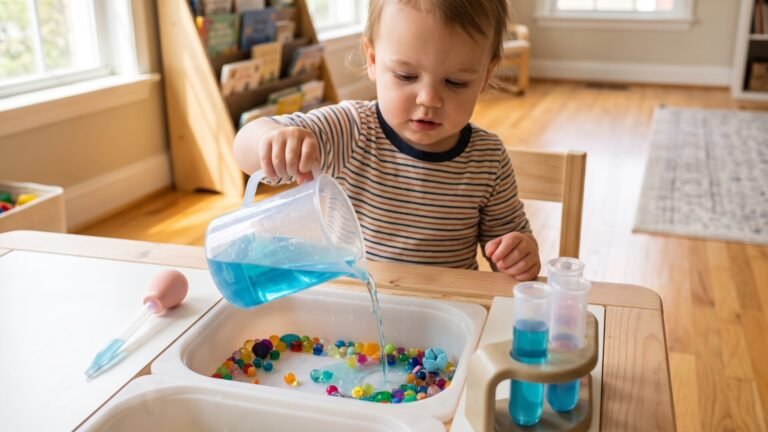
Overview: My First Science Kits are designed specifically for preschoolers. They offer hands-on experiments that involve sorting, pouring, mixing, and observing changes, all with safe, non-toxic materials.
Features:
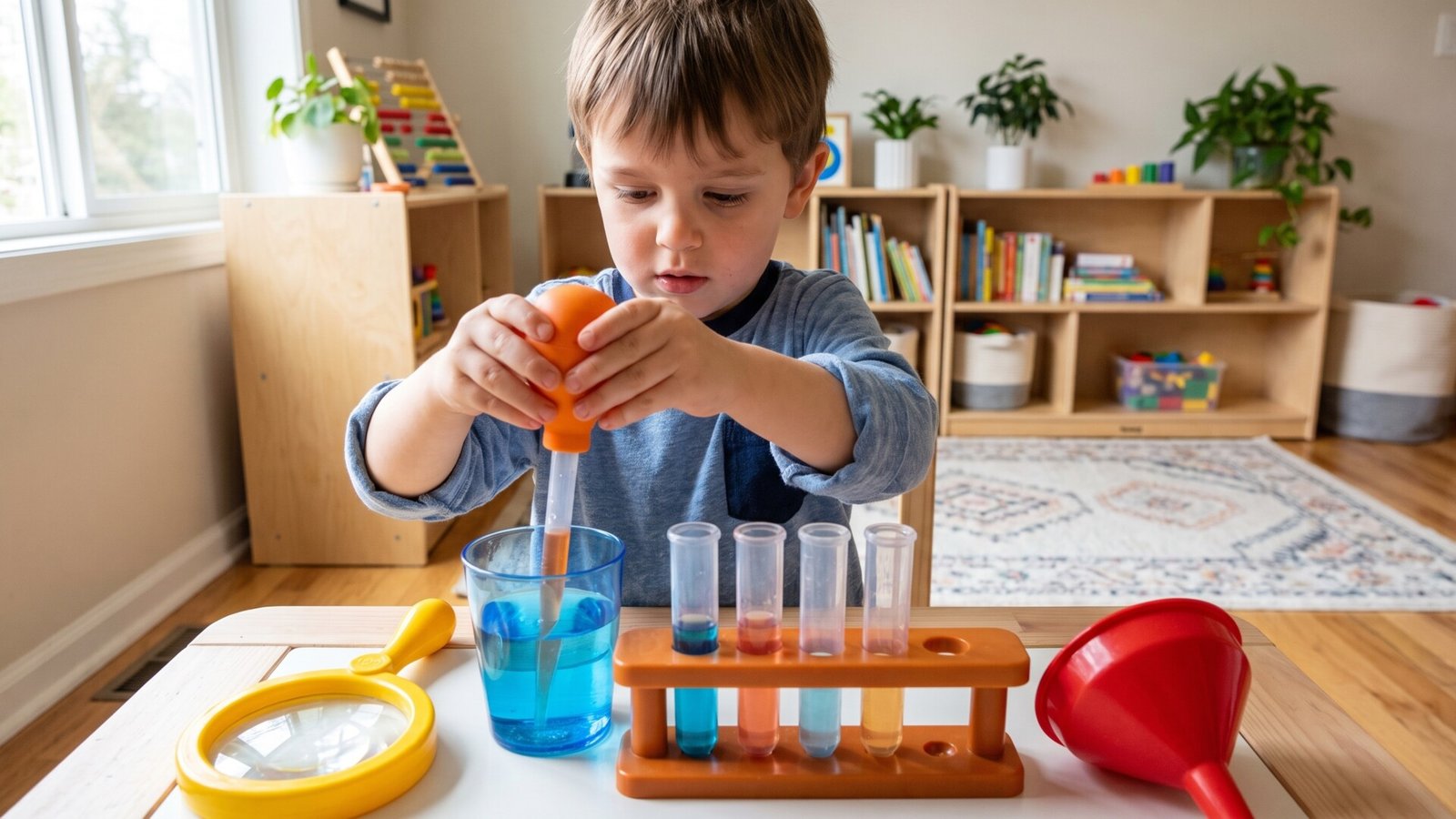
- Bright, simple tools: Funnels, scoops, and colored cups for easy manipulation.
- Multiple experiments: Introduces basic concepts of chemistry and physics like mixing colors, creating fizz, and observing floating and sinking.
- Step-by-step instructions: Visual guides that children can follow with minimal help.
Skills Developed:
- Cause-and-effect reasoning
- Fine motor coordination
- Color recognition
- Early scientific observation
Why 4-Year-Olds Love It: Simple, interactive, and safe; kids can see immediate results from their actions.
Where to Get It: Amazon, Target, Walmart.
2. The Magic Science Lab Kit
Overview: This kit focuses on visual, “wow” experiments that captivate young learners. From volcano eruptions to simple color changes, the kit is designed to amaze and educate.
Features:
- Safe reaction-based experiments: Baking soda, vinegar, and colored water are the main components.
- Reusable tools: Plastic droppers, cups, and mini-beakers.
- Interactive guide: Step-by-step pictures guide both children and adults.
Skills Developed:
- Observation and prediction
- Early chemistry concepts
- Vocabulary growth (action words like pour, fizz, mix)
- Encouragement of inquiry and questioning
Why 4-Year-Olds Love It: The “magic” effect of fizzing, bubbling, and changing colors keeps them engaged and eager to explore.
Where to Get It: Amazon, Walmart.
3. Little Scientists’ Nature Lab
Overview: This kit brings the outdoors inside. It focuses on biology and environmental science, giving preschoolers an introduction to plants, seeds, and simple ecosystems.
Features:
- Planting seeds and observing growth: Transparent planters help kids see roots and shoots develop.
- Nature-themed activities: Leaf identification, color matching, and small animal observation guides.
- Hands-on tools: Mini shovels, watering bottles, and magnifying glasses.
Skills Developed:
- Cause-and-effect: Watering leads to plant growth
- Observation skills: Tracking changes over days
- Fine motor skills: Handling seeds and tools
- Early environmental awareness
Why 4-Year-Olds Love It: Kids feel like “real scientists” caring for living things, and watching seeds sprout provides daily excitement.
Where to Get It: Amazon, Fat Brain Toys, specialty science retailers.
4. Science Lab Kit – Fizz & Pop Edition
Overview: Focused on chemistry fun, this kit gives preschoolers the joy of explosive (but safe) reactions using household-safe ingredients.
Features:
- Mini “volcano” experiments: Using baking soda and vinegar for a fizzy effect.
- Color mixing and fizzing solutions: Visual and tactile.
- Large, easy-to-handle equipment: Little hands can scoop, pour, and mix safely.
Skills Developed:
- Early understanding of chemical reactions
- Sequencing and following steps
- Cause-and-effect observation
- Vocabulary development
Why 4-Year-Olds Love It: Fizzing and popping is exciting and satisfying; children feel they are creating something powerful and magical.
Where to Get It: Amazon, Target.
5. Little Engineer STEM Kit
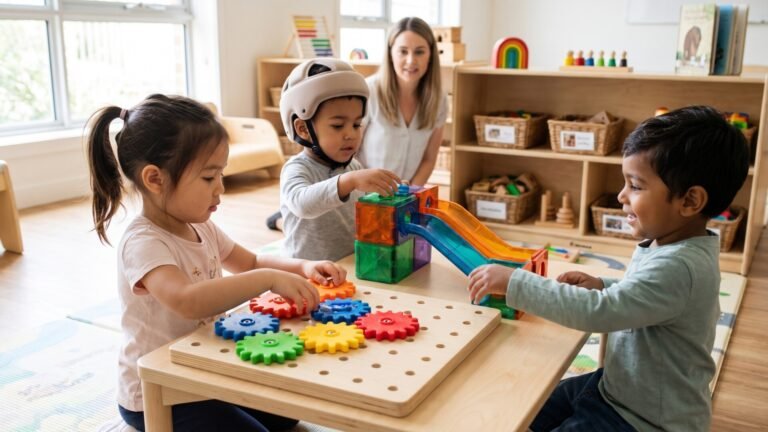
Overview: This kit combines basic physics and engineering. While simple, it encourages building, stacking, and understanding movement and balance.
Features:
- Blocks, ramps, and connectors: Perfect for early engineering play.
- Experiment cards: Show different ways to build ramps or towers and predict outcomes.
- Colorful, safe pieces: Designed for toddlers’ dexterity.
Skills Developed:
- Spatial reasoning
- Problem-solving
- Fine motor coordination
- Cause-and-effect understanding
Why 4-Year-Olds Love It: Building ramps to see cars roll down and stacking towers that can tumble provides instant feedback and fun.
Where to Get It: Amazon, Walmart, specialty STEM retailers.
How to Make the Most of Science Kits
1. Set Up a Science Corner
Create a dedicated area where experiments happen. Even a small table or mat works. This helps children associate the space with exploration and keeps cleanup manageable.
2. Participate and Narrate
Even the simplest experiment becomes more educational when you talk through what’s happening:
- “Watch what happens when we pour the blue liquid into the cup!”
- “What do you think will happen next?”
- “Why do you think the color changed?”
This language helps develop vocabulary and observation skills.
3. Repeat and Explore
Science learning thrives on repetition. Let your child redo experiments, mix new colors, or explore variations. Repetition strengthens learning and confidence.
4. Document Observations
For older preschoolers, a simple notebook or drawing pad to draw what they see can reinforce observation and early data collection.
5. Keep It Safe
Even toddler-friendly kits require supervision. Ensure that:
- No small parts can be swallowed
- Materials are non-toxic
- Kids wear aprons or use mats for easy cleanup
What Skills Preschoolers Gain from Science Kits
Science kits aren’t just fun — they’re foundational learning tools. By age four, children can gain:
- Problem-Solving Skills: Figuring out why an experiment works or fails.
- Observation Skills: Noticing changes in color, shape, and motion.
- Fine Motor Development: Pouring, mixing, stacking, and manipulating tools.
- Sequencing and Logic: Following steps to complete experiments.
- Creativity and Imagination: Exploring new ways to use materials and predict outcomes.
- Social and Language Skills: Engaging with adults or peers, explaining what they see, or teaching a sibling.
Tips for Choosing the Right Science Kit
When selecting a kit for a 4-year-old:
- Focus on hands-on play: Kits with tools children can manipulate themselves are more engaging than passive kits.
- Check age recommendations: Ensure the kit is truly toddler-appropriate.
- Avoid overly complex experiments: Simple, clear experiments prevent frustration.
- Look for variety: Kits that combine chemistry, biology, and physics are more stimulating.
- Choose reusable materials: Kits that allow repeated play offer better value.
Science Fun Beyond Kits
Even without kits, there are ways to incorporate science learning into daily routines:
- Water Play: Observing objects float or sink, pouring, and measuring.
- Planting Seeds: Watching sprouts grow over time.
- Kitchen Experiments: Simple baking soda and vinegar reactions.
- Nature Walks: Collecting leaves, rocks, or observing insects.
Science kits simply structure these experiences in a safe, repeatable, and engaging way.
Tips for Parents
- Stay Engaged: Ask questions and encourage predictions.
- Keep Sessions Short: Toddlers have short attention spans — 10-20 minute experiments are perfect.
- Celebrate Successes: Clap, cheer, or talk about what worked to boost confidence.
- Repeat Favorites: Kids often enjoy doing the same experiment multiple times.
- Encourage Observation: Ask them to describe what they see or make simple drawings.
Making Science Part of Playtime
- Integrate science kits into regular playtime routines.
- Rotate kits to maintain interest.
- Combine science with arts and crafts for STEAM learning.
- Invite siblings or friends for cooperative experiments.
This approach helps kids see science as fun and accessible, not just a structured lesson.
Final Thoughts
4-year-olds are naturally curious, and simple science kits give them a safe, structured way to explore the world. From magic fizz experiments to engineering ramps, these kits teach:
- Observation
- Problem-solving
- Sequencing
- Fine motor coordination
- Language skills
- Creativity
The five kits highlighted here — My First Science Kit, Magic Science Lab Kit, Little Scientists’ Nature Lab, Fizz & Pop Edition, and Little Engineer STEM Kit — cover a range of topics, ensuring that every child can find something that sparks their curiosity.
When used with parent participation, short sessions, and safe materials, these kits can inspire a lifelong love of exploration, problem-solving, and learning. Best of all, they let kids play, discover, and learn without feeling like “work.”
Looking for more ways to make math fun and hands-on for your child? Explore our Montessori Math Games for Kids sub-hub for a full collection of interactive activities, games, and kits designed to build early numeracy, logical thinking, and problem-solving skills.