Beginner Coding Toys for Preschoolers (No Tablet Needed)
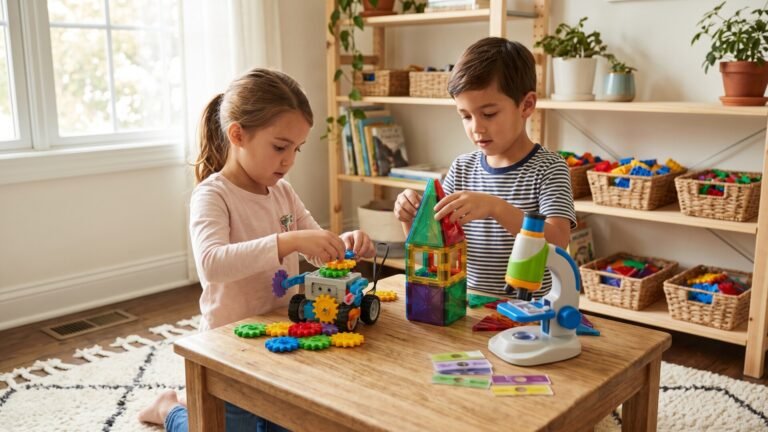
Introducing your preschooler to the basics of coding doesn’t have to involve screens, tablets, or apps that require constant supervision. In fact, hands-on coding toys designed for little ones can teach critical thinking, sequencing, problem-solving, and logic without ever opening a browser or turning on a tablet. If your goal is to spark early computational thinking, the right toys can make learning feel like play, not homework.
This article is your friendly, family-style guide to the best beginner coding toys for preschoolers that don’t require a tablet. We’ll cover why these toys matter, which skills they support, and some standout products you can link to for easy access.
Why Teach Coding Without Screens?
Many parents assume coding always means screens, but preschoolers are better off learning abstract concepts through tangible play. Physical toys:
- Encourage problem-solving and logic by letting kids manipulate pieces.
- Build sequencing skills through tasks like arranging cards or connecting paths.
- Promote collaboration when kids play together.
- Reduce screen time while still teaching early STEM concepts.
For kids aged 3–5, screen-free coding toys also reduce overstimulation and allow more creative exploration. They learn to see patterns, predict outcomes, and experiment in a tactile way — all foundational for later digital literacy.
Key Skills Taught by Screen-Free Coding Toys
Before picking toys, it helps to know what they actually teach:
- Sequencing – Understanding the order of steps.
- Cause and Effect – Learning that actions produce predictable outcomes.
- Problem Solving – Figuring out what works and what doesn’t.
- Logical Thinking – Planning moves and anticipating results.
- Spatial Awareness – Recognizing patterns and understanding movement.
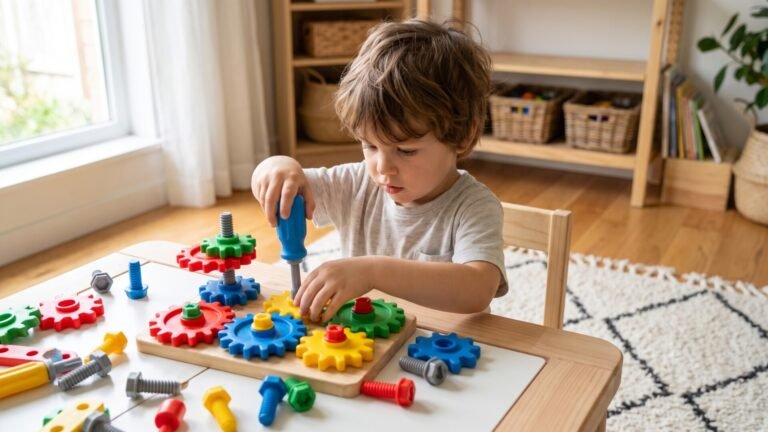
- Fine Motor Skills – Picking up pieces, connecting parts, and arranging tokens.
A good toy combines fun and challenge without requiring literacy or advanced math.
1. Coding Board Games for Preschoolers
Yes, you read that right: board games can introduce coding principles. They use movement, rules, and sequence without any electronics.
Robot Turtles
- How it works: Players move “turtles” through obstacles on a board using command cards (forward, turn, etc.).
- Skills developed: Sequencing, problem solving, following instructions, critical thinking.
- Why preschoolers love it: Colorful, simple, and allows cooperative play with parents.
- Where to find it: Amazon, Target, and specialty toy stores.
This game is screen-free, cooperative, and flexible, making it perfect for families who want early coding concepts in playful format.
2. Coding Cubes & Path Toys
Coding cubes are physical robots or moveable pieces that respond to instructions, helping preschoolers learn sequencing and cause-and-effect in real space.
Cubetto
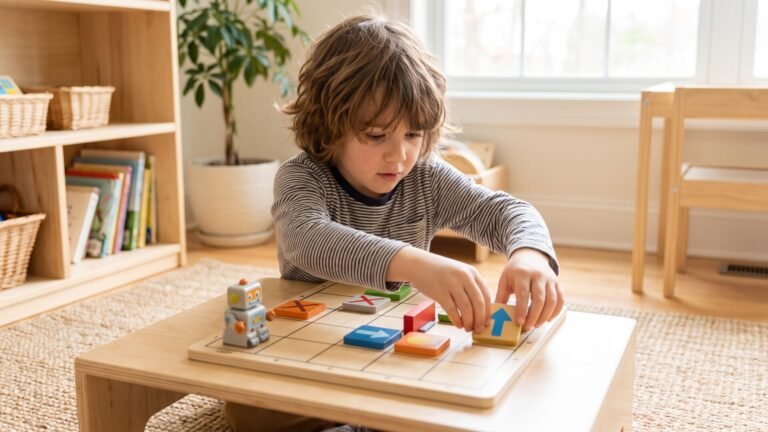
- How it works: A wooden robot moves across a physical map guided by coding blocks placed on a control board.
- Skills developed: Sequencing, spatial awareness, logical thinking.
- Why preschoolers love it: Hands-on blocks, cute robot, and no screens needed.
- Where to find it: Online through Amazon or Cubetto’s official website.
Cubetto’s tactile approach allows kids to visualize code in the real world, perfect for early learners.
Coding Tracks and Mats
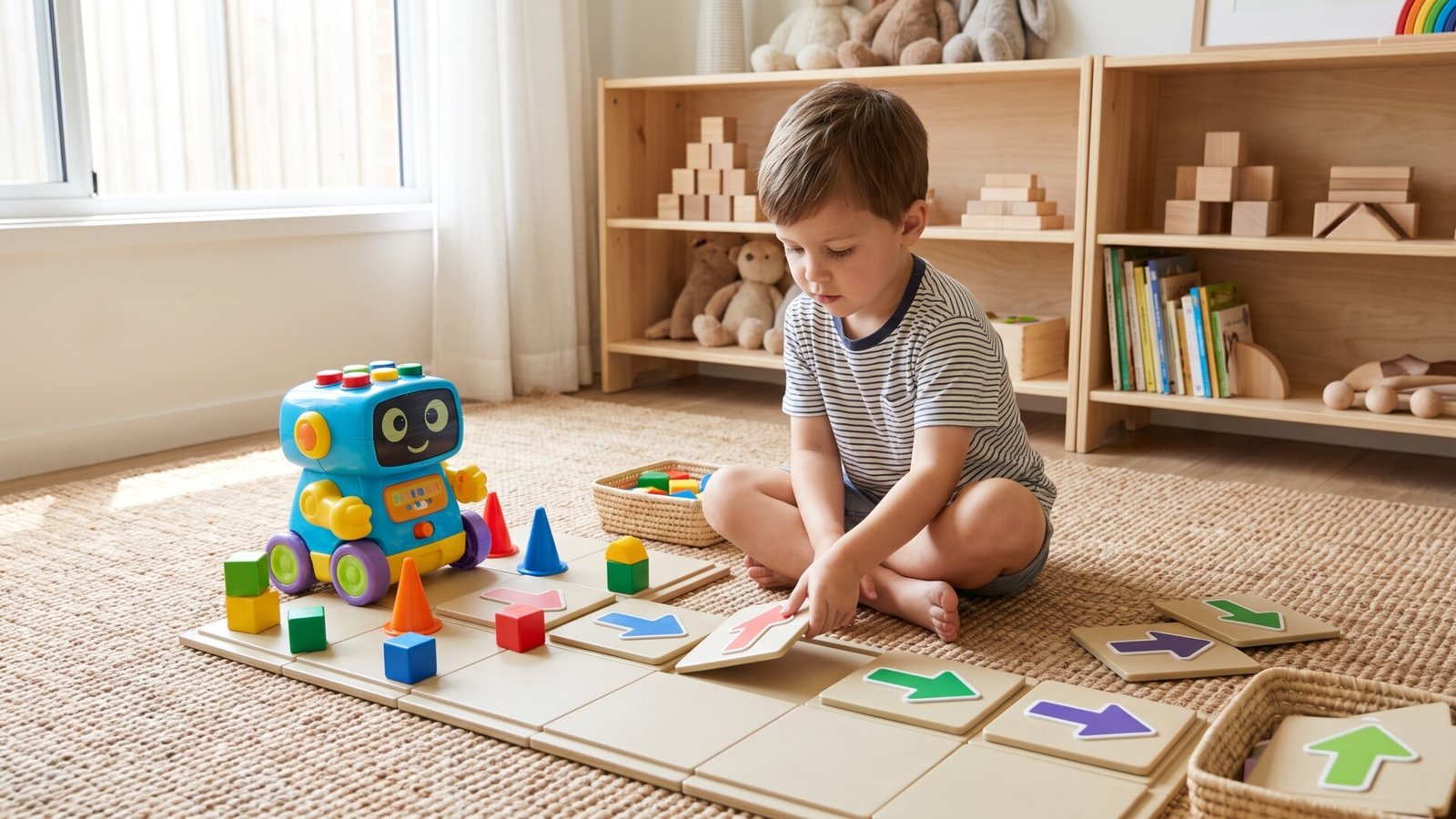
These toys often come as magnetic or cardboard tiles that form paths for robot characters.
- Learning Paths – Toddlers arrange tiles to guide a character from start to finish.
- Skills developed: Sequencing, spatial reasoning, problem solving.
- Example Products: Code-a-Pillar (Fisher-Price), Think & Learn Code-a-Pillar Twist.
- Why preschoolers love it: Moveable, colorful, and interactive without screens.
3. Command Blocks & Token Coding
Command blocks are physical blocks or cards that represent commands, similar to programming logic.
Kibo Robot
- How it works: Kids stack physical blocks to program a robot’s actions (move, turn, play sound).
- Skills developed: Sequencing, critical thinking, logical reasoning.
- Why preschoolers love it: Tangible blocks that produce immediate robot feedback.
- Where to find it: Amazon, official Kibo distributors.
This approach teaches cause and effect intuitively: stack blocks wrong? The robot goes off track — instantly reinforcing learning.
4. Puzzle-Based Coding Toys
Puzzle coding toys combine spatial reasoning with logical sequencing.
Cubetto Maze Puzzles
- How it works: Kids create maze challenges for the robot using wooden tiles and blocks.
- Skills developed: Planning, sequencing, problem solving, fine motor skills.
- Why preschoolers love it: Physical movement, colorful pieces, and a “mission” to complete.
- Where to find it: Cubetto official site, Amazon.
Puzzle-based toys let kids visualize algorithms in a tactile and playful way.
5. Sequential Art Toys
Some toys teach coding through storytelling and sequences, where actions follow a narrative.
StoryCubes / Algorithm Cards
- How it works: Kids arrange cubes/cards in order to create sequences that drive play or storytelling.
- Skills developed: Sequencing, logic, narrative thinking.
- Why preschoolers love it: Story creation and problem solving rolled into one.
- Where to find it: Amazon, Barnes & Noble, specialty toy shops.
These toys connect coding principles to everyday thinking — sequencing a story is a form of algorithmic thinking.
6. Cause-and-Effect Learning Toys
Toddlers love seeing actions produce results. Cause-and-effect toys are the simplest introduction to coding logic.
Fisher-Price Code-a-Pillar
- How it works: Kids connect segments of a caterpillar; each segment sends it forward, left, or right.
- Skills developed: Sequencing, planning, problem-solving, cause-effect reasoning.
- Why preschoolers love it: Bright, interactive, and instantly rewarding.
- Where to find it: Amazon, Target, Walmart.
Cause-and-effect toys make abstract programming concepts concrete, reinforcing early coding intuitions.
7. Stackable Robot Toys
Stackable or connectable robots let kids program actions by arranging physical components.
Botley 2.0 (Screen-Free Coding Robot)
- How it works: Kids use remote control or cards to guide Botley through obstacle courses.
- Skills developed: Sequencing, spatial awareness, critical thinking.
- Why preschoolers love it: Hands-on interaction and instant feedback.
- Where to find it: Amazon, Walmart.
Botley’s screen-free approach combines play, movement, and coding basics seamlessly.
8. Tangible Algorithm Toys
Some toys let preschoolers practice repeating patterns or algorithmic loops without electronics.
- Pattern Blocks with Commands
- Logic Towers or Color Sequencing Towers
- Skills developed: Pattern recognition, cause-effect, sequencing
- Why preschoolers love them: They can create different outcomes each time, encouraging experimentation.
Tips for Maximizing Learning With Coding Toys
- Start Simple: Focus on basic sequencing before introducing complex problem-solving.
- Pair Toys With Storytelling: Narratives help toddlers remember steps and understand cause-and-effect.
- Encourage Trial and Error: Let kids make mistakes; it’s part of learning logic.
- Rotate Toys: Keep interest high by alternating coding toys with other STEM or sensory play.
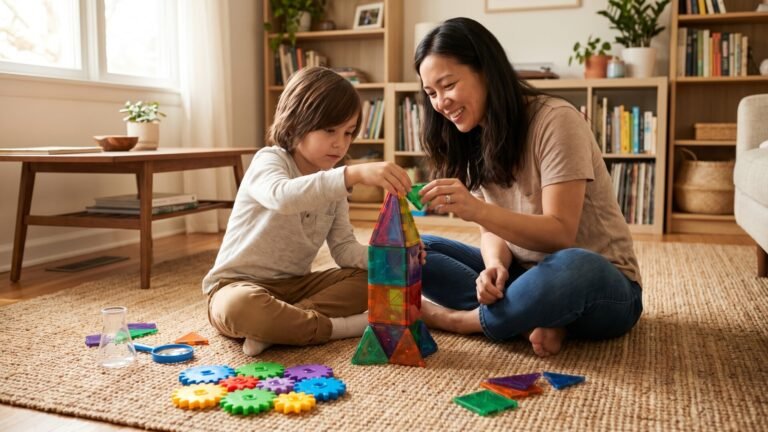
- Join Play Sessions: Sitting with your child and narrating actions strengthens understanding and language skills.
Why Screen-Free Coding Matters
Preschoolers are learning attention, focus, and problem-solving skills in addition to coding principles. Screen-free toys:
- Encourage physical movement
- Enhance social play (siblings, friends, parents)
- Avoid screen overuse, which can reduce attention spans at this age
- Allow hands-on experimentation, critical for conceptual understanding
These toys bridge the gap between abstract digital coding and real-world problem-solving — a key foundation for future STEM skills.
Recommendations for Parents
- Observe Interests: Some kids prefer robots; others love puzzles or storytelling. Match the toy to the child’s natural inclinations.
- Set up Play Zones: A small area with a coding mat or robot tracks allows kids to focus and experiment safely.
- Celebrate Successes: Clap or cheer when the robot reaches its destination; positive reinforcement strengthens engagement.
- Mix with Other Learning: Coding toys pair well with building blocks, shape sorters, or art to support multiple developmental areas.
Final Thoughts
Preschool coding toys that don’t require tablets are a fantastic way to teach early computational thinking while keeping play tactile, interactive, and developmentally appropriate. From board games to programmable robots, there’s a variety of toys that build sequencing, cause-and-effect, problem-solving, and logical thinking in preschoolers.
Early exposure to these concepts supports critical thinking and prepares kids for later coding and STEM learning — all while having a blast. The best part? No screens, no apps, no worries — just learning through play.
Want to take your child’s coding play a step further? Check out Montessori Coding Robots for Preschoolers for interactive, Montessori-inspired robots that teach coding, sequencing, and critical thinking in a fun, hands-on way.
Looking for more age-appropriate Montessori toys to support your preschooler’s learning? Explore our Montessori Toys for Preschoolers sub-hub for curated selections that foster creativity, problem-solving, and hands-on STEM exploration.