Top 5 Wooden Balance Boards for Toddlers
Promoting balance, coordination, and fun at home
Toddlers are bundles of energy. They love to run, climb, jump, and explore, but developing balance and coordination at this stage is crucial. One of the best tools for supporting this development is a wooden balance board.
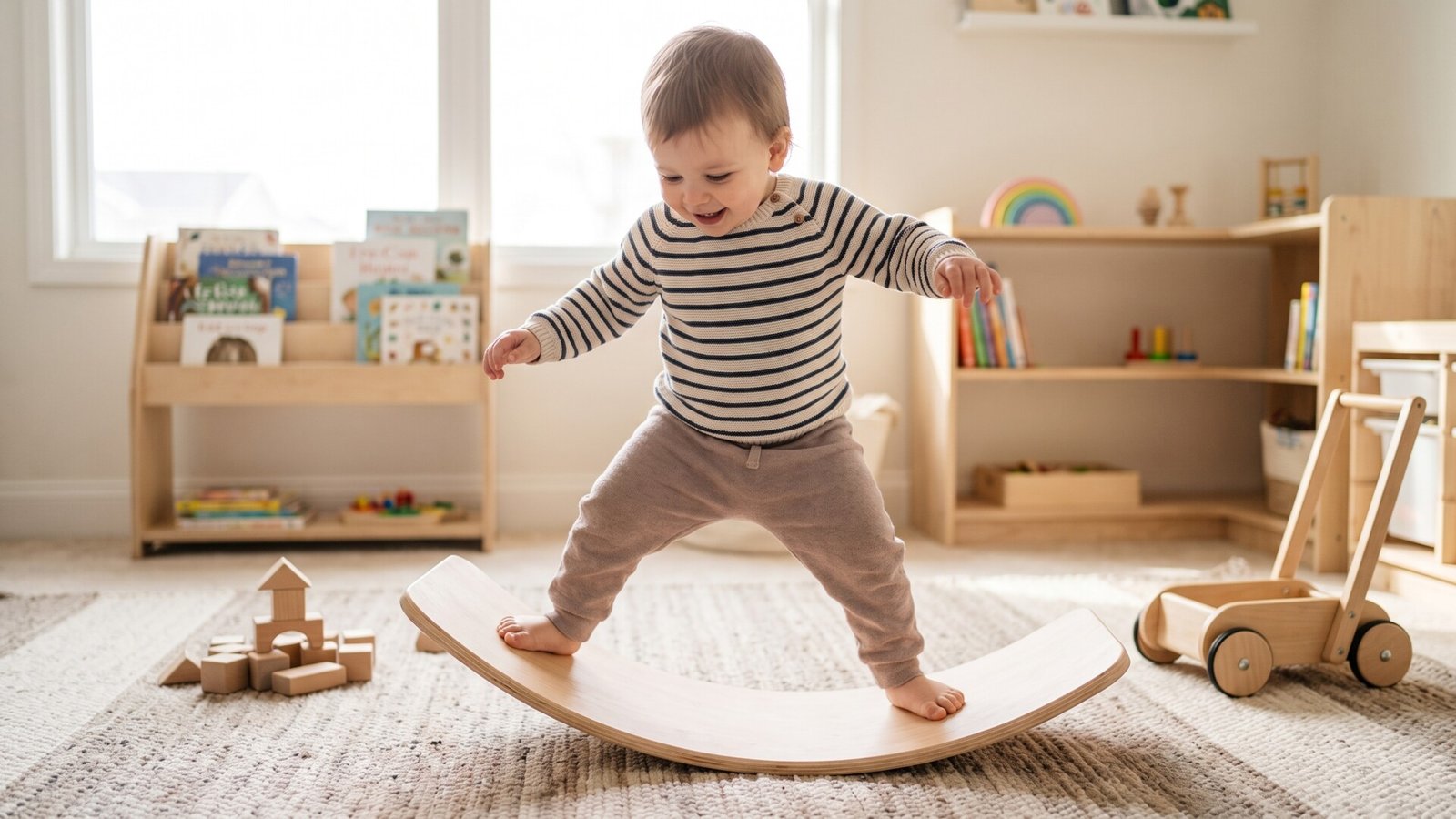
Balance boards are simple yet versatile: a curved wooden plank that rocks back and forth, helping toddlers improve core strength, motor skills, and spatial awareness. They can be used for indoor play, physical therapy exercises, or creative open-ended play.
In this guide, we’ll review the top 5 wooden balance boards for toddlers, discuss their safety features, benefits, and play ideas, and provide tips for choosing the right board for your child.
Why Wooden Balance Boards Are Great for Toddlers
Before diving into specific products, it’s important to understand why these boards are beneficial:
1. Physical Development
Balance boards help toddlers develop:
- Core strength: Rocking engages abdominal and back muscles.
- Leg strength: Standing and shifting weight builds leg muscles.
- Coordination: Maintaining balance improves proprioception.
- Motor planning: Children learn to predict movements and adjust their body accordingly.
2. Cognitive Benefits
- Problem-solving skills: Learning how to balance and tilt the board requires experimentation.
- Concentration: Staying on the board demands focus.
- Spatial awareness: Children learn how their body moves in relation to the environment.
3. Open-Ended Play
- Wooden balance boards are versatile. Toddlers can use them as:
- Rocks and seesaws
- Slides for small toys
- Stepping stones for obstacle courses
- Pretend play props: Bridges, ramps, or tunnels
What to Look for in a Toddler Balance Board
When choosing a board, keep these criteria in mind:
- Size and Weight Capacity
- A toddler board should be smaller, lightweight, and low to the ground for safety.
- Check weight limits for older siblings who might want to join play.
- Material Quality
- Solid wood is durable and eco-friendly.
- Smooth edges and non-toxic finishes ensure safe play.
- Surface Texture
- Non-slip surfaces or grip tape help prevent slipping.
- Stability vs Challenge
- Beginners need a board that rocks gently.
- More advanced boards can offer a greater tilt to increase the challenge.
- Safety Standards
- Look for boards tested for children’s safety, with rounded edges and smooth surfaces.
Top 5 Wooden Balance Boards for Toddlers
Here’s a detailed review of the best options on the market:
1. Wobbel Original Balance Board
Overview:
Wobbel is a premium brand known for its durable wooden boards and smooth rocking motion.
Features:
- Made from high-quality laminated wood.
- Rounded edges for safety.
- Optional soft felt cover for added comfort.
- Weight capacity: up to 200 lbs, suitable for toddlers and older kids.
Pros:
- Very sturdy and durable.
- Smooth rocking motion prevents tipping.
- Versatile for open-ended play.
- Non-toxic finishes.
Cons:
- Higher price point.
- May be too large for very small toddlers.
Play Ideas:
- Use as a rocker chair or slide for toys.
- Create obstacle courses by stacking or combining with cushions.
- Encourage balance challenges for physical development.
2. Kinderfeets Toddler Balance Board
Overview:
Kinderfeets is eco-friendly and designed specifically for younger children.
Features:
- Made from sustainably sourced beechwood.
- Small and lightweight, perfect for ages 2–5.
- Rounded edges and non-slip surface.
- Low-profile design for safety.
Pros:
- Affordable and safe for beginners.
- Eco-conscious material.
- Lightweight and portable.
Cons:
- Less weight capacity than some other boards.
- Rocking motion is gentle, may not challenge older toddlers.
Play Ideas:
- Indoor rocking or gentle stepping exercises.
- Use as a pretend boat, bridge, or ramp.
- Great for gross motor skill practice in small spaces.
3. Lovevery Toddler Balance Board
Overview:
Lovevery is known for development-focused toys, and their balance board is designed to encourage motor skills and creative play.
Features:
- Made from European birch plywood, smooth finish.
- Slightly curved design encourages natural rocking.
- Lightweight but durable.
- Designed for ages 18 months+.
Pros:
- Developmentally appropriate for toddlers.
- Encourages imaginative play and creativity.
- Smooth, child-safe finish.
Cons:
- Limited weight capacity (~100 lbs).
- Not suitable for very advanced balance challenges.
Play Ideas:
- Turn into a rocking boat in imaginative play.
- Combine with cushions for mini obstacle courses.
- Integrate into physical therapy or structured play.
4. Tumble Forms Wooden Balance Board
Overview:
Tumble Forms is well-known for occupational therapy products, and their wooden board is perfect for toddlers needing extra balance support.
Features:
- Made from solid maple or birch wood.
- Rounded edges for safety.
- Non-slip underside for stability on floors.
- Slightly flatter than some boards for gentle rocking.
Pros:
- Great for toddlers building confidence.
- Durable and long-lasting.
- Trusted by occupational therapists.
Cons:
- Less visually playful than colorful boards.
- Slightly heavier.
Play Ideas:
- Use during guided balance exercises.
- Encourage stepping on/off to improve coordination.
- Add to indoor active play areas for safe movement.
5. Hape Curvy Wooden Balance Board
Overview:
Hape is a well-loved children’s brand, and their balance board combines fun aesthetics and functional design.
Features:
- Made from sustainable bamboo plywood.
- Bright, child-friendly colors.
- Rounded edges and smooth finish.
- Slightly smaller size for toddlers.
Pros:
- Affordable and lightweight.
- Fun design encourages play.
- Sturdy and safe for small children.
Cons:
- Smaller size limits some advanced play.
- Rocking motion less pronounced.
Play Ideas:
- Incorporate into pretend play kitchens or forts.
- Use as a stepping stone or bridge in creative setups.
- Encourage balancing games during indoor play.
Tips for Safe Use of Wooden Balance Boards
Even the best balance boards require parental guidance for safety:
- Use on a flat, stable surface: Avoid slippery floors.
- Supervise toddlers: Especially at first, guide their steps.
- Start slowly: Begin with gentle rocking before attempting standing play.
- Use socks or bare feet: Prevent slipping on the board.
- Add padding: Place the board on a play mat or carpet for extra cushioning.
- Rotate activities: Encourage balancing, stepping, rocking, and imaginative play.
Creative Ways to Play with Balance Boards
- Rocking Chair – Toddlers can sit and rock gently.
- Bridge or Ramp – Stack pillows or other toys to create obstacle courses.
- Boat or Ship – Encourage pretend play adventures.
- Step Challenge – Practice stepping on and off to improve coordination.
- Balance Games – Challenge toddlers to hold poses, reach for toys, or balance objects.
These activities extend playtime, build skills, and keep children engaged.
Choosing the Right Board for Your Family
When deciding among the options:
- Consider age and size: Younger toddlers need smaller boards with gentle rocking.
- Look at material and durability: Solid wood lasts longer and withstands rough play.
- Think about versatility: Boards that double as props for open-ended play give more value.
- Set a budget: Premium boards like Wobbel offer durability and versatility but cost more, while brands like Hape or Kinderfeets are budget-friendly.
Maintaining and Caring for Wooden Balance Boards
- Regular cleaning: Wipe with a damp cloth, avoid harsh chemicals.
- Check for cracks or splinters: Smooth rough edges promptly.
- Store properly: Keep away from moisture to prevent warping.
- Rotate play: Allow the board to rest between intense use to maintain longevity.
Conclusion
Wooden balance boards are fantastic tools for toddlers: they improve balance, coordination, and core strength, while encouraging creative, open-ended play.
The top boards reviewed here—Wobbel Original, Kinderfeets, Lovevery, Tumble Forms, and Hape Curvy—offer a range of sizes, materials, and price points, making it easy to find one that fits your family’s needs.
- For durability and versatility, Wobbel is top-of-the-line.
- For eco-friendly, toddler-sized options, Kinderfeets and Hape are perfect.
- For development-focused play, Lovevery and Tumble Forms shine.
By supervising play, encouraging creativity, and maintaining the boards, you can ensure toddlers gain skills, have fun, and stay safe.