Playmobil vs. LEGO: Which Classic Toy System is Better for Creative Storytelling?
If you have children between the ages of four and twelve, you’ve almost certainly encountered the great debate: Playmobil or LEGO? Both are beloved, both have passionate fans, and both promise hours of imaginative play. But when it comes to creative storytelling—the kind of play where children invent characters, build worlds, and act out narratives—which system truly shines?
Here’s the honest truth: they are different tools for different kinds of storytelling. Playmobil gives you a ready‑to‑play world with highly detailed figures and realistic settings. LEGO gives you a box of bricks and says, “Build your own world, then tell its story.” Neither is universally “better.” The right choice depends on your child’s personality, age, and what they want from play.
This guide breaks down both systems, reviews the best sets for storytelling, and helps you decide which one—or both—belongs in your home. Both Playmobil and LEGO sets are available via Amazon, Target, Ryder Toys, and LEGO Affiliate programs—look for links throughout the article to check current prices and availability.
Understanding Playmobil and LEGO
Playmobil
Playmobil debuted in 1974 with a simple idea: a world of detailed, 7.5‑cm figures with friendly, smiling faces and accessories that fit perfectly in their hands. Unlike building toys, Playmobil sets come mostly pre‑assembled. The play is in the story, not the construction.
Focus: Detailed figurines, themed sets, realistic scenarios. A Playmobil pirate ship has cannons that fire, a captain’s cabin, and a treasure chest. The child’s job is to sail the seas, find treasure, and defeat rival pirates.
Strengths: Playmobil excels at roleplay and imaginative world‑building. The figures are highly expressive (despite not having moving mouths), and the accessories—swords, cups, telescopes, chickens—are incredibly detailed. Children can start playing immediately, without spending an hour building first.
Examples: Playmobil Pirate Ship, Playmobil Family Home, Playmobil Knights’ Castle, Playmobil Space Shuttle.
Target audience: 4–12 years, especially children who love pretending, re‑enacting scenes, and collecting themed worlds.
LEGO
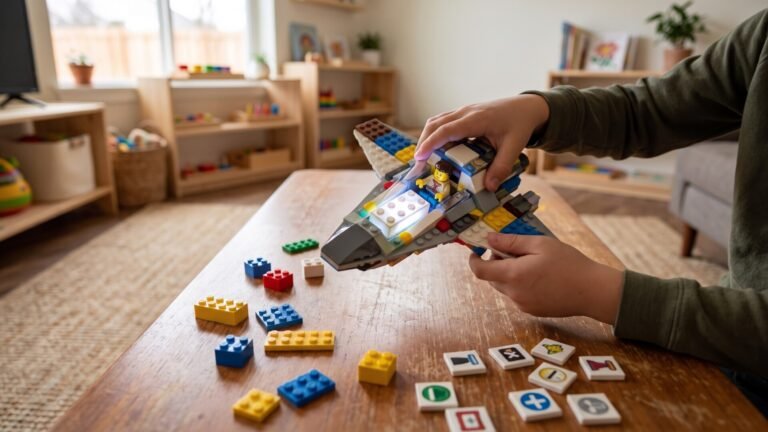
LEGO (from the Danish “leg godt” – play well) is the world’s most famous construction toy. Unlike Playmobil, LEGO is about building the world before you can play in it. That building process is itself a creative act, but it requires patience and fine motor skill.
Focus: Building, creativity, modularity. LEGO bricks are a universal language. You can build a castle today, take it apart, and build a spaceship tomorrow.
Strengths: LEGO offers endless creativity through mixing and matching. A LEGO minifigure can be a firefighter, a Jedi, or a pizza chef depending on which accessories you give it. The system is highly expandable, and sets from different themes (City, Friends, Ninjago, Star Wars) all work together.
Examples: LEGO City Police Station, LEGO Friends Heartlake City, LEGO Classic Creative Box, LEGO Creator 3‑in‑1 sets.
Target audience: 4+ with sets ranging from simple (LEGO Classic) to extremely complex (LEGO Technic, LEGO Icons).
Key Factors for Creative Storytelling
When comparing Playmobil and LEGO for storytelling, consider these factors:
Variety of characters and accessories – Playmobil sets come with many unique figures and themed accessories out of the box. LEGO minifigures are also highly varied, but you often need to buy multiple sets or minifigure packs to get a diverse cast.
Level of detail in settings and props – Playmobil settings are pre‑built and highly detailed (e.g., a medieval castle with working drawbridge). LEGO settings are built by the child, which can be empowering or frustrating depending on age and patience.
Expandability and compatibility – LEGO wins here. Any brick fits with any other brick. Playmobil sets are less compatible across themes (a pirate ship doesn’t easily connect to a farm).
Durability and ease of setup – Playmobil is ready to play in minutes. LEGO requires building, but the bricks are nearly indestructible. Playmobil’s small accessories (e.g., coins, cups) are easily lost.
Affiliate relevance – Both systems are widely available through Amazon, Ryder Toys, Target, and LEGO Affiliate.
Top Playmobil Sets for Storytelling
Playmobil Pirate Ship
Amazon | Target
This is Playmobil at its best. The Pirate Ship comes with two pirates, a skeleton, a treasure chest with gold coins, cannons that really fire, a crow’s nest, and a working anchor. The ship floats in water (bathtub adventures, anyone?).
Storytelling potential: Children can act out treasure hunts, sea battles, or rescuing prisoners. The detailed accessories (swords, map, telescope) invite dialogue and negotiation.
Age range: 4–10.
Check Playmobil Pirate Ship on Amazon →
Playmobil Family Home
Ryder Toys | Amazon
A modern dollhouse‑style set with four rooms, furniture, a family of four figures, and accessories like a kitchen table, pots, pans, and a bathroom. The roof opens for easy access.
Storytelling potential: Daily life scenarios—cooking breakfast, putting children to bed, having a birthday party. This set is excellent for social roleplay, empathy, and understanding family routines.
Age range: 4–10.
Shop Playmobil Family Home at Ryder Toys →
Playmobil Knights’ Castle
Target | Amazon
A large castle with a working drawbridge, portcullis, towers, a throne room, and a dungeon. Includes knights, a king, a dragon, and siege weapons.
Storytelling potential: Fantasy narratives—defending the castle, jousting tournaments, rescuing the princess, or even dragon‑taming. The castle’s multiple rooms allow for parallel storylines.
Age range: 5–12.
Explore Knights’ Castle at Target →
Playmobil Space Shuttle
Amazon | Ryder Toys
A detailed space shuttle with opening cargo bay, a satellite, two astronauts, and mission control accessories. The shuttle has a removable booster rocket.
Storytelling potential: Science‑fiction narratives—launching into space, repairing a satellite, discovering alien life (add your own alien figure). Great for children fascinated by space exploration.
Age range: 5–10.
Get Playmobil Space Shuttle on Amazon →
Playmobil Farm Life
Amazon | Target
A barn with stable, hayloft, tractor, and multiple animals (cows, horses, pigs, chickens). Includes farmer figure and child figure.
Storytelling potential: Animal care, harvesting crops, veterinary play. This set encourages nurturing narratives and understanding where food comes from.
Age range: 4–8.
Shop Playmobil Farm on Amazon →
Top LEGO Sets for Storytelling
LEGO City Police & Fire Sets
LEGO Affiliate | Amazon
LEGO City sets come with vehicles, buildings, and minifigures. The police station includes a jail, police car, helicopter, and crook figure. Fire sets have a fire engine, firehouse, and flames to put out.
Storytelling potential: Hero narratives—catching the bank robber, rescuing a cat from a tree, putting out a fire. Children can build the station first, then act out emergencies. The modular nature allows them to expand the city over time.
Age range: 5+.
Check LEGO City Police at LEGO →
LEGO Friends Heartlake City
LEGO Affiliate | Amazon
LEGO Friends features detailed dollhouse‑like buildings (café, hair salon, veterinary clinic) with a focus on friendship and social play. The minifigures (called mini‑dolls) are taller and more slender than standard minifigures, with more detailed hair and clothing.
Storytelling potential: Social narratives—friends meeting for juice, taking pets to the vet, planning a party. The sets encourage dialogue, cooperation, and emotional storytelling.
Age range: 5–10.
Explore LEGO Friends at LEGO →
LEGO Classic Creative Building Sets
Amazon | Target
A box of colourful bricks, windows, wheels, eyes, and basic instructions for simple models (a house, a plane, a dinosaur). No theme, no story—just bricks.
Storytelling potential: This is pure open‑ended creativity. The child builds a creature, then invents its name and backstory. They build a car, then drive it to an imaginary city. Because there are no pre‑printed stories, the child is the author of everything.
Age range: 4–99.
Shop LEGO Classic Creative Box on Amazon →
LEGO Creator 3‑in‑1 Sets
LEGO Affiliate | Amazon
Each 3‑in‑1 set includes instructions for three different models using the same pieces. For example, a medieval castle can also be built as a dragon or a tower.
Storytelling potential: Multiple story possibilities from one set. Today the castle is a royal palace; tomorrow it’s a haunted ruin. The rebuild process itself becomes part of the narrative (“The dragon destroyed the castle, so we must rebuild as a fortress”).
Age range: 6–12.
Check LEGO Creator 3‑in‑1 at LEGO →
LEGO Ninjago or Star Wars Playsets
LEGO Affiliate | Amazon
Action‑oriented sets with heroes, villains, vehicles, and locations. Ninjago sets include ninja figures, dragons, and spinners. Star Wars sets include X‑wings, TIE fighters, and iconic scenes.
Storytelling potential: Fantasy and adventure narratives. Children who know the TV show (Ninjago) or movies (Star Wars) will re‑enact scenes, then invent their own. The conflict‑based play (good vs. evil) is very engaging for 6‑10 year olds.
Age range: 6–12.
Explore LEGO Ninjago on Amazon →
Comparison Table: Playmobil vs. LEGO
| Feature | Playmobil | LEGO |
|---|---|---|
| Focus | Figurines & roleplay | Building & modular creativity |
| Storytelling | High – narrative scenarios | Medium–High – imaginative construction |
| Expandability | Moderate – compatible themed sets | High – mix‑and‑match & cross‑theme building |
| Complexity | Low–medium | Medium–high |
| Collectibility | High – iconic figurines | Medium–high – limited edition & LEGO Icons |
| Playability | Ready‑to‑play sets | Build then play |
| Creativity | Structured story worlds | Open‑ended creativity |
| Target Age | 4–12 | 4+ (varies by set) |
| Educational Value | Social, roleplay, empathy | STEM, problem‑solving, creativity |
| Affiliate Programs | Amazon, Ryder Toys, Target | LEGO, Amazon, Target |
Tips for Maximizing Storytelling Play
Combine multiple themed sets for expanded worlds – A Playmobil pirate ship can visit a LEGO island (even if the bricks don’t attach, the stories can). Or combine LEGO City police with LEGO fire for a town‑wide emergency narrative.
Use figures and accessories to encourage roleplay dialogue – Ask open‑ended questions: “What is the pirate captain saying to the crew?” “Why is the firefighter in a hurry?” The accessories (treasure maps, walkie‑talkies) give children props for their voices.
Encourage kids to narrate their own stories – Resist the urge to correct or direct. If a child says the pirate ship is a school bus, that’s creative. Let them lead. You can gently extend: “Oh, a pirate school bus? What do pirates learn in school?”
Rotate sets to maintain interest – Put away half the Playmobil or LEGO for a few weeks. When you bring them back, they feel new. This also encourages children to invent fresh narratives instead of repeating old ones.
Mix LEGO and Playmobil for hybrid storytelling – The figures are different scales (Playmobil figures are larger), but that doesn’t matter in imagination play. A LEGO minifigure can visit a Playmobil castle as a “guest.” The only limit is creativity.
Use storage wisely – For LEGO, sort bricks by colour or type in bins. For Playmobil, keep small accessories in a partitioned box (fishing tackle boxes work great). Lost pieces kill storytelling momentum.
Pros and Cons Summary
Playmobil Pros
- Highly detailed figures and accessories – ready for story out of the box
- No building required – great for impatient children or younger kids
- Excellent for social roleplay and empathy (family, farm, hospital sets)
- Themed worlds feel cohesive and immersive
Playmobil Cons
- Less flexible – you can’t easily rebuild a pirate ship into a spaceship
- Small accessories are easily lost (coins, cups, flowers)
- Figures are not as poseable as LEGO minifigures
- Sets are less compatible across themes
LEGO Pros
- Endless building combinations – one box of bricks is infinite worlds
- Minifigures are highly customisable (swap heads, hair, legs)
- Encourages both construction and narrative creativity
- Sets from any theme work together (Star Wars meets City)
LEGO Cons
- Build‑first model can be frustrating for children who want to play immediately
- Some sets are expensive and require adult help
- Small bricks can be lost or create mess
- Storytelling may be secondary to building for some children
Frequently Asked Questions About Playmobil And LEGO
Which is better for younger children (ages 4–5)?
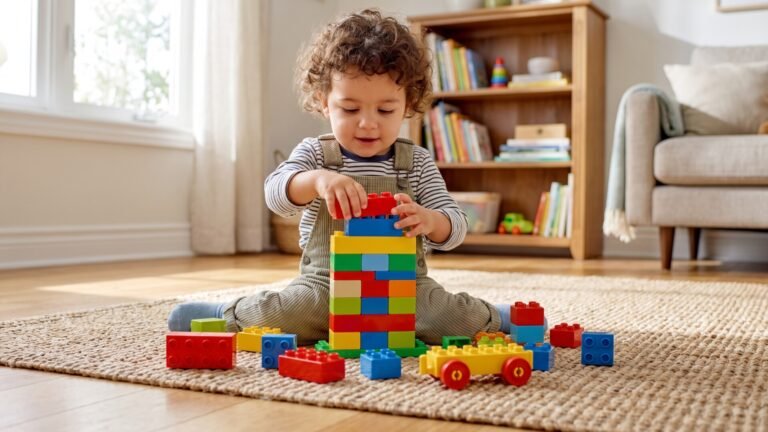
Playmobil is often easier for this age because the sets come ready to play. A four‑year‑old can immediately put a figure in the pirate ship and start talking. LEGO requires building, which may frustrate a child who lacks fine motor skills or patience. However, LEGO Classic boxes with large bricks (LEGO Duplo for under 4) are also great.
Which fosters more creative storytelling?
It depends on the child. Playmobil provides a detailed stage – the story is already half‑written. LEGO provides raw materials – the child writes the entire story, including the set design. Many educators argue that LEGO’s open‑endedness leads to more original narratives, but both are valid.
Can LEGO and Playmobil sets be combined physically?
No, the connection systems are different. However, children often combine them in narrative play. A LEGO spaceship can land next to a Playmobil castle. The figures are different scales, but children don’t mind.
Are Playmobil or LEGO better for gifts?
For a child who loves playing pretend immediately, Playmobil is a great gift. For a child who loves building and engineering, LEGO is better. If you’re unsure, a medium‑sized set of each is a wonderful introduction.
How do prices compare?
Playmobil sets often seem cheaper for the amount of storytelling content. A $40 Playmobil set might have 50 pieces but 5 figures and many accessories. A $40 LEGO set might have 200 pieces but only 2 minifigures. However, LEGO bricks have high reuse value across many builds.
Do these toys grow with a child?
LEGO grows exceptionally well. A child who starts with Duplo at 2, moves to Classic at 5, and tackles Technic at 10 is still using the same system. Playmobil also grows, but older children may tire of the fixed themes and want more building control.
Which system is better for only children vs. siblings?
LEGO is excellent for solitary building and storytelling, but also works well for siblings building together. Playmobil’s ready‑to‑play worlds are great for two children to act out scenes cooperatively. Both are fine; it’s more about personality.
Conclusion
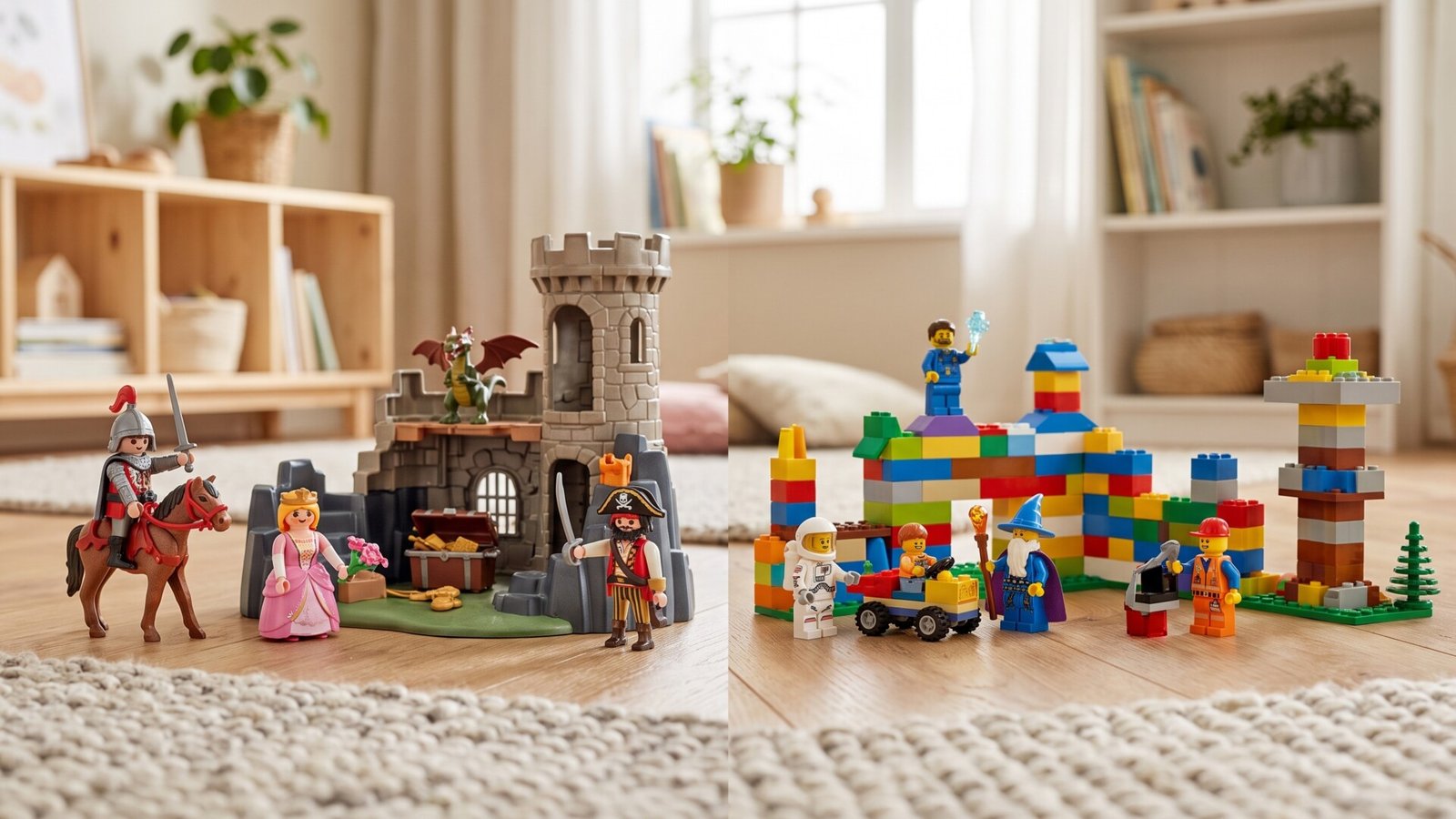
Playmobil and LEGO are both champions of childhood creativity, but they serve different storytelling styles. Playmobil hands a child a detailed stage, populated with expressive characters and realistic props, and says, “Start your story now.” LEGO hands a child a pile of bricks and says, “Build your stage, then tell us what happens.”
For the child who loves dressing up, acting out scenes, and collecting themed worlds, Playmobil is often the better choice. For the child who loves designing, rebuilding, and mixing themes, LEGO is unmatched. Many families end up with both—Playmobil for the pirate ship and castle, LEGO for the city and space adventures.
The best approach is to watch your child play. Do they grab a figure and start talking? Try Playmobil. Do they spend an hour building a structure before they even add a character? LEGO is their language. And if they love both, you’ve hit the jackpot.
Explore the latest Playmobil and LEGO sets through our recommended partners using the links throughout this article.