Best Montessori Toys for Newborns (0–3 Months)
The first three months of life are a period of rapid neurological development, sensory exploration, and emerging awareness. Although newborns may seem passive, they are actively learning about the world through vision, hearing, touch, and movement. Choosing the right Montessori toys for newborns (0–3 months) ensures that infants are stimulated in a safe, developmentally appropriate way, encouraging early cognitive, motor, and sensory skills while fostering calm, focused attention.
Unlike traditional “flashy” baby toys that rely on lights, sounds, or electronics, Montessori newborn toys focus on simplicity, quality, and purposeful design. They invite exploration without overwhelming the senses, allowing infants to interact at their own pace. This article dives deep into the best Montessori toys for newborns, categorized by sensory type and developmental goal, and includes clear product recommendations you can link with affiliate URLs.
This guide to the best Montessori toys for newborns is part of our broader Montessori Toys for Infants (0–12 Months) hub, where we cover developmental stages, sensory toys, and age-appropriate materials for babies.
Why Montessori Toys Are Ideal for Newborns
Maria Montessori emphasized that even the youngest children are capable of concentrated attention when given a prepared environment. For newborns, the environment and toys must be calming, safe, and engaging without overstimulation. Montessori toys for newborns are designed to:
- Encourage sensory exploration through touch, sight, and sound
- Support visual and auditory development with age-appropriate stimuli
- Foster early motor coordination, including grasping and tracking
- Promote concentration, calmness, and purposeful interaction
- Allow infants to control their engagement, building independence from day one
Using Montessori toys in the first three months can help babies develop focus, sensory integration, and hand-eye coordination, setting a strong foundation for later learning.
Key Developmental Goals for Newborns (0–3 Months)
Understanding what your newborn is developing will help guide your toy choices:
- Visual tracking: The ability to follow objects with the eyes.
- Auditory discrimination: Responding to different sounds and tones.
- Tactile sensitivity: Differentiating textures and materials.
- Motor exploration: Beginning to reach, grasp, and bat.
- Focus and attention: Short bursts of concentrated engagement.
- Early cause-and-effect learning: Observing actions and responses.
The best Montessori toys align directly with these goals, allowing infants to practice skills naturally while enjoying safe, engaging play.
Montessori Toys for Visual Development
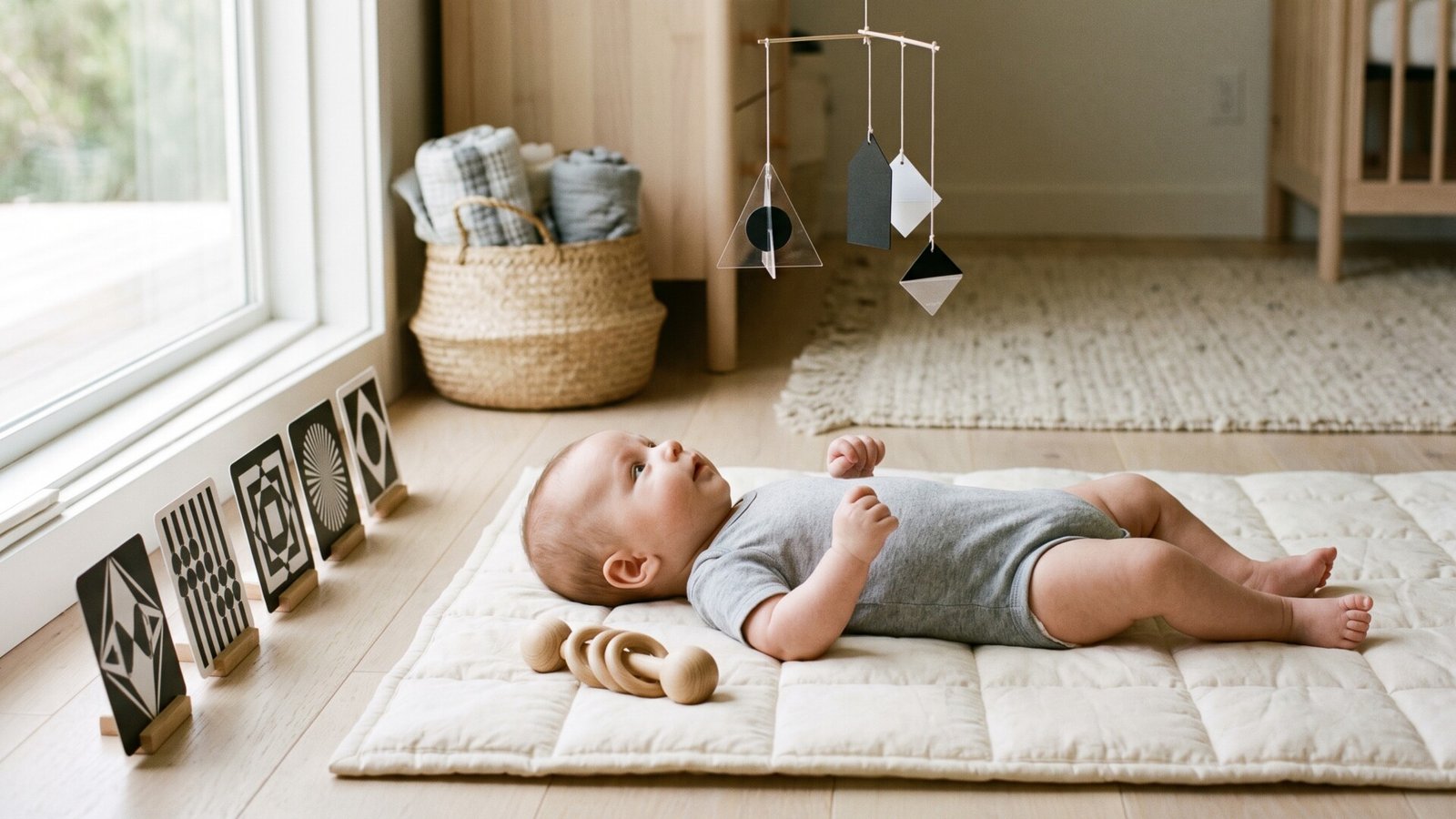
Newborn vision is limited: babies primarily see high-contrast patterns, black-and-white images, and bold geometric shapes. Visual stimulation is crucial for eye development, visual tracking, and early focus skills.
High-Contrast Mobiles
Mobiles are one of the first Montessori tools for newborns, hanging above cribs or play areas.
Benefits:
- Encourage visual tracking and depth perception
- Support early concentration and attention
- Develop recognition of shapes and patterns
Recommended products:
- Montessori Munari Mobile – A classic black-and-white mobile that gently moves, capturing the infant’s attention.
- High-Contrast Geometric Mobiles – Simple shapes on a lightweight frame, perfect for 0–3 months.
- Natural Wood Hanging Mobiles – Eco-friendly, safe, and visually soothing.
Hang a Munari or geometric mobile in your baby’s crib or play area to stimulate early visual focus and tracking.
Visual Cards and Patterns
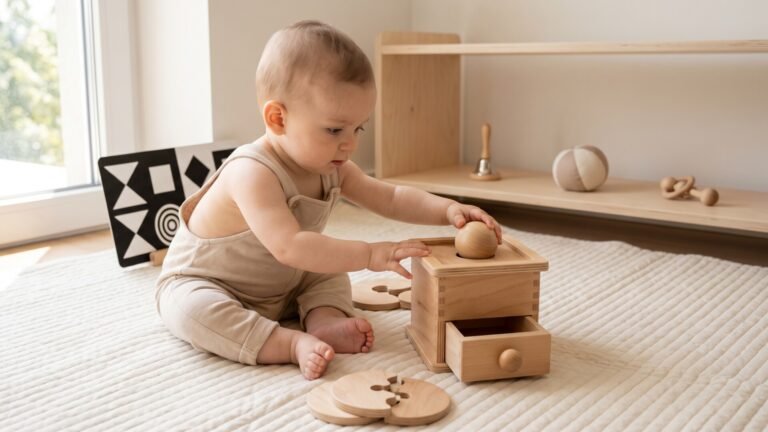
Montessori black-and-white cards allow infants to focus and differentiate shapes.
Benefits:
- Strengthen eye muscles
- Teach contrast and pattern recognition
- Support early visual attention
Top products:
- High-Contrast Montessori Flash Cards – Featuring bold shapes and patterns
- Infant Visual Tracking Cards – Durable and safe for young babies
- Geometric Wooden Tiles – Simple, tactile cards for visual exploration
Place high-contrast cards near your baby during tummy time or crib time to encourage focus and attention.
Montessori Toys for Auditory Development
Even newborns respond to sounds, and early auditory play supports language and cognitive development.
Rattles and Bells
Infants respond to gentle sounds, especially when they can produce the sound themselves.
Benefits:
- Encourage grasping and motor coordination
- Help differentiate pitch and volume
- Support cause-and-effect understanding
Recommended products:
- Natural Wooden Rattles – Non-toxic, lightweight, easy for tiny hands
- Fabric or Crochet Rattles – Soft, tactile, and safe for mouthing
- Montessori Sound Cylinders – Pairs of cylinders that make distinct tones
Introduce a soft wooden rattle during playtime to engage auditory senses while supporting grasping skills.
Music and Tone Exploration
Music should be gentle and infant-controlled in Montessori principles.
Recommended approaches:
- Hand-crank music boxes
- Soft lullabies sung live
- Baby-safe chimes
Avoid battery-operated or automatic music toys—they remove the child’s ability to control interaction, which Montessori emphasizes.
Montessori Toys for Tactile and Sensory Exploration
Touch is one of the most developed senses at birth. Montessori sensory toys allow newborns to explore textures safely, encouraging curiosity and fine motor skills.
Textured Balls and Fabric Toys
Benefits:
- Strengthen hand muscles
- Promote tactile discrimination
- Encourage reaching and grasping
Recommended products:
- Montessori Crochet Sensory Balls – Soft, textured balls ideal for grasping and mouthing
- Fabric Sensory Squares – Different materials sewn together for texture exploration
- Silicone Teething Rings – Multi-textured, safe, and chew-friendly
Offer your newborn a variety of textures to explore independently under supervision, supporting sensory development.
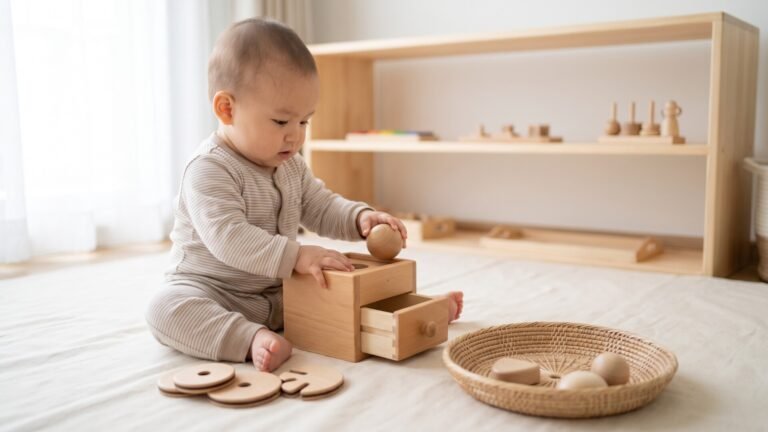
Sensory Baskets
A Montessori sensory basket is a curated selection of safe items for infants to touch and explore.
Contents may include:
- Wooden spoons or rings
- Soft fabric swatches
- Small natural sponges
- Silicone or wooden textured items
Benefits:
- Encourage independent exploration
- Introduce cause-and-effect learning
- Support fine motor and sensory skills
Product examples:
- Pre-made Montessori Sensory Baskets for Newborns
- DIY natural-material exploration baskets
Rotate items weekly to maintain novelty and sustained engagement.
Montessori Toys for Early Motor Skills
At 0–3 months, infants are just beginning to reach, bat, and lift their heads. Toys that encourage gentle movement help develop coordination, muscle strength, and early posture control.
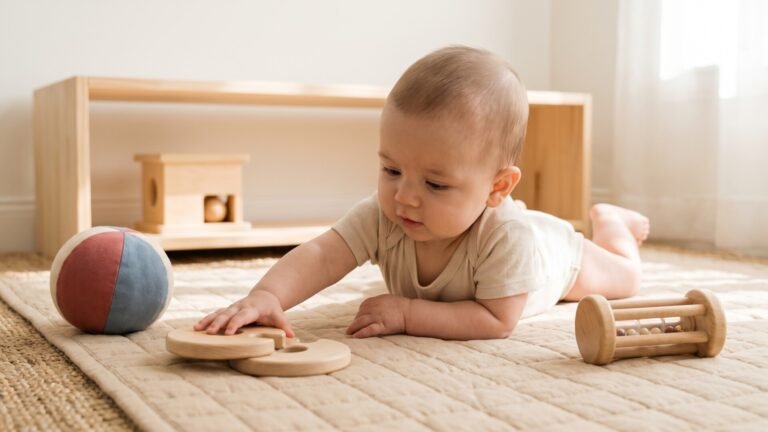
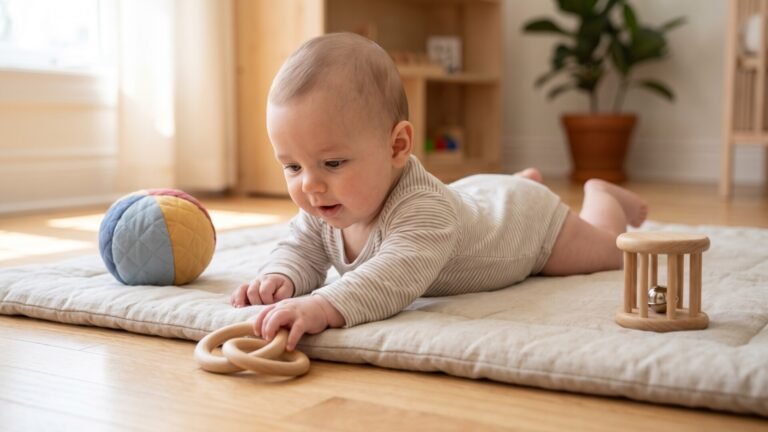
Tummy Time Accessories
Tummy time is essential for building neck, shoulder, and arm strength.
Recommended tools:
- Low baby mirrors
- Soft, rollable tummy mats
- Plush objects to reach and bat
Popular products:
- Montessori Tummy Time Mirror – Encourages self-recognition and head-lifting
- Soft Montessori Play Mats – Provide a safe, sensory-friendly surface
- Reaching Rattles and Balls – Encourage swatting and grasping
Add a mirror and soft toys to tummy time sessions to support motor development while making play interactive.
Grasping and Hand Coordination
Even in the first three months, infants start exploring objects with their hands, which lays the groundwork for future fine motor skills.
Recommended toys:
- Wooden grasping rings
- Interlocking discs
- Soft crochet balls
- Silicone sensory rings
Product examples:
- Wooden Montessori Grasping Rings – Smooth, safe, and perfectly sized for tiny hands
- Crochet Sensory Balls – Multi-textured for tactile exploration
- Montessori Interlocking Wooden Discs – Encourage coordination and curiosity
Keep grasping toys within reach during supervised floor time to encourage independent exploration.
Montessori Toys for Early Cognitive Development
Even at 0–3 months, infants start to notice cause-and-effect relationships, patterns, and repetition.
Simple Visual and Auditory Pairings
Benefits:
- Encourage observation and focus
- Support early problem-solving
- Introduce consistency and rhythm
Product ideas:
- Paired black-and-white cards and rattles
- Mobile movement paired with gentle sound
- Soft sensory objects that react to touch
These interactions teach infants that their actions have effects, an essential early cognitive milestone.
Organizing a Montessori Play Area for Newborns
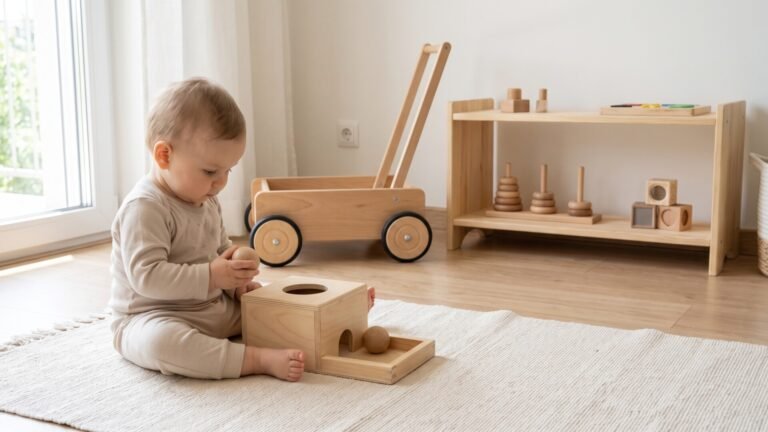
A Montessori-inspired play area for 0–3 months should be safe, minimal, and accessible:
- Use low mats or baby-safe areas for floor time
- Keep only a few toys accessible at a time (3–5)
- Rotate materials weekly for novelty
- Include visual, auditory, tactile, and movement-focused toys
- Provide safe mirrors for head-lifting and self-recognition
An organized play area encourages infants to choose toys independently and explore without distraction.
Montessori Toys vs Traditional Newborn Toys
Montessori Toys:
- Calm, simple, and purposeful
- Encourage independent exploration
- Made from natural, non-toxic materials
- Support sensory, motor, and cognitive development
Traditional Toys:
- Often overstimulating (lights, sounds, music)
- Passive play—infant doesn’t initiate engagement
- Battery-operated or electronic
- Focus on entertainment, not development
Parents increasingly choose Montessori toys because they foster learning through active engagement, even in newborns.
Tips for Choosing Montessori Toys for Newborns
When selecting toys for 0–3 months:
- Look for high-contrast visuals for early vision development
- Choose lightweight grasping toys for small hands
- Avoid toys with small parts or toxic materials
- Rotate toys frequently to maintain interest and engagement
- Include mobiles, sensory objects, rattles, and mirrors to cover all developmental domains
Best Montessori Toys for Newborn Gift Ideas
Montessori infant toys also make excellent gifts:
- Munari Mobiles or high-contrast hanging mobiles
- Wooden grasping rings or interlocking discs
- Crochet sensory balls and soft tactile toys
- Tummy time mats with mirrors
- Sensory exploration baskets with natural items
Consider a curated Montessori newborn toy set for baby showers or first-month gifts.
Final Thoughts
Even in the first three months, infants are active learners. Montessori toys for newborns respect their pace, encourage independent exploration, and provide stimulating yet calming interactions. By carefully selecting age-appropriate toys—mobiles, high-contrast visuals, rattles, sensory items, mirrors, and grasping tools—parents can nurture vision, hearing, touch, motor skills, and cognitive development from day one.
Montessori newborn toys are more than just playthings; they are tools for building a foundation of curiosity, focus, and learning that will support a child’s growth for months and years to come.
While these toys are perfect for newborns in the first three months, many parents also like to explore our full guide to Best Montessori Toys for Infants (0–12 Months), which covers age-appropriate sensory, grasping, and developmental toys for the entire first year.
If you’re planning your baby’s Montessori environment and want to explore toys for older infants, toddlers, and preschoolers, check out our Montessori Toys & Activities for Kids guide for full recommendations.