Montessori Creative Play Toys
Creativity is at the heart of Montessori education. While Montessori is often associated with structured learning in practical life, sensory work, and math, creative play is equally essential, offering children the freedom to explore, imagine, and express themselves in ways that build both cognitive and emotional skills.
Montessori creative play toys provide children with opportunities to experiment, construct, and problem-solve independently, all while engaging their imagination. Unlike many traditional toys that dictate how they are used, Montessori creative toys are open-ended, purposeful, and self-directed, allowing each child to discover their own methods, solutions, and stories.
This page serves as a Montessori Creative Play Toys sub-hub, guiding parents and educators through age-appropriate creative materials, hands-on activities, and meaningful ways to foster imagination in a Montessori context.
What Is Creative Play in Montessori?
Montessori creative play is not about passive entertainment. It is a form of learning that combines freedom of expression, practical skills, and purposeful engagement. Creative play encourages children to think critically, innovate, and find their own solutions while exploring materials in a deliberate, thoughtful way.
Unlike free-for-all “imaginative” play, Montessori creative play:
- Encourages intentional exploration of materials
- Integrates real-life tools and manipulatives
- Develops fine motor skills, concentration, and coordination
- Promotes patience, problem-solving, and perseverance
Children develop a deep sense of agency as they manipulate materials to create, build, and transform their environment.
Why Creative Play Matters in Montessori Education
Creative play is foundational for holistic development. While structured Montessori work strengthens cognitive and sensory skills, creative play allows children to apply those skills in flexible, imaginative ways.
Through creative play, children:
- Practice fine and gross motor coordination
- Experiment with cause and effect
- Develop problem-solving and planning abilities
- Cultivate self-expression and emotional intelligence
- Learn to collaborate and communicate with peers
Montessori emphasized the importance of balancing structured learning with self-directed creative experiences, ensuring children grow into well-rounded, independent thinkers.
How Montessori Creative Play Toys Differ from Conventional Toys
Many conventional creative toys emphasize results over process—kits that must be completed in a specific way, electronic toys that respond instantly, or sets with predetermined outcomes. Montessori creative play toys focus on the journey, not the final product.
Key characteristics of Montessori creative play toys:
- Open-ended materials that can be used in multiple ways
- Real, natural materials like wood, fabric, clay, and paper
- Encouragement of experimentation rather than replication
- Developmentally appropriate challenges that grow with the child
By engaging with these toys, children develop originality, perseverance, and confidence rather than simply following instructions.
Categories of Montessori Creative Play Toys
Building and Construction Toys
Construction toys allow children to explore spatial reasoning, balance, and structural thinking.
Examples include:
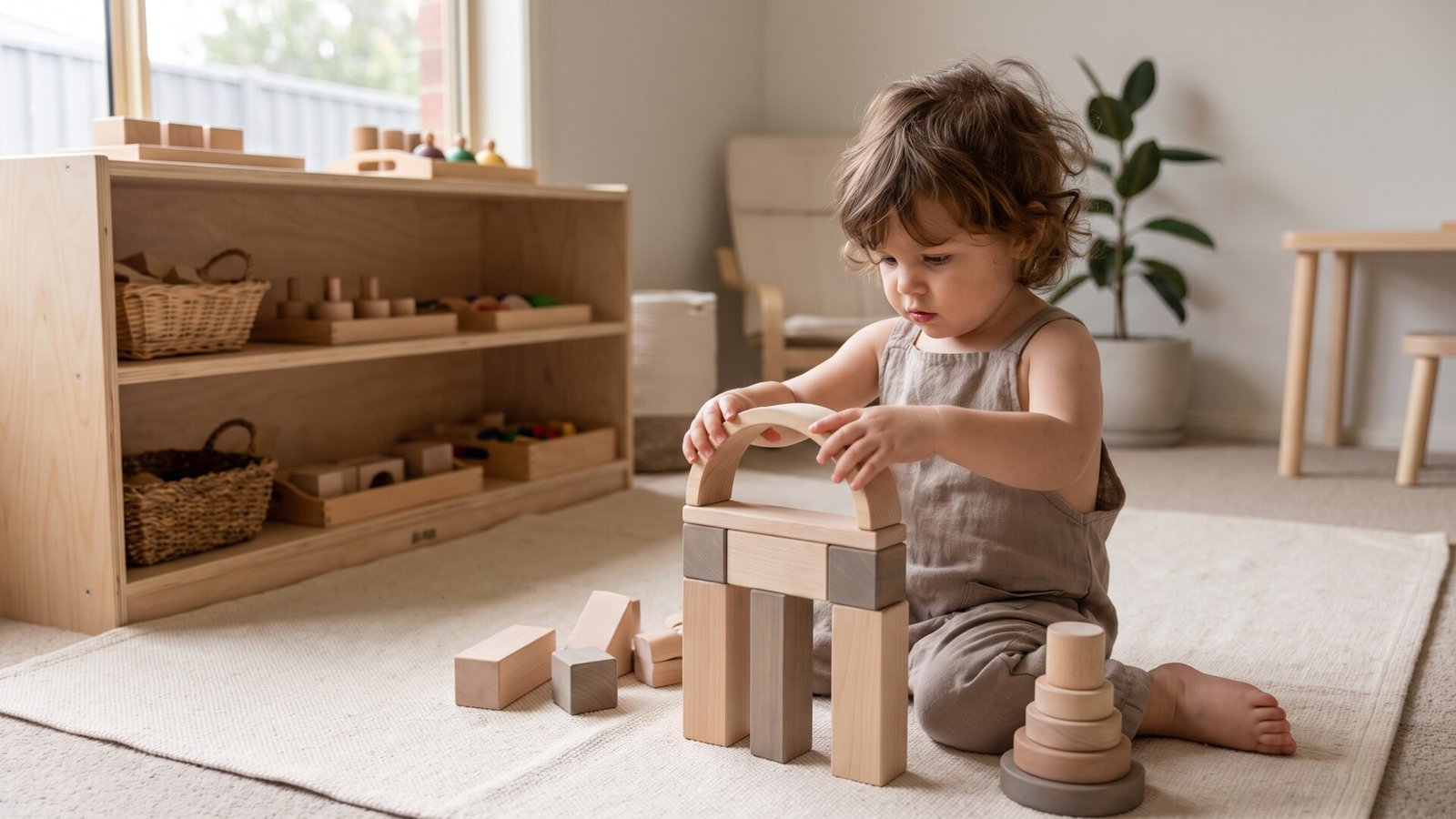
- Wooden blocks of various sizes and shapes
- Magnetic tiles and geometric construction sets
- Modular building kits
- Open-ended engineering kits
These toys help children:
- Visualize structures before building
- Learn planning and sequencing
- Practice fine motor control
- Experiment with symmetry and balance
Unlike pre-designed kits, open-ended building materials allow children to test their creativity and solve problems independently.
Art and Craft Materials
Art is a natural form of self-expression in Montessori education. Children are encouraged to create, explore textures, and understand the physical properties of materials.
Examples include:
- Watercolor and tempera paints
- Natural clay, dough, and modeling materials
- Child-safe scissors, glue, and collage materials
- Recyclable craft items for open-ended creation
These activities support:
- Fine motor coordination
- Visual discrimination and observation
- Color and shape recognition
- Patience and attention to detail
Children learn to express ideas while building confidence in their abilities and decisions.
Music and Movement Toys
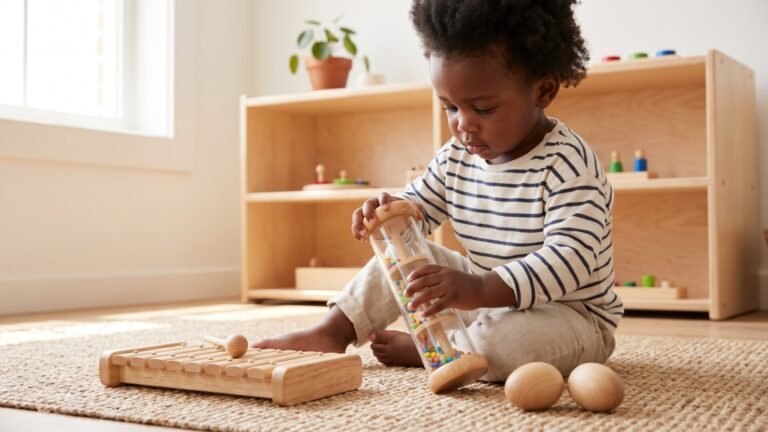
Music and movement are powerful tools for creative expression and brain development. Montessori encourages children to explore rhythm, pitch, and sound naturally.
Examples include:
- Bells, xylophones, and percussion instruments
- Rhythm sticks and shakers
- Scarves or props for movement activities
- Child-friendly recorders or simple string instruments
These toys develop:
- Auditory discrimination and musical awareness
- Coordination and rhythm
- Expressive creativity
- Cognitive pattern recognition
Music and movement often integrate sensory and cognitive skills in joyful, playful ways.
STEM-Integrated Creative Toys
Creative play and STEM learning intersect when children design, experiment, and test solutions.
Examples include:
- Simple machines and lever sets
- STEM construction kits
- Coding robots with hands-on components
- Engineering and robotics kits for open-ended challenges
These materials teach:
- Cause-and-effect reasoning
- Problem-solving and critical thinking
- Trial-and-error experimentation
- Project planning and execution
STEM creative play toys align perfectly with Montessori principles of learning by doing and discovering through exploration.
Dramatic and Pretend Play
Montessori encourages pretend play in a realistic, purposeful context—helping children make sense of the adult world and develop social and emotional skills.
Examples include:
- Child-sized kitchen sets and practical life props
- Puppet theaters with natural puppets
- Dress-up clothes representing real professions
- Play money, tools, and market items
These toys support:
- Social-emotional development
- Vocabulary and communication skills
- Role understanding and empathy
- Collaborative problem-solving
Montessori pretend play emphasizes realistic representation and purposeful action rather than fantastical or chaotic play.
Montessori Creative Play by Age Group
Toddlers (1–3 Years)
Toddlers benefit from sensory-rich, simple creative activities that develop motor skills and exploration habits.
Recommended materials:
- Large blocks and stacking toys
- Soft modeling dough
- Musical shakers or bells
- Simple color sorting activities
Goal: Encourage exploration, hand-eye coordination, and curiosity.
Preschoolers (3–6 Years)
Preschoolers thrive with more complex materials that combine creativity with problem-solving.
Recommended materials:
- Open-ended block sets and construction toys
- Art materials for drawing, painting, and sculpting
- Simple musical instruments and rhythm games
- Early STEM kits for cause-and-effect experiments
Goal: Develop fine motor control, planning, and imaginative thinking.
Early Elementary (6–9 Years)
Older children can handle sustained, multi-step projects that integrate creativity with reasoning and STEM principles.
Recommended materials:
- Advanced building sets and engineering kits
- Clay sculpting and mixed-media art projects
- Musical composition or instrument exploration
- STEM design challenges and coding robots
Goal: Encourage independence, project planning, critical thinking, and creative problem-solving.
Find out more about on our Montessori Toys by Age Group article.
Creating a Montessori Creative Play Area at Home
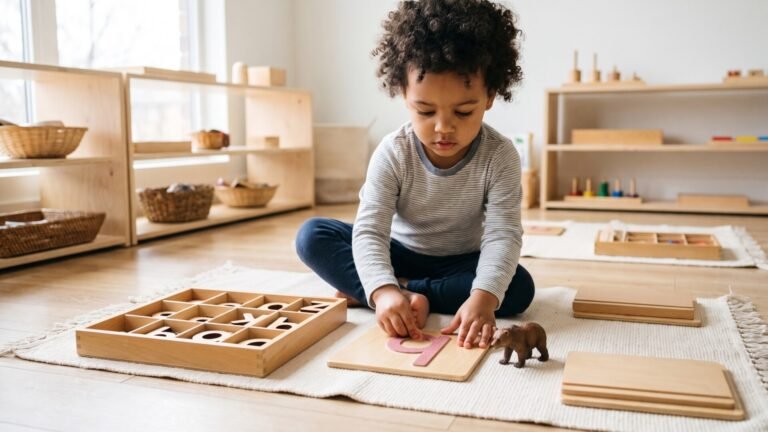
A prepared environment supports focus and independence.
Key tips:
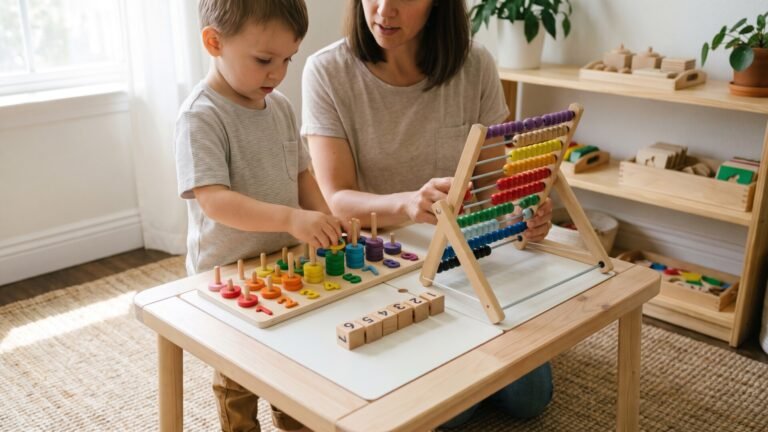
- Use low, accessible shelves for materials
- Organize toys by type and developmental level
- Provide open-ended materials that encourage exploration
- Rotate activities to maintain engagement
- Include a clear workspace for projects
A calm, uncluttered environment encourages children to explore thoughtfully rather than becoming overstimulated.
Creative Play vs. Free Play
Montessori creative play emphasizes purposeful exploration, while free play can be more chaotic or unstructured. Both have value, but Montessori creative play:
- Encourages mastery and repetition
- Integrates learning with self-expression
- Fosters planning, problem-solving, and creativity
- Builds confidence through achievement
This structured yet open-ended approach supports long-term development.
Choosing Montessori Creative Play Toys as Gifts
Creative play toys make excellent gifts because they remain relevant and engaging across developmental stages.
Tips for choosing gifts:
- Prioritize open-ended, versatile materials
- Choose natural, durable materials
- Avoid electronic or overly directive toys
- Select age-appropriate complexity
Well-chosen creative play toys often become favorites that children return to repeatedly.
Common Questions About Montessori Creative Play Toys
Are Montessori creative toys suitable for multiple children at once?
Yes. Many open-ended materials encourage cooperative play, collaboration, and social learning.
Do children ever outgrow these toys?
Creative play evolves rather than ends. Materials that challenge imagination can remain engaging for years.
Can these toys be integrated into structured learning?
Absolutely. Creative play complements academic skills, problem-solving, and project-based learning.
Final Thoughts: Fostering Creativity, Confidence, and Curiosity
Montessori creative play toys empower children to explore, build, and imagine in ways that develop critical thinking, problem-solving, and self-expression. By offering open-ended, purposeful materials in a prepared environment, parents and educators can support children’s intellectual, emotional, and creative growth simultaneously.
When guided by Montessori principles, creative play is not just fun—it becomes a foundation for lifelong learning, curiosity, and resilience.