Montessori Sensory Toys for 1–3 Year Olds
Supporting Early Brain Development Through Purposeful, Hands-On Exploration
Between the ages of one and three, children experience a period of extraordinary neurological growth. During these early toddler years, the brain develops more rapidly than at almost any other stage of life, forming neural connections that will influence movement, language, emotional regulation, and cognitive ability for years to come. At this age, learning does not happen through explanation or instruction, but through direct sensory experience — touching, grasping, tasting, hearing, seeing, and moving within the physical world.
This is why Montessori sensory toys for 1–3 year olds are fundamentally different from conventional toys marketed to toddlers. Rather than attempting to entertain, distract, or overstimulate, Montessori sensory materials are designed to isolate specific sensory inputs, allowing the child to focus deeply on one experience at a time. These toys support the natural developmental drives of toddlers, encouraging concentration, coordination, independence, and self-confidence through repetition and self-correction.
In this guide, we will explore what sensory play means in a Montessori context, why it is so critical during the toddler years, how Montessori sensory toys differ from mainstream sensory products, and which types of toys best support children between one and three years old. We will also look at specific Montessori-aligned sensory toys that parents and caregivers can confidently introduce at home, without overwhelming the child or the environment.
What Are Montessori Sensory Toys?
Montessori sensory toys are purposeful learning materials designed to help children refine and organize sensory input. In Montessori education, the senses are viewed as gateways to intelligence. Before a child can classify, reason, or abstract, they must first experience the world clearly and accurately through their senses.
Rather than offering a mixture of sounds, textures, lights, and movement all at once, Montessori sensory toys typically focus on one sensory quality at a time, such as weight, texture, temperature, color, sound, or shape. This isolation allows the child to concentrate fully and build precise mental categories based on real, physical experiences.
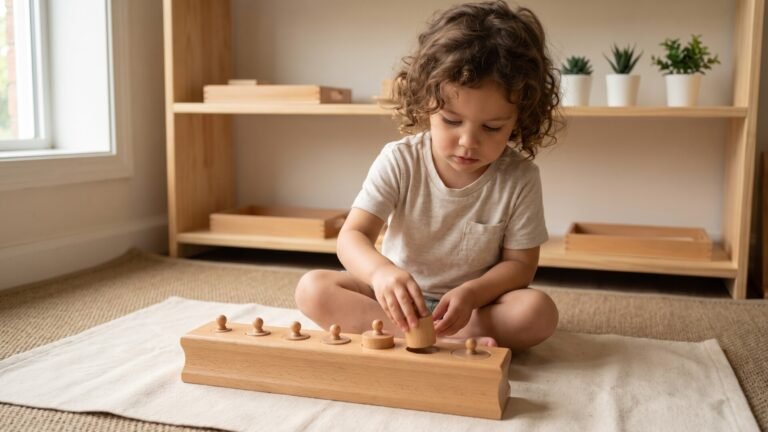
For toddlers aged one to three, Montessori sensory toys are usually simple in appearance, made from natural materials like wood, metal, cotton, or silicone, and designed to be used independently. The goal is not to impress the child, but to invite them into focused, meaningful interaction.
Why Sensory Play Is Essential from 1–3 Years Old
During the toddler years, children are not passively absorbing information; they are actively constructing their understanding of reality. Every sensation — rough or smooth, heavy or light, loud or quiet — helps the brain organize incoming data into usable knowledge.
Rapid Brain Development
Neuroscience research consistently shows that sensory experiences during early childhood directly influence brain architecture. When a toddler repeatedly manipulates an object, compares textures, or experiments with cause and effect, neural pathways are strengthened through repetition. Montessori sensory toys support this process by offering clear, repeatable experiences that encourage deep engagement rather than fleeting stimulation.
Motor Skill Integration
Sensory development and motor development are closely linked. A child refining their sense of touch is also strengthening fine motor control, hand-eye coordination, and muscle memory. Many Montessori sensory toys naturally integrate movement, grasping, transferring, and balancing, supporting both sensory and physical development simultaneously.
Emotional Regulation and Focus
Contrary to popular belief, toddlers are capable of remarkable concentration when given appropriate materials. Sensory toys that are calm, predictable, and purposeful help children regulate their emotions, slow down, and focus. This early ability to concentrate lays the groundwork for later academic learning and emotional resilience.
Explore safe and stimulating options for toddlers who learn through touch and exploration. Our guide, Montessori Sensory Toys for 1–3 Year Olds, highlights the best toys to develop sensory awareness and cognitive skills in young children.
Want to focus on sensory exploration specifically? Our Montessori Sensory Toys hub has a full collection of toys designed to engage your child’s senses safely and effectively.
Montessori Sensory Toys vs Mainstream Sensory Toys
The term “sensory toy” has become increasingly popular, but not all sensory toys align with Montessori principles, especially for very young children.
Mainstream sensory toys often aim to stimulate as many senses as possible at once, using bright colors, flashing lights, music, and novelty features to capture attention. While these toys may hold a child’s interest briefly, they often encourage passive interaction rather than deep exploration.
Montessori sensory toys, by contrast, are intentionally restrained. They are designed to be engaged with, not watched. The child is the active participant, manipulating the object, observing the result, and repeating the activity as needed. This distinction is especially important for children between one and three, who are still developing their ability to filter sensory input.
Core Montessori Sensory Areas for Toddlers
Maria Montessori identified several key sensory areas that children naturally seek to refine. Montessori sensory toys for toddlers typically support one or more of these domains.
Tactile (Touch)
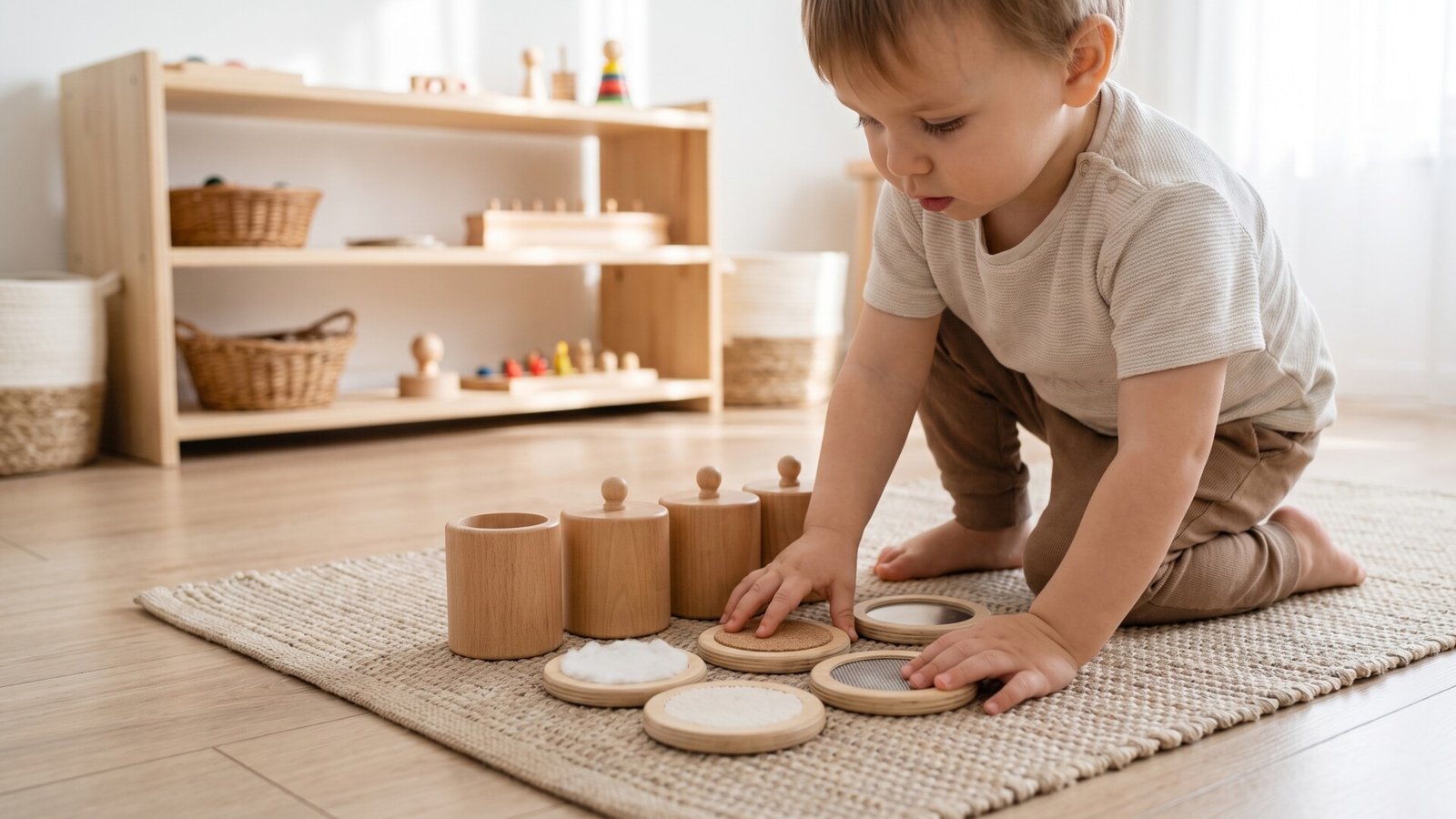
Touch is one of the earliest and most important senses to develop. Toddlers learn about the world by grasping, rubbing, squeezing, and transferring objects between their hands. Montessori tactile materials often feature contrasting textures, smooth and rough surfaces, or graded variations in material.
Visual
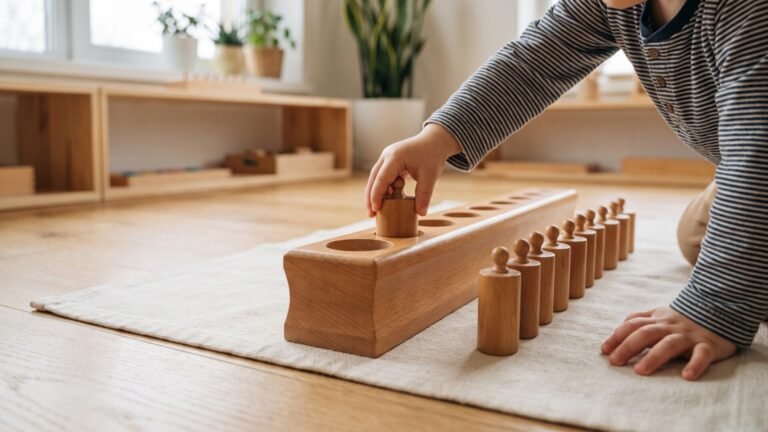
Visual sensory development involves more than recognizing colors. It includes distinguishing shapes, sizes, dimensions, and patterns. Montessori visual materials tend to be simple and uncluttered, allowing children to focus on one visual attribute at a time.
Auditory
Sound-based Montessori toys help toddlers differentiate pitch, volume, and rhythm. These materials are typically subtle, producing gentle sounds rather than loud or electronic noise, encouraging careful listening and comparison.
Proprioceptive and Vestibular
These senses relate to body awareness and movement. While often supported through gross motor play, some Montessori sensory toys for toddlers incorporate weight, balance, and resistance to help children understand how their bodies move through space.
Best Types of Montessori Sensory Toys for 1–3 Year Olds
Rather than focusing solely on branded products, it is often more helpful to think in terms of categories of sensory materials that align with Montessori principles.
Sensory Balls and Texture Balls
Simple balls made from natural rubber, silicone, or fabric offer rich tactile input. Different textures encourage grasping, squeezing, and rolling, supporting both sensory exploration and motor development. Unlike electronic or light-up balls, Montessori-aligned sensory balls invite active manipulation rather than visual distraction.
Wooden Shape Sorters
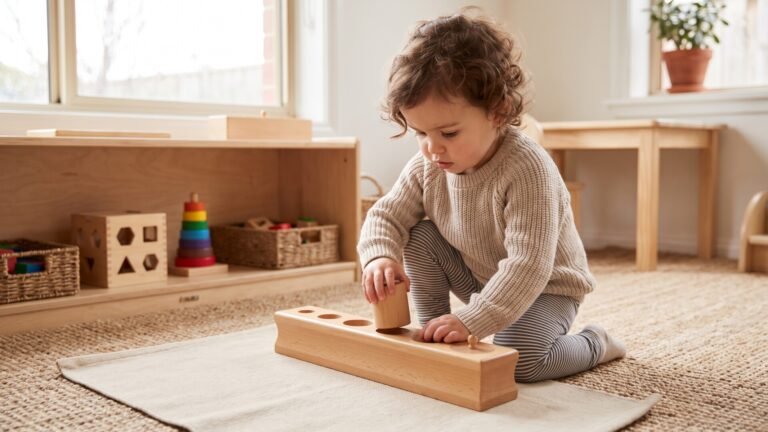
Well-designed wooden shape sorters help toddlers refine visual discrimination, spatial awareness, and problem-solving skills. Montessori-style versions typically limit the number of shapes and avoid cartoon imagery, allowing the child to focus on matching shapes accurately.
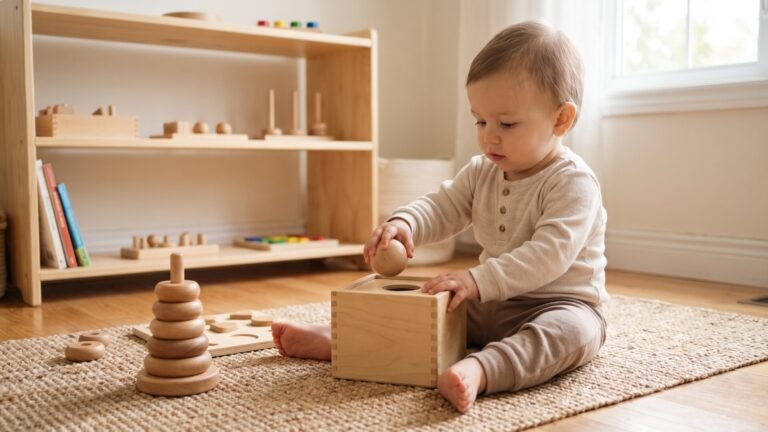
Object Permanence Boxes
These classic Montessori materials support both sensory exploration and cognitive development. Dropping an object into a box and retrieving it helps toddlers understand cause and effect, refine hand movements, and develop early problem-solving abilities.
Stacking and Nesting Toys
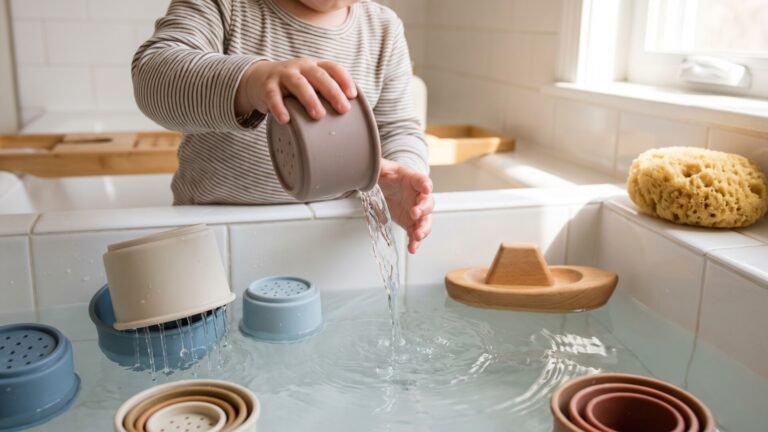
Stacking rings, nesting cups, and boxes offer opportunities to compare size, weight, and dimension. When made from wood or metal, these toys provide more accurate sensory feedback than lightweight plastic alternatives.
Sensory Boards and Busy Boards
Montessori-inspired busy boards for toddlers focus on real-life elements such as latches, zippers, knobs, and switches. These materials refine tactile perception while also supporting independence and practical life skills.
Looking for a broader range of age-appropriate Montessori toys? Check out our Montessori Toys for Toddlers (1–3 Years Old) hub for more skill-building options.
Montessori-Aligned Sensory Toy Recommendations
Below are examples of Montessori-style sensory toys commonly used for children aged one to three. These are not fads or novelty items, but materials with long-term developmental value.
Wooden Sensory Blocks
Sets of wooden blocks with different textures, weights, or internal sounds help toddlers explore variations through touch and movement. These blocks encourage repeated handling and comparison, supporting both sensory refinement and early classification skills.
Silicone Stacking Towers
Food-grade silicone stacking toys provide a soft, flexible tactile experience that is especially suitable for younger toddlers. Their simple design encourages stacking, nesting, and mouthing without overwhelming the senses.
Fabric Texture Books
Montessori-aligned fabric books feature a limited color palette and varied textures, allowing toddlers to explore touch and visual contrast simultaneously. Unlike electronic books, these invite slow, focused interaction.
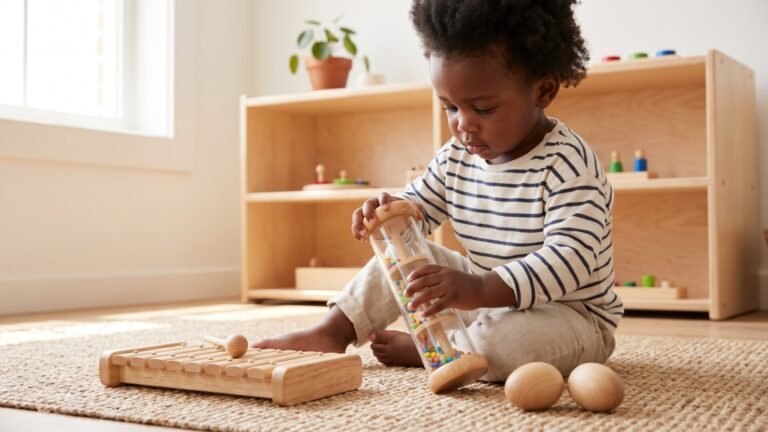
Sound Cylinders or Shakers
Sound cylinders help toddlers refine auditory discrimination by comparing different sounds produced by shaking or rolling objects. Montessori versions emphasize subtle differences rather than loud effects.
How to Choose the Right Sensory Toys for Your Toddler
When selecting Montessori sensory toys for children aged one to three, it is important to prioritize quality over quantity. A few well-chosen materials will support deeper learning than a shelf full of overstimulating toys.
Consider the child’s current developmental stage. Younger toddlers may benefit most from simple tactile materials, while older toddlers may enjoy more complex sorting or matching activities. Look for toys that can be used in multiple ways and that remain engaging over time.
Avoid toys that do everything for the child. The best Montessori sensory toys require active participation, allowing the child to discover relationships and patterns independently.
Introducing Sensory Toys the Montessori Way
Presentation matters. In a Montessori-inspired home, sensory toys are typically placed on low shelves, neatly arranged, and accessible to the child. Each toy should have a clear purpose and enough space to be used comfortably.
When introducing a new sensory toy, demonstrate its use slowly and deliberately, using minimal language. Then allow the child to explore freely. Resist the urge to correct or redirect unless safety is a concern. Observation is often the most valuable role an adult can play.
Common Mistakes Parents Make with Sensory Toys
One common mistake is offering too many sensory toys at once, which can overwhelm the child and reduce concentration. Rotating toys periodically helps maintain interest while preserving a calm environment.
Another mistake is confusing stimulation with development. Loud, flashy toys may capture attention, but they often interfere with the child’s ability to focus and self-regulate. Montessori sensory toys are intentionally calm because they respect the child’s developing nervous system.
Montessori Sensory Play vs Sensory Entertainment
Sensory entertainment is designed to amuse; Montessori sensory play is designed to educate through experience. While both involve the senses, their outcomes are very different.
Montessori sensory toys encourage deep engagement, repetition, and mastery, helping toddlers build a solid foundation for later learning. For children between one and three years old, this foundation is far more important than early academic skills or novelty-driven play.
Are Montessori Sensory Toys Worth It?
For parents and caregivers who value intentional early childhood development, Montessori sensory toys are absolutely worth the investment. They support brain development, motor coordination, emotional regulation, and independence during one of the most critical periods of growth.
Rather than entertaining the child, these toys empower them to explore the world at their own pace, building confidence and curiosity that extend far beyond the toddler years.