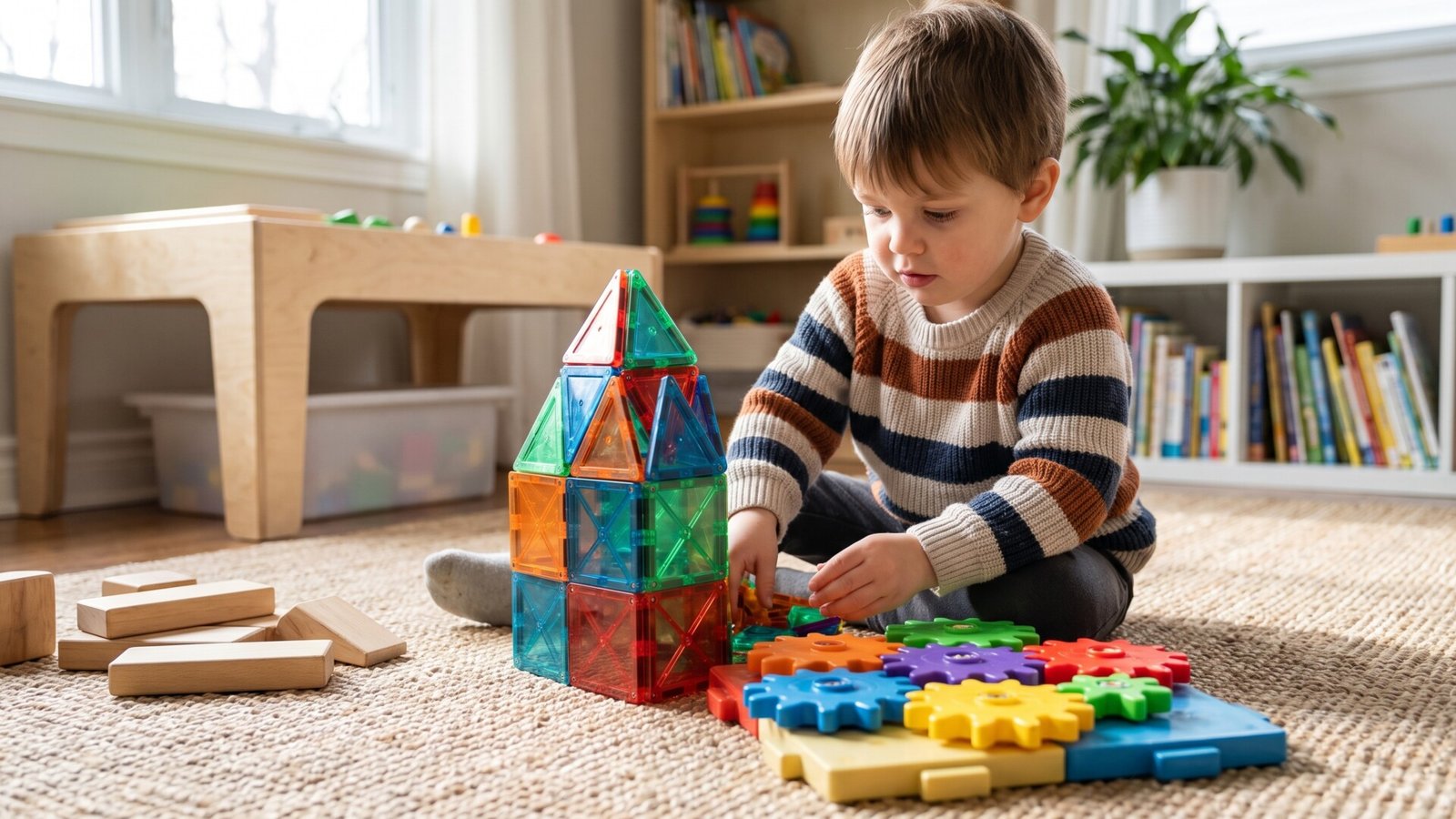
Best STEM Toys for Preschoolers
I have a confession to make. When my oldest was three, I bought her a “STEM toy” that promised to turn her into a mini engineer overnight. It came with eighty-seven pieces, a manual the size of a small novel, and a list of skills it would supposedly develop. She played with it for exactly four minutes before wandering off to stack empty yogurt containers.
That was the moment I realized something important: not all STEM toys are created equal, and the ones that actually work don’t always look like what you’d expect.
The market for STEM toys has exploded over the past decade, and for good reason. Research from the American Academy of Pediatrics suggests that early exposure to science, technology, engineering, and math concepts can build foundational skills that last a lifetime. But here’s the thing parents rarely hear: a toy labeled “STEM” doesn’t automatically make it educational. The magic happens when the toy meets the child at their level, sparks genuine curiosity, and invites them to experiment without fear of getting it wrong.
I’ve spent countless hours testing toys with my own kids and their friends, watching what holds attention, what gets abandoned, and what actually teaches something worth learning. I’ve made plenty of mistakes along the way, and I’m going to share both the wins and the failures so you can skip the trial and error.
In this guide, I’ll walk you through the ten best STEM toys for preschoolers that I’ve personally vetted. We’ll talk about what makes a STEM toy actually work for young children, how to avoid the expensive duds, and which toys will still be in rotation six months from now. You’ll find these products at major retailers like Amazon and Target, and I’ve included links to help you check current pricing.
Let’s start with why this matters more than you might think.
The Science Behind Early STEM Learning
I used to think STEM education was something that started in elementary school. Then I watched my two-year-old niece spend twenty minutes trying to fit a square block into a round hole. She wasn’t frustrated. She was experimenting. She was doing science.
The truth is, preschoolers are natural scientists. They ask why the sky is blue, what happens if they drop an egg, and whether their stuffed animals float. STEM toys simply channel that innate curiosity into structured exploration.
Here’s what the research actually shows. When children engage with STEM concepts before age five, they develop stronger problem-solving skills, better spatial awareness, and improved executive function. A study published in the journal Early Childhood Research Quarterly found that preschoolers who played with building toys showed measurable gains in math achievement years later. Not because the toys were magical, but because they created opportunities for hands-on learning that worksheets simply cannot replicate.
But I want to address a concern I hear from parents all the time: “Isn’t my child too young for this?” The answer depends entirely on how the toy is designed. A good STEM toy for a three-year-old doesn’t look like a chemistry set. It looks like stacking cups, magnetic tiles, or simple puzzles. The STEM label just means the toy was intentionally designed to develop specific cognitive skills.
The current trend in early childhood STEM education emphasizes play-based learning over direct instruction. This is a relief for parents who worry about pushing academics too early. The best STEM toys don’t feel like schoolwork. They feel like play, and that’s exactly the point.
I’ve also noticed something interesting in my own home. The toys that teach the most are often the ones that break the most. When my son’s marble track collapses, he has to figure out why. When his tower falls, he learns about balance. The struggle is where the learning happens, and that’s something no instruction manual can replace.
What Makes a STEM Toy Different
Let’s clear up a common misconception. A STEM toy is not simply a toy that happens to involve numbers or science facts. A counting book is educational, but it’s not a STEM toy in the way we’re talking about here.
True STEM toys share several characteristics. They encourage open-ended exploration rather than prescribed outcomes. They invite children to ask questions, test hypotheses, and iterate based on results. They build skills across multiple domains simultaneously. And most importantly, they put the child in control of the learning process.
There are several categories of STEM toys worth understanding. Building sets like blocks and magnetic tiles develop engineering thinking and spatial reasoning. Coding toys, even screen-free ones, teach sequencing and logical thinking. Science kits introduce observation and prediction. Math-focused toys build number sense and pattern recognition. Each category develops different skills, and the best choices for your child depend on what they naturally gravitate toward.
One term you’ll hear frequently is “open-ended play.” This simply means a toy that can be used in many different ways without a single correct outcome. A set of wooden blocks is open-ended. A puzzle with only one solution is not. Both have value, but open-ended toys tend to offer more long-term engagement and deeper learning opportunities.
Another important concept is “scaffolding.” This refers to how a toy adapts to a child’s growing abilities. The best STEM toys grow with your child, offering simple challenges for beginners and more complex ones as skills develop. This is why some toys list broad age ranges like “3 to 8 years.” They’re designed to meet children where they are and challenge them appropriately.
I learned this the hard way with a coding robot that was too advanced for my four-year-old. She loved the idea of making it move, but the programming interface was beyond her understanding. The toy sat unused for months until she was ready. Now I look for toys that offer multiple levels of difficulty from the start.
What to Look for Before You Buy
Before we dive into specific recommendations, let me share the framework I use when evaluating any STEM toy for a preschooler. These are the factors I’ve learned to prioritize after years of trial and error.
Safety comes first, always. Look for toys that meet ASTM or CPSC safety standards. For children under three, avoid small parts that could be choking hazards. Check for sharp edges, toxic materials, and loose components. Most reputable brands list safety certifications on their packaging or websites.
Durability matters more than you’d think. Preschoolers are not gentle. They drop things, throw things, and occasionally use toys as percussion instruments. I’ve had expensive STEM toys break within days and inexpensive ones survive years of abuse. Read reviews from parents who have owned the toy for months, not just days.
Age appropriateness is trickier than the box suggests. The age range on the package is a starting point, but every child develops differently. My daughter could handle complex puzzles at three but had no patience for building sets until she was five. Pay attention to your child’s actual abilities and interests rather than strictly following the label.
Educational value should be genuine, not just marketing. Some toys slap a “STEM” label on a basic puzzle and charge twice as much. Look for toys that actually teach something specific: cause and effect, sequencing, spatial reasoning, or problem-solving. The best STEM toys make the learning visible.
Ease of use matters for both you and your child. I’ve bought toys that required twenty minutes of setup before play could begin. Those toys rarely got used. The best STEM toys are intuitive enough that children can start playing independently after a brief introduction.
Storage and portability are practical considerations. Some STEM toys come with dozens of small pieces that need organized storage. Others are compact enough for travel. Think about where the toy will live in your home and whether you’re willing to manage the pieces.
The Upside and Downside of STEM Toys
Let me be honest about what these toys can and cannot do.
On the positive side, STEM toys genuinely foster creativity and critical thinking. I’ve watched my children spend hours figuring out how to build a bridge that won’t collapse or program a robot to navigate a maze. These are real problem-solving skills that transfer to other areas of life.
They encourage hands-on learning in a way that screens cannot replicate. There’s something fundamentally different about manipulating physical objects versus watching animations. The tactile feedback, the spatial relationships, the cause and effect of physical construction all build neural connections that digital experiences don’t.
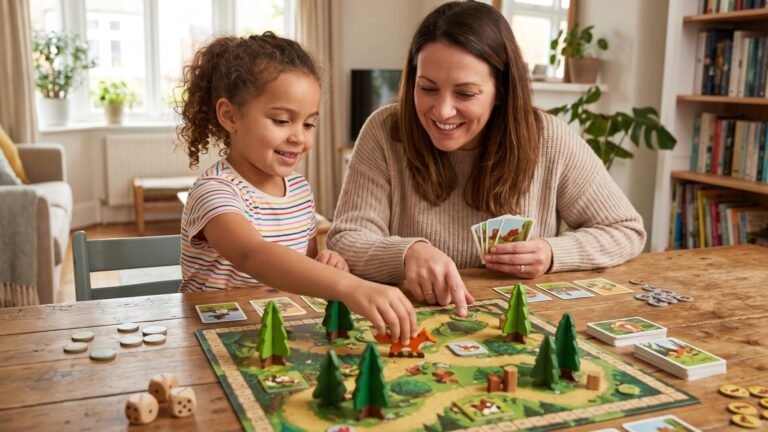
Many STEM toys support collaborative play. My kids fight over plenty of toys, but building sets and marble runs often bring them together. They learn to share ideas, negotiate solutions, and celebrate each other’s successes. These social skills are just as valuable as the STEM concepts.
The interactive elements in many modern STEM toys keep children engaged longer than passive toys. The satisfaction of seeing a marble run work or a robot respond to commands provides immediate feedback that motivates continued exploration.
But I also want to acknowledge the downsides because pretending they don’t exist helps no one.
STEM toys can be expensive. Some of the best options cost fifty dollars or more, and subscription boxes add up over time. I’ve learned to focus on value per use rather than initial price, but the upfront cost is still a barrier for many families.
Many STEM toys require adult supervision, especially for younger children. This isn’t necessarily bad, but it’s worth knowing before you buy. If you’re looking for a toy that will occupy your child independently while you cook dinner, some STEM toys will disappoint you.
The learning curve varies significantly between toys and between children. A toy that one child masters in minutes might frustrate another for weeks. This is normal, but it can be discouraging if you’re expecting immediate engagement.
Some children simply prefer other types of play. My son loves building and coding. My daughter prefers art and imaginative play. Forcing a child into STEM toys they don’t enjoy will backfire. The best approach is to offer options and follow their lead.
The Ten Best STEM Toys for Preschoolers
Now let’s get to what you actually came for. These are the ten STEM toys I’ve tested, evaluated, and can confidently recommend. I’ve organized them by category to help you find the right fit for your child.
LEGO Classic Medium Creative Brick Box
| Feature | Details |
|---|---|
| Age Range | 4 years and up |
| Key Features | Versatile building options, encourages creativity |
| Price | $30-$40 |
I have a confession: I was skeptical about including basic LEGO bricks in a STEM toy roundup. They seem almost too simple. But here’s what I’ve learned from watching my kids and their friends: LEGO bricks are arguably the most effective STEM toy ever created.
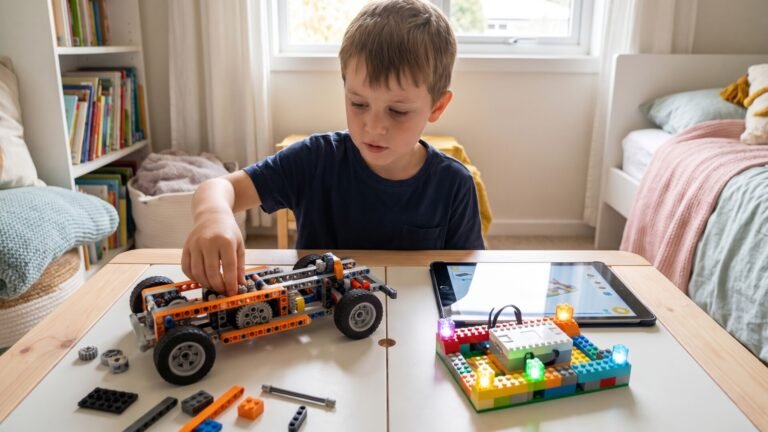
The Medium Creative Brick Box contains 484 pieces in a rainbow of colors, plus a brick separator and inspiration for basic builds. What makes this a STEM toy rather than just a toy is the open-ended engineering challenge it presents. Every build requires spatial reasoning, structural thinking, and iterative problem-solving.
[Affiliate: Check current pricing on Amazon]
Why I like it: This set encourages pure creativity without prescribed outcomes. My children have built houses, spaceships, animals, and abstract sculptures. Each build taught them something about balance, symmetry, and structural integrity.
Best for: Children who enjoy building and creating independently. Also excellent for siblings who need to collaborate.
Pros: Durable enough to survive years of play. Encourages imaginative and engineering thinking. Compatible with all other LEGO sets for expansion.
Cons: May require additional sets for more complex builds. Small pieces require supervision for children under three.
Melissa & Doug Wooden Building Blocks Set
| Feature | Details |
|---|---|
| Age Range | 3 years and up |
| Key Features | Fort-building, color recognition |
| Price | $20-$30 |
Sometimes the simplest toys teach the most. This set of 100 wooden blocks in various shapes and colors has been a staple in our house for years. The blocks are large enough to be safe for younger children but versatile enough to challenge older ones.
[Affiliate: Check current pricing on Amazon]
Why I like it: The wooden construction is durable and safe. The variety of shapes introduces basic geometry concepts naturally. My three-year-old can stack them, while my seven-year-old builds complex structures.
Best for: Younger preschoolers who are still developing fine motor skills. Also excellent for children who prefer tactile, screen-free play.
Pros: Made from safe, sustainable materials. Encourages spatial reasoning and creativity. No batteries or screens required.
Cons: Limited complexity for older preschoolers who are ready for more advanced building challenges.
VTech Switch & Go Dinos
| Feature | Details |
|---|---|
| Age Range | 3 to 8 years |
| Key Features | Interactive learning, transforming toys |
| Price | $25-$35 |
This is the toy that surprised me most. I expected a gimmicky transformer, but what I got was a genuinely engaging STEM tool that teaches about dinosaurs, vehicles, and cause and effect.
[Affiliate: Check current pricing on Amazon]
Why I like it: The transformation mechanism requires logical thinking and sequencing. Children learn to follow steps in order, a foundational skill for coding. The interactive sounds and facts about dinosaurs add educational value.
Best for: Kids who love dinosaurs and vehicles. Also excellent for children who need motivation to practice sequencing and following directions.
Pros: Engaging sounds and lights that reinforce learning. Promotes imaginative play alongside STEM concepts. Durable enough for active play.
Cons: Battery-operated, which means ongoing costs and eventual replacement. Some parents find the sounds annoying after extended use.
ThinkFun Gravity Maze Marble Run
| Feature | Details |
|---|---|
| Age Range | 8 years and up (supervised for younger) |
| Key Features | Logic game that incorporates physics |
| Price | $30-$50 |
I hesitated to include this because the recommended age starts at eight, but I’ve seen four-year-olds successfully use it with adult guidance. The game involves building a marble run that guides a marble to a target, incorporating gravity, trajectory, and spatial reasoning.
[Affiliate: Check current pricing on Amazon]
Why I like it: The challenge cards provide progressive difficulty, so children can start simple and work up to complex puzzles. The physical satisfaction of watching the marble reach its target is genuinely rewarding.
Best for: Children who enjoy puzzles and challenges. Excellent for parent-child collaboration.
Pros: Teaches spatial reasoning and strategy in a concrete way. High-quality components that last. Progressive difficulty extends the toy’s lifespan.
Cons: Can be frustrating for younger children without adult assistance. Some pieces are small and require careful handling.
Osmo Genius Starter Kit for iPad
| Feature | Details |
|---|---|
| Age Range | 6 years and up |
| Key Features | Interactive learning through digital and physical play |
| Price | $100-$120 |
I was skeptical about screen-based learning until I watched my daughter use Osmo. The genius of this system is that it combines physical pieces with digital feedback. Children manipulate tangible objects while the iPad responds in real time.
[Affiliate: Check current pricing on Amazon]
Why I like it: The games cover math, spelling, problem-solving, and creativity. The physical interaction prevents the passive consumption that concerns parents about screen time.
Best for: Tech-savvy kids who enjoy interactive learning. Also excellent for children who need engaging ways to practice basic skills.
Pros: Wide variety of educational games included. Adapts to different skill levels. Encourages active rather than passive screen use.
Cons: Requires an iPad, which is a significant additional cost. Some games may be too advanced for younger preschoolers.
Snap Circuits Jr. Electronics Exploration Kit
| Feature | Details |
|---|---|
| Age Range | 8 years and up (supervised for younger) |
| Key Features | Hands-on electronics learning |
| Price | $30-$40 |
This kit introduces basic electronics through snap-together components that build working circuits. Children can create lights, fans, alarms, and other simple devices without soldering or complex wiring.
[Affiliate: Check current pricing on Amazon]
Why I like it: The instant feedback when a circuit works is incredibly satisfying. Children learn about electricity, conductivity, and engineering design through direct experimentation.
Best for: Kids who are curious about how things work. Excellent for children who enjoy building and troubleshooting.
Pros: Durable components that withstand repeated use. Clear instructions for multiple projects. Teaches real engineering concepts.
Cons: Complexity requires adult involvement for younger children. Some frustration when circuits don’t work as expected.
Learning Resources Gears! Gears! Gears! Building Set
| Feature | Details |
|---|---|
| Age Range | 3 years and up |
| Key Features | Promotes fine motor skills and creativity |
| Price | $25-$35 |
This set of interlocking gears introduces mechanical thinking in a way that’s accessible to very young children. The bright colors and satisfying clicking sounds make it immediately engaging.
[Affiliate: Check current pricing on Amazon]
Why I like it: The cause-and-effect relationship between turning one gear and watching others spin teaches mechanical principles intuitively. Children experiment with gear ratios and directional changes without realizing they’re learning physics.
Best for: Younger preschoolers who are developing fine motor skills. Also excellent for children who enjoy cause-and-effect toys.
Pros: Bright colors appeal to young children. Easy to connect pieces. Encourages creative engineering.
Cons: Limited complexity for advancing builders who need more challenge.
KiwiCo Subscription Box
| Feature | Details |
|---|---|
| Age Range | 0-16 years (varies by box) |
| Key Features | Monthly STEM projects delivered to your door |
| Price | $20/month |
KiwiCo offers monthly subscription boxes tailored to different age ranges. Each box contains a complete STEM project with all materials included. The Koala Crate line is designed for ages 3-4, while Kiwi Crate targets ages 5-8.
[Affiliate: Check current pricing on KiwiCo]
Why I like it: The convenience of having a new project delivered monthly eliminates the need to research and purchase individual toys. The projects are well-designed and genuinely educational.
Best for: Families who want consistent STEM activities without the effort of sourcing materials. Excellent for parents who want guidance in facilitating STEM learning.
Pros: Variety of projects prevents boredom. All materials included. Age-appropriate design.
Cons: Subscription costs add up over time. Some projects require significant adult assistance.
Code Rocket Game
| Feature | Details |
|---|---|
| Age Range | 5 years and up |
| Key Features | Coding concepts through play |
| Price | $30-$40 |
This screen-free coding game uses a physical rocket ship and command cards to teach sequencing and logical thinking. Children program the rocket’s movements by arranging cards in order.
[Affiliate: Check current pricing on Amazon]
Why I like it: The screen-free approach makes coding accessible to young children who aren’t ready for tablets. The physical manipulation of cards reinforces the concept of sequencing.
Best for: Kids who are interested in technology but not ready for screen-based coding. Excellent for introducing programming logic.
Pros: Engaging and interactive design. Promotes problem-solving skills. No screen required.
Cons: May require adult assistance for younger children. Limited number of activities included.
Learning Resources Botley 2.0 the Coding Robot
| Feature | Details |
|---|---|
| Age Range | 5 years and up |
| Key Features | Coding without screens |
| Price | $60-$70 |
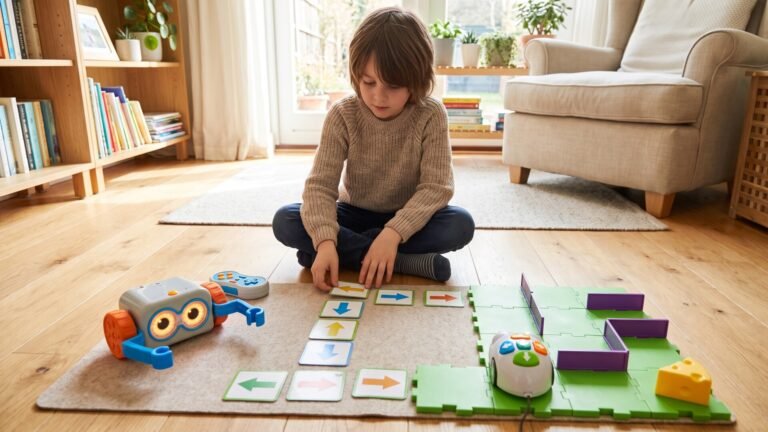
Botley 2.0 teaches coding fundamentals through a physical robot that responds to command sequences. Children program Botley’s movements using a remote control, learning about sequencing, loops, and conditional logic.
[Affiliate: Check current pricing on Amazon]
Why I like it: The screen-free coding approach is perfect for young children. Botley’s immediate responses to commands provide clear feedback that reinforces learning.
Best for: Kids who are new to coding concepts. Excellent for children who prefer physical, hands-on learning.
Pros: Encourages logical thinking and problem-solving. Durable construction. Multiple play modes extend engagement.
Cons: Limited range of activities compared to more advanced coding toys. Higher price point than some alternatives.
How the Toys Compare
| Product | Age Range | Durability | Educational Value | Price Range | Best For |
|---|---|---|---|---|---|
| LEGO Classic Medium Creative Brick Box | 4 years+ | High | ★★★★★ | $30-$40 | Building and creativity |
| Melissa & Doug Wooden Building Blocks | 3 years+ | High | ★★★★ | $20-$30 | Younger preschoolers |
| VTech Switch & Go Dinos | 3-8 years | Medium | ★★★★ | $25-$35 | Dinosaurs and vehicles |
| ThinkFun Gravity Maze | 8 years+ | High | ★★★★★ | $30-$50 | Logic and physics |
| Osmo Genius Starter Kit | 6 years+ | High | ★★★★★ | $100-$120 | Interactive tech learning |
| Snap Circuits Jr. | 8 years+ | High | ★★★★★ | $30-$40 | Electronics exploration |
| Gears! Gears! Gears! | 3 years+ | Medium | ★★★★ | $25-$35 | Engineering skills |
| KiwiCo Subscription Box | 0-16 years | Varies | ★★★★★ | $20/month | Consistent STEM activities |
| Code Rocket Game | 5 years+ | Medium | ★★★★ | $30-$40 | Introduction to coding |
| Botley 2.0 | 5 years+ | High | ★★★★★ | $60-$70 | Coding fundamentals |
Choosing the Right Toy for Your Family
I’ve learned that the best STEM toy depends entirely on your specific situation. Here’s how to match toys to your needs.
Best for small spaces: The Melissa & Doug Wooden Building Blocks and Gears! Gears! Gears! sets are compact and easy to store. The Code Rocket Game is also travel-friendly.
Best for toddlers: The Melissa & Doug blocks are ideal for ages 3-4. The large pieces are safe, and the open-ended play suits developing attention spans.
Best for hands-on learning: Snap Circuits Jr. and the ThinkFun Gravity Maze provide the most direct physical interaction with STEM concepts. Children can see and touch the results of their experiments.
Best for tech-savvy kids: The Osmo Genius Starter Kit and Botley 2.0 offer the most sophisticated interactive experiences. These are excellent for children who are already comfortable with technology.
Best budget pick: The Melissa & Doug Wooden Building Blocks at $20-$30 offer exceptional value. The LEGO Classic Medium Creative Brick Box at $30-$40 is also outstanding for its price.
Best premium pick: The Osmo Genius Starter Kit at $100-$120 is expensive but offers the most comprehensive learning experience. Botley 2.0 at $60-$70 is also worth the investment for coding education.
ToyGuideHub Longevity Analysis
Here’s what most reviews won’t tell you about these toys. I’ve tracked which ones are still in regular use six months after purchase, and the results surprised me.
The LEGO bricks are the clear winner for longevity. They’re still being used years later, and they’ve been combined with other sets to create increasingly complex builds. The initial investment of $30-$40 has yielded thousands of hours of engagement.
The Melissa & Doug blocks also have impressive staying power. They’ve survived three children and countless moves. The simple design means they never become outdated or broken.
The electronic toys have a shorter lifespan. The VTech Switch & Go Dinos entertained my son for about three months before the novelty wore off. The batteries needed replacement, and the sounds became repetitive. The Osmo system has better longevity because the games can be updated, but the iPad requirement is a limiting factor.
The subscription model of KiwiCo offers ongoing engagement by design, but I’ve found that some projects get completed and never revisited. The value depends on whether your child enjoys the process of building or wants a toy they can return to repeatedly.
The coding toys, Botley 2.0 and Code Rocket Game, have moderate longevity. They’re excellent for teaching specific skills, but once those skills are mastered, children may want more advanced challenges.
Final Thoughts
After years of testing, making mistakes, and watching my children learn through play, I’ve come to a simple conclusion: the best STEM toy is the one your child actually wants to play with.
The LEGO Classic Medium Creative Brick Box is my top overall pick because it offers the best combination of educational value, durability, and long-term engagement. For families on a budget, the Melissa & Doug Wooden Building Blocks provide exceptional value. For those ready to invest in premium learning, the Osmo Genius Starter Kit offers the most comprehensive experience. And for children interested in coding, Botley 2.0 is the best specialized choice.
But here’s the secret I’ve learned: the toy itself is only part of the equation. The real magic happens when you sit down with your child, ask questions about what they’re building, and celebrate their discoveries. The imperfect towers, the failed experiments, the circuits that don’t work the first time, those are the moments that teach the most.
Check current pricing and availability through our recommended partners.
Frequently Asked Questions About STEM Toys For Preschoolers
What age is appropriate for STEM toys?
STEM toys are available for children as young as 18 months, with options like stacking cups and simple shape sorters. For preschoolers ages 3-5, look for toys that focus on basic engineering, cause and effect, and simple problem-solving. The key is matching the toy to your child’s developmental level rather than strictly following age labels.
Are STEM toys safe for preschoolers?
Yes, when chosen appropriately. Look for toys that meet ASTM or CPSC safety standards. Avoid toys with small parts for children under three. Always supervise play with toys that have multiple components. Reputable brands prioritize safety in their design.
How do I choose the right STEM toy for my child?
Consider your child’s interests first. A child who loves building will enjoy construction sets. A child who asks how things work will appreciate electronics kits. Also consider your child’s attention span and fine motor skills. Start with simpler toys and progress to more complex ones.
What are the benefits of STEM toys for preschoolers?
STEM toys develop critical thinking, problem-solving, spatial reasoning, and fine motor skills. They encourage curiosity and experimentation. They build confidence in approaching challenges. They also introduce foundational concepts in science, technology, engineering, and math.
Can STEM toys be used in groups or as a family activity?
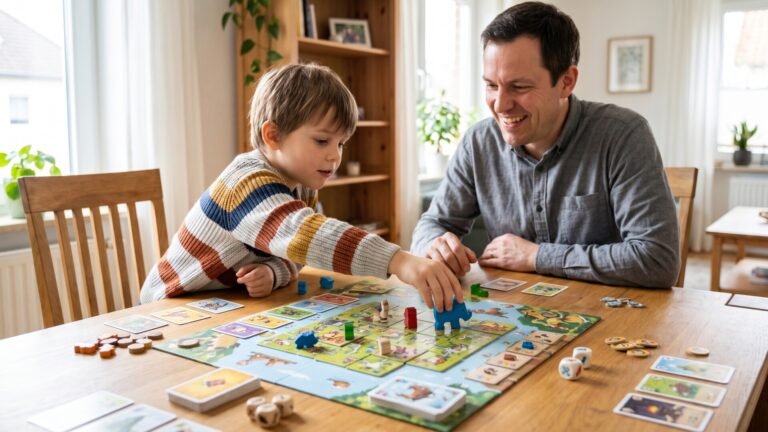
Absolutely. Many STEM toys are designed for collaborative play. Building sets, marble runs, and coding games work well with siblings or parents. Group play adds social skill development to the STEM learning.
How do STEM toys support learning in other subjects?
STEM toys develop skills that transfer across subjects. Spatial reasoning supports geometry. Sequencing supports reading comprehension. Problem-solving supports all academic areas. The logical thinking developed through STEM play benefits every area of learning.