The Best Family Board Games for 6‑Year‑Olds (That Parents Actually Enjoy)
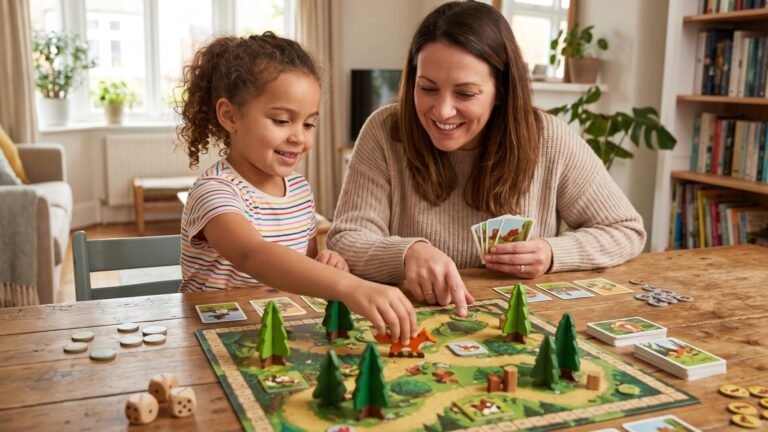
I love family game night. The laughter, the playful trash talk, the moment when my six‑year‑old beats me fair and square at a game I thought I’d mastered. But let’s be honest: not every “kids’ game” is fun for grown‑ups. I’ve sat through endless rounds of Candy Land that felt more like a test of patience than a bonding experience. The dice roll, the colour match, the same pink square every time – my brain checked out after five minutes.
The good news? There’s a whole world of modern board games designed specifically for 6‑year‑olds that are genuinely engaging for parents too. These games offer real strategy, clever mechanics, and enough unpredictability to keep adults interested – all while teaching kids turn‑taking, problem‑solving, and graceful losing.
In this guide, I’ll share the 10 best family board games for 6‑year‑olds in 2026. They’re easy to learn, quick to play, and most importantly, they won’t make you want to fake a headache halfway through. Many of these games are available through Amazon, Target, Ryder Toys, and Friendly Toy Box affiliate programs – look for links throughout to check current pricing and availability.
Why Board Games Matter at Age 6
Age six is a sweet spot. Kids can read a little (or at least recognise numbers and colours), they understand rules, and they’re starting to grasp strategy. Board games tap into all of that.
Cognitive benefits – A good game teaches planning (which move will help me win?), memory (what card did my opponent pick up?), and flexible thinking (my first plan failed – what’s my backup?). These are executive function skills that help in school and life.
Social benefits – Turn‑taking, waiting patiently, negotiating house rules, and celebrating someone else’s victory – these are social muscles that board games build naturally. Unlike screens, games force real‑time interaction.
Emotional development – Losing is hard at any age, but a board game offers a safe space to practice handling disappointment. “Good game, you got lucky” is a step toward genuine sportsmanship. Winning with humility is another lesson.
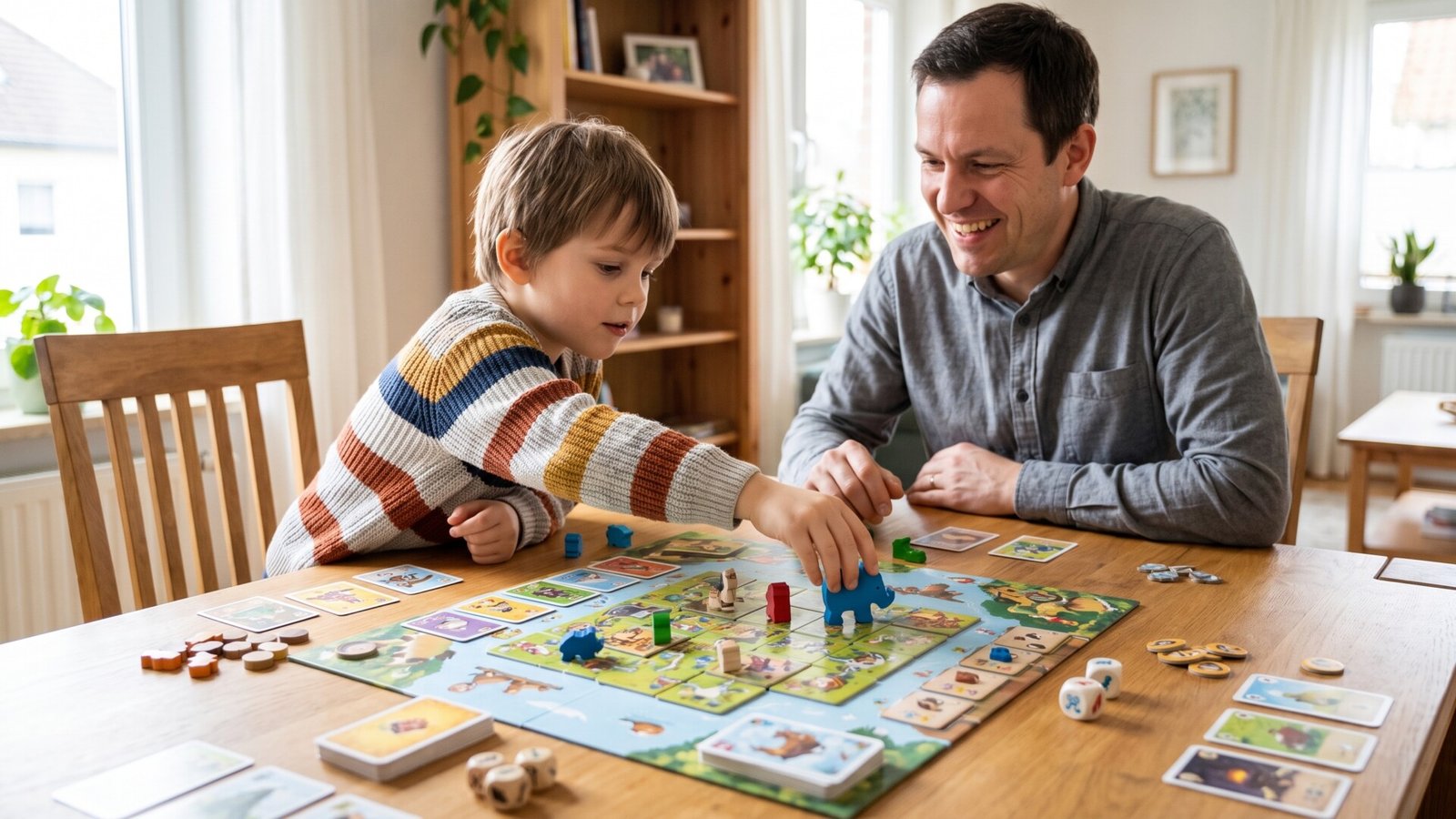
Screen‑free family bonding – In a world of tablets and YouTube, sitting around a table with a physical board, cards, and tokens is a mini‑vacation. The shared focus creates inside jokes, memorable moments, and a rhythm that says: “We’re here, together.”
Key Features to Look for in Family Board Games
Not every game labelled “ages 6+” is worth your time. Here’s what to look for.
Age‑appropriateness – The rules should fit a 6‑year‑old’s attention span (10–30 minutes) and reading level. Avoid games with dense text or complex scoring. Look for icon‑based instructions.
Game duration – Sweet spot: 15–30 minutes. Longer than that, and a 6‑year‑old will lose focus. Shorter than 10 minutes, and it feels like a snack, not a meal.
Player count – Most family games work best with 2–4 players. If you have a larger family, check for 5–6 player options.
Replayability – A game that feels the same every time gets boring fast. Look for variable setups, random elements (dice, card draws), or multiple paths to victory.
Parental engagement – Does the game offer meaningful choices? Is there a little bit of strategy or bluffing? If you find yourself on autopilot, it’s not a parent‑friendly game.
Durability – Six‑year‑olds are not gentle. Thick cardboard, linen‑finished cards, and chunky wooden tokens survive spills and enthusiastic shuffling.
Types of Board Games for 6‑Year‑Olds
Understanding the categories helps you pick what your family will love.
Strategy Games (light) – Think simplified versions of adult strategy games. Players make decisions that affect the outcome, but the rules are streamlined. Examples: Ticket to Ride: First Journey, Kingdomino.
Cooperative Games – Everyone works together to beat the game. No one loses alone. Great for kids who get upset by direct competition. Examples: Outfoxed!, Hoot Owl Hoot!
Memory & Matching Games – Classic mechanics that challenge observation and recall. Often fast‑paced and portable. Example: Spot It!
Dice & Movement Games – Roll, move, and maybe draw a card. Luck‑based but can include light decision‑making. Example: Dragonwood.
Creative & Storytelling Games – Players build narratives or draw pictures. These tap into imagination and are often hilarious for adults too.
Top Family Board Games for 6‑Year‑Olds
4.1 Premium Options (Games 1–3)
#1 Ticket to Ride: First Journey
Amazon | Target
The original Ticket to Ride is a modern classic, but it’s too complex for a 6‑year‑old. First Journey simplifies everything. Players collect coloured train cards and use them to claim routes on a kid‑friendly map of the US or Europe. The goal is to be the first to complete six routes. The game takes about 30 minutes. Parents enjoy the real strategy – deciding which routes to block, which colours to hoard – while kids love the tactile trains and the excitement of connecting cities.
Age range: 6–10 years.
Key features: Map board, train cards, plastic train pieces, simplified scoring.
Pros: Real strategy; high replayability; parents won’t be bored.
Cons: Setup takes a few minutes; box is large.
Best for: Families ready to move beyond basic kids’ games.
Check Ticket to Ride: First Journey on Amazon →
#2 Outfoxed!
Amazon | Ryder Toys
Outfoxed! is a cooperative whodunit. A fox has stolen a pot pie, and players work together to gather clues, eliminate suspects, and catch the thief before they escape. The game uses a special “evidence scanner” (a simple device that reveals clues) and a process of elimination. Kids feel like real detectives. Parents love the deduction element – it’s like Clue for young children, but without the reading burden. No one loses alone; you either all win or all lose, which takes the sting out of failure.
Age range: 6–8 years.
Key features: Evidence scanner, suspect cards, clue tokens, cooperative play.
Pros: Engaging mystery; no reading required; great for mixed‑age siblings.
Cons: Limited replayability (the mystery is always a fox, but the suspect changes).
Best for: Kids who love solving puzzles and playing as a team.
Shop Outfoxed! at Ryder Toys →
#3 Kingdomino
Amazon | Friendly Toy Box
Kingdomino is a tile‑laying game that won the prestigious Spiel des Jahres (Game of the Year) award. Players draw domino‑like tiles showing two terrain types (forest, water, grassland, etc.) and place them to build a 5×5 kingdom. The twist: players choose tiles in order of the quality of their previous pick. It’s a simple concept with surprising depth. A 6‑year‑old can play the basic version (just match terrain), while adults can optimise for the “middle square” scoring. Games last 15–20 minutes. It’s tiny, portable, and addictive.
Age range: 6–99 years.
Key features: Domino tiles, 5×5 grid, simple scoring, fast play.
Pros: Very easy to learn; deep strategy for adults; quick setup.
Cons: Requires basic counting (up to 5); not cooperative.
Best for: Families who like puzzles and spatial thinking.
Explore Kingdomino at Friendly Toy Box →
4.2 Mid‑Range Options (Games 4–6)
#4 Dragonwood
Amazon | Ryder Toys
Dragonwood is a dice‑based adventure game. Players collect cards (fire, trees, magic) and roll dice to defeat monsters like orcs, spiders, and dragons. The dice pool grows as you collect sets. It’s partly luck, partly hand management. Kids love the theme and the tactile dice. Parents appreciate the light strategy – deciding when to use a smaller dice pool for a weaker monster or save up for a bigger prize. The artwork is charming, and the game plays in about 30 minutes.
Age range: 6–10 years.
Key features: Dice, monster cards, adventure theme, set collection.
Pros: Exciting theme; fast turns; some meaningful choices.
Cons: Luck can be frustrating (bad dice rolls).
Best for: Kids who love fantasy and rolling handfuls of dice.
Get Dragonwood at Ryder Toys →
#5 Rhino Hero
Amazon | Target
Rhino Hero is a dexterity game with a twist. Players build a skyscraper by stacking cards, then move a little rhino figure up the building. The cards have special actions: “swap,” “reverse,” or “build another floor.” The goal is to be the first to reach the top without making the tower collapse. It’s part Jenga, part card game. Kids love the precarious stacking and the superhero rhino. Parents love the tension – will the tower survive your turn? Games last 10–15 minutes, perfect for a short attention span.
Age range: 6–8 years.
Key features: Card stacking, rhino figure, action cards, dexterity.
Pros: Very short playtime; hilarious when the tower falls; compact box.
Cons: Requires a steady hand; can be frustrating for kids who hate losing to gravity.
Best for: Families who enjoy physical play and don’t mind rebuilding.
#6 My First Carcassonne
Amazon | Friendly Toy Box
Carcassonne is a tile‑laying classic. My First Carcassonne simplifies it beautifully. Instead of farmers, knights, and monasteries, you just match roads and rivers. Players draw a tile, place it, and decide whether to put a child meeple on a completed road or river. The first to place all their meeples wins. There’s also a cooperative variant where everyone works together. The game is quick (20 minutes) and visually appealing. Parents enjoy the spatial puzzle and the calm, peaceful pace.
Age range: 6–99 years.
Key features: Tiles with roads/rivers, wooden meeples, two play modes.
Pros: Very accessible; no reading; cooperative option.
Cons: Less exciting than monster‑themed games.
Best for: Families who want a quiet, thoughtful game before bedtime.
Find My First Carcassonne at Friendly Toy Box →
4.3 Budget‑Friendly or Compact Options (Games 7–10)
#7 Spot It!
Amazon | Target
Spot It! (also known as Dobble) is a pattern recognition game in a small tin. Each pair of cards has exactly one matching symbol. Players race to find the match. There are five different mini‑games, from “the tower” to “hot potato.” The game takes 5–10 minutes and can be played with 2–8 players. Kids love the speed and the “I saw it first!” thrill. Parents appreciate that it’s genuinely challenging – even adults have to focus. It’s tiny enough to throw in a purse or backpack.
Age range: 6+ years.
Key features: 55 cards, multiple game variants, portable tin.
Pros: Very affordable ($10–$15); fast; no reading; highly replayable.
Cons: Can be frustrating for kids who are slower at visual processing.
Best for: Travel, waiting rooms, or a quick filler between longer games.
#8 Sushi Go!
Amazon | Friendly Toy Box
Sushi Go! is a card‑drafting game about picking the best combination of sushi dishes. Players choose a card from their hand, pass the rest, then reveal simultaneously. Different sushi score in different ways: dumplings reward sets, sashimi needs three of a kind, and wasabi multiplies the next card. The game is fast (15 minutes) and cute. Kids learn basic set collection and risk assessment. Parents enjoy the strategic tension – do you take the chopsticks (which let you swap later) or the valuable salmon? No reading required; everything is symbols.
Age range: 6–12 years.
Key features: Card drafting, cute art, simple scoring, portable box.
Pros: Very engaging for adults; quick rounds; high replayability.
Cons: Scoring can be tricky for the first few plays; not cooperative.
Best for: Families who enjoy light strategy and cute themes.
Shop Sushi Go! at Friendly Toy Box →
#9 Hoot Owl Hoot!
Amazon | Ryder Toys
Hoot Owl Hoot! is a cooperative colour‑matching game. Players work together to help all the owls fly back to the nest before the sun rises. You play cards that match the coloured spaces on the board. There’s no reading, and no player is left out – everyone contributes to the same goal. Kids love the owls and the feeling of winning together. Parents appreciate that it teaches cooperation over competition, and it’s genuinely relaxing to play. The game is designed by a child psychologist.
Age range: 4–8 years.
Key features: Colour‑coded board, owl tokens, sun track, cooperative.
Pros: Very simple; great for mixed ages; no player elimination.
Cons: Too easy for older kids (7+ may get bored).
Best for: Families with a 6‑year‑old and a younger sibling.
Get Hoot Owl Hoot! at Ryder Toys →
#10 Zingo!
Amazon | Target
Zingo! is bingo with a twist. A tile dispenser slides to reveal two tiles at a time. Players race to match the pictures/words on their Zingo card. The first to fill their card wins. It’s fast, loud, and addictive. The game teaches pattern recognition and early reading (words are printed under pictures). Parents enjoy the frantic energy and the satisfying click of the dispenser. Games last 10–15 minutes. It’s also great for grandparents to join.
Age range: 6+ years.
Key features: Tile dispenser, double‑sided cards (picture and word), 2–6 players.
Pros: Very engaging; helps with reading; durable components.
Cons: Can be noisy; luck‑based (no strategy).
Best for: A high‑energy, laugh‑filled game night opener.
Fun for Kids & Parents
| Game | Age Range | Players | Duration | Skill Focus | Parent Enjoyment | Affiliate Program |
|---|---|---|---|---|---|---|
| Ticket to Ride: First Journey | 6–10 | 2–4 | 30 min | Strategy, planning | High | Amazon / Target |
| Outfoxed! | 6–8 | 2–4 | 20–30 min | Deduction, cooperation | High | Amazon / Ryder Toys |
| Kingdomino | 6–99 | 2–4 | 15–20 min | Tile‑laying, strategy | High | Amazon / Friendly Toy Box |
| Dragonwood | 6–10 | 2–4 | 30 min | Dice, set collection | Medium | Amazon / Ryder Toys |
| Rhino Hero | 6–8 | 2–5 | 15 min | Dexterity, stacking | High | Amazon / Target |
| My First Carcassonne | 6–99 | 2–4 | 20–30 min | Tile placement | High | Amazon / Friendly Toy Box |
| Spot It! | 6+ | 2–8 | 10 min | Pattern recognition | Medium | Amazon / Target |
| Sushi Go! | 6–12 | 2–5 | 15 min | Card drafting | High | Amazon / Friendly Toy Box |
| Hoot Owl Hoot! | 4–8 | 2–4 | 15–20 min | Cooperation, colour | Medium | Amazon / Ryder Toys |
| Zingo! | 6+ | 2–6 | 10–20 min | Matching, literacy | Medium | Amazon / Target |
Tips for Getting the Most Out of Family Board Game Nights
A great game is only half the fun. How you play matters too.
Create a dedicated family game space – It doesn’t have to be fancy. A cleared dining table, a shelf with a few games, and a rule that no devices are allowed during game time. The ritual of “game night” builds anticipation.
Keep rules simple and flexible – For the first few plays, ignore obscure rules. Let a 6‑year‑old take back a move if they realise a mistake. The goal is fun, not strict enforcement. You can add complexity later.
Rotate games to maintain interest – Even the best game gets stale if you play it every week. Keep 4–6 games in active rotation and swap in a new one every month. The library effect works.
Encourage cooperative play and positive reinforcement – In competitive games, celebrate good moves even if they beat you. “Wow, you really blocked me there!” In cooperative games, talk through decisions together. “What do you think we should do?”
Combine educational and fun games – Alternate between pure‑fun games (Rhino Hero, Zingo) and strategy games (Ticket to Ride, Kingdomino). The variety keeps everyone engaged and works different mental muscles.
Know when to stop – If a child is tired, frustrated, or losing interest, it’s okay to end the game early. Better to finish on a good note than to force a completion. You can always play another night.
Let the child win sometimes – but not always – Winning is fun, but losing teaches resilience. A 6‑year‑old needs to experience both. If you never let them win, they’ll give up. If you always let them win, they won’t learn sportsmanship.
Frequently Asked Questions About Family Board Games For 6‑Year‑Olds
Which board games are easiest for 6‑year‑olds to learn?
The simplest are Hoot Owl Hoot! (match colours, cooperative), Spot It! (find matching symbols), and Zingo! (bingo with pictures). All have no reading and can be taught in under two minutes.
Are these games good for mixed‑age siblings?
Yes. Many games have simple enough mechanics that a 4‑year‑old can play with help, while an 8‑year‑old can play independently. Hoot Owl Hoot! and Outfoxed! are especially good for mixed ages. For a wider gap (e.g., 6 and 10), Ticket to Ride: First Journey and Kingdomino work well.
How long should a game session last for young children?
At age 6, aim for 20–30 minutes total, including setup and cleanup. If you play two games, take a snack break in between. Watch for signs of fatigue – glazed eyes, fidgeting, or asking “when will this end?”.
Do these games require reading skills?
Most do not. Ticket to Ride: First Journey uses pictures of trains and city names (but reading helps). Outfoxed! has no reading. Kingdomino uses numbers (1–6) and symbols. Sushi Go! uses only pictures. Only Zingo! has words (but pictures are also shown). A non‑reader can play all of these with minimal help.
Are these games durable enough for repeated use?
Yes, the premium games (Ticket to Ride, Kingdomino, Outfoxed!) use thick cardboard and linen‑finished cards that resist wear. Rhino Hero cards are thinner but fine. Spot It! cards are coated plastic – very tough. Zingo!’s dispenser is the only potential weak point; treat it gently.
Where can I buy these games via affiliate programs?
Use the links throughout this article to support ToyGuideHub. Amazon, Target, Ryder Toys, and Friendly Toy Box are trusted partners with competitive prices and fast shipping.
How many games should I keep in a rotation?
Start with 3–4 games. Play them for a few months. Then add 1–2 new ones and retire the least favourite. A collection of 8–10 total games is plenty for a family with a 6‑year‑old.
What if my child doesn’t like losing?
Focus on cooperative games first (Outfoxed!, Hoot Owl Hoot!). In competitive games, use a “best of three” format so a single loss isn’t final. Also, model good sportsmanship – when you lose, say “good game, you played well” and move on without fuss.
Conclusion
Family board game night shouldn’t feel like a chore. With the right games, it becomes the highlight of the week. For a 6‑year‑old, the sweet spot is games that offer real choices, a bit of luck, and a playtime under 30 minutes. For parents, the magic is when you forget you’re playing a “kids’ game” because you’re actually having fun.
My top recommendations: Ticket to Ride: First Journey for strategy lovers, Outfoxed! for cooperative mystery fans, and Kingdomino for quick, clever tile‑laying. For a budget or travel option, Spot It! and Sushi Go! are unbeatable.
Gather the family, clear the table, and roll those dice. The laughter and the “one more game?” pleas are worth every minute.
Check current pricing and availability for these family board games through our trusted partners: