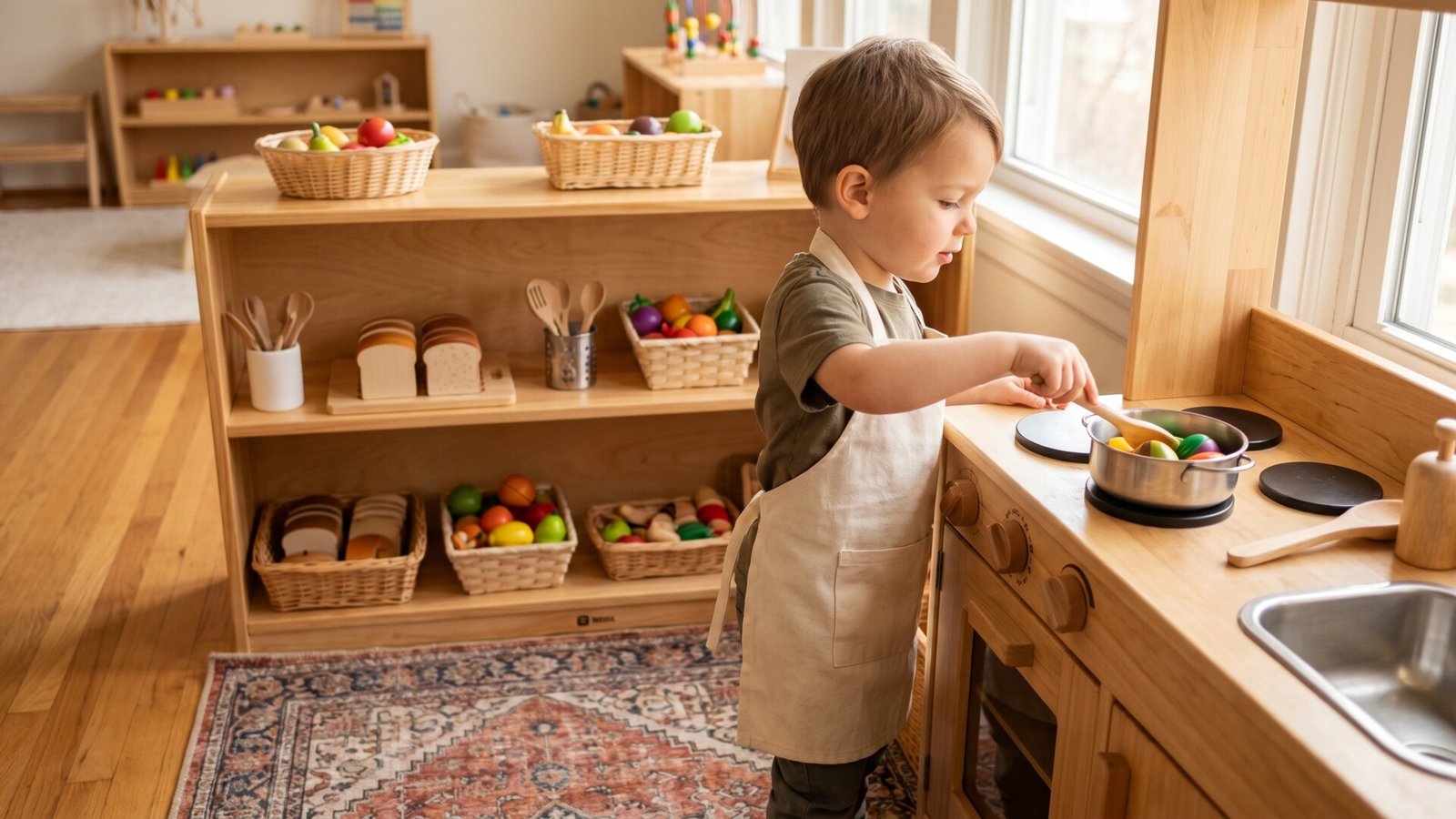
Setting Up a Little Chef Corner: Play Food & Kitchen Ideas for Kids
Every parent dreams of a play area that combines fun, learning, and creativity. A Little Chef Corner—a mini kitchen or cooking play space—does just that. It encourages imaginative play, social interaction, fine motor skill development, and even early math and literacy skills. Whether your child wants to whip up a pretend cake or serve a full-course meal to their stuffed animals, a thoughtfully designed chef corner can become a central hub for learning through play.
This guide explores how to set up a Little Chef Corner, the best play food and kitchen toys, and ways to integrate learning into imaginative cooking.
Why create a Little Chef Corner?
Pretend play, particularly in a kitchen context, supports multiple areas of child development:
- Language Development: Children expand vocabulary through naming ingredients, utensils, and cooking actions.
- Social Skills: Role-playing teaches turn-taking, sharing, and cooperation.
- Math Skills: Measuring, counting, and portioning help with basic numeracy.
- Fine Motor Skills: Stirring, pouring, and manipulating small objects strengthens hand-eye coordination.
- Cognitive Skills: Sequencing recipes, following steps, and problem-solving foster executive function.
- Creativity and Imagination: Children invent dishes, menus, and entire scenarios, building storytelling skills.
A Little Chef Corner is more than a toy—it’s a learning environment disguised as play.
Step 1: Choose the Right Space
Before adding toys, consider the location:
- Dedicated Play Area: A corner of a playroom, bedroom, or living room works best.
- Accessible Storage: Keep play food, utensils, and kitchen accessories within reach for your child.
- Safe Surface: Use a small table, play kitchen, or low countertop for food preparation.
- Clear Boundaries: Define the area with mats, rugs, or small partitions to create a “kitchen zone.”
Parent Tip: Rotate kitchen tools and accessories periodically to maintain interest and introduce new learning opportunities.
Step 2: Select the Play Kitchen
The centerpiece of any Little Chef Corner is the play kitchen.
Types of Play Kitchens:
- Wooden Play Kitchens
- Durable and long-lasting
- Offer a classic, tactile experience
- Often include realistic features like knobs, doors, and sinks
- Plastic Play Kitchens
- Lightweight and easy to clean
- Often have colorful, interactive elements (sounds, lights)
- Good for smaller spaces or children who love bright designs
- Compact or Modular Kitchens
- Perfect for toddlers or small apartments
- Can be expanded with add-on accessories
- Flexible for growing children
Parent Tip: Choose a kitchen that matches your child’s age and height to ensure comfort and engagement.
Step 3: Stocking the Kitchen: Essential Play Food
Play food is the heart of imaginative cooking. Focus on variety, texture, and realism:
Categories of Play Food
- Fruits & Vegetables
- Promote naming, colors, and healthy eating vocabulary
- Soft, sliceable sets (with velcro or magnets) add interactivity
- Dairy & Bakery Items
- Cheese, milk cartons, bread, cupcakes
- Supports counting, portioning, and role-play scenarios
- Meat & Protein Sets
- Chicken, fish, eggs, and plant-based options
- Encourages discussion about nutrition and meal planning
- Condiments & Accessories
- Bottles, jars, plates, cups, and cutlery
- Useful for sorting, matching, and table-setting games
- Specialty Sets
- Ice cream cones, pizza slices, sushi kits
- Keeps play engaging and creative
Parent Tip: Rotate play food sets to introduce new vocabulary and imaginative scenarios.
Step 4: Include Kitchen Tools & Accessories
In addition to food, tools enhance realism and motor skill development:
- Utensils: Spatulas, spoons, ladles, and tongs
- Cookware: Pots, pans, mixing bowls
- Appliances: Toy blenders, ovens, or microwaves
- Measuring Cups & Spoons: Introduce early math and fractions
Parent Tip: Encourage your child to pretend “measure” ingredients, which reinforces counting and volume concepts.
Step 5: Create a Learning Environment
Your Little Chef Corner can also integrate educational content:
- Math Skills
- Counting pieces of play food
- Measuring ingredients with cups and spoons
- Sorting items by size, shape, or color
- Language Development
- Naming ingredients, utensils, and cooking actions
- Practicing conversational skills through pretend customer orders
- Science Exploration
- Discuss how mixing ingredients changes textures
- Introduce concepts of heat, freezing, or liquid-to-solid changes (pretend or safe water play)
- Social-Emotional Learning
- Role-play restaurant scenarios
- Take turns being chef or customer
- Practice empathy and cooperation
Parent Tip: Narrate actions and ask questions: “What happens if we add more water?” or “How many pieces of fruit are on the plate?”
Step 6: Organizing & Rotating Toys
A well-organized Little Chef Corner keeps play engaging:
- Use Bins and Baskets: Separate fruits, vegetables, utensils, and cookware.
- Label Containers: Encourage early literacy by labeling bins with words or pictures.
- Rotate Toys: Introduce seasonal or thematic sets (e.g., holiday baking, picnic sets)
- Display Play Food: Open shelving or clear containers makes items visible and inviting
Parent Tip: Changing the setup periodically keeps the kitchen fresh and exciting, promoting sustained engagement.
Age-Based Considerations
| Age | Play Kitchen Focus | Recommended Toys |
|---|---|---|
| 1–2 years | Simple cause-and-effect play, large, safe objects | Soft play food, chunky utensils |
| 2–3 years | Role-playing and sorting | Sliceable fruits, cups and plates, small pots |
| 3–4 years | Storytelling and sequencing | Full kitchen sets, pretend cooking tasks, recipe play |
| 4–5 years | Early math and literacy integration | Measuring cups, counting play food, writing menus |
| 5–6 years | Collaborative play and imaginative scenarios | Restaurant setup, themed recipe kits, advanced kitchen tools |
Tips for Maximizing Learning in the Little Chef Corner
- Join the Play: Model language, counting, and sequencing while your child cooks.
- Encourage Creativity: Let children invent recipes, name dishes, and decorate “plates.”
- Use Everyday Objects: Real measuring cups, spoons, and containers expand play possibilities.
- Rotate Themes: Breakfast, lunch, dinner, picnic, or holiday baking themes keep play engaging.
- Integrate Literacy: Encourage children to write menus, take orders, or label ingredients.
- Promote Social Play: Invite siblings or friends for cooperative cooking scenarios.
Safety Considerations
- Avoid small pieces for children under 3 to prevent choking hazards.
- Ensure play food and kitchen sets are non-toxic and BPA-free.
- Keep sharp utensils or adult kitchen items out of reach.
- Regularly inspect toys for wear or damage.
Recommended Toys for a Little Chef Corner
Here are some toys that you should consider:
- Melissa & Doug Wooden Chef Kitchen – Durable, realistic wooden play kitchen
- Play Food Sets – Sliceable fruits, vegetables, and bakery items for interactive play
- Pretend Cookware & Utensils – Pots, pans, and utensils for realistic role-play
- Interactive Kitchen Appliances – Toy microwaves, blenders, or stovetops with sounds
- Measuring Cups & Spoons – Supports counting and early math skills
- Themed Recipe Kits – Pizza, ice cream, or baking kits for extended play
Parent Tip: Select toys that balance open-ended play with guided learning opportunities.
Benefits of a Little Chef Corner
- Holistic Development: Enhances cognitive, social, emotional, and motor skills
- Language Growth: Expands vocabulary and conversational skills
- Numeracy Skills: Counting, measuring, and sequencing
- Creativity and Imagination: Encourages storytelling and invention
- Confidence & Independence: Children feel capable in their “own kitchen”
Parent Experiences
Parents often notice:
- Children can spend extended periods in focused play, experimenting and creating.
- Social interactions improve as children take turns cooking or role-playing.
- Language skills flourish—children use descriptive words, narrate actions, and invent dialogue.
- Creativity is evident as children mix unexpected ingredients or invent recipes.
Conclusion
A Little Chef Corner is more than a toy area—it’s a learning hub. By thoughtfully selecting play kitchens, food, and accessories, parents can foster:
- Language and literacy
- Math and problem-solving
- Social-emotional skills
- Creativity and imaginative thinking
Creating a space for pretend cooking encourages hands-on learning in a safe, playful environment. With rotating toys, thematic sets, and guided play, children can enjoy hours of imaginative exploration while developing foundational skills.